Destinations Vatican City

Vatican City.

Vatican City 12 cities

Vatican City is what happens when a martyr's grave becomes a sovereign state. You come for masterpieces, then realize the real subject is power made visible in stone, ritual and space.

Get the app Cities in Vatican City
Vatican City
Vatican City
Capital
12
Cities
April-May and September-October
best season
1-2 days
trip length
Euro (€)
currency

EntryEntry via Italy under Schengen rules

01 An introduction

verified

VThis Vatican City travel guide starts with the oddest fact of all: the world's smallest state holds a basilica, museums and a political court inside 0.44 km².

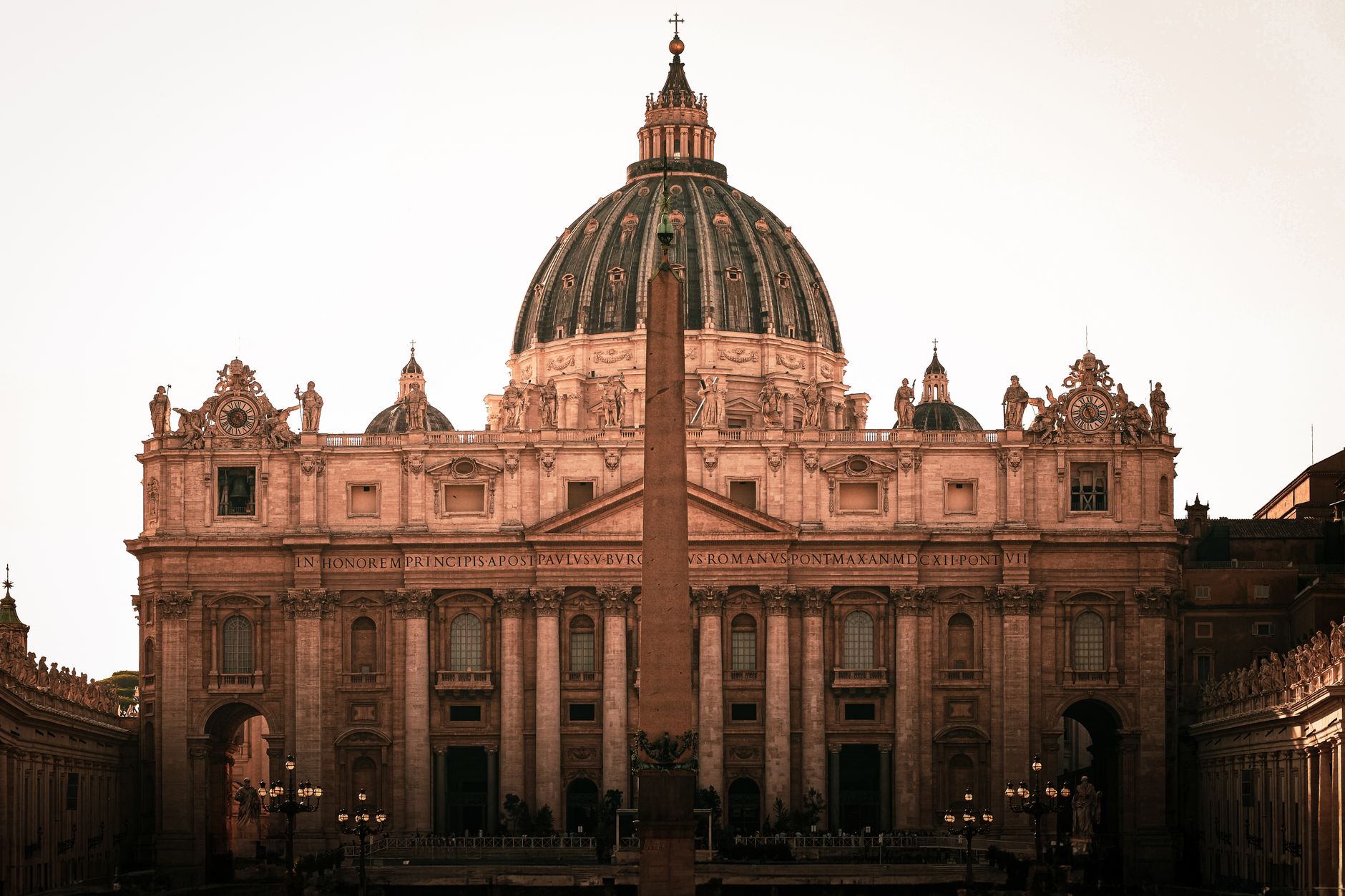
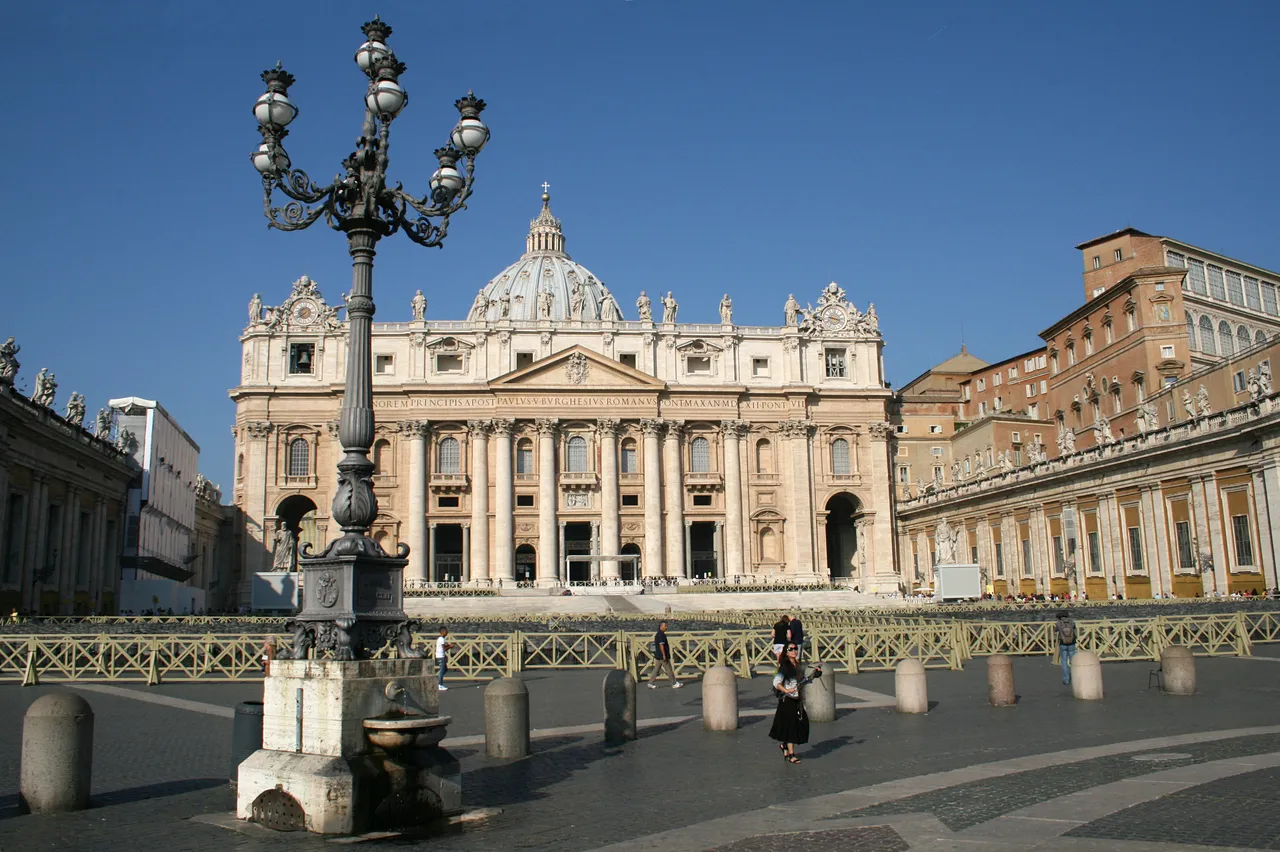
Vatican City is less a capital than a pressure chamber where empire, faith and image-making were compressed into 44 hectares. Caligula's circus once stood here. Nero's obelisk still does. Then Constantine's builders cut into a Roman cemetery to raise Old St Peter's above a grave that Christians had already begun to honor. That layering is the real draw: not a checklist, but a site where martyrdom, money, ritual and architecture keep colliding in plain sight. You feel it fastest in St Peter's Square, where Bernini's colonnades stage welcome on a scale large enough to absorb a Wednesday audience crowd and still make one person feel small.

Most travelers enter from Rome, and that is the right way to understand the place. Inside the walls, time turns ceremonial: Swiss Guards at the gates, Latin in stone, polished marble underfoot, security lines that move with the gravity of an airport and the logic of a shrine. Step back into Borgo Pio or Prati and the spell changes into espresso, traffic and Roman impatience. That contrast matters. Vatican City gives you the theater; Rome gives you the pulse. If you want the papal summer story, continue to Castel Gandolfo. If you care about medieval power rather than baroque ceremony, Viterbo sharpens the picture.

History Buff Photography Hotspot

A History Told Through Its Eras

An Obelisk, a Circus, and One Dangerous Tomb

Imperial Rome and the Martyr's Grave, 1st century CE-4th century CE

Morning dust rose from the racing ground on the Vatican plain long before anyone called this place holy. Caligula had his circus laid out on the west bank of the Tiber, Nero embellished it, and an Egyptian obelisk stood there as a piece of imperial vanity, glaring over games, punishments, and the theater of power. The stone is still here. The emperors are not.

Ce que l'on ignore souvent, c'est que the slope behind that spectacle was a cemetery. Along the Via Triumphalis, graves pressed close together: freedmen, craftsmen, children, women with names now half-erased, ordinary Romans who could never have guessed that one burial among theirs would draw pilgrims for nearly two millennia. That contrast matters. The Vatican begins not in triumph, but beside the dead.

Christian memory fixed on one grave in particular. Tradition placed the martyrdom of Peter near Nero's circus and his burial nearby, and by the early 3rd century a memorial shrine seems already to have marked the spot. Evidence has its gradations here: the exact tomb remains debated, but devotion to this place is documented early and stubbornly.

Then Constantine did something almost shocking in its ambition. To build the first St Peter's, his engineers cut into the necropolis, leveled the hill, and half-buried a city of tombs so that one grave could remain at the center of the Christian world. A basilica rose over a cemetery. That act, both pious and brutal, set the pattern for everything that followed: the Vatican would keep remaking itself without ever quite escaping the bones beneath it.

Saint Peter appears here not as a bronze colossus, but as an executed fisherman whose remembered grave changed the map of Christianity.

The obelisk in St Peter's Square is older than Christianity, older than imperial Rome on this hill, and it is the only ancient obelisk in Rome never to have fallen.

The Fortified Shrine and the Humiliation of Avignon

Leonine Walls, Jubilees, and Exile, 846-1377

In 846, fear arrived by river and by sea. Arab raiders struck the great basilicas outside Rome's old walls, including St Peter's, and the shock was enough to change the shape of the Vatican forever. Pope Leo IV answered with masonry: the Leonine Walls, enclosing the Vatican district and turning a vulnerable shrine into a defended sanctuary.

That wall still tells the truth. The medieval Vatican was never only a place of prayer; it was a place of anxiety, logistics, crowds, and money. When Boniface VIII proclaimed the first Jubilee in 1300, pilgrims flooded into Rome in such numbers that the city rediscovered its own prestige, and the Vatican learned what mass devotion looked like when it arrived on foot, dusty, desperate, and hopeful.

Then the court left. From 1309 the papacy settled in Avignon, and the Vatican fell into a melancholy half-life: buildings neglected, prestige drained away, the old center of Latin Christendom reduced to absence. You can feel the insult in the chronology. One decade, roads clogged with penitents; the next, empty halls and a papal monarchy conducting its business on the Rhone.

The return in January 1377 was not a simple homecoming. Gregory XI came back to Rome under pressure that was spiritual, political, and intensely personal, with Catherine of Siena urging him forward in language that left little room for hesitation. He returned just in time for fresh disorder, but the principle had been restored: whatever the schisms to come, the papacy's theater would once again be staged in Rome, not elsewhere.

Catherine of Siena was not a courtier at all, but a stubborn laywoman writing to princes and popes as if eternity had given her a private audience.

The Vatican's medieval revival owes as much to panic after a raid and to one woman's letters as it does to any serene plan of church government.

Painted Ceilings, Poison Rumors, and a Corridor for Escape

Renaissance Splendor and Counter-Reformation Discipline, 1450-1644

Picture the papal court at dawn: wet plaster, bootsteps, secretaries with sealed letters, bankers waiting in an antechamber, and artists treated like expensive mercenaries. This was the Vatican at its most intoxicating. Between the late 15th century and the first half of the 17th, popes turned the hill into Europe's most dazzling machine of image-making, where theology, family ambition, and artistic genius were bound together with alarming frankness.

Alexander VI Borgia gave the court its darkest perfume. His name still trails poison legends, bedchamber whispers, and dynastic appetite, and one should separate legend from proof; yet even the documented facts are theatrical enough. When he died in 1503, attendants struggled to force his rapidly swollen body into a coffin, a final indignity fit for a pontiff who had lived as if scandal were simply another instrument of rule.

Julius II wanted everything at once: territory, fortresses, Bramante, Raphael, Michelangelo, and immortality. On 8 May 1508 Michelangelo signed the contract for the Sistine ceiling, a commission he did not greet with delight, and the chapel became a battlefield of pigment, money, ego, and vision. Look up now, and it is easy to imagine certainty. The real story is quarrel, fatigue, and a genius painting prophets while resenting half the process.

Then came 6 May 1527. Imperial troops stormed Rome, the Swiss Guard died in defense of Clement VII, and the pope fled through the Passetto to Castel Sant'Angelo, that elevated corridor suddenly stripped of ceremony and reduced to one human function: escape. This is the Vatican in one image. Magnificence in the chapel, panic in the passageway.

The answer to that humiliation was not retreat but discipline. The rebuilt St Peter's, Bernini's theater of columns, and the ceremonial order of the Counter-Reformation made the Vatican less like a princely residence and more like a global stage set for Catholic authority. Rome provided the stone and the audience. The Vatican supplied the script.

Julius II, the so-called warrior pope, was less a serene father of the Church than an impatient patron-general who spent money, gave orders, and expected eternity to keep pace.

The Swiss Guard's annual oath on 6 May still commemorates the date of the Sack of Rome, when 147 guardsmen died buying time for a pope to run.

The Pope Without a Kingdom, Then a State Smaller Than a Palace Garden

From Captive Pontiff to Sovereign Microstate, 1798-present

The old papal world did not collapse in one elegant stroke. It was humiliated in stages: revolution, French occupation, Napoleon, and then the long 19th century of nationalism. Pius VI died in French captivity in 1799, and few images better capture the shock of the age than a pope carried off as if he were merely another defeated prince.

After Italian unification, the drama became almost claustrophobic. In 1870 Rome was taken by the Kingdom of Italy, the Papal States vanished, and Pius IX declared himself a prisoner in the Vatican. Ce que l'on ignore souvent, c'est que this phrase was not just rhetoric. For decades the popes refused to recognize the new order and would not cross the threshold into the city that surrounded them on every side.

The solution came on 11 February 1929 with the Lateran Pacts. Vatican City was born as a sovereign state of 44 hectares, tiny enough to walk across in minutes and influential enough to trouble cabinets on several continents. This odd little monarchy acquired its own stamps, coins, railway spur, radio, and legal identity, while remaining physically inseparable from Rome, as if history had solved a constitutional crisis by inventing a jewel box.

The modern Vatican has lived through war, diplomacy, reform, secrecy, media, and mass pilgrimage. Pius XII governed from here during the Second World War under the terrible shadow of Nazi occupation in Rome; John XXIII opened the Second Vatican Council in 1962 and let fresh air into institutions that had grown used to sealed windows; John Paul II turned St Peter's Square into a truly global stage after surviving an assassination attempt there in 1981. A state no larger than a park became a broadcasting tower for the world.

And yet the paradox remains deliciously Roman. Inside the walls, ritual time. Outside them, espresso, traffic, gossip, and the practical life of neighborhoods that continue toward Prati and beyond. That tension is the Vatican's modern secret, and it leads naturally to places like Castel Gandolfo, where papal power learned, from time to time, to breathe in the summer heat.

Pius IX spent so long on the throne of Peter that he watched the papacy lose its territories and gain, in the end, a stranger kind of authority.

Vatican City has its own railway station and a rail connection, but for decades the line was used more for symbolism, freight, and ceremonial arrivals than for anything resembling ordinary urban travel.

The Cultural Soul

A State Made of Breath and Rehearsal

Vatican City does not behave like a city. It behaves like a liturgy that accidentally acquired post offices, courtrooms, a railway stub, and men in striped sleeves carrying halberds. You enter from Rome in minutes, yet the temperature of time changes at the colonnade of St Peter's Square: traffic becomes procession, chatter becomes murmur, and even the pigeons seem to understand that stone can command silence.

Religion here is less an idea than a choreography of waiting, kneeling, rising, queueing, crossing oneself, lowering the voice before marble that has already heard every register of human need. The strange thing is not grandeur. Rome has plenty of that. The strange thing is compression: so much belief packed into 44 hectares that one begins to understand faith as a form of architecture, a way of telling the body where to stand and the soul how small it is.

And yet the sacred never gets the place entirely to itself. A nun checks her phone. A priest hurries past with the expression of a civil servant late for a meeting. Eternity keeps office hours. That contradiction is the Vatican's real perfume.

Latin in the Stone, Italian at the Counter

Listen for ten minutes and the Vatican reveals its hierarchy by sound. Latin lives on facades, seals, tombs, and blessings; it does not order coffee. Italian runs the day instead: at security, in offices, in the bookstore, in the quick exchange between two women arranging chairs before Mass. Then Swiss German cuts through a drill command somewhere behind a gate, and the whole place remembers that ritual likes uniforms as much as it likes incense.

This is why Vatican language feels theatrical without being false. One tongue governs memory, another governs errands. In Rome you hear speed. In Vatican City you hear rank.

The useful words are modest ones. "Buongiorno" before a question. "Scusi" when bodies compress near a chapel door. "Permesso" when you slide past a row of knees and handbags inside St Peter's Basilica. Politeness here is not sweetness. It is form, and form is half the local religion.

Gold Leaf for the Terrified

Vatican art has an inconvenient habit: it makes even the skeptical neck bend upward. The Sistine Chapel is famous in the lazy way thunder is famous, but fame does not prepare you for the first muscular shock of Michelangelo's ceiling, where prophets, sibyls, ignudi, and invented anatomies crowd the vault as if paint had decided to become weather. One does not merely look. One submits.

Then the galleries change the register. Raphael prefers persuasion where Michelangelo prefers force. Ancient statues stand with their damaged noses and complete authority. Maps spread Italy across walls in greens and blues so delicious that geography begins to resemble confectionery, which is only fair, because power always liked its knowledge glazed.

The Vatican collected art the way some dynasties collected enemies: systematically, with appetite, and on a scale that leaves the visitor half-fed and half-defeated. Good. A masterpiece should not flatter you. It should rearrange your breathing.

Marble That Teaches the Body

St Peter's Basilica is less a building than a lesson in proportion delivered by force. Bramante began it in 1506, Michelangelo gave the dome its tense, commanding profile, and Bernini later staged the embrace outside with 284 columns in St Peter's Square, a gesture so large it feels almost indecent. The square gathers crowds the way a palm gathers rain.

Inside, size stops behaving honestly. Letters you assume are painted turn out to be mosaics big enough to cover walls in an ordinary church. Putti become wrestlers. Tombs become small countries. The baldachin rises above the papal altar like a bronze storm, and one realizes that Vatican architecture was designed not to shelter devotion but to educate it, to tell the spine exactly how much awe it can bear before surrender.

This is the city-state's oldest trick. It takes the human body, that vain little instrument, and measures it against domes, nave lengths, staircases, thresholds, and courtyards until humility ceases to be a virtue and becomes simple mathematics. Rome knows spectacle. The Vatican knows calibration.

Lunch Returns the Soul to the Body

Vatican City has ceremony. Lunch belongs to Rome. This is not a disappointment. It is an act of mercy.

Step outside the walls toward Borgo Pio or Prati and the metaphysics end in a plate of cacio e pepe, all pecorino sting and black pepper heat, or in a supplì eaten too fast because hunger has no theology. The kitchens around the Vatican are Roman to the bone: guanciale, artichokes, anchovy, chicory, lamb, fried cod, bitter greens, sharp white wine. A country is a table set for strangers.

The true local wisdom is that you do not eat "Vatican food." You eat after the Vatican, or before it, or in strategic defiance of it. Coffee standing up. Pizza al taglio folded in paper. A late lunch in Rome after the Museums, when your eyes have seen too much gold and your mouth asks for salt. This is how balance is restored.

If you want a gentler version of the same rhythm, go to Castel Gandolfo on a papal-weather day and notice how lake air changes appetite. Even there, ritual yields to appetite in the end. It always does.

The Courtesy of Passing Through

Vatican etiquette begins with clothing but does not end there. Covered shoulders, knees out of sight, hats off inside sacred spaces: these are the visible rules, the ones printed on signs and enforced at doors. The more interesting rules are social. Lower your voice before you are told. Do not plant yourself in the center of a chapel with a camera held high like a weapon. Step aside when someone is praying, because devotion has right of way.

Roman manners around the Vatican are brisk rather than warm. This confuses visitors who expect softness from holy ground. Better to think of it as compressed respect. Greet first. Ask clearly. Thank quickly. Move.

The place rewards those who understand ritual as a gift rather than a burden. Queue discipline at the Museums. A pause before entering the necropolis area beneath St Peter's Basilica. The small instinct to let an elderly pilgrim take the bit of shade near the colonnade. Civilization often amounts to nothing grander than knowing when not to occupy space. Vatican City, tiny as it is, teaches that lesson with unusual severity.


02 What Makes Vatican City Unmissable.

church

St Peter's Scale

Basilica di San Pietro was built to overawe ambassadors and pilgrims alike, and it still works. Michelangelo's dome, Bernini's baldachin and a nave measured in giant human units make ordinary churches feel suddenly modest.

museum

Museums With Teeth

The Musei Vaticani are not a polite afternoon stop. They are a state collection built by popes who used antiquities, tapestries and frescoes to argue that Rome's past and the Church's future belonged in the same custody.

history_edu

A Grave Below

The deepest story sits under the spectacle. Ancient roads, tombs and the Vatican Necropolis reveal that this polished ceremonial center grew out of a cemetery on Rome's edge.

photo_camera

Stone and Ceremony

Few places photograph so well at such different scales. One moment it's the sweep of St Peter's Square; the next it's a Swiss Guard sleeve, an inscription in shadow or afternoon light sliding across travertine.

route

Rome in Reverse

Vatican City makes more sense when paired with Rome just beyond the walls. Cross on foot and the shift is instant: from incense and protocol to bars, scooters and Roman lunch moving at full speed.

03 Cities in Vatican City.

12 cities — start with the ones we'd send you to first.

Rome
01

Rome

Vatican City is technically a foreign country inside Rome, so the Colosseum, Trastevere's alleys, and a €1.50 espresso at a marble counter are all part of the same trip.

Florence
02

Florence

The Uffizi holds the Botticellis that Sixtus IV's court was absorbing when Michelangelo was still a teenager — understanding Florence makes the Sistine Chapel legible.

Naples
03

Naples

The city that supplied Rome with its street food logic, its volcanic temperament, and the pizza that papal delegations have been eating since the 18th century.

Ravenna
04

Ravenna

The Byzantine mosaics here predate St Peter's Basilica by a millennium and show exactly what early Christian rulers wanted gold and glass to say about power.

Assisi
05

Assisi

Francis of Assisi, whose name Jorge Mario Bergoglio took in 2013, built his order in this Umbrian hill town — the connection to the current papacy is direct and personal.

Palermo
06

Palermo

Arab-Norman cathedrals, a street market that smells of offal and citrus, and a civic culture that shaped the polyglot Mediterranean world the medieval papacy spent centuries trying to govern.

Milan
07

Milan

Leonardo's 'Last Supper' is on a refectory wall in Santa Maria delle Grazie — the painting the Vatican never owned but whose iconography it exported to every continent.

Venice
08

Venice

The Republic of Venice spent four centuries in open diplomatic war with the Holy See, producing a paper trail of interdicts, excommunications, and furious ambassadorial letters that reads like a thriller.

Siena
09

Siena

Catherine of Siena — the laywoman who wrote to Gregory XI with the bluntness of someone who had nothing left to lose — was born here, and the city still treats her as a living civic fact.

All 12 cities

04 Regions.

Rome

Roman Vatican Core

Vatican City makes sense only when you see how tightly it is fused to Rome. Stay near Prati, Borgo Pio, or Ottaviano and you can move between St Peter's Basilica, museum queues, espresso bars, and late dinners without wasting half your day underground.

St Peter's Basilica Vatican Museums Sistine Chapel Borgo Pio Prati
Castel Gandolfo

Papal Hills

Castel Gandolfo shows the papacy off duty, if such a thing exists. The air is cooler, Lake Albano replaces traffic noise, and the mood shifts from marble theater to summer-residence calm within an hour of Rome.

Castel Gandolfo Papal Palace of Castel Gandolfo Lake Albano Albano Laziale Appian Way Regional Park
Florence

Tuscan Faith and Civic Pride

Florence and Siena turn religious art into civic competition, and that is what makes them useful after the Vatican. In Florence the scale is princely; in Siena it feels more severe, more local, and in some ways more human.

Florence Siena Florence Cathedral Siena Cathedral Santa Croce
Assisi

Hilltown Pilgrimage Country

Assisi and Viterbo carry the older Italy of stone lanes, monastery bells, and practical devotion. You come here after Rome to hear the religious story in a lower register, with fewer barriers, fewer crowds, and more silence.

Assisi Viterbo Basilica of Saint Francis of Assisi Palazzo dei Papi Bomarzo
Ravenna

Adriatic Shrines and Mosaics

Ravenna and Loreto sit on different branches of the same map: one built on glittering Byzantine surfaces, the other on one of the Catholic world's strongest Marian devotions. Add Venice and the route becomes a study in how ritual, trade, and spectacle kept borrowing from one another across the Adriatic edge of Italy.

Ravenna Loreto Venice Basilica di San Vitale Basilica della Santa Casa
Naples

Southern Drama and Northern Finish

Naples, Palermo, and Milan show how far the Catholic story stretches once it leaves Vatican walls. Naples is baroque and combustible, Palermo layers Arab-Norman and Spanish rule into one street scene, and Milan closes the sequence with a colder, richer, more disciplined face of Italian power.

Naples Palermo Milan Duomo di Milano Palatine Chapel

06 From Necropolis to Sovereign Microstate

Vatican history in scenes of burial, magnificence, siege, and reinvention

  1. stadium
    37-41 CEImperial Vatican Ground

    Caligula lays out the circus

    Caligula establishes the imperial circus on the Vatican plain and brings in the Egyptian obelisk that still dominates St Peter's Square. A place built for spectacle begins its long career before it becomes a place of pilgrimage.

  2. person
    64-67 CEImperial Vatican Ground

    Peter's martyrdom enters tradition

    Christian tradition places Peter's martyrdom near Nero's circus and his burial on the nearby slope. The exact archaeology remains debated, but devotion to the site becomes one of the strongest currents in Vatican history.

  3. church
    2nd-3rd centuryImperial Vatican Ground

    A shrine marks the grave

    By the early 3rd century, a memorial associated with Peter appears to have marked the burial place. What began as a grave in a cemetery starts becoming a destination of memory.

  4. church
    c. 324-333Constantinian and Early Christian Vatican

    Constantine builds Old St Peter's

    Constantine orders a vast basilica over the site venerated as Peter's tomb. Engineers cut into the necropolis and level the hill, preserving one grave while burying many others beneath the new Christian monument.

  5. swords
    846Leonine Vatican

    Raiders strike St Peter's

    Arab raiders attack the basilicas outside Rome's ancient walls, exposing the vulnerability of the Vatican district. The shock changes the site from open sanctuary to defended enclave.

  6. castle
    852Leonine Vatican

    Leonine Walls are completed

    Pope Leo IV encloses the Vatican quarter with new walls. The Leonine City gives the papal shrine a military shell and a more distinct territorial identity.

  7. celebration
    1300Jubilee and Exile

    Boniface VIII proclaims the first Jubilee

    The bull of Jubilee turns Rome and the Vatican into a vast engine of pilgrimage. Crowds, indulgences, and ceremonial authority restore papal prestige on a dramatic scale.

  8. flight_takeoff
    1309Jubilee and Exile

    The papacy leaves for Avignon

    The papal court moves to Avignon, and the Vatican enters a period of neglect and diminished status. For decades, the old center of Latin Christendom feels abandoned by its own monarchs.

  9. home
    1377Return to Rome

    Gregory XI returns to Rome

    Under intense political and spiritual pressure, including the appeals of Catherine of Siena, Gregory XI brings the papacy back to Rome. The return does not end crisis, but it restores the Vatican's central claim.

  10. church
    1477-1480sRenaissance Vatican

    The Sistine Chapel takes shape

    Under Sixtus IV, the chapel that will become the papacy's most famous ceremonial room is built. At first it is a statement of dynastic and liturgical ambition; later, Michelangelo will make it overwhelming.

  11. shield
    1506Renaissance Vatican

    Swiss Guard is founded

    Julius II establishes the Swiss Guard as the pope's personal corps. Their loyalty will become legend during the catastrophe of 1527.

  12. palette
    1508Renaissance Vatican

    Michelangelo signs for the ceiling

    Michelangelo accepts the contract to repaint the Sistine Chapel ceiling, a task he initially resisted. The result will turn papal patronage into one of the most intimidating interiors in Europe.

  13. swords
    1527Renaissance Vatican

    The Sack of Rome

    Imperial troops storm Rome, the Swiss Guard is massacred in defense of Clement VII, and the pope escapes through the Passetto to Castel Sant'Angelo. The moment exposes how thin the line can be between majesty and panic.

  14. construction
    1586Counter-Reformation Vatican

    The obelisk is moved to the square

    Domenico Fontana relocates the ancient obelisk to the center of the future St Peter's Square in one of the era's great feats of engineering. An imperial monument is re-scripted as Christian theater.

  15. church
    1626Counter-Reformation Vatican

    New St Peter's is consecrated

    After more than a century of construction, the new basilica is consecrated. The Vatican now possesses an architectural statement equal to its global ambitions.

  16. architecture
    1656-1667Baroque Vatican

    Bernini shapes St Peter's Square

    Bernini designs the monumental colonnade that frames the square like open arms. The papacy gains not only a forecourt but a choreography for crowds, processions, and spectacle.

  17. public
    1799Revolution and Empire

    Pius VI dies in French captivity

    The French Revolutionary wars break the old papal order with brutal clarity. A pope dies far from Rome, and the vulnerability of temporal papal power is exposed to all Europe.

  18. gavel
    1870Roman Question

    Rome is annexed to the Kingdom of Italy

    Italian troops enter Rome, the Papal States effectively end, and the pope withdraws behind Vatican walls. The 'Roman Question' begins, and the papacy casts itself as confined in its own ceremonial center.

  19. handshake
    1929Vatican City State

    Lateran Pacts create Vatican City

    Italy and the Holy See settle the Roman Question with the Lateran Pacts. Vatican City becomes a sovereign state, tiny in area but immense in symbolic reach.

  20. radio
    1931Vatican City State

    Vatican Radio begins broadcasting

    The new state embraces modern communication with Vatican Radio. A territory smaller than many parks acquires a voice capable of crossing continents.

  21. groups
    1962Conciliar Vatican

    Second Vatican Council opens

    John XXIII convenes the council that will reshape Catholic worship, language, and the Church's posture toward the modern world. The Vatican becomes once again a workshop, not merely a museum of authority.

  22. warning
    1981Global Vatican

    John Paul II is shot in St Peter's Square

    An assassination attempt in the square shocks the Catholic world and turns a familiar ritual space into a scene of near-tragedy. The survival of the pope deepens the square's role as a place of global memory.

  23. public
    1984Global Vatican

    UNESCO recognizes Vatican City

    Vatican City is inscribed as a World Heritage Site, formalizing what visitors already sense: this minute state contains an extraordinary concentration of art, ritual, and historical layering. The old burial ground has become a universal archive.

07 The story of Vatican City.

011st century CE-4th century CE

An Obelisk, a Circus, and One Dangerous Tomb

Imperial Rome and the Martyr's Grave

Saint Peter appears here not as a bronze colossus, but as an executed fisherman whose remembered grave changed the map of Christianity.

Morning dust rose from the racing ground on the Vatican plain long before anyone called this place holy. Caligula had his circus laid out on the west bank of the Tiber, Nero embellished it, and an Egyptian obelisk stood there as a piece of imperial vanity, glaring over games, punishments, and the theater of power. The stone is still here. The emperors are not.

Ce que l'on ignore souvent, c'est que the slope behind that spectacle was a cemetery. Along the Via Triumphalis, graves pressed close together: freedmen, craftsmen, children, women with names now half-erased, ordinary Romans who could never have guessed that one burial among theirs would draw pilgrims for nearly two millennia. That contrast matters. The Vatican begins not in triumph, but beside the dead.

Christian memory fixed on one grave in particular. Tradition placed the martyrdom of Peter near Nero's circus and his burial nearby, and by the early 3rd century a memorial shrine seems already to have marked the spot. Evidence has its gradations here: the exact tomb remains debated, but devotion to this place is documented early and stubbornly.

Then Constantine did something almost shocking in its ambition. To build the first St Peter's, his engineers cut into the necropolis, leveled the hill, and half-buried a city of tombs so that one grave could remain at the center of the Christian world. A basilica rose over a cemetery. That act, both pious and brutal, set the pattern for everything that followed: the Vatican would keep remaking itself without ever quite escaping the bones beneath it.

1fr

The obelisk in St Peter's Square is older than Christianity, older than imperial Rome on this hill, and it is the only ancient obelisk in Rome never to have fallen.

02846-1377

The Fortified Shrine and the Humiliation of Avignon

Leonine Walls, Jubilees, and Exile

Catherine of Siena was not a courtier at all, but a stubborn laywoman writing to princes and popes as if eternity had given her a private audience.

In 846, fear arrived by river and by sea. Arab raiders struck the great basilicas outside Rome's old walls, including St Peter's, and the shock was enough to change the shape of the Vatican forever. Pope Leo IV answered with masonry: the Leonine Walls, enclosing the Vatican district and turning a vulnerable shrine into a defended sanctuary.

That wall still tells the truth. The medieval Vatican was never only a place of prayer; it was a place of anxiety, logistics, crowds, and money. When Boniface VIII proclaimed the first Jubilee in 1300, pilgrims flooded into Rome in such numbers that the city rediscovered its own prestige, and the Vatican learned what mass devotion looked like when it arrived on foot, dusty, desperate, and hopeful.

Then the court left. From 1309 the papacy settled in Avignon, and the Vatican fell into a melancholy half-life: buildings neglected, prestige drained away, the old center of Latin Christendom reduced to absence. You can feel the insult in the chronology. One decade, roads clogged with penitents; the next, empty halls and a papal monarchy conducting its business on the Rhone.

The return in January 1377 was not a simple homecoming. Gregory XI came back to Rome under pressure that was spiritual, political, and intensely personal, with Catherine of Siena urging him forward in language that left little room for hesitation. He returned just in time for fresh disorder, but the principle had been restored: whatever the schisms to come, the papacy's theater would once again be staged in Rome, not elsewhere.

1fr

The Vatican's medieval revival owes as much to panic after a raid and to one woman's letters as it does to any serene plan of church government.

031450-1644

Painted Ceilings, Poison Rumors, and a Corridor for Escape

Renaissance Splendor and Counter-Reformation Discipline

Julius II, the so-called warrior pope, was less a serene father of the Church than an impatient patron-general who spent money, gave orders, and expected eternity to keep pace.

Picture the papal court at dawn: wet plaster, bootsteps, secretaries with sealed letters, bankers waiting in an antechamber, and artists treated like expensive mercenaries. This was the Vatican at its most intoxicating. Between the late 15th century and the first half of the 17th, popes turned the hill into Europe's most dazzling machine of image-making, where theology, family ambition, and artistic genius were bound together with alarming frankness.

Alexander VI Borgia gave the court its darkest perfume. His name still trails poison legends, bedchamber whispers, and dynastic appetite, and one should separate legend from proof; yet even the documented facts are theatrical enough. When he died in 1503, attendants struggled to force his rapidly swollen body into a coffin, a final indignity fit for a pontiff who had lived as if scandal were simply another instrument of rule.

Julius II wanted everything at once: territory, fortresses, Bramante, Raphael, Michelangelo, and immortality. On 8 May 1508 Michelangelo signed the contract for the Sistine ceiling, a commission he did not greet with delight, and the chapel became a battlefield of pigment, money, ego, and vision. Look up now, and it is easy to imagine certainty. The real story is quarrel, fatigue, and a genius painting prophets while resenting half the process.

Then came 6 May 1527. Imperial troops stormed Rome, the Swiss Guard died in defense of Clement VII, and the pope fled through the Passetto to Castel Sant'Angelo, that elevated corridor suddenly stripped of ceremony and reduced to one human function: escape. This is the Vatican in one image. Magnificence in the chapel, panic in the passageway.

The answer to that humiliation was not retreat but discipline. The rebuilt St Peter's, Bernini's theater of columns, and the ceremonial order of the Counter-Reformation made the Vatican less like a princely residence and more like a global stage set for Catholic authority. Rome provided the stone and the audience. The Vatican supplied the script.

1fr

The Swiss Guard's annual oath on 6 May still commemorates the date of the Sack of Rome, when 147 guardsmen died buying time for a pope to run.

041798-present

The Pope Without a Kingdom, Then a State Smaller Than a Palace Garden

From Captive Pontiff to Sovereign Microstate

Pius IX spent so long on the throne of Peter that he watched the papacy lose its territories and gain, in the end, a stranger kind of authority.

The old papal world did not collapse in one elegant stroke. It was humiliated in stages: revolution, French occupation, Napoleon, and then the long 19th century of nationalism. Pius VI died in French captivity in 1799, and few images better capture the shock of the age than a pope carried off as if he were merely another defeated prince.

After Italian unification, the drama became almost claustrophobic. In 1870 Rome was taken by the Kingdom of Italy, the Papal States vanished, and Pius IX declared himself a prisoner in the Vatican. Ce que l'on ignore souvent, c'est que this phrase was not just rhetoric. For decades the popes refused to recognize the new order and would not cross the threshold into the city that surrounded them on every side.

The solution came on 11 February 1929 with the Lateran Pacts. Vatican City was born as a sovereign state of 44 hectares, tiny enough to walk across in minutes and influential enough to trouble cabinets on several continents. This odd little monarchy acquired its own stamps, coins, railway spur, radio, and legal identity, while remaining physically inseparable from Rome, as if history had solved a constitutional crisis by inventing a jewel box.

The modern Vatican has lived through war, diplomacy, reform, secrecy, media, and mass pilgrimage. Pius XII governed from here during the Second World War under the terrible shadow of Nazi occupation in Rome; John XXIII opened the Second Vatican Council in 1962 and let fresh air into institutions that had grown used to sealed windows; John Paul II turned St Peter's Square into a truly global stage after surviving an assassination attempt there in 1981. A state no larger than a park became a broadcasting tower for the world.

And yet the paradox remains deliciously Roman. Inside the walls, ritual time. Outside them, espresso, traffic, gossip, and the practical life of neighborhoods that continue toward Prati and beyond. That tension is the Vatican's modern secret, and it leads naturally to places like Castel Gandolfo, where papal power learned, from time to time, to breathe in the summer heat.

1fr

Vatican City has its own railway station and a rail connection, but for decades the line was used more for symbolism, freight, and ceremonial arrivals than for anything resembling ordinary urban travel.

08 The cultural soul.

religion

A State Made of Breath and Rehearsal

Vatican City does not behave like a city. It behaves like a liturgy that accidentally acquired post offices, courtrooms, a railway stub, and men in striped sleeves carrying halberds. You enter from Rome in minutes, yet the temperature of time changes at the colonnade of St Peter's Square: traffic becomes procession, chatter becomes murmur, and even the pigeons seem to understand that stone can command silence.

Religion here is less an idea than a choreography of waiting, kneeling, rising, queueing, crossing oneself, lowering the voice before marble that has already heard every register of human need. The strange thing is not grandeur. Rome has plenty of that. The strange thing is compression: so much belief packed into 44 hectares that one begins to understand faith as a form of architecture, a way of telling the body where to stand and the soul how small it is.

And yet the sacred never gets the place entirely to itself. A nun checks her phone. A priest hurries past with the expression of a civil servant late for a meeting. Eternity keeps office hours. That contradiction is the Vatican's real perfume.

language

Latin in the Stone, Italian at the Counter

Listen for ten minutes and the Vatican reveals its hierarchy by sound. Latin lives on facades, seals, tombs, and blessings; it does not order coffee. Italian runs the day instead: at security, in offices, in the bookstore, in the quick exchange between two women arranging chairs before Mass. Then Swiss German cuts through a drill command somewhere behind a gate, and the whole place remembers that ritual likes uniforms as much as it likes incense.

This is why Vatican language feels theatrical without being false. One tongue governs memory, another governs errands. In Rome you hear speed. In Vatican City you hear rank.

The useful words are modest ones. "Buongiorno" before a question. "Scusi" when bodies compress near a chapel door. "Permesso" when you slide past a row of knees and handbags inside St Peter's Basilica. Politeness here is not sweetness. It is form, and form is half the local religion.

art

Gold Leaf for the Terrified

Vatican art has an inconvenient habit: it makes even the skeptical neck bend upward. The Sistine Chapel is famous in the lazy way thunder is famous, but fame does not prepare you for the first muscular shock of Michelangelo's ceiling, where prophets, sibyls, ignudi, and invented anatomies crowd the vault as if paint had decided to become weather. One does not merely look. One submits.

Then the galleries change the register. Raphael prefers persuasion where Michelangelo prefers force. Ancient statues stand with their damaged noses and complete authority. Maps spread Italy across walls in greens and blues so delicious that geography begins to resemble confectionery, which is only fair, because power always liked its knowledge glazed.

The Vatican collected art the way some dynasties collected enemies: systematically, with appetite, and on a scale that leaves the visitor half-fed and half-defeated. Good. A masterpiece should not flatter you. It should rearrange your breathing.

architecture

Marble That Teaches the Body

St Peter's Basilica is less a building than a lesson in proportion delivered by force. Bramante began it in 1506, Michelangelo gave the dome its tense, commanding profile, and Bernini later staged the embrace outside with 284 columns in St Peter's Square, a gesture so large it feels almost indecent. The square gathers crowds the way a palm gathers rain.

Inside, size stops behaving honestly. Letters you assume are painted turn out to be mosaics big enough to cover walls in an ordinary church. Putti become wrestlers. Tombs become small countries. The baldachin rises above the papal altar like a bronze storm, and one realizes that Vatican architecture was designed not to shelter devotion but to educate it, to tell the spine exactly how much awe it can bear before surrender.

This is the city-state's oldest trick. It takes the human body, that vain little instrument, and measures it against domes, nave lengths, staircases, thresholds, and courtyards until humility ceases to be a virtue and becomes simple mathematics. Rome knows spectacle. The Vatican knows calibration.

cuisine

Lunch Returns the Soul to the Body

Vatican City has ceremony. Lunch belongs to Rome. This is not a disappointment. It is an act of mercy.

Step outside the walls toward Borgo Pio or Prati and the metaphysics end in a plate of cacio e pepe, all pecorino sting and black pepper heat, or in a supplì eaten too fast because hunger has no theology. The kitchens around the Vatican are Roman to the bone: guanciale, artichokes, anchovy, chicory, lamb, fried cod, bitter greens, sharp white wine. A country is a table set for strangers.

The true local wisdom is that you do not eat "Vatican food." You eat after the Vatican, or before it, or in strategic defiance of it. Coffee standing up. Pizza al taglio folded in paper. A late lunch in Rome after the Museums, when your eyes have seen too much gold and your mouth asks for salt. This is how balance is restored.

If you want a gentler version of the same rhythm, go to Castel Gandolfo on a papal-weather day and notice how lake air changes appetite. Even there, ritual yields to appetite in the end. It always does.

etiquette

The Courtesy of Passing Through

Vatican etiquette begins with clothing but does not end there. Covered shoulders, knees out of sight, hats off inside sacred spaces: these are the visible rules, the ones printed on signs and enforced at doors. The more interesting rules are social. Lower your voice before you are told. Do not plant yourself in the center of a chapel with a camera held high like a weapon. Step aside when someone is praying, because devotion has right of way.

Roman manners around the Vatican are brisk rather than warm. This confuses visitors who expect softness from holy ground. Better to think of it as compressed respect. Greet first. Ask clearly. Thank quickly. Move.

The place rewards those who understand ritual as a gift rather than a burden. Queue discipline at the Museums. A pause before entering the necropolis area beneath St Peter's Basilica. The small instinct to let an elderly pilgrim take the bit of shade near the colonnade. Civilization often amounts to nothing grander than knowing when not to occupy space. Vatican City, tiny as it is, teaches that lesson with unusual severity.

09 Notable Figures.

Saint Peter

c. 1 BCE-64/67 CEApostle and martyr
Traditionally buried on Vatican Hill

He was a Galilean fisherman with rough hands and an unstable record, not an obvious founder of a courtly monarchy. Yet his remembered grave on the Vatican slope became the fixed point around which basilicas, ceremonies, and papal claims would gather for centuries.

Leo IV

790-855Pope and builder of the Leonine Walls
Fortified the Vatican district after the raid of 846

Leo IV mattered because he answered terror with stone. After Arab raiders exposed the vulnerability of St Peter's, he enclosed the area in walls and turned a pilgrimage zone into a defended enclave, giving the Vatican one of its first clearly political skins.

Boniface VIII

c. 1230-1303Pope and architect of the first Jubilee
Made Rome and the Vatican a mass pilgrimage center in 1300

Boniface VIII understood spectacle before the word became modern. By proclaiming the Jubilee of 1300, he filled Rome with pilgrims and restored papal prestige, though his own end was brutal, marked by the trauma of the outrage at Anagni and the collapse of his authority.

Catherine of Siena

1347-1380Mystic, political letter-writer, saint
Pressured Gregory XI to return the papacy to Rome

She was not born to power and had no office to protect, which made her more dangerous. Her letters to Gregory XI carried urgency, reproach, and holy impatience, and they helped drag the papal court back toward Rome when hesitation had become a habit.

Alexander VI

1431-1503Renaissance pope of the Borgia family
Ruled from the Vatican during one of its most scandal-haunted courts

Alexander VI made the Vatican feel like a princely court with sacramental overtones rather than the other way around. Legends of poison cling to him, but even without embroidery his reign offered enough nepotism, calculation, and family strategy to keep chroniclers busy for five hundred years.

Julius II

1443-1513Warrior pope and major patron
Commissioned transformative Vatican building and art projects

Julius II treated artists the way other rulers treated artillery: as instruments of domination and glory. Under him the Vatican ceased to be merely important and became visually overwhelming, with Michelangelo and Bramante recruited into a project of papal magnificence so ambitious it still feels slightly unreasonable.

Michelangelo Buonarroti

1475-1564Artist, sculptor, architect
Painted the Sistine Chapel ceiling and later shaped St Peter's dome

He did not stroll into the Vatican as a compliant decorator. He fought, complained, delayed, and then produced a ceiling that changed the emotional temperature of Western art; later, his work on St Peter's gave the skyline of Rome one of its defining lines.

Gian Lorenzo Bernini

1598-1680Sculptor, architect, master of Baroque theater
Designed the great colonnade of St Peter's Square

Bernini understood that architecture could choreograph emotion. His embracing colonnade in front of St Peter's turned an open space into a gesture, part welcome, part command, and gave the papacy a stone version of outstretched arms.

Pius IX

1792-1878Pope during the fall of the Papal States
Lived through the loss of temporal power and the 'prisoner in the Vatican' years

No pope better embodies the Vatican's 19th-century humiliation and reinvention. Pius IX began as a figure some hoped would reconcile old authority with a new age, then ended enclosed within the Vatican after losing Rome, making grievance itself part of papal identity.

10 Suggested Itineraries.

3 days

3 Days: Rome and the Papal Hills

This is the clean first trip: base yourself in Rome, give one full day to the Vatican, then leave the crush behind for Castel Gandolfo. You get Bernini, Michelangelo, papal ceremony, and a lake-town reset without spending half the trip in transit.

RomeCastel Gandolfo
Best for: first-timers and short city breaks
7 days

7 Days: Florence to Venice Through Sacred Art

Start in Florence for Renaissance muscle, pause in Siena for civic religion done with sharp edges, then head to Ravenna and Venice for mosaics, relics, and lagoon light. It works best by rail and rewards travelers who care more about chapels and painted walls than checklists.

FlorenceSienaRavennaVenice
Best for: art lovers and rail travelers
10 days

10 Days: Viterbo, Assisi and Loreto

This central Italy route trades headline cities for older forms of devotion: medieval streets in Viterbo, Franciscan gravity in Assisi, and one of Europe's great Marian shrines in Loreto. The pace is slower, the hotel bills are gentler, and the crowds are far easier than Rome in peak season.

ViterboAssisiLoreto
Best for: pilgrims, history readers, and second-time Italy visitors
14 days

14 Days: Palermo to Milan by Way of Naples and Rome

Begin in Palermo for layered power and street life, move north to Naples for raw energy, give Rome the Vatican days it deserves, then finish in Milan where Catholic ritual meets finance, fashion, and hard polish. This is the long route for travelers who want the church's story inside very different Italian cities, not just inside one square.

PalermoNaplesRomeMilan
Best for: return visitors and travelers pairing Vatican days with a wider Italy trip

11 Taste the Country.

Cacio e pepe

Fork, twirl, swallow fast. Lunch after the Vatican Museums, with one impatient friend and one glass of Frascati.

Suppli

Fingers, paper, mozzarella thread. Mid-afternoon on Borgo Pio, standing, alone or with someone who also refuses cutlery.

Carciofi alla giudia

Hands, leaves, crunch. Spring lunch in Rome, with people who understand silence between bites.

Pizza al taglio

Point, weigh, fold, walk. Early evening near Ottaviano, with children, priests, students, anyone in a hurry.

Carbonara

Fork, guanciale, pepper, no cream. Night meal after a long queue, with companions who argue and still share bread.

Espresso at the counter

Stand, greet, drink, leave. Morning ritual before St Peter's Basilica, shoulder to shoulder with commuters and cassocks.

Crostata di ricotta e visciole

Plate, fork, sour cherry stain. Late afternoon in Rome, with one coffee and one person worth listening to.

14Before you go

Practical Information

visa

Visa

Vatican City has no separate tourist visa and no routine border control from Rome. If you can legally enter Italy and the Schengen Area, you can walk into Vatican City; for US, Canadian, UK, and Australian passport holders that usually means visa-free stays of up to 90 days in any 180-day period. As of April 20, 2026, ETIAS is not live yet, though the EU says it is planned for the last quarter of 2026.

payments

Currency

Vatican City uses the euro. Cards work for Vatican Museums bookings, most shops, and most hotels in Rome, but small cafes, kiosks, church offerings, and a few low-value purchases still go faster with cash, so carry about €50 to €100 in small notes. Tipping follows Roman habits: round up, or leave €1 to €2 for good service if no service charge is added.

flight

Getting There

Most visitors arrive through Rome Fiumicino Airport, 32 km from central Rome, then take the Leonardo Express to Roma Termini in 32 minutes for €14. From Termini, Metro A to Ottaviano or Cipro is the simplest link to St Peter's Basilica and the Vatican Museums. Rome Ciampino works for low-cost flights, but the ground transfer is slower and less tidy.

directions_walk

Getting Around

Inside Vatican City, you walk. The country covers 0.44 km², so time is lost in security lines, not transport; for the wider area, Metro A and your own feet beat taxis in daytime traffic. If you are linking Vatican visits with Rome, Florence, Naples, Assisi, or Milan, high-speed rail is usually faster than flying once you are already in Italy.

wb_sunny

Climate

Vatican City shares Rome's Mediterranean climate: spring and autumn are the sweet spot, with daytime temperatures often around 15 to 25°C. Summer regularly pushes into the low 30s, with hard sun and long queues, while winter stays mild at roughly 8 to 14°C and usually brings the shortest waits. Easter week and Christmas create crowds regardless of weather.

wifi

Connectivity

Vatican City has the country code +379, but travelers use Italian mobile networks in practice. TIM, Vodafone Italia, and WindTre all cover the area well, and EU roaming rules apply for eligible European SIMs; everyone else should treat this as a Rome trip and buy an Italian eSIM or roaming package before landing. Museum and hotel Wi-Fi exists, but do not count on it in outdoor queues.

health_and_safety

Safety

The Vatican itself is heavily policed and generally safe, but the usual Rome risks apply at Ottaviano station, on Metro A, and in packed queue zones: pickpockets, distraction scams, and overpriced unofficial tour sellers. Keep passports zipped away, carry water in summer, and expect airport-style security at major entrances. Dress codes matter in churches, and being turned away at St Peter's for bare shoulders or very short shorts is still common.

15 Tips for visitors.

Book the museums

Reserve Vatican Museums and Sistine Chapel tickets online before you fly, especially for April to October and all major feast weeks. In peak periods, turning up without a timed ticket can cost you two to four hours in line.

Carry small cash

Use cards for major bookings, but keep €10, €20, and coins for coffee bars, kiosks, candles, and the odd machine that dislikes foreign cards. Cash also helps if you want a quick lunch near Ottaviano without waiting on the bill.

Use rail, not taxis

From Fiumicino, the Leonardo Express to Termini is the cleanest arrival move, then Metro A to Ottaviano or Cipro. Taxis can make sense very early or very late, but daytime Rome traffic burns money fast.

Dress for entry

Cover shoulders and avoid very short shorts, crop tops, and beachwear if St Peter's Basilica is on your list. The rule is enforced unevenly until it suddenly is not, and that is a poor moment to discover your outfit is the problem.

Eat one street back

Do not make your main meal choices on the edge of St Peter's Square. Walk into Prati or Borgo Pio instead, where lunch prices drop, the carbonara improves, and the room stops feeling built for captive customers.

Sleep near Metro A

For a Vatican-first trip, staying near Ottaviano, Cipro, Lepanto, or in Prati saves both time and taxi money. You reach early-entry slots more easily, and late dinners in Rome still stay simple.

Sort your data first

Treat Vatican City like Rome for connectivity and set up an Italian eSIM or roaming plan before arrival. Queue lines are a bad place to discover your booking email will not load.
Explore Vatican City with a personal guide in your pocket

Your personal curator

The whole Vatican City,
told well.

Audio guides for 1,100+ cities across 96 countries. History, stories, and local insight — offline ready.

The Audiala app

16 Frequently asked

Do I need a passport to visit Vatican City from Rome?

You do not pass through routine passport control when walking from Rome into Vatican City. Still, carry your passport or a legal ID because Italy's entry rules are what make the visit lawful, and hotels or police in Rome may ask for identification.

Is Vatican City in Schengen or the EU?

No. Vatican City is a sovereign state outside both Schengen and the European Union, but it has an open border with Italy, so travelers use Italy's Schengen rules in practice.

Do US citizens need ETIAS for Vatican City in 2026?

Not yet, as of April 20, 2026. The EU's official ETIAS site says the system is planned for the last quarter of 2026, so Vatican trips right now still run on the usual Italy and Schengen visa-free rules.

How much time do you need for the Vatican Museums and St Peter's Basilica?

Give the Vatican one full day if you want both without rushing. A timed museum visit plus the Sistine Chapel often takes three to four hours, and St Peter's Basilica, security, and the dome can easily take another half day.

What is the cheapest way to get from Fiumicino Airport to the Vatican?

The cheapest easy route is usually train plus metro, not a taxi. Take the Leonardo Express or an FL1 regional train into Rome, then connect to Metro A for Ottaviano or Cipro depending on your hotel and your first stop.

Is it worth staying near the Vatican or better to stay in central Rome?

Stay near the Vatican if the visit is the spine of your trip. Prati and the Ottaviano area cut early-morning travel time, but if Vatican City is just one day in a wider Rome stay, the historic center or Trastevere can make evenings livelier.

Can you bring a backpack into St Peter's Basilica and the Vatican Museums?

Yes, a normal daypack is usually fine, but it will go through security screening. Large bags, knives, glass bottles, and anything that slows the line or looks risky are where problems start.

Is Vatican City expensive for travelers?

It can be, but the cost depends more on Rome than on Vatican City itself. St Peter's Basilica is free, while museums, dome climbs, guided tours, hotels, and meals near the main gates are where the budget rises fast.

17 Sources & attribution

  • EU ETIAS Official Website — Official timeline and status for ETIAS, including the current statement that no action is required yet.
  • UK Government Travel Advice for Italy — Official entry rules, passport validity guidance, and practical travel advice used for Vatican access via Italy.
  • Trenitalia Leonardo Express — Current airport rail link details between Rome Fiumicino Airport and Roma Termini, including journey time and fare.
  • Aeroporti di Roma — Official operator for Rome Fiumicino and Ciampino airports, used for airport access facts and distances.
  • Vatican Museums Official Site — Official visitor information for the Vatican Museums, including ticketing and entry planning.

Last reviewed