volcano
Walk-Up Volcanoes
Tanna and Ambrym offer something rare: active volcano landscapes you can experience without expedition logistics. Mount Yasur, especially at night, turns geology into theatre.
Vanuatu is what happens when a Pacific archipelago keeps its nerve: volcanoes still burn, kastom still matters, and the most memorable room in town is often a dark kava bar rather than a resort lobby.
EntryVisa-free for many passports; verify stay length before travel
VA Vanuatu travel guide starts with a fact most brochures miss: this archipelago packs active volcanoes, WWII wrecks, and more than 100 languages into 83 islands.
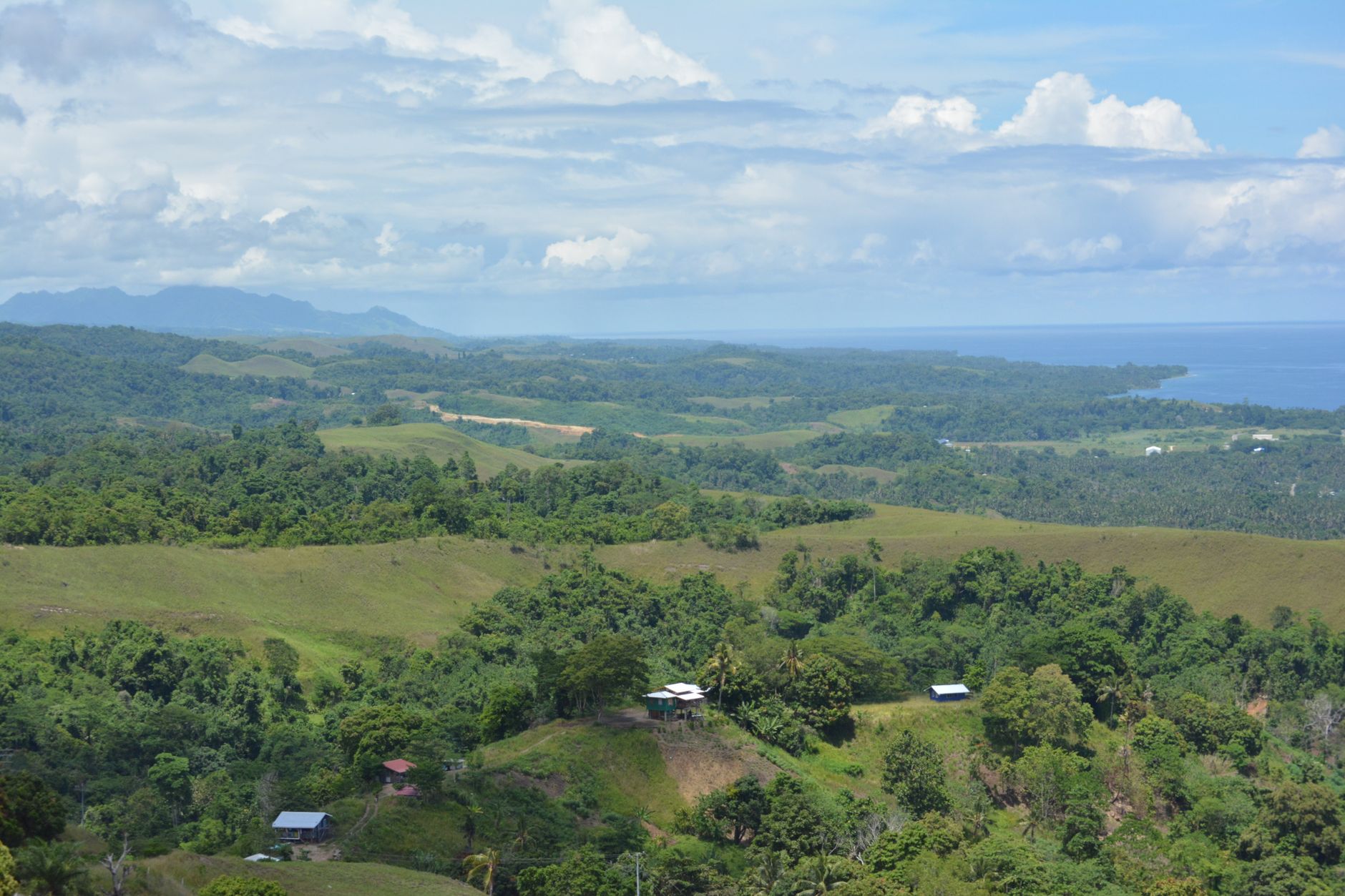
Vanuatu sits in the southwest Pacific, but it does not behave like a single beach destination. In Port Vila, you can drink kava at dusk, hear Bislama, French, and English in one market lane, then drive 20 minutes to Erakor Lagoon or take a boat toward Lelepa Island and the story of Chief Roi Mata, the 17th-century ruler whose burial domain is now UNESCO-listed. This is a country shaped by fire and reef at the same time: black-sand shores on Ambrym, coral shallows off Efate, and villages where kastom still governs land, rank, and ceremony with more force than any tourism slogan ever could.
Then the geography starts showing off. On Tanna, Mount Yasur throws red sparks into the night from a crater you can reach on foot. Around Luganville on Espiritu Santo, divers descend through the SS President Coolidge while inland roads lead to electric-blue spring pools like Nanda Blue Hole and powder-white arcs such as Champagne Beach. Pentecost still stages the land-diving ritual that inspired bungee jumping, and Malekula keeps some of the most tradition-rooted village culture in the archipelago. Come between May and October for steadier weather, but come prepared for distances, patchy infrastructure, and a country that rewards curiosity more than speed.
Lapita Beginnings, c. 1100 BCE-1600 CE
A burial ground at Teouma, on Efate, gives the game away. Three thousand years of rain and roots could not erase the care with which the dead were laid out there: pottery with fine-toothed patterns, turtle shells under a body, skulls removed and placed elsewhere as if the conversation between living and dead had not ended at death.
Ce que l'on ignore souvent, c'est que Vanuatu begins not with a European flag but with one of the boldest sea crossings in human history. The Lapita navigators reached these islands by reading stars, swells, birds, and cloud light over open water, then left behind ceramics so precise that archaeologists can follow their route like a signature across the Pacific.
Over the centuries, the archipelago turned into a mosaic of fiercely local worlds. On Malekula, on Pentecost, on Ambrym, rank was not simply inherited; it had to be earned through ceremonies, feasts, and the sacrifice of tusked pigs whose curved ivory still feels like condensed prestige. Power had weight. It could be counted in bodies fed, alliances made, and ritual debts settled.
Then came one of the great names in Pacific memory: Chief Roi Mata, who ruled in central Vanuatu in the early seventeenth century. Oral tradition said he ended wars, and when Jose Garanger excavated his burial near Lelepa Island, he found not a legend dissolved by time but a grave arranged with terrible dignity, where companions had followed their ruler into death. That idea of sacred authority would haunt every outsider who tried to rule these islands after him.
Chief Roi Mata survives not through a portrait but through a grave, a taboo, and a memory so exact that archaeology arrived four centuries late and still found him waiting.
At Teouma, one woman's body was buried with two adult male skulls where her own head should have been, suggesting that ancestors' skulls were kept, exchanged, and revered rather than left to rest.
Encounters and Misreadings, 1606-1887
On 3 April 1606, Pedro Fernandez de Quiros dropped anchor at Espiritu Santo and believed, quite sincerely, that Heaven had rewarded him with the great southern continent. He named his discovery Austrialia del Espiritu Santo, founded a settlement he called New Jerusalem, held Mass, and dreamed of a Catholic empire at the edge of the world.
The scene has everything Stephane Bern loves: ceremony, vanity, and the first crack in the performance. Quiros was part mystic, part court petitioner, intoxicated by titles and divine signs; his officers, less lyrical, saw sickness, confusion, and rising tension with local communities. Within weeks the grand project was fraying, and the promised continent had shrunk into a dangerous misunderstanding.
A century and a half later, James Cook arrived and renamed the archipelago the New Hebrides, folding it neatly into a British frame. Neat on the map, not at all neat on the ground. The islands were never empty stages for European ambition, and every landing depended on negotiation, fear, exchange, and, at times, outright violence.
What followed in the nineteenth century was not one clean conquest but a scramble of missionaries, sandalwood traders, recruiters, and settlers. Men were taken into the labour trade known as blackbirding, especially to Queensland plantations; villages lost sons to contracts that often smelled of kidnapping. By the time London and Paris decided to impose order, the New Hebrides had already learned what foreign appetites could cost.
Pedro Fernandez de Quiros wanted to found a holy empire in Espiritu Santo; instead he left behind one of history's more magnificent colonial misreadings.
Quiros created a chivalric order on the beach itself, the Knights of the Holy Spirit, before he had managed to secure the colony's food, discipline, or peace.
The Condominium, 1887-1980
Few colonial arrangements have been so absurd, or so revealing, as the Anglo-French Condominium imposed on the New Hebrides. From 1906 onward, Britain and France governed the same islands side by side, each with its own police, schools, courts, prisons, and bureaucracy, while the Ni-Vanuatu had little reason to find the arrangement amusing. It was called the Pandemonium by those who had to live in it.
Ce que l'on ignore souvent, c'est how intimate colonial rivalry became. In Port Vila, a family might move between French and British institutions depending on language, religion, business, or pure necessity, while outside the capital the real struggle was over land. European planters wanted coconut estates; Presbyterian and Catholic missions wanted souls; island communities wanted to remain on the ground that held their ancestors.
Then came the movements that colonial officials dismissed as superstition and underestimated at their peril. On Tanna, the John Frum movement gathered force from the late 1930s, mixing anti-colonial feeling, spiritual expectation, and a refusal to accept that European ways were the only route to dignity. During the Second World War, when tens of thousands of American troops passed through Efate and Espiritu Santo, locals saw mountains of cargo, Black soldiers in uniform, and a world order that made the old colonial pecking order look suddenly flimsy.
By the 1970s, the house was cracking. Walter Lini and other independence leaders pushed toward self-government, while on Espiritu Santo the Nagriamel movement led by Jimmy Stevens turned land rights into rebellion. Independence, when it came, would not be a polite handover. It arrived through argument, fracture, and the question every empire postpones until too late: who truly owns the future of a place like this?
Walter Lini, an Anglican priest with a calm voice and hard political instincts, turned the dream of independence into a disciplined national argument.
Under the Condominium, the British and French even kept separate prison systems, a bureaucratic farce in which the same colony could punish people under two different imperial logics.
Independence and the Republic, 1980-Present
On 30 July 1980, the Republic of Vanuatu was born. The timing was dramatic enough already, but history added one last flourish: the new state emerged while the Santo rebellion still smouldered, with foreign meddling, local grievances, and fresh nerves everywhere. Nationhood did not arrive in a polished case. It arrived while people were still arguing over who had the right to speak for the islands.
Walter Lini became the first prime minister and gave the country a moral vocabulary that still echoes: Melanesian socialism, non-alignment, and a fierce defense of decolonization abroad. Grace Mera Molisa, poet and parliamentarian, insisted that independence without women was only half a revolution. Their Vanuatu was not meant to be a postcard republic. It was meant to be politically awake.
And yet the old powers never vanished. Cyclones tore through the islands; volcanic ash drove evacuations on Ambae; earthquakes reminded everyone that this country stands on one of the liveliest seams of the Pacific Ring of Fire. In Port Vila, governments rose and fell with exhausting speed, while on Tanna Mount Yasur kept throwing red light into the night as if the earth itself wanted a say in public affairs.
What endures is a country that never became simple. Bislama binds together extraordinary linguistic diversity, kastom still shapes authority from Malekula to Ambrym, and places like Lelepa Island keep memory anchored in older sovereignties than any parliament. The next chapter of Vanuatu, as ever, begins with that tension: a modern republic built across islands that have never forgotten their own names.
Grace Mera Molisa gave the young republic one of its sharpest consciences, writing with such force that politics could not pretend women were standing politely at the edge of the room.
When Cyclone Pam struck in 2015, the parliament building in Port Vila lost its roof, an image almost too perfect for a country whose institutions are often tested by weather as much as by politics.
In Vanuatu, language is not a tool. It is a weather system. A woman in Port Vila may sell you mangoes in Bislama, quote a school rule in English, answer her aunt in French, then turn and use the island language that tells everyone exactly where her people belong.
That changes the air of every conversation. Words do not merely carry meaning here; they carry reef, kin, church, school, and old obligations, and the listener hears all of it at once, which is why a greeting matters before any question and why a raised eyebrow can mean yes with more elegance than a speech.
Bislama is the great social bridge, but it never behaves like an empire. It joins without erasing. A country with more than a hundred Indigenous languages has made multilingualism feel less like achievement than table manners.
Vanuatu eats by wrapping the world before consuming it. Lap lap arrives in leaves, tuluk travels in leaves, simboro steams in leaves, and the act of unwrapping becomes part of appetite, like opening a gift that smells of cassava, wood smoke, and coconut cream.
The old grammar of the meal remains root crop, flame, patience. In Port Vila, a baguette can appear at breakfast because the condominium left crumbs that never vanished, yet by dusk the serious tastes return: taro, island cabbage, fish in lolo, and kava waiting at the edge of the evening like a dark clause.
Food here has rank. Yam can be ceremony. Coconut crab, when lawful and offered, is not a stunt but a declaration that abundance has chosen your table. A country is a table set for strangers.
Vanuatu politeness has no interest in performance. Nobody needs your grin at full voltage. People greet first, pause first, and allow the other person to arrive fully before business begins, which can feel almost luxurious if you come from a culture that treats human contact as a delay.
The lesson becomes strict in a nakamal. You do not stride in as if entering a beach bar. You sit, you drink the kava in one motion, you let the numbness spread through the mouth and the silence spread through the group, and only then do you understand that conversation here is not poor in words; it is rich in permission.
Loudness looks childish. Hurry looks rude. On Tanna and Ambrym, where kastom still orders much of social life, this becomes more than manners. It becomes evidence that you know other people are real.
Religion in Vanuatu is not a clean replacement story in which Christianity arrives and everything earlier retires with dignity. The church bell rings. Kastom remains. On one island you hear a hymn carried in four-part harmony; on another you hear of tabu places where permission is older than any mission house.
That doubleness gives the country its voltage. At Lelepa Island, the memory of Chief Roi Mata still shapes conduct around the land and the dead. On Pentecost, ritual can involve bodies, vines, and gravity with a seriousness that makes imported theology look almost verbal.
And then there is the volcano. On Tanna, Mount Yasur is not merely geology with a ticket booth. Fire has always attracted reverence because it behaves like a god with poor impulse control.
Music in Vanuatu does not wait for a stage. It begins on verandas, in yards, after church, near the market, beside a bottle, after kava. String band music can sound light at first hearing, almost casual, until you notice how neatly it carries history: island melody, mission harmony, Pacific drift, and the calm insistence of voices used to singing together.
Choirs matter here. So do hymns. Christianity brought forms that Ni-Vanuatu singers quietly made their own, giving them a softness and swing that turn doctrine into something bodily, a matter of breath more than argument.
In Port Vila, recorded reggae pours from phones and minibuses. In Luganville, the same rhythm may drift past a stall selling tuluk. The archipelago understands that a borrowed beat is still yours once it has passed through enough mouths.
Vanuatu art often begins in gesture rather than object. Sand drawing, recognized by UNESCO, looks fleeting enough to be accidental: one finger, one continuous line, a pattern appearing on the ground as if the earth had briefly decided to think aloud.
But the line is never only a line. It can be diagram, story, map, memory device, teaching tool, signature of belonging. The brilliance lies in its refusal to separate beauty from use, which is a distinction many museums adore and many cultures wisely ignore.
Elsewhere the art grows heavier. On Ambrym, carved slit drums stand like dark witnesses, half instrument and half ancestor. On Malekula, ceremonial objects still carry the aftertaste of rank, exchange, and death. Decoration is the wrong word. Presence is closer.
Tanna and Ambrym offer something rare: active volcano landscapes you can experience without expedition logistics. Mount Yasur, especially at night, turns geology into theatre.
Off Luganville, the SS President Coolidge is one of the great accessible wreck dives on earth. Even non-divers feel the island's WWII history in the old airstrips, relics, and stories.
Espiritu Santo pairs coral coast with inland springs so blue they look edited. Nanda Blue Hole and Champagne Beach make the case in a single day.
On Pentecost, the Naghol land dive is still a ritual, not a performance invented for cameras. Across Malekula and outer islands, rank, exchange, and taboo still shape daily life.
Vanuatu's real evening ritual happens in the nakamal. In Port Vila, the light fades, the chatter drops, and a shell of peppery kava tells you more about the country than any cocktail menu will.
12 cities — start with the ones we'd send you to first.
The capital spreads around a horseshoe bay where French baguettes, Chinese hardware shops, and nakamal kava bars occupy the same block, and the fish market at the waterfront opens before dawn.
Espiritu Santo's only town is a single long street of corrugated-iron shopfronts where WWII American surplus once sold for scrap and the SS President Coolidge lies 20 minutes offshore in 21 metres of water.
The entire southern island is organised, emotionally and logistically, around Mount Yasur — a crater you can stand on the rim of at night while lava bombs arc overhead in near-silence.
On Espiritu Santo's northeast coast, a crescent of white sand backs onto jungle so dense it reads as a wall, and the water is the specific shallow turquoise that makes every photograph look implausible.
A circular freshwater pool fed by underground springs in Santo's interior, ringed by tree roots and so intensely blue it looks artificially lit even at noon.
A black volcanic island with two active craters — Marum and Benbow — where the ground radiates heat underfoot and the local tradition of slit-drum carving and 'black magic' kastom runs uninterrupted.
The second-largest island holds some of Vanuatu's most intact grade societies, where pig-tusk ceremonies still determine a man's social rank and outsiders are guests, not audience.
Every April through June, men on the island's southern end climb rickety 30-metre towers and dive headfirst with only liana vines tied to their ankles — the ritual called Naghol that bungee jumping plagiarised and simpli
A small island off Efate's northwest coast where archaeologist José Garanger excavated the mass burial of Chief Roi Mata in 1967, confirming 400-year-old oral tradition in bone and prestige goods.
Port Vila is where Vanuatu feels most mixed: market produce, French bread, minibus horns, kava at dusk, and the country's easiest logistics. Beyond town, Efate softens into lagoons, reefs and village coastline, with Lelepa Island carrying the weight of Chief Roi Mata's memory rather than just another day-trip label.
Luganville is practical rather than pretty at first glance, then Santo starts showing off. This is the island of blue holes, WWII wreck lore, broad beaches and enough freshwater swimming spots to make you rethink what a tropical holiday is supposed to look like.
Tanna is Vanuatu at full voltage: kava, ash, village roads and Mount Yasur throwing sparks into the dark. Travelers come for the volcano because it is one of the few on earth you can approach this closely, but the island stays with you because daily life feels so little arranged for outsiders.
Ambrym, Malekula and Pentecost sit in the part of Vanuatu where kastom is not a performance put on for visitors but a structure that still orders life. One island is known for active volcanoes and slit drums, another for masked traditions and grade-taking histories, and Pentecost for the land-diving ritual that predates bungee by centuries.
The Banks Islands and nearby Ambae are for travelers who know that remoteness is expensive, slow and often worth it anyway. Infrastructure thins out, weather matters more, and the reward is a version of Vanuatu that feels less edited: stronger local rhythms, fewer services, more sea and sky.
Vanuatu's history moves through migration, ritual authority, colonial absurdity, and a stubborn modern independence.
The first known settlers reach the islands by canoe, carrying pottery traditions, horticulture, and seafaring knowledge of astonishing precision. Vanuatu enters human history as part of the great Pacific expansion, not as an isolated afterthought.
Burials at Teouma on Efate preserve skull rituals, pottery, and bodily arrangements that still unsettle and fascinate archaeologists. The dead were not simply interred; they remained active within the social world of the living.
Across places later known as Malekula, Ambrym, and Pentecost, rank is earned through pigs, feasts, exchange, and ritual achievement. Authority depends on performance and wealth in tusks, not only on bloodline.
Oral traditions remember Roi Mata as the ruler who stopped wars across central Efate and nearby islands. His name survives with unusual force because memory, taboo, and burial all preserved his authority long after his death.
Spanish navigator Pedro Fernandez de Quiros anchors at Espiritu Santo and believes he has found the great southern continent. He names it Austrialia del Espiritu Santo and tries to found a colony wrapped in religious theater.
Cook charts the islands and gives them the name that British and French empires will carry into official use. It sounds tidy on a map; on the ground, the archipelago remains a web of distinct communities and languages.
Presbyterian and Catholic missions expand through the islands, bringing literacy, new moral codes, and deep social upheaval. Conversion is never just spiritual; it reshapes dress, marriage, authority, and land.
Recruiters take Ni-Vanuatu men to plantations in Queensland and elsewhere, sometimes by contract, sometimes by coercion dressed as recruitment. Families lose workers, communities lose trust, and the colonial economy shows its teeth.
Britain and France create a first shared mechanism to police their competing interests in the islands. It is an overture to the stranger arrangement still to come.
The New Hebrides become a colony ruled simultaneously by Britain and France, each with its own laws and institutions. It is one of empire's more bizarre inventions, and Ni-Vanuatu pay the price for its confusion.
A movement centered on kastom, prophecy, and resistance to colonial authority takes hold on Tanna. Officials see disorder; many islanders see dignity returning in a language the missions cannot control.
American forces build bases on Efate and Espiritu Santo, pouring in roads, cargo, uniforms, and new racial realities. For many Ni-Vanuatu, the war exposes how flimsy the old colonial hierarchy really is.
French archaeologist Jose Garanger confirms oral tradition with one of the Pacific's great archaeological discoveries. The excavation gives scholarly weight to what local memory had kept alive all along.
Lini and other leaders give independence politics an organized national form. The argument shifts from local grievance to the question of how a state made of many islands might speak with one voice.
On 30 July, the New Hebrides becomes Vanuatu. The birth of the republic is shadowed by the Santo rebellion, which means independence begins not with calm ceremony but with unfinished conflict.
Jimmy Stevens' Vemarana challenge on Espiritu Santo tests the authority of the new state at the very moment of its creation. Independence proves immediately that national unity will have to be negotiated, not assumed.
The new republic steps onto the international stage with a foreign policy far larger than its size might suggest. Anti-colonial solidarity becomes part of its identity, not a diplomatic accessory.
One of the country's fiercest writers and advocates moves deeper into formal politics, pushing Vanuatu to confront the gaps between independence rhetoric and everyday power. Her presence alters the tone of public debate.
Sites across Efate, Lelepa Island, and Artok gain World Heritage status, recognizing a cultural landscape held together by oral tradition, archaeology, and living taboo. Vanuatu's pre-colonial history receives global acknowledgment on its own terms.
One of the strongest storms in Vanuatu's recorded history tears through the archipelago, destroying homes, crops, and infrastructure. The disaster exposes both the country's vulnerability and the resilience of island communities.
Activity at Manaro Voui forces large-scale evacuations from Ambae, reminding the republic that geology still governs politics, budgets, and family life. In Vanuatu, the earth is never background scenery.
The European Union suspends visa-free access for Vanuatu nationals, linking a distant diplomatic decision to the country's controversial citizenship-by-investment policies. Even in the twenty-first century, sovereignty comes with external scrutiny.
Lapita Beginnings
Chief Roi Mata survives not through a portrait but through a grave, a taboo, and a memory so exact that archaeology arrived four centuries late and still found him waiting.
A burial ground at Teouma, on Efate, gives the game away. Three thousand years of rain and roots could not erase the care with which the dead were laid out there: pottery with fine-toothed patterns, turtle shells under a body, skulls removed and placed elsewhere as if the conversation between living and dead had not ended at death.
Ce que l'on ignore souvent, c'est que Vanuatu begins not with a European flag but with one of the boldest sea crossings in human history. The Lapita navigators reached these islands by reading stars, swells, birds, and cloud light over open water, then left behind ceramics so precise that archaeologists can follow their route like a signature across the Pacific.
Over the centuries, the archipelago turned into a mosaic of fiercely local worlds. On Malekula, on Pentecost, on Ambrym, rank was not simply inherited; it had to be earned through ceremonies, feasts, and the sacrifice of tusked pigs whose curved ivory still feels like condensed prestige. Power had weight. It could be counted in bodies fed, alliances made, and ritual debts settled.
Then came one of the great names in Pacific memory: Chief Roi Mata, who ruled in central Vanuatu in the early seventeenth century. Oral tradition said he ended wars, and when Jose Garanger excavated his burial near Lelepa Island, he found not a legend dissolved by time but a grave arranged with terrible dignity, where companions had followed their ruler into death. That idea of sacred authority would haunt every outsider who tried to rule these islands after him.
At Teouma, one woman's body was buried with two adult male skulls where her own head should have been, suggesting that ancestors' skulls were kept, exchanged, and revered rather than left to rest.
Encounters and Misreadings
Pedro Fernandez de Quiros wanted to found a holy empire in Espiritu Santo; instead he left behind one of history's more magnificent colonial misreadings.
On 3 April 1606, Pedro Fernandez de Quiros dropped anchor at Espiritu Santo and believed, quite sincerely, that Heaven had rewarded him with the great southern continent. He named his discovery Austrialia del Espiritu Santo, founded a settlement he called New Jerusalem, held Mass, and dreamed of a Catholic empire at the edge of the world.
The scene has everything Stephane Bern loves: ceremony, vanity, and the first crack in the performance. Quiros was part mystic, part court petitioner, intoxicated by titles and divine signs; his officers, less lyrical, saw sickness, confusion, and rising tension with local communities. Within weeks the grand project was fraying, and the promised continent had shrunk into a dangerous misunderstanding.
A century and a half later, James Cook arrived and renamed the archipelago the New Hebrides, folding it neatly into a British frame. Neat on the map, not at all neat on the ground. The islands were never empty stages for European ambition, and every landing depended on negotiation, fear, exchange, and, at times, outright violence.
What followed in the nineteenth century was not one clean conquest but a scramble of missionaries, sandalwood traders, recruiters, and settlers. Men were taken into the labour trade known as blackbirding, especially to Queensland plantations; villages lost sons to contracts that often smelled of kidnapping. By the time London and Paris decided to impose order, the New Hebrides had already learned what foreign appetites could cost.
Quiros created a chivalric order on the beach itself, the Knights of the Holy Spirit, before he had managed to secure the colony's food, discipline, or peace.
The Condominium
Walter Lini, an Anglican priest with a calm voice and hard political instincts, turned the dream of independence into a disciplined national argument.
Few colonial arrangements have been so absurd, or so revealing, as the Anglo-French Condominium imposed on the New Hebrides. From 1906 onward, Britain and France governed the same islands side by side, each with its own police, schools, courts, prisons, and bureaucracy, while the Ni-Vanuatu had little reason to find the arrangement amusing. It was called the Pandemonium by those who had to live in it.
Ce que l'on ignore souvent, c'est how intimate colonial rivalry became. In Port Vila, a family might move between French and British institutions depending on language, religion, business, or pure necessity, while outside the capital the real struggle was over land. European planters wanted coconut estates; Presbyterian and Catholic missions wanted souls; island communities wanted to remain on the ground that held their ancestors.
Then came the movements that colonial officials dismissed as superstition and underestimated at their peril. On Tanna, the John Frum movement gathered force from the late 1930s, mixing anti-colonial feeling, spiritual expectation, and a refusal to accept that European ways were the only route to dignity. During the Second World War, when tens of thousands of American troops passed through Efate and Espiritu Santo, locals saw mountains of cargo, Black soldiers in uniform, and a world order that made the old colonial pecking order look suddenly flimsy.
By the 1970s, the house was cracking. Walter Lini and other independence leaders pushed toward self-government, while on Espiritu Santo the Nagriamel movement led by Jimmy Stevens turned land rights into rebellion. Independence, when it came, would not be a polite handover. It arrived through argument, fracture, and the question every empire postpones until too late: who truly owns the future of a place like this?
Under the Condominium, the British and French even kept separate prison systems, a bureaucratic farce in which the same colony could punish people under two different imperial logics.
Independence and the Republic
Grace Mera Molisa gave the young republic one of its sharpest consciences, writing with such force that politics could not pretend women were standing politely at the edge of the room.
On 30 July 1980, the Republic of Vanuatu was born. The timing was dramatic enough already, but history added one last flourish: the new state emerged while the Santo rebellion still smouldered, with foreign meddling, local grievances, and fresh nerves everywhere. Nationhood did not arrive in a polished case. It arrived while people were still arguing over who had the right to speak for the islands.
Walter Lini became the first prime minister and gave the country a moral vocabulary that still echoes: Melanesian socialism, non-alignment, and a fierce defense of decolonization abroad. Grace Mera Molisa, poet and parliamentarian, insisted that independence without women was only half a revolution. Their Vanuatu was not meant to be a postcard republic. It was meant to be politically awake.
And yet the old powers never vanished. Cyclones tore through the islands; volcanic ash drove evacuations on Ambae; earthquakes reminded everyone that this country stands on one of the liveliest seams of the Pacific Ring of Fire. In Port Vila, governments rose and fell with exhausting speed, while on Tanna Mount Yasur kept throwing red light into the night as if the earth itself wanted a say in public affairs.
What endures is a country that never became simple. Bislama binds together extraordinary linguistic diversity, kastom still shapes authority from Malekula to Ambrym, and places like Lelepa Island keep memory anchored in older sovereignties than any parliament. The next chapter of Vanuatu, as ever, begins with that tension: a modern republic built across islands that have never forgotten their own names.
When Cyclone Pam struck in 2015, the parliament building in Port Vila lost its roof, an image almost too perfect for a country whose institutions are often tested by weather as much as by politics.
In Vanuatu, language is not a tool. It is a weather system. A woman in Port Vila may sell you mangoes in Bislama, quote a school rule in English, answer her aunt in French, then turn and use the island language that tells everyone exactly where her people belong.
That changes the air of every conversation. Words do not merely carry meaning here; they carry reef, kin, church, school, and old obligations, and the listener hears all of it at once, which is why a greeting matters before any question and why a raised eyebrow can mean yes with more elegance than a speech.
Bislama is the great social bridge, but it never behaves like an empire. It joins without erasing. A country with more than a hundred Indigenous languages has made multilingualism feel less like achievement than table manners.
Vanuatu eats by wrapping the world before consuming it. Lap lap arrives in leaves, tuluk travels in leaves, simboro steams in leaves, and the act of unwrapping becomes part of appetite, like opening a gift that smells of cassava, wood smoke, and coconut cream.
The old grammar of the meal remains root crop, flame, patience. In Port Vila, a baguette can appear at breakfast because the condominium left crumbs that never vanished, yet by dusk the serious tastes return: taro, island cabbage, fish in lolo, and kava waiting at the edge of the evening like a dark clause.
Food here has rank. Yam can be ceremony. Coconut crab, when lawful and offered, is not a stunt but a declaration that abundance has chosen your table. A country is a table set for strangers.
Vanuatu politeness has no interest in performance. Nobody needs your grin at full voltage. People greet first, pause first, and allow the other person to arrive fully before business begins, which can feel almost luxurious if you come from a culture that treats human contact as a delay.
The lesson becomes strict in a nakamal. You do not stride in as if entering a beach bar. You sit, you drink the kava in one motion, you let the numbness spread through the mouth and the silence spread through the group, and only then do you understand that conversation here is not poor in words; it is rich in permission.
Loudness looks childish. Hurry looks rude. On Tanna and Ambrym, where kastom still orders much of social life, this becomes more than manners. It becomes evidence that you know other people are real.
Religion in Vanuatu is not a clean replacement story in which Christianity arrives and everything earlier retires with dignity. The church bell rings. Kastom remains. On one island you hear a hymn carried in four-part harmony; on another you hear of tabu places where permission is older than any mission house.
That doubleness gives the country its voltage. At Lelepa Island, the memory of Chief Roi Mata still shapes conduct around the land and the dead. On Pentecost, ritual can involve bodies, vines, and gravity with a seriousness that makes imported theology look almost verbal.
And then there is the volcano. On Tanna, Mount Yasur is not merely geology with a ticket booth. Fire has always attracted reverence because it behaves like a god with poor impulse control.
Music in Vanuatu does not wait for a stage. It begins on verandas, in yards, after church, near the market, beside a bottle, after kava. String band music can sound light at first hearing, almost casual, until you notice how neatly it carries history: island melody, mission harmony, Pacific drift, and the calm insistence of voices used to singing together.
Choirs matter here. So do hymns. Christianity brought forms that Ni-Vanuatu singers quietly made their own, giving them a softness and swing that turn doctrine into something bodily, a matter of breath more than argument.
In Port Vila, recorded reggae pours from phones and minibuses. In Luganville, the same rhythm may drift past a stall selling tuluk. The archipelago understands that a borrowed beat is still yours once it has passed through enough mouths.
Vanuatu art often begins in gesture rather than object. Sand drawing, recognized by UNESCO, looks fleeting enough to be accidental: one finger, one continuous line, a pattern appearing on the ground as if the earth had briefly decided to think aloud.
But the line is never only a line. It can be diagram, story, map, memory device, teaching tool, signature of belonging. The brilliance lies in its refusal to separate beauty from use, which is a distinction many museums adore and many cultures wisely ignore.
Elsewhere the art grows heavier. On Ambrym, carved slit drums stand like dark witnesses, half instrument and half ancestor. On Malekula, ceremonial objects still carry the aftertaste of rank, exchange, and death. Decoration is the wrong word. Presence is closer.
Roi Mata matters because he was remembered before he was excavated. Oral tradition called him the chief who ended wars, and when his burial was uncovered near Lelepa Island, the bones, ornaments, and ritual layout confirmed that memory with almost eerie precision.
Quiros arrived in Vanuatu convinced he had found the great southern continent and named it with baroque enthusiasm. He planted a colony, staged ceremonies, and misread the place so extravagantly that his failure became part of the islands' historical theater.
Cook gave the islands the name Europe would use for more than two centuries, but names are power, not innocence. His charts folded Vanuatu into an imperial geography that later traders, missionaries, and colonial officials would treat as permission.
Stevens was not a footnote to independence; he was one of its great complications. On Espiritu Santo he turned land, kastom, and anger at outside control into the Vemarana rebellion, forcing the newborn state to define itself under pressure.
Lini spoke softly, which made it easier to miss how hard his politics really were. He gave the republic its first ideological spine, tying independence at home to anti-colonial solidarity abroad and insisting that Melanesia did not need to borrow its dignity from Europe.
Molisa wrote as if words were tools meant to strike sparks. She pushed Vanuatu to look at the unfinished business inside freedom itself: women shut out of power, custom used selectively, and a nation too willing to praise itself before it had listened to all its citizens.
Garanger did something rare enough to feel almost miraculous: he treated oral tradition as evidence worth testing, then found it was right. His work around Efate and Lelepa Island helped turn Vanuatu's ancestral memory into one of the Pacific's most compelling historical proofs.
Whether John Frum was one man, several men, or a story sharpened by need hardly matters now. On Tanna, his name became a way of refusing missionary contempt and colonial control, a promise that dignity could come from one's own ground rather than from imported rules.
This is the short Vanuatu trip that still feels like Vanuatu rather than an airport transfer with a beach attached. Base yourself in Port Vila, take time for Erakor Lagoon, and cross to Lelepa Island for the landscape tied to Chief Roi Mata's story and the calmer side of Efate.
Espiritu Santo gives you the easiest mix of freshwater, reef coast and room to slow down. Start in Luganville, swim at Nanda Blue Hole when the light is high, then give Champagne Beach a full day rather than the rushed half-stop it often gets.
This route is for travelers who would rather hear ash under their boots than spend another afternoon by an infinity pool. Tanna brings Mount Yasur's nightly violence, Ambrym adds black sand and drum-carving traditions, and Malekula turns the trip toward rank systems, masks and village visits that need time and tact.
The northern islands ask for patience, flight flexibility and a stronger tolerance for things not running on your clock. Pentecost brings the land-diving season in April to June, Ambae adds volcanic drama, and the Banks Islands finish the trip with reefs, distance and the feeling of reaching the edge of the map.
Leaf parcel, market table, family feast. Hands, spoon, cassava, taro, coconut cream, fish or pork, slow chewing, little talking.
Street stall, bus stop, noon hunger. Cassava wrapper, meat filling, hot leaf in the hand, quick bite, shared bench.
Morning market, side dish, church gathering. Leaf peel, steam, coconut, root crop, fish beside it, fingers first.
Lunch with rice or manioc, often with family, often near water. Spoon through coconut sauce, bread or taro after, plate clean.
Ceremony day, village meal, elder table. Split, dip, pass, eat with fish or greens, no fuss.
Dusk ritual, men and women depending on place, silence after the shell. One swallow, no sipping, then darkness, numb tongue, low voices.
Breakfast or late snack. Warm leaf, sweet steam, coconut, small bites, children near, adults pretending restraint.





EU, UK, US, Canadian and Australian passport holders are generally visa-exempt for tourism, but the official wording on stay length is inconsistent. Plan on a 30-day entry unless you have written confirmation of longer, carry a passport valid for at least 6 months beyond your stay, and keep proof of onward travel handy.
Vanuatu uses the vatu (VUV, often written VT), and cash still runs the show once you leave Port Vila and Luganville. Tipping is not standard, VAT is 15%, and ATMs are limited to Efate and Espiritu Santo, so withdraw before heading to Tanna, Ambrym or Pentecost.
Most travelers arrive at Bauerfield International Airport in Port Vila, with some international service also reaching Pekoa Airport in Luganville. From Australia the most direct links are from Sydney and Brisbane; from North America and Europe, the usual routing is via Nadi, Brisbane or Noumea.
Inter-island travel depends on domestic flights, and schedules can change fast enough to wreck a tight plan. In Port Vila, shared minibuses with B plates cost about VT 150-500 for town trips; taxis have T plates, rarely use meters, and should be priced before you get in.
The dry season from May to October is the easier window: lower humidity, steadier seas and temperatures around 22-28C on Efate and Tanna. November to April is hotter, wetter and cyclone-prone, with January to March the riskiest period for flight disruption.
Mobile coverage is decent in Port Vila, Luganville and the main tourist corridors, then drops sharply on outer islands and coastal roads. Buy a local SIM or eSIM before you leave town, use WhatsApp for hotels and drivers, and do not expect reliable high-speed internet on Malekula, Ambrym or the Banks Islands.
Vanuatu is usually calm and low-crime by regional standards, but the real risks are natural: cyclones, earthquakes, rough seas and active volcanoes. Follow local advice around Mount Yasur and Ambrym, do not swim unknown currents after rain, and keep cash, water and a flashlight in case flights or ferries slip.
Withdraw in Port Vila or Luganville before you fly onward. Outer islands often run on cash only, and even places that accept cards may lose signal for hours.
Any site suggesting rail passes or train routes is wrong. Vanuatu has no rail network; inter-island travel is by plane or boat, and town travel is by minibus, taxi or arranged transfer.
Domestic flights shape the whole trip, especially for Tanna, Ambrym, Pentecost and the Banks Islands. Lock those in before you reserve boutique stays or dive days.
Markets will save you money fast. Lap lap, tuluk, fish and root crops cost far less than resort menus, and lunch is often the best value meal of the day.
Volcano access is never just a ticketed viewpoint. If guides or local authorities close Mount Yasur or restrict crater visits on Ambrym, treat that as the end of the discussion.
A greeting matters in Vanuatu more than polished small talk. Say hello before you ask for prices, directions or photos, and keep your voice down in nakamals.
Keep one change of clothes, medication, chargers and a torch in your hand luggage. Weather and aircraft rotations can easily turn a same-day hop into an overnight wait.
Explore Vanuatu with a personal guide in your pocket
Audio guides for 1,100+ cities across 96 countries. History, stories, and local insight — offline ready.

Usually no for short tourist stays, but the official stay length is not presented consistently across sources. Bring a passport valid for at least 6 months beyond your trip, an onward ticket, and plan around a 30-day initial entry unless immigration confirms more in writing.
Yes, more than many travelers expect once domestic flights and tours enter the picture. A careful budget trip can work around VT 8,000-15,000 per person per day, but mid-range travel with island flights often lands closer to VT 18,000-35,000.
July or August is the safest all-round bet for dry weather, easier sea conditions and smoother island-hopping. If you want fewer people and still decent weather, May, June and October are often smarter buys.
Only if you have a lot of time and a high tolerance for uncertainty. Boats and ferries exist, but flights are the reliable backbone between places like Port Vila, Luganville and Tanna.
Usually yes in day-to-day personal safety terms, but natural hazards matter more than street crime. Check volcanic advisories, cyclone forecasts and flight status before moving between islands, especially in the wet season.
Seven days is enough for one island plus a second short hop, while ten to fourteen days lets the country start opening properly. Anything shorter than four days is best spent on Efate alone instead of pretending you can 'do' the whole archipelago.
Yes in Port Vila and parts of Luganville, but not reliably beyond them. Carry cash for taxis, market food, village fees, smaller guesthouses and almost anything on outer islands.
Espiritu Santo is easier if you want swimming, beaches and diving, while Tanna is stronger if you want one unforgettable land-based experience. First-time travelers who only have a few days usually find Santo simpler; travelers chasing Mount Yasur know exactly why they are choosing Tanna.
Bring a Type I adapter, the same three-flat-pin style used in Australia and New Zealand. Power is typically 220-230V at 50Hz, so check hair tools and chargers before you pack them.
Last reviewed