Plan and listen to Holy Assumption Cathedral Church with Audiala.
Audio guide in your pocket, itinerary in your browser. Built for the way you actually visit.
Introduction
The Holy Assumption Cathedral Church, also known as the Cathedral of the Dormition of the Mother of God or Uspensky Cathedral, stands as a spiritual and cultural beacon in Tashkent, Uzbekistan. As the principal Orthodox Christian cathedral in the country, it combines striking Russian neoclassical architecture, a deep-rooted spiritual heritage, and a history marked by resilience and renewal. Strategically located near major city landmarks such as Mirabad Market and the Central Railway Station, the cathedral is both easily accessible and essential for anyone exploring Tashkent’s historical sites.
This comprehensive guide offers detailed insights into the cathedral’s history, architectural evolution, religious and cultural significance, practical visitor information, and nearby attractions. For additional resources, refer to the Central Asia Guide, Visit Silk Road portal, and Uzbekistan Travel.

Historical Background
The origins of the Holy Assumption Cathedral trace back to the 1860s, coinciding with Russian imperial expansion in Central Asia. Initially established near a military hospital and cemetery, it was known locally as the “Hospital Church.” By 1878, with a growing Russian community, a larger church was constructed thanks to the efforts of local leaders such as Governor-General and merchant Dmitry Zokho (trvlland.com). The cathedral has since served as the seat of the Tashkent and Uzbekistan Diocese, weathering periods of closure and repurposing during the Soviet era, before being re-consecrated in 1958 (Visit Silk Road).
Architectural Evolution
Exterior Design
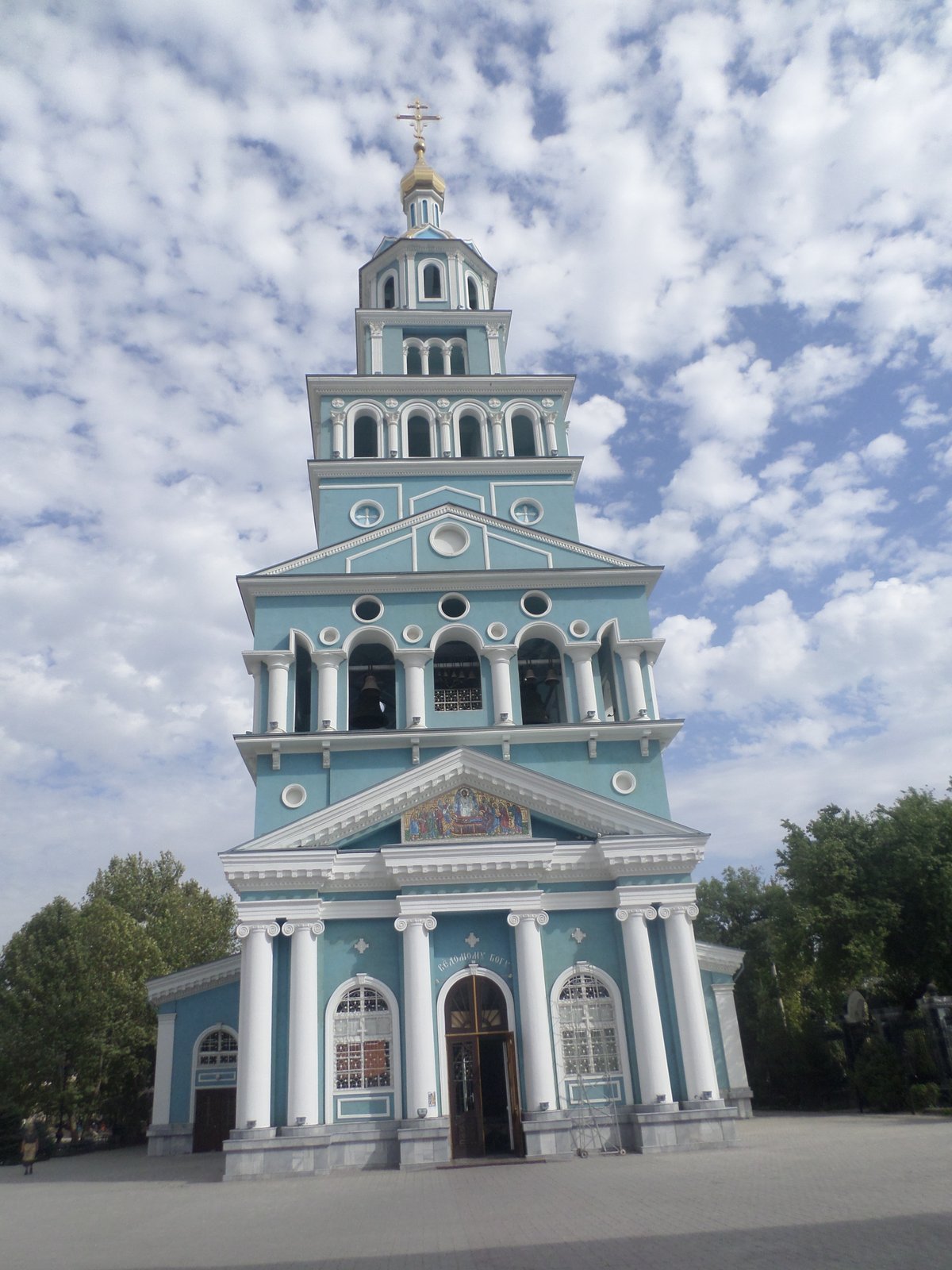
The cathedral is a prime example of Russian Orthodox neoclassical design, featuring a cross-in-square plan, blue and gold domes, and a grand triple-arched portico. The central gilded dome, symbolizing the heavens, is flanked by smaller domes and a five-tiered bell tower—reconstructed in 2010—that serves both liturgical and architectural functions (Uzbekistan1).
Interior Layout
Inside, the cathedral is characterized by soaring vaulted ceilings, luminous blue walls, and a multi-tiered chandelier. The iconostasis, separating the nave from the sanctuary, is a masterpiece of carved wood and gold leaf, adorned with icons of Christ, the Virgin Mary, and saints. Frescoes and painted panels depict scenes from the life of Christ and the saints, enveloping visitors in a sacred atmosphere (Uzbekistan1).
Sacred Relics and Complex Structures
The cathedral houses revered relics, such as fragments of the True Cross and relics from the Kiev-Pechersk Lavra. The complex also includes auxiliary chapels, a seminary, a separate baptismal font, and landscaped gardens with fountains and commemorative plaques.
Restoration Efforts
Ongoing renovations, particularly after challenges such as WWII and the Soviet era, have preserved the cathedral’s historical integrity while modernizing facilities. Notable projects include dome restorations, bell tower reconstruction, and fresco preservation (Uzbekistan1).
Religious and Cultural Significance
Spiritual Importance
Dedicated to the Dormition (Assumption) of the Mother of God, the cathedral is the focal point for major Orthodox feasts, especially the Dormition celebration on August 28, which attracts worshippers from across the region (Visit Silk Road). It hosts regular liturgies, sacraments, and serves as the administrative center for the Orthodox community.
Cultural Role
Beyond its religious function, the cathedral fosters intercultural dialogue by hosting festivals, charitable activities, and events that bring together the diverse communities of Tashkent. Its proximity to mosques and churches of other faiths underscores its role in promoting religious tolerance and cultural coexistence.
Visiting Information
Visiting Hours & Tickets
- Hours: Open daily from 9:00 AM to 6:00 PM (Monday–Friday), with liturgies at 9:00 AM and 5:00 PM. Hours may vary during religious holidays or special events.
- Entry Fee: Free admission for all visitors; donations are welcome to support maintenance and restoration.
Accessibility
- Physical Access: Ramps are available at the main entrance; assistance can be requested for visitors with limited mobility.
- Restrooms: On-site restrooms are available.
- Gift Shop: A small shop may offer religious items and souvenirs.
Dress Code & Etiquette
- Dress Modestly: Cover shoulders and knees. Women may be asked to cover their heads, especially during services.
- Behavior: Remain quiet and respectful, especially during ceremonies. Photography is allowed outside and in gardens; interior photography requires permission and is restricted during services.
Guided Tours & Special Events
- Guided Tours: Available in English, Russian, and Uzbek by appointment, offering detailed insights into the cathedral’s history and art.
- Events: Major Orthodox feasts feature additional liturgies and cultural programs.
Travel Tips and Nearby Attractions
Getting There
- Address: Avliyoota Street 91, Mirobod District, Tashkent
- By Car: Easily accessible from central Tashkent with parking nearby.
- By Public Transport: Buses No. 1 and No. 8 reach the Mirobod stop; the cathedral is a short walk away. The Alisher Navoi metro station is nearby, with taxis available for the final stretch.
- By Taxi: Ride-hailing apps like Yandex.Taxi are convenient and affordable.
Nearby Attractions
- Mirabad Market: A bustling local market for fresh produce and Uzbek goods.
- Central Railway Station: Tashkent’s main rail hub.
- Khast Imam Complex: An important Islamic heritage site.
- Alisher Navoi Opera and Ballet Theatre: A cultural landmark.
- Chorsu Bazaar: A traditional market with local crafts and foods.
- Other Religious Sites: Sacred Heart of Jesus Catholic Church and the Evangelical Lutheran Church.
Best Time to Visit
- Season: Spring and autumn offer pleasant weather.
- Time of Day: Late morning or early afternoon is optimal for sightseeing with fewer crowds.
Frequently Asked Questions (FAQ)
Q: What are the cathedral’s visiting hours?
A: Open daily from 9:00 AM to 6:00 PM. Hours may vary on holidays.
Q: Is there an entrance fee?
A: No, entry is free. Donations are appreciated.
Q: Are guided tours available?
A: Yes, by appointment in multiple languages.
Q: Is the cathedral wheelchair accessible?
A: Yes, with ramps and accessible facilities.
Q: Can I take photos inside?
A: Photography is permitted outdoors; interior photography requires permission.
Q: What should I wear?
A: Modest dress is required. Women may need to cover their heads during services.
Q: Can I attend services?
A: Yes, visitors are welcome at regular liturgies and major feasts.
Listen to the full story in the app
The whole Holy Assumption Cathedral Church,
told well.
Audio guides for 1,100+ cities across 96 countries. History, stories, and local insight — offline ready.
Verified, and shown.
Researched and written by the Audiala editorial team from historical records, architectural archives, and local expertise.
Researched from Wikidata, Wikipedia & official sources · fact-checked · How we make our guides →