Montevideo

Uruguay

Montevideo

Montevideo's 30 km Rambla turns the whole city into a waterfront walk. Come for Art Deco towers, candombe history, markets, and slow, salty evenings.

location_on 25 attractions
calendar_month Spring and autumn (October-November, March-April)
schedule 3-5 days

Introduction

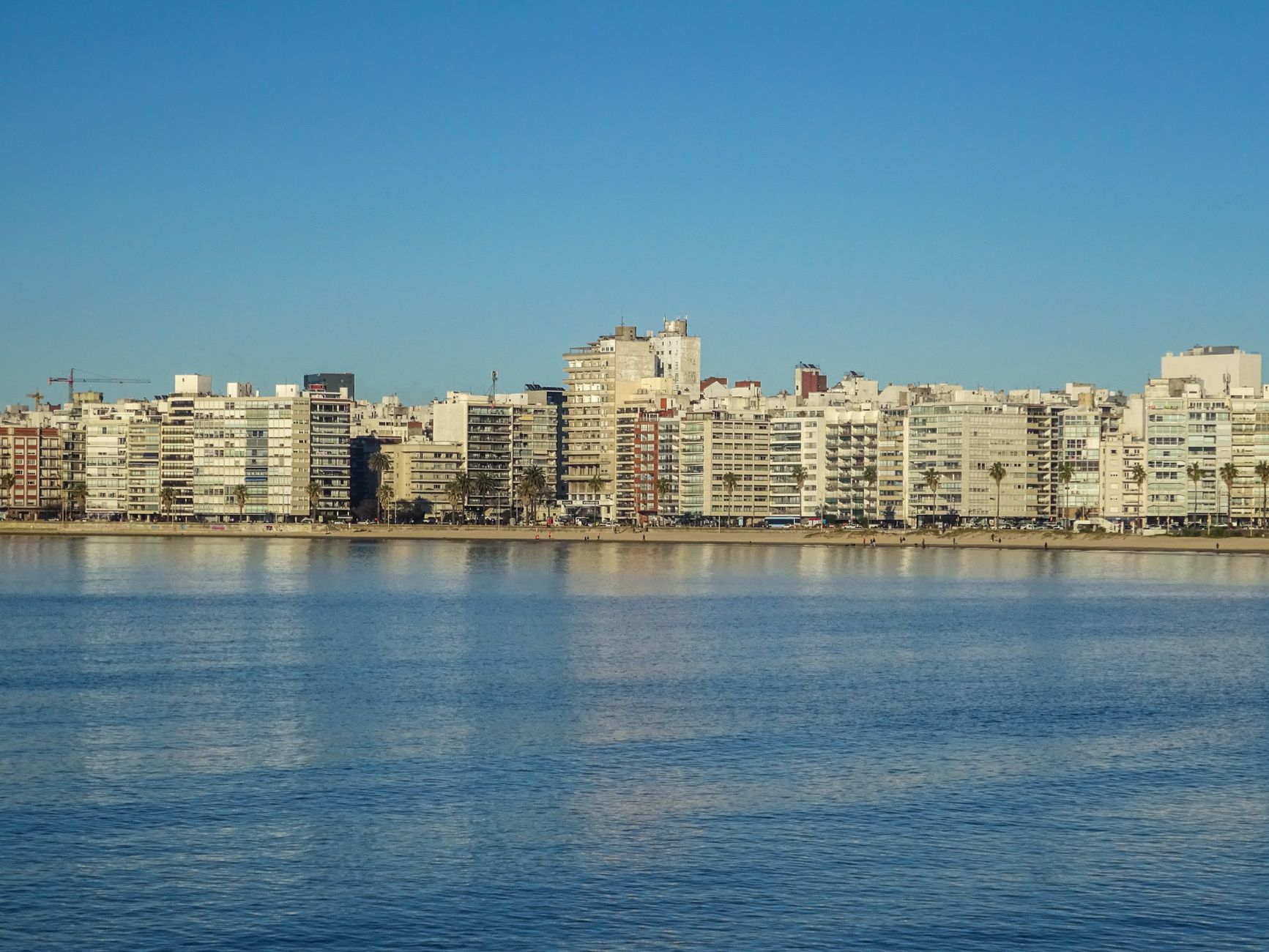
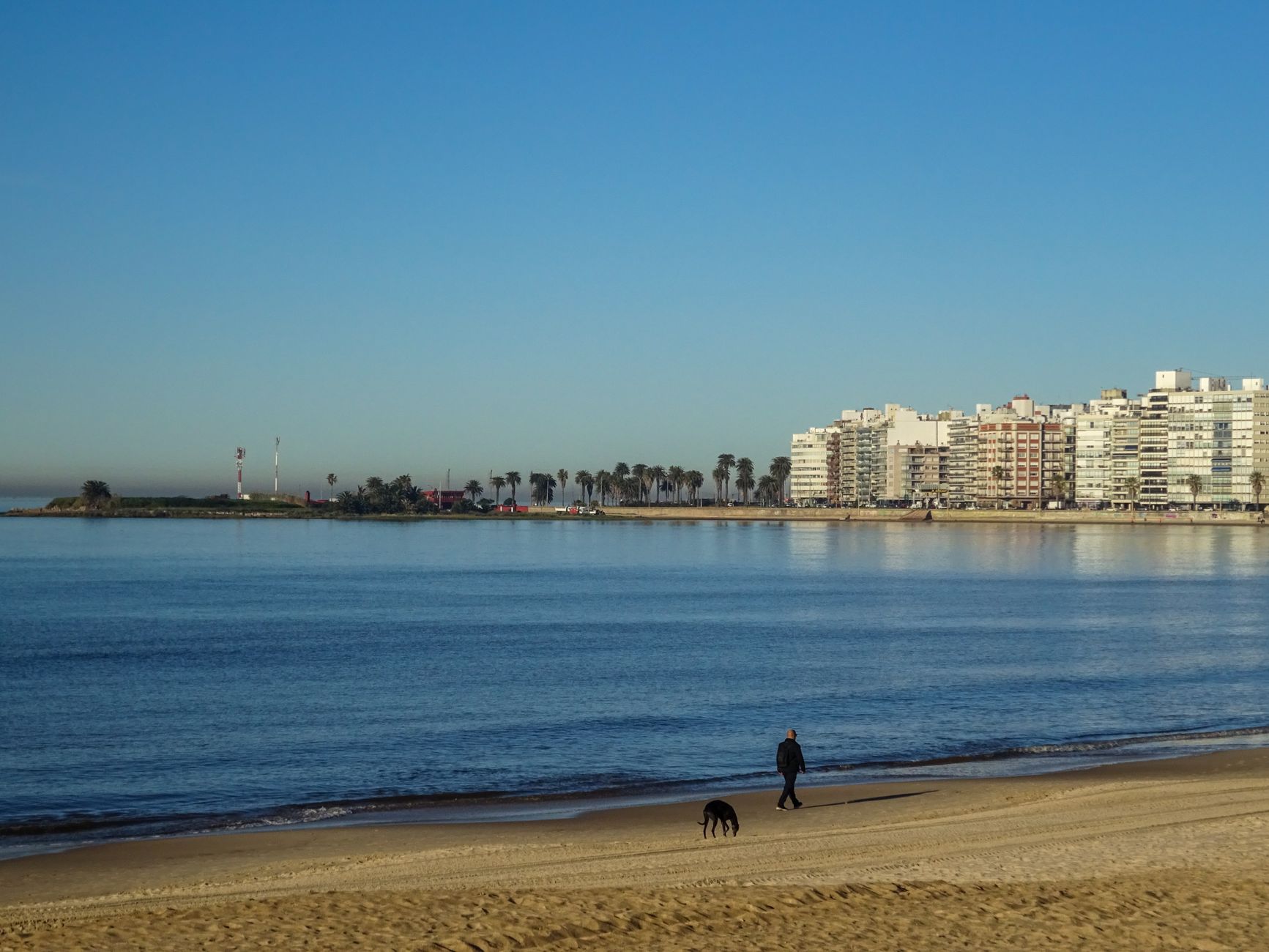
By sunset, the Rambla in Montevideo fills with people carrying thermoses under one arm and mate gourds in the other, all facing the wide brown shimmer of the Rรญo de la Plata as if it were a private ceremony. That riverfront runs 23 kilometers, longer than many cities can sustain without losing their nerve. Montevideo, Uruguay, surprises because it feels both capital city and seaside habit: part port, part park, part slow-burning cultural machine.

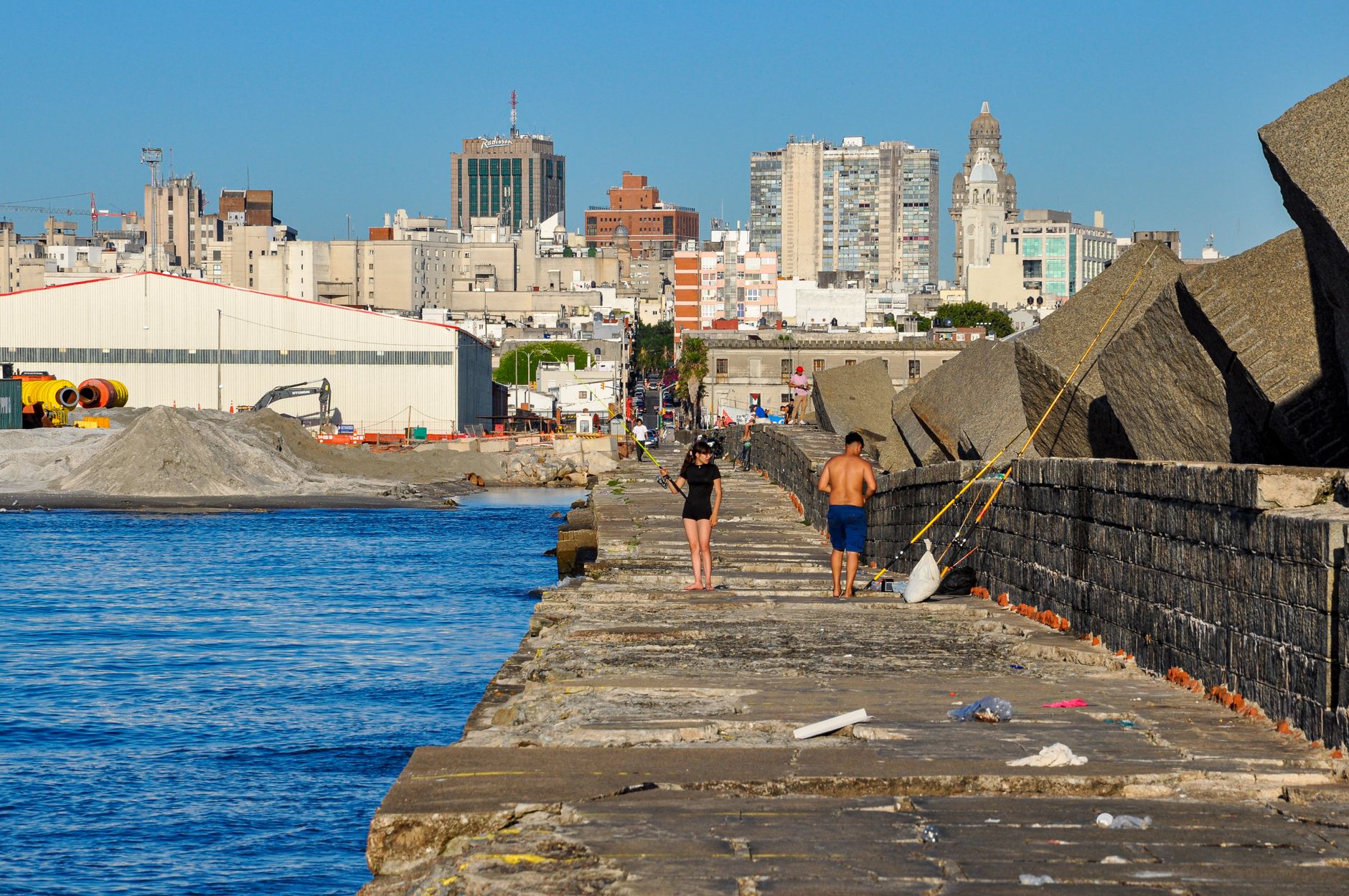
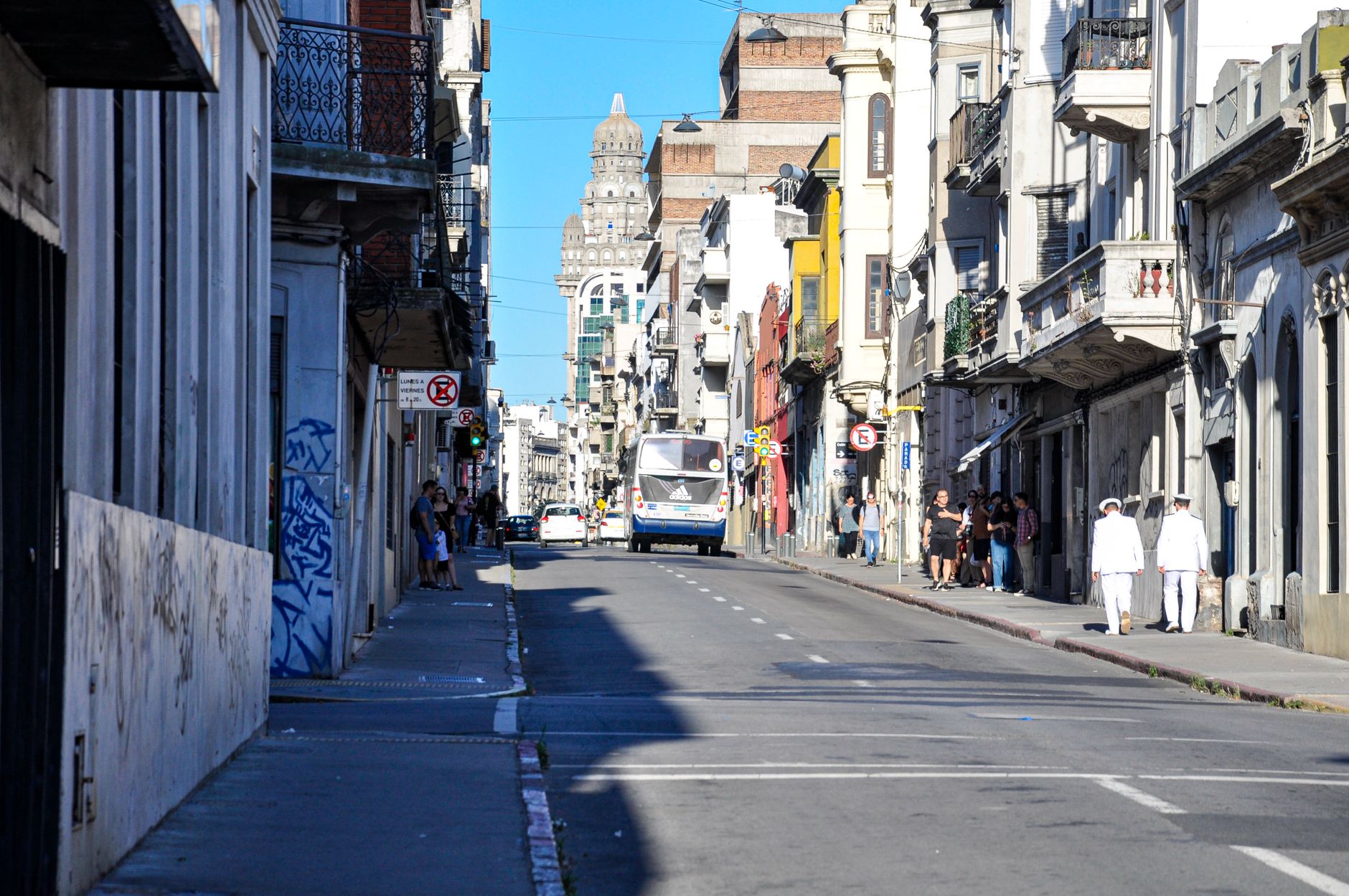
The old core still carries the weight of empire, but lightly. In Ciudad Vieja, you pass through the 1741 Puerta de la Ciudadela, cross Plaza Independencia under the watch of Artigas, and end up beneath Palacio Salvo, that 95-meter fever dream from 1928 that looks as if someone asked a lighthouse to become an apartment block. Montevideo likes buildings with personality disorders. Good for us.

What gives the city its pulse, though, isn't monumentality. It's the Sunday sprawl of Tristรกn Narvaja, the smell of grill smoke in old market halls, the rattle of candombe drums through Barrio Sur and Palermo, the hush inside the Museo de la Memoria, and the way dinner rarely feels urgent before 20:30. Montevideo doesn't sell itself hard. It assumes you'll notice.

That's why the city lingers. One day you're studying Joaquรญn Torres Garcรญa in a museum, the next you're watching skaters by the Holocaust Memorial, then climbing Cerro for a view that explains the whole place at once: low, open, wind-brushed, suspicious of grandeur yet full of it in pieces. Montevideo changes your sense of Uruguay too. This country is often described through beaches, beef, and football; the capital shows how much intellect, melancholy, and style sit underneath.

What Makes This City Special

A City Built Along the Rambla

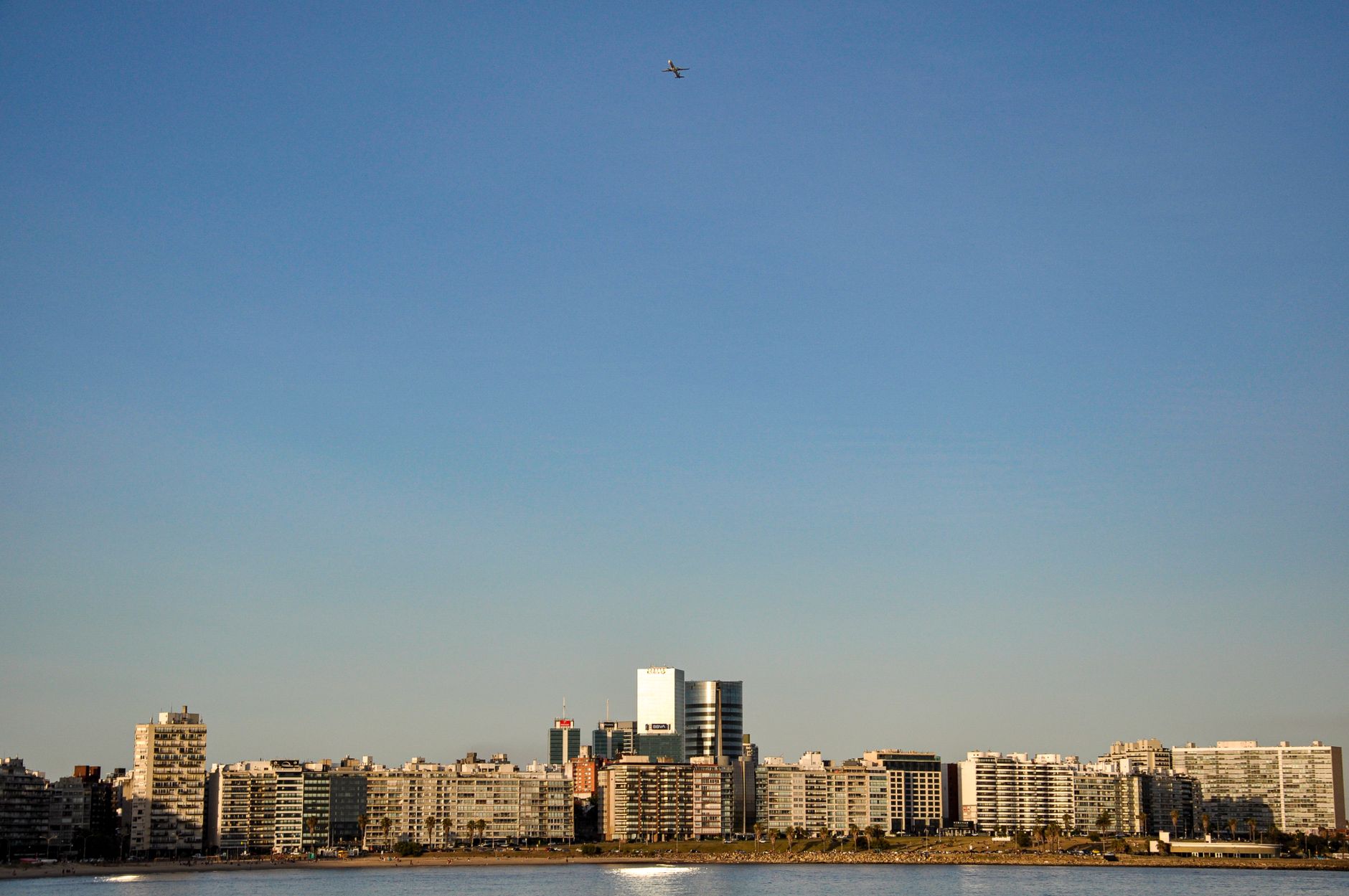
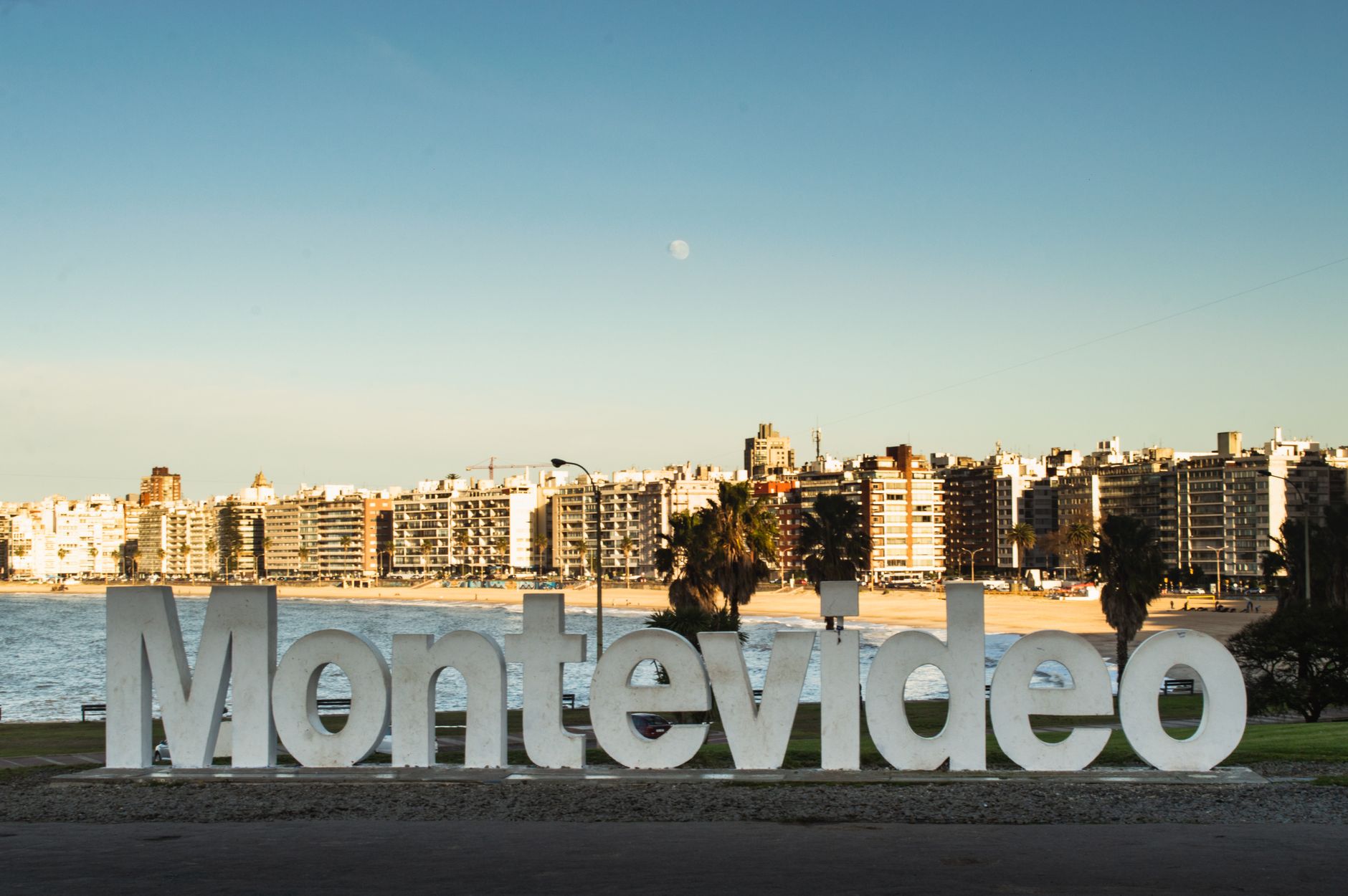
Montevideo stretches itself beside the Rio de la Plata for about 30 kilometers, and the Rambla is where the city exhales. You see cyclists, fishers, teenagers with mate gourds, and that long silver light at dusk that makes even apartment blocks look briefly poetic.

Layers of Stone and Concrete

Ciudad Vieja still carries the outline of the 18th-century fortified city, with the Puerta de la Ciudadela as its surviving threshold. Then the skyline jumps to 1920s ambition: Palacio Salvo, inaugurated in 1928 and rising 95 meters, still looks like Montevideo wanted to become a fever dream and nearly managed it.

Candombe Still Beats Here

Barrio Sur and Palermo are not museum pieces but the living ground of Afro-Uruguayan candombe, the drum tradition that shapes Montevideo's carnival and street sound. The Museo del Carnaval helps with context, but the real point is that this culture still belongs to neighborhoods, not display cases.

A Strong Art City in Disguise

Montevideo hides serious art behind a modest face: the Museo Nacional de Artes Visuales, Museo Torres Garcia, Museo Figari, and the prison-turned-contemporary venue Espacio de Arte Contemporaneo. The city rarely shouts about this. Better that way.

Historical Timeline

A Port Built Under Siege, Then Taught to Sing

From Indigenous ground on the bay to a capital of memory, football, and letters

public
1516

Solis Enters the Estuary

Juan Diaz de Solis sailed into the Rio de la Plata in 1516, giving the wider region its first securely documented European encounter. The bay that would become Montevideo was not an empty stage waiting for history to begin; Indigenous peoples already moved through these grasslands and shores, using them seasonally rather than building a dense city on the exact site.

swords
1724

Spain Seizes the Peninsula

On 20 January 1724, forces under Bruno Mauricio de Zabala pushed out a Portuguese garrison from the Montevideo peninsula. That date matters because the city began as a military answer to imperial anxiety: whoever held this bay could watch the estuary and threaten Buenos Aires.

gavel
1726

A City Is Drawn

Pedro Millan prepared the first census and urban grid on 20 December 1726, and 24 December is the date Montevideo usually commemorates as its foundation. The paperwork is messier than the anniversary suggests. Still, by then settlers from Buenos Aires and the Canary Islands had given the outpost a street plan, a population, and a name that stuck.

gavel
1730

Cabildo Takes Its Seat

The first Cabildo was installed on 1 January 1730, turning a guarded settlement into a town with civil authority. You can almost hear the shift: fewer shouted orders from soldiers, more ink scratching across legal records as property, trade, and municipal life took form.

castle
c. 1741

Walls Rise From the Mud

By around 1741, Montevideo's defensive walls and bastions were taking shape around the peninsula. Enslaved labor helped build them. The old city that visitors stroll today began as a hard-edged fortress, with stone and earth meant to keep cannons out and imperial control in.

person
1764

Artigas Is Born

Jose Gervasio Artigas was born in Montevideo in 1764, when the place was still a Spanish colonial port behind walls. His later break with empire gave the city its founding political myth, even if his relationship with Montevideo itself was never simple, warm, or stable.

church
1790

Cathedral Cornerstone Laid

The foundation stone for the current cathedral was laid in 1790 on Plaza Matriz, where the city had already learned how to gather and argue. Stone by stone, Montevideo gave itself a proper ecclesiastical face. The church that followed still catches the afternoon light with a kind of restrained colonial gravity.

church
1804

Cathedral Consecrated

Montevideo Metropolitan Cathedral was consecrated in 1804, just before the city entered a brutal stretch of war and siege. The timing feels almost rude: incense in the nave, then gun smoke in the streets a few years later.

swords
1807

British Troops Break In

Between January and February 1807, British forces besieged and captured Montevideo. The occupation lasted only until September, but it exposed the city's military value with embarrassing clarity: this fortified port could be taken, and whoever took it could rattle the whole estuary.

swords
1814

Spanish Rule Collapses

After the second siege and a naval blockade that choked supply lines, Governor Gaspar de Vigodet surrendered in 1814. Spanish power in Montevideo ended with hunger, pressure, and no elegant finale. The city stepped out of one empire only to face fresh occupations and new uncertainty.

gavel
1817

Luso-Brazilian Occupation Begins

On 20 January 1817, Luso-Brazilian forces occupied Montevideo and folded it into a different imperial project. The flag changed, the calculations changed, and the port remained the prize. Montevideo had learned a harsh lesson by then: independence in the Rio de la Plata rarely arrived in a straight line.

gavel
1828

Capital of a Buffer State

The Preliminary Peace Convention of 1828 created Uruguay as an independent state between larger rivals, and Montevideo became its capital. That diplomatic compromise shaped the city's temperament for generations. It was born from geopolitics, but it learned quickly how to turn survival into identity.

castle
1829

The Walls Come Down

Demolition of the old walls began in 1829, opening the city beyond its colonial core. Few urban acts say more. Montevideo stopped being a clenched fist on a peninsula and started spreading inland, toward boulevards, immigrant districts, and a future too large for bastions.

swords
1843

The Great Siege Begins

From 16 February 1843, Montevideo endured the Sitio Grande, a siege that lasted until 1851. The city held out behind defenses while much of the countryside aligned with Manuel Oribe. Hunger and fear were real, but so was stubborn commerce: ships still came, cafรฉs still argued, and the port kept the besieged capital alive.

palette
1856

Teatro Solis Opens

Teatro Solis opened on 25 August 1856 with Verdi's "Ernani," after years of interruption by war. Montevideo had barely emerged from siege and epidemic, yet it chose opera. That tells you something about the city: even under pressure, it wanted polish, debate, and a stage big enough for ambition.

local_fire_department
1857

Yellow Fever Cuts Through

Yellow fever tore through Montevideo in 1855 to 1857, killing around 3,400 people by contemporary counts. Port cities trade in movement, and disease always knows that first. The smell of the harbor, the crowding, the heat, the panic around sickrooms and burials: modernity could be merciless.

factory
1868

Mercado del Puerto Debuts

Mercado del Puerto opened on 10 October 1868 with ironwork fabricated in Liverpool, a piece of industrial Britain dropped beside the bay. The building still smells of smoke and meat. For all the tourist clutter around it now, the structure itself belongs to the age when Montevideo tied its fortunes to Atlantic trade and imported engineering.

palette
1874

Torres-Garcia Is Born

Joaquin Torres-Garcia was born in Montevideo in 1874, then returned in 1934 after long years in Europe. That return changed the city's artistic temperature. Through the Taller Torres-Garcia, Montevideo became a place where modernism spoke with a local accent instead of borrowing one.

castle
1909

Palacio Taranco Rises

Palacio Taranco was built between 1909 and 1910, a French-inflected mansion planted in Ciudad Vieja like an argument for elite refinement. Marble, ornament, formal rooms, imported taste. Montevideo at the turn of the century wanted Europe badly, and sometimes got it in limestone and silk.

music_note
1916

La Cumparsita Is Composed

Gerardo Matos Rodriguez wrote "La Cumparsita" in Montevideo in 1916, and it was first played the next year at La Giralda on the site where Palacio Salvo now stands. A city secret hides in plain sight there: beneath the tower's theatrical silhouette sits one of tango's origin points, born not in nostalgia but in a modern urban rush.

gavel
1925

Legislative Palace Opens

Palacio Legislativo was inaugurated on 25 August 1925 for the centenary of independence. The building is all marble, ceremony, and state confidence, the kind of architecture meant to make politics look permanent. Whether Uruguayan politics deserved that confidence every year after is another question.

castle
1928

Palacio Salvo Claims the Sky

When Palacio Salvo opened on 12 October 1928, its 95 meters made it the city's unmistakable vertical shout. Eclectic, slightly bizarre, impossible to ignore. Montevideo did not build many skyscrapers like New York or Buenos Aires, so this one tower had to carry the dream alone.

public
1930

World Cup at Centenario

Estadio Centenario opened on 18 July 1930 for the first FIFA World Cup, named for the centenary of Uruguay's constitution. Uruguay won the tournament in Montevideo, and football ceased to be mere entertainment. In this city it became memory, class story, national theatre, and sometimes secular religion with concrete terraces.

swords
1939

Graf Spee Off the Coast

After the Battle of the River Plate, the German warship Admiral Graf Spee entered Montevideo in December 1939 and was scuttled off the coast on the 17th. World War II touched the city in a strangely theatrical way: diplomacy on shore, damaged steel offshore, crowds watching history from the water's edge.

palette
1945

Generation of '45 Takes Over

From the mid-1940s, writers such as Juan Carlos Onetti, Idea Vilariรฑo, Mario Benedetti, and Ida Vitale made Montevideo unusually dense with literary argument. Cafรฉs, editorial offices, classrooms, and apartments became pressure cookers for criticism and style. Small city, fierce standards.

gavel
1973

Democracy Is Broken

The coup of 27 June 1973 pulled Uruguay into civic-military dictatorship, and Montevideo became the center of censorship, prison networks, exile, and resistance. The city changed register. Doors closed earlier, voices dropped lower, and ordinary streets acquired the heavy silence that fear leaves behind.

school
2007

Memory Gets a House

Museo de la Memoria opened in 2007 in the Prado, in a former estate built for dictator Maximo Santos. The irony is sharp and deserved. A place once tied to power now preserves evidence of repression, resistance, and the lives broken during the 1973 to 1985 dictatorship.

music_note
2009

Candombe Wins UNESCO Recognition

In 2009, UNESCO inscribed candombe as Intangible Cultural Heritage, explicitly grounding it in Montevideo's Barrio Sur, Palermo, and Cordon. That mattered because the drums were never folklore in a glass case. They came from Afro-Uruguayan communities shaped by slavery, exclusion, endurance, and nights when the rhythm carried down the block before you saw the parade.

palette
2015

A City of Literature

UNESCO named Montevideo a City of Literature in 2015, a title the city earned through writers rather than branding. Onetti's hard shadows, Benedetti's middle-class streets, Ida Vitale's precision, Galeano's political nerve: the place had been writing itself for decades before the certificate arrived.

local_fire_department
2022

Floodwater Swallows the Streets

On 17 January 2022, intense rainfall triggered severe flooding across Montevideo, described in reporting as unprecedented in the city's recent history. A port built to face the water found itself overwhelmed by it from above instead. Cars stalled, avenues turned to channels, and the old fact of climate became a very modern warning.
schedule
Present Day

Notable Figures

Jose Gervasio Artigas

1764โ€“1850 ยท Revolutionary leader
Born here

Artigas was born in Montevideo when it was still a Spanish colonial outpost, long before his name ended up carved into the city's civic stone. Today he lies beneath Plaza Independencia, and the setting feels right: traffic above, guards below, the republic still arguing in public.

Joaquin Torres Garcia

1874โ€“1949 ยท Painter and theorist
Born here

Torres Garcia returned to Montevideo after decades in Europe and treated the city as a place where modern art could be rebuilt from scratch, not imported second-hand. He would probably smile at how many visitors walk into his museum in Ciudad Vieja expecting a footnote and walk out seeing the whole city differently.

Pedro Figari

1861โ€“1938 ยท Painter, writer, and lawyer
Born here

Figari painted Montevideo's memory rather than its official portrait: dances, patios, Black social life, evenings thick with movement. His work still matters here because the city can seem reserved at first, and he reminds you how much rhythm has always been hiding under the surface.

Juan Manuel Blanes

1830โ€“1901 ยท Painter
Lived and worked here

Blanes gave Uruguay its grand historical images, the kind a young nation uses to see itself in heroic scale. Then you visit his museum in Prado, with its garden calm and domestic rooms, and the official painter suddenly feels less like marble and more like a man trying to pin a country in place before it changed again.

Jose Enrique Rodo

1871โ€“1917 ยท Essayist
Born here

Rodo was born in Montevideo and became one of Latin America's sharpest public intellectuals, suspicious of shallow materialism long before that complaint became routine. His name survives in Parque Rodo, but the better tribute is the city's habit of lingering over argument in cafes and on benches with a thermos under one arm.

Practical Information

flight

Getting There

Carrasco International Airport (MVD) is Montevideo's main airport, 18 kilometers from the center, with direct routes in 2026 to cities including Buenos Aires, Madrid, Miami, Panama City, Santiago, Lima, Bogota, Sao Paulo, and Rio. Official airport taxis run 24 hours from Arrivals, the shared shuttle sold through Aeroshop costs USD 13 one way, and buses are operated by CUTCSA, COPSA, COT, and Turismar. Montevideo has no passenger rail hub for intercity arrivals, so long-distance travel is mainly by road via Routes 1, 5, 8, and Interbalnearia.

directions_transit

Getting Around

Montevideo has no metro and no active tram system in 2026; the city moves by bus under the STM network. Current STM fares are UYU 52 for a 1-hour trip with card, UYU 78 for 2 hours, and UYU 64 cash for a 1-hour fare; the first standard STM card is free and the minimum top-up is UYU 100. Cycling works well along the Rambla and on the city's mapped ciclovias, bicisendas, and Zona 30 streets, especially in Ciudad Vieja.

thermostat

Climate & Best Time

Montevideo has a temperate, humid climate with four clear seasons. In 2026 planning terms, expect summer highs around 27 to 29 C from December to February, winter daytime temperatures around 13 to 16 C from June to August, and rain spread through the year, with April and October among the wetter months. March to April and October to November are the sweet spots for long walks, museum days, and evenings on the Rambla without midsummer heat.

translate

Language & Currency

Spanish is the working language of the city, and English is mostly limited to airports, bigger hotels, and the more polished end of the restaurant trade. The currency is the Uruguayan peso (UYU), though U.S. dollars are often accepted; Visa and MasterCard are widely used, and in 2026 foreign visitors still benefit from 0% VAT on hotels plus a full VAT reduction on restaurant spending when paying with eligible foreign cards, valid through 2026-04-30.

shield

Safety

Uruguay remains manageable for travelers, but Montevideo asks for urban habits rather than innocence. In 2026, official foreign-advisory language still warns about street crime, and the most repeated local caution is simple: avoid isolated stretches of downtown and the port area at night, especially on weekends, and take a radio taxi or app car back from Ciudad Vieja after dark. Emergency services use 911.

Tips for Visitors

directions_bus
Get an STM Card

Pick up an STM card if you'll use buses more than once. The first standard card is free, fares drop to UYU 52 for one hour instead of UYU 64 cash, and the transfer ticket lets you chain up to three buses within the time limit.

wb_sunny
Aim for Shoulder Season

October-November and March-April suit Montevideo best if you plan to walk a lot. Carrasco's official climate normals show mild temperatures then, while January and February run warmer and draw more beach traffic.

savings
Pay by Foreign Card

Use a foreign-issued debit or credit card in restaurants, bars, and hotels when you can. Non-residents currently get 0% VAT on lodging year-round and a full VAT reduction on restaurant spending through 2026-04-30.

restaurant
Skip Puerto at Peak

Mercado del Puerto is fun for the ironwork and grill smoke, but many travelers find it overpriced. For a less tourist-shaped meal, research points instead to Mercado Ferrando, Mercado Williman, or Casa Pastora.

nightlight
Use Taxis at Night

Street crime is the main practical concern, especially after dark. Avoid empty streets in the port and downtown areas at night and take a radio taxi or app taxi back instead of walking from Ciudad Vieja.

beach_access
Watch the Beach Flags

Montevideo's city beaches use a simple flag system in season: green means safe, yellow means caution, red means stay out of the water. Lifeguards operate on municipal beaches, but the flag tells you more than the sunshine does.

Explore the city with a personal guide in your pocket

Your Personal Curator, in Your Pocket.

Audio guides for 1,100+ cities across 96 countries. History, stories, and local insight โ€” offline ready.

smartphone

Audiala App

Available on iOS & Android

download Download Now

Join 50k+ Curators

Frequently Asked

Is Montevideo worth visiting? add

Yes, especially if you like cities that reveal themselves slowly. Montevideo has a 30 km waterfront, strong Art Deco and eclectic architecture, serious museums, and the lived rhythm of mate drinkers, Sunday markets, and candombe rather than a checklist of blockbuster sights.

How many days in Montevideo? add

Three to five days works well for most travelers. That gives you time for Ciudad Vieja, the Rambla, Prado, Parque Rodo, at least one art museum, and a slower Sunday morning at Feria de Tristan Narvaja or a half-day out to the Cerro.

Is Montevideo safe for tourists? add

Mostly yes, with ordinary big-city caution and a little more care at night. U.S. and UK travel advice both flag crime, and the UK guidance is blunt about avoiding isolated or poorly lit areas, especially downtown and the port area after dark.

How do you get around Montevideo without a car? add

Buses do the heavy lifting because Montevideo has no current metro or tram network for visitors. The STM system covers the city well, the official trip planner helps, and the Rambla plus several Zona 30 streets make walking and casual cycling easier than the traffic first suggests.

Is Montevideo expensive? add

Montevideo can feel pricier than some South American capitals, especially around the waterfront and tourist-heavy parrillas. You can keep costs down with STM buses, free viewpoints like the Intendencia mirador, and the current VAT breaks for non-residents paying by foreign card.

What is the best area to stay in Montevideo? add

Pocitos, Punta Carretas, and Parque Rodo strike the best balance for many travelers. Ciudad Vieja wins on atmosphere and old stone, but it gets quieter at night and works better if you know you want history first and nightlife second.

Can you walk along the Rambla in Montevideo? add

Yes, and you should. The Rambla runs about 30 km from Capurro to Carrasco, so you can treat it as a moving balcony over the Rio de la Plata rather than a single promenade, then hop on and off in neighborhoods that feel completely different.

What food should you try in Montevideo? add

Start with asado from a proper parrilla, then look for chivito, empanadas, and a glass of Tannat if you're curious about Uruguayan wine. Mercado del Puerto is the obvious place to smell wood smoke and sizzling fat, but smaller markets often feed you better for less.

Sources

Last reviewed: