Destinations

Uruguay

"Uruguay rewards travelers who prefer texture over noise: a small country where beach towns, colonial streets, hot springs, and gaucho country all sit within one sane itinerary."

location_city

Capital

Montevideo

translate

Language

Spanish

payments

Currency

Uruguayan peso (UYU)

calendar_month

Best season

Spring and autumn (October-November, March-April)

schedule

Trip length

7-10 days

badge

EntryVisa-free for many Western travelers up to 90 days

Introduction

A Uruguay travel guide starts with a surprise: South America’s quietest country may be its easiest, smartest, and most subtly addictive trip.

Uruguay does not overwhelm you on arrival. That is its trick. In Montevideo, the Río de la Plata throws silver light across long rambla walks, old port streets, and beach neighborhoods where people actually linger instead of performing leisure for the camera. Then the country keeps changing scale: Colonia del Sacramento folds Portuguese and Spanish street plans into one small riverside grid, while Punta del Este swings toward high-rise summer excess, yacht marinas, and late dinners that start when other places are closing. Few countries this compact let you move so quickly between worn elegance, resort polish, and riverfront history.

The best things to do in Uruguay depend on whether you want water, food, or silence. You can eat a proper chivito in Montevideo, soak in thermal waters around Salto and Paysandú in winter, or drive east toward Cabo Polonio, where the road gives up and 4WD trucks take over the dunes. Rocha keeps a wilder Atlantic edge, with long beaches, wind, and fewer polished surfaces. Inland, Minas and Tacuarembó open a different Uruguay: gaucho country, rolling grassland, roadside paradores, and a national identity built as much on cattle, mate, and understatement as on any postcard coast.

What makes Uruguay memorable is not spectacle but proportion. Distances are manageable, buses work, tap water is generally safe, and the country is calm without feeling bland. Summer brings crowds and sharp hotel prices, especially on the coast, but spring and autumn are close to ideal: warm days, room to breathe, and vineyards around Garzón and the Canelones region in motion. Travelers who arrive expecting a filler stop between Argentina and Brazil usually leave talking about texture instead: candombe drums in Montevideo, river sunsets in Colonia del Sacramento, and the rare pleasure of a place that never needs to raise its voice.

A History Told Through Its Eras

Before the republic, the dead were buried in towers of earth

First Peoples and Sacred Wetlands, c. 10000 BCE-1516

Morning mist hangs over the marshes of Rocha, and the ground rises in low rounded mounds that do not look dramatic until you understand what they are. Uruguay's oldest monuments are not churches or forts but the cerritos de indios, earthworks built, reused, and revered over thousands of years by communities who knew these wetlands intimately.

What many people miss is that this land was never the empty pasture later conquerors pretended to find. Archaeology around India Muerta and Laguna Merin shows settlements, burials, tools, pottery, and even careful human-animal relationships that suggest memory, ritual, and a patient shaping of the landscape.

No chronicler wrote their names. But the mounds speak anyway. Families returned to the same raised places generation after generation, burying their dead above flood level, marking kinship in earth rather than stone, and leaving behind a history older than any archive in Montevideo.

By the centuries before European contact, Charrua, Chana, Guenoa-Minuan, and later Guarani-speaking groups moved through this territory by river, lagoon, and grassland corridor. That matters, because the first European mistake about Uruguay was to confuse a landscape without castles for a landscape without history, and that misunderstanding shaped every conflict that followed.

The emblematic figures of this era are the unnamed mound-builders of eastern Uruguay, who left the country's first monumental architecture in packed earth and burial ritual.

Some burials in the eastern mounds included dogs laid beside humans, a detail so intimate it collapses ten thousand years in an instant.

A death on the riverbank, then two crowns fighting over contraband

Frontier of Empires, 1516-1811

The first famous scene in Uruguay's written history is brutal and theatrical. In 1516, Juan Diaz de Solis reached the Rio de la Plata and was killed soon after landing, reportedly in view of his ships, a warning from the shore before Spain had even learned what sort of country this was.

For two centuries, the territory remained more useful than settled. Cattle multiplied on open grassland, hides moved through illegal channels, and the real prize was position: whoever controlled this estuary could irritate Buenos Aires, tax trade, and watch the southern Atlantic breathe in and out.

That is why Colonia del Sacramento matters so much. Founded by the Portuguese in 1680 almost as an act of geopolitical insolence, it became a city of smugglers, diplomats, sieges, and changing flags, where one empire built and the other protested, then both traded anyway when profit was too tempting.

Spain answered by securing Montevideo between 1724 and 1726 under Bruno Mauricio de Zabala. Ce que l'on ignore souvent, c'est que Montevideo was born less from grand urban vision than from military anxiety: a harbor had to be held, a rival had to be watched, and the eastern bank had to stop slipping through imperial fingers. From that defensive decision came the city that would later imagine a nation.

Bruno Mauricio de Zabala, a cautious Basque governor rather than a romantic conqueror, founded Montevideo because empires are often made by anxious administrators.

Colonia del Sacramento changed hands so often that treaties in Europe redrew its fate before many residents could learn which king they were supposed to obey.

The horseman who refused a throne and the republic born between sieges

Artiguista Revolution and Fragile Independence, 1811-1870

Picture Jose Gervasio Artigas not in marble but on horseback, papers damp in a saddlebag, trying to hold together ranchers, militiamen, Indigenous allies, and frightened towns while the Spanish empire cracked around him. In 1811 his victory at Las Piedras gave the eastern province its revolutionary hero, but heroes in the Rio de la Plata are rarely rewarded with peace.

Artigas did not dream of a neat little buffer state. He wanted a federal order, provincial dignity, and less obedience to Buenos Aires. When pressure mounted, he led the Exodus of the Eastern People, a moving nation of carts, livestock, women, children, and armed men, the sort of episode that tells you more about a country than any declaration signed indoors.

Then came the trap of geography. Portuguese and then Brazilian ambitions pressed from one side, Buenos Aires from another, and local loyalties split into the Blancos and Colorados who would haunt Uruguayan politics for generations. Independence in 1828 was real, but it was also a compromise arranged because stronger neighbors found a small republic more convenient than a larger war.

The new state barely had time to breathe before Montevideo became the stage for the Great Siege from 1843 to 1851. Foreign volunteers arrived, Giuseppe Garibaldi passed through, and the city lived as a besieged capital facing an interior controlled by its enemies. Uruguay emerged sovereign, yes, but also marked by a painful truth: family names, party colors, and civil war had become almost the same thing.

Jose Artigas remains the national father precisely because he died in exile in Paraguay, defeated enough to look honest and grand enough to remain useful to everyone.

Garibaldi, future hero of Italian unification, once fought on Uruguayan waters under the flag of Montevideo.

Immigrants, electric light, and the small republic that dared to be modern

Batllista Republic and the Invention of Modern Uruguay, 1870-1950

By the late 19th century, the smell of civil war had not vanished, but a different country was taking shape in ports, schools, newspapers, and cafes. Montevideo filled with immigrants from Spain and Italy, the state grew confident, and the old frontier began to dress itself as a republic of laws, boulevards, and secular ambition.

The central figure was Jose Batlle y Ordonez, twice president and still hovering over the national story like a stubborn uncle who reorganized the household. Under his influence, Uruguay separated church and state, expanded public education, strengthened labor protections, and built a welfare-minded political culture so early and so boldly that outsiders began calling the country the Switzerland of America. A flattering phrase, but too tidy.

What many people miss is that this polished republic was never only parliamentary and respectable. Afro-Uruguayan candombe kept beating through Carnival in Montevideo, workers argued, newspapers fought, and social peace had to be built again and again, not announced once from a balcony.

Then came 1930, when Montevideo hosted the first FIFA World Cup and Uruguay won it in the Estadio Centenario. Sport became civic theater. A little nation of scarcely more than a million souls looked at itself in a stadium and saw proof that size could be answered by style, discipline, and nerve, an idea that would outlast the match and harden into national myth.

Jose Batlle y Ordonez was less a statue than a relentless editor of national life, convinced that a republic could be re-written through schools, laws, and public utilities.

The Estadio Centenario was built so quickly for the 1930 World Cup that workers raced winter rain and mud to finish a monument now treated almost like a secular cathedral.

From Maracana glory to prison cells, then back to the ballot box

Crisis, Dictatorship, and Democratic Return, 1950-present

On 16 July 1950, Uruguay defeated Brazil at the Maracana before a crowd so vast it has entered legend. Alcides Ghiggia said only three people had silenced that stadium: the Pope, Frank Sinatra, and himself. It was the perfect ending to one national story, which is usually how you know another, darker one is about to begin.

Economic strain, political violence, and repression sharpened through the 1960s and early 1970s. The Tupamaros embraced urban guerrilla tactics, the state answered with brutality, and in 1973 the armed forces imposed a civic-military dictatorship that censored, jailed, tortured, and taught Uruguay that even sober republics can lose their balance.

One prisoner became the emblem of that wound. Jose Mujica, held for years in harsh captivity, emerged from prison not polished but stripped down, with the plain speech of a man who had measured time by survival. When democracy returned in 1985, Uruguay rebuilt itself slowly, with investigations, silences, arguments, and the stubborn habits of voting, reading, and remembering.

That is the republic travelers encounter now, whether in Montevideo, Colonia del Sacramento, Salto, Paysandu, or Punta del Este: secular, argumentative, often understated, and more marked by history than its calm surface first suggests. The next chapter is still being written between old party loyalties, new social debates, and the enduring question of how a small country keeps its dignity beside giant neighbors.

Jose Mujica matters because he carried the memory of prison into the presidency without ever trying to look like a savior.

Mujica continued living on his modest farm outside Montevideo while president, with a three-legged dog and a Volkswagen Beetle that became almost as famous as he was.

The Cultural Soul

A Country of Two Syllables

Uruguay speaks in shortcuts that somehow contain whole moral systems. You hear "bo" in Montevideo and understand, within half a second, whether you are being summoned, teased, forgiven, or accused of minor foolishness. Then comes "ta," that miraculous monosyllable which means yes, enough, agreed, continue, stop complaining, life goes on. A language can reveal a people by what it allows them to omit. Uruguay omits bravado.

Río de la Plata Spanish lives here too, of course, with its "vos" and its music of Italian immigration, yet the Uruguayan version feels as if someone turned the volume knob one careful notch to the left. Buenos Aires declaims. Montevideo confides. Even the slang has a domestic quality: "gurí" for a child, "quilombo" for a mess, "macanudo" for a person who can be trusted with your house keys and your last cigarette.

What moves me is the economy. Uruguayans do not waste syllables because they do not waste intimacy. They will not perform warmth for strangers, which is a form of respect. Then one afternoon, perhaps over mate on a bench facing the Rambla in Montevideo, the reserve opens and the speech loosens, and you realize the country has been speaking softly so that you might earn the right to lean closer.

The Grammar of Fire and Milk

Uruguayan cuisine begins with cattle, wheat, and patience. This sounds severe. It is anything but. An asado here is not a meal; it is a long argument conducted over embers, with chorizo as prologue and ribs as thesis, while the smoke perfumes shirts, hair, and memory so thoroughly that you carry lunch into the evening like a second skin.

The national appetite has the candor of a country that does not believe food should apologize for existing. Pizza arrives with fainá laid on top, because one starch apparently felt lonely. Capeletis a la Caruso drown under cream, ham, mushrooms, and cheese with the solemnity of opera. The chivito, born in Punta del Este and perfected everywhere people understand hunger, stacks steak, ham, cheese, egg, bacon, lettuce, tomato, and mayonnaise into a sandwich so tall it stops being lunch and becomes an ethical test.

Then the bakeries undo you. Bizcochos in Montevideo are bought by weight, which is sensible because counting would only expose weakness. In Paysandú, postre Chajá pretends to be airy with meringue and peaches before landing with the sweet force of cream and dulce de leche. Uruguay knows a secret many refined nations forget: excess, when practiced with rigor, becomes elegance.

Drums That Refuse to Behave

If Uruguay has a heartbeat, it is not discreet. It comes with leather, wood, and procession. Candombe, shaped by Afro-Uruguayan communities in Montevideo, does not merely accompany the street; it reorganizes it. One drum proposes, another argues, a third settles nothing, and suddenly a whole block is walking differently.

The right place to understand this is not a museum panel but the barrios Sur and Palermo during Carnival season, when the llamadas turn the city into an instrument. You hear the cuerda de tambores before you see it. Balconies lean in. Children copy the rhythm with their shoulders. Old men stand still in the exact way that means they are full of memory. UNESCO may have recognized candombe in 2009, but official recognition always arrives late to living things.

Elsewhere the national soundtrack shifts rather than breaks. Tango exists here without asking Argentina for permission. Milonga survives in the interior with dust on its boots. And in Cabo Polonio, where the wind can sound like an animal working through an old grievance, silence itself becomes percussive. Uruguay understands rhythm as character: repetition, restraint, then one magnificent insistence.

Books Read with the Kettle On

Uruguay is too literate to advertise its literacy. That is one of its better manners. This is the country of José Enrique Rodó, of Idea Vilariño, of Juan Carlos Onetti, who wrote Montevideo as if the city were a cigarette burning down in a rainstorm and somehow made the result irresistible. Readers here do not treat books as decoration. Books remain part of the furniture of thought.

Onetti matters because he refused local prettiness. He gave the Río de la Plata its fatigue, its desire, its moldy upholstery, its hours that pass under weak light and still leave marks. Vilariño did something even crueler: she made emotional precision sound bare and inevitable, like a knife laid next to a plate. A small country often writes with either insecurity or vanity. Uruguay, on its best pages, writes with neither.

You feel this in Montevideo bookstores, where the shelves can move from poetry to political history to football memoir without any sense of category error. You feel it in Colonia del Sacramento too, where the postcard beauty of stone and river keeps running into sentences from the 20th century that know exactly how nostalgia can lie. A country is also its reading posture. Uruguay reads with one hand free for mate and the other ready to turn a page that may wound.

Reserve with a Thermos

Uruguayan etiquette is built on a principle I admire: affection should not be wasteful. People do not rush to occupy your air. They greet, they observe, they make room. Only a foolish visitor mistakes this for coldness. It is the opposite. It is a refusal to impose.

Mate explains almost everything. One person carries the thermos as if it were an organ. The gourd passes from hand to hand in a choreography of trust that is older than small talk and more honest than most forms of hospitality. You do not stir the bombilla. You do not wipe the straw with nervous foreign hygiene. You drink, you return, you join the circle. Ritual is the most elegant form of democracy.

Even urban life obeys this understated code. On the Rambla in Montevideo, couples, runners, old friends, solitary men with radios, teenagers with skateboards, everyone seems to understand the geometry of coexistence without turning it into a speech. In Punta del Este, money makes more noise, but even there the old national preference for understatement survives in surprising corners. Uruguay has discovered that courtesy is strongest when it does not look rehearsed.

Stone, Salt, and a Touch of Melancholy

Uruguayan architecture has the intelligence to avoid grandiosity most of the time. In Colonia del Sacramento, Portuguese irregularity still wrinkles the streets, and the cobblestones force your feet into a slower grammar. Walls thicken against weather. Doors sit low and solid. The river light does strange merciful things to old plaster, especially late in the day, when every surface seems to remember at least two empires and trust neither.

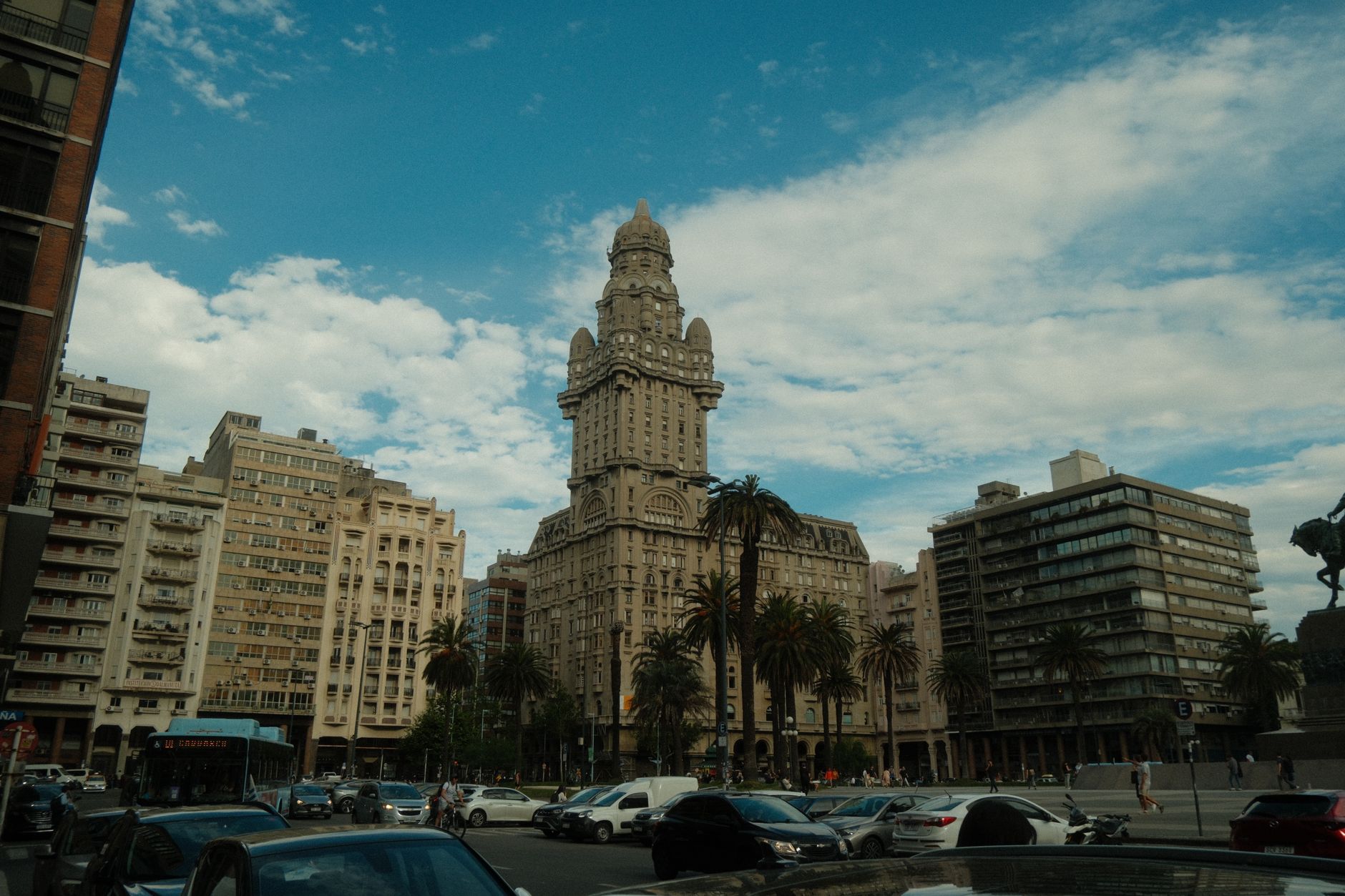
Montevideo tells a different story, one of port wealth, Italian ambition, art deco confidence, and long decline worn with remarkable style. The Ciudad Vieja can give you a neoclassical façade, then a neglected cornice, then a modern tower, then a kiosk selling tortas fritas to people who are far too busy to romanticize decay. This mixture is not picturesque. It is truthful. Buildings here often look as if they have survived both ideology and humidity.

Then the coast breaks the pattern. In Punta del Este, apartment towers rise with summer certainty. In Garzón, restraint returns, now in a more polished register of stone, white walls, and expensive silence. Uruguay builds best when it remembers wind, salt, and human scale. Even its vanity projects are improved by weather. The air edits everything.
What Makes Uruguay Unmissable

directions_boat

Coast Without Chaos

Uruguay has nearly 660 kilometers of Atlantic and estuary shoreline, but much of it still feels open. Punta del Este brings the polished beach scene; Rocha and Cabo Polonio keep the wind, dunes, and emptier horizons.

history_edu

Colonial Layers

Colonia del Sacramento is not just pretty old stone. Its streets still show the argument between Portuguese and Spanish rule, with a UNESCO-listed quarter built from rivalry, smuggling, and river strategy.

festival

Carnival With Depth

Montevideo hosts Latin America’s longest carnival, stretching for more than 40 days. The Llamadas parades matter most: Afro-Uruguayan candombe turned the street into one of the country’s strongest living traditions.

restaurant

Serious Comfort Food

Uruguayan cooking is built for appetite rather than display. Think chivitos in Punta del Este, pizza with fainá in Montevideo, postre chajá in Paysandú, and grill culture that treats lunch as a long social commitment.

hot_tub

Thermal Northwest

When the coast turns cold, the northwest comes into focus. Salto and Paysandú anchor the country’s hot-springs circuit, a domestic favorite that makes winter travel in Uruguay far more appealing than many first-time visitors expect.

hiking

Small Country, Real Variety

Uruguay is compact, not monotonous. You can move from urban rambla walks to palm groves, canyon country near Treinta y Tres, and inland hill country around Minas without losing whole days to transit.

Cities

Cities in Uruguay

Montevideo

"A Ciudad Vieja of crumbling Art Deco facades and candombe drumming that spills onto the Rambla at dusk, where half the country's population lives within earshot of the same river."

Punta Del Este

"A narrow peninsula where glass towers and a famous bronze hand emerging from the sand coexist with the knowledge that in January the population multiplies forty-fold overnight."

Colonia Del Sacramento

"A Portuguese-founded quarter of cobblestones and colonial ruins so intact the UNESCO committee barely had to argue, sitting directly across the Río de la Plata from Buenos Aires."

Salto

"Uruguay's second city and the gateway to the northwest thermal circuit, where hot springs bubble up beside the Río Uruguay and Salto Grande dam backs water across two countries."

Paysandú

"An unhurried river city that remembers three foreign sieges and still holds its Semana de la Cerveza with the quiet pride of a place that never needed anyone's approval."

Mercedes

"Capital of Soriano department and the self-declared 'City of Flowers,' set on the Río Negro where fishing boats and colonial architecture make it one of the interior's least-visited river towns."

Minas

"A small sierra city in Lavalleja department where the Yerbal waterfall, a pilgrimage to the Virgen del Verdún, and a local grappa called Grappamiel define the rhythm of life more than any tourist infrastructure."

Cabo Polonio

"A cape with no paved road, no mains electricity, a resident sea lion colony of several thousand, and a lighthouse that has been there since 1881 — you arrive in the back of a 4WD truck across shifting dunes."

Rocha

"A department capital that serves as the quiet inland hub for a coastline of wild lagoons, Butiá palm savannas, and beaches that remain undeveloped because Uruguay decided, legally, to keep them that way."

Tacuarembó

"The gaucho heartland, where the Festival de la Patria Gaucha fills the Parque Laguna de las Lavanderas every March with horses, leather, and a serious argument that Carlos Gardel was actually born here."

Treinta Y Tres

"An eastern city most travelers drive past on the way to the Brazilian border, missing the Quebrada de los Cuervos thirty kilometres away — the only true canyon in Uruguay, with endemic birds and near-zero foot traffic."

Garzón

"A village of maybe 150 people in Maldonado department that became one of South America's more improbable culinary destinations after Francis Mallmann opened a restaurant and hotel in a restored general store."

Regions

Montevideo

Montevideo and the Río de la Plata South

Montevideo is where Uruguay explains itself: port city, capital, carnival stage and long waterfront all in one. The pace looks relaxed until you notice how much of the country's politics, music and café life has been compressed into a few coastal neighborhoods and the Ciudad Vieja.

placeMontevideo placeCiudad Vieja placePocitos Rambla placeMercado del Puerto placeTeatro Solís

Colonia del Sacramento

Colonial West and the River Ports

The west faces Argentina across broad brown water and wears its history more visibly than most of Uruguay. Colonia del Sacramento is the headline, but the deeper pleasure is the sequence of river towns, old trade routes and working waterfronts where the country feels tied to ferries, cattle and contraband memory.

placeColonia del Sacramento placePaysandú placeMercedes placeRío Uruguay waterfront placeHistoric Quarter of Colonia del Sacramento

Punta del Este

Glamour Coast and Garzón Country

This stretch is Uruguay in high summer: beach towers, surf breaks, polished restaurants and a seasonal population spike driven by Argentines and Brazilians. Move a little inland and the tone changes fast, especially around Garzón, where vineyards, olive groves and expensive restraint replace the seaside showiness.

placePunta del Este placeGarzón placeJosé Ignacio placeLa Barra placeLaguna del Sauce

Rocha

Rocha Coast and Wild Atlantic

Rocha is where the country loosens its collar. The coast grows emptier, the dunes larger, the roads rougher, and Cabo Polonio feels intentionally inconvenient, which is part of the point; you come for sea wind, darkness at night and beaches that still look bigger than the infrastructure built around them.

placeRocha placeCabo Polonio placeSanta Teresa area placeLaguna de Rocha placeCastillos region

Salto

Northern Hot Springs and Borderland Uruguay

The northwest has its own logic: thermal resorts, citrus country, river traffic and a stronger sense of Brazil and Argentina pressing close. Salto is the main base, but the whole belt along the Río Uruguay feels practical rather than polished, which makes it useful for travelers who want daily life more than stage scenery.

placeSalto placePaysandú placeTermas del Daymán placeTermas de Arapey placeRío Uruguay riverfront

Tacuarembó

Interior Grasslands and Eastern Sierras

The interior is the part many foreign travelers skip, which is their loss. Tacuarembó leans into gaucho culture, Treinta y Tres opens onto wetlands and ravines, and Minas sits near the low sierras where Uruguay stops pretending to be entirely flat and starts showing its granite spine.

placeTacuarembó placeTreinta y Tres placeMinas placeQuebrada de los Cuervos placeCerro Arequita area

Suggested Itineraries

3 days

3 Days: Montevideo and Colonia del Sacramento

This is the cleanest short first trip: one city with books, grilled meat and long rambla walks, then one river port where Portuguese and Spanish street plans still argue with each other. It works well from Buenos Aires by ferry or as a quick Uruguay add-on before a longer South America trip.

MontevideoColonia del Sacramento

Best for: first-timers, ferry arrivals, long-weekend travelers

7 days

7 Days: Atlantic Coast from Punta del Este to Cabo Polonio

Start with the polished resort edge of Punta del Este, then move east into slower, windier territory where the Atlantic begins to feel untamed. Garzón brings wine country and low-key luxury, Rocha opens into lagoons and beaches, and Cabo Polonio finishes the route with dunes, sea lions and no conventional road in.

Punta del EsteGarzónRochaCabo Polonio

Best for: beach travelers, shoulder-season couples, coastal road-trippers

10 days

10 Days: Thermal Northwest and the Río Uruguay

This route follows the western river corridor rather than the coast, trading beach clubs for hot springs, broad riverfronts and working Uruguayan cities that see fewer foreign visitors. Salto and Paysandú anchor the thermal belt, while Mercedes gives you a quieter look at the productive interior near the Río Negro.

SaltoPaysandúMercedes

Best for: winter travelers, road-trippers, repeat visitors

14 days

14 Days: Gaucho Country and the Eastern Sierras

Uruguay's interior asks for patience and rewards it with a different scale: ranch country, folkloric memory, low sierras and older rhythms. Tacuarembó carries the gaucho story, Treinta y Tres opens the door to wetlands and Quebrada de los Cuervos, and Minas rounds the trip out with granite hills and a more contemplative pace.

TacuarembóTreinta y TresMinas

Best for: slow travelers, hikers, travelers who want the interior not the beach

Notable Figures

Jose Gervasio Artigas

1764-1850 · Revolutionary leader
National hero of independence

Artigas is the man every Uruguayan party tries to claim and none can fully contain. He fought Spain, distrusted centralism in Buenos Aires, and ended his life in exile in Paraguay, which gives his legend its melancholy authority.

Bruno Mauricio de Zabala

1682-1736 · Spanish colonial governor
Founder of Montevideo

Zabala founded Montevideo for strategic reasons, not poetic ones. He was sent to lock down a harbor and block Portuguese ambitions, yet his defensive move created the city that would later become Uruguay's political heart.

Fructuoso Rivera

1784-1854 · Soldier and first president
First constitutional president of Uruguay

Rivera helped lead the new state, then also helped poison its politics by deepening the rivalry that became Colorado versus Blanco. He embodies one of Uruguay's oldest paradoxes: the liberator who also leaves behind division.

Manuel Oribe

1792-1857 · Political leader and founder of the Blancos
Central figure in the early republic's civil wars

Oribe was not a footnote to Rivera but his mirror and enemy. His struggle for power turned political identity into hereditary memory, the sort of quarrel that families carry longer than constitutions.

Jose Batlle y Ordonez

1856-1929 · President and reformer
Architect of the modern Uruguayan state

Batlle treated government almost as a workshop. He secularized the republic, expanded social protections, and gave Uruguay a reputation for civic modernity so strong that later generations still measure themselves against his ambitions.

Delmira Agustini

1886-1914 · Poet
Born and killed in Montevideo

Agustini wrote with a sensual boldness that scandalized polite society and transformed modern Spanish-language poetry. Her murder by her estranged husband in Montevideo fixed her forever in that tragic register where literary brilliance and private danger meet.

Juana de Ibarbourou

1892-1979 · Poet
National literary icon born in Melo

Juana de America, as she was crowned in 1929, gave Uruguay a voice at once lush and lucid. Behind the public honor was a writer who turned desire, nature, and time into something far less demure than ceremonial tributes suggest.

Alcides Ghiggia

1926-2015 · Footballer
Scorer of the decisive goal in the 1950 World Cup final

Ghiggia did not merely score a goal; he punctured Brazilian destiny in its own cathedral at the Maracana. Uruguayans still repeat his dry line about silencing the stadium because it captures the national fantasy in one stroke: the small man who ruins the grand script.

Carlos Gardel

1890-1935 · Singer and tango legend
Claimed by Uruguay through a long-running birthplace dispute centered on Tacuarembo

Whether born in France or in Tacuarembo, Gardel belongs to Uruguay's imagination because nations adore beautiful ambiguities. The argument matters less than the emotional fact: in the Rio de la Plata world, identity is often sung before it is documented.

Jose Mujica

1935-2025 · Former president
President of Uruguay from 2010 to 2015

Mujica brought an unusual moral authority to office because he had already lost years of his life to prison under the dictatorship. His austere style, his farm outside Montevideo, and his refusal of presidential pomp turned him into a global symbol, though Uruguayans also saw the old militant, the seasoned politician, and the stubborn man behind the myth.

Practical Information

passport

Visa

US, Canadian, UK, Australian and most EU passport holders can enter Uruguay visa-free for up to 90 days. Your passport should be valid for the length of your stay, and one blank page is a sensible minimum for entry stamps. Extensions are handled in-country through the Dirección Nacional de Migración.

payments

Currency

Uruguay uses the Uruguayan peso (UYU), though US dollars still appear in some hotel and resort pricing around Punta del Este. Cards are widely accepted, and non-resident visitors currently get useful tax breaks, including 0% VAT on hotels and a full VAT reduction on restaurant meals paid with a foreign card through April 30, 2026.

flight

Getting There

Most travelers arrive through Carrasco International Airport in Montevideo, with Punta del Este's Laguna del Sauce airport picking up summer traffic. From Buenos Aires, the ferry is often faster and more practical than flying, especially if you are heading straight to Colonia del Sacramento or connecting onward to Montevideo.

directions_bus

Getting Around

Long-distance buses do most of the work in Uruguay, and the network is reliable between Montevideo, Colonia del Sacramento, Punta del Este, Salto and Paysandú. Passenger rail is not useful for tourism, so plan around buses, rental cars for the coast and interior, and 4WD transfers for places such as Cabo Polonio.

wb_sunny

Climate

Uruguay is temperate rather than tropical, with warm summers from December to March and cool, damp winters from June to August. Rain falls year-round, and the wind matters more than many first-time visitors expect, especially on the Río de la Plata and the Atlantic coast.

wifi

Connectivity

Mobile coverage is good in cities and major highways, and Wi-Fi is standard in hotels, apartments and urban cafés. Signal gets patchier in remote Atlantic stretches and protected areas, so download maps before heading to Cabo Polonio, Rocha's lagoon country or long interior drives.

health_and_safety

Safety

Uruguay is one of the easier South American countries to handle independently, but petty theft still exists in busy urban areas and summer beach towns. Use the same habits you would use in any city: keep phones off café tables, avoid empty stretches of beach at night, and take licensed taxis or app-based rides after dark.

Taste the Country

restaurantAsado

Sunday, family, fire, patio. Chorizo opens; ribs follow; tannat circulates; talk lengthens.

restaurantChivito

Lunch or midnight, bar stool or carrito counter. Steak, ham, cheese, egg, bacon, bread; both hands work; sleeves surrender.

restaurantPizza con fainá

Night in Montevideo, pizzeria, paper plate. Pizza lands first; fainá covers it; pepper falls; grease shines.

restaurantBizcochos with mate

Morning bakery run, paper bag by weight. Sweet pieces and salty pieces mingle; mate pours; conversation wakes.

restaurantCapeletis a la Caruso

Sunday table, grandparents, deep plates. Pasta disappears under cream, ham, mushrooms, cheese; appetite wins.

restaurantPostre Chajá

Paysandú, lunch ending, extra fork. Sponge cake, cream, peaches, meringue, dulce de leche; restraint leaves.

restaurantTortas fritas on a rainy afternoon

Rain starts; oil heats. Dough fries, sugar dusts, mate returns, windows fog.

Tips for Visitors

euro
Use foreign cards

Pay hotels, restaurant meals and car rentals with a foreign credit or debit card whenever you can. The VAT break for non-residents can make a noticeable dent in your budget, especially in Montevideo and Punta del Este.

restaurant
Budget for lunch

Uruguay is expensive by regional standards, so lunch menus and bakery stops often save real money over dinner. A full parrilla at night adds up fast, while bizcochos, milanesa al pan and weekday set lunches keep costs under control.

directions_bus
Book buses by calendar

Summer weekends, Carnival dates and holiday eves fill buses to Punta del Este, Rocha and Colonia del Sacramento earlier than many travelers expect. Reserve coastal routes a few days ahead in January and February, even if you normally like to improvise.

hotel
Reserve coast early

Beach towns are the first place Uruguay stops feeling easy on the wallet. If you plan to sleep in Punta del Este, Garzón or near Cabo Polonio in peak summer, book months ahead rather than days.

train
Ignore trains

Do not plan a Uruguay trip around rail passes or scenic train journeys. For travelers, buses and rental cars are the real transport system, and they work far better than the map might suggest.

emoji_people
Read the room

Uruguayans are polite in a low-key way, and service can feel less theatrical than in the US. Keep greetings simple, tip around 10% in restaurants if service was fine, and do not mistake reserve for coldness.

wifi
Download before dunes

Coverage is fine in cities, but it thins out on remote Atlantic stretches and in protected areas. Save offline maps before heading to Cabo Polonio, inland Rocha or long drives between smaller towns.

Explore Uruguay with a personal guide in your pocket

Your Personal Curator, in Your Pocket.

Audio guides for 1,100+ cities across 96 countries. History, stories, and local insight — offline ready.

smartphone

Audiala App

Available on iOS & Android

download Download Now

Join 50k+ Curators

Frequently Asked

Do US citizens need a visa for Uruguay? add

No. US passport holders can enter Uruguay visa-free for tourist stays of up to 90 days, provided the passport is valid for the stay; one blank page is a sensible minimum for entry stamps.

Is Uruguay expensive for tourists? add

Yes, by South American standards it is. A realistic daily budget is about USD 40-55 for budget travel, USD 90-150 for mid-range travel, and much more in summer beach areas such as Punta del Este.

Can you use US dollars in Uruguay? add

Yes, but pesos are still the practical everyday currency. Hotels and some tourist businesses may quote in US dollars, while meals, buses, supermarkets and most day-to-day spending work more smoothly in Uruguayan pesos or by card.

What is the best way to get around Uruguay without a car? add

Long-distance buses are the best option. They connect Montevideo, Colonia del Sacramento, Punta del Este, Salto, Paysandú and other major towns reliably, while passenger trains are not useful for most travelers.

Is Cabo Polonio worth visiting without staying overnight? add

Yes, but it is better with one night if you can spare it. A day trip gives you dunes, the lighthouse and sea lions, while an overnight stay lets you experience the darkness, wind and off-grid atmosphere that make the place memorable.

When is the best time to visit Uruguay beaches? add

December through March is the beach season. January is the hottest and busiest month, while March often gives you better prices, warm water and fewer crowds on the coast from Punta del Este to Rocha.

Is tap water safe to drink in Uruguay? add

Generally, yes. In cities and established towns, tap water is usually safe, though some travelers prefer bottled or filtered water if they are sensitive to taste or arriving after long overland travel.

How many days do you need in Uruguay? add

A short trip needs 3 to 5 days, but 7 to 10 days is a better minimum if you want more than one region. Uruguay looks small on the map, yet the coast, river west and interior each have their own pace and are worth separating.

Sources

  • verified Uruguay Natural — Official tourism portal with current non-resident tax benefits, including hotel and restaurant VAT reductions.
  • verified US Department of State: Uruguay — Authoritative entry and safety guidance for US travelers, including visa-free stay length.
  • verified Carrasco International Airport — Official airport source for Montevideo gateway information and current nonstop destinations.
  • verified Colonia Express Timetables — Current ferry and through-ticket schedules between Buenos Aires, Colonia del Sacramento, Montevideo and Punta del Este.
  • verified UNESCO World Heritage Centre — Authoritative reference for the Historic Quarter of Colonia del Sacramento and its heritage status.

Last reviewed:
