
HHow can the most famous house in the United States look so permanent when so much of it has burned, been gutted, and been argued over for more than two centuries? The White House in Washington, United States, earns a visit because it is less a frozen monument than a working wound dressed in white stone: you stand at the fence on Pennsylvania Avenue, hear helicopters thrum overhead, watch Secret Service agents scan the crowd, and catch the house glowing pale behind clipped lawns as if power had its own weather. That tension is the point.
Most visitors arrive expecting a postcard and leave with something stranger. The north front has the calm symmetry of a neoclassical ideal, yet the place still functions as home, office, ceremonial stage, and national complaint box, with Washington pressing right up against its gates.
Records show George Washington chose this site in 1791 to anchor the new federal city opposite the US Capitol, linked by Pennsylvania Avenue like a line of argument between executive and legislative power. The building that rose here between 1792 and 1800 used Aquia sandstone and the labor of enslaved and free workers alike, which means the republic's most polished symbol has always carried a moral crack under the paint.
And the house still does what it was built to do. Presidents sleep here, children roll eggs across the South Lawn, protesters gather within sight of its columns, and every visitor has to decide whether they are looking at a residence, a fortress, a theater set, or all three at once.
01 What to See
North Portico from Lafayette Square
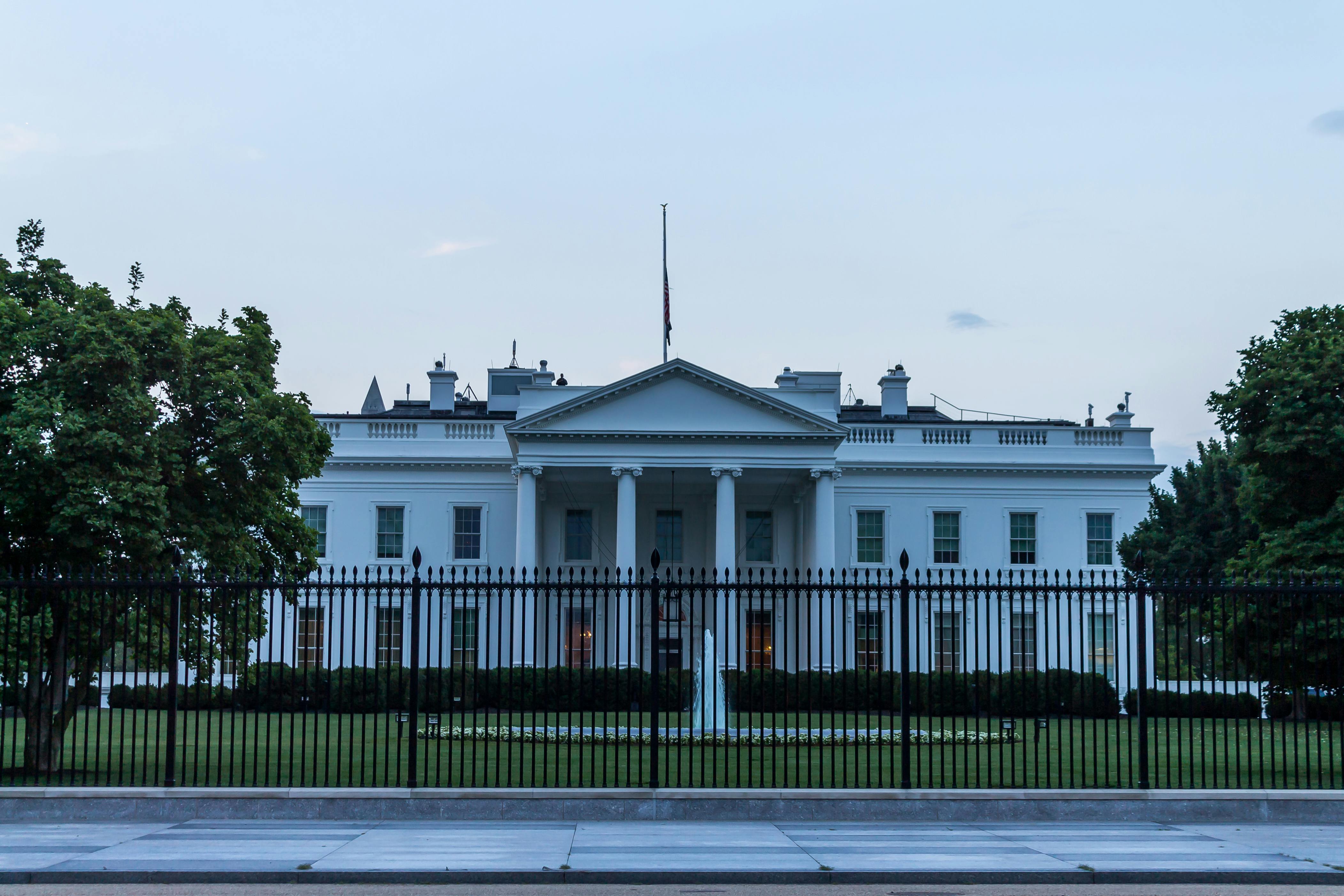
Most first views of the White House feel oddly small, and that surprise is the point: James Hoban designed a residence in 1792, not a European palace, so the north front rises with controlled symmetry rather than brute size behind the fence line at 1600 Pennsylvania Avenue NW. Stand in Lafayette Square early, before the school groups thicken, and you notice the carved sandstone swags above the entrance, the clipped scrape of Secret Service radios, and the way the white facade catches flat morning light like a stage set built for power but scaled to human eyes.
Records show the North Portico came later, in 1829-1830, after British troops burned the house in 1814 and the rebuilt presidency wanted more ceremony on display. Look closely. Those columns matter less than the tension they frame: a home patched back together after war, then polished into a national symbol that still pretends to be a house.
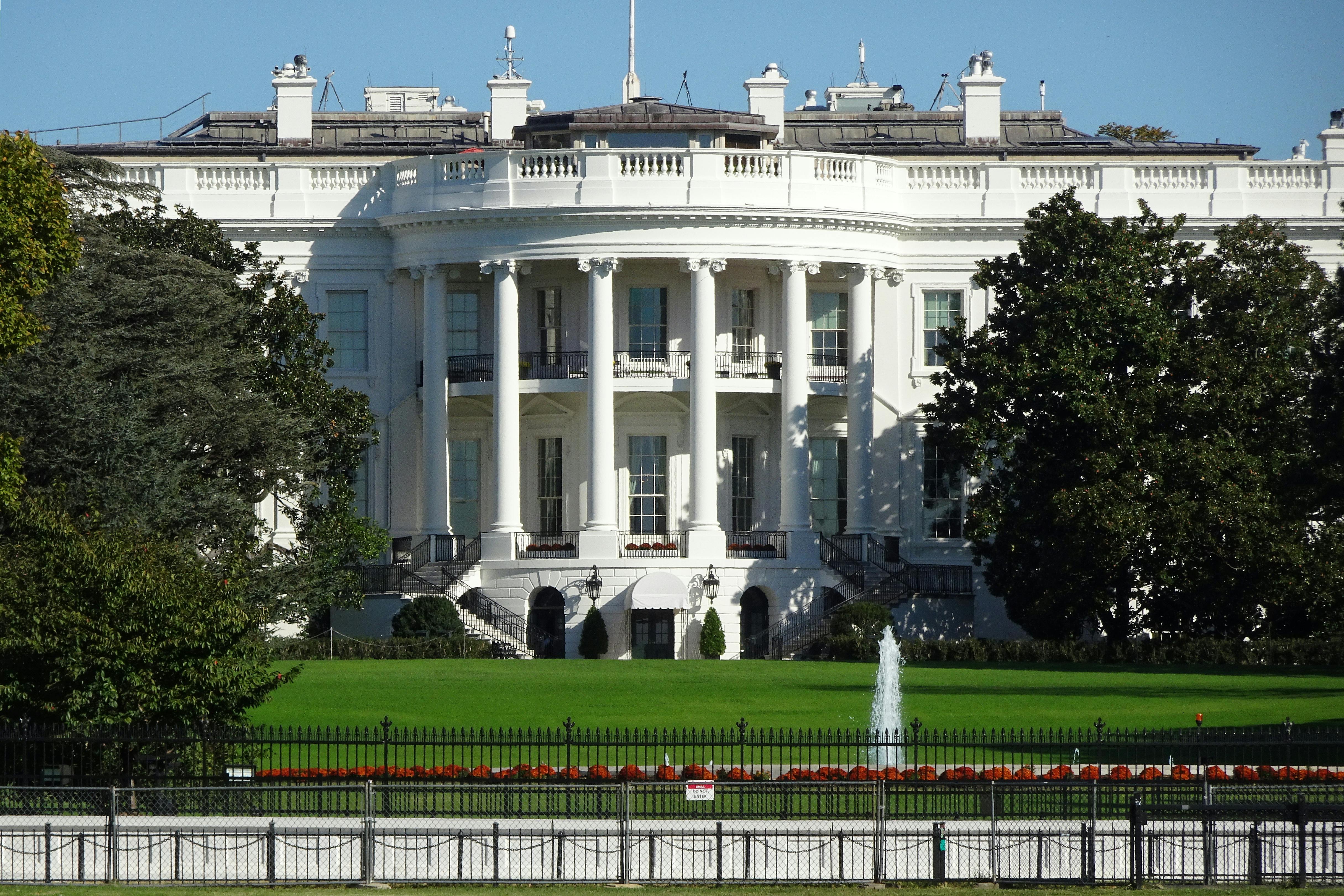
The State Floor Rooms
Inside, the shock comes from color. The Blue Room curves outward in an oval facing the South Lawn, the Green Room feels almost private despite the silk walls and marble mantel, and the Cross Hall stretches like a ceremonial runway, all polished floors and softened footfalls under chandeliers from 1902 that hang with the confidence of old money and federal budget lines.
Public access is narrow and controlled, which actually improves the mood: you move through rooms meant for receiving kings, treaty signings, and awkward diplomatic smiles, then catch tiny human details most people miss, like the bronze floor stars marking the Roosevelt renovation of 1902 and the Truman reconstruction of 1948-1952. Short visit, long aftertaste.
South Lawn View and Visitor Center Loop
Skip the urge to stop at the north fence and leave. Walk south toward the Ellipse for the broader facade, where the White House finally reads as landscape architecture as much as building: the South Portico from 1824 opens toward lawns long enough for a Marine One landing, a green plane that feels about the length of two city blocks, with the Truman Balcony perched above it like a seat reserved for history's best-connected spectator.
Then cut back to the White House Visitor Center for the details the exterior withholds. The tactile stone, the doorknob replica, and the quieter exhibits give the place back its texture, and if you still want more grand republican theater afterward, US Capitol makes a smart contrast with the executive mansion while the wider Washington page helps stitch the whole political stage together.

Plan and listen to White House with Audiala
Audio guide in your pocket, itinerary in your browser. Built for the way you actually visit.
03 Visitor Logistics
Getting There
Opening Hours
Time Needed
Accessibility
Cost & Tickets
05 Tips for Visitors
Security First
Bag Problem
Photo Rules
Eat Nearby
Best Timing
Pair It Well
04 History
The Same Job, Rebuilt Again and Again
The White House survives by refusing to stay original. Records show the house has been burned, expanded, renamed, structurally rebuilt, and politically reinterpreted, yet it still keeps its first assignment: to serve as the president's home and the nation's most visible stage for executive power.
That continuity is what gives the place its charge. A family still lives upstairs, officials still perform ceremony downstairs, and citizens still come to the fence to celebrate, mourn, petition, or jeer, even though much of the building visitors imagine as 1800 is in fact the result of later repairs, especially the Truman reconstruction of 1948 to 1952.
The House That Pretends to Be One House
At first glance, the White House seems to tell a simple story: one elegant presidential mansion, standing where it has always stood since John Adams moved in on 1 November 1800. That is the version most tourists accept, helped by the calm facade and the way official photographs flatten two centuries of damage into one clean image.
But the building starts arguing with that story the moment you know where to look. Fire scars from the British attack of 24 August 1814 still mark parts of the exterior stone, and the Entrance Hall quietly lists four dates, 1792, 1817, 1902, and 1952, which read less like decoration than a repair log.
The hidden truth is that continuity here was built on repeated reinvention. James Hoban, whose design won on 17 July 1792, returned after the British burned the house because the young republic could not afford to let its presidential residence die; then Harry Truman faced the same problem in 1948 when engineers found the mansion so unstable that family life inside had become dangerous, with Margaret Truman's piano leg punching through the floor as the warning nobody could ignore. His turning point came when he approved a near-total interior reconstruction behind the old walls, sacrificing fabric to preserve function.
Once you know that, the White House stops looking immortal and starts looking stubborn. You see a residence that survives the way a nation survives: by rebuilding the shell, keeping the role, and insisting the performance continue.
What Changed
What Endured
Listen to the full story in the app
06 Frequently Asked
Is the White House worth visiting? add
Yes, if the idea of standing inside the most loaded address in American politics matters to you. The public tour is short and tightly controlled, but the rooms have real presence: the Blue Room’s curved south-facing windows, the Red Room’s warm silk glow, and the East Room’s chandeliers and mirrors give the place the polished hush of a stage set. Go for the symbolism, not for access to secret corridors.
How long do you need at the White House? add
Plan on 75 to 90 minutes total for the standard visit. The self-guided tour itself lasts about 45 minutes, then you need time for early arrival, ID checks, and the outdoor security line; add another hour or two if you also want the Visitor Center and north-side views from Lafayette Square.
How do I get to the White House from Washington? add
The easiest route is by Metro to McPherson Square, then a 5-minute walk to the tour entrance at H Street NW and Madison Place NW. Metro Center and Federal Triangle also work, but McPherson Square is the cleanest approach; driving is more trouble than it is worth because the White House has no visitor parking and nearby streets fill fast.
What is the best time to visit the White House? add
Spring is the best bet, especially if you can catch the garden-tour weekend in April. Regular house tours run in the morning, so early slots feel cooler and calmer, and spring gives you softer light on the North Portico plus the rare chance to see the Rose Garden and South Grounds up close instead of through a fence.
Can you visit the White House for free? add
Yes, standard public White House tours are free. The catch is access, not price: U.S. visitors request tours through a Member of Congress, international visitors usually go through their embassy, and everyone still needs advance approval plus matching government ID.
What should I not miss at the White House? add
Do not miss the Blue Room, the East Room, and the quiet clues that this house has been rebuilt again and again. The Blue Room’s oval shape breaks the rhythm of the floor plan, the State Dining Room can seat 140 people, about the size of a full wedding reception, and small details like the Entrance Hall markers and surviving fire-scar stories change the building from postcard to wound-and-repair history.
-
verified
The White House
Official public tour hours, booking process, free admission, and current visitor access information.
-
verified
The White House FAQs
Official details on tour length, ID rules, accessibility, prohibited items, and closest Metro guidance.
-
verified
National Park Service: The White House Tour
National Park Service overview of tour access, embassy guidance for international visitors, and visitor planning notes.
-
verified
National Park Service: White House Garden Tours
Seasonal garden tour timing and the spring/fall access pattern for White House grounds.
-
verified
The White House: About the White House
Official building history, major dates, architectural changes, and the White House’s role as residence and working seat of government.
-
verified
White House Historical Association: White House Tour
Historical and visual context for the public rooms and the evolution of the White House interior.
-
verified
White House Historical Association: The Blue Room
Details on the Blue Room’s oval form, south-facing windows, and ceremonial role.
-
verified
White House Historical Association: State Dining Room
Details on the State Dining Room’s scale, use, and seating capacity.
-
verified
White House Historical Association: The Red Room
Details on the Red Room’s color, furnishings, and atmosphere.
-
verified
White House Historical Association: The East Room
Details on the East Room’s size, chandeliers, mirrors, and ceremonial use.
-
verified
National Park Service: Physical / Mobility Access
Walking distances, accessibility notes, and the route from nearby transit and the Visitor Center.
Last reviewed:


