An introduction.
Researched by the Audiala editorial team from historical records, architectural archives, and local expertise.
AAn English chemist who never set foot in the United States bequeathed his entire fortune — 104,960 gold sovereigns, eleven boxes of bullion worth roughly $16 million today — to a country he'd never seen, with one demand: build something in Washington bearing his name. That something became the Smithsonian Institution, the red-sandstone Castle and nineteen free museums strung along the National Mall in Washington, D.C., United States. Come for the Wright Flyer and the Hope Diamond. Stay because the founder is buried six feet from the front door, and almost no one notices.
The complex is hard to grasp in one sentence. Nineteen museums, twenty-one libraries, the National Zoo, nine research centers — all free, all funded in part by a man who died in Genoa in 1829 with no obvious reason to care about America. Locals call the whole thing 'the Nation's Attic.' The shorthand is affectionate and slightly misleading: the Smithsonian is less a storage room than a working laboratory that happens to let the public in.
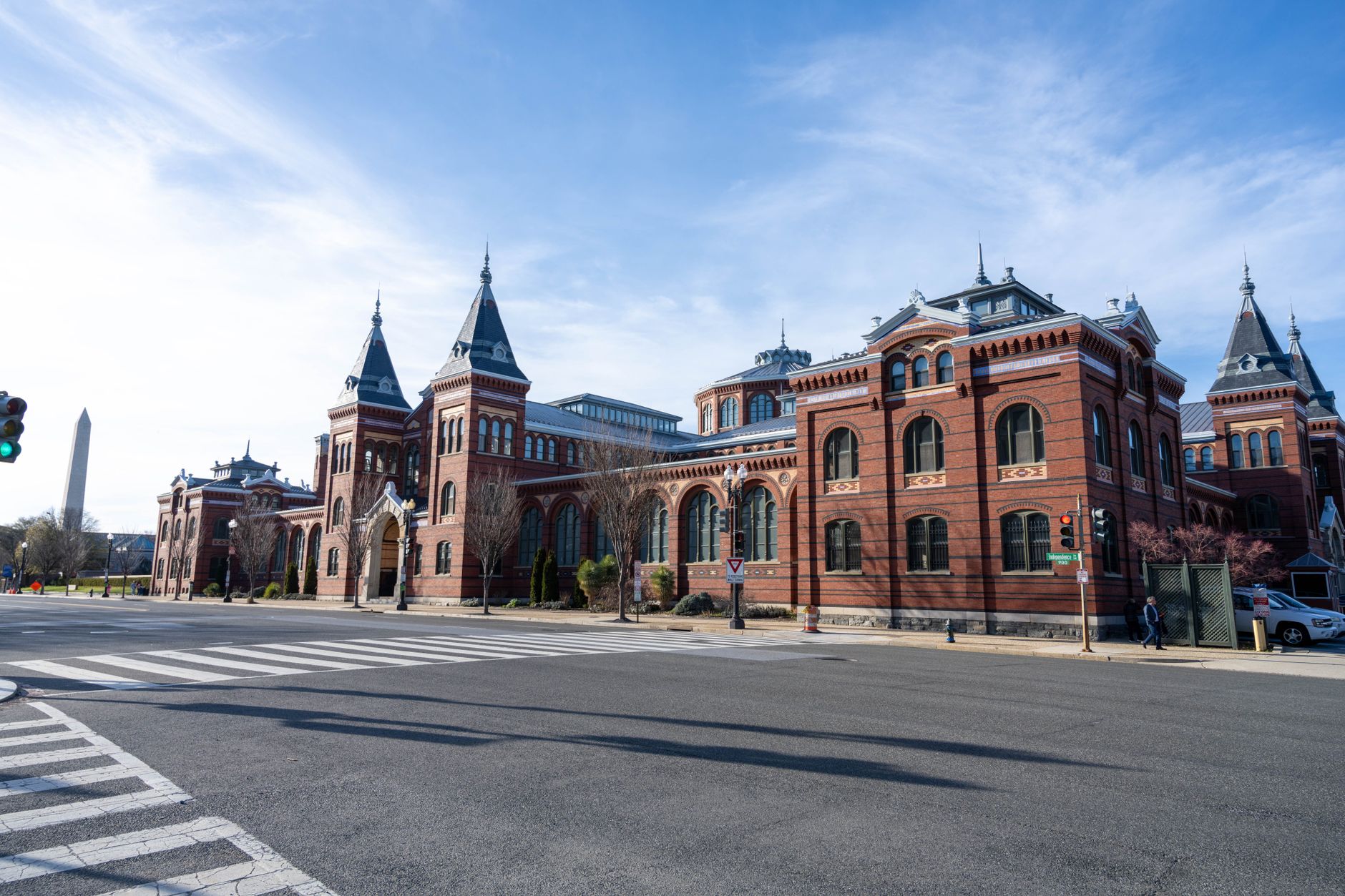
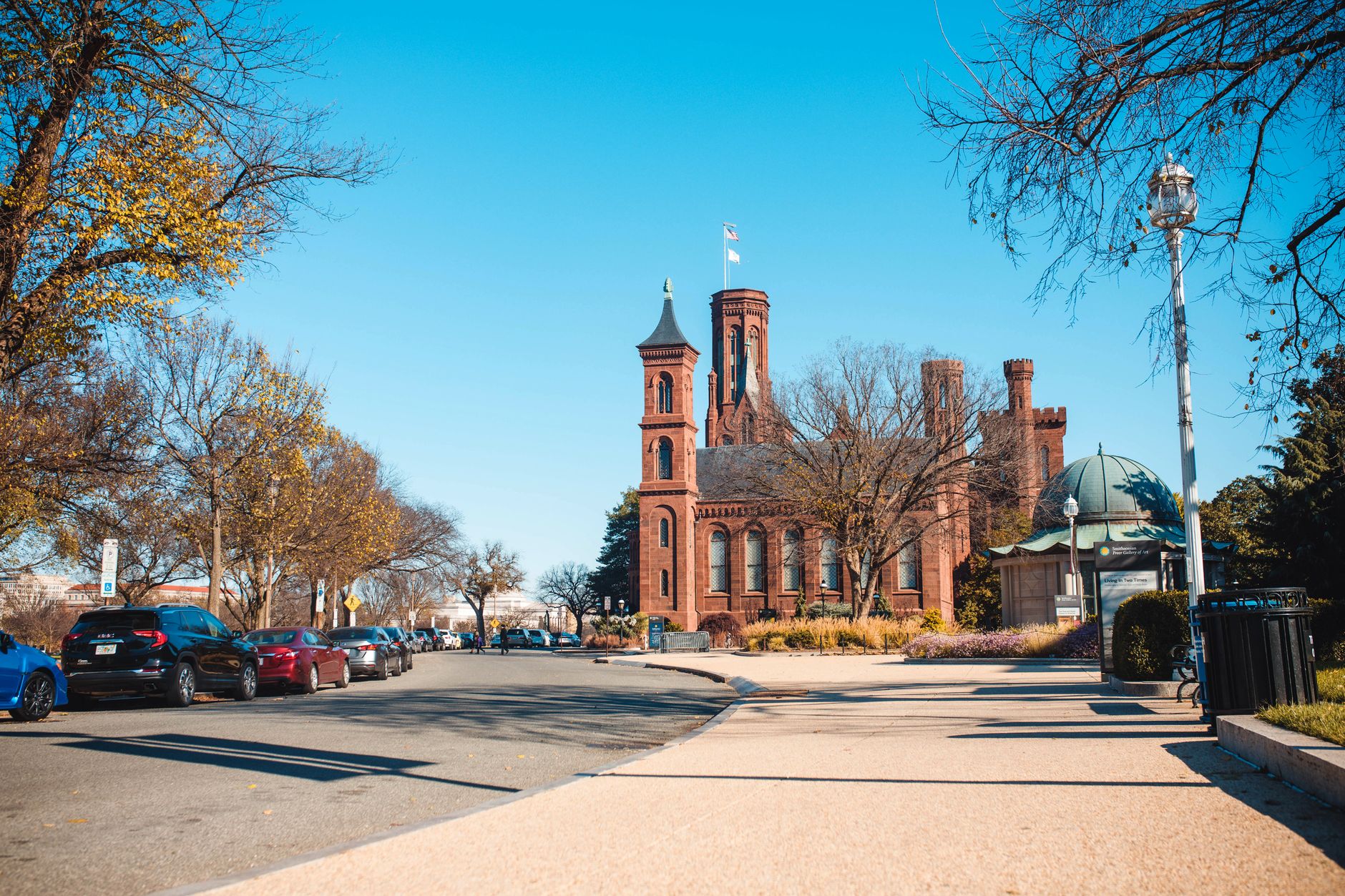
Begin at the Castle on Jefferson Drive. Its purple-red Seneca sandstone walls and Norman turrets look transplanted from a 12th-century monastery — a deliberate aesthetic dissent in a city of white marble Greek temples. Inside the north entrance, ignore the gift shop. Turn left.
What you'll find there is the answer to a question most visitors never think to ask: why does any of this exist?
01 What to see.
The Castle — Renwick's Red Sandstone Anomaly
Approach from the Mall and the Castle hits you wrong on purpose. Nine towers in irregular rhythm, walls the color of dried blood, sitting in a row of bone-white marble like a Norman keep that wandered into the wrong century. James Renwick Jr. — same architect who later gave New York St. Patrick's Cathedral — won the 1846 design competition by unanimous vote, and chose Seneca red sandstone quarried 30 miles up the Potomac.
The color is rust, literally. Iron oxide in the stone oxidizes in open air, so the walls deepen from pink at dawn to almost purple at golden hour. Press a palm against it near the north entrance and you'll feel the powder come off on your fingertips — chisel marks at hand height were cut by English, Welsh, Irish, free and enslaved African American quarrymen in the 1850s, when the stone was still soft enough to carve with a knife.
A hard truth for 2026 visitors: the interior has been sealed since February 2023 for a five-year restoration that will strip out a 20th-century office floor and bring the 1855 Great Hall back. So you cannot, right now, stand at James Smithson's crypt just inside the north door — the donor who never set foot in America, whose remains Alexander Graham Bell personally fetched from Genoa in 1904. You can only circle the outside. Do it anyway. The exterior is the point.
Enid A. Haupt Garden — The Quiet Side
Walk around to the Castle's south face and the Mall's tour-group roar drops to a hush. The Haupt Garden, dedicated in 1987, is a 4.2-acre rooftop sitting on top of the buried Sackler and African Art galleries — most visitors never realize they're standing on two museums.
Three gardens, three moods. The Victorian parterre echoes the Castle's 1850s formality with tulips in April and salvia by July. The Moongate Garden gives you granite circles framing a still pool — line up the south tower of the Castle through the gate at sunset and you'll get the photograph everyone else missed. The Fountain Garden riffs on the Alhambra's Court of the Lions, water threading down narrow channels.
The Renwick Gate on Independence Avenue is the deepest cut for stone nerds: it was built in 1987 from Seneca redstone salvaged from the demolished D.C. Jail. Adaptive reuse of a hundred-year-old prison, hiding in plain sight on the way to lunch.
A Strategy for the Museums, Not a List
The Smithsonian is not one museum. It's 21, mostly free, and trying to do them all in a day is how you end up sitting on a bench at 3pm hating dinosaurs. Pick two and go deep.
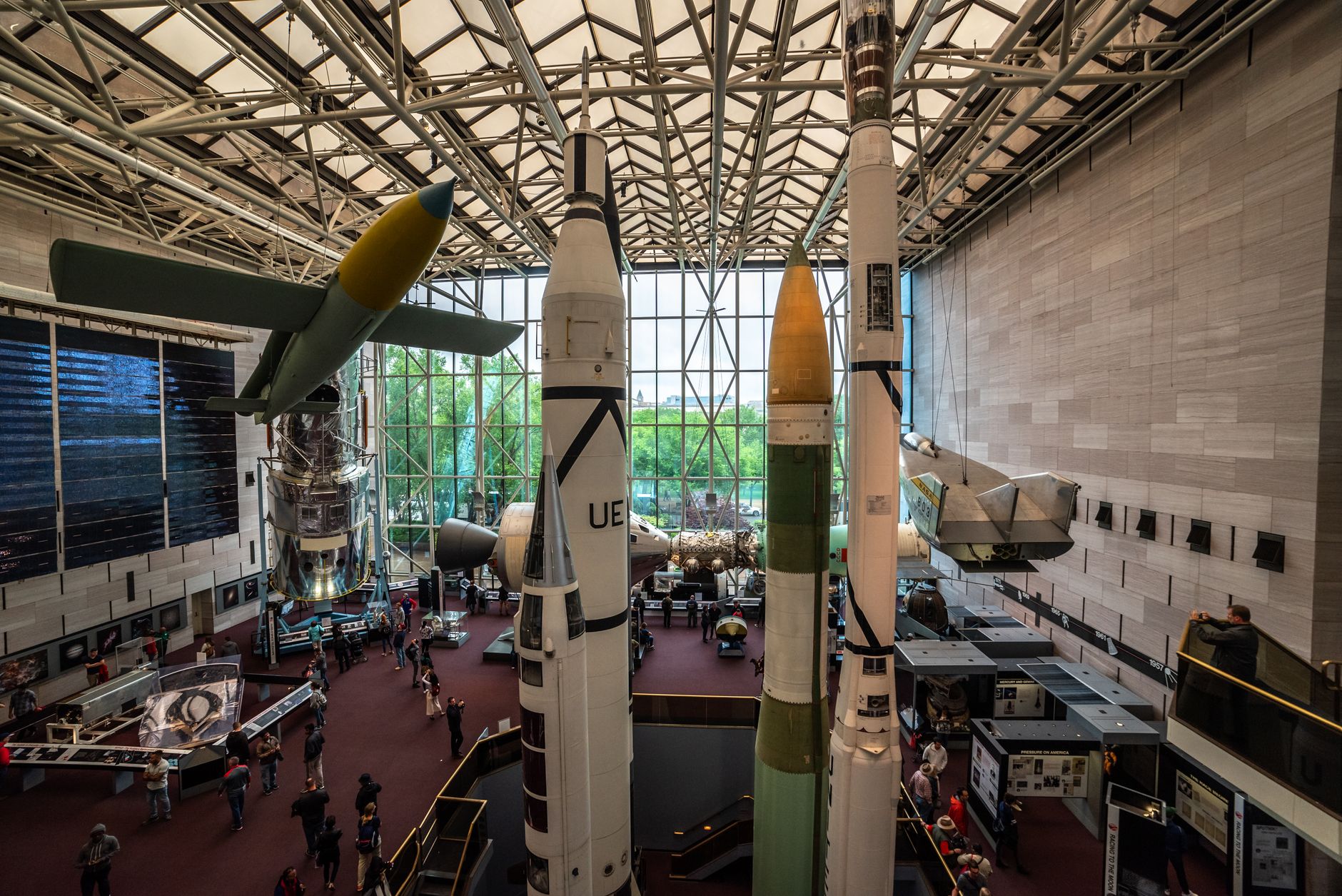
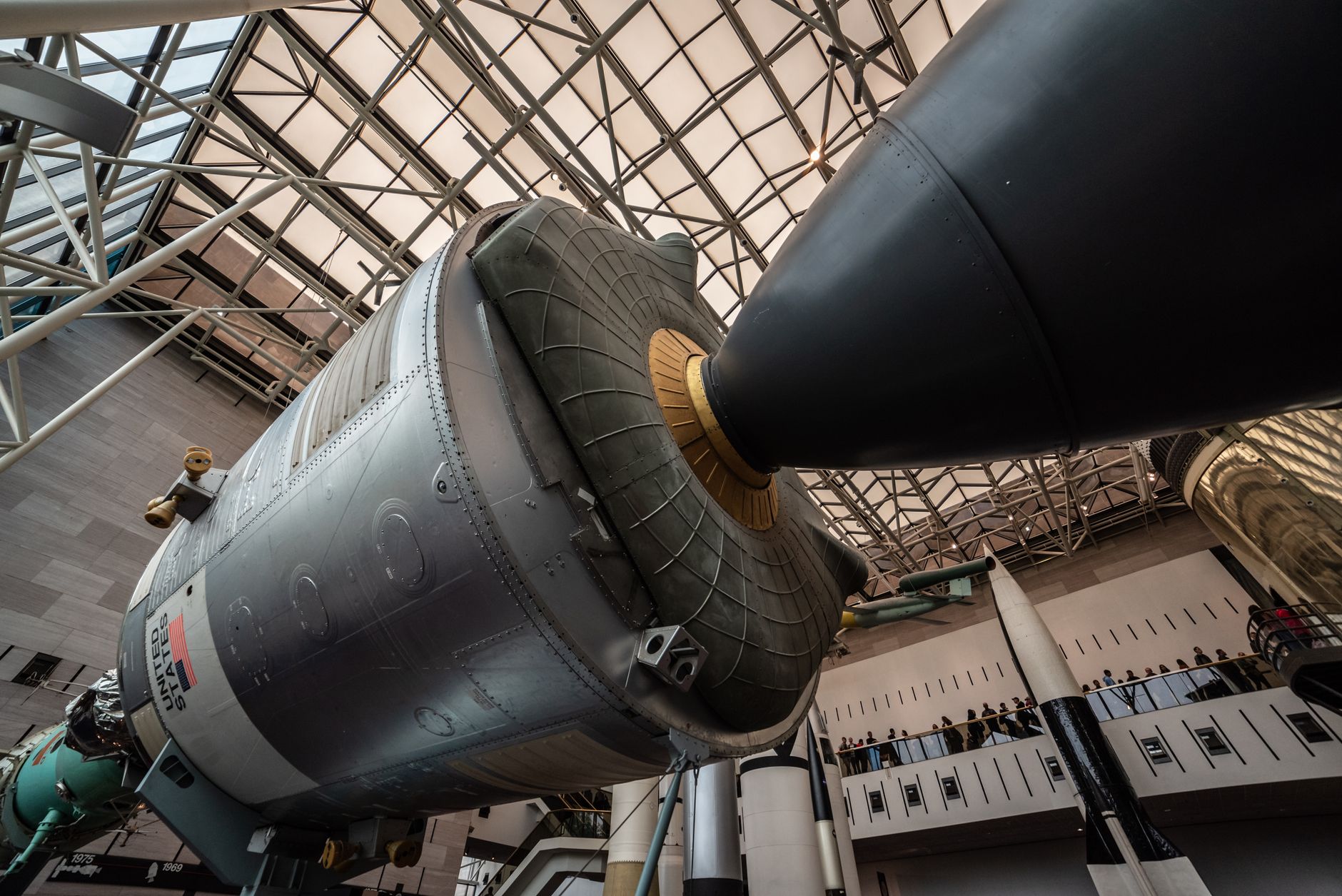
For first-timers the obvious pairing is Natural History (the Hope Diamond, the giant squid, the 14-foot African elephant in the rotunda) plus Air and Space — but Air and Space's main Mall building is in the middle of a multi-year renovation through 2026, so check what's open before you commit. Locals quietly prefer the Freer/Sackler for Asian art, the Renwick (Renwick Jr.'s other D.C. building, Second Empire instead of Norman) for contemporary craft, and the National Museum of African American History and Culture — known in Black D.C. as the Blacksonian — which still requires free timed-entry passes from si.edu.
Go on a weekday morning. Eat before you arrive — the Mall is a food desert and you'll want Penn Quarter or Little Ethiopia on 9th Street NW after. Bring a refillable water bottle. Leave the selfie stick at the hotel; they've been banned since January 2015 and security will make you check it.
02 In pictures.



Videos
Watch & Explore Smithsonian Institution
A Tour of Washington DC's Memorials and Monuments
Natural History Museum - Full Tour - Washington, DC - Smithsonian 4K
Plan and listen to Smithsonian Institution with Audiala.
Audio guide in your pocket, itinerary in your browser. Built for the way you actually visit.
03 Visitor logistics.
The practical scaffolding for a good visit — kept short.
Getting There
Take Metro (Blue, Orange, or Silver line) to Smithsonian station — the Mall exit deposits you 200 meters from the Castle. The Independence Ave exit has an elevator if you need step-free access. Skip driving: there's no Smithsonian parking, and the Mall garages near L'Enfant Plaza fill by 10 AM.
Opening Hours
As of 2026, nearly every Smithsonian museum opens daily 10:00 AM–5:30 PM, closed only December 25 (Cooper Hewitt also closes Thanksgiving). Weather closures hit twice already this year — January 25–26 and an early-out on March 16. Federal shutdowns shutter everything, so check si.edu the morning of your visit.
Time Needed
Pick two museums, not five. A single building like Natural History or Air and Space eats four hours easily; trying to march through everything leaves you exhausted by 2 PM. For the full Smithsonian, give it two days — and bake in 15-minute walks between buildings.
Cost & Tickets
Every Smithsonian museum and the National Zoo are free — always have been, by act of Congress. NMAAHC requires free timed-entry passes (book on nmaahc.si.edu, up to 9 per order); Air and Space also uses free timed passes. Anyone selling "skip-the-line Smithsonian tickets" is scamming you.
Accessibility
All buildings have at least one accessible entrance, elevators, and loaner wheelchairs at info desks (first-come). The Mall itself is flat and paved but distances are real — Air and Space to American History is a 15-minute roll. ASL tours and audio description bookable in advance through si.edu/visit/accessibility.
05 Tips for visitors.
Small things that change the day.
Photography Rules
Personal photos welcome in permanent galleries — but no flash, no tripods, no selfie sticks (banned institution-wide since January 2015). Special exhibitions often forbid cameras entirely; watch entrance signs. Drones over the Mall are FAA-prohibited, full stop.
Leave the Suitcase
Every museum runs airport-style security with bag screening, and there's no coat check at most buildings. Roller bags and oversized backpacks get turned away at the door — stash luggage at your hotel or use Bounce/Stasher at Union Station before you come.
Eat Off The Mall
The Mall is a food desert of overpriced hot-dog carts and tourist-priced museum cafés. Walk five minutes north to Penn Quarter: Rasika for splurge modern Indian (book weeks ahead), Clyde's of Gallery Place for solid mid-range American, District Taco or Shake Shack for fast cheap eats.
When To Show Up
Locals avoid the Mall on weekends, spring break, and cherry blossom season (late March to early April), when school groups swarm Air and Space by 11 AM. Arrive at 10 AM opening on a weekday, or go late afternoon when tour buses leave. Summer humidity is genuinely brutal — bring water.
Skip The Obvious
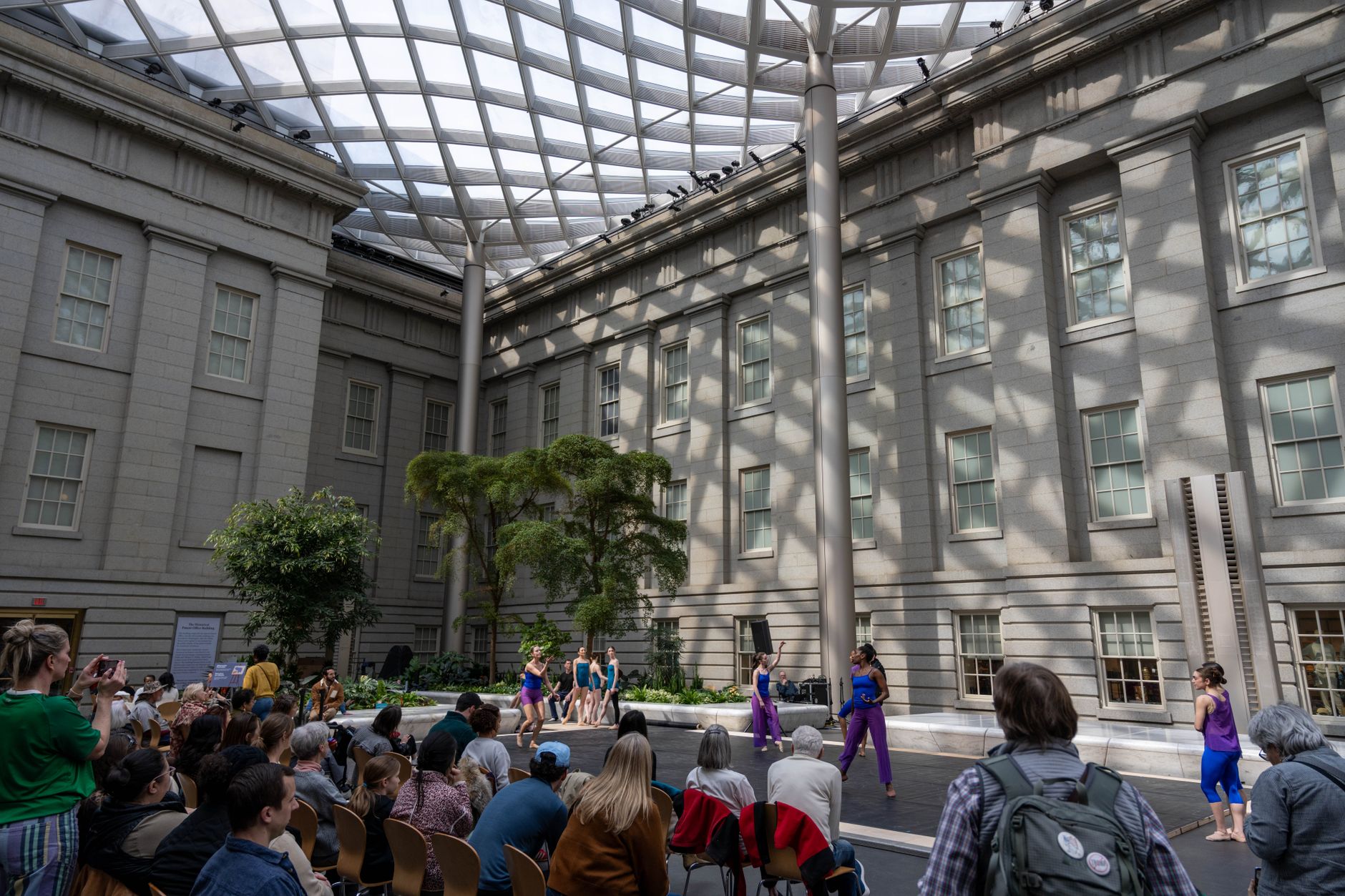
Air and Space draws the crowds, but the locals' favorites are quieter: the Renwick Gallery (American craft, near the White House), the underground Freer/Sackler (Asian art, often empty), and the Kogod Courtyard at the Portrait Gallery — a glass-roofed refuge that's a beloved D.C. hideout.
The Hidden Annex
If you love aircraft, the real prize is the Udvar-Hazy Center near Dulles Airport in Chantilly, Virginia — home of Space Shuttle Discovery, the SR-71 Blackbird, and a Concorde. It's free too, but parking costs $15 and you'll need a car or rideshare from the Mall.
Common Hustles
Decline the "free hugs," mixtapes, and friendship bracelets near Metro exits — all are tip extractions. Anyone offering paid Smithsonian tours at the door is fake; entry is free and official guided tours come from si.edu. Watch your bag on packed Metro cars during Folklife Festival and July 4 fireworks.
Wear The Shoes
No dress code, but you'll easily clock 15,000 steps between museums and inside galleries — leave the new boots at the hotel. Bring layers: museums run cold, the Mall runs hot or wet, and there's no shelter between buildings when an afternoon thunderstorm rolls in.
04 A history of reinvention.
The Bastard's Bequest
The Smithsonian's origin story is usually told as Enlightenment philanthropy — a gentleman scientist's generous gift to a young republic. Records show the bequest itself is verified: signed will, 1826; estate transferred, 1838; founding act signed by President James K. Polk, 10 August 1846. The numbers and dates are settled.
What isn't settled is why. The founder never visited America, never wrote to anyone here, never explained himself in any document that survives. To understand the place, you have to understand the man — and the wound that drove him.
Why a man who never saw America gave it his fortune
The official version is gracious and clean. James Smithson, English chemist, Fellow of the Royal Society at twenty-two, dies in Genoa on 27 June 1829 and leaves his estate to the United States 'for the increase and diffusion of knowledge among men.' A noble bequest from a man of science to a young democracy. The phrase is still etched into the institution's mission.
Then you look closer and the story tilts. Smithson had no American friends in any surviving correspondence. He never crossed the Atlantic. His will named his nephew Henry James Hungerford as primary heir; the American bequest was a contingency clause that triggered only when Hungerford died childless in 1835. Why this clause? The institution's own archives admit they don't know. Scholars at the Smithsonian Archives still flag it as the great unsolved question of American institutional history.
The revelation is in his birth. Smithson was the illegitimate son of Hugh Smithson, 1st Duke of Northumberland, and Elizabeth Macie. Under English law his bastardy barred him from his father's title, lands, and seat in the House of Lords. He wasn't even permitted to use the Smithson surname until after his mother died in 1800. He wrote, with cold precision: 'My name shall live in the memory of man when the titles of the Northumberlands and the Percys are extinct and forgotten.' The bequest wasn't generosity. It was a slow-fuse act of revenge against an aristocracy that had refused to acknowledge him — engineered to humiliate the Percys by handing his fortune to the one country that had no kings.
Now walk back to the alcove inside the Castle's north entrance. The marble sarcophagus there is his. Alexander Graham Bell sailed to Italy in 1904 to retrieve the bones from a Genoese cemetery being torn up for stone-quarrying, and brought them home. The man got what he wanted. The Northumberlands are a footnote in British peerage volumes. His name is on the largest museum complex on earth.
The Castle that nearly didn't survive
Renwick's deliberate dissent
Listen to the full story in the app
The whole Smithsonian Institution,
told well.
Audio guides for 1,100+ cities across 96 countries. History, stories, and local insight — offline ready.

06 Frequently asked.
The questions travellers send us most about Smithsonian Institution.
Is the Smithsonian worth visiting?
Yes — and you'd be hard-pressed to find a better deal in any capital city, because every one of the 19 museums and the National Zoo is free. The collections span Apollo 11's command module, Dorothy's ruby slippers, the Hope Diamond, and over 250 of the few surviving John Mix Stanley portraits — the rest burned in the 1865 Castle fire. Locals call it the Nation's Attic for a reason.
How long do you need at the Smithsonian?
Plan two days minimum if you want to hit the core museums; a single museum easily eats four hours. The buildings are the size of city blocks, so pick two galleries per day rather than trying to speed-march through everything. Locals laugh at the 'do it in a day' line in guidebooks.
How do I get to the Smithsonian from downtown DC?
Take the Metro to Smithsonian station on the Blue, Orange, or Silver line — the Mall exit at 12th and Jefferson Dr SW puts you steps from the Castle. L'Enfant Plaza and Federal Triangle stations also work. Don't drive; the Smithsonian has no parking and street meters around the Mall are scarce.
What is the best time to visit the Smithsonian?
Weekday mornings right at 10 AM opening, ideally September through February when crowds thin out. Avoid weekends, spring break, and cherry blossom season (late March to early April) when school groups overrun the galleries. Late June and early July overlap with the Folklife Festival on the Mall if you want living-heritage programming alongside the museums.
Can you visit the Smithsonian for free?
Yes — admission to all 19 Smithsonian museums and the National Zoo is free, no ticket required for most. The exception is the National Museum of African American History and Culture, which uses free timed-entry passes during peak periods; book at nmaahc.si.edu. Anyone selling you Smithsonian 'tickets' is running a scam.
What should I not miss at the Smithsonian?
James Smithson's crypt just inside the Castle's north entrance — the English founder who never set foot in America rests six feet from the door. Then the Sweet Home Café at NMAAHC, the Hirshhorn's donut-shaped contemporary galleries, and the Kogod Courtyard inside the Portrait Gallery. Note the Castle interior itself is closed until roughly 2028 for renovation.
Is the Castle at the Smithsonian open to the public?
No — the Smithsonian Institution Building, the red sandstone Castle, has been closed since February 2023 for a five-year renovation, with reopening targeted around 2028. You can still walk the exterior and the Enid A. Haupt Garden behind it. The Visitor Information Center has relocated; check si.edu before going.
Can you take pictures inside the Smithsonian?
Yes, personal photography is allowed in permanent galleries without flash. Tripods, monopods, and selfie sticks have been banned since January 2015, and some special exhibitions prohibit photos entirely — watch for signage. Commercial shoots and drones over the Mall require permits, and the FAA enforces a no-fly zone for drones across DC.
Verified, and shown.
Researched and written by the Audiala editorial team from historical records, architectural archives, and local expertise.
Primary biographical record of the founding donor, his illegitimate birth, bequest, and the chain of events that brought his fortune to the United States.
Documentation of the August 10, 1846 founding act signed by President Polk.
Construction timeline, Renwick's design, Seneca sandstone sourcing, and post-fire reconstruction.
Account of the January 24-25, 1865 Castle fire and irreplaceable losses including Stanley's Native American portraits.
Architectural details on Renwick's Norman Revival design, the nine towers, terrazzo floor, Haupt Garden, and 2023 closure for renovation.
Geological and historical story of Seneca Creek sandstone, including Renwick's 'lilac tint' description.
Official opening hours, museum list, and free-admission policy.
Entry rules covering security, photography, banned items, and selfie-stick prohibition.
Timed-entry pass policy, advance booking, and walk-up windows for the African American History museum.
Timed-entry pass release schedule and visiting logistics for Air and Space DC.
Metro station exits, accessibility, and line connections (Blue, Orange, Silver).
Wheelchair access, sensory accommodations, and accessible entrance details across the complex.
Annual late-June/early-July living-heritage festival on the National Mall and 2026 semiquincentennial programming.
Confirmation of January 2015 selfie-stick ban across Smithsonian museums.
2025-2026 White House review of Smithsonian exhibitions, director departures, and Hirshhorn Sculpture Garden fall 2026 reopening.
Curated dining guide for Penn Quarter and Mall-adjacent restaurants including Rasika, Old Ebbitt Grill, and Joe's.
Account of John Mix Stanley's destroyed Native American portrait collection and Smithson's lost personal papers.
Formal UNESCO partnership documentation and confirmation of 1846 founding.
Last reviewed
Researched from Wikidata, Wikipedia & official sources · fact-checked · How we make our guides →


