Place
United States Updated Apr 2026
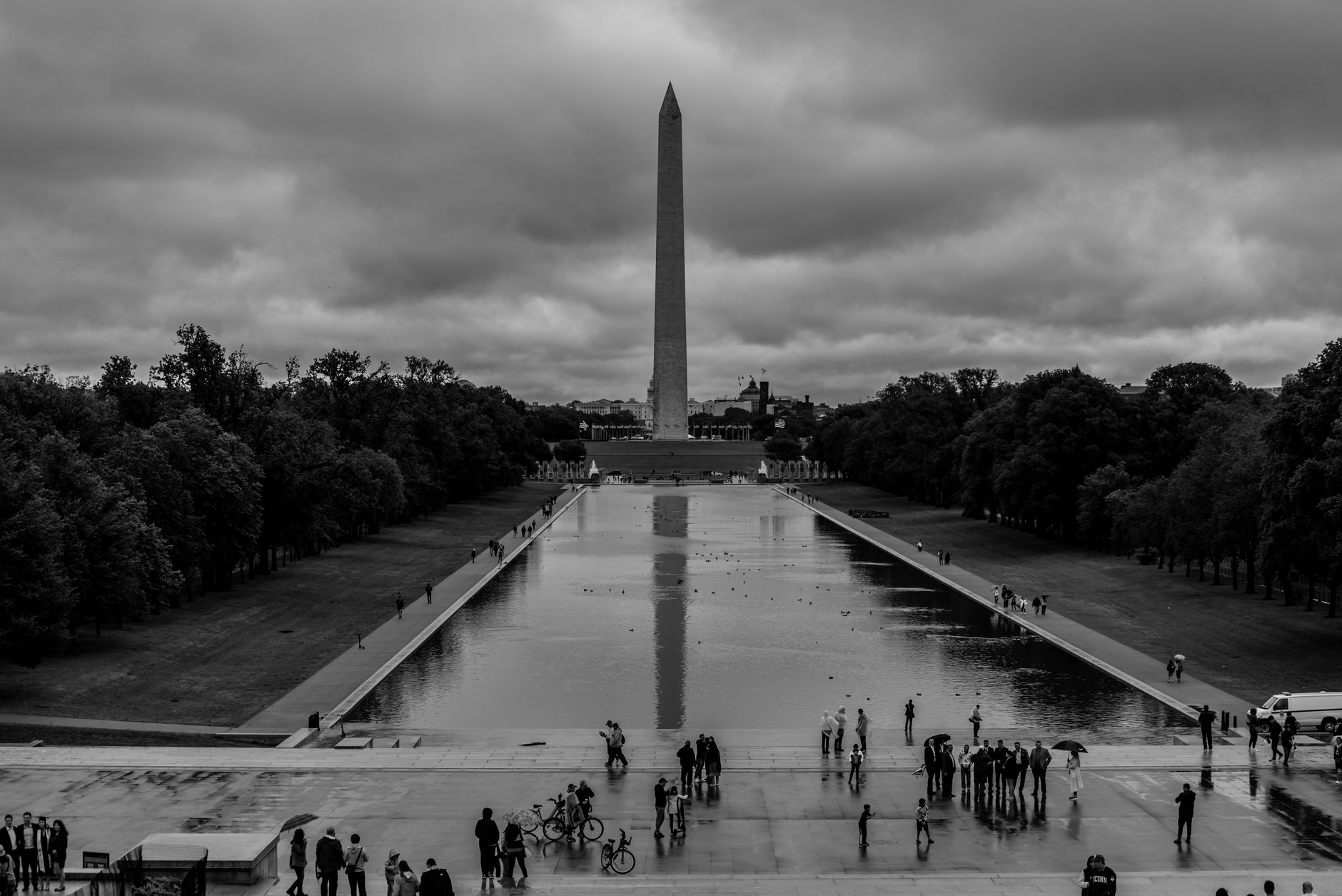
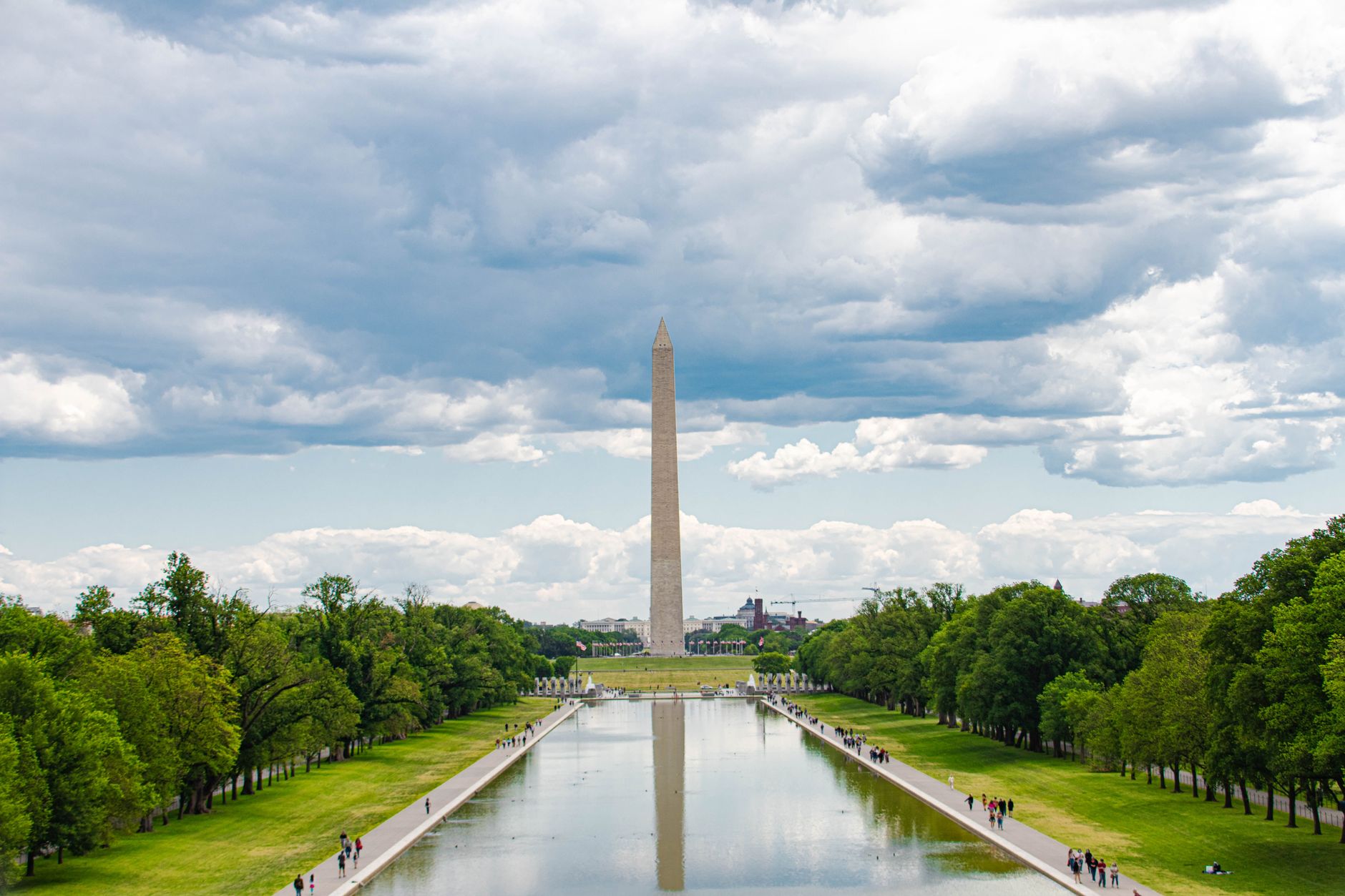
Marble, sirens, and the sweet smoke of a half-smoke on U Street do not sound like they belong to the same city, yet that collision is exactly what makes Washington, United States, worth your time. The surprise is scale: one minute you are under the 169-meter Washington Monument, thin as a pencil against the sky, and ten minutes later you are in a rowhouse neighborhood where the politics feel far away. Washington works best when you stop treating it as a backdrop for government and start reading it as a city of fiercely separate neighborhoods, each with its own appetite, music, and memory.

Built from cited sources · see the method · How we make our guides →
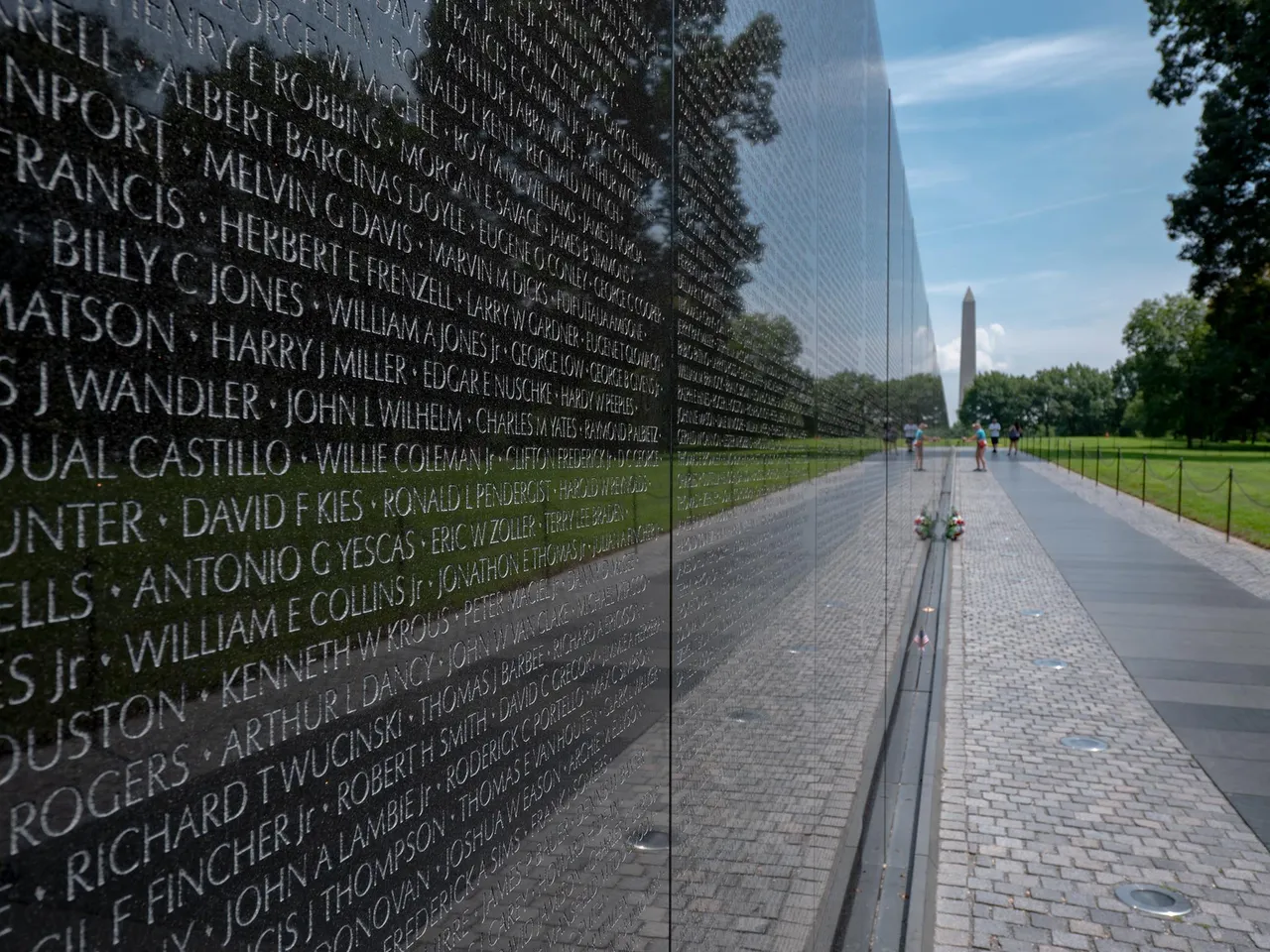
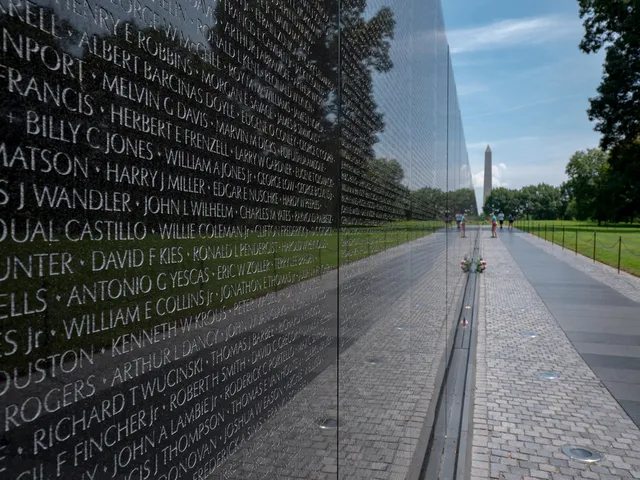
The National Mall still does what it was built to do. It stages the republic in long lines of stone and water, from Lincoln's seated calm to the black granite cut of Maya Lin's Vietnam Veterans Memorial. But the city becomes more interesting once you notice what sits beside that ceremony: the Smithsonian museums with free admission, the Thomas Jefferson Building at the Library of Congress with its gilded staircases and painted ceilings, the Botanic Garden's wet heat a few blocks from Capitol granite.
Washington is a majority-Black city with cultural roots that run deeper than the federal script visitors usually get. You hear that history on U Street, once called Black Broadway, where Duke Ellington was born and Ben's Chili Bowl has been feeding night owls since 1958. You taste it too, in mumbo sauce at a carryout counter, in Ethiopian coffee along 9th Street NW, in the fact that a city associated with official power often feels most honest after dark.
And then there is the local habit of slipping between worlds. A day here can start with the hush of the National Gallery's West Building, move to I. M. Pei's sharp-edged East Building, and end with a Thursday happy hour that feels more alive than Friday in many American cities. Washington rewards visitors who leave room for contradiction: solemn memorials, go-go rhythms, embassy parties, neighborhood markets, and enough architecture to keep you looking up.
Not every monument, just the ones we'd walk you past ourselves.



Where to wander, by quarter — each with its own rhythm.
Before you go
Curated from places in this city. Same price as official sites.


Prices shown are indicative — final pricing and availability are confirmed at checkout. Audiala may receive a commission from bookings made via these links.
From Indigenous trading ground to federal stage, Washington keeps turning streets into arguments about power.
Archaeology shows people were using the Potomac-Anacostia corridor thousands of years before any capital existed. This was good ground: fish-filled water, wooded bluffs, and fertile flats that caught the morning mist. Washington began as a lived-in river world, not an empty site waiting for surveyors.
By the first millennium's later centuries, the Nacotchtank had established a trading community along the Anacostia. Canoes moved people, food, and news through these waters long before Pennsylvania Avenue existed. The future capital sat on an older map of exchange.
Captain John Smith became the first documented English explorer to push this far up the river. Contact brought trade at first, then disease, warfare, and land seizure; National Park Service accounts say Native populations in the region fell to roughly one-quarter of pre-contact levels within about 40 years. The colonial city that came later was built on that rupture.
The Residence Act of July 16, 1790 fixed the national capital on the Potomac River. Maryland and Virginia ceded land for a federal district meant to stand apart from any state, a political compromise with survey stakes in the dirt. Washington was born from bargaining before it was born from brick.
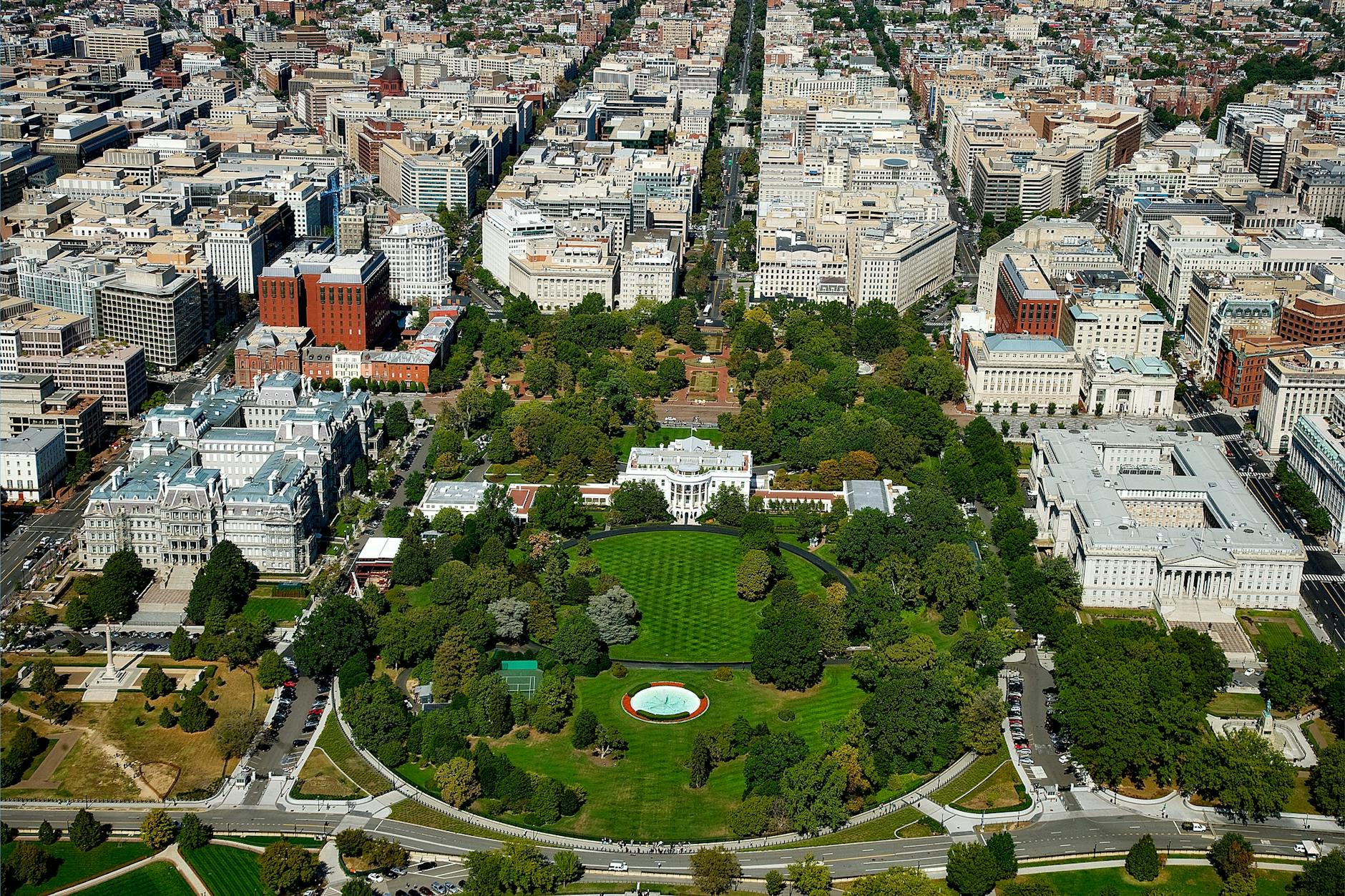
Pierre Charles L'Enfant gave Washington its grand conceit: a street grid pierced by diagonal avenues, long vistas, and ceremonial nodes that still shape how the city feels underfoot. Walk from the Capitol toward the Washington Monument and you are still walking inside his argument. Few cities wear a planner's ego this elegantly.
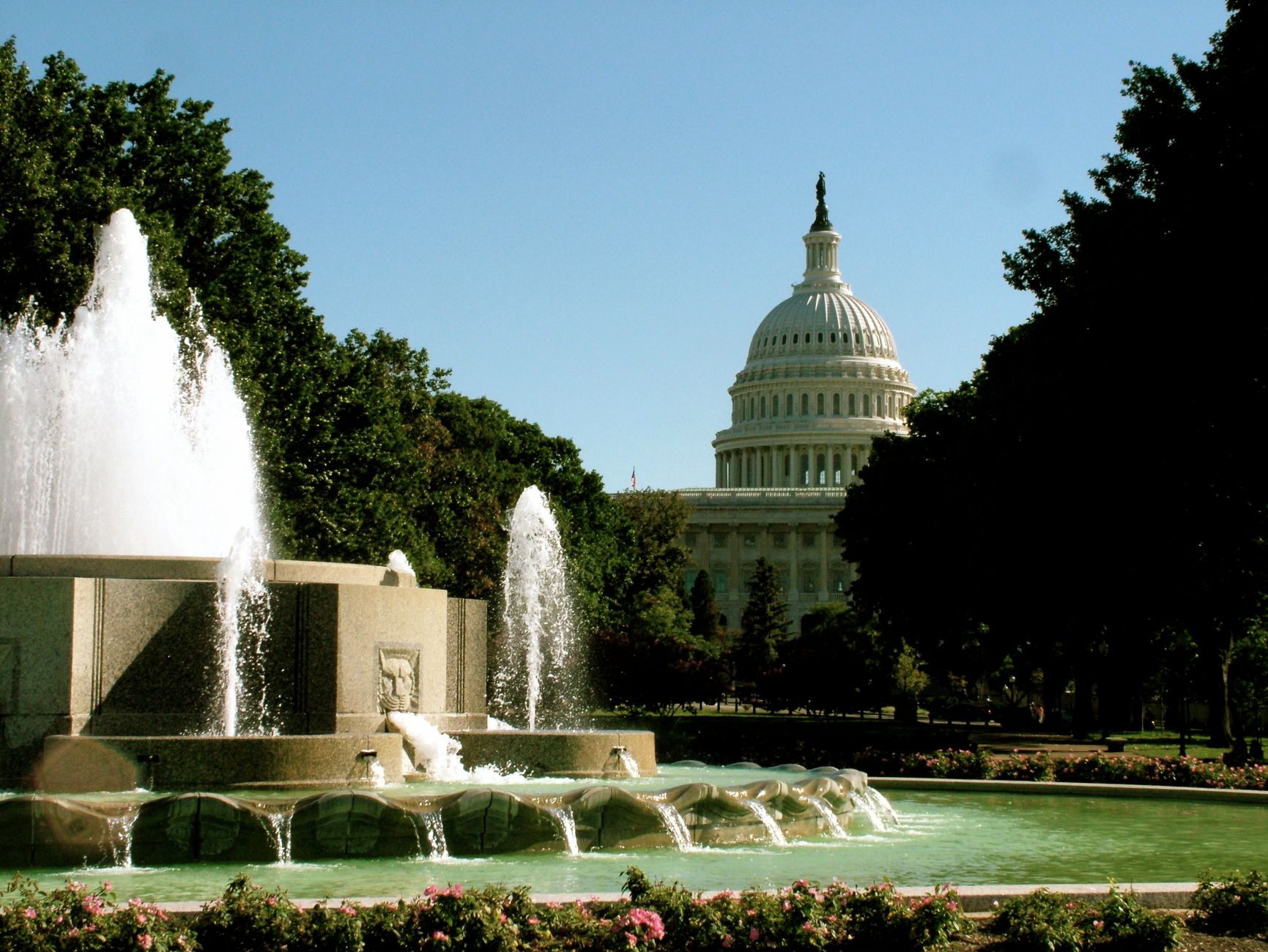
On September 18, 1793, George Washington laid the Capitol cornerstone in a Masonic ceremony thick with symbolism and wet earth. The building rose slowly, but the gesture mattered at once: Congress had claimed its hill. Even half-finished, the Capitol told the country where power intended to live.
In 1800 the federal government relocated from Philadelphia, and John Adams entered the still-damp President's House. Washington was muddy, underbuilt, and full of construction noise rather than polish. That rough beginning matters because the city was designed as an idea first and a functioning place second.
After the American defeat at Bladensburg on August 24, 1814, British troops marched into the capital and set fire to the Capitol, the President's House, and other public buildings. Smoke rolled over the unfinished city, turning the republic's symbols into black shells. Washington's first great lesson was brutal: monuments do not protect a government.
Congress created the Smithsonian Institution on August 10, 1846, giving Washington a cultural mission beyond politics. The same year, the Virginia portion of the district was returned to Virginia, cutting the federal city back from its original 100 square miles. So 1846 made Washington both smaller on the map and larger in ambition.
The Washington Monument's cornerstone was laid on July 4, 1848, and then the whole enterprise stalled for decades in a fog of money trouble and politics. That pause is still visible in the stone: the lower marble and upper marble don't quite match. The obelisk looks seamless from far off; up close, it admits how messy memory can be.
On April 16, 1862, the District of Columbia Compensated Emancipation Act freed enslaved people in Washington, months before the Emancipation Proclamation. Nearly 3,200 people were released from slavery in the capital of a nation still at war with itself. Freedom arrived here by statute first, which gave the city a special place in the history of abolition.
During the Civil War, Washington swelled from about 65,000 people before the conflict to roughly 200,000 by the end of 1861, ringed by 68 forts and 93 detached batteries. Soldiers, clerks, nurses, contrabands, and contractors turned the city into a crowded war machine. The sleepy capital never really came back.
Congress replaced Washington's patchwork local governments in 1871, and Alexander Robey Shepherd drove through sewers, sidewalks, street trees, and paved roads at punishing speed. He spent freely and angered plenty of people. Still, much of the city visitors now read as old Washington was shaped by this burst of hard, muddy, expensive modernization.
When Frederick Douglass bought Cedar Hill in Anacostia in 1877, he chose a house with commanding views east of the river and turned it into a center of Black intellectual and political life. The man who had escaped slavery now received diplomats, activists, and writers in a 20-room home above the city. Washington sharpened his public voice, and he sharpened Washington's conscience.
The Washington Monument was dedicated in 1885 after a stop-and-start construction saga that lasted more than 30 years. At 555 feet 5 1/8 inches, it was then the tallest structure in the world, a pale stone needle rising clean above a still-low city. Washington had found its vertical exclamation point.
Edward Kennedy Ellington was born in Washington in 1899 and grew up in the city's Black social world around U Street, churches, dance halls, and disciplined piano lessons. He left for New York, but the polish and swing people later called elegant were shaped here first. Washington likes to present itself in marble; Ellington caught its satin side.
The McMillan Plan of 1902 swept away the Victorian clutter that had filled the Mall and restored L'Enfant's long axial vision. Out went the tangled gardens and railroad traces; in came the broad civic greensward people now mistake for something inevitable. It was planned theater, and it worked.
Congress passed the Height of Buildings Act in 1910, fixing the low skyline that still makes Washington feel horizontal and oddly breathable. The rule keeps church towers, domes, and monuments in command, with sky pooled above them instead of sealed off by glass canyons. Love it or hate it, the law gives the city its peculiar scale.
The Lincoln Memorial was dedicated on May 30, 1922, after eight years of construction on the west end of the Mall. Henry Bacon's temple and Daniel Chester French's seated Lincoln turned white marble into civic stagecraft. The building would become far more than a memorial; it would become an American microphone.
By summer 1932, between 10,000 and 20,000 World War I veterans and their families had camped in Washington, many on the Anacostia Flats, demanding early bonus payments during the Depression. On July 28, federal troops under Douglas MacArthur cleared them with cavalry, tanks, tear gas, and fire. The capital looked cold that day. Maybe colder than it ever intended.
After the Daughters of the American Revolution blocked Marian Anderson from Constitution Hall because she was Black, she sang on the Lincoln Memorial steps on April 9, 1939. About 75,000 people gathered outdoors, with millions more listening by radio. One contralto voice and a cold spring wind changed what that memorial meant.
On August 28, 1963, the March on Washington for Jobs and Freedom filled the Mall and the Lincoln Memorial with one of the largest political crowds the city had ever seen. Martin Luther King Jr.'s 'I Have a Dream' speech fixed the reflecting pool, the steps, and the long westward vista in global memory. Washington stopped being merely the seat of government and became the nation's moral theater.
After Martin Luther King Jr. was assassinated on April 4, 1968, Washington erupted in days of unrest that left about 1,000 fires and brought 13,600 troops into the city. U Street and H Street carried the scars for decades in boarded storefronts and empty lots. You can still feel 1968 in the gaps between old brick facades.
The Home Rule Act of 1973 gave Washington an elected mayor and council, the largest return of local self-government since the nineteenth century. Even then, Congress kept the power to overrule the city, which is why D.C. politics still carries an edge sharper than most American municipal life. This capital governs itself with one eye always on Capitol Hill.
Metrorail opened its first 4.6-mile segment on March 27, 1976, giving Washington the infrastructure it had argued about for years. The stations came dressed in coffered concrete vaults, soft light, and a kind of institutional grandeur that feels more Roman bath than subway grit. Metro changed the map in people's heads before it changed the commute.
A magnitude 5.8 earthquake centered near Mineral, Virginia, struck on August 23, 2011 and damaged Washington's stone-heavy monuments. The Washington Monument cracked badly enough to close, and the National Cathedral took around $32 million in damage. Even in a city built to look permanent, the masonry can shiver.
The National Museum of African American History and Culture opened on September 24, 2016, after decades of political struggle and planning. David Adjaye's bronze-colored corona rises from the Mall with the authority of a monument and the warmth of crafted metal catching late sun. The building changed the center of Washington by changing whose story stands there in full scale.
On January 6, 2021, a mob stormed the U.S. Capitol in an effort to stop certification of the presidential election, injuring more than 140 officers. The assault left broken windows, blood, chemical irritants, and a terrible intimacy between spectacle and violence. Washington had seen invasion before; this time the breach came from within the republic.
On March 27, 2026, Metro marked 50 years of rail service with 98 stations spread across 128 miles of track. That statistic sounds dry until you remember what it means in daily life: students, federal workers, bartenders, museum guards, and tourists all descending into the same vaulted stations. Washington remains a capital, yes, but this anniversary underlines something better: it is a lived city, not a set piece.
Abolitionist and writer · 1818–1895
Lived here 1877–1895
Douglass spent his final years at Cedar Hill in Anacostia, on a rise above the city where he could look back toward the Capitol that had once legislated his bondage. He would recognize Washington's grand language about freedom, then ask the harder question: who gets to live inside it?
Composer and bandleader · 1899–1974
Born here
Ellington was born in Washington and came out of the U Street world once called Black Broadway, where formal manners and late-night swing learned to share a sidewalk. He'd still hear his city in the brass and polish of the place, though he'd probably notice the rising rents before the applause.
Composer and conductor · 1854–1932
Born here
Sousa was born in Washington and turned military march music into something almost theatrical, a fitting talent for a city that loves ceremony and uniforms. He might smile at the parade routes still intact, then wonder what happened to the patience for a full brass band in the street.
Urban planner · 1754–1825
Planned the city in 1791
L'Enfant drew Washington with sweeping avenues, long sightlines, and enough symbolic geometry to keep historians employed for generations. He'd recognize the bones immediately, though the traffic, security barriers, and food trucks parked inside his grand design might leave him muttering in French.
Women's rights activist · 1885–1977
Worked here from the 1910s onward
Paul used Washington as a political stage, turning parades, pickets, and a Capitol Hill headquarters into pressure points for the suffrage and equal rights movements. She'd probably approve of the city whenever it fills with protest signs, because that was always the point: democracy should make noise.
Small things that change how the city treats you.
The city, as it actually looks.



Yes, especially if you like cities that put power, protest, and culture on the same block. Washington gives you free Smithsonian museums, the National Mall after dark, strong Black history, and neighborhoods that feel nothing like federal postcard America.
Three to four days works for most first-time visitors. That gives you one day for the National Mall and monuments, one for museums, one for neighborhoods like Georgetown or U Street, and a spare day for places people often skip such as the Arboretum, Hillwood, or Frederick Douglass's house.
Take Metro. Reagan National sits on the Blue and Yellow lines, and official visitor guidance puts downtown about 20 minutes away, which is faster and cheaper than sitting in bridge traffic with a taxi meter running.
No, and a car usually makes the trip worse. Metro covers the main visitor districts, buses fill the gaps, central neighborhoods are walkable, and parking near the Mall or Georgetown can feel like a small civic punishment.
Less than many U.S. capitals if you use the city properly. The big money saver is free admission at most Smithsonian museums, the National Gallery of Art, the Library of Congress, and many memorial sites, so your budget goes mainly to hotels, meals, and transport.
Usually yes in the main visitor areas, with the same late-night caution you'd use in any large U.S. city. Official advice is simple: stay aware, don't walk alone through quiet stretches of parkland at night, keep valuables out of sight on Metro, and take summer heat as seriously as petty crime.
April to May and late September to October are the sweet spots. Spring brings cherry blossoms and good walking weather, while early fall keeps the air lighter than midsummer, when the Mall can turn hot enough to erase your ambition by noon.
Metro and Metrobus are usually the cheapest combination. You can tap in directly with a contactless card or phone, and if you're taking several rides a day, WMATA's 1-day or 3-day passes start making sense.
7 places to discover
Saved and recently read places — kept on this device only.
Photos may have been resized or cropped.