

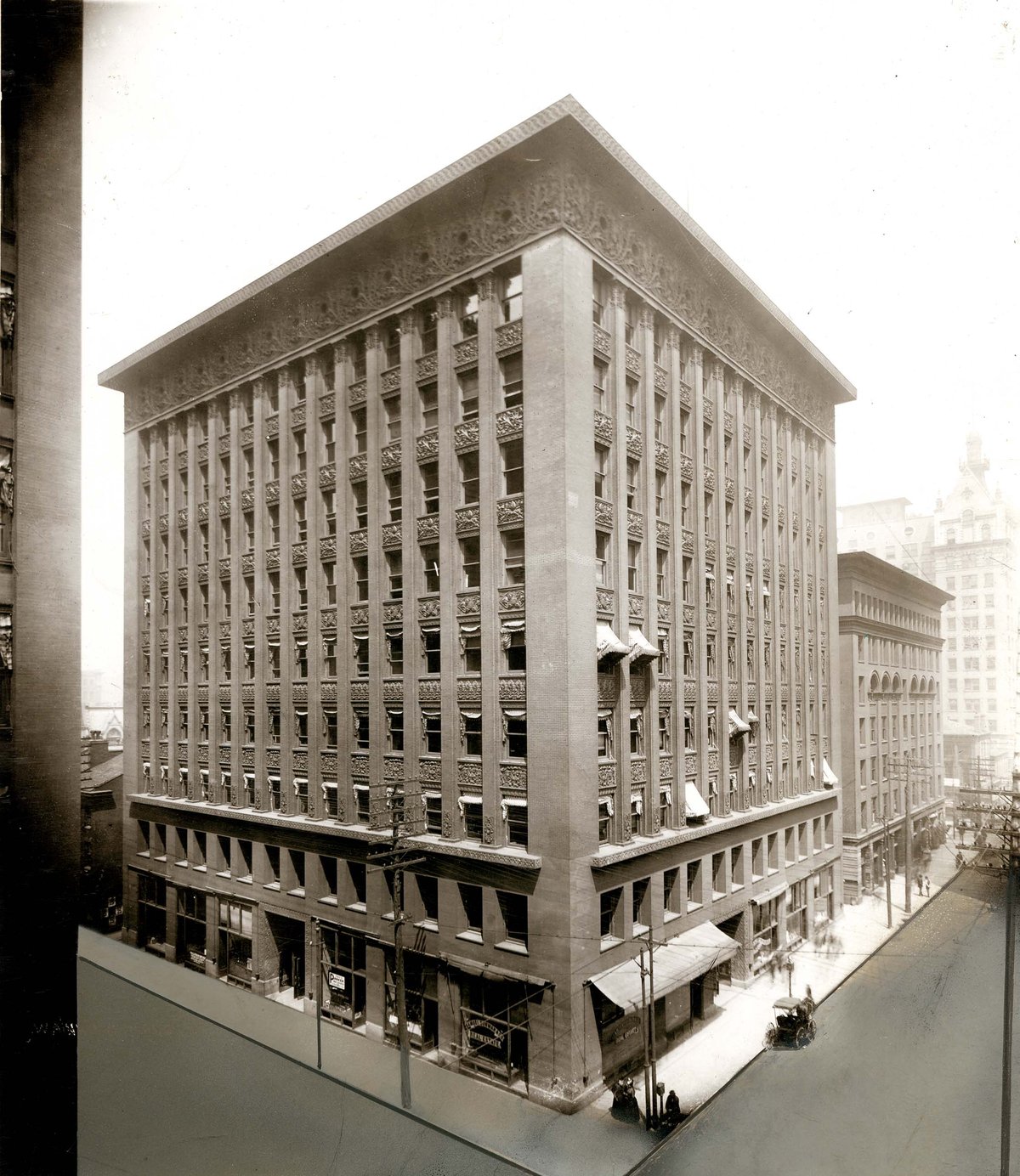
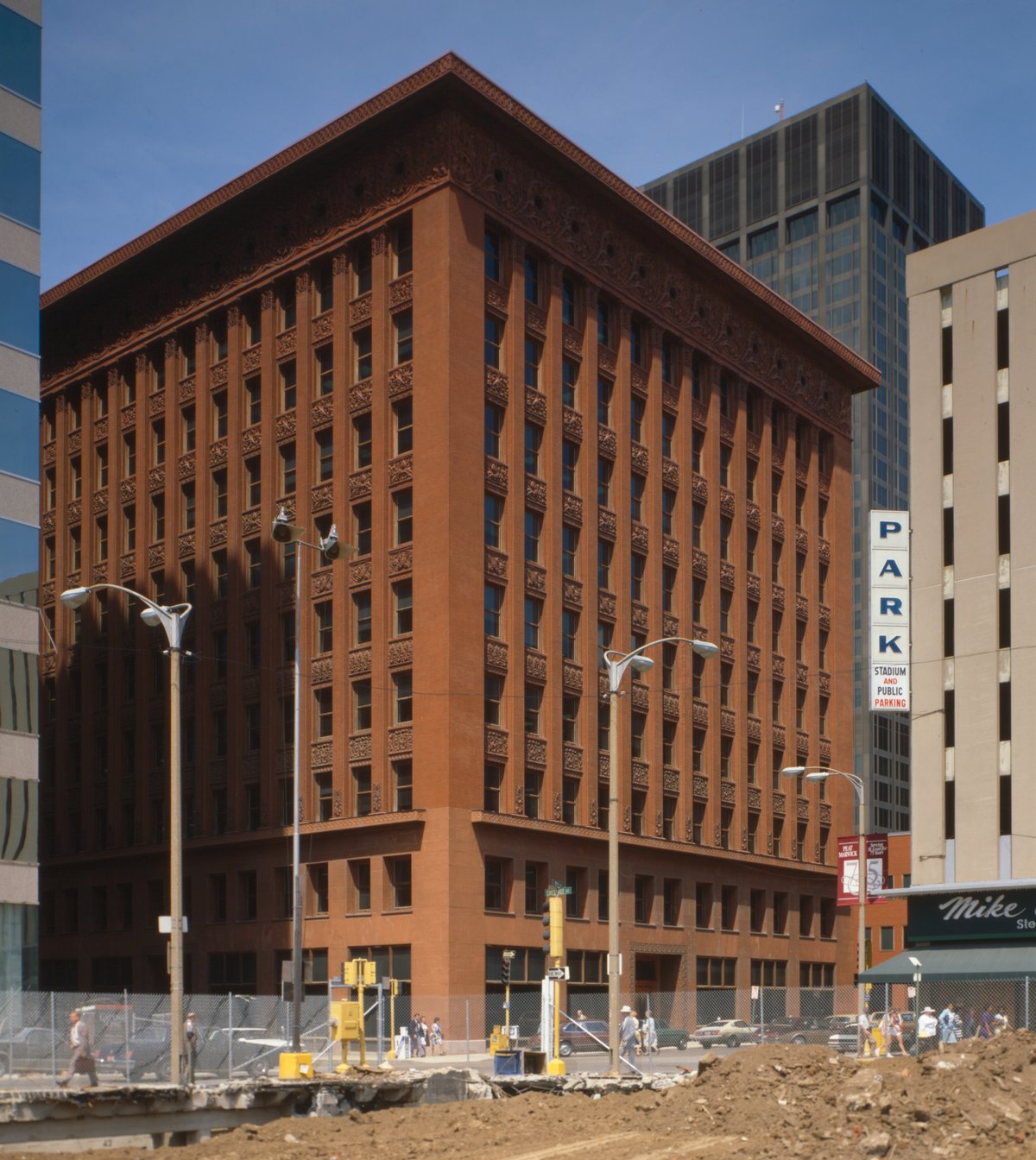
Quick Facts
- Location 709 Chestnut Street, Downtown St. Louis, MO
- Architects Louis Sullivan & Dankmar Adler
- Completed 1891
- Height 10 stories, 147 feet (45 meters)
- Style Chicago School / Early Skyscraper
- Designations National Historic Landmark (1968), St. Louis City Landmark (1972)
Historical Background
Commissioned by Ellis Wainwright, a successful St. Louis brewer, the Wainwright Building was envisioned as a modern office building that would reflect the city’s economic vitality in the late 19th century. Sullivan and Adler’s design replaced traditional load-bearing masonry with a steel skeleton, allowing for greater height and expansive windows. The building’s tripartite structure—base, shaft, and capital—mirrors a classical column, while its rich ornamentation and vertical emphasis reflect Sullivan’s belief that a building’s form should honestly express its function (Wikipedia).
Architectural Highlights
Sullivan’s “Form Follows Function”
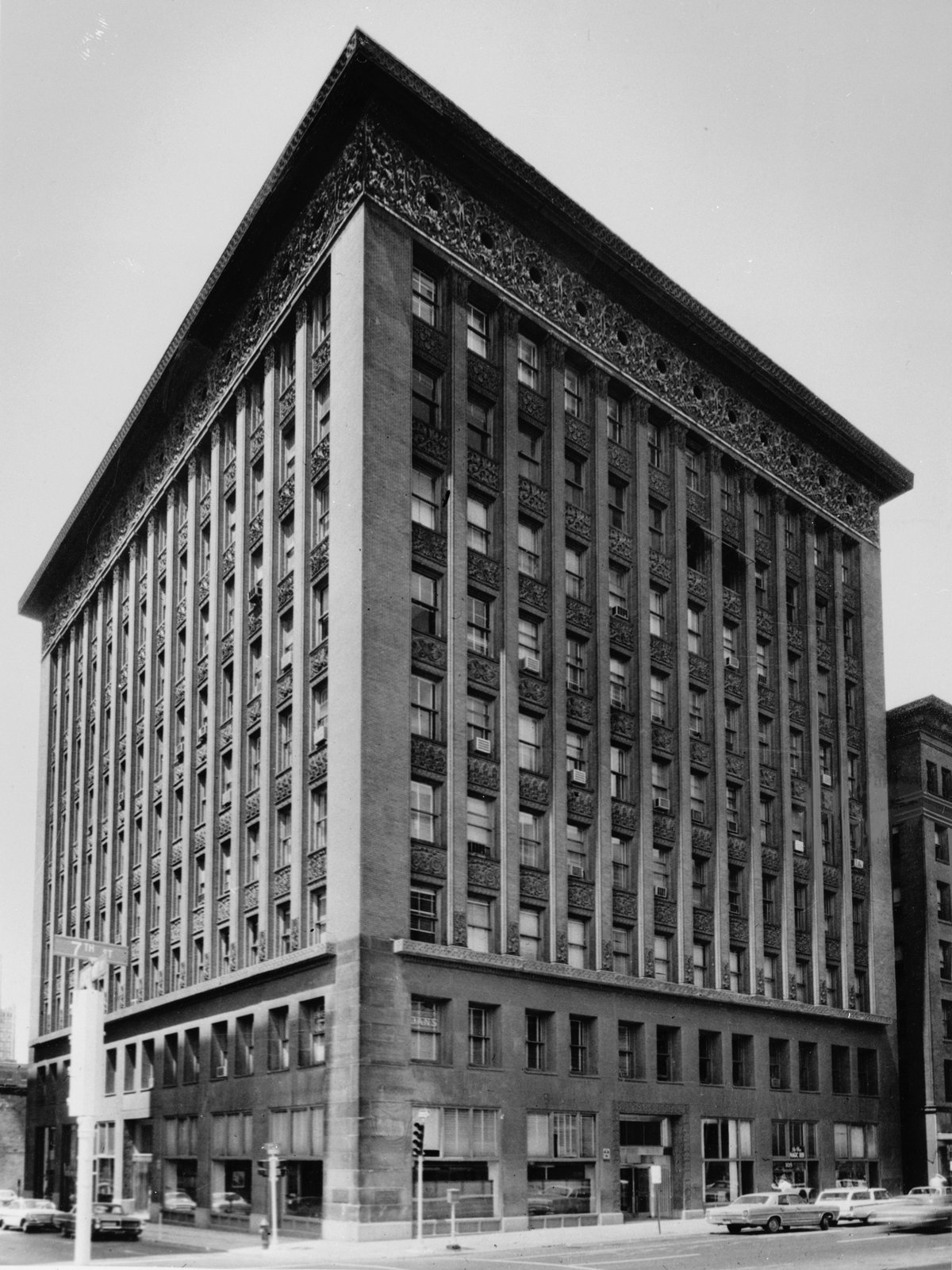
The Wainwright Building is celebrated for embodying Sullivan’s design philosophy, "form follows function." Rather than concealing its structure, the building’s design openly celebrates its steel frame through uninterrupted vertical piers and broad windows. The façade is divided into:
- Base Terra cotta-clad ground floor with large windows for retail engagement.
- Shaft Eight stories of vertical red brick piers, visually emphasizing height.
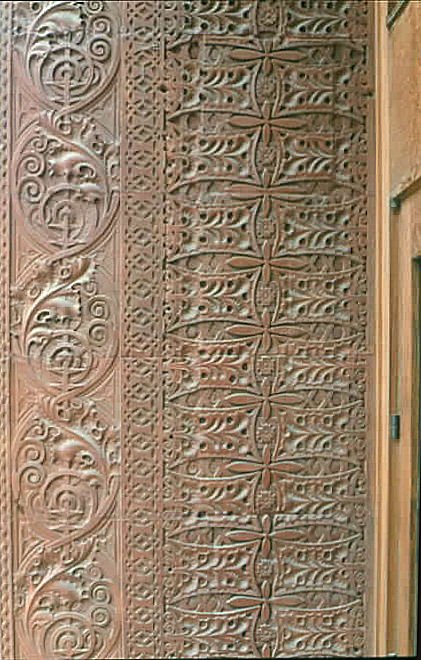
- Capital Ornate terra cotta frieze and cornice, featuring stylized foliage and geometric motifs.
This approach set a precedent for future skyscrapers and influenced generations of architects, including Frank Lloyd Wright (Frank Lloyd Wright Foundation).
Ornamentation
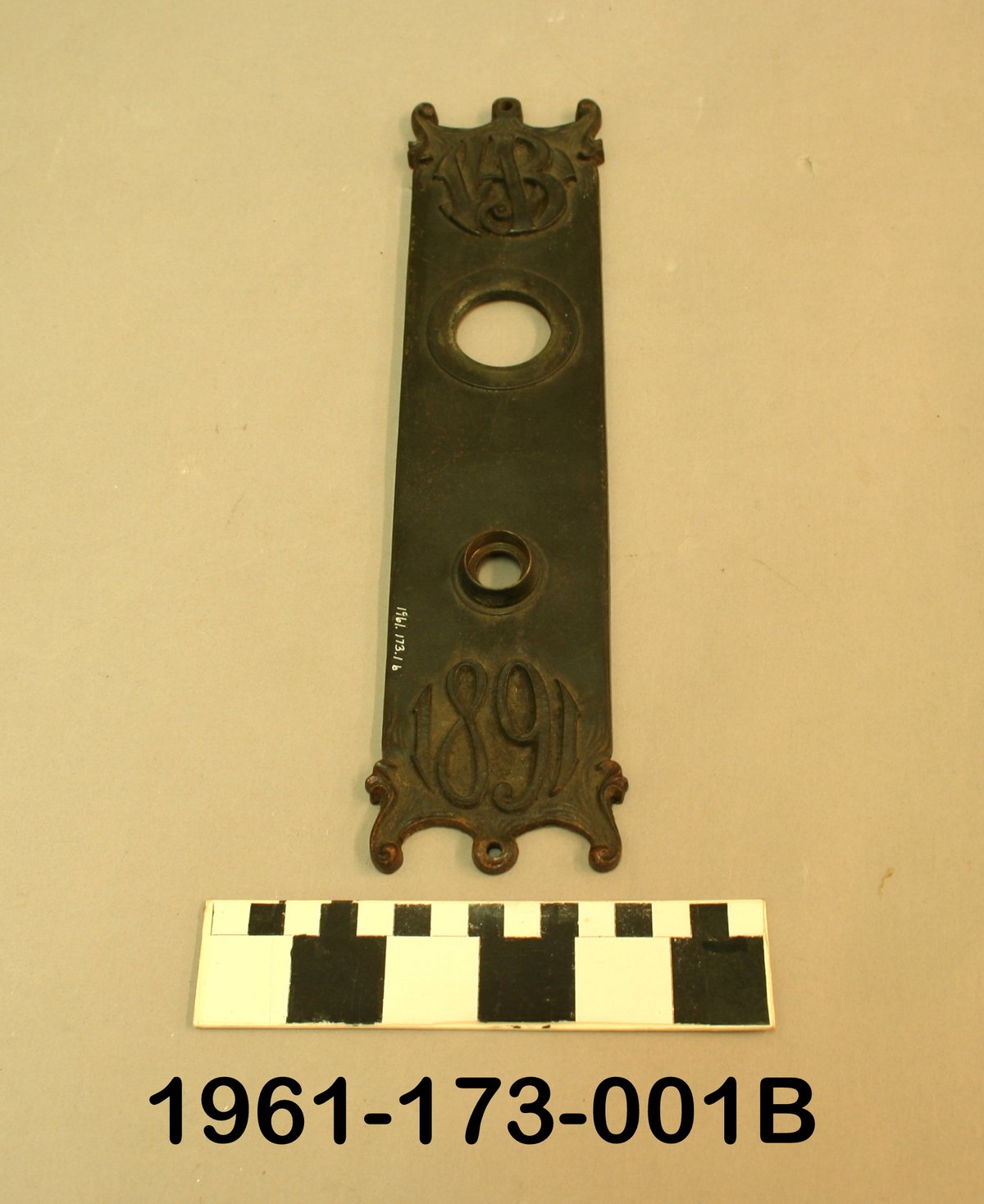
Sullivan’s organic ornamentation is visible in the building’s intricate terra cotta panels and friezes, inspired by natural forms. The lobby, accessible during business hours, retains original marble wainscoting and decorative metalwork, offering a glimpse of the building’s interior artistry (The Art Institute of Chicago).
Visitor Information
Exterior Viewing
The Wainwright Building’s striking exterior can be viewed at any time from Chestnut Street and surrounding sidewalks. Interpretive plaques provide historical and architectural context. The best photography opportunities are during morning or late afternoon when natural light enhances the terra cotta details.
Interior Access
Public access to the interior is currently limited due to the building’s ongoing use as a state office facility and pending redevelopment. Lobby access is generally available during weekday business hours (8:00 AM – 5:00 PM), though hours may vary during ownership transition. Guided interior tours are not regularly offered but may be arranged by special request through organizations like the Landmarks Association of St. Louis or as part of select walking tours.
Guided Tours
Several local walking tour companies include the Wainwright Building as a highlight within downtown St. Louis architecture tours. These tours offer in-depth commentary on the building’s design, its place in architectural history, and its impact on the surrounding area (Explore St. Louis Visitors Guide).
Accessibility
The building’s exterior and surrounding sidewalks are wheelchair accessible, with curb cuts at major intersections. Interior accessibility is limited due to restricted public access, but the ground-level lobby is ADA-compliant during open hours.
Tickets and Admission
There are no tickets or admission fees required for viewing the exterior or lobby. Advance arrangements and special approval are needed for group or educational interior tours.
Nearby Attractions
While visiting the Wainwright Building, explore these nearby St. Louis landmarks:
- Gateway Arch National Park: Iconic monument and museum just a short walk away.
- Old Courthouse: Historic site of the Dred Scott case.
- St. Louis Union Station: Renovated train station with entertainment, dining, and attractions.
- Citygarden Sculpture Park: Contemporary urban park with public art, located within walking distance.
Downtown St. Louis offers a variety of dining, shopping, and entertainment options. Visitor guides and maps are available at the St. Louis Visitor Center.
Preservation and Redevelopment
The Wainwright Building has faced preservation challenges, including threats of demolition in the 20th century and ongoing maintenance concerns. It was saved through the efforts of local and national preservation organizations, earning National Historic Landmark status in 1968 (St. Louis Public Radio). In 2024, the State of Missouri sold the building to Arch to Park Equity LLC, which has pledged to preserve and revitalize the site as part of a broader downtown redevelopment plan (Greater St. Louis Inc. RFP). Restoration initiatives have focused on maintaining the exterior terra cotta, brickwork, and original interior finishes, ensuring the building remains an enduring symbol of St. Louis’s architectural heritage (ABBAE).
FAQs
Q: What are the Wainwright Building’s visiting hours?
A: The exterior is viewable at any time. The lobby is generally open weekdays from 8:00 AM to 5:00 PM, but interior access is limited due to ongoing redevelopment.
Q: Is there an admission fee?
A: No, there is no fee to view the exterior or lobby.
Q: Are guided tours available?
A: Several local walking tours include the building as a highlight. Interior tours require advance arrangement.
Q: Is the building wheelchair accessible?
A: Yes, the exterior and lobby are accessible.
Q: What are the best nearby attractions?
A: The Gateway Arch, Old Courthouse, and St. Louis Union Station are all within walking distance.
Practical Visitor Tips
- Best Time for Photos Early morning or late afternoon for optimal lighting.
- Parking Public garages and street meters are available nearby.
- Duration Plan for 20–30 minutes at the building; longer if including nearby sites or a guided tour.
- Safety Downtown St. Louis is safe during daylight; be mindful of surroundings in urban areas.
- Events While the building itself does not host public events, downtown often features cultural and community festivals.