Plan and listen to Robison Field with Audiala.
Audio guide in your pocket, itinerary in your browser. Built for the way you actually visit.
Introduction
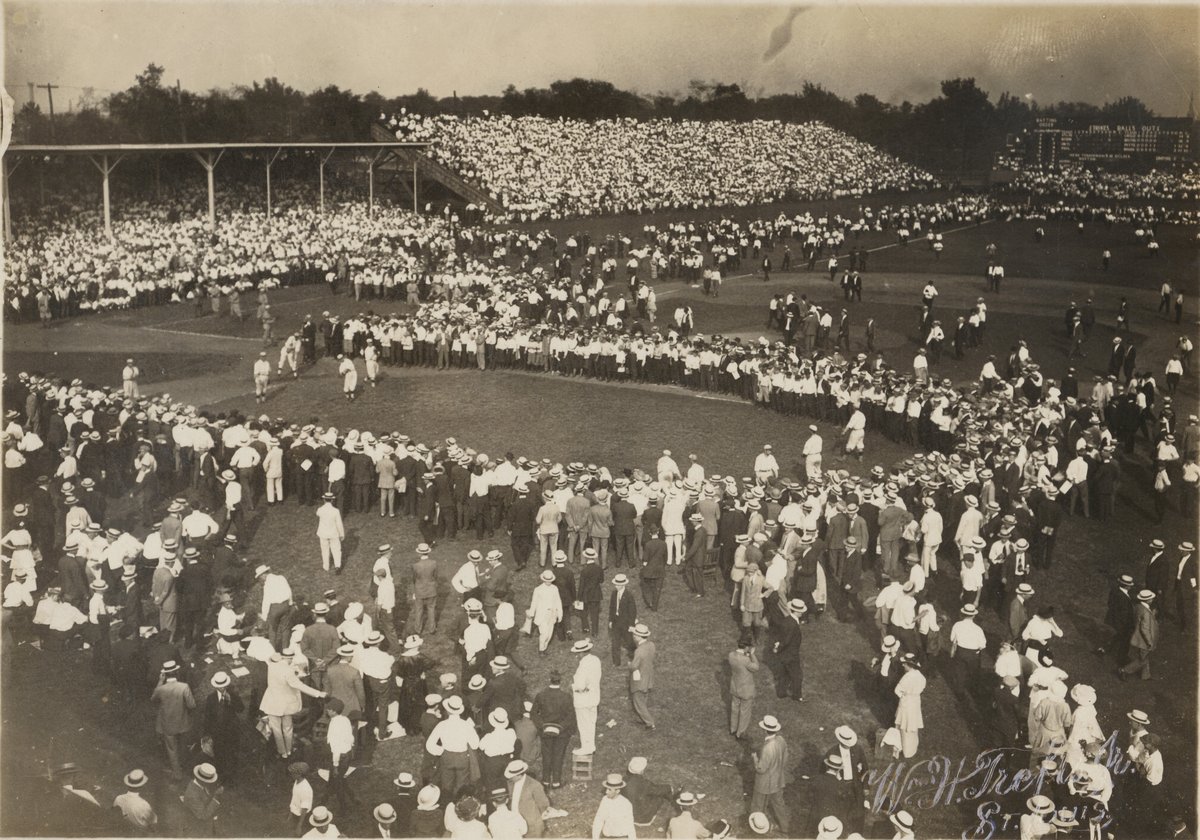
Robison Field stands as a testament to St. Louis’s deep-rooted baseball heritage and the evolution of America’s pastime. Once the home of the St. Louis Cardinals, this iconic ballpark played a pivotal role in shaping both the local community and baseball at large. Although the original structure was demolished over a century ago, its historical footprint endures through commemorative markers, museum exhibits, and the vibrant stories cherished by fans and historians. Whether you’re a lifelong Cardinals supporter, a student of sports history, or a visitor eager to connect with St. Louis’s rich past, this guide offers a thorough look at Robison Field’s legacy, practical visitor information, and tips for exploring related sites throughout the city (Project Ballpark; Distilled History; SABR BioProject).

Origins and Construction of Robison Field
Built in 1893 as New Sportsman’s Park, Robison Field emerged during a period of rapid urban expansion in St. Louis and widespread enthusiasm for professional baseball. The site, selected on Jesse G. Lindell’s estate, was accessible thanks to a strategic partnership with the Lindell Street Railway Company, which aimed to boost streetcar ridership by situating the park at the end of their line—a common strategy in late 19th-century sports venue development (Project Ballpark).
The ballpark featured wooden grandstands, open-air seating, and a natural grass field, offering capacity for about 15,000 spectators at its peak. Its location north of downtown was instrumental in building a loyal fanbase and embedding the club into St. Louis’s growing sports culture.
Ownership and Naming History
Entrepreneur Chris Von der Ahe, owner of the St. Louis Browns, was central to the park’s early years. Originally called New Sportsman’s Park to distinguish it from the older venue, it was renamed Robison Field in 1899 after the Robison brothers, Frank and Stanley, purchased both the club and the stadium, ushering in a new era of stability and growth (SABR BioProject).
Architectural Features and Layout
Robison Field embodied typical turn-of-the-century ballpark architecture, with a wooden grandstand encircling the infield, bleacher seating in the outfield, and asymmetrical field dimensions—most notably a deep center field that challenged even the best hitters (Ballparks of Baseball). Amenities were basic, with limited concessions and restroom facilities, yet the park’s intimacy and lively crowds made it beloved among fans. The vulnerability of its wooden construction was exposed by several fires, including major rebuilds after blazes in 1898 and 1901.
Robison Field’s Role in St. Louis Baseball History
For nearly three decades, Robison Field was the home of the St. Louis Cardinals, formerly the Browns, from 1893 to 1920. The park witnessed the club’s transformation from underdogs to National League contenders, with highlights such as the 1914 season and the major league debut of Hall of Famer Rogers Hornsby (Baseball Reference). The venue also hosted exhibition games featuring Negro League teams, providing rare integrated audiences and marking important moments in the struggle for baseball integration.
Decline, Demolition, and Site Today
By the late 1910s, Robison Field’s wooden facilities were outdated compared to modern steel-and-concrete ballparks. Recurrent fire damage and declining attendance led the Cardinals to relocate to Sportsman’s Park in 1920. The original ballpark was demolished, and the land was redeveloped. Today, Beaumont High School stands on the site, and a historical marker installed by the Society for American Baseball Research (SABR) commemorates the location (St. Louis Cardinals History).
Visiting Robison Field’s Legacy: Hours, Tickets, and Tips
Robison Field Historical Marker
- Location: Beaumont High School, 3836 Natural Bridge Ave, St. Louis, MO 63107
- Access: The SABR historical marker is publicly accessible from the sidewalk; no ticket or entry fee is required.
- Visiting Hours: The marker can be viewed at any time, but daytime visits are recommended for safety.
- Accessibility: The area is flat and accessible to visitors with mobility challenges.
- Parking: Street parking is available nearby, but check local signs for restrictions.
Nearby Museums and Attractions
- Missouri History Museum
- Hours: Tuesday–Sunday, 10 AM–5 PM
- Admission: Free general admission; ticket reservations recommended for special exhibits (Missouri History Museum)
- St. Louis Cardinals Hall of Fame and Museum
- Hours: Daily, 10 AM–5 PM
- Tickets: Available online or at the museum (Cardinals Hall of Fame)
Getting There
- Public Transit: MetroBus routes serve Natural Bridge Ave and Vandeventer Ave (Metro Transit St. Louis).
- Taxi/Rideshare: Available throughout St. Louis; travel time from downtown is approximately 5–15 minutes.
Cultural and Urban Impact
Robison Field was more than just a ballpark—it was a community anchor that catalyzed neighborhood growth and exemplified early 20th-century urban planning. Its legacy is felt in the surrounding area’s evolution, the development of local businesses, and St. Louis’s continued prominence as a baseball city (Project Ballpark).
Notable Events and Anecdotes
- Early Careers of Baseball Legends: Rogers Hornsby, Cy Young, and Miller Huggins all graced Robison Field, making it a launching pad for Hall of Fame careers (Distilled History).
- Pioneering Women in Sports: Helene Britton became baseball’s first female owner in 1911, guiding the Cardinals through a transformative era.
- Branch Rickey’s Innovations: Rickey’s time at the Cardinals began here, where he developed strategies that would later revolutionize the sport.
Preservation and Modern Recognition
While no original structures remain, Robison Field’s story is preserved through the SABR marker, digital archives, local walking tours, and exhibits at area museums. Online resources such as Project Ballpark and SABR offer historical photographs, diagrams, and first-person accounts.
Frequently Asked Questions (FAQs)
Q: Can I visit Robison Field today?
A: Yes, the historical marker is accessible at Beaumont High School; the ballpark itself no longer exists.
Q: Are there tours or tickets required?
A: No tickets or tours are required to view the marker. Museums nearby may have ticketed exhibits.
Q: What are the best nearby attractions?
A: Busch Stadium, Cardinals Hall of Fame, Missouri History Museum, and Fairground Park.
Q: Are there any commemorative events at the site?
A: Occasionally, local historical groups or SABR host commemorations, especially during baseball season.
Q: Is the site accessible for people with disabilities?
A: Yes, the marker is on a flat public sidewalk.
Summary Table: Key Visitor Tips
| Aspect | Details |
|---|---|
| Location | Beaumont High School, 3836 Natural Bridge Ave, St. Louis, MO 63107 |
| Access | Public sidewalk, marker visible at all times |
| Parking | Street parking; check local restrictions |
| Facilities | None on site; plan ahead for restrooms and refreshments |
| Safety | Daytime visits recommended; be aware of surroundings |
| Nearby Attractions | Busch Stadium, Cardinals Hall of Fame, Missouri History Museum |
| Best Time to Visit | Daytime, especially during baseball season |
| Accessibility | Sidewalk-accessible, flat terrain |
| Souvenirs | Available at downtown sports shops and the Cardinals Hall of Fame |
| Etiquette | Respect school property and operations |
Discover More
Though the grandstands of Robison Field are long gone, its spirit endures in the memories of fans, the histories preserved by SABR and local museums, and the living tradition of St. Louis baseball. A visit to the site, complemented by stops at the Missouri History Museum and Cardinals Hall of Fame, offers a meaningful journey through the city’s sporting and cultural evolution.
Plan your visit to St. Louis’s baseball heritage sites, download the Audiala app for guided audio tours, and follow us on social media for travel tips and historical insights. Whether you’re tracing the steps of baseball greats or exploring the city’s vibrant neighborhoods, Robison Field’s story offers inspiration and a window into the past.
Listen to the full story in the app
The whole Robison Field,
told well.
Listen to sourced travel stories with local history and practical context — ready offline.
Verified, and shown.
Researched and written by the Audiala editorial team from historical records, architectural archives, and local expertise.
Louis’s Iconic Baseball Park, 2025, Project Ballpark
Louis’ Legendary Baseball Park, 2025, Distilled History
Louis Attractions, 2025, Ballparks.com and Rome2Rio ,
Louis’s Baseball Heritage, 2025, SABR and Ballparks of Baseball ,
Louis Cardinals Hall of Fame and Museum
Built from cited sources · see the method · How we make our guides →