Plan and listen to Pulitzer Foundation For The Arts with Audiala.
Audio guide in your pocket, itinerary in your browser. Built for the way you actually visit.
Introduction
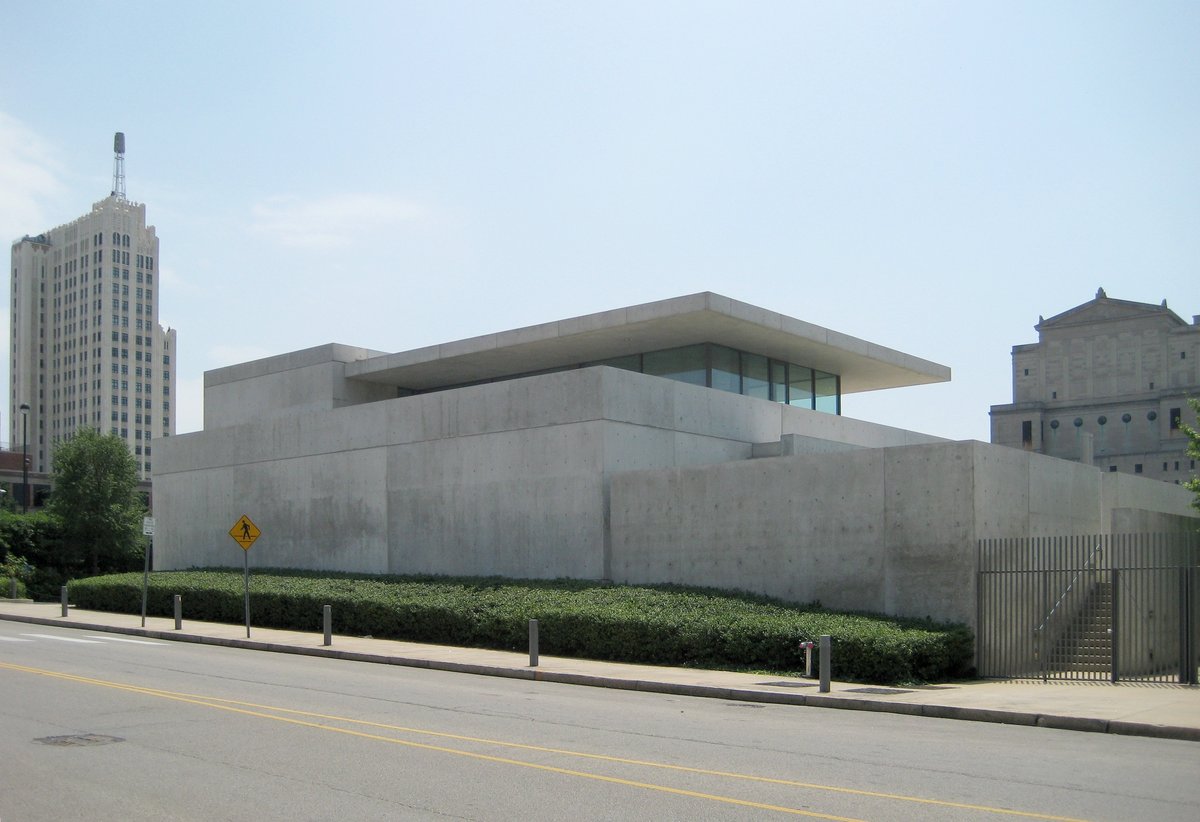
The Pulitzer Arts Foundation in St. Louis, Missouri, is a celebrated institution where innovative architecture, contemporary art, and community engagement converge. Founded in 2001 by Emily Rauh Pulitzer and Joseph Pulitzer Jr., the foundation is renowned for its dynamic exhibitions, non-collecting philosophy, and its architectural home—an internationally acclaimed building by Tadao Ando. Visitors are welcomed into a contemplative environment where art and architecture are deeply intertwined, making the Pulitzer Arts Foundation a must-see for anyone interested in St. Louis’s historical and cultural landscape (Pulitzer Arts Foundation).

History and Mission
The Pulitzer Arts Foundation was established to foster the appreciation of art and architecture through thought-provoking exhibitions and public programming. From its inception, the institution has been a catalyst for artistic innovation and dialogue in St. Louis, reflecting a late 20th-century trend toward purpose-built spaces for contemporary art (Wikipedia). The foundation’s commitment to community engagement and education is reflected in its free admission policy and robust calendar of public events.
Architectural Highlights
The Pulitzer Arts Foundation’s building is the first freestanding public commission in the United States by Japanese architect Tadao Ando, a Pritzker Prize laureate. The 27,000-square-foot structure exemplifies minimalist design, with smooth concrete surfaces, rectilinear volumes, and an emphasis on natural light and serene spatial experiences. Ando’s design integrates indoor galleries with tranquil outdoor spaces, such as a water court and landscaped gardens, fostering a meditative atmosphere that enhances visitors’ engagement with the art on display (Pulitzer Arts Foundation).
Notable permanent, site-specific installations include Richard Serra’s monumental steel sculpture "Joe" in the courtyard and Ellsworth Kelly’s "Blue Black" in the main gallery. These works were commissioned to complement Ando’s architecture and provide enduring focal points within the ever-evolving exhibition program (pulitzerarts.org).
Visiting Hours and Admission
As of June 2025:
- Thursday: 10:00 AM – 8:00 PM
- Friday – Sunday: 10:00 AM – 5:00 PM
- Monday – Wednesday: Closed
Admission: Free for all visitors. While walk-ins are welcome, select events or tours may require advance registration (whichmuseum.com).
Visitors should always check the official Pulitzer Arts Foundation website for the most up-to-date information on hours, closures, and event schedules.
Exhibitions and Curatorial Philosophy
Dynamic and Rotating Exhibitions
The Pulitzer operates as a non-collecting institution, presenting a rotating program of exhibitions that feature a diverse array of contemporary and historic artworks from local and international artists. Exhibitions typically change every six months, providing fresh perspectives and encouraging repeat visits (Wikipedia; whichmuseum.com).
Notable Recent and Current Exhibitions (Spring/Summer 2025)
- Veronica Ryan: Unruly Objects – The first survey of the Montserrat-born British artist, spanning four decades of multidisciplinary work (St. Louis Magazine).
- Jess T. Dugan: I’m right here with you – New work by the acclaimed photographer, exploring drawing as meditative practice (pulitzerarts.org).
Permanent Commissions
- Ellsworth Kelly, Blue Black (2001) – A monumental wall sculpture that interacts with the gallery’s natural light.
- Richard Serra, Joe (2001) – A massive spiral steel sculpture inviting physical and emotional engagement.
Curatorial Approach
The Pulitzer’s exhibitions are designed to interact closely with Ando’s architecture, often installed without wall labels to encourage direct, personal engagement and contemplation. The foundation’s programming is interdisciplinary and community-focused, featuring artist talks, performances, wellness workshops, and partnerships with organizations such as the Saint Louis Symphony Orchestra (Wikipedia; pulitzerarts.org).
Visitor Experience and Amenities
Atmosphere and Setting
The Pulitzer offers a serene, minimalist environment, with natural light, tranquil water features, and an outdoor garden that invites reflection. The building’s design and layout encourage a slow, contemplative experience, making it an ideal space for both art appreciation and architectural exploration (Matador Network).
Guided Tours and Education
Guided tours and educational programs are available to deepen visitors’ understanding of current exhibitions and the building’s design. These programs are suitable for all audiences, from first-time art viewers to seasoned enthusiasts (Tourist Checklist).
Amenities
- Restrooms: Accessible on all public floors.
- Coat & Bag Check: Complimentary at the front desk.
- Wi-Fi: Free throughout the building.
- Photography: Permitted without flash in most areas.
- Gift Shop: Limited selection of exhibition catalogs and merchandise.
Accessibility and Inclusivity
The Pulitzer Arts Foundation is committed to accessibility:
- Wheelchair ramps and elevators connect all public spaces.
- Service animals are welcome.
- Staff assistance is available upon request.
- Clear signage and open layouts provide ease of navigation.
Practical Information
Location: 3716 Washington Blvd, St. Louis, MO 63108
Phone: (314) 754-1850
Getting There
- Public Transportation: Accessible via MetroLink (Grand Station) and MetroBus routes 70 and 97.
- Parking: Limited free parking adjacent to the building; additional paid parking nearby (Matador Network).
Health and Safety
The Pulitzer follows current local health guidelines. Check the official website for up-to-date information on health and safety protocols.
Nearby Attractions
Grand Center Arts District:
Other St. Louis Highlights:
Dining:
Frequently Asked Questions (FAQ)
Q: What are the Pulitzer Arts Foundation visiting hours?
A: Thursday 10:00 AM–8:00 PM; Friday–Sunday 10:00 AM–5:00 PM; closed Monday–Wednesday.
Q: Is there an admission fee?
A: No, admission is free.
Q: Are guided tours available?
A: Yes, and some may require advance registration.
Q: Is the facility wheelchair accessible?
A: Yes, fully accessible.
Q: Can I take photos inside?
A: Non-flash photography is generally permitted for personal use.
Q: Where can I park?
A: Limited free parking is available; additional paid parking is nearby.
Listen to the full story in the app
The whole Pulitzer Foundation For The Arts,
told well.
Listen to sourced travel stories with local history and practical context — ready offline.
Verified, and shown.
Researched and written by the Audiala editorial team from historical records, architectural archives, and local expertise.
Louis: Visiting Hours, Tickets, and Architectural Highlights, 2025, Emily Rauh Pulitzer & Joseph Pulitzer Jr
Louis Historical Sites, 2025, St. Louis Tourism
Louis Magazine, 2025
Built from cited sources · see the method · How we make our guides →