Historical Background
Early Vision and National Context
The Gateway Arch’s origins are rooted in the American narrative of westward expansion and the pivotal role of St. Louis as the “Gateway to the West.” The idea for a riverfront monument was conceived in the 1930s, during a period of national reflection on American growth. In 1935, President Franklin D. Roosevelt established the Jefferson National Expansion Memorial to commemorate Thomas Jefferson’s vision and St. Louis’s historic significance as a launching point for exploration and migration (Architectural Digest; Gateway Arch History; Britannica).
Planning, Funding, and Design Competition
Planning for the Arch spanned decades. A St. Louis civic committee led by Luther Ely Smith championed the memorial, and voters approved a $7.5 million bond to fund the project. In 1947, a national design competition sought proposals symbolizing westward expansion. Eero Saarinen’s stainless steel catenary arch was selected from 172 entries, merging innovation with profound symbolism (Architectural Digest; Gateway Arch History).
Site Preparation and Controversies
Realizing Saarinen’s vision meant major changes to the St. Louis riverfront. The project involved the demolition of warehouses and historic buildings, displacing nearly 290 businesses. These urban renewal efforts sparked controversy and highlighted challenges of balancing progress with preservation. Later investigations revealed irregularities in the funding vote, underscoring the project’s political complexity (Architectural Digest).
Construction: Engineering Feats and Challenges
Construction began in 1963 and required novel engineering solutions. Each leg was built simultaneously to extreme precision; a deviation of even 1/64th of an inch would have prevented the two sides from meeting at the apex (Wikipedia). Completed in 1965 at a cost of $13 million (about $95.9 million today), the Arch stands as a triumph of American engineering and modernist design (History Time Machine).
Symbolism and Cultural Significance
The Gateway Arch is dedicated to “the American people,” embodying the spirit of exploration and ambition. Its sweeping curve represents the westward movement of settlers and St. Louis’s role as a crossroads of migration and commerce. The monument’s symbolism is layered, inviting reflection on both national achievement and the complex consequences of expansion, including the displacement of Native American communities (Arquidiocese de Maputo; Wikipedia).
Visiting the Gateway Arch
Gateway Arch Visiting Hours
- April to September 9:00 AM – 7:00 PM
- October to March 9:00 AM – 6:00 PM
Last tram rides depart about an hour before closing. Hours may vary for holidays or special events—check the official Gateway Arch website for current schedules.
Tickets and How to Buy
Tickets are required for the Tram Ride to the Top and the “Monument to the Dream” documentary. Museum admission is free.
- Tram Ride Adults (18-59): ~$14–$16; Seniors (60+): ~$14; Children (3-17): ~$10–$12; Under 3: Free
- Documentary Film ~$7 per person
Purchase tickets online, by phone (877-982-1010), or at the visitor center. Advance booking is highly recommended, especially during busy periods (Gateway Arch).
Accessibility
The Gateway Arch is fully accessible. Wheelchair-accessible trams, ramps, elevators, and services for hearing or visual impairments are available. Strollers are permitted in the museum and park but must be parked before boarding the tram (Crazy Family Adventure).
Travel Tips and Parking
- Parking Preferred parking is at the Stadium East Garage (discounted via Gateway Arch validation). Additional garages and lots are nearby.
- Public Transit MetroLink and bus stops are within walking distance.
- Arrival Arrive at least 45 minutes before your scheduled entry for security screening.
- Best Times to Visit Early mornings and late afternoons on weekdays are least crowded; sunset offers spectacular views (Gateway Arch).
Nearby Attractions
- Old Courthouse Site of the Dred Scott case; currently under renovation (Gateway Arch).
- Mississippi Riverfront Riverboat cruises offer scenic views of the Arch and city.
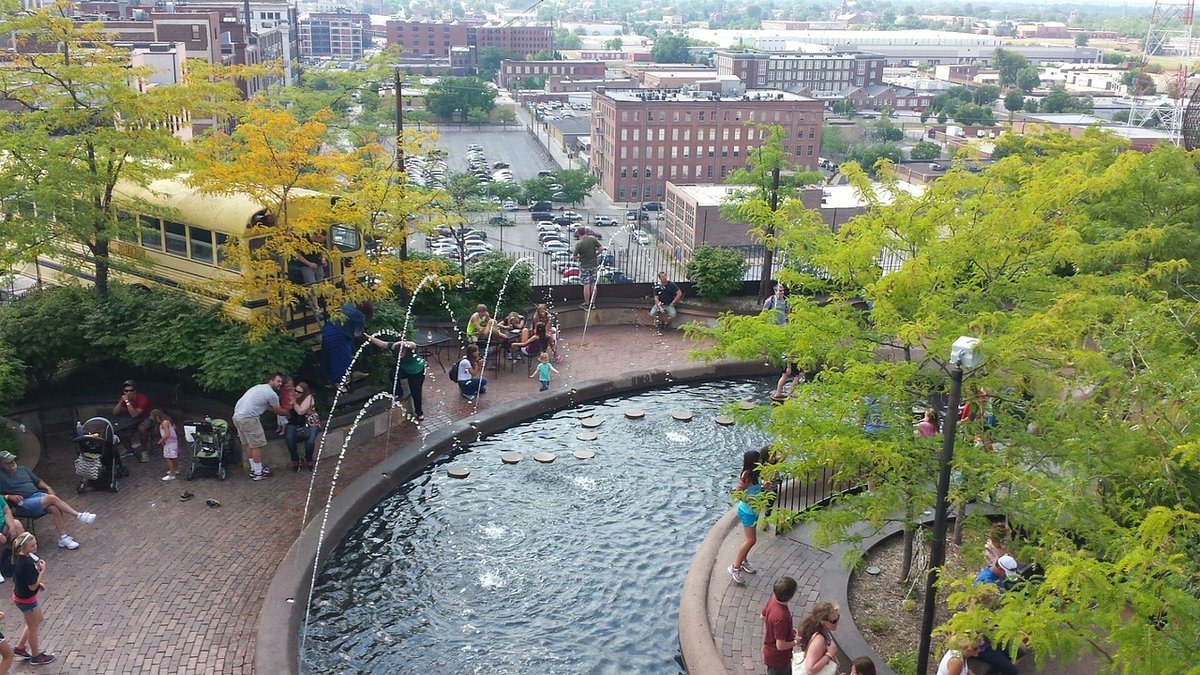
- Citygarden Urban sculpture park nearby.
- Busch Stadium & Laclede’s Landing Historic and entertainment districts within walking distance.
Special Events and Guided Tours
Seasonal events, educational programs, and guided tours are available. These offer deeper insights into the Arch’s history, architecture, and the broader story of St. Louis (places.travel).
Photographic Spots
- Observation deck windows for panoramic city and river views
- Grand Staircase and riverfront levee
- Framed city skyline from the park’s landscaped grounds
- Sunset and nighttime illuminated shots
Visitor Experience: The Arch and Its Surroundings
Arrival and Entry Procedures
The Gateway Arch is located in downtown St. Louis, within Gateway Arch National Park’s 91 acres (More Than Just Parks). Multiple pathways connect the monument to the city and riverfront. All visitors must pass through security; allow extra time for screening.
The Tram Ride to the Top
The tram system is a unique blend of elevator, escalator, and Ferris wheel technology, featuring eight capsule-like pods per side (five seats each). The ride to the top takes four minutes, with panoramic views from the observation deck's 32 small windows (Crazy Family Adventure).
The Museum at the Gateway Arch
Beneath the Arch, the museum offers six galleries covering over 200 years of St. Louis and American history. Highlights include a full-scale log house, a scale model of the 1852 riverfront, and artifacts exploring westward expansion, Native American history, and the Arch’s construction (Gateway Arch; More Than Just Parks).
A Virtual Reality experience, “Cobblestones & Courage,” simulates 1850s St. Louis and is recommended for families (More Than Just Parks).
Documentary Film: “Monument to the Dream”
This 35-minute film chronicles the Arch’s design and construction, focusing on Eero Saarinen and the engineering challenges. Tickets are required and can be purchased with your tram reservation (More Than Just Parks).
Park Grounds and Outdoor Activities
The 91-acre park features five miles of walking paths, two reflecting ponds, and the Grand Staircase to the river. The North Gateway area includes the Lewis & Clark Explorers’ Garden. Riverboat cruises depart from the levee and offer unique views of the Arch (Gateway Arch).
Dining and Shopping
The Arch Café offers food and beverages; The Arch Store sells souvenirs, books, and gifts.
Preservation, Legacy, and Future Significance
The Gateway Arch is a National Historic Landmark, maintained through rigorous preservation by the National Park Service. A major renovation in 2018 improved accessibility, expanded museum spaces, and revitalized the surrounding park. The Arch remains a living symbol of American ambition and resilience, attracting millions annually and serving as a focal point for community and national identity (e-a-a.com; edenbengals.com).
Frequently Asked Questions (FAQs)
Q: What are the Gateway Arch visiting hours?
A: Typically 9:00 AM–7:00 PM (April–September) and 9:00 AM–6:00 PM (October–March), with last tram rides about one hour before closing. Check here for current hours.
Q: How do I buy Gateway Arch tickets?
A: Purchase online, by phone (877-982-1010), or on-site. Advance booking is highly recommended, especially for tram rides (Gateway Arch).
Q: Is the Arch accessible for visitors with disabilities?
A: Yes, the Arch, museum, and tram are all accessible.
Q: Are there guided tours?
A: Yes, guided tours and educational programming are offered seasonally. Check the Gateway Arch website for details.
Q: What other historical sites are nearby?
A: The Old Courthouse, Mississippi Riverfront, Busch Stadium, Citygarden, and more.