Plan and listen to Eads Bridge with Audiala.
Audio guide in your pocket, itinerary in your browser. Built for the way you actually visit.
Introduction
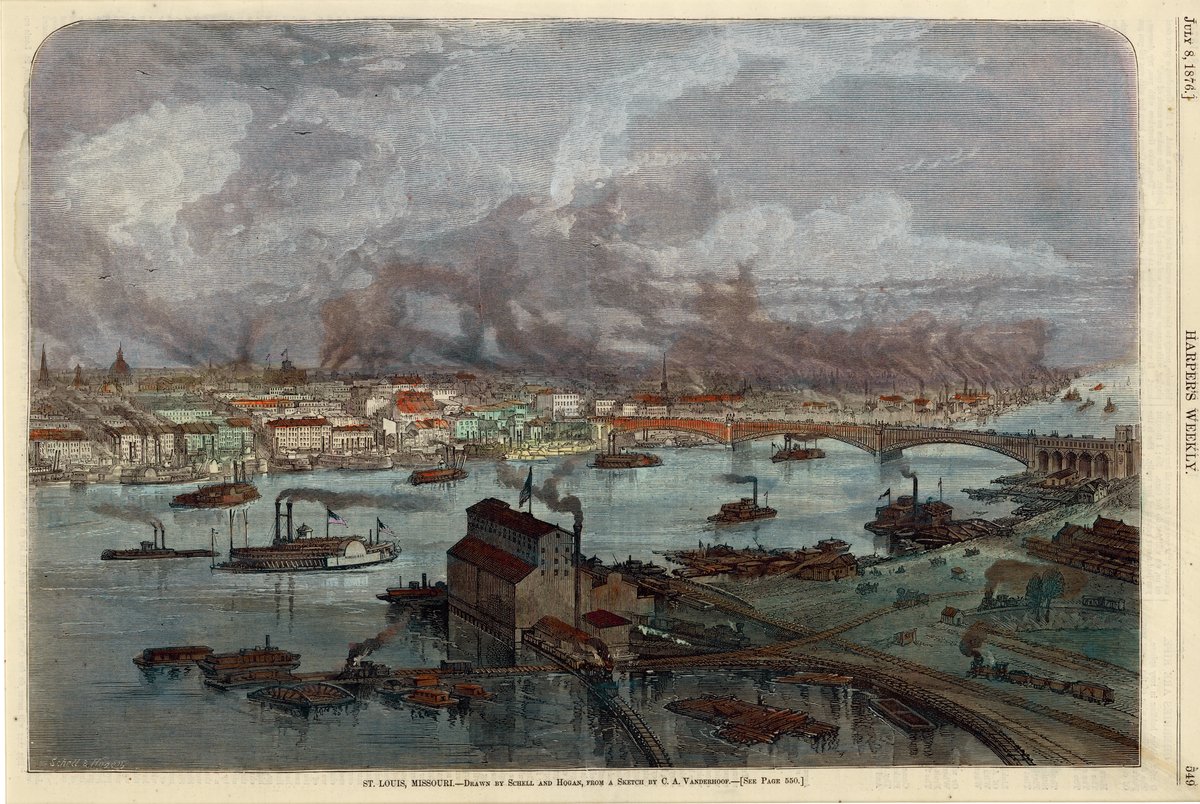
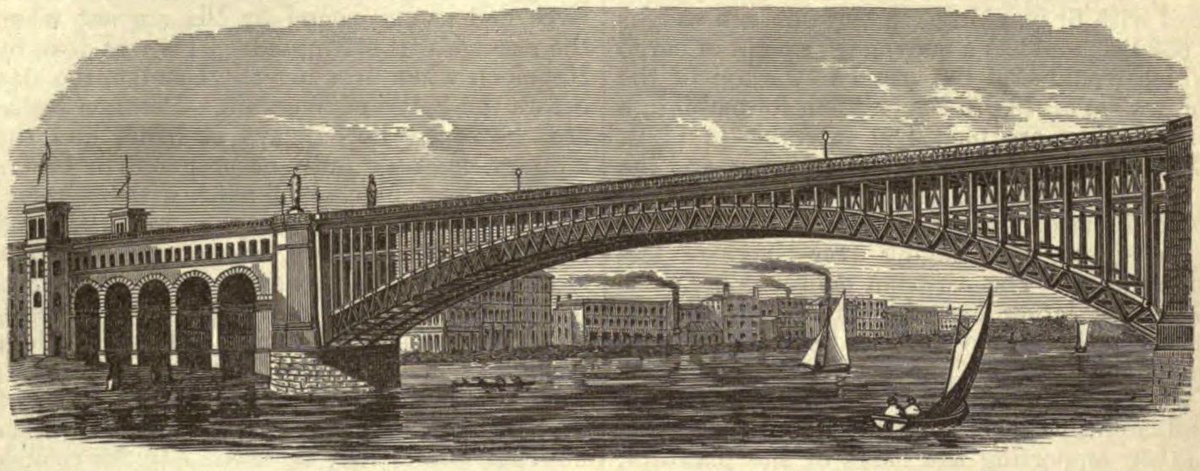
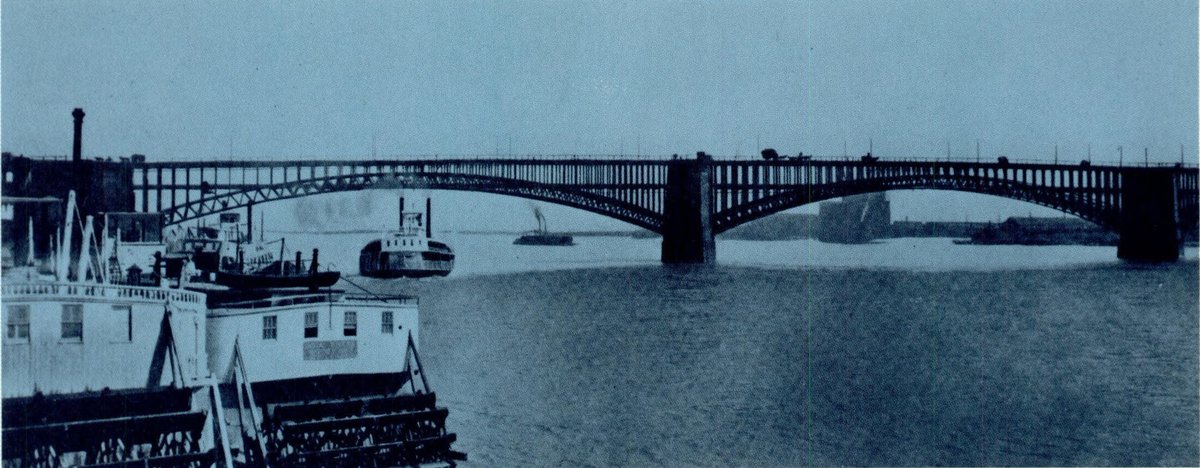
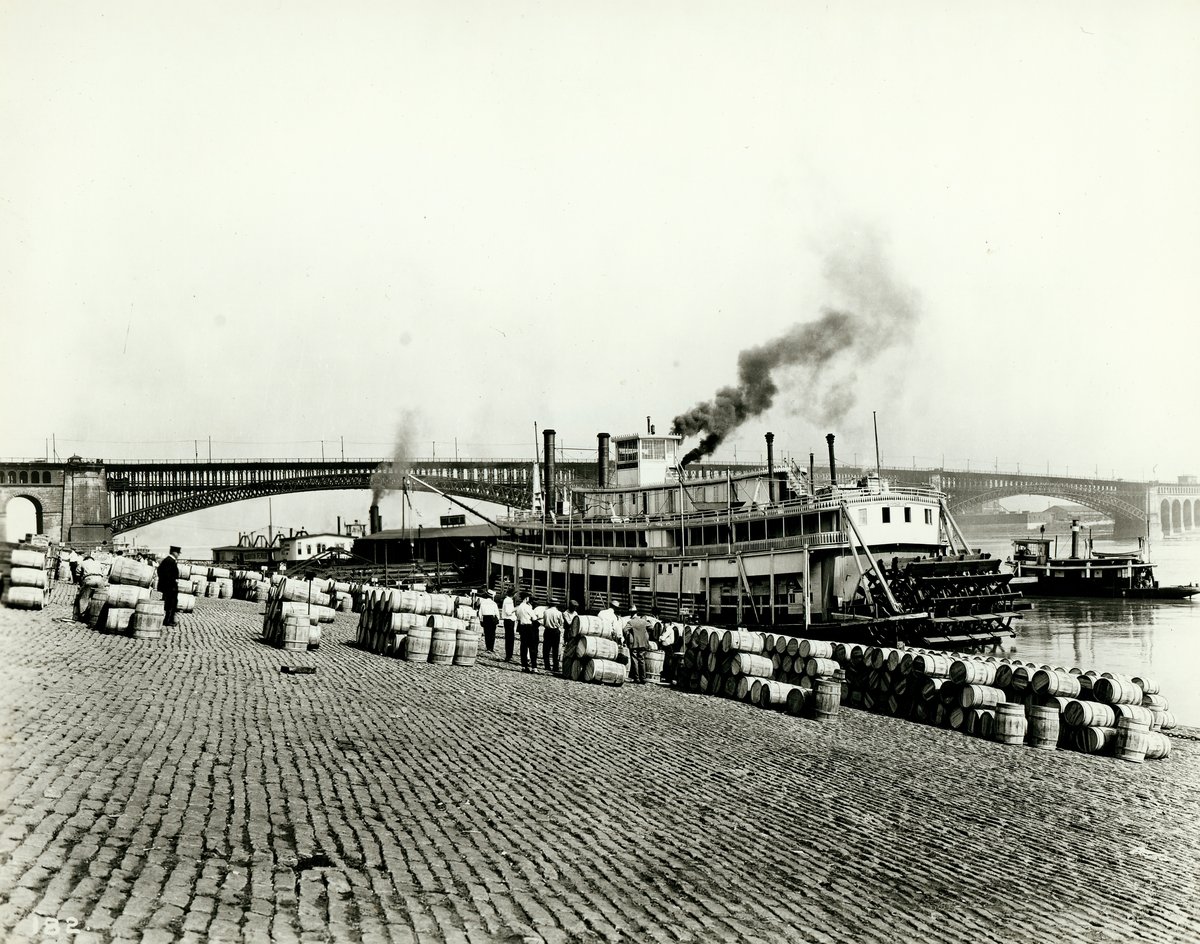
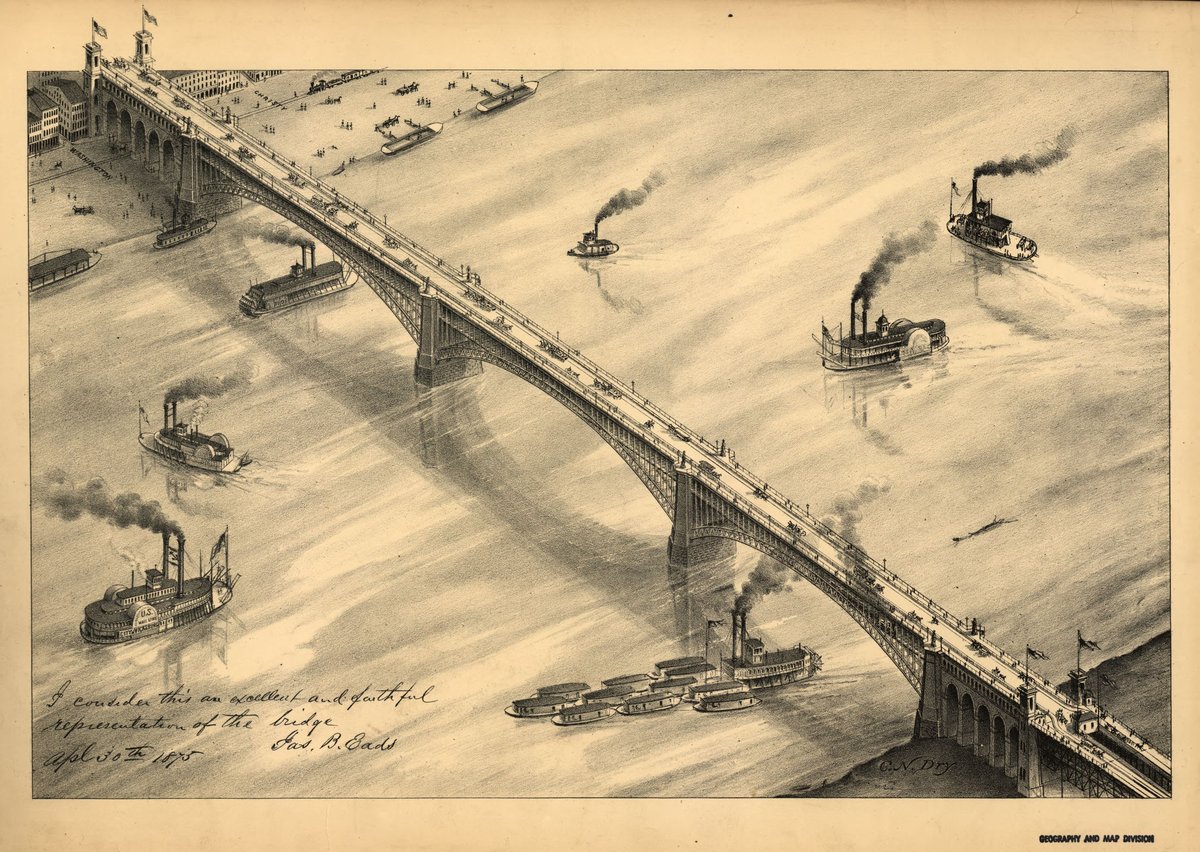
The Eads Bridge is a historic landmark and engineering marvel that spans the Mississippi River, connecting St. Louis, Missouri, with East St. Louis, Illinois. Completed in 1874, it was the first bridge to use steel as its primary material and the first to employ pneumatic caissons for its piers, a revolutionary technique at the time. Designed by James Buchanan Eads, the bridge played a crucial role in maintaining St. Louis's prominence as a commercial hub following the American Civil War (St. Louis Government). Beyond its engineering significance, the Eads Bridge has become an iconic symbol of St. Louis, second only to the Gateway Arch. This comprehensive guide will explore the bridge's rich history, offer practical visitor information, provide travel tips, and highlight nearby attractions, ensuring you make the most of your visit to this architectural wonder.

History of Eads Bridge
Early Conception and Need
The Eads Bridge was conceived in the aftermath of the Civil War when the expansion of the nation's railroad system highlighted the necessity for a bridge across the Mississippi River to ensure St. Louis's survival as a commercial hub. In 1867, the St. Louis Bridge and Iron Company, comprising city bankers and businessmen, hired James Buchanan Eads to design and construct the bridge (St. Louis Government). Eads, a self-educated engineer, had no prior experience in bridge construction but had gained recognition for building ironclad gunships during the Civil War.
Design and Engineering Innovations
The Eads Bridge was groundbreaking in its use of materials and construction techniques. It was the first bridge in the world to use steel as its primary material, marking a significant shift from wrought iron (St. Louis Public Radio). The bridge's foundations were sunk to unprecedented depths of over 100 feet below water level using pneumatic caissons, a pioneering application in the United States (Wikipedia). These caissons were the largest ever built at the time.
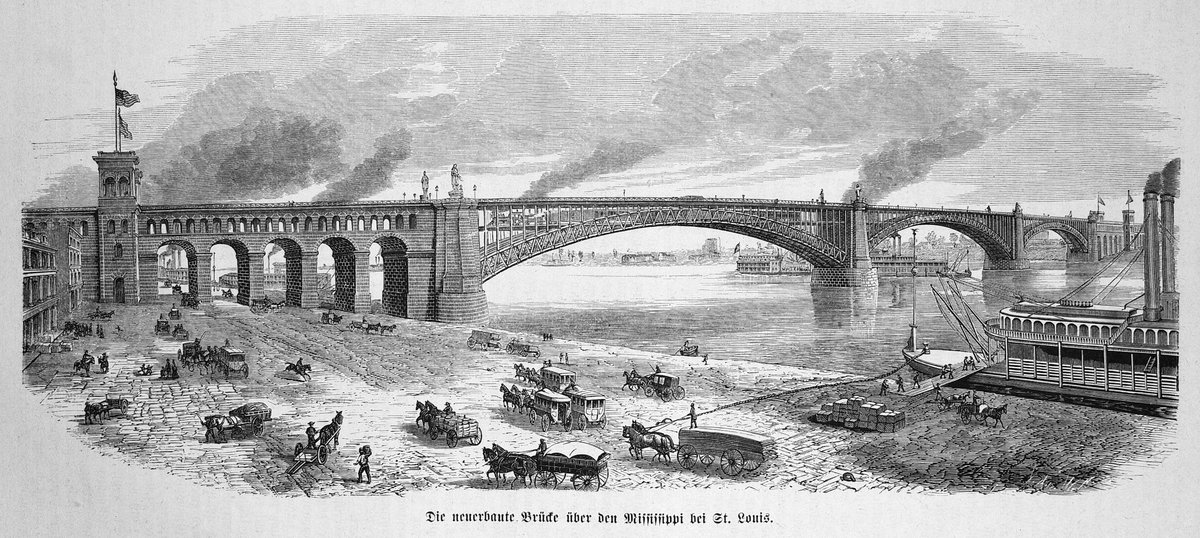
The bridge's design also featured the first use of tubular cord members and cantilever construction for its superstructure. The three graceful arches of the bridge were supported by giant granite-faced piers, and the central arch, spanning 520 feet, was the longest rigid span ever built at the time (St. Louis Government).
Construction Challenges and Milestones
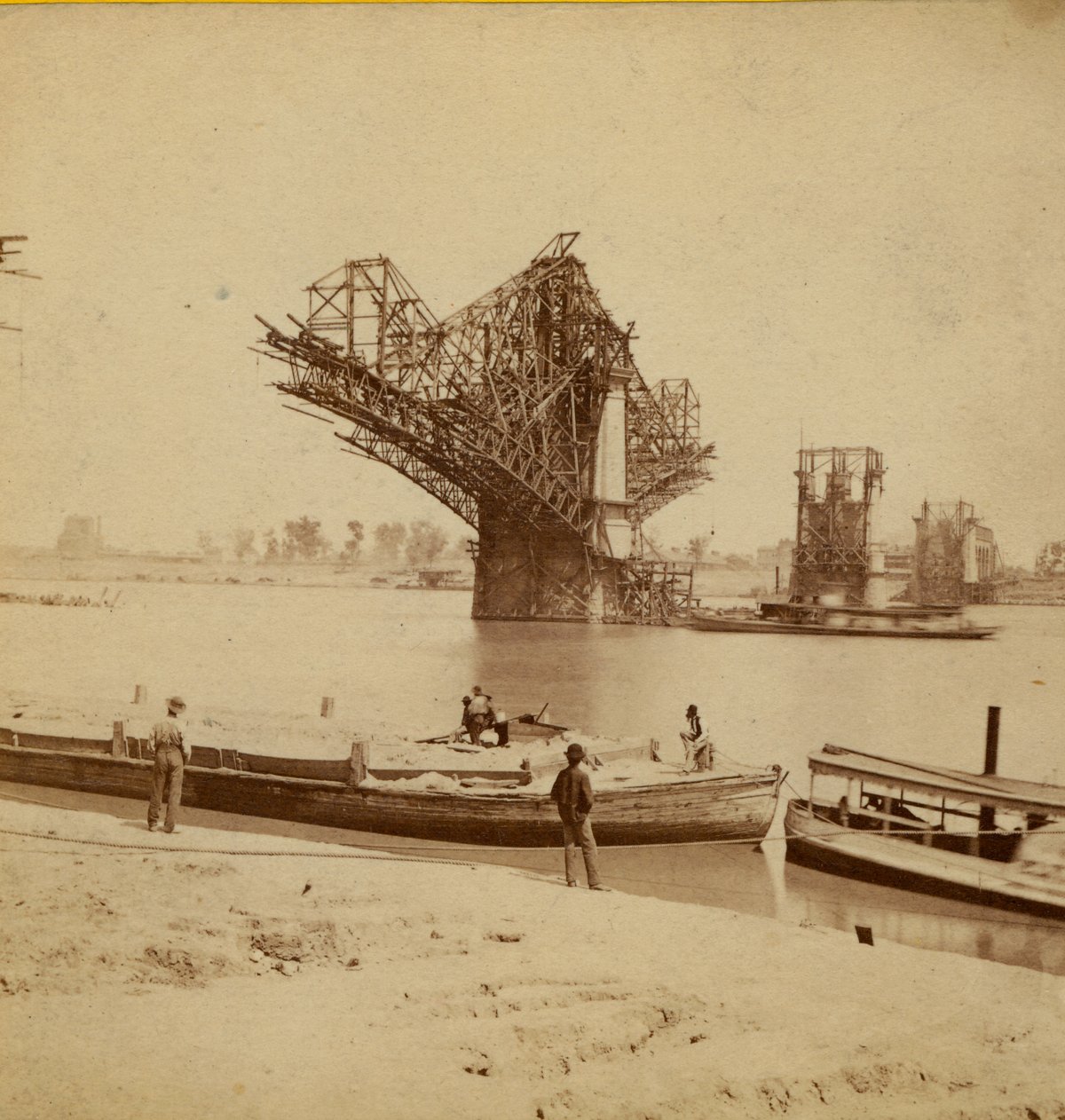
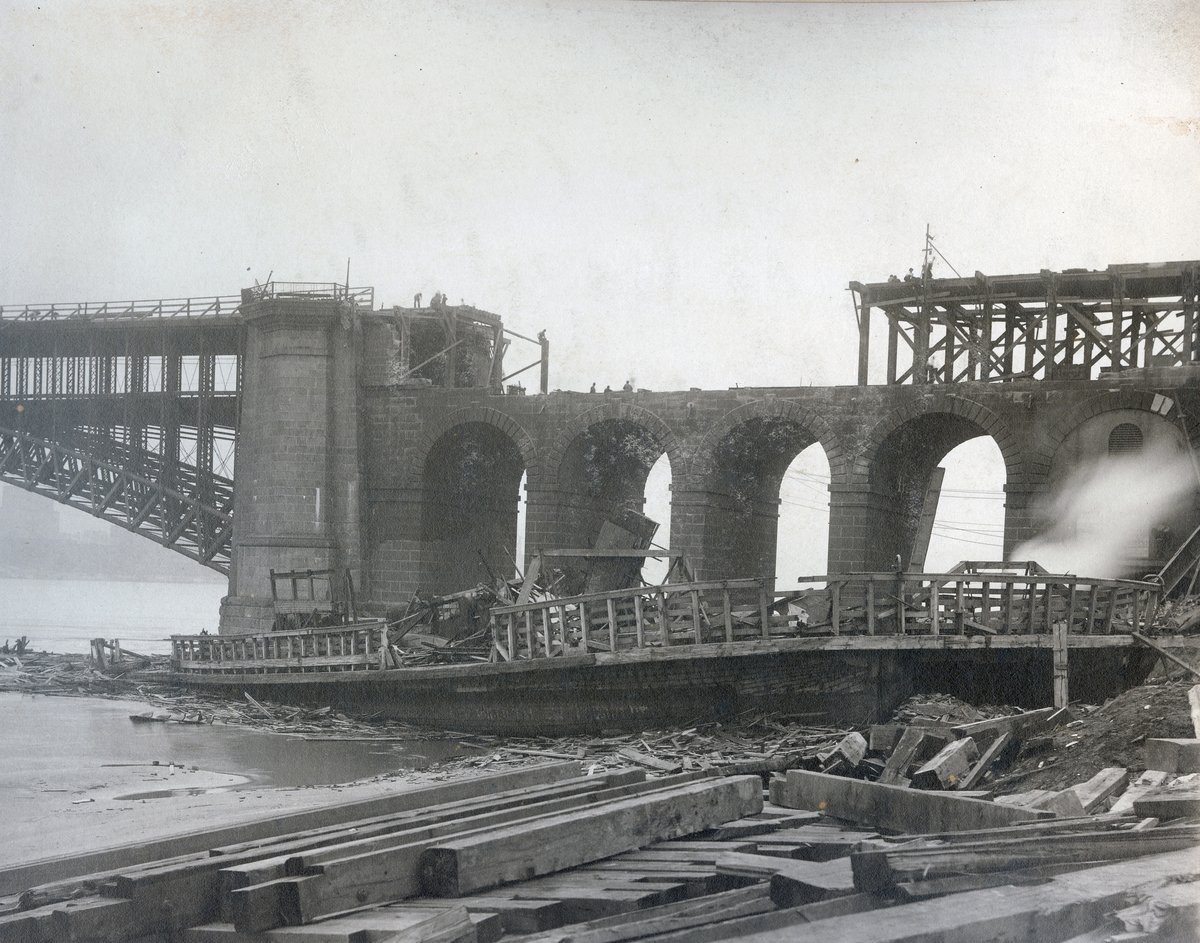
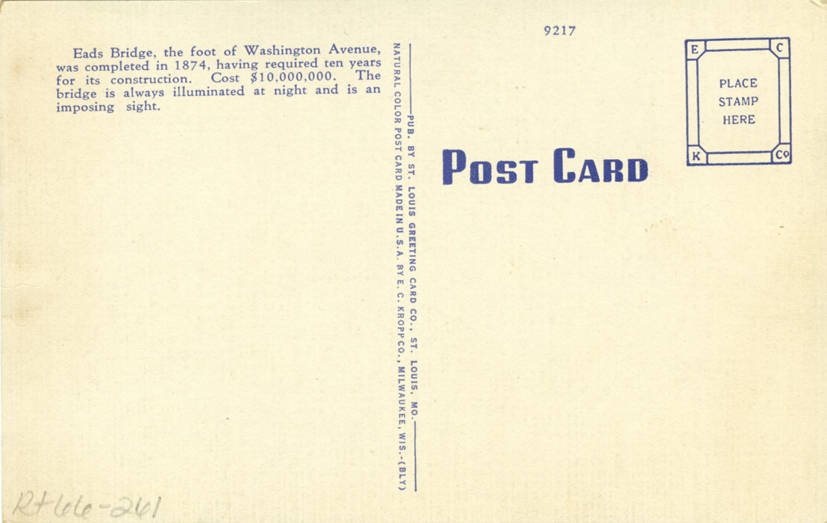
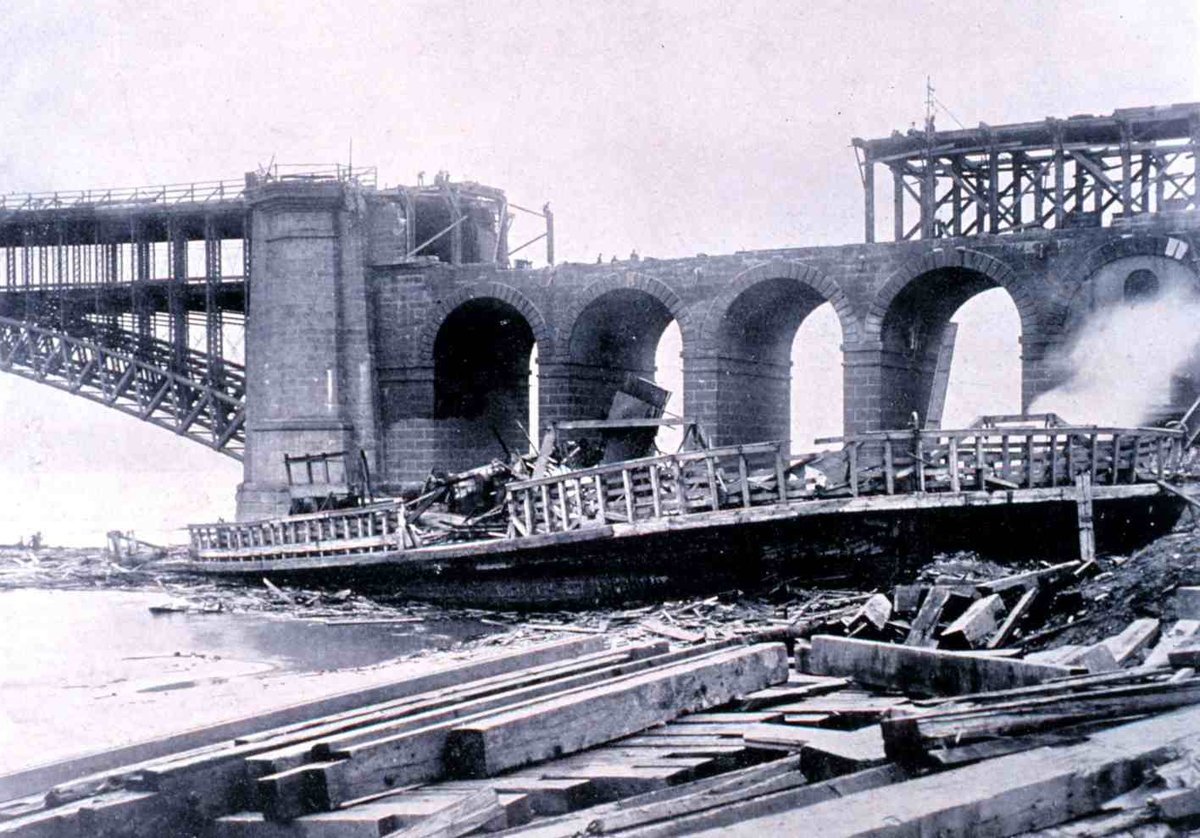
Construction of the Eads Bridge began in 1867 and faced numerous challenges, including political pushback and criticism of Eads's design plans. Despite these obstacles, the bridge was completed in 1874 at a cost of nearly $10 million (St. Louis Government). The bridge's construction was marked by several engineering feats, including the use of temporary wooden towers to support the arches during construction, a method that allowed the river channel to remain open (St. Louis Magazine).
The bridge was dedicated on July 4, 1874, with a grand celebration that included a parade stretching 15 miles through the streets of St. Louis. President Ulysses S. Grant dedicated the bridge, and General William T. Sherman drove the gold spike completing the construction (Wikipedia). To prove the bridge's stability, 14 locomotives crossed it on the day of its dedication.
Impact and Legacy
The Eads Bridge played a crucial role in restoring St. Louis's prominence as a commercial center by connecting railroad and vehicle transportation across the Mississippi River. It was the first bridge to carry railroad tracks and the first to use caissons for its piers (St. Louis Public Radio). The bridge's innovative design and construction methods influenced the construction of later bridges, including the Brooklyn Bridge.
Despite its initial success, the bridge and its associated tunnel companies declared bankruptcy in 1875. In 1881, Jay Gould gained control of the bridge and tunnel companies by threatening to build a competing bridge. This led to the creation of the Terminal Railroad Association of St. Louis and the construction of Union Station in 1894 (Wikipedia).
Recognition and Preservation
The Eads Bridge has been recognized for its historical and engineering significance. It was designated a National Historic Landmark in 1964 and a National Historic Civil Engineering Landmark by the American Society of Civil Engineers in 1971 (St. Louis Government). The bridge was also featured on the $2 Trans-Mississippi Issue of postage stamps in 1898 and again in a commemorative souvenir sheet 100 years later (Wikipedia).
Modern Use and Restoration
In the late 20th century, the Eads Bridge saw a decline in passenger rail traffic due to the rise of automobile use and the restructuring of the railroad industry. By the 1970s, the Terminal Railroad Association had abandoned its Eads trackage, and the bridge lost all remaining passenger rail traffic to the MacArthur Bridge (Wikipedia). However, MetroLink service over the bridge began in 1993, and the bridge was closed to automobile traffic between 1991 and 2003 for restoration of the highway deck (Wikipedia).
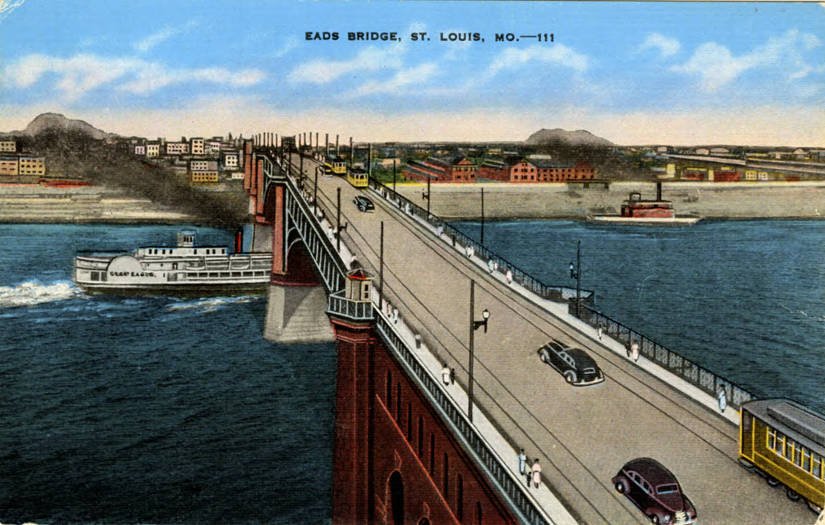
Today, the Eads Bridge carries both vehicular and pedestrian traffic, connecting Washington Avenue in St. Louis with Riverpark Drive and East Broadway in East St. Louis. The former railroad deck now carries the St. Louis MetroLink light rail system, connecting Missouri and Illinois stations (Wikipedia).
Cultural Significance
The Eads Bridge remains an iconic symbol of St. Louis, second only to the Gateway Arch. It has been featured in various cultural exhibits, including the "Eads at 150" exhibit at the Missouri History Museum, which celebrates the bridge's design, construction, and historical significance (St. Louis Public Radio). The exhibit highlights the bridge's role in connecting the region and its impact on the city's development.
The bridge's namesake, James Buchanan Eads, is celebrated as a self-taught innovator and engineer who overcame significant challenges to create one of the most groundbreaking bridges in history. His legacy is preserved through the bridge's continued use and recognition as a National Historic Landmark (St. Louis Magazine).
Visitor Information
- Visiting Hours: The Eads Bridge is open to pedestrians and vehicles 24/7.
- Tickets: No tickets are required for pedestrian access. Check for any special tours or events.
- Accessibility: The bridge is accessible to both vehicles and pedestrians, with pathways accommodating wheelchairs.
Travel Tips and Nearby Attractions
- Travel Tips: The best times to visit are early morning or late afternoon for beautiful lighting. Parking is available nearby, and it's advisable to wear comfortable walking shoes and bring water, especially during summer.
- Nearby Attractions: The Gateway Arch, St. Louis Riverfront, and Missouri History Museum are all within close proximity and worth visiting.
Frequently Asked Questions
- Q: Are there guided tours available? A: Yes, guided tours are available through local tour companies.
- Q: Can I take photos on the bridge? A: Absolutely, it's a popular spot for photography.
Listen to the full story in the app
The whole Eads Bridge,
told well.
Listen to sourced travel stories with local history and practical context — ready offline.
Verified, and shown.
Researched and written by the Audiala editorial team from historical records, architectural archives, and local expertise.
Built from cited sources · see the method · How we make our guides →