



Historical Significance of Boeing Plant 2
Origins and Construction
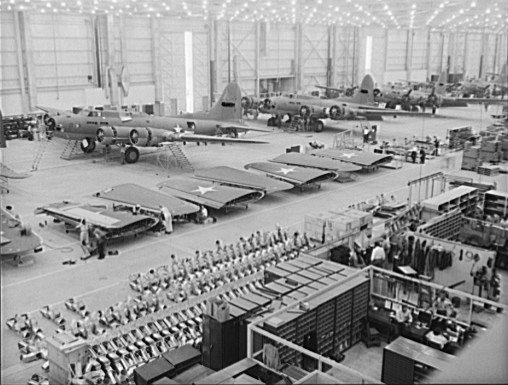
Boeing Plant 2 was constructed in 1936 at 7755 East Marginal Way South, Seattle, with an initial footprint of 60,000 square feet. Built to meet mounting military aircraft demands, the plant rapidly expanded to over 1.7 million square feet as World War II escalated (Fox News). Its design included low 35-foot roof beams and an extensive system of underground tunnels, enhancing worker efficiency and safety.
Role in World War II and "Rosie the Riveter"
During WWII, Plant 2 became a production powerhouse, assembling nearly 7,000 of the 13,000 B-17 bombers built, at times rolling out 16 aircraft daily (We Are The Mighty). The workforce swelled to around 30,000, including thousands of women who broke gender barriers as “Rosie the Riveter.” Their contributions marked a turning point in American labor and social history, with women taking on skilled roles in manufacturing and engineering.
Wartime Camouflage and Secrecy
To safeguard Plant 2 from potential Japanese attacks, the U.S. Army Corps of Engineers enlisted Hollywood set designer John Stewart Detlie to disguise the factory. The result: a 23-acre rooftop “neighborhood” complete with fake houses, painted streets, rubber cars, and artificial trees. Special paint and infrared countermeasures were employed to further obscure the site (99% Invisible; Seattle Times). This deception was so effective that even allied pilots often struggled to locate the plant from the air.
Postwar Innovation and Aircraft Development
After WWII, Plant 2 transitioned to producing groundbreaking postwar aircraft, including the B-47 Stratojet, B-52 Stratofortress, and the first Boeing 737 jetliners—now the best-selling commercial jet in history. The plant's design limitations, such as low roof beams, led to inventive solutions like hinged B-52 tail fins to allow indoor assembly. By the 1960s, production shifted to newer facilities, but Plant 2 continued as a machine shop and restoration center, later playing a critical role in rehabilitating historic aircraft for major museums (Flying Magazine).
Social and Cultural Impact
Boeing Plant 2 was more than an industrial site—it was a catalyst for Seattle’s transformation into “Jet City.” The influx of workers and the pioneering inclusion of women and minorities in skilled positions spurred economic growth and reshaped the city’s culture. The plant’s commitment to worker welfare was evident in its underground tunnels, cafeterias, and classrooms, fostering a strong sense of community and shared purpose (AMLI).
Visiting Boeing Plant 2’s Legacy
Hours, Tickets, and Accessibility
The original Plant 2 building no longer exists, but its legacy is accessible through several key sites:
-
Museum of Flight (Seattle)
- Open daily, typically 10 AM–5 PM.
- Tickets available online or on-site; prices vary by age and exhibit.
- Fully wheelchair accessible.
(Museum of Flight)
-
Boeing Future of Flight & Everett Factory Tour (Mukilteo)
- Open Tuesday–Sunday, 9 AM–5 PM (hours may vary).
- Advance ticket purchase required for factory tours; general admission around $25 for adults, with discounts for youth, seniors, and military.
- Fully accessible and includes free parking.
(Boeing Future of Flight)
-
Plant 2 Site
- The former plant location can be viewed from public roads and features interpretive signage. No admission or hours apply.
Nearby Attractions and Travel Tips
- Museum of History and Industry (MOHAI) Features Boeing artifacts and local industrial history.
- King County International Airport (Boeing Field) Adjacent to the original Plant 2 site, still active for Boeing test flights and private aviation.
- Paine Field Aviation District Home to additional museums and flight experiences.
Travel Tips:
- Reserve factory tour tickets well in advance.
- Public transit and ample parking are available at most locations.
- Combine museum visits with other Seattle landmarks like the Space Needle or Pike Place Market.
Visuals and Media
Enhance your experience with archival photos, virtual tours, and interactive exhibits available on museum websites. Notable visuals include historic images of the camouflaged rooftop, B-17 assembly lines, and restored aircraft displays. Virtual tours often provide a behind-the-scenes look at Boeing’s ongoing innovations.
Frequently Asked Questions (FAQ)
Q: Can I visit the original Boeing Plant 2 building?
A: No, the building was demolished in 2010. However, its history is preserved at the Museum of Flight and the Boeing Future of Flight Aviation Center.
Q: Are there tours related to Boeing Plant 2?
A: While tours of the original plant are not possible, the Boeing Future of Flight offers factory tours, and local operators offer aviation-themed tours covering Seattle’s Boeing legacy.
Q: What is the significance of the Plant 2 camouflage operation?
A: It was one of the largest and most creative WWII camouflage projects, protecting a vital war asset and symbolizing American ingenuity.
Q: Are the museums and attractions accessible?
A: Yes, both the Museum of Flight and the Boeing Future of Flight are wheelchair accessible and have visitor accommodations.
Q: Can I take photos during my visit?
A: Photography is allowed in most public areas but is restricted inside the Boeing Everett Factory Tour.


