
Historical Context: China’s War of Resistance and the Pacific Theater
The WWII Pacific War Memorial Hall stands as the only museum outside China dedicated to chronicling China’s resistance against Japanese invasion and the U.S.-China partnership during World War II (People’s Daily Online; China Daily). The exhibits span from the initial conflicts of the 1930s to the final surrender in 1945, highlighting the immense toll on China—over 35 million military and civilian casualties (China Daily). Artifacts and photographs from private collections, heritage organizations, and the Flying Tigers Historical Organization help tell these stories.
The Genesis of Sino-American Collaboration
The Flying Tigers and Early Support
A central feature of the museum is its coverage of the American Volunteer Group—the “Flying Tigers”—who aided China before the U.S. officially entered WWII. Led by Claire Lee Chennault, these American pilots flew daring missions from southern China, providing critical air support and hope (China Daily; Xinhua).
Broader Allied Operations
Following America’s entry into the war, the partnership deepened. The "Hump" airlift over the Himalayas delivered vital supplies to Chinese forces, and many Chinese villagers risked their lives to shelter downed American pilots (China Daily). These acts of courage are highlighted throughout the museum.
Exhibitions and Artifacts
Permanent Collections
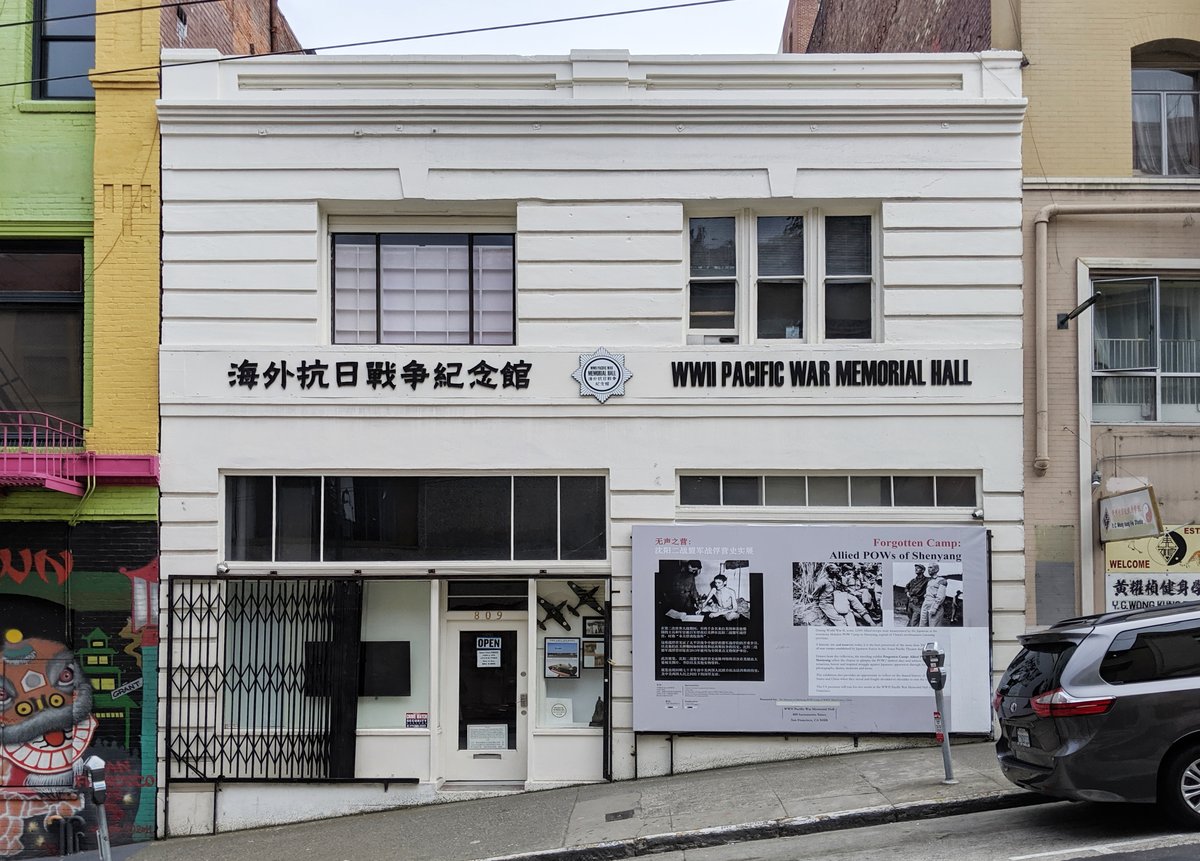
Located at 809 Sacramento Street, the Memorial Hall’s three floors showcase over 100 artifacts and hundreds of photographs (People’s Daily Online). All exhibits are bilingual (English and Mandarin) (SFTourismTips). Key highlights include:
- Flying Tigers mission photographs and memorabilia (Xinhua)
- Artifacts from POW camps, notably the Shenyang WWII Allied Prisoners Camp (China Daily)
- Personal testimonies from survivors and descendants (China Daily)
Special Exhibitions
The Hall regularly hosts special exhibits, such as the 2025 "Sino-American Friendship — Flying Tigers in Guangxi" exhibition, featuring descendants, officials, and history advocates (Xinhua; Alamy).
Practical Visitor Information
Address
- Location 809 Sacramento Street, San Francisco, CA 94108
Hours
- Wednesday–Sunday 10:00 am – 4:00 pm
- Closed Mondays and Tuesdays; major holidays
(Check official site for updates.)
Admission
- Free entry. Donations are encouraged to support operations and educational programming (WWII Pacific War Memorial Hall).
Accessibility
- Fully wheelchair accessible, with elevators, ramps, and accessible restrooms.
Getting There
- Transit Short walk from Powell Street BART; accessible via Muni bus lines.
- Parking Limited street parking; several public garages nearby.
Guided Tours
- Youth docents and staff offer guided tours (primarily in English; Chinese available).
- Group tours require booking; individuals can join public tours as available.
Facilities
- Exhibition galleries, reading room (dedicated to Iris Chang), and a gift shop with books and memorabilia.
- Restrooms and seating are available.
Best Time to Visit
- Weekdays (Wednesday–Friday) are less crowded.
- Photography is allowed in most areas; check with staff for any restrictions.
Special Exhibitions & Events
- Regularly rotating exhibits and commemorative events—see the news section for updates.
Educational Outreach and Community Engagement
The Hall’s educational mission is driven by youth volunteers who serve as docents, guiding visitors and bridging the knowledge gap left by mainstream curricula (China Daily). Programs include model plane drawing, peace badge crafting, lectures, and panel discussions. The Hall also collaborates with organizations like the Sino-American Aviation Heritage Foundation and the Carter Center (China Daily).
The reading room honors Iris Chang, author of “The Rape of Nanking,” and provides resources for deeper study (WWII Pacific War Memorial Hall News). Community partnerships and volunteer opportunities are central to the Hall’s ethos (WWII Pacific War Memorial Hall Get Involved).
Frequently Asked Questions (FAQ)
Q: What are the visiting hours?
A: Wednesday–Sunday, 10:00 am–4:00 pm; closed Monday and Tuesday.
Q: Is there an admission fee?
A: Entry is free; donations are welcome.
Q: Is the Hall wheelchair accessible?
A: Yes, with accessible entrances, restrooms, and facilities.
Q: Are guided tours available?
A: Yes, guided by youth docents. Group bookings recommended for tours.
Q: Can I take photographs?
A: Yes, except in restricted areas. Please ask staff if uncertain.
Q: Where is the Hall located?
A: 809 Sacramento Street, San Francisco, CA 94108, in Chinatown.
Q: Are COVID-19 guidelines in place?
A: The Hall follows local health protocols; check the official site for current rules.
Useful Links
- Official WWII Pacific War Memorial Hall Website
- San Francisco Chinatown Tourism
- People’s Daily Online Coverage
- WWII Pacific War Memorial Hall Official Site
Image Suggestions
- Exterior view of the Memorial Hall with Chinatown backdrop (alt: "WWII Pacific War Memorial Hall San Francisco Chinatown exterior")
- Flying Tigers exhibit—historic photos and memorabilia (alt: "Flying Tigers WWII Pacific War Memorial Hall exhibit")
- Youth docents leading a tour (alt: "Youth docents guiding WWII Pacific War Memorial Hall visitors")
- Panels from the "Sino-American Friendship — Flying Tigers in Guangxi" exhibition (alt: "Sino-American Friendship exhibition at WWII Pacific War Memorial Hall")
For a map and virtual tour, refer to resources on the official website.