Plan and listen to Vaillancourt Fountain with Audiala.
Audio guide in your pocket, itinerary in your browser. Built for the way you actually visit.
Introduction
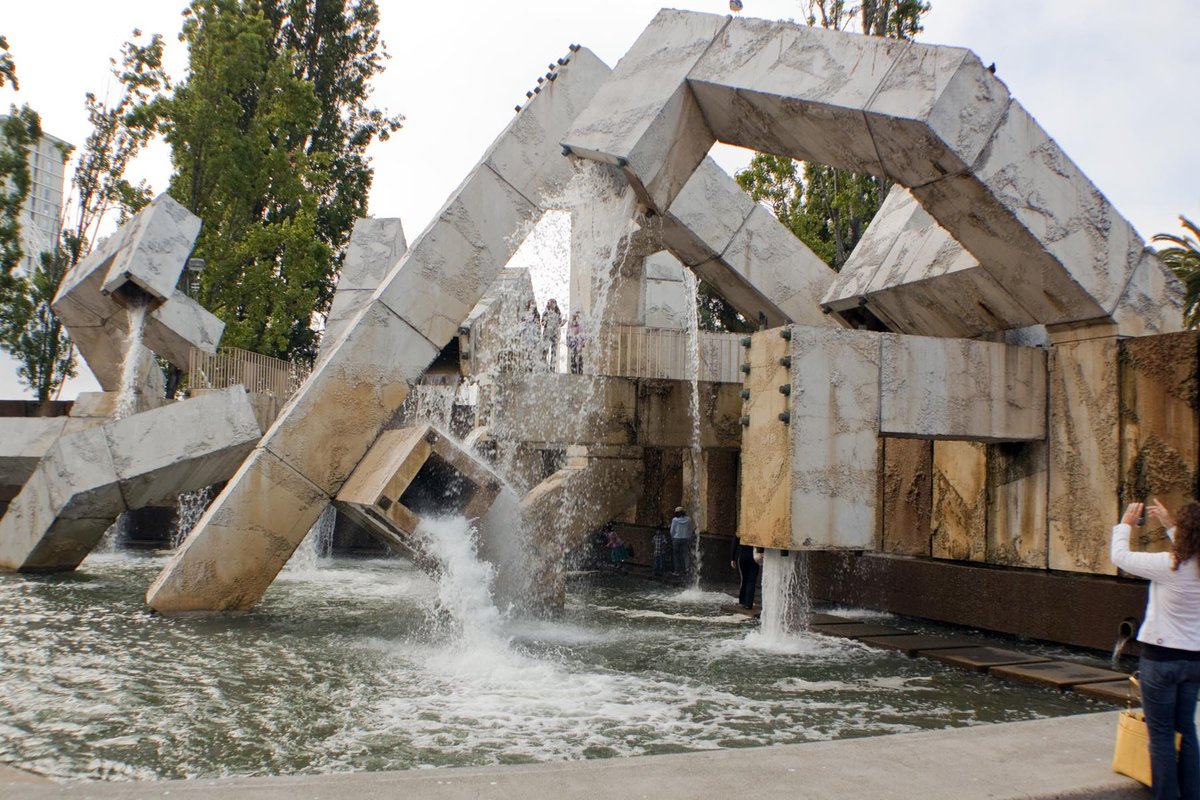
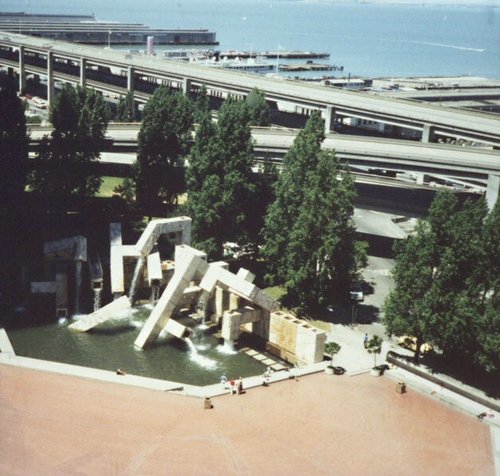
The Vaillancourt Fountain, also known as "Quebec Libre!", is a remarkable and controversial landmark situated in the heart of San Francisco's Embarcadero Plaza. Designed by the Québécois artist Armand Vaillancourt and completed in 1971, this Brutalist masterpiece has not only stirred public debate but has also become an integral part of the city's cultural landscape. The fountain's conception can be traced back to the ambitious urban redevelopment plans of landscape architect Lawrence Halprin, who envisioned it as a monumental work of civic art (Atlas Obscura).
Standing approximately 40 feet high and constructed from precast concrete square tubes, the Vaillancourt Fountain was initially designed to complement the now-demolished Embarcadero Freeway. This industrial aesthetic has both intrigued and polarized viewers since its dedication. From its role in social and political protests to being the backdrop of a famous U2 concert, the fountain has cemented its place in San Francisco's history and culture (Wikipedia).
This guide aims to provide a comprehensive overview of the Vaillancourt Fountain, covering its historical context, cultural significance, and practical visitor information. Whether you're a history buff, an art enthusiast, or just planning a visit to San Francisco, this guide will equip you with everything you need to know about this iconic landmark.

History of Vaillancourt Fountain
Origins and Conception
The Vaillancourt Fountain was conceived during a period of significant urban redevelopment in San Francisco. The fountain's origins can be traced back to the ambitions of Lawrence Halprin, a prominent landscape architect in the Bay Area. Halprin, who was instrumental in the redesign of Ghirardelli Square, championed the fountain project with fervor. In 1968, he boldly proclaimed that the fountain would be regarded as one of America’s “great works of civic art [or] I am going to slit my throat” (Atlas Obscura).
Design and Construction
The fountain was designed by Québécois artist Armand Vaillancourt in 1971. It stands approximately 40 feet (12 meters) high and is constructed out of precast concrete square tubes (Wikipedia). The design was part of a broader redevelopment plan for San Francisco that began in the 1950s and 1960s. This period saw the construction of iconic structures such as the Transamerica Pyramid and the BART system, with the Embarcadero Station opening in 1976 (Wikipedia).
The fountain was initially designed to complement the elevated Embarcadero Freeway (Interstate 480), which was still in existence along the Embarcadero at the time. The freeway environment influenced the fountain's industrial aesthetic, making it appear as if it had grown out of the thoroughfare (Wikipedia).
Controversy and Criticism
From its inception, the Vaillancourt Fountain was a subject of controversy. Critics, including artists, city officials, and citizens, questioned both the safety and aesthetics of the project. Ruth Asawa, a member of the Art Commission, famously rejected the design, stating, "I for one, am not willing to remain silent while we play the old game of the emperor's new clothes on the unsuspecting people of this city" (Wikipedia).
Despite the criticism, Halprin remained steadfast in his support for the project. The fountain was eventually completed and dedicated in 1971. Vaillancourt himself added to the controversy by painting "Québec Libre" on the fountain during its dedication, a statement in support of an independent Quebec. This act led to the fountain being nicknamed the Quebec Libre Fountain (Atlas Obscura).
Changes and Challenges
The Loma Prieta Earthquake in 1989 caused significant damage to the Embarcadero Freeway, leading to its removal. This event dramatically altered the context of the Vaillancourt Fountain, as it lost the freeway backdrop that had helped it make "sense" (Atlas Obscura). In the early 2000s, a severe drought forced the fountain to go dry. The city leaders decided to keep it dry permanently, saving $250,000 and 30,000 gallons of water annually. This decision led to the fountain becoming a temporary shelter for homeless individuals (Atlas Obscura).
In 2004, a measure was proposed to demolish the fountain. However, a group of private backers stepped in to underwrite the fountain's water usage, allowing it to remain operational as long as private funds covered the costs (Atlas Obscura).
Cultural Significance
The Vaillancourt Fountain has played a notable role in San Francisco's cultural landscape. It has been a site for protests and public dissent, aligning with Vaillancourt's vision of the fountain as a confrontational work. One of the most famous events associated with the fountain was a free concert by the rock band U2 in 1987. During the concert, lead singer Bono spray-painted "Rock and roll stops traffic" on the fountain, an act that led to both praise and criticism. The band later apologized, and Bono was fined by the San Francisco Police Department (Atlas Obscura).
Visitor Information
Location and Surroundings
The Vaillancourt Fountain is located in Embarcadero Plaza, a highly visible spot on the downtown San Francisco waterfront where Market Street meets The Embarcadero. The plaza is adjacent to the Hyatt Regency Hotel and the Embarcadero Center's high-rise towers. Nearby landmarks include the Ferry Building and the eastern end of the California Street cable car line (Wikipedia).
The plaza itself was part of a larger redevelopment plan outlined in the 1962 analysis "What to do About Market Street," which proposed several public spaces, including Hallidie Plaza and United Nations Plaza. The plans for Embarcadero Plaza were drawn up by Mario Ciampi, John Savage Bolles, and Lawrence Halprin (Wikipedia).
Visiting Hours and Tickets
Currently, the Vaillancourt Fountain is accessible to the public 24/7 and does not require any tickets for viewing. However, guided tours of the surrounding area, including Embarcadero Plaza, may be available through local tour companies.
Travel Tips
- Best Time to Visit: The fountain is best visited during daylight hours to fully appreciate its structure and surrounding scenery.
- Accessibility: Embarcadero Plaza is wheelchair accessible, making it easy for all visitors to enjoy the fountain.
- Nearby Attractions: Make sure to visit the Ferry Building, the Exploratorium, and take a stroll along the Embarcadero for beautiful waterfront views.
- Photography Tips: The fountain provides a unique backdrop for photography enthusiasts. Early morning or late afternoon light can offer the best conditions for capturing stunning photos.
Frequently Asked Questions
Q: What are the visiting hours for Vaillancourt Fountain?
A: The Vaillancourt Fountain is accessible 24/7.
Q: Is Vaillancourt Fountain accessible for disabled visitors?
A: Yes, Embarcadero Plaza is wheelchair accessible.
Q: Are there guided tours available for Vaillancourt Fountain?
A: While there are no specific tours for the fountain, guided tours of the surrounding area may be available through local tour companies.
Listen to the full story in the app
The whole Vaillancourt Fountain,
told well.
Audio guides for 1,100+ cities across 96 countries. History, stories, and local insight — offline ready.
Verified, and shown.
Researched and written by the Audiala editorial team from historical records, architectural archives, and local expertise.
Researched from Wikidata, Wikipedia & official sources · fact-checked · How we make our guides →