
History of the Robert Emmet Statue
Origins and Artistic Creation
The Robert Emmet Statue is a bronze sculpture by Jerome Connor, an Irish immigrant artist celebrated for his public monuments bridging American and Irish traditions. Connor cast the statue in 1916, a year marked by the historic Easter Rising in Ireland. The piece was initially commissioned to honor Emmet’s ideals and sacrifices, with its first casting unveiled in Washington, D.C., in 1917. A second casting was installed in San Francisco’s Golden Gate Park in 1919, reflecting the city’s vibrant Irish immigrant community and ongoing support for Irish independence (Irish American Heritage Museum; Smithsonian American Art Museum).
Robert Emmet: The Patriot
Robert Emmet (1778–1803) was a key figure in the fight for Irish independence from British rule. Born in Dublin, he joined the United Irishmen and led a failed rebellion in 1803. Emmet, executed at just 25, delivered a famous final speech, “Let no man write my epitaph,” which became a rallying cry for Irish nationalists (Encyclopaedia Britannica; History Ireland).
Installation and Dedication
Irish-American organizations, notably the United Irish Societies of San Francisco, championed the installation of the statue, raising funds and collaborating with city officials. The statue was officially dedicated on July 20, 1919, at a ceremony attended by Eamon De Valera, then president of the Irish Republic, a testament to the transatlantic ties between San Francisco and Ireland (San Francisco Chronicle; Golden Gate Park; aoh.com).
Visiting Information
Location
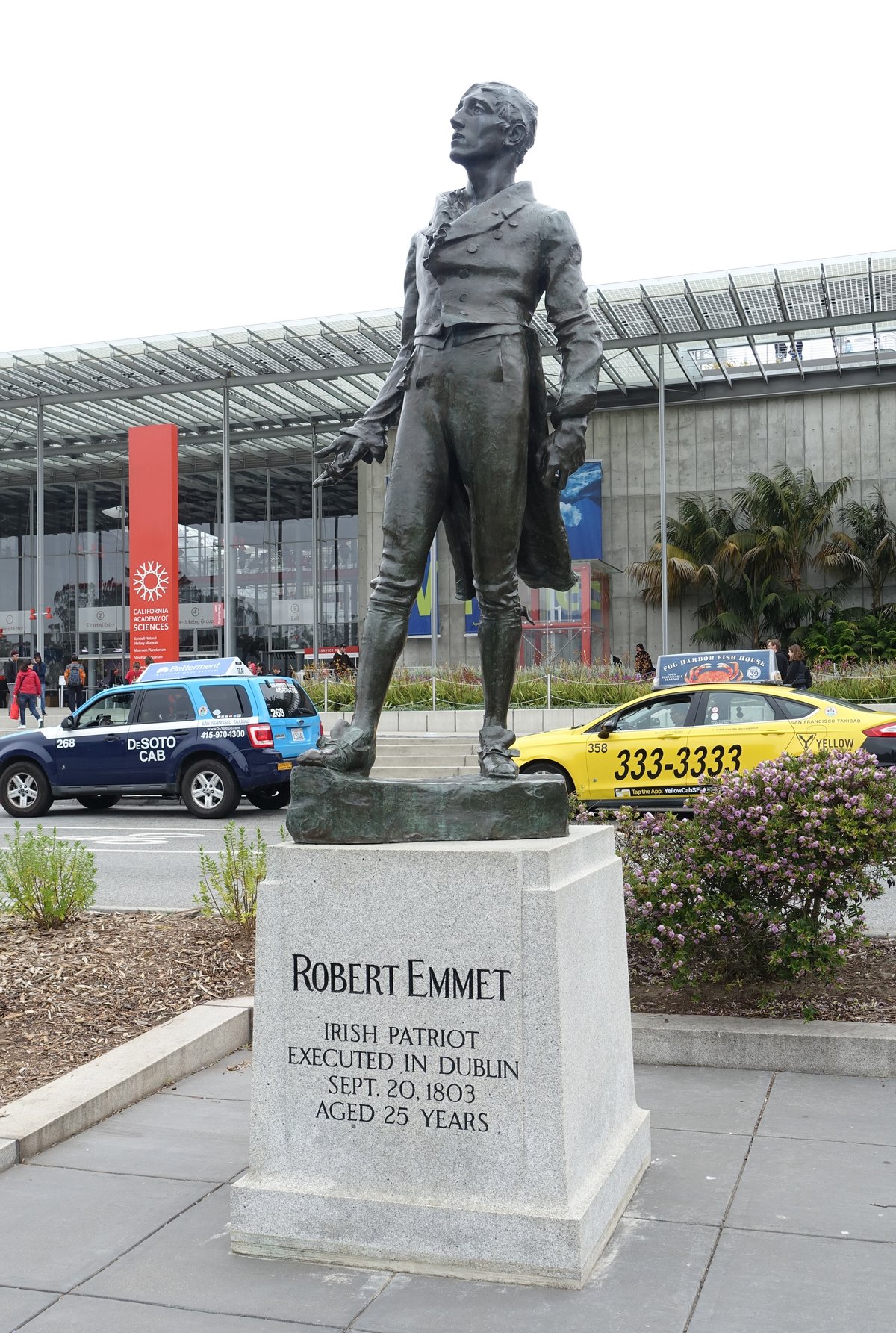
The Robert Emmet Statue is located in the eastern section of Golden Gate Park, near the intersection of John F. Kennedy Drive and Bowling Green Drive, and directly in front of the California Academy of Sciences. GPS coordinates: 37.7701° N, 122.4547° W.
Visiting Hours and Entry
- Park Hours Open daily from 5:00 AM to midnight.
- Statue Freely accessible during all park hours.
- Admission No tickets or fees required to visit the statue.
Accessibility
- The statue is reachable via paved pathways suitable for wheelchairs and strollers.
- The Music Concourse area, where the statue sits, is fully accessible.
- Public transit options include Muni bus lines and the N-Judah light rail.
- Paid parking is available at the Music Concourse Garage; limited street parking nearby.
Nearby Attractions
Enhance your visit by exploring these nearby sites:
- California Academy of Sciences Natural history museum, aquarium, and planetarium.
- de Young Museum Renowned for American art and city views.
- Japanese Tea Garden Oldest public Japanese garden in the U.S.
- Conservatory of Flowers Historic botanical garden.
Guided Tours and Annual Events
- Local tour companies and the San Francisco Recreation & Parks Department offer walking tours that include the statue.
- Key annual events:
- Robert Emmet Commemoration (September) Ceremony with music, speeches, and wreath-laying.
- St. Patrick’s Day Observances (March 17) Green-themed gatherings and performances.
- Special Anniversaries Marking Irish milestones, often with international guests.
For up-to-date event schedules, consult the Golden Gate Park official website or United Irish Societies of San Francisco.
Symbolism and Artistic Features
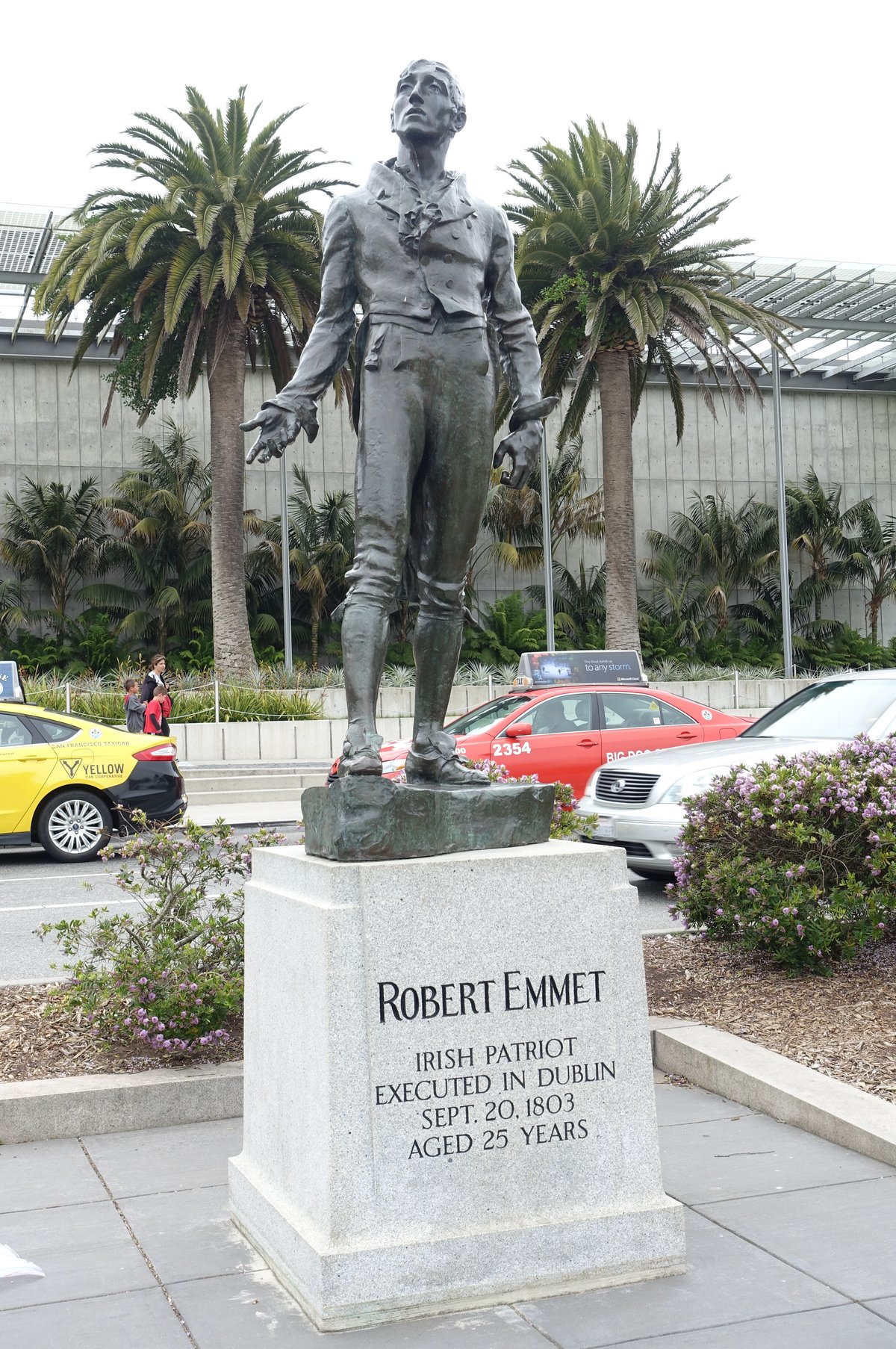
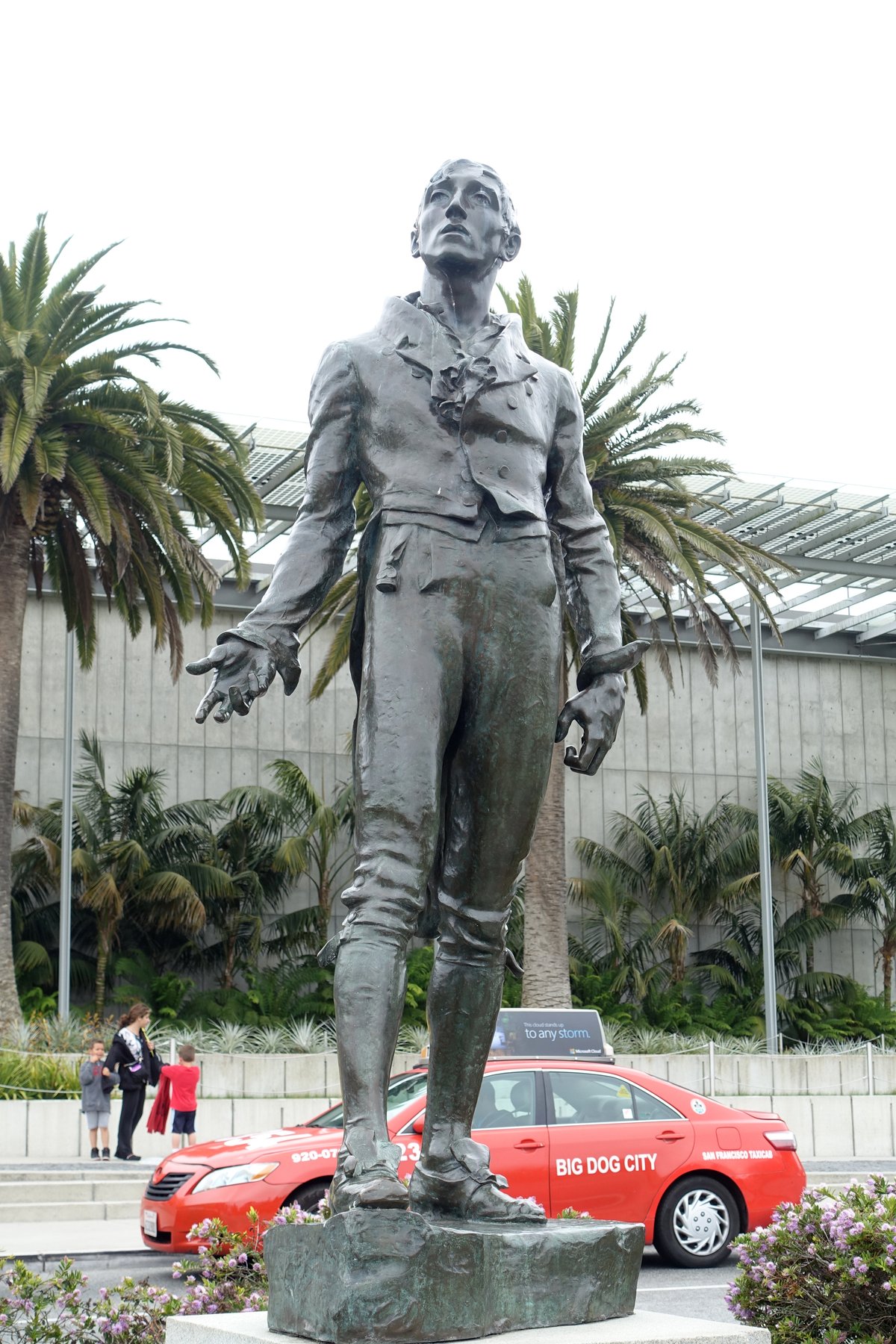
Jerome Connor’s statue depicts Robert Emmet as a young orator, his right arm extended as if delivering his famous “Speech from the Dock.” The bronze figure stands approximately 7 feet tall atop a granite pedestal. An inscription on the base includes an excerpt from Emmet’s speech:
“I wished to procure for my country the guarantee which Washington procured for America. I have parted from everything that was dear to me in this life for my country’s cause. When my country takes her place among the nations of the earth, then, and not till then, let my epitaph be written.”
This quote reinforces the shared aspirations of Irish and American struggles for independence. The statue is one of four identical bronzes by Connor, also found in Washington, D.C., Dublin, and Emmetsburg, Iowa (wikipedia.org).
Irish-American Community and Cultural Significance
By the late 19th and early 20th centuries, San Francisco had a thriving Irish population, active in labor, politics, and civic life (California Historical Society). The Robert Emmet Statue stands as a symbol of cultural pride, resilience, and the ongoing connection between the city's Irish-American community and their ancestral homeland. It is a centerpiece for events like Robert Emmet Remembrance Day and other Irish cultural celebrations (uissf.org).
Preservation and Legacy
The statue has been carefully preserved for over a century, including a major rededication ceremony in 2003 attended by Irish diplomats and community leaders (Irish Consulate San Francisco). It remains a pilgrimage site for those interested in Irish history, public art, and civic activism. Educational programs and guided tours often feature the statue as a key stop in Golden Gate Park (San Francisco Travel).
Visitor Tips and Etiquette
- Best Times to Visit Weekday mornings or late afternoons for fewer crowds; September and March for cultural events.
- Weather San Francisco is often cool and foggy; dress in layers.
- Photography Encouraged; be respectful during ceremonies.
- Restrooms and Food Available at the California Academy of Sciences and de Young Museum; food trucks and cafes are common in the area.
- Pets Dogs must be leashed.
- Cycling Walk bikes near the statue in crowded areas.
Frequently Asked Questions (FAQ)
Q: What are the statue’s visiting hours?
A: The statue is accessible daily during Golden Gate Park hours: 5:00 AM to midnight.
Q: Is there a fee or ticket required?
A: No, visiting the statue is free.
Q: Is the statue accessible for wheelchairs and strollers?
A: Yes, the area features paved, accessible paths.
Q: Are guided tours available?
A: Yes, many walking tours of Golden Gate Park include the statue.
Q: What annual events are held?
A: Robert Emmet Commemoration (September) and St. Patrick’s Day gatherings (March).