
Historical Background
Early Visions and Proposals (1900s–1930s)
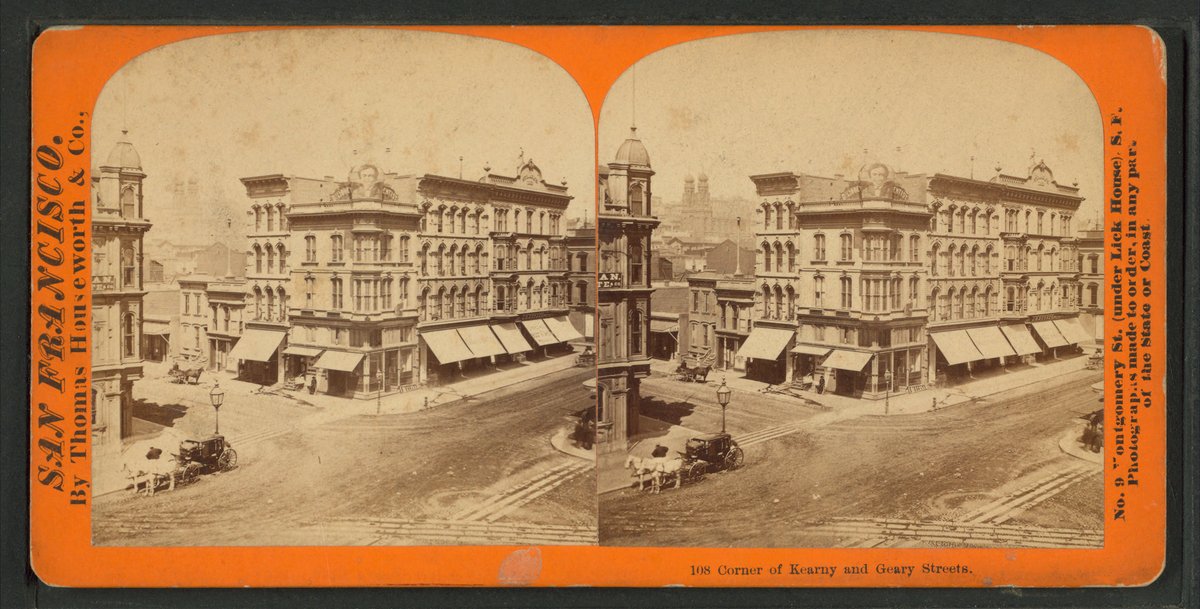
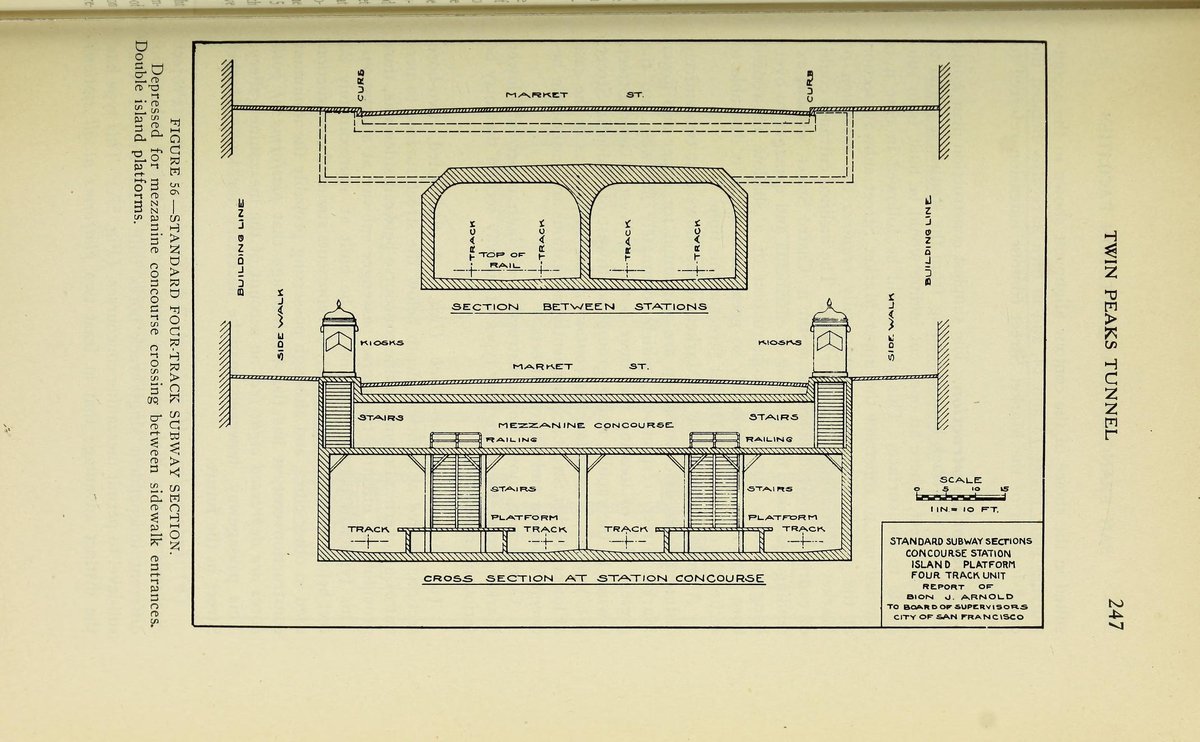
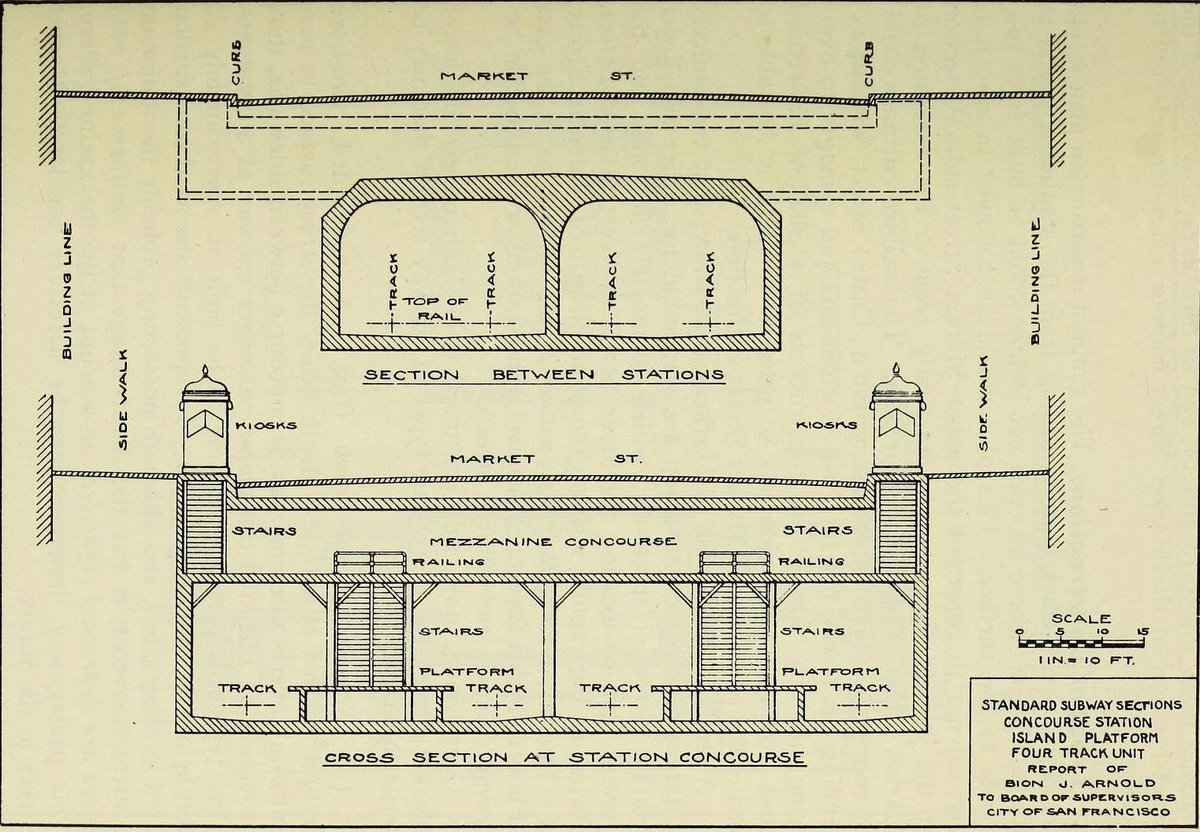
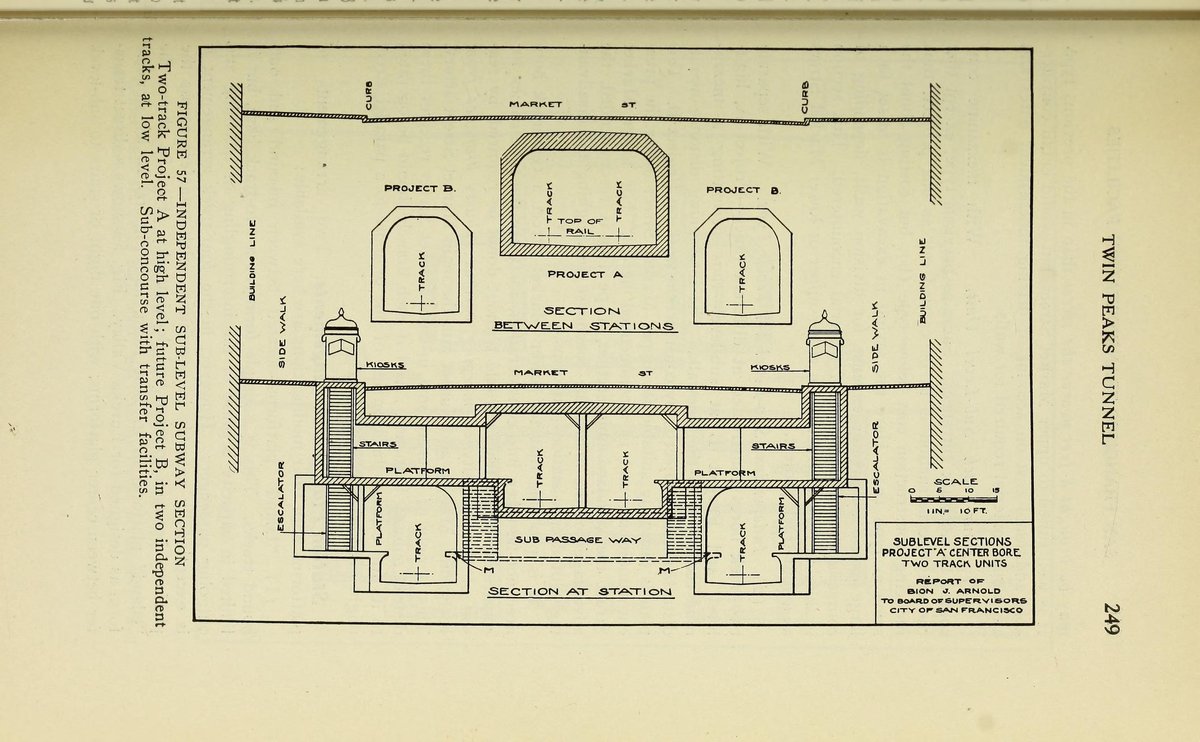
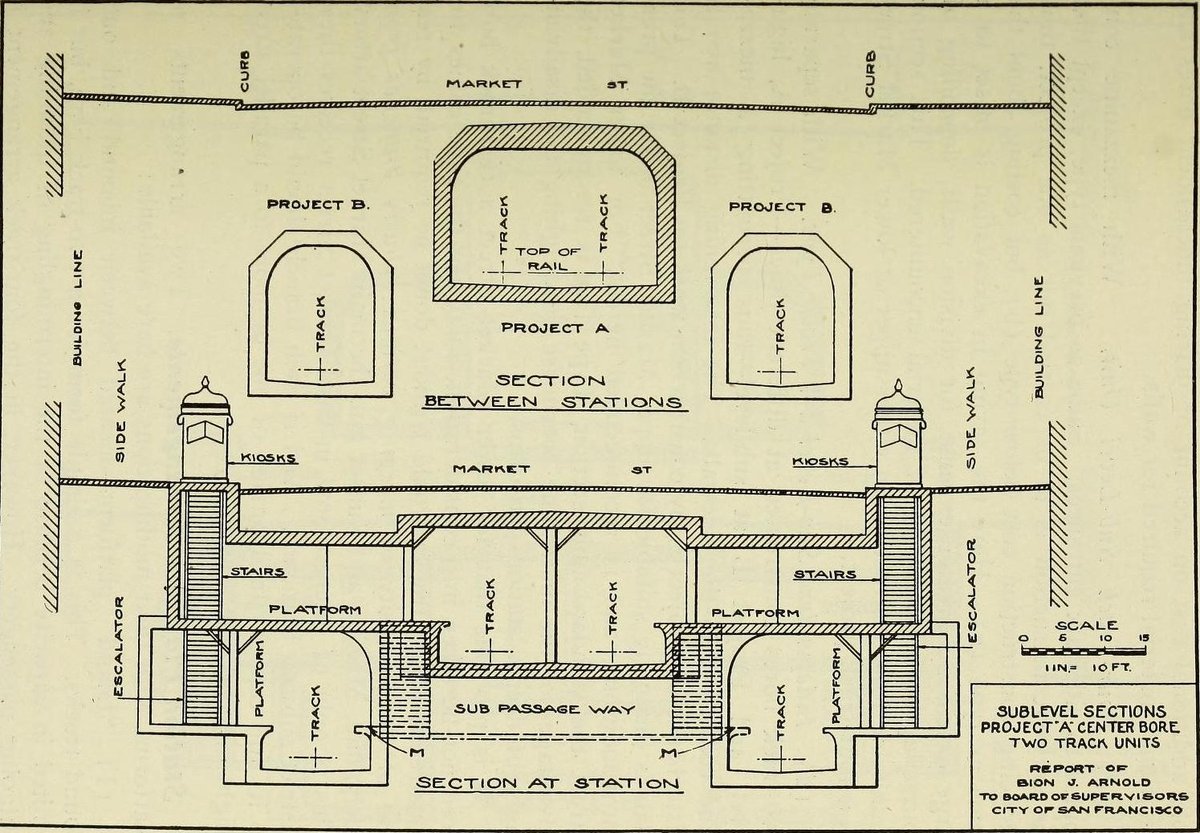
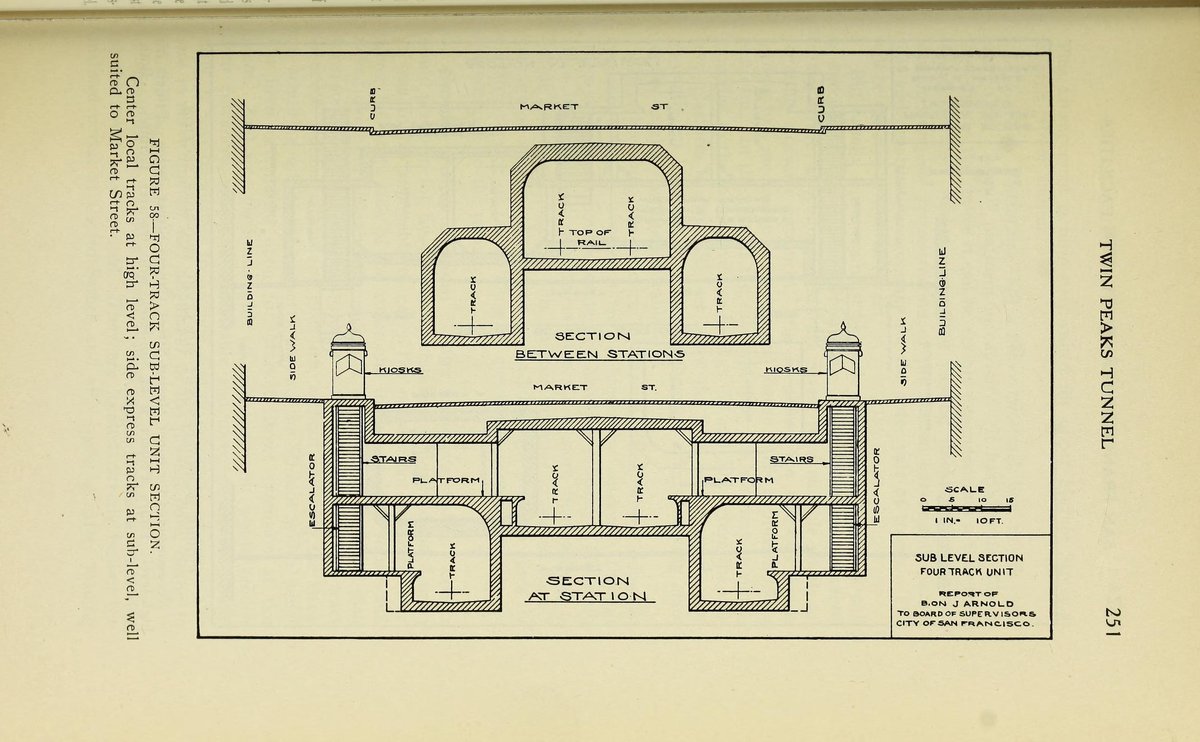
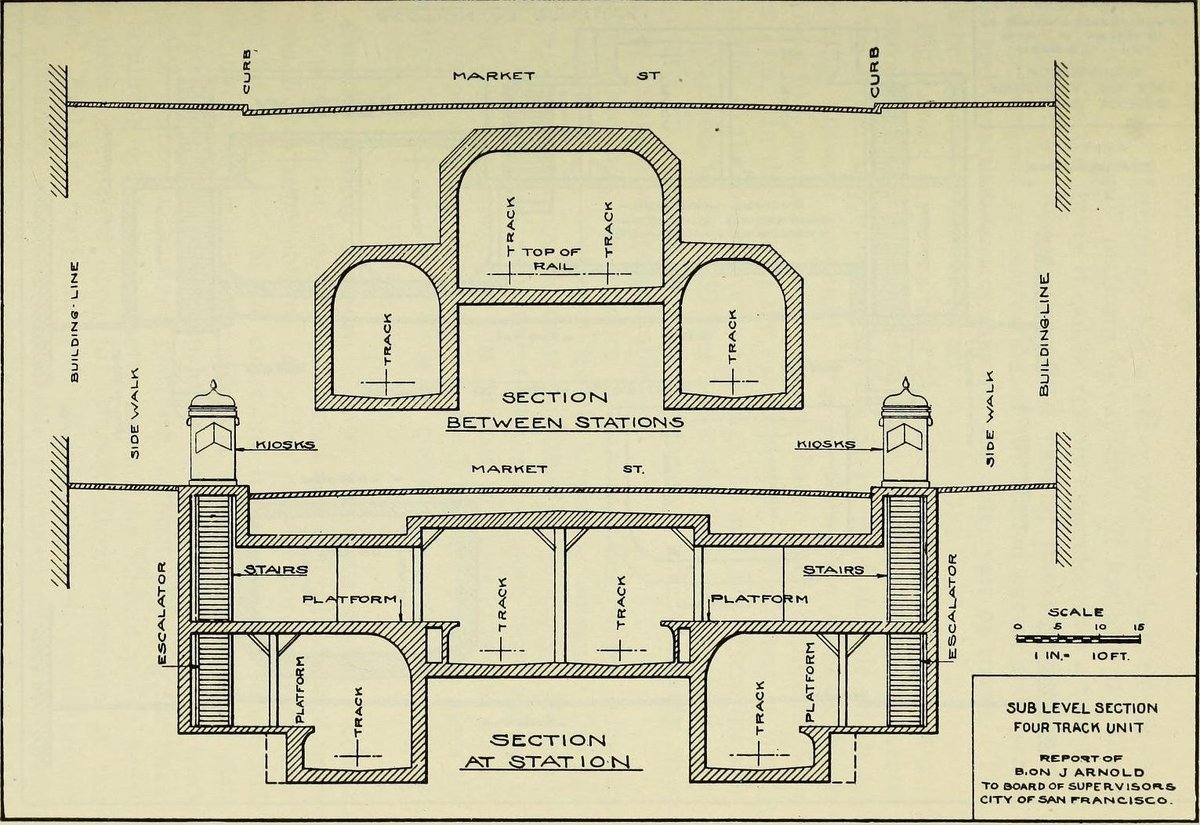
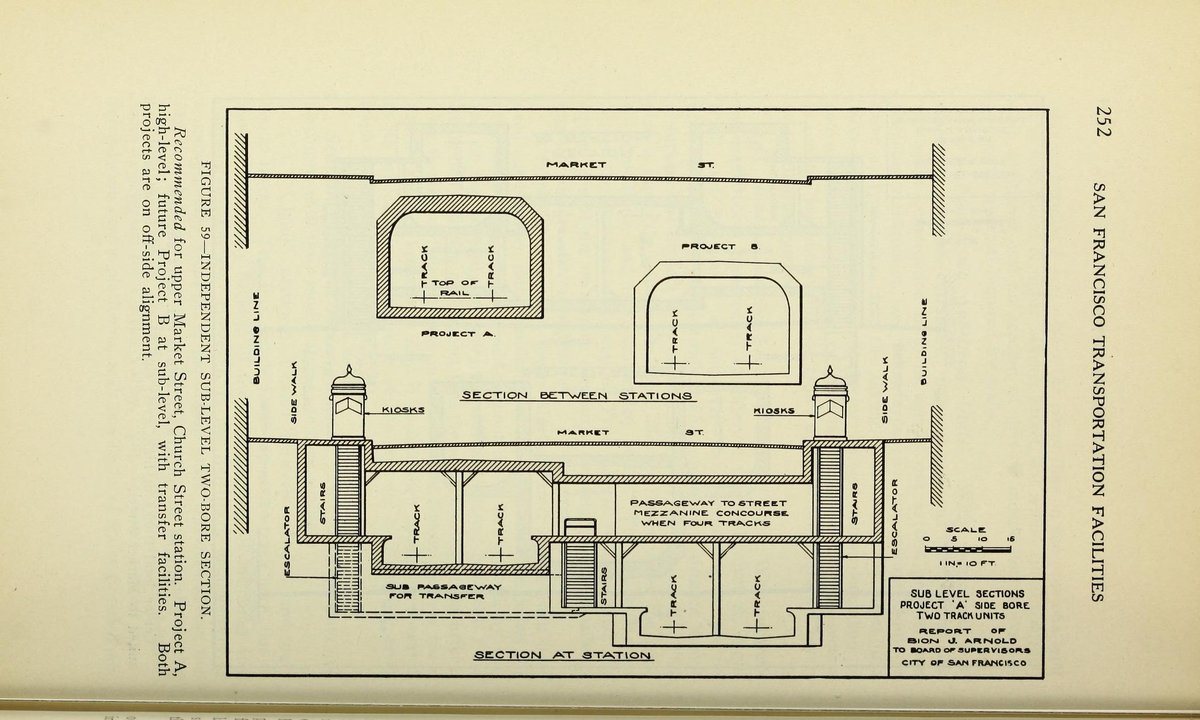
The dream of a subway beneath Market Street originated in the early 20th century, as city leaders sought to alleviate the mounting congestion of cable cars, horse-drawn vehicles, and electric streetcars (SFMTA). By 1918, four tracks spanned Market Street, serving both the Municipal Railway (Muni) and the private Market Street Railway Company (Wikipedia). In 1930, City Engineer Michael O’Shaughnessy envisioned a multi-track subway with close-spaced stations and connections to existing tunnels (Streetcar.org). However, political and financial roadblocks, especially the dominance of private transit operators, delayed progress for decades.
Postwar Momentum and the BART Era (1940s–1960s)
After World War II, San Francisco’s growing population and traffic congestion revived the push for underground rapid transit. The formation of the Bay Area Rapid Transit (BART) District in the late 1950s culminated in the 1962 voter approval of a bond issue to fund both BART and a two-level Market Street Subway. The lower level would accommodate BART trains, while the upper level would serve Muni’s light rail vehicles (Streetcar.org; Wikipedia).
Engineering Challenges, Construction, and Modernization (1967–Present)
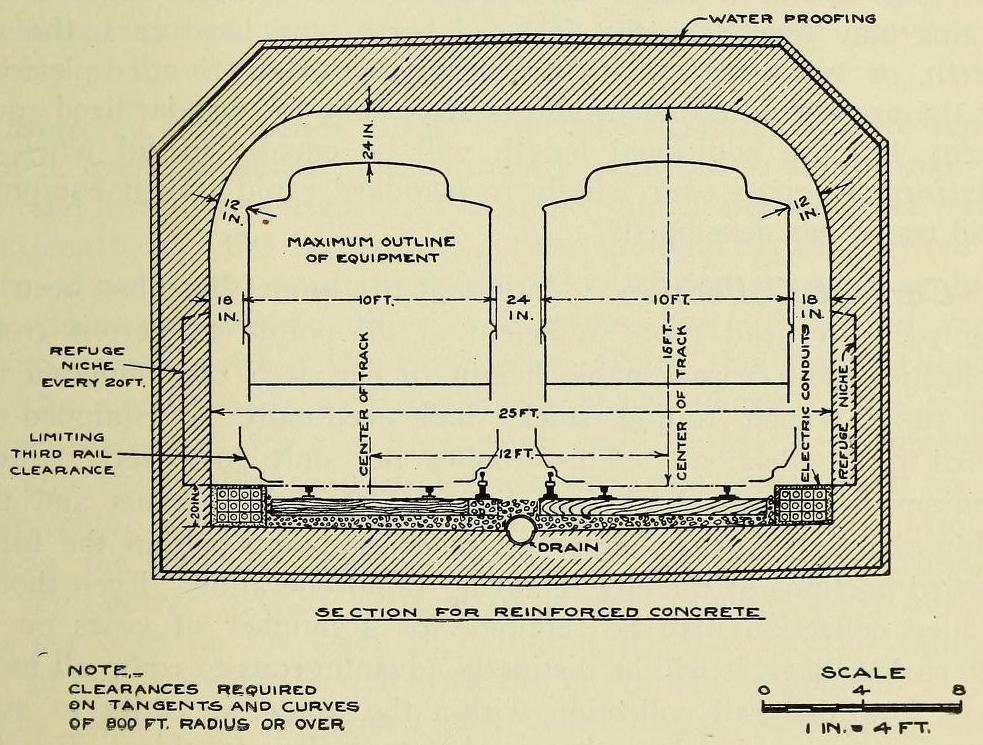
Construction began in 1967, employing the cut-and-cover method and contending with hundreds of utility lines and challenging soil conditions (FoundSF). The project’s engineering feats included slurry walls, deep pilings, and complex tie-ins with the Transbay Tube under San Francisco Bay. Despite delays caused by vehicle procurement and operational compromises, the subway’s first official ride took place in 1978, and full service began by 1980 (SFMTA; Railway Age; Streetcar.org). Integration with the Central Subway and ongoing modernization efforts, including upgrades to accessibility and infrastructure, continue to shape the subway’s role today.
Visiting the Market Street Subway
Visiting Hours
- BART Trains operate from approximately 5:00 AM to midnight on weekdays, with slightly reduced hours on weekends (bart.gov).
- Muni Metro Service generally runs from 5:00 AM to 1:00 AM, with Night Owl buses replacing trains during late-night hours (SFMTA).
- Holiday and Event Schedules Always check the latest BART and SFMTA updates for special schedules, particularly during citywide events or maintenance.
Tickets and Fares
Clipper Card
- What it is A contactless, reloadable payment card usable on BART, Muni Metro, Muni buses, ferries, cable cars, and more (clippercard.com).
- Where to buy Station vending machines, authorized retailers, or via the Clipper app (also supports Apple Pay and Google Pay).
- Initial fee $3 for a physical card; no fee for mobile wallet.
Fare Structure
- BART Distance-based fares, typically $2.50–$12.90 per ride.
- Muni Metro Flat fare ($3.00 adult), with discounts for youth, seniors, and disabled riders (SFMTA Fares).
- Transfers Separate fares for BART and Muni; both accept Clipper Cards but require separate taps when transferring.
- Visitor Passes Muni Visitor Passports and CityPASS® offer unlimited Muni rides for 1, 3, or 7 days (not valid on BART) (San Francisco Subway).
Accessibility
- All Market Street Subway stations are ADA-compliant, with elevators, ramps, tactile paving, and accessible boarding areas (SFMTA Accessibility; BART Accessibility).
- Real-time elevator and escalator status is updated on official transit websites.
- Priority seating is available on all trains.
Travel Tips
- Avoid Rush Hours For a more comfortable journey, travel outside of 7:00–9:00 AM and 4:30–6:30 PM.
- Navigation Look for clear, color-coded signage distinguishing BART (lower level) from Muni Metro (upper level).
- Luggage Store items under your seat or in designated areas; avoid blocking aisles.
- Bicycles Allowed on BART outside of peak hours; folding bikes permitted on Muni Metro at all times.
- Safety Keep valuables secure, allow others to exit before boarding, and use headphones for audio.
Nearby Attractions and Historic Sites
- Embarcadero Station Steps from the historic Ferry Building, waterfront piers, and F-Line historic streetcars (BARTable).
- Montgomery Street Station Close to SFMOMA, Yerba Buena Gardens, and the Financial District.
- Powell Street Station Next to Union Square, Chinatown, and the cable car turnaround.
- Civic Center/UN Plaza Station Adjacent to City Hall, the Asian Art Museum, and major performance venues.
For guided tours, several local operators highlight the subway’s engineering and historical significance—check with SF City Guides and other providers.
Frequently Asked Questions (FAQ)
Q: What are the Market Street Subway operating hours?
A: BART: 5:00 AM–midnight; Muni Metro: 5:00 AM–1:00 AM. Always verify the latest schedules before your trip.
Q: How do I buy tickets?
A: Use Clipper Cards, available at station vending machines, authorized shops, or as a mobile wallet. Visitor Passports are ideal for unlimited Muni rides.
Q: Is the subway accessible for people with disabilities?
A: Yes, all stations and trains are ADA-compliant, with elevators, tactile paths, and priority seating.
Q: Can I bring my bicycle?
A: Bicycles are allowed on BART outside peak commute hours; folding bikes are permitted at all times on Muni Metro.
Q: What historical sites are near the Market Street Subway?
A: The Ferry Building, City Hall, Union Square, Chinatown, and the Asian Art Museum are all easily accessible.