Type 2+ letters to search all countries, cities, and places
/Ctrl KEsc
travel_explore
Type 2+ letters to search all countries, cities, and places
Press Enter to open the top result
Lombard Street
San Francisco·United States·37° N · 122° W·Updated Apr 2026
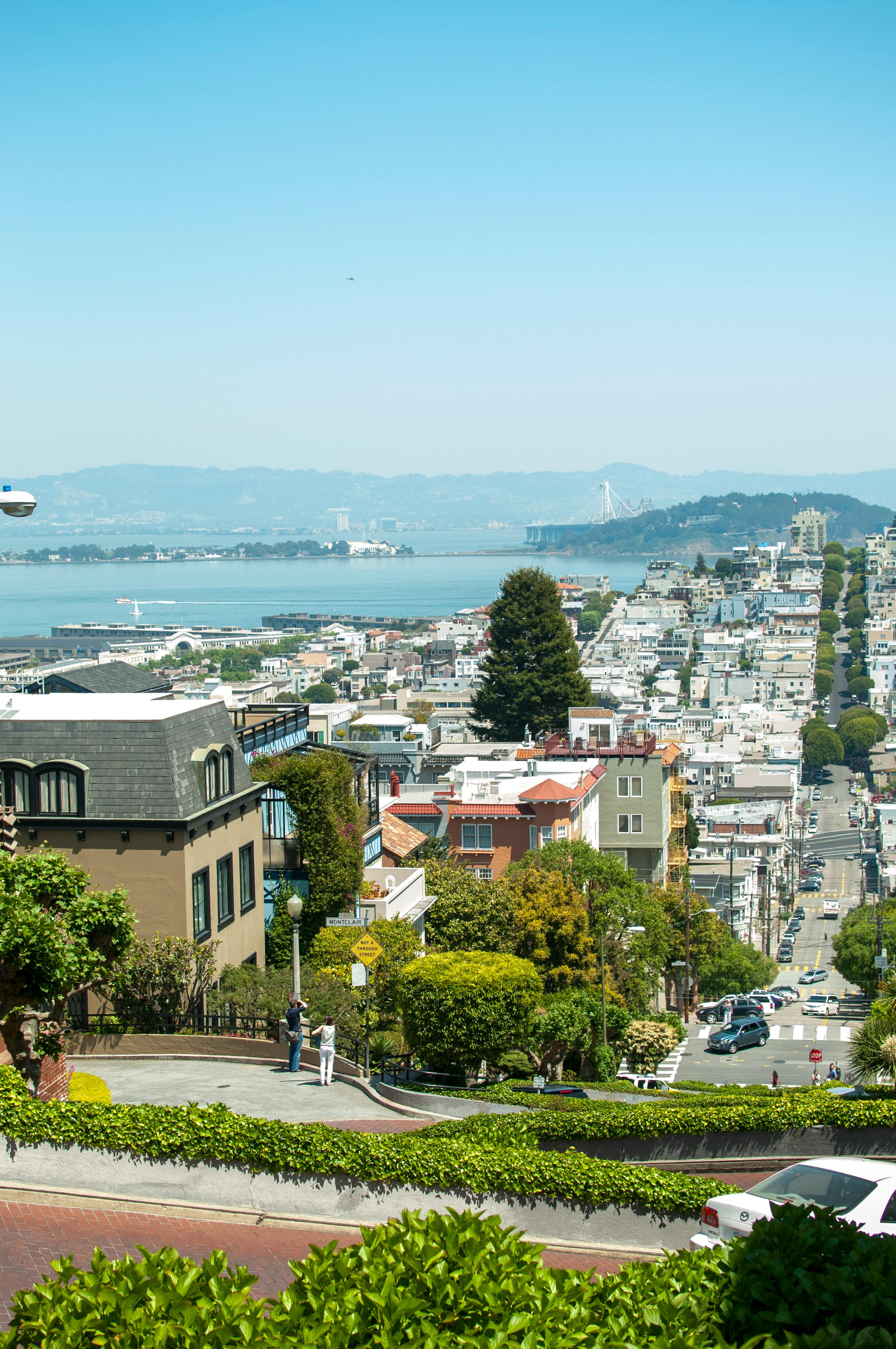
Designed in 1922 to tame a 27% grade that stumped early cars, this single-block brick switchback is a private residential street, not a municipal attraction.
Why does a residential street force cars to crawl at five miles per hour (slower than a brisk jog) through eight hairpin turns while millions line up just to watch? It looks like a whimsical trap designed for postcards, yet the geometry serves a brutal purpose. You visit Lombard Street in San Francisco, United States, to witness how a desperate engineering fix became a living laboratory of urban adaptation.
The curves were never meant to be slow. Municipal records show city engineers calculated the switchbacks in 1922 to break a twenty-seven percent grade steeper than a standard garage ramp. Early drivers routinely spun their tires into the dirt while pedestrians hammered wooden cleats into the sidewalks just to reach their front doors.
Now the brick ribbon functions as a managed spectacle. Neighbors fund the irrigation lines that feed fourteen planted beds of roses and Matilija poppies. Tour operators circle the perimeter while residents thread through the narrow margins between their garages and the public gaze.
Researched by the Audiala editorial team from historical records, architectural archives, and local expertise.
What to see
The Hyde Street Landing and 1922 Switchbacks
City records show property owner Carl Henry pushed engineers to tame a 27 percent grade, steeper than a standard theater balcony, into eight hairpin turns in 1922. Look closer. The Powell-Hyde cable car drops you here with a metallic clang, forcing your stomach to register the pitch as the 400-foot block stretches into a quarter-mile crawl longer than three double-decker buses.
The Pedestrian Stairways and Planted Islands
Skip the idling tour vans and take the concrete stairs that run parallel to the roadway, where the real street life actually happens. Listen. The brick pavement forces tires to scrape at a strict 5 mph, roughly the pace of a strolling pedestrian, while neighbors tend hydrangea heads the size of dinner plates in the tight planting beds.
Dawn Descent Route
Walk the full descent at dawn when the coastal fog still clings to the hydrangeas and the neighborhood shutters stay firmly closed. Start early. You’ll leave realizing the whole block was never meant for sightseers, but to make a brutal slope survivable for ordinary commuters.
Plan your visit
Getting There
The famous brick-paved switchback runs strictly one-way downhill from Hyde Street to Leavenworth Street, dropping cars through eight hairpin turns each narrower than a standard taxi cab. Take the Powell-Hyde cable car. Expect a 20-minute crawl longer than a feature film if you drive from Van Ness Avenue.
Opening Hours
The street operates as a public municipal road 24 hours a day, completely free of seasonal gates, posted closures, or official operating hours. Show up anytime. Crowds swell by noon, but early morning offers clear sidewalks and quiet corners.
Time Needed
Budget 15 minutes to snap photos from the top and bottom railings while watching heavy sedans squeeze through the tight curves. Add ten more. Driving swallows 30 minutes on weekends, far longer than a typical sitcom marathon.
Cost/Tickets
Walking the public sidewalks costs absolutely nothing, and absolutely no official entry ticket exists for the famous crooked residential section on Russian Hill. Ride the cable car. That historic trip uphill runs $9 per person as of 2026, roughly the price of two street tacos.
Photo Gallery
A view of Lombard Street, San Francisco, United States. · Mahesh GudladonaA view of Lombard Street, San Francisco, United States. · Javier BranasA view of Lombard Street, San Francisco, United States. · William J Sisti from Morristown, NJ, USAA view of Lombard Street, San Francisco, United States. · HichiA view of Lombard Street, San Francisco, United States. · bryan...A view of Lombard Street, San Francisco, United States. · peter boy12qq12A view of Lombard Street, San Francisco, United States. · peter boy12qq12
History
The Street That Refused to Be Straight
Lombard Street’s crooked block has never functioned as a museum piece. It operates as a working residential corridor that happens to double as a civic theater. The true continuity here lies in the daily negotiation between private stewardship and public consumption.
City planners note the original drainage chutes still route runoff away from the retaining walls just as they did a century ago. The neighborhood’s commitment to slope maintenance remains untouched by the tourist economy. Local associations still raise funds for soil amendments while the Powell-Hyde cable car rings its bell at the intersection.
The turning point
The Switchback Compromise
Most guidebooks claim the serpentine layout was a scenic detour designed to showcase San Francisco’s topographic charm. The numbers refuse to cooperate. A straight twenty-seven percent drop would shred vintage brakes and leave engines stalling halfway down the hill.
According to property archives, landowner Carl Henry recognized the financial threat in the early nineteen twenties. His Russian Hill lot faced functional isolation as motor vehicles replaced streetcars, and he watched neighbors resort to horse-drawn winches just to move their automobiles. He petitioned the Board of Supervisors for a radical solution, gambling that a serpentine grade would preserve his property value and protect local lives.
The turning point arrived when municipal engineers translated his plea into a brick-paved compromise, carving eight tight curves that reduced the effective slope to a manageable crawl. When you walk the sidewalk now, the postcard illusion dissolves. You are looking at a traffic-calming device born from logistical desperation, dressed up by a century of volunteer gardeners who refused to let a functional retaining wall turn gray.
What Changed
The straight cobbled descent vanished under a 1922 brick paving project that fundamentally altered the hill’s geometry. Municipal oversight shifted from basic maintenance to active traffic management, instituting strict speed limits and queue systems to handle two million annual visitors. Tour buses now circle the perimeter while residents install reinforced garage doors to withstand the vibration of idling engines.
What Endured
The neighborhood’s commitment to slope stewardship remains untouched by the visitor economy. Local associations still raise funds for the irrigation lines and soil amendments that keep the retaining walls from cracking under seasonal rain. The Powell-Hyde cable car continues to climb the adjacent grade, threading historic transit through a corridor that still serves its original purpose as a working residential artery.
Tips for visitors
Respect the Flower Beds
Stay strictly on the concrete and step clear of private driveways. Trampling the privately maintained hydrangeas earns a swift local glare.
Handheld Only
Keep your gear compact so you do not block the narrow pedestrian stairs. Commercial tripods require city filming permits.
Leave the Car Empty
Strip your vehicle completely before leaving it. Burglars target rental plates relentlessly.
Hyde Street Fuel
Skip the wharf traps and walk downhill to the Buena Vista. Order an Irish coffee at the historic bar.
Chase the Morning Light
Arrive before 8 a.m. on weekdays to catch clear skies and empty sidewalks. Pack a windbreaker for the sudden bay fog.
Ride Up, Walk Down
Save the fare by taking the cable car uphill to the top viewpoint. Walking down the side stairs saves your knees and skips traffic.
Order: The traditional Swedish fika bun (available Thursday–Sunday) or their perfectly crafted ham and cheese croissant.
This bright, dog-friendly spot is a local favorite for its warm, owner-operated service and high-quality coffee. It's the perfect neighborhood retreat for a pastry and a flat white.
Order: The tubruk, a strong and traditional Indonesian brew, or the Pandan Latte for a unique flavor.
A true gem for coffee enthusiasts, this shop sources authentic beans directly from Indonesia. It’s a relaxed, welcoming space where the owner often shares stories about the coffee regions.
Order: The crispy chicken wings followed by their signature ramen and a cold Sapporo draft.
This laid-back spot offers a quiet, comfortable atmosphere and efficient ordering via phone. It’s a reliable go-to for high-quality Japanese comfort food after a long day.
Order: The fresh salmon toast or the hearty breakfast sandwich on a biscuit.
With its beautiful outdoor patio filled with fiddle leaf figs, this cafe is a quintessential San Francisco healthy-yet-indulgent spot. The espresso is consistently excellent, making it a great morning stop.
checkDinner in San Francisco is earlier than in other major cities; aim for 7:00 p.m. and expect many kitchens to close by 9:00 p.m.
checkMonday and Tuesday can be tricky for dining; check hours in advance as some spots remain closed during these days.
checkWeekend brunch is a cultural institution here; expect it to be a busy, extended affair until mid-afternoon.
checkStandard tipping is 15-20%, but always check your bill to see if an 18%+ service charge has been added automatically for groups.
checkMost locals tip by card, though cash is always accepted.
Food districts:North BeachMarina DistrictFerry Building / Embarcadero
Restaurant data powered by Google
Frequently asked
Is Lombard Street worth visiting?
Yes, but only if you walk it instead of baking in a car queue. The real value appears on the concrete side stairways where you hear tires scrape over 1922 herringbone brick and smell damp hydrangeas, turning a traffic stunt into a quiet urban sequence.
How long do you need at Lombard Street?
Twenty minutes covers the top overlook, the stairway descent, and the classic bottom angle. Add another ten if you sit on the steps to watch cars fold around eight hairpin turns at a strict 5 mph crawl, realizing the curves were engineered for survival rather than spectacle.
How do I get to Lombard Street from downtown San Francisco?
Catch the Powell-Hyde cable car from Powell and Market, which drops you exactly at the Hyde landing with a brass bell clang. The ten-minute ride uphill saves you from hunting for parking in a neighborhood where every curb is painted red, letting you face the slope with fresh legs.
What is the best time to visit Lombard Street?
Early morning on a weekday catches the street empty and the plantings glowing in soft Pacific light. Skip weekend afternoons when the queue stretches past Hyde Street and the brick echoes with impatient engines, because the street reveals its geometry only when the crowds leave.
Can you visit Lombard Street for free?
Walking the block costs nothing because it remains an active public road. You only pay if you ride the historic cable car up, which runs $9 a single ride, proving the city charges for the climb but gives away the descent.
What should I not miss at Lombard Street?
The pedestrian side stairs and the lateral drainage grooves cut into the red brick hold the real story. Most visitors snap a photo from the top parking lot and leave, missing how the steps compress the view into tight layers of foliage and brake lights that make the slope feel suddenly human.
Sources & attribution4
Researched and written by the Audiala editorial team from historical records, architectural archives, and local expertise. Last updated April 2026.
SFCTA Lombard Crooked Street Project — Documents the original 27% grade, the 5 mph speed limit, visitor congestion data, and the 2017 management study balancing tourism with residential access.
SFMTA Powell-Hyde Cable Car Route — Confirms cable car fare, daily schedule, and exact stop location at Hyde and Lombard for direct uphill transit access.
SF Chronicle Archive: Twisted Traffic History — Provides 1922 construction details, resident accounts of pre-curve chicken cleats, and the evolution of the brick switchbacks through archival photography.
SF Travel Lombard Street Guide — Outlines visitor etiquette, parking warnings, seasonal crowd patterns, and the Hyde to Leavenworth block boundaries.
500px photo (56766436) — Mahesh Gudladona — CC BY 3.0 (https://creativecommons.org/licenses/by/3.0/) — Source: https://commons.wikimedia.org/wiki/File:500px_photo_(56766436).jpeg
Columbus Av. - panoramio - Javier Branas (1) — Javier Branas — CC BY 3.0 (https://creativecommons.org/licenses/by/3.0/) — Source: https://commons.wikimedia.org/wiki/File:Columbus_Av._-_panoramio_-_Javier_Branas_(1).jpg
CIMG0135 (207603781) — William J Sisti from Morristown, NJ, USA — CC BY-SA 2.0 (https://creativecommons.org/licenses/by-sa/2.0/) — Source: https://commons.wikimedia.org/wiki/File:CIMG0135_(207603781).jpg
1207 Lombard Street San Francisco — Hichi — CC BY-SA 3.0 (https://creativecommons.org/licenses/by-sa/3.0/) — Source: https://commons.wikimedia.org/wiki/File:1207_Lombard_Street_San_Francisco.jpg
Apartments, Lombard Street, San Francisco (October 2017)(37573830464) — bryan... — CC BY-SA 2.0 (https://creativecommons.org/licenses/by-sa/2.0/) — Source: https://commons.wikimedia.org/wiki/File:Apartments,_Lombard_Street,_San_Francisco_(October_2017)(37573830464).jpg
Cow Hollow, San Francisco, CA 94123, USA - panoramio (1) — peter boy12qq12 — CC BY 3.0 (https://creativecommons.org/licenses/by/3.0/) — Source: https://commons.wikimedia.org/wiki/File:Cow_Hollow,_San_Francisco,_CA_94123,_USA_-_panoramio_(1).jpg
Cow Hollow, San Francisco, CA 94123, USA - panoramio (2) — peter boy12qq12 — CC BY 3.0 (https://creativecommons.org/licenses/by/3.0/) — Source: https://commons.wikimedia.org/wiki/File:Cow_Hollow,_San_Francisco,_CA_94123,_USA_-_panoramio_(2).jpg
Entering San Francisco on US 101 (178779364) — Joe Ross from Lansing, Michigan — CC BY-SA 2.0 (https://creativecommons.org/licenses/by-sa/2.0/) — Source: https://commons.wikimedia.org/wiki/File:Entering_San_Francisco_on_US_101_(178779364).jpg
Flowers on Lombard Street (14044187039) — Nan Palmero from San Antonio, TX, USA — CC BY 2.0 (https://creativecommons.org/licenses/by/2.0/) — Source: https://commons.wikimedia.org/wiki/File:Flowers_on_Lombard_Street_(14044187039).jpg
Hyde Street, between Lombard Street and Chestnut Street, San Francisco (May 2022) — dconvertini — CC BY-SA 2.0 (https://creativecommons.org/licenses/by-sa/2.0/) — Source: https://commons.wikimedia.org/wiki/File:Hyde_Street,_between_Lombard_Street_and_Chestnut_Street,_San_Francisco_(May_2022).jpg
GOOG-411 billboard — Danny Sullivan on Flickr — CC BY 2.0 (https://creativecommons.org/licenses/by/2.0/) — Source: https://commons.wikimedia.org/wiki/File:GOOG-411_billboard.jpg
Strictly necessary cookies keep the site working. Analytics (PostHog, Google Analytics) measures how each visitor uses our pages. Marketing loads YouTube videos and walking-route maps without a tap and lets Google Analytics set advertising cookies. We never sell your data. You can change this any time from the footer.
Analytics and marketing cookies are optional and only load if you agree. Details under Customize.
Privacy
Cookie preferences
Pick what you're okay with. You can change this any time from the footer.
Strictly necessary
Always on
Sign-in, language, navigation. Always on.
Product analytics
PostHog (EU) and Google Analytics record which pages you view and how you use them, under a random identifier stored in your browser. Helps us see which pages work and which need fixing. Google's ad personalisation stays off. No selling.
Marketing
Loads YouTube videos and the walking-route maps (OpenFreeMap) without a tap; without it, they load only when you tap them. If analytics is also on, Google Analytics may set advertising cookies. Ad personalisation stays off.