
Origins of the Equestrian Statue of Joan of Arc in San Francisco
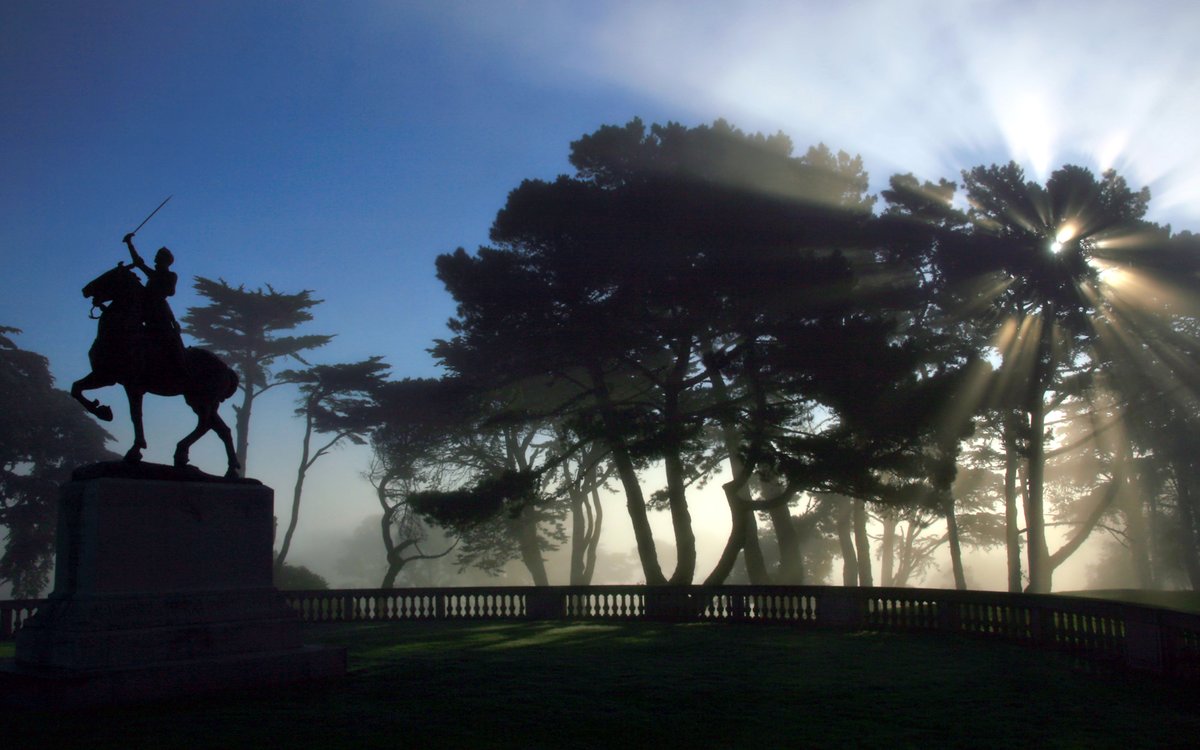
The Equestrian Statue of Joan of Arc in Golden Gate Park is a replica of Anna Vaughn Hyatt Huntington’s celebrated work. Huntington, an acclaimed American sculptor, was renowned for her dynamic equestrian compositions and mastery of animal anatomy. The original Joan of Arc statue debuted in New York City in 1915, earning widespread recognition and prompting the creation of replicas in various cities, including San Francisco. Huntington’s dedication to accuracy and expressive movement is evident in the statue, which captures Joan in a moment of determined action atop her horse (Art of the Horse).
San Francisco’s adoption of the statue reflects a broader 20th-century movement to honor Joan of Arc, whose story resonated as a symbol of resilience, leadership, and faith. Replicas of Huntington’s statue can also be found in France, Massachusetts, Quebec, and several North American museums, underlining the global significance of her artistic vision.
Joan of Arc: Historical and Cultural Significance
Joan of Arc, or “La Pucelle d’Orléans,” was born in 1412 and rose from humble origins to lead French forces during the Hundred Years’ War. Her pivotal role in lifting the siege of Orléans and ensuring Charles VII’s coronation cemented her as a national heroine. Following her execution in 1431 and posthumous exoneration in 1456, Joan became a symbol of faith, courage, and justice—eventually canonized as a saint (Art of the Horse). The decision to commemorate her with a public monument in San Francisco reflects her enduring inspiration as a figure of empowerment.
Artistic Features and Symbolism
Huntington’s equestrian Joan of Arc is distinguished by its dynamic realism and psychological depth. The bronze statue depicts Joan in full armor, astride a rearing horse, with sword raised—a composition that conveys spiritual resolve and martial determination. The Beaux-Arts style, characterized by realism, movement, and dramatic effect, enhances the sculpture’s impact. Joan’s upward gaze and the horse’s forward momentum evoke themes of heroism, faith, and the relentless pursuit of justice (Golden Gate Park Statues).
Placement and Context in Golden Gate Park
Golden Gate Park, spanning over 1,000 acres, is a cornerstone of San Francisco’s public spaces, renowned for its monuments, gardens, and cultural institutions. The Equestrian Statue of Joan of Arc is located near the Music Concourse, surrounded by major attractions like the de Young Museum and the California Academy of Sciences. The statue’s setting places it among other historical and cultural tributes, with the park’s landscaping providing a harmonious backdrop (Golden Gate Park Statues). Despite past efforts to reduce the visual impact of park statues, Joan of Arc remains a prominent and celebrated landmark.
Visitor Information: Hours, Accessibility, and Travel Tips
- Hours Golden Gate Park is open daily, 5 a.m. to midnight. The statue is accessible during these times.
- Admission No tickets are required; visiting the statue and park is free. Entry to nearby museums requires separate admission.
- Accessibility Paved paths lead to the statue; wheelchair access is available, though some terrain may be uneven.
- Travel Tips Use MUNI buses for public transit; parking is limited during peak times. Early mornings and weekdays offer quieter visits.
- Guided Tours Offered by local companies and self-guided apps; check the Golden Gate Park official website for updates.
Nearby Attractions and Events
Explore the de Young Museum, California Academy of Sciences, and the Conservatory of Flowers—all located within walking distance. The Music Concourse hosts regular cultural events. For schedules and current happenings, consult Golden Gate Park's event listings.
The Statue at the Palace of the Legion of Honor: Artistry and Access
Artistry and Symbolism
The Joan of Arc statue at the Palace of the Legion of Honor is another example of Huntington’s artistry, blending expressive realism with historical iconography. Joan is depicted in full armor, sword raised, her gaze skyward—signifying her dual role as visionary and military leader (Medievalists.net). The statue’s installation in 1926, within the museum’s neoclassical setting, underscores San Francisco’s embrace of French cultural heritage and international artistic traditions (Citybop).
Visiting Details
- Location Palace of the Legion of Honor, Lincoln Park.
- Hours Tuesday–Sunday, 9:30 a.m.–5:15 p.m.; last admission at 4:30 p.m. Closed Mondays.
- Admission General entry ~$15 for adults; discounts for seniors, students, youth; children under 12 free.
- Accessibility Fully wheelchair accessible; ramps and elevators available.
- Guided Tours Check the museum’s official website for schedules.
Nearby Attractions
After visiting, enjoy the Lands End Trail, Cliff House, and panoramic views of the Golden Gate Bridge.
Joan of Arc in Alamo Square Park: Setting and Experience
Location and Access
The Equestrian Statue of Joan of Arc is also found in Alamo Square Park at the intersection of Fulton and Scott Streets, offering views of the Painted Ladies and downtown skyline. The park is easily reached by Muni buses (lines 5, 21, and 22), and is wheelchair accessible. Open daily from 5 a.m. to midnight, the park is free to enter.
Nearby Highlights
- Painted Ladies Iconic Victorian homes.
- Picnic Areas Rolling lawns and scenic benches.
- Local Cafes The Mill, Nopa, and more within walking distance.
Joan of Arc in the French Quarter: Location and Community Significance
Location
Another notable Joan of Arc statue stands in the French Quarter at Pine and Kearny Streets, adjacent to Notre-Dame-des-Victoires Church. This gilded bronze equestrian statue, a replica of Emmanuel Frémiet’s original in Paris, was gifted to San Francisco’s French community in 1921 (Joan of Arc Statues).
Visiting Details
- Hours Always accessible; plaza is open 24/7.
- Admission Free, no tickets required.
- Accessibility Wheelchair accessible; benches and shade provided.
Community and Events
The statue is a focal point for French cultural events, including Bastille Day and Joan of Arc’s feast day, often featuring ceremonies, performances, and guided tours. The adjacent Notre-Dame-des-Victoires Church is open for visitors and services.
Frequently Asked Questions (FAQ)
Q: What are the general visiting hours for Joan of Arc statues in San Francisco?
A: Outdoor statues (Golden Gate Park, Alamo Square, French Quarter) are accessible daily during park or plaza hours; Palace of the Legion of Honor hours are Tuesday–Sunday, 9:30 a.m.–5:15 p.m.
Q: Is there an admission fee?
A: Outdoor statues are free; museum entry at the Legion of Honor requires a ticket.
Q: Are sites wheelchair accessible?
A: Yes, all sites are wheelchair accessible with paved paths or ramps.
Q: Are guided tours available?
A: Yes, both museum and city walking tours include these statues.
Q: When is the best time to visit for photography?
A: Early mornings and late afternoons offer ideal lighting with fewer crowds.
Q: Are restrooms available?
A: Public restrooms are available in parks; nearby cafes or museums also provide facilities.
Legacy, Conservation, and Public Engagement
San Francisco’s Joan of Arc statues are not just historical monuments—they are active sites of education, reflection, and community engagement. Ongoing conservation is managed by city arts and parks departments, with support from local heritage organizations. Educational signage, tours, and digital resources foster a deeper public appreciation of Joan’s legacy and the role of public art in civic life (Golden Gate Park Statues, Art of the Horse).
Summary and Essential Tips for Travelers
- San Francisco offers multiple Joan of Arc statues, each with unique historical and artistic significance.
- Sites are centrally located, free or low-cost, and accessible by public transit.
- Plan visits around museum hours for the Legion of Honor; outdoor statues are accessible daily.
- Use early or late-day light for the best photos.
- Explore nearby attractions, cafes, and events to enrich your experience.
- Download the Audiala app for guided tours and real-time visitor information.