
Early Foundations and Pre-1906 Era
The site now known as Civic Center Plaza has deep historical roots. In the mid-19th century, it was Yerba Buena Cemetery, San Francisco’s first municipal burial ground established in 1849. By the late 1860s, the city relocated graves to allow for urban expansion, converting the area into Yerba Buena Park by 1870 (sfplanning.org). The installation of the Pioneer Monument in 1896 and the completion of the grand Old City Hall in 1897 marked its first foray into civic prominence.
The 1906 Earthquake and the City Beautiful Movement
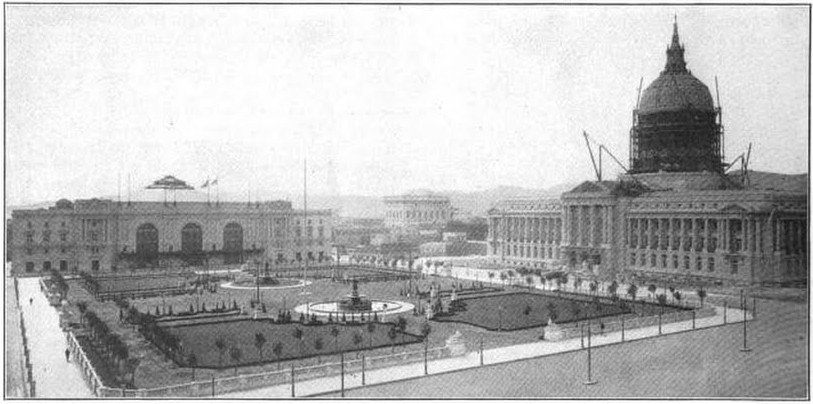
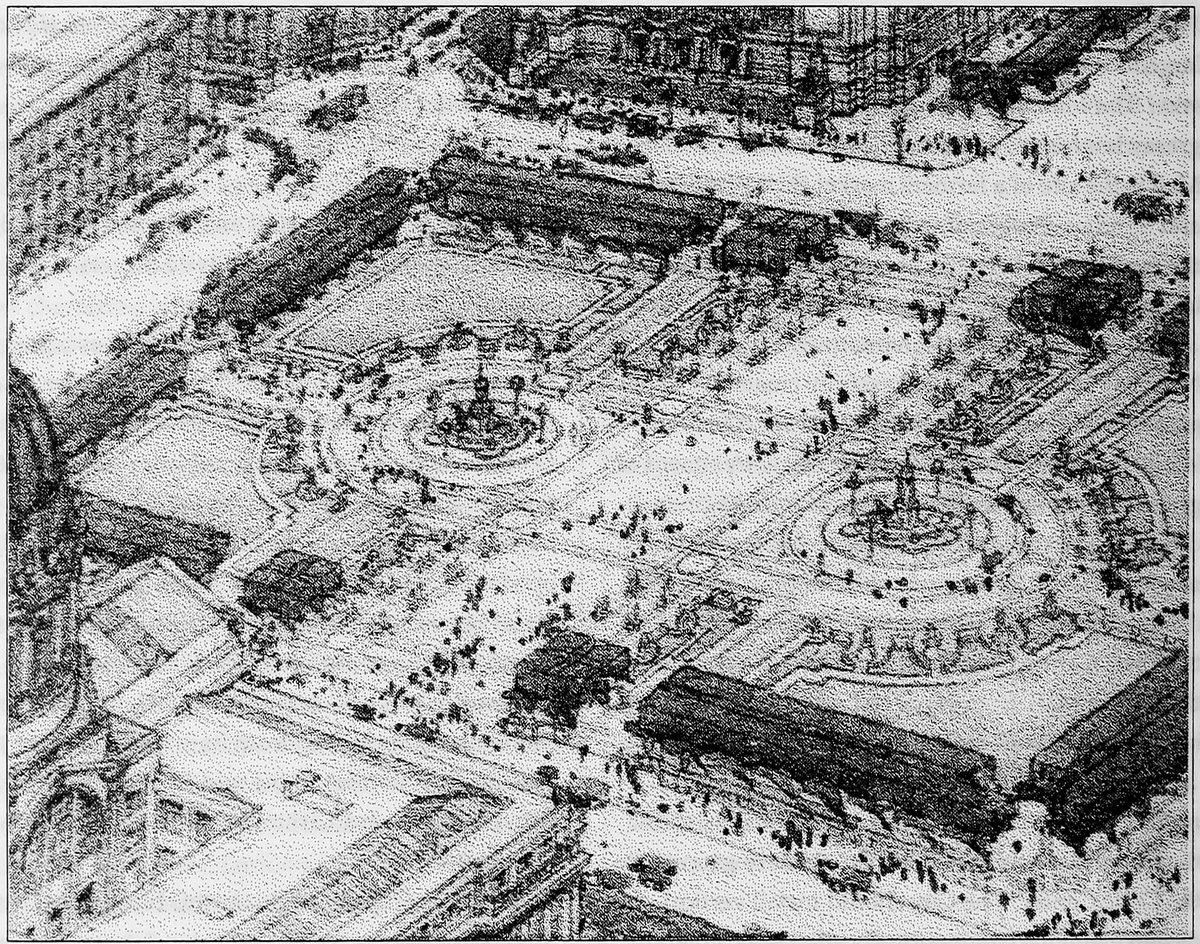
The devastating 1906 earthquake and fire razed much of San Francisco, including the recently finished Old City Hall. This catastrophe presented urban planners with the opportunity to reimagine the city’s heart in line with the City Beautiful movement, which emphasized monumental civic spaces and classical architecture. Daniel Burnham’s 1905 plan, inspired by Washington D.C.’s layout, envisioned a grand Civic Center with radiating boulevards and a formal park (artandarchitecture-sf.com). This vision was refined and implemented by John Galen Howard and others in the years following the earthquake (civiccentersf.org).
Construction of the Civic Center Complex (1912–1930s)
Between 1912 and the late 1930s, the Civic Center district took shape. The new City Hall (1915) became its crown jewel, featuring one of the world’s largest domes (sf.gov). The Exposition Auditorium (now Bill Graham Civic Auditorium) and the War Memorial Opera House soon followed, joined by the Veterans Building and the original Public Library (now the Asian Art Museum). These structures formed a cohesive architectural statement and established Civic Center Plaza as the city’s ceremonial core (civiccentersf.org).
Visiting Hours, Tickets, and Accessibility
- Civic Center Plaza Open daily from dawn until 10:00 PM. Entry is free.
- San Francisco City Hall Open Monday to Friday, 8:00 AM to 5:00 PM. Free guided tours are available on select weekdays; check the official website for details.
- Asian Art Museum Open Tuesday to Sunday, 10:00 AM to 5:00 PM. Tickets are required (asianart.org).
- War Memorial Opera House Hours depend on scheduled performances. Purchase tickets through SF Opera.
- Bill Graham Civic Auditorium Hours and tickets are event-specific.
All public areas and most venues are fully ADA accessible, including ramps, elevators, and accessible restrooms. The Civic Center/UN Plaza BART and Muni stations provide direct public transit access, and nearby parking garages are available on McAllister and Grove Streets.
Major Attractions and Guided Tours
San Francisco City Hall
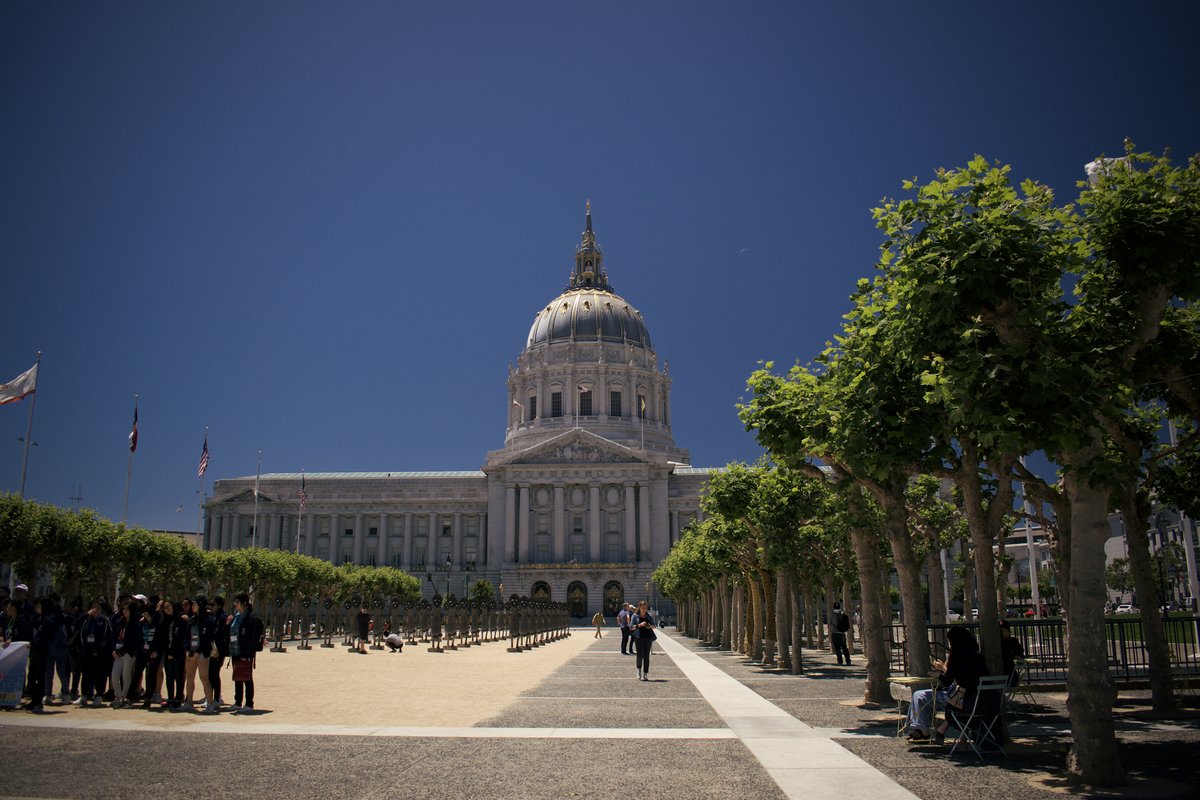
A Beaux-Arts marvel, City Hall boasts a 307-foot dome—taller than the U.S. Capitol’s. Self-guided visits are available during business hours, with free guided tours offered on select weekdays (sf.gov).
Asian Art Museum
Housed in the former main library, this museum features one of the largest collections of Asian art in the world. Open Tuesday to Sunday, with ticketed entry (asianart.org).
Performing Arts Venues
- War Memorial Opera House Home to the San Francisco Opera and Ballet. Guided tours available by appointment.
- Davies Symphony Hall Hosts the San Francisco Symphony.
- Bill Graham Civic Auditorium Venue for concerts and special events.
- Orpheum Theatre Known for Broadway shows; tickets available through the official website.
Civic Center Plaza
The Plaza itself is a landscaped public space ideal for picnics, relaxation, and people-watching. An adjacent playground and open lawns invite families and visitors of all ages.
Guided Tours
San Francisco City Guides and other local organizations offer architectural and historical walking tours of the Civic Center and surrounding neighborhoods (sfcityguides.org).
Cultural Programming and Annual Events
San Francisco Pride Celebration and Parade
Each June, Civic Center Plaza is transformed by the world-famous Pride Parade and Festival, featuring live music, performances, and a mass wedding ceremony at City Hall (sf.funcheap.com; sftravel.com; sfciviccenter.org).
Free Live Music and Cultural Events
Regular free programming includes “Lunch & Listen” concerts at Fulton Plaza every Tuesday and Thursday, as well as summer dance performances, art installations, and pop-up markets (sf.funcheap.com; sfciviccenter.org).
Farmers Markets and Food Events
The Heart of the City Farmers Market at UN Plaza operates on Wednesdays and Sundays, offering fresh local produce and artisanal foods (sfciviccenter.org).
Performing Arts and Outdoor Festivals
The Bill Graham Civic Auditorium, Davies Symphony Hall, and Orpheum Theatre present concerts, operas, ballets, and Broadway shows throughout the year. Outdoor events and film screenings enliven the Plaza in summer (sftravel.com; bartable.bart.gov; sftourismtips.com).
Nearby San Francisco Historical Sites
- San Francisco Public Library – Main Branch Modern facility with public programs and free admission.
- UN Plaza Commemorates the 1945 United Nations Charter signing.
- Van Ness Avenue Lined with historic theaters and cultural institutions.
- Hayes Valley Adjacent neighborhood with dining, cafes, shops, and galleries (sftravel.com).
Travel Tips and Visitor Amenities
- Best Visiting Times Weekdays, 9:00 AM to 4:00 PM, are typically less crowded.
- Parking Limited street parking; use nearby garages on Polk, Grove, or McAllister Streets.
- Safety The area is generally safe during the day, but visitors should remain aware of their surroundings, especially near the Tenderloin border.
- Accessibility All main attractions and pathways are wheelchair-accessible; ADA service animals are welcome.
- Pets Leashed dogs are allowed in outdoor spaces, with an off-leash dog run at UN Plaza.
Frequently Asked Questions (FAQ)
Q: What are Civic Center Plaza’s visiting hours?
A: The Plaza is open daily from dawn until 10:00 PM.
Q: Is there an entrance fee?
A: No, access to the Plaza is free; some venues (e.g., Asian Art Museum) require tickets.
Q: Are guided tours available?
A: Yes, free City Hall tours are available; walking tours can be booked through local organizations.
Q: How do I get there by public transport?
A: The Plaza is accessible via BART and Muni at Civic Center/UN Plaza station, as well as multiple bus and streetcar lines.
Q: Is Civic Center Plaza wheelchair accessible?
A: Yes, the Plaza and all major attractions offer ADA-compliant access.
Q: Can I bring my dog?
A: Leashed dogs are welcome except at farmers markets. An off-leash dog run is available at UN Plaza.
Discover More
Civic Center Plaza is a must-see San Francisco destination, seamlessly blending history, architecture, and vibrant community life. Whether you’re drawn by iconic landmarks, major cultural events, or the lively atmosphere, the Plaza offers something for everyone. For event schedules and the latest updates, consult official sources and consider downloading the Audiala app for real-time guides. Follow us on social media to stay up-to-date with insider tips and upcoming events.