Type 2+ letters to search all countries, cities, and places
/Ctrl KEsc
travel_explore
Type 2+ letters to search all countries, cities, and places
Press Enter to open the top result
Cable Cars
San Francisco·United States·37° N · 122° W·Updated Apr 2026
Born after horses slipped on slick streets, this manually operated transit relic survived earthquakes and electric rivals through fierce civic preservation.
How does a city obsessed with tech and speed choose to protect a transit system that moves at a brisk walk, relies on subterranean steel cables, and costs far more per passenger to run than a modern bus? The answer thrums beneath the asphalt of San Francisco, United States, in the form of the historic Cable Cars. You ride them not for efficiency, but to feel the exact friction between nineteenth-century mechanics and steep urban geography. It remains a living machine that still carries commuters and proves that progress does not always mean moving faster.
The system survives because the hills refused to surrender to electric streetcars. Three lines still trace routes carved over a century ago. The Powell-Hyde and Powell-Mason lines climb toward the waterfront, while the California Street line cuts through Nob Hill with a quieter, more utilitarian rhythm. Every car is a mechanical hybrid. The gripman does not steer a wheel. He operates a heavy iron lever that clamps onto a constantly moving cable running eight miles per hour beneath the pavement.
At the turnaround points, the ritual continues. The conductor and gripman step out, lock the brakes, and physically rotate the entire vehicle on a massive steel turntable. Bystanders often pitch in, pushing the wooden sides until the car faces the opposite direction. You can watch the live engines that drive those cables at the Washington and Mason museum. Rotating drums and tension wheels keep the city in motion from a brick powerhouse perched above the street.
Researched by the Audiala editorial team from historical records, architectural archives, and local expertise.
What to see
Powell-Hyde Turnaround
Stand at the Powell & Market turnaround and watch a two-ton wooden car pivot on steel rollers while the grip operator drops a three-hundred-pound set of iron jaws through a slot barely wider than a paperback. Feel the gravity shift. Records show Andrew Smith Hallidie tested this exact mechanism on August 2, 1873, catching a moving cable that hums beneath your shoes at nine miles per hour.
Washington-Mason Powerhouse
Step past the polished antique displays and descend into the sheave room at 1201 Mason Street, where four winding wheels pull thirteen miles of steel cable at a relentless nine miles per hour. Listen to the motors. Scholars note this exact 1887 configuration kept running while half the city burned in 1906, leaving behind a working machine hall that still vibrates through the floorboards.
California Street Line
Trade the Powell Street queues for the California Street line, where double-ended maroon cars run without turntables and locals actually ride to work. Watch the slot. The route crosses over the Powell cable at California and Powell, forcing cars to coast through a depression pulley while a tiny signal house dictates the right of way.
Plan your visit
Reaching the Terminals
BART drops you a block from the Powell & Market turnaround, while the California line terminal waits deeper in the Financial District near Embarcadero station. Skip the rental car. Street parking runs $40 a day and the steep grades will chew through your brake pads.
Daily Operating Hours
All three lines roll daily from 7:00 AM to 10:30 PM, with occasional late-night extensions to 11:00 PM during peak weekend traffic. The ticket booths close at 5:00 PM. The cars keep rolling regardless of Pacific fog or coastal drizzle.
How Long to Ride
A single hop from Union Square to Fisherman's Wharf takes 15 to 25 minutes, just enough to hear the bell ring and feel the grip catch the underground cable. Plan two to three hours if you want to trace the Powell-Hyde and California lines separately while stopping at the Cable Car Museum on Washington Street. The Cal line moves faster.
Mobility & Boarding
The historic cars lack ramps, lifts, or wheelchair securement zones, making them entirely inaccessible for riders who cannot navigate a steep step up from street level. Open-air running boards demand strong balance. All other Muni buses and F-line streetcars offer full accessibility if you need an alternative route.
Fares & Payment
Terminal kiosks sell single rides for $9.00 as of 2026, but you will save hours by loading the MuniMobile app with a $15 one-day pass instead. Cash requires exact change. Contactless cards only work onboard outside of the 8:00 AM to 8:00 PM terminal rush.
Photo Gallery
A view of Cable Cars, San Francisco, United States. · Pi.1415926535A view of Cable Cars, San Francisco, United States. · Col. Albert S. Evans who also authored "Our Sister Republic"A view of Cable Cars, San Francisco, United States. · BrokenSphereA view of Cable Cars, San Francisco, United States. · Underwood & UnderwoodA view of Cable Cars, San Francisco, United States. · HaeBA view of Cable Cars, San Francisco, United States. · HaeBA view of Cable Cars, San Francisco, United States. · Pi.1415926535
History
The Grip That Held a City Together
Before the surviving three lines, the network spanned fifty-three miles of track across eight separate companies. It was the most ambitious urban transit experiment in the United States, engineered to conquer grades that broke horses and stalled early electric motors. Records show the system carried over a hundred million passengers a year by the 1890s, transforming steep, inaccessible ridges into prime real estate. Then came the 1906 earthquake, followed by decades of municipal budget cuts that whittled the network down to a handful of struggling routes. What remains today is not a complete system, but a carefully defended fragment.
The turning point
The War for the Wires
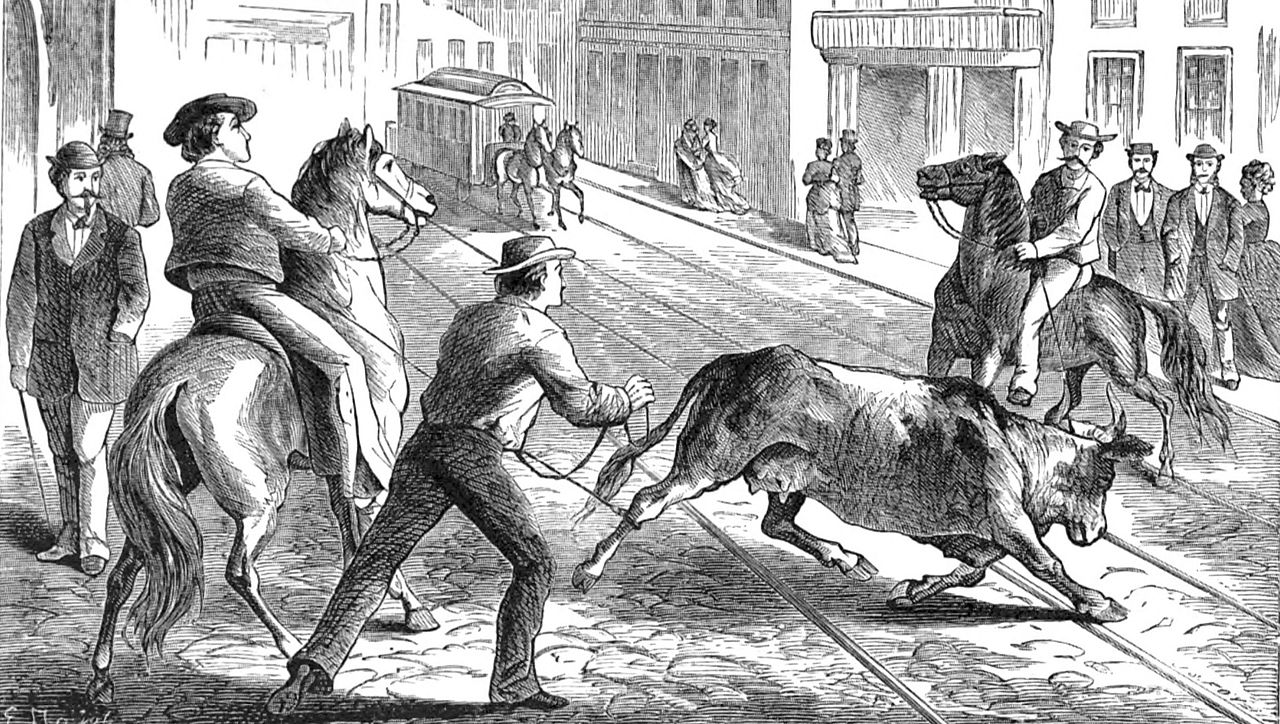
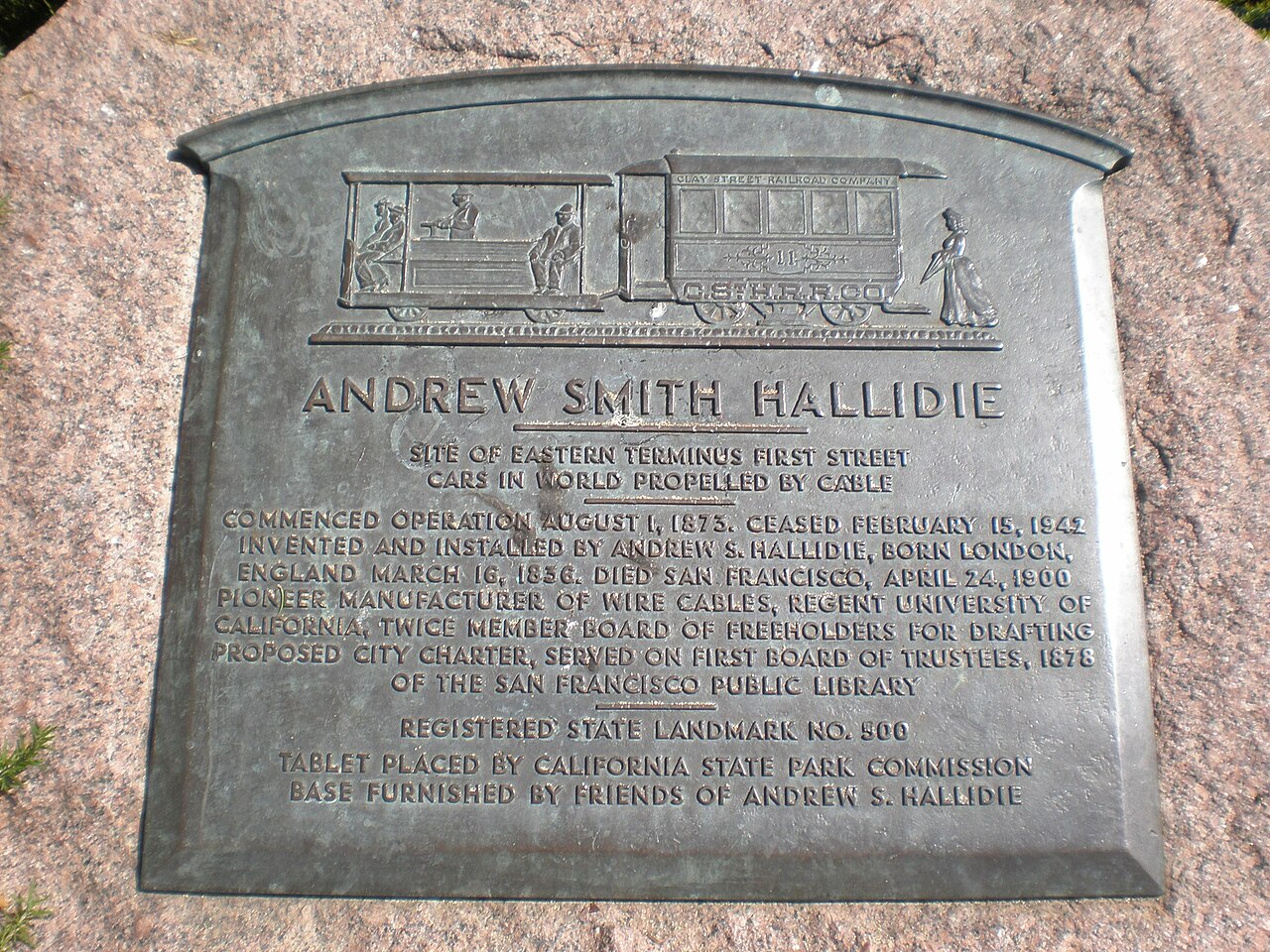
Most visitors accept the neat parable: Andrew Smith Hallidie watched a horse team slip on wet cobblestones, felt a pang of conscience, and single-handedly engineered a humane replacement. The official plaques present a solitary genius whose moral clarity birthed an icon. But the paperwork tells a different story. Hallidie’s Clay Street Hill Railroad actually missed its franchise deadline by a day, forcing a rushed, predawn test on 2 August 1873 that nearly ended in disaster when the original gripman froze at the controls. The engineering credit is even murkier, with scholars pointing to draftsman William Eppelsheimer and later engineers for the grip mechanisms that actually work.
By 1947, the romance had evaporated from City Hall. Mayor Roger Lapham publicly declared the cable cars a dangerous, budget-bleeding embarrassment and ordered their replacement with diesel buses. What was at stake was not nostalgia, but the city’s physical identity. Friedel Klussmann, a civic organizer who had never held public office, recognized that modernization meant erasure. She turned a scattered network of women’s clubs into the Citizens’ Committee to Save the Cable Cars, gathering fifty thousand signatures and forcing a municipal election. The turning point arrived in November 1947, when San Francisco voters passed Measure 10, overriding the mayor and legally mandating the preservation of the Powell lines.
Knowing this shifts how you read the tracks. The narrow slot between the rails stops looking like a quaint decorative groove. It becomes the scar of a system that survived fires, corporate monopolies, and political hostility through sheer stubbornness. When you hear the conductor’s bell code or watch the gripman wrestle a wooden lever on a twenty-one percent grade, you are witnessing a craft kept alive by deliberate, hard-fought votes. The cable car is not a museum piece. It is a political artifact that still runs.
The Invisible Powerhouse
The system’s true heart sits at the intersection of Washington and Mason, inside a brick building most passengers never enter. According to SFMTA maintenance records, four continuous steel cables run beneath the streets, each measuring over one inch thick, roughly the diameter of a modern garden hose. Massive electric motors drive rotating drums inside the powerhouse, keeping the cables under constant tension. Visitors can stand on a grated walkway and watch the sheaves spin. The ride above is entirely dependent on a single, synchronized underground engine.
The 1982-1984 Rebirth
The network you ride today did not emerge from steady maintenance. It survived a near-total collapse. In September 1982, the city shut down every line to replace rotting wooden bodies, cracked foundations, and worn grips with historically accurate replicas. The two-year rebuild required carpenters and machinists to reverse-engineer parts that had not been manufactured since the 1890s. When service resumed in June 1984, the system emerged lighter, safer, and structurally sound enough to handle another forty years of daily service.
Tips for visitors
Layer for the Hills
Pacific wind cuts through open-air running boards even on bright afternoons, so pack a windbreaker you can secure tightly. Loose hats will sail into the street. Dress in layers you can zip up before you leave the terminal.
Shoot Without Leaning
Grip the fixed brass poles with both hands while framing your shots, because leaning outward over the moving street invites serious injury. Tripods and large camera bags are prohibited onboard. Keep your phone tethered to your wrist if you plan to film the cable slot from the rear platform.
Eat After the Ride
Walk two blocks inland from the Hyde Street turnaround to find The Buena Vista, where Irish coffee actually matches the neighborhood history. Skip the bread-bowl chowder lines. Golden Boy Pizza on Green Street offers cheap square slices that locals still queue for.
Skip the Powell Line
The queue at Powell & Market stretches for blocks and rarely moves faster than 15 minutes per car. Walk three stops up the hill. Board at the California & Market terminal to catch an empty car with clear seats.
Watch the Signals
A glowing green "X" above the tracks means the cable car has right of way, so do not step into the lane until the car fully stops at the curb. Folding bikes are strictly banned. Wait for the conductor's bell before you board or exit.
Pair With the Museum
The free Cable Car Museum on Washington Street reveals the massive underground sheaves and live powerhouse that actually pull the cars up Nob Hill. Pair a downhill California Street ride with a walk through the museum. You can enter the museum directly from street level.
Where to Eat
local_dining
Don't Leave Without Trying
CioppinoDungeness crabSourdough breadClam chowder in a sourdough bowlIrish coffeeDim sumMission burritosFortune cookies
The Buena Vista
local favorite
American Bar & Grill€€star4.6(8041)
Order: You absolutely must order the Irish Coffee; it is a legendary San Francisco staple.
This is a true piece of local history that has been serving up its signature Irish coffee since 1916. It's an old-school, bustling spot where both locals and visitors gather for a hearty breakfast and a classic SF atmosphere.
Order: The cardamom bun and the smoked trout bowl are phenomenal choices for a Nordic-inspired brunch.
Kantine is a rare gem in the Bay Area, offering a truly authentic Scandinavian experience with handmade pastries and healthy, flavor-forward brunch boards. It's the perfect spot for a relaxed, high-quality morning meal.
Order: The signature 'Millionaire’s Bacon' is a must-try—it's sweet, spicy, and melts in your mouth.
It’s a quintessential SF brunch destination that lives up to the hype with creative, high-quality comfort food. The line moves fast, and the generous portions of crab-filled omelets and unique bacon make it worth the wait.
Order: The French toast with Nutella is a standout, and their steak and eggs are surprisingly high-grade.
This bistro offers a warm, friendly atmosphere that feels like a hidden neighborhood retreat despite its central location. It’s a great spot for both a solid breakfast and a relaxed evening meal.
checkCable car service runs from 7:30 a.m. to 10:30 p.m., which is a helpful guide for planning your dining itinerary.
checkDo not assume a standard weekly closing day; many popular spots remain open throughout the week.
checkAlways check specific venue hours, as some traditional or specialized spots may have limited operating hours or early closing times.
checkThe Ferry Plaza Farmers Market operates on Saturdays (8am-2pm) and Tuesdays/Thursdays (10am-2pm) at the front of the Ferry Building.
Restaurant data powered by Google
Frequently asked
Are San Francisco cable cars worth visiting?
Yes, but only if you treat them as moving industrial theater rather than simple transit. The real payoff arrives when you notice the narrow steel slot between the rails where a 300-pound grip drops down to seize the moving cable beneath your feet. Skip the Powell & Market queue and board the California line mid-route for a quieter, more local experience.
How long do you need at the San Francisco cable cars?
A single ride between Union Square and Fisherman’s Wharf takes roughly 20 minutes. For the full picture, budget two hours to ride both the Powell-Hyde and California lines, watch a manual turntable reversal, and descend into the live powerhouse at the Cable Car Museum.
How do I get to the San Francisco cable cars from downtown San Francisco?
Walk straight to the Powell & Market turnaround, just steps from the Powell Street BART and Muni Metro station. Load a fare onto the MuniMobile app beforehand so you can bypass the ticket kiosk lines that form before 9 a.m.
What is the best time to visit the San Francisco cable cars?
Late morning on a weekday offers the clearest bay views and the shortest boarding queues. Summer riders should expect heavy fog rolling over Russian Hill around 2 p.m., which turns the exposed outside running boards into sudden wind tunnels.
Can you visit the San Francisco cable cars for free?
Riding the cars costs $9 per trip, but the Cable Car Museum at Washington and Mason Streets is completely free to enter. The building sits directly above the active powerhouse, letting you watch massive winding wheels drag four underground cables through the city without spending a dime.
What should I not miss at the San Francisco cable cars?
Look down at the narrow rail slot, then head downstairs in the museum to watch the heavy sheaves pull the moving cables. Seeing the mechanical reality of a distributed street machine completely changes how the ride feels, turning a postcard cliché into a survival story of 19th-century engineering.
Sources & attribution6
Researched and written by the Audiala editorial team from historical records, architectural archives, and local expertise. Last updated April 2026.
SFMTA Cable Car Riding Guide — Official transit authority page detailing current routes, accessibility limits, safety rules, and boarding procedures for all three lines.
Cable Car Museum Guide — Museum documentation covering the live powerhouse observation decks, historic car displays, and free admission policy at the Washington and Mason Streets facility.
SFMTA Cable Car History — Chronological record of the 1873 Clay Street launch, the 1906 earthquake damage, the 1947 preservation vote, and subsequent restoration campaigns.
SF Travel Powell-Hyde Line Guide — Route-specific guide highlighting topography, seasonal fog patterns, and recommended photo viewpoints along the Hyde Street corridor.
Cable Car Museum Powerhouse Overview — Technical breakdown of the winding engines, cable tension systems, and continuous underground mechanics that still pull the streetcars.
SFMTA Cable Car Fares — Current fare schedule, digital payment instructions, and youth or senior discount policies for the 2026 operating year.
Cable car display on The Embarcadero, May 2018 — Pi.1415926535 — CC BY-SA 3.0 (https://creativecommons.org/licenses/by-sa/3.0/) — Source: https://commons.wikimedia.org/wiki/File:Cable_car_display_on_The_Embarcadero,_May_2018.JPG
Andrew Smith Hallidie plaque, Portsmouth Square — BrokenSphere — CC BY-SA 4.0 (https://creativecommons.org/licenses/by-sa/4.0/) — Source: https://commons.wikimedia.org/wiki/File:Andrew_Smith_Hallidie_plaque,_Portsmouth_Square.JPG
Brake blocks of a San Francisco cable car, in three different states of usage (detail) — HaeB — CC BY-SA 4.0 (https://creativecommons.org/licenses/by-sa/4.0/) — Source: https://commons.wikimedia.org/wiki/File:Brake_blocks_of_a_San_Francisco_cable_car,_in_three_different_states_of_usage_(detail).jpg
Brake blocks of a San Francisco cable car, in three different states of usage — HaeB — CC BY-SA 4.0 (https://creativecommons.org/licenses/by-sa/4.0/) — Source: https://commons.wikimedia.org/wiki/File:Brake_blocks_of_a_San_Francisco_cable_car,_in_three_different_states_of_usage.jpg
Cable car transfer track on Minnesota Street, January 2018 — Pi.1415926535 — CC BY-SA 3.0 (https://creativecommons.org/licenses/by-sa/3.0/) — Source: https://commons.wikimedia.org/wiki/File:Cable_car_transfer_track_on_Minnesota_Street,_January_2018.jpg
California Street i San Fransisco 1927 SLSA 1232-3 foto 6 — Paulig, Eduard — CC BY 4.0 (https://creativecommons.org/licenses/by/4.0/) — Source: https://commons.wikimedia.org/wiki/File:California_Street_i_San_Fransisco_1927_SLSA_1232-3_foto_6.jpg
Cable section of the Hayes Cable Car line (pre 1906) — HaeB — CC BY-SA 4.0 (https://creativecommons.org/licenses/by-sa/4.0/) — Source: https://commons.wikimedia.org/wiki/File:Cable_section_of_the_Hayes_Cable_Car_line_(pre_1906).jpg
Cable section of the Hayes Cable Car line (pre 1906) - detail — HaeB — CC BY-SA 4.0 (https://creativecommons.org/licenses/by-sa/4.0/) — Source: https://commons.wikimedia.org/wiki/File:Cable_section_of_the_Hayes_Cable_Car_line_(pre_1906)_-_detail.jpg
Strictly necessary cookies keep the site working. Analytics (PostHog, Google Analytics) measures how each visitor uses our pages. Marketing loads YouTube videos and walking-route maps without a tap and lets Google Analytics set advertising cookies. We never sell your data. You can change this any time from the footer.
Analytics and marketing cookies are optional and only load if you agree. Details under Customize.
Privacy
Cookie preferences
Pick what you're okay with. You can change this any time from the footer.
Strictly necessary
Always on
Sign-in, language, navigation. Always on.
Product analytics
PostHog (EU) and Google Analytics record which pages you view and how you use them, under a random identifier stored in your browser. Helps us see which pages work and which need fixing. Google's ad personalisation stays off. No selling.
Marketing
Loads YouTube videos and the walking-route maps (OpenFreeMap) without a tap; without it, they load only when you tap them. If analytics is also on, Google Analytics may set advertising cookies. Ad personalisation stays off.