
The History of Washington Square and the Benjamin Franklin Statue
Washington Square Park, established in 1847, is among San Francisco’s oldest parks, originally laid out as part of the city’s first street grid (San Francisco Recreation & Parks). Once agricultural land used by Mexican ranchers, it quickly became a community gathering space, especially for the city’s Italian-American population. Celebrations, festivals, and public events have long animated the park, reinforcing its role in civic life.
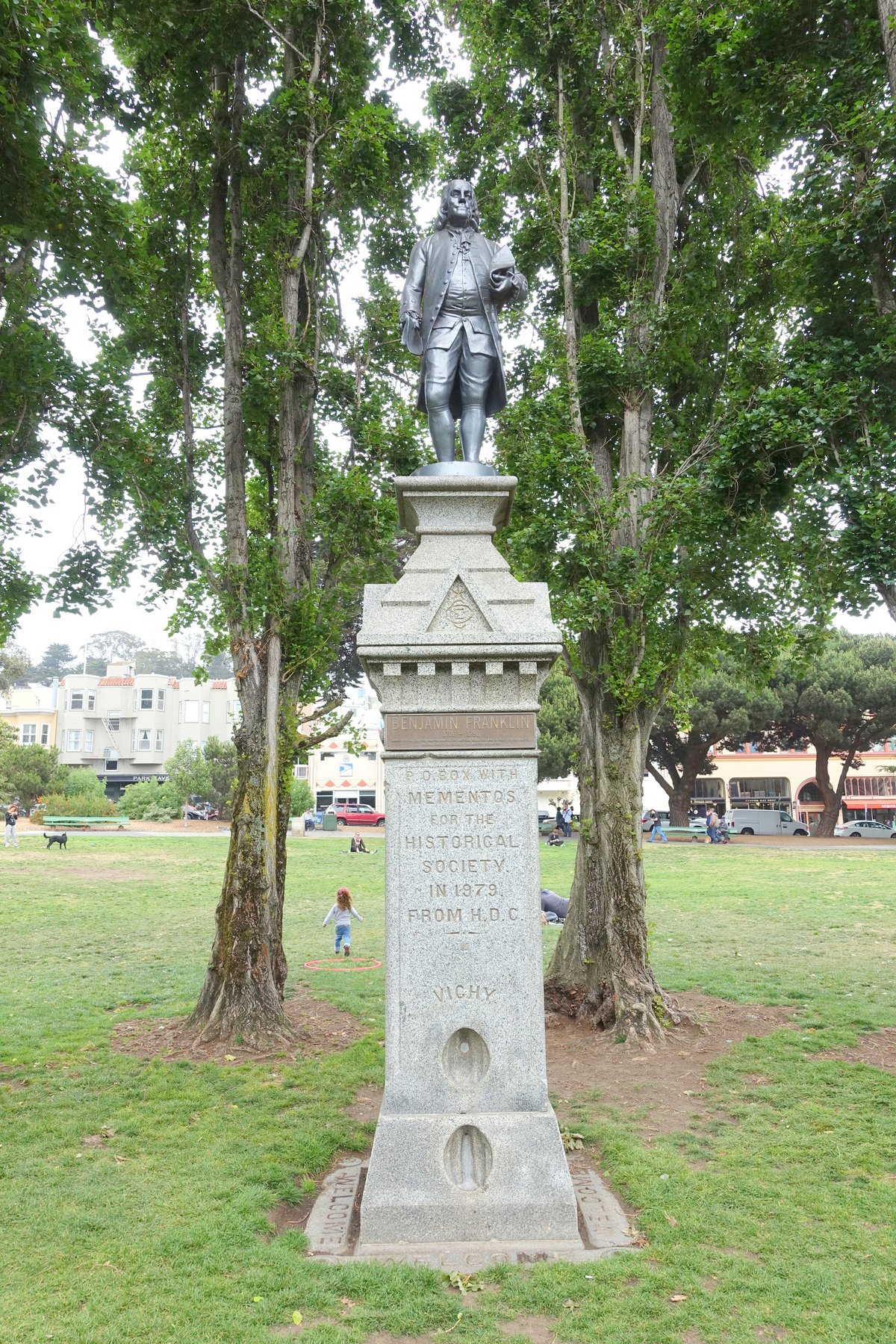
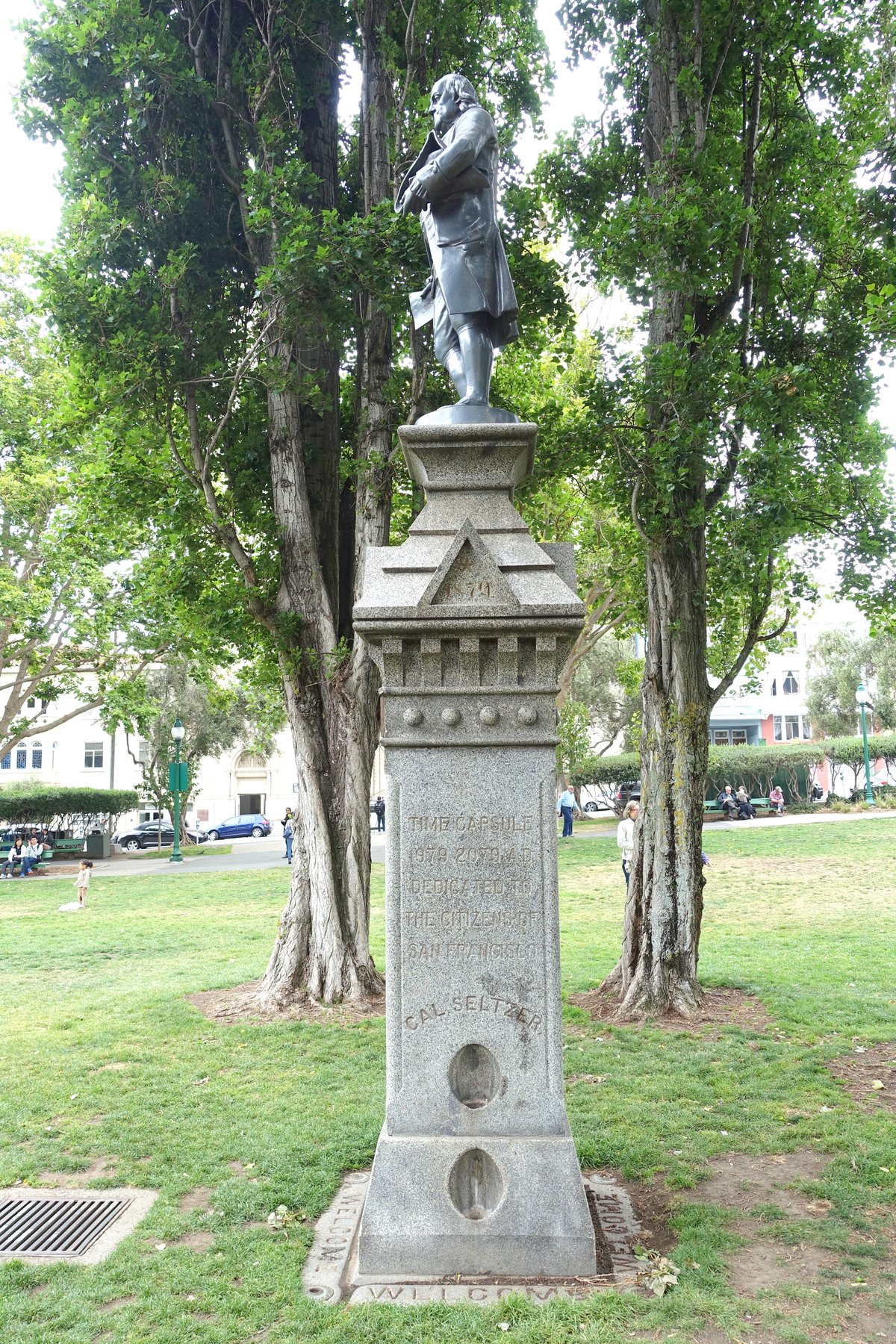
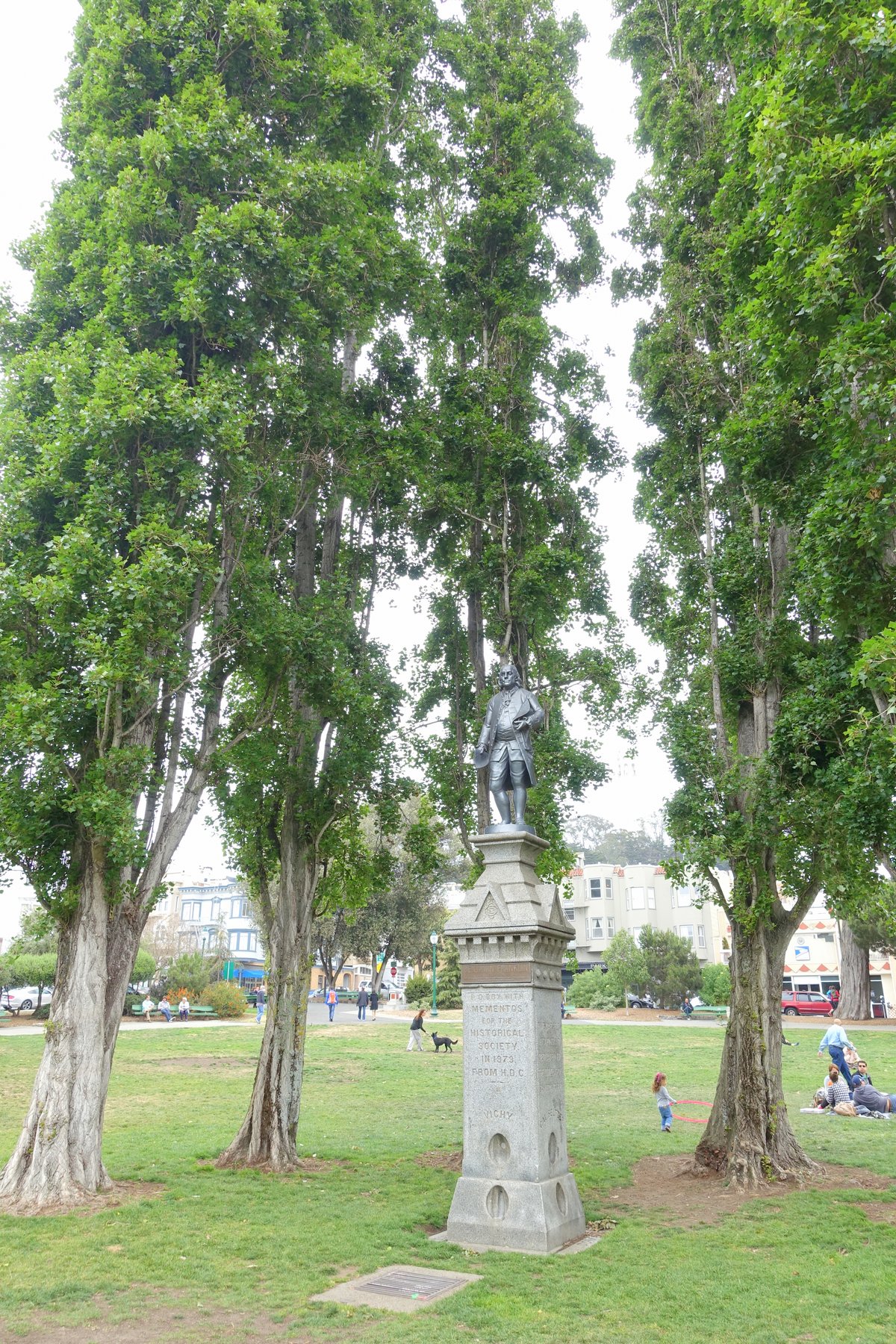
The Benjamin Franklin statue was installed in 1879—a gift from Henry D. Cogswell, who sought to promote temperance by donating public drinking fountains topped with statues of notable figures. Franklin, famed for his advocacy of moderation, was a fitting choice.
Artistic Features and Temperance Fountain
Design and Materials
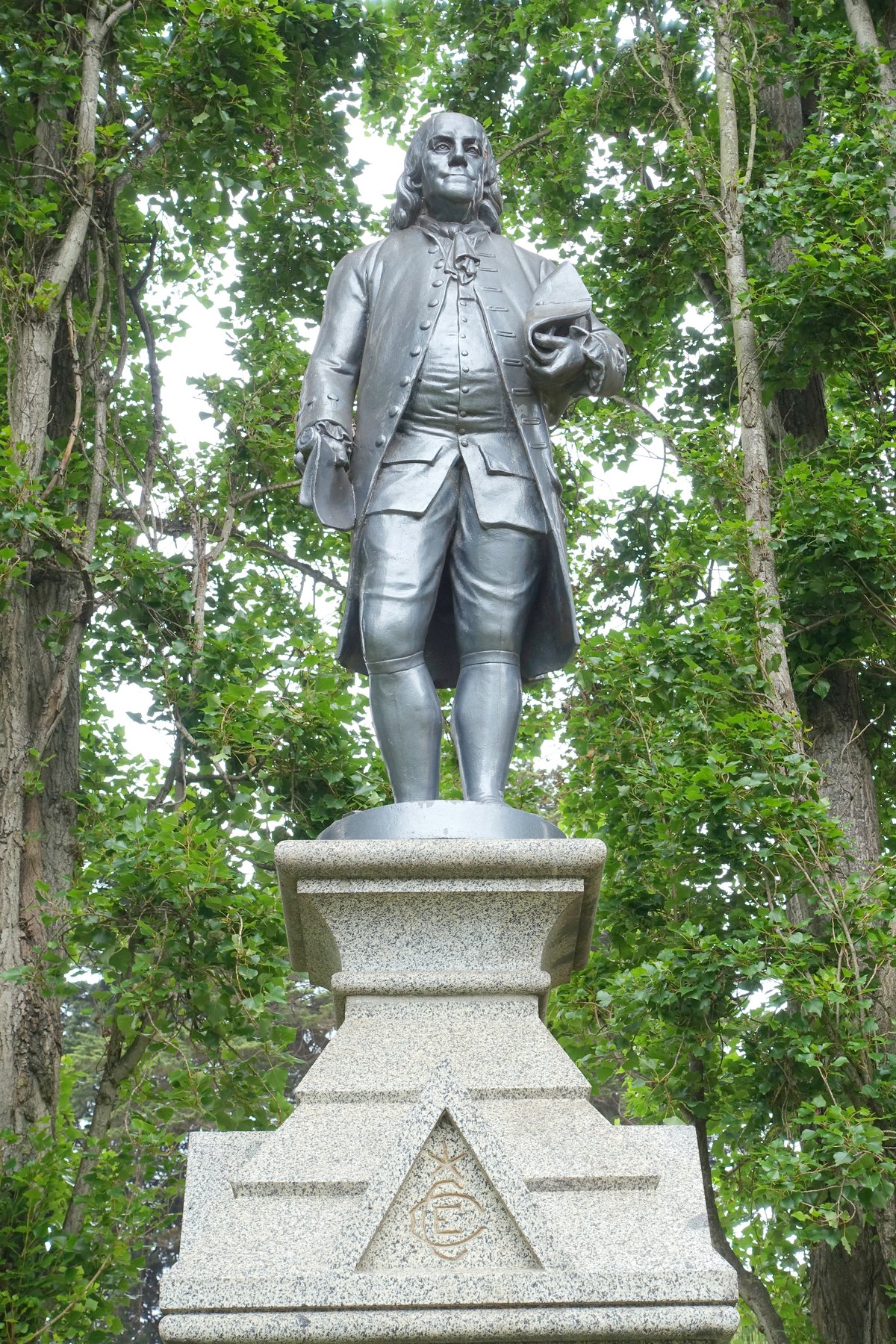
The statue is cast in bronze, standing roughly 8 feet tall atop a 6-foot granite pedestal. Franklin is portrayed in 18th-century attire, holding a rolled document—a nod to his role as a statesman and thinker. The neoclassical style is evident in the dignified pose and detailed rendering (San Francisco Chronicle).
Inscriptions and Fountain Elements
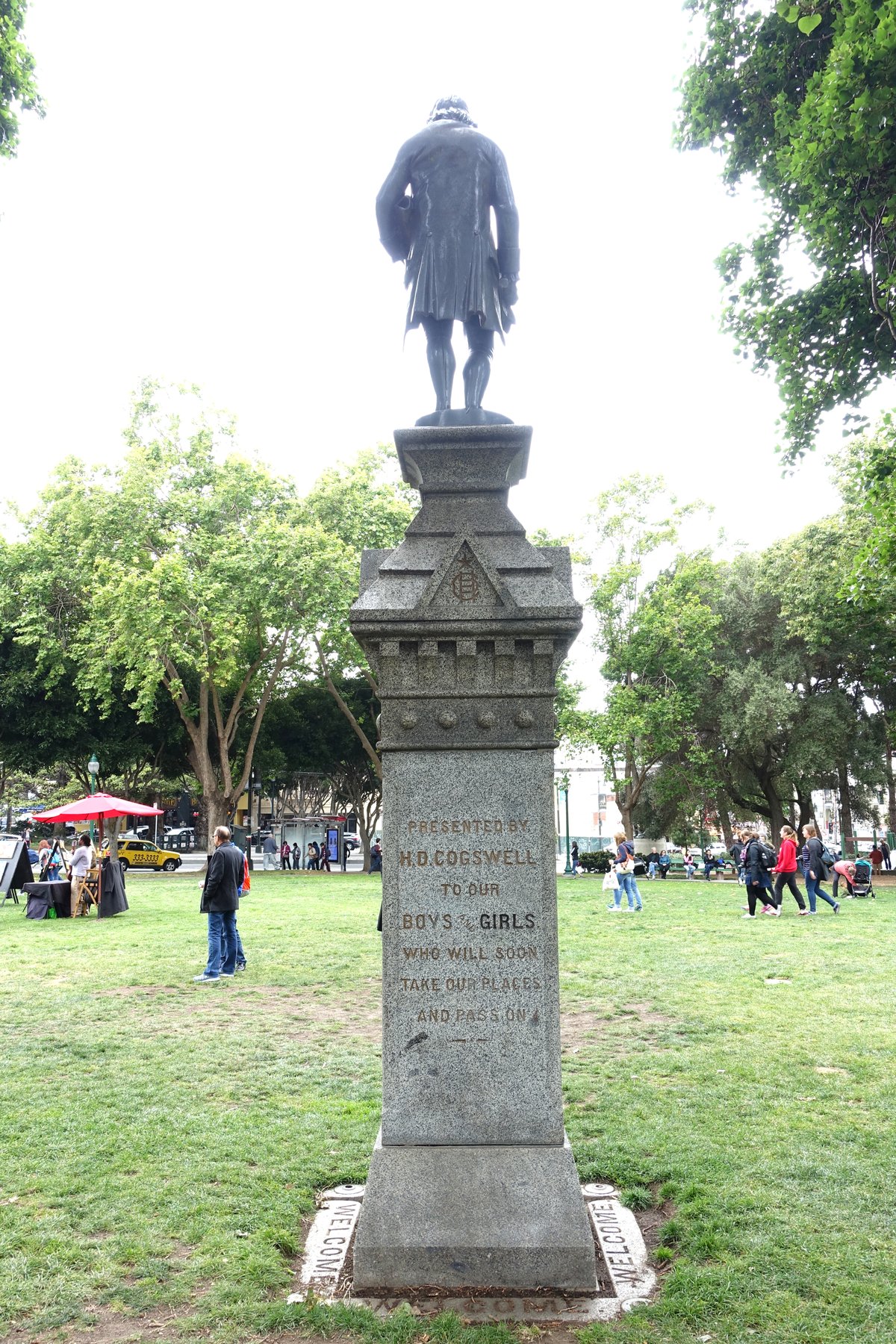
The pedestal is inscribed:
“Presented to the City of San Francisco by Henry D. Cogswell, 1879.”
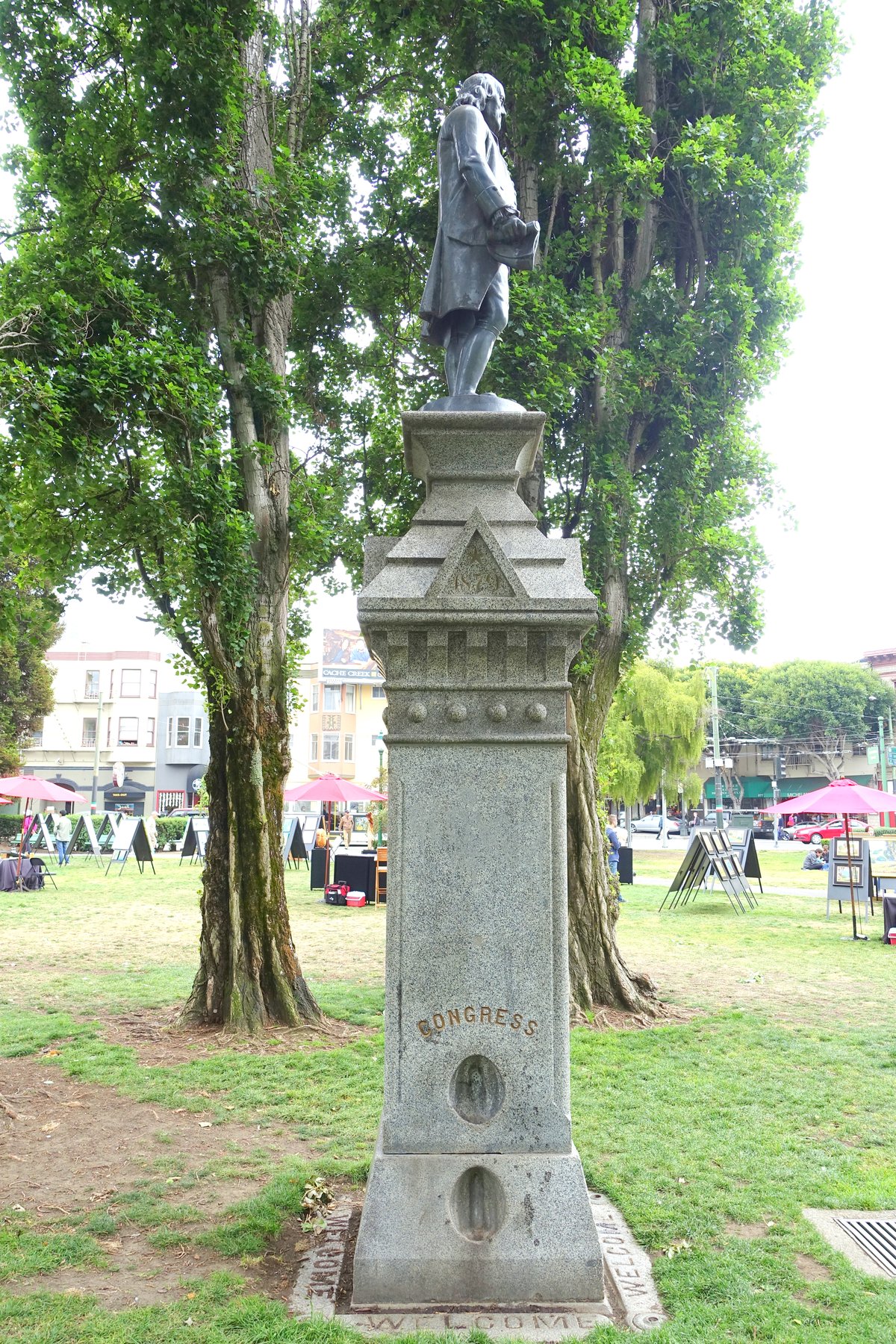
A bronze plaque bears Franklin’s “13 Virtues,” underscoring the statue’s educational purpose. The fountain, now dry, originally dispensed water from spigots marked “Congress,” “Vichy,” and “Cal Seltzer”—references to pure mineral springs (Art and Architecture SF).
Time Capsule
A time capsule was placed under the statue in 1879. Opened a century later, it was replaced with a new capsule set for opening in 2079, connecting generations to the monument’s origins (Wikipedia).
Practical Visitor Information
Visiting Hours
Washington Square Park is open daily from 6:00 AM to 10:00 PM. The statue is available for viewing at any time during these hours, and admission is always free (San Francisco Visitor Information Center).
Accessibility
The park has paved walkways and flat terrain, making it accessible for wheelchairs and strollers. Public restrooms and benches are nearby.
Tickets and Tours
No tickets or reservations are needed. For deeper historical context, guided walking tours of North Beach and Washington Square are available through local operators (San Francisco Visitor Information Center).
Special Events
Washington Square hosts a variety of community events, including festivals, concerts, and seasonal celebrations. See the San Francisco Recreation & Parks calendar for details.
Photography Tips
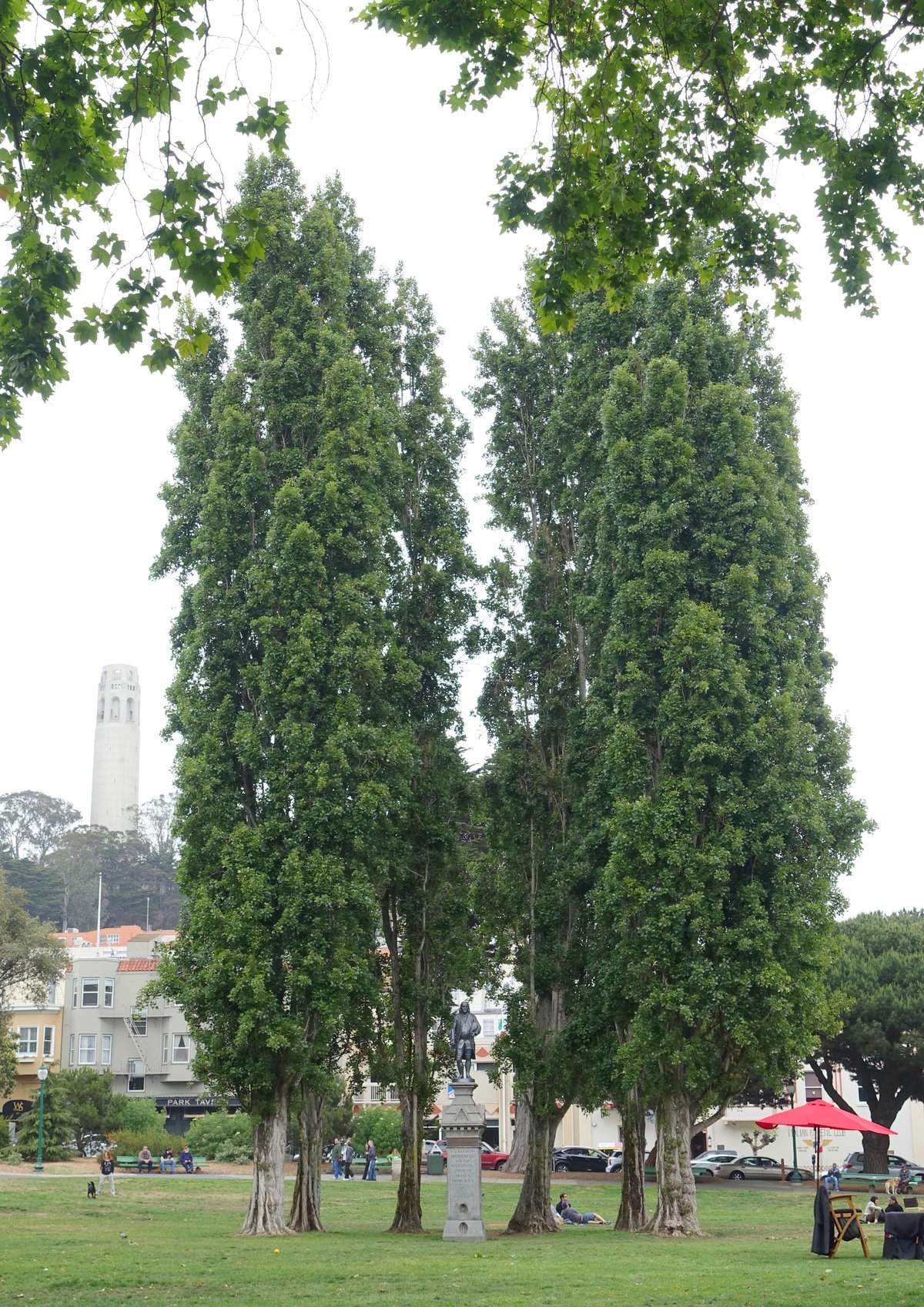
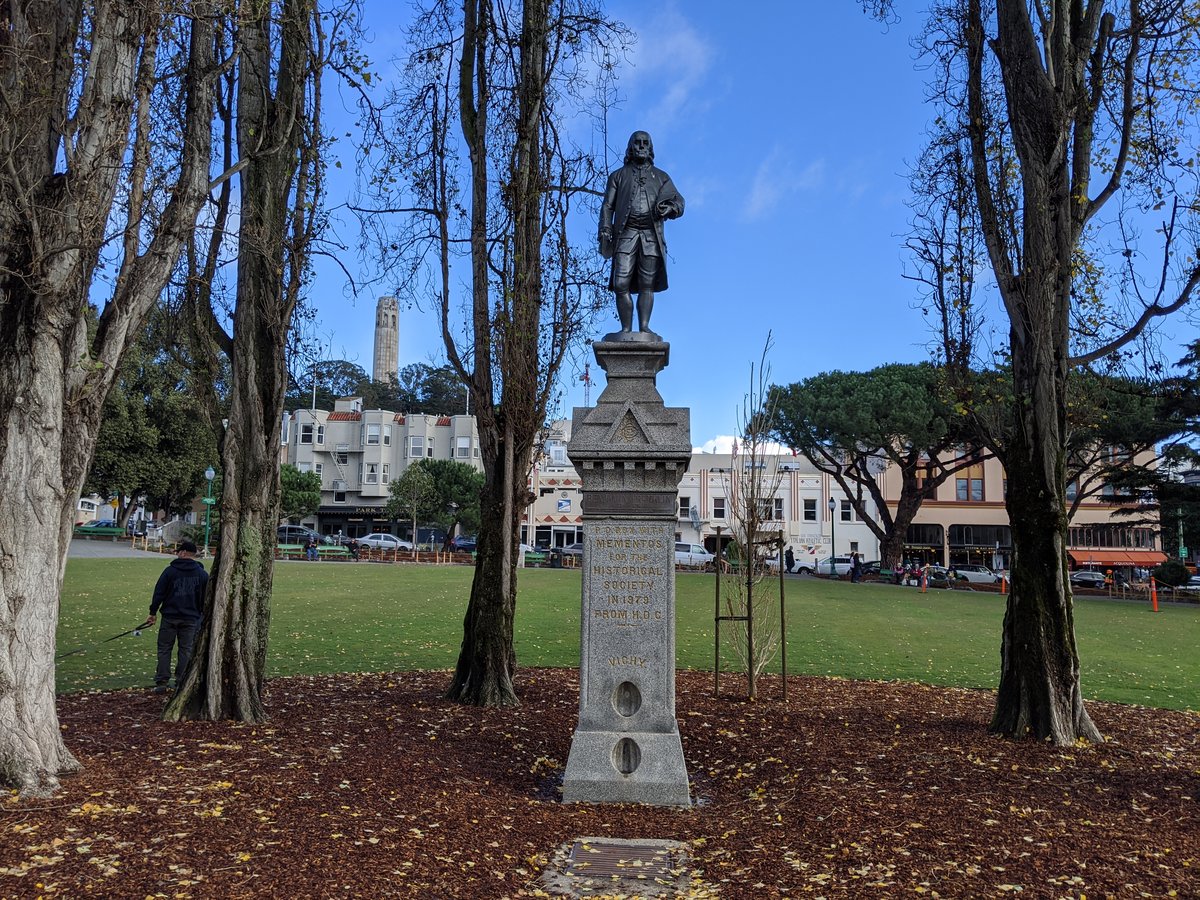
The statue photographs best in morning or late afternoon light. For dynamic images, include the Saints Peter and Paul Church or park greenery in the background.
The Temperance Movement and Henry D. Cogswell
Henry D. Cogswell (1820–1900), a dentist and philanthropist, believed that providing free, clean water would combat alcohol abuse. He funded temperance fountains nationwide, with the Franklin statue in Washington Square among the few still standing (San Francisco Heritage). His approach was sometimes controversial, but his lasting impact on San Francisco’s public spaces is widely acknowledged.
Cultural and Community Significance
The statue and fountain symbolize the city’s 19th-century reformist spirit, blending art, public health, and education. Over time, the monument has become a cherished landmark, integral to the identity of North Beach and its Italian-American community. The park remains a gathering place for festivals, markets, and everyday relaxation (San Francisco Arts Commission).
Preservation and Restoration
Exposure to San Francisco’s climate has necessitated ongoing conservation. In the early 2000s, significant restoration stabilized the statue and refreshed its details. The San Francisco Arts Commission and local community groups continue to monitor and protect this historic monument (Committee to Beautify Washington Square).
The Statue’s Place in San Francisco Heritage
The Franklin statue is part of a broader tradition of public art and civic commemoration in San Francisco. Its location in Washington Square resonates with the city’s values of innovation, inclusivity, and public service—principles Franklin himself championed.
Nearby, Franklin Street and other place names further honor his legacy. The city’s libraries and schools have also featured Franklin’s life in educational programs, reflecting his enduring influence (San Francisco Public Library).
Location and Setting
Washington Square Park is in the heart of North Beach, surrounded by Italian cafes, historic bakeries, and the Saints Peter and Paul Church. The Benjamin Franklin statue stands at the park’s eastern edge, near Columbus Avenue and Filbert Street. The area is easily reached by Muni bus lines 8, 30, and 45. Limited street parking is available, but public transit is recommended (Virtual Globetrotting).
Visitor Experience and Tips
- Best Times to Visit Late morning and late afternoon for optimal light and fewer crowds.
- Nearby Attractions Saints Peter and Paul Church, Coit Tower, North Beach cafes, and Chinatown.
- Etiquette Please do not climb or touch the statue. Keep the area clean, and respect community events in the park.
- Safety The park is generally safe but stay aware, especially in the evenings.
- Amenities Public restrooms are available in the park and nearby businesses.
- Fun Fact The statue is sometimes mistaken for George Washington—a reminder to check inscriptions!
Frequently Asked Questions (FAQ)
Q: What are the hours for visiting the Benjamin Franklin statue?
A: Washington Square Park is open daily, 6:00 AM to 10:00 PM.
Q: Is there an admission fee or need for tickets?
A: No, admission is free and no tickets are required.
Q: Is the park and statue area wheelchair accessible?
A: Yes, with paved paths and level terrain.
Q: Are guided tours available?
A: Yes, local operators offer tours that often include the statue and park.
Q: Can I take photographs?
A: Absolutely! The statue is not fenced off and is photogenic in all seasons.
Q: Where can I find restrooms?
A: Public restrooms are within the park; additional restrooms are in nearby cafes.
Plan Your Visit
For interactive maps, curated tours, and up-to-date tips on San Francisco’s historical monuments, download the Audiala app. Follow us on social media to stay informed about events, insider guides, and the city’s vibrant cultural scene.
Audiala2024