Introduction
The first thing that hits you in San Francisco is the smell of eucalyptus mixed with sea salt and hot sourdough. One minute you're shivering in fog so thick it muffles the cable car bells, the next you're squinting under a sky so blue it feels like a dare. This is the United States of America at its most contradictory: 49 square miles of Victorian gingerbread, Gold Rush ghosts, and venture capital poured into coffee that costs more than lunch.
The city has always collected dreamers. Gold in 1848. Peace and love in 1967. Code in the 2010s. Each wave left its mark. Walk through the Mission and you'll still taste the burritos born there in the 1960s, rice and all. Stand under the Golden Gate at Fort Point and the bridge's rivets, each one 3.5 inches across, still look like they were hammered in yesterday.
Yet the place refuses to freeze. Fog rolls in like a stage curtain at 4 p.m. sharp. Locals layer jackets the way other cities layer irony. And every neighborhood argues, loudly, that it is the real San Francisco. They're all half right. The arguments themselves might be the truest part.
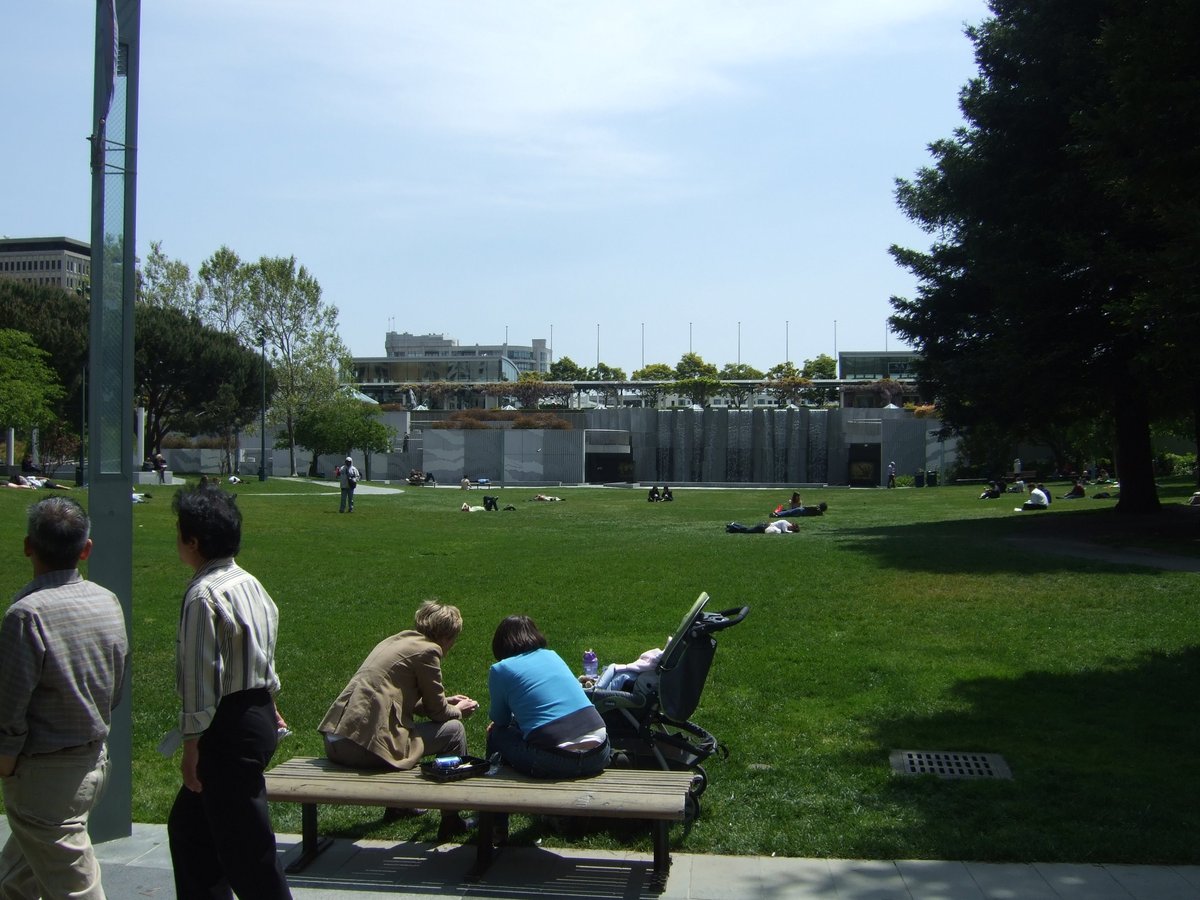
What changes you is how small the city feels once you learn its secrets. A crooked street no one photographs. The free observation tower at the de Young that beats every paid viewpoint. The fact that you can ferry to Sausalito for houseboats and be back before dinner. San Francisco doesn't ask you to love it. It simply rearranges what you thought a city could be.
Places to Visit
The Most Interesting Places in San Francisco
Golden Gate Bridge
The Golden Gate Bridge, an architectural marvel and a symbol of American resilience, stands as one of the most iconic landmarks in the United States.
Pier 39
Welcome to Pier 39, San Francisco's premier waterfront destination that seamlessly combines rich history, stunning architecture, and a vibrant cultural scene.
San Francisco Museum of Modern Art
Nestled in the dynamic South of Market (SoMa) district of San Francisco, the San Francisco Museum of Modern Art (SFMOMA) stands as a beacon of modern and…
Golden Gate Park
Golden Gate Park stands as a sprawling urban oasis nestled in the heart of San Francisco, offering visitors a rich tapestry of natural beauty, historical…
Oracle Park
Oracle Park, nestled in the vibrant South Beach neighborhood of San Francisco, stands as more than just a baseball stadium—it is a cultural landmark that…
Candlestick Park
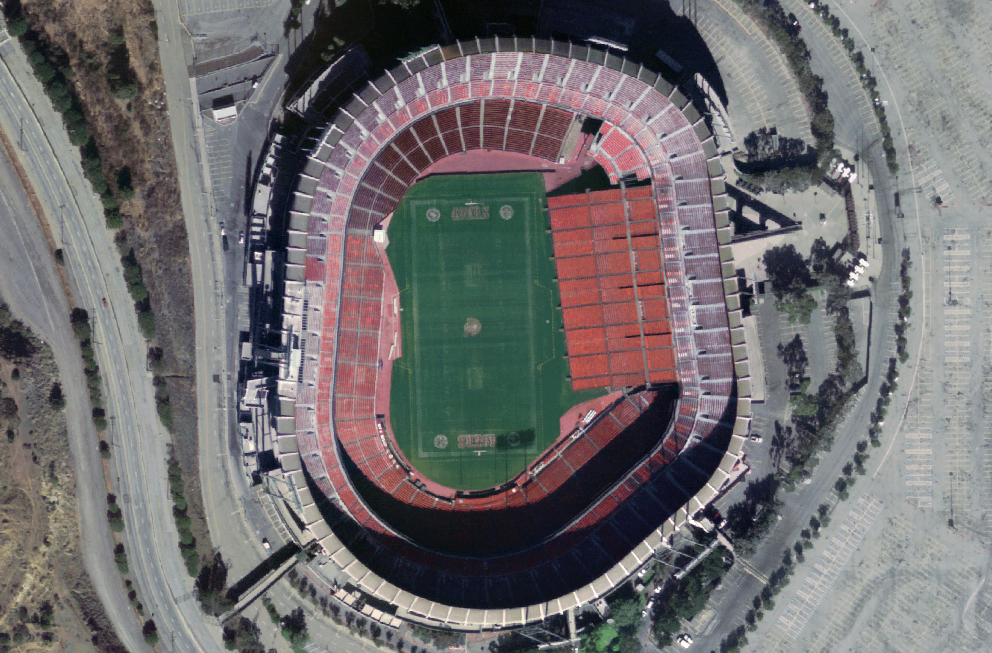
Nestled at the southeastern edge of San Francisco lies Candlestick Point, a location steeped in rich natural beauty and a storied past that intertwines urban…
Muir Woods National Monument
Nestled in the heart of Marin County, just a short drive north of San Francisco, Muir Woods National Monument is a sanctuary of towering coast redwoods, some…
M. H. De Young Memorial Museum
The Hamon Observation Tower, located at the de Young Museum in Golden Gate Park, San Francisco, is a captivating blend of modern architecture and cultural…
Golden Gate National Recreation Area
Nestled within the picturesque Presidio of San Francisco, the Wolf Ridge Trail offers an enriching journey through history, nature, and breathtaking landscapes.
Fine Arts Museums of San Francisco
Nestled within the picturesque landscapes of San Francisco, the Fine Arts Museums of San Francisco (FAMSF) stand as premier cultural institutions that offer…
Transamerica Pyramid
The Transamerica Pyramid stands as one of San Francisco’s most recognizable and architecturally significant landmarks, symbolizing the city’s spirit of…
San Francisco–Oakland Bay Bridge
The San Francisco – Oakland Bay Bridge, often simply referred to as the Bay Bridge, stands as a testament to the remarkable achievements of early 20th-century…
What Makes This City Special
The Bridge from Below
Stand at Fort Point directly beneath the Golden Gate Bridge and feel the steel humming 220 feet above you. The fog doesn't roll in gently here. It barrels through the strait like a cold freight train, swallowing the orange towers in seconds.
Murals That Talk Back
The Mission District's alley walls carry on conversations started in the 1970s. Diego Rivera's 1931 fresco at the San Francisco Art Institute still looks down with the same skeptical eyes. These aren't decorations. They're arguments about who gets to own this city.
Secret High Places
Tank Hill at dusk beats Twin Peaks by a mile. No tour buses, no railings, just locals wrapped in jackets watching the fog pour over the ridges like cream over strawberries. Ina Coolbrith Park offers the same skyline for half the effort and twice the poppies in spring.
Counterculture on a Plate
The city's kitchens still carry the scent of 1967. Burritos the size of your forearm from the Mission, fresh Dungeness crab at Fisherman's Wharf in December, and sourdough that actually deserves its reputation. Each bite tells you exactly where you are.
Historical Timeline
Earthquakes, Emperors, and Unexpected Gold
From Ohlone shell mounds to Silicon Valley fog
Ohlone Villages Rise
The Ramaytush Ohlone settled the bay's edge in small villages. They harvested clams and acorns where downtown skyscrapers now stand. Their name for the place, Ahwaste, simply meant the bay. Shell mounds still surface in construction sites, reminding us the city rests on ten thousand years of someone else's home.
Portolá Claims the Bay
On November 2, Gaspar de Portolá's Spanish expedition first sighted the immense harbor. They stood on the headlands while fog peeled back like theater curtains. Within seven years soldiers and friars arrived to build both presidio and mission. The Ohlone world began its violent unraveling.
Mission Dolores Founded
Juan Bautista de Anza planted a cross at the edge of a lagoon on June 29. The adobe Mission San Francisco de Asís still stands, the oldest building in the city. Its walls contain Ohlone labor and Spanish ambition. Sunday mornings the smell of incense still drifts across Dolores Park.
Mexican Independence Arrives
News traveled slowly to this distant outpost. When it finally reached Yerba Buena, the handful of settlers simply changed flags. The presidio crumbled while cattle wandered its parade ground. For twenty-seven years the settlement remained a sleepy trading post scented with hides and tallow.
Gold Discovered at Sutter's Mill
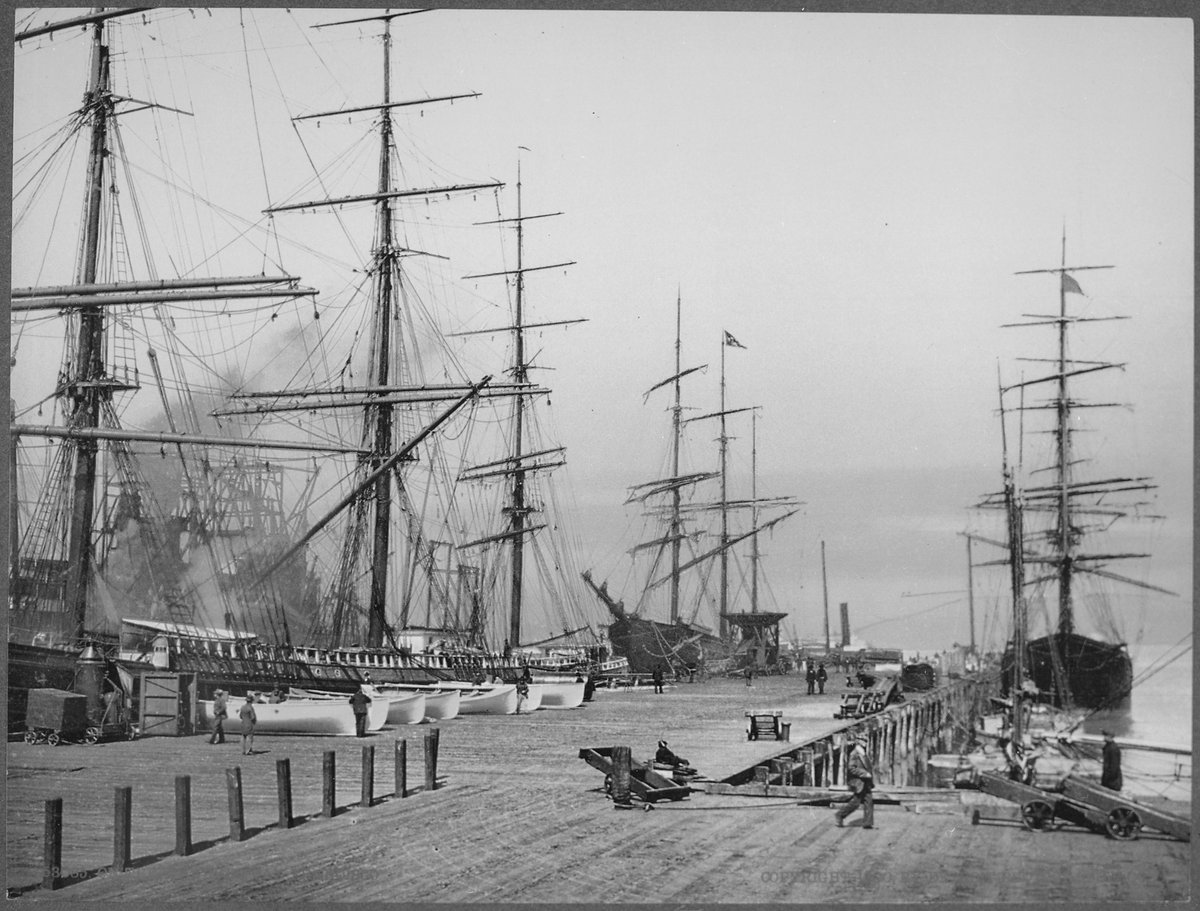
James Marshall found glittering flakes in a Sierra stream on January 24. Within months San Francisco's population exploded from 850 to 25,000. Ships choked the bay so thickly that sailors abandoned them and walked straight to the mines. The rotting hulls became the city's first real estate.
Emperor Norton Declares Himself
Joshua Abraham Norton walked into a newspaper office and announced he was Emperor of the United States. Locals played along for twenty-one years. He issued his own currency, ate for free at the best restaurants, and banned the word "Frisco." When he died in 1880, 30,000 people attended his funeral. The city has never quite recovered from the joke.
Transcontinental Railroad Completes
The final golden spike at Promontory Summit funneled thousands of Chinese laborers through San Francisco. They built the railroads then faced exclusion laws in the city they helped create. Chinatown's narrow alleys became both refuge and pressure cooker. The incense and sound of mahjong still carry the memory.
First Cable Car Clangs
Andrew Hallidie watched a horse slip on a wet cobblestone hill and die. Four months later his Clay Street cable car made its maiden voyage. The system still runs on the same principles, gripping a moving steel rope buried beneath the street. Listen carefully at Powell and Market. You can hear 1873 rattling underneath modern traffic.
Earthquake and Fire Destroy City
At 5:12 a.m. on April 18 the ground lurched for 47 seconds. Buildings fell. Gas mains snapped. Fires burned for four days and destroyed 80 percent of San Francisco. Army troops dynamited entire blocks trying to create firebreaks. The smell of smoke lingered for months. Yet within three years the city hosted a world's fair to prove it had survived.
Panama-Pacific Exposition Opens
The fair celebrated both the rebuilt city and the new Panama Canal. Its Tower of Jewels glittered with 100,000 cut-glass pieces. At night searchlights played across the sky while the bay lapped at temporary palaces. Only the Palace of Fine Arts remains, its reflected columns still trembling in the lagoon like a fever dream.
Golden Gate Bridge Opens
Eleven men died during construction. The finished bridge swayed 27 feet in the wind on its first day. Joseph Strauss promised it would stand 1,000 years. The color, called International Orange, was chosen because it cuts through fog better than any other. Walk across at dawn. The cables sing in the wind like nothing else on earth.
Bruce Lee Born in Chinatown
Lee Jun Fan entered the world at Chinese Hospital during the Year of the Dragon. His father was performing in local opera. The city taught him both wing chun and street fighting before Hollywood ever noticed. He would later say San Francisco's fog and hills shaped his footwork. The dragon never really left.
Steve Jobs Born
Steven Paul Jobs arrived at San Francisco General Hospital and was immediately given up for adoption. The city that would later make him its reluctant godfather barely noticed. Twenty years later he and Wozniak started Apple in a Los Altos garage, but the attitude was pure San Francisco. Question everything. Especially authority.
Summer of Love Blooms
Thirty thousand young people descended on Haight-Ashbury carrying flowers and LSD. The Diggers handed out free food on the Panhandle while the Grateful Dead played in the park. By October the streets reeked of patchouli, urine, and dashed expectations. The counterculture had both invented and destroyed itself in six months.
Loma Prieta Earthquake Strikes
Game 3 of the World Series was about to begin when the ground rolled at 5:04 p.m. The Bay Bridge collapsed. A freeway pancake in Oakland killed 42. Baseball saved lives that day. The city, newly obsessed with seismic safety, retrofitted everything it could reach. The fault line still sleeps beneath your feet. It dreams in magnitudes.
Occupy San Francisco Encampment
Tents appeared in front of the Federal Reserve Building on Market Street. Bankers walked past protesters every morning carrying the same briefcases. The camp lasted 74 days before police cleared it at 2 a.m. in full riot gear. The conversation about who the city belongs to never really ended. It just moved indoors.
Pandemic Empties Downtown
Office towers went dark. The Financial District echoed like a cathedral at midnight. Tech workers discovered they could live anywhere with good WiFi. When the fog rolled in during those quiet months it felt like the city was finally catching its breath after 170 years of constant shouting. Some say it hasn't stopped breathing easier since.
Notable Figures
Joshua Abraham Norton
1818–1880 · Self-proclaimed EmperorAfter losing everything in the Gold Rush, he declared himself Emperor of the United States in 1859 and issued his own currency. San Franciscans played along, seating him in theaters and printing his decrees in newspapers. He even banned the word “Frisco.” Walk down Commercial Street today and you can almost picture him inspecting his domain in his threadbare uniform.
Joe DiMaggio
1914–1999 · Baseball LegendThe Yankee Clipper grew up in the North Beach neighborhood, the son of a fisherman. He’d return here after seasons, eating at the same restaurants where old-timers still told stories about his 56-game hitting streak. The city named the airport roadway after him. You can still find old-timers in North Beach who swear the fog lifted the day he hit safely in game 57.
Dashiell Hammett
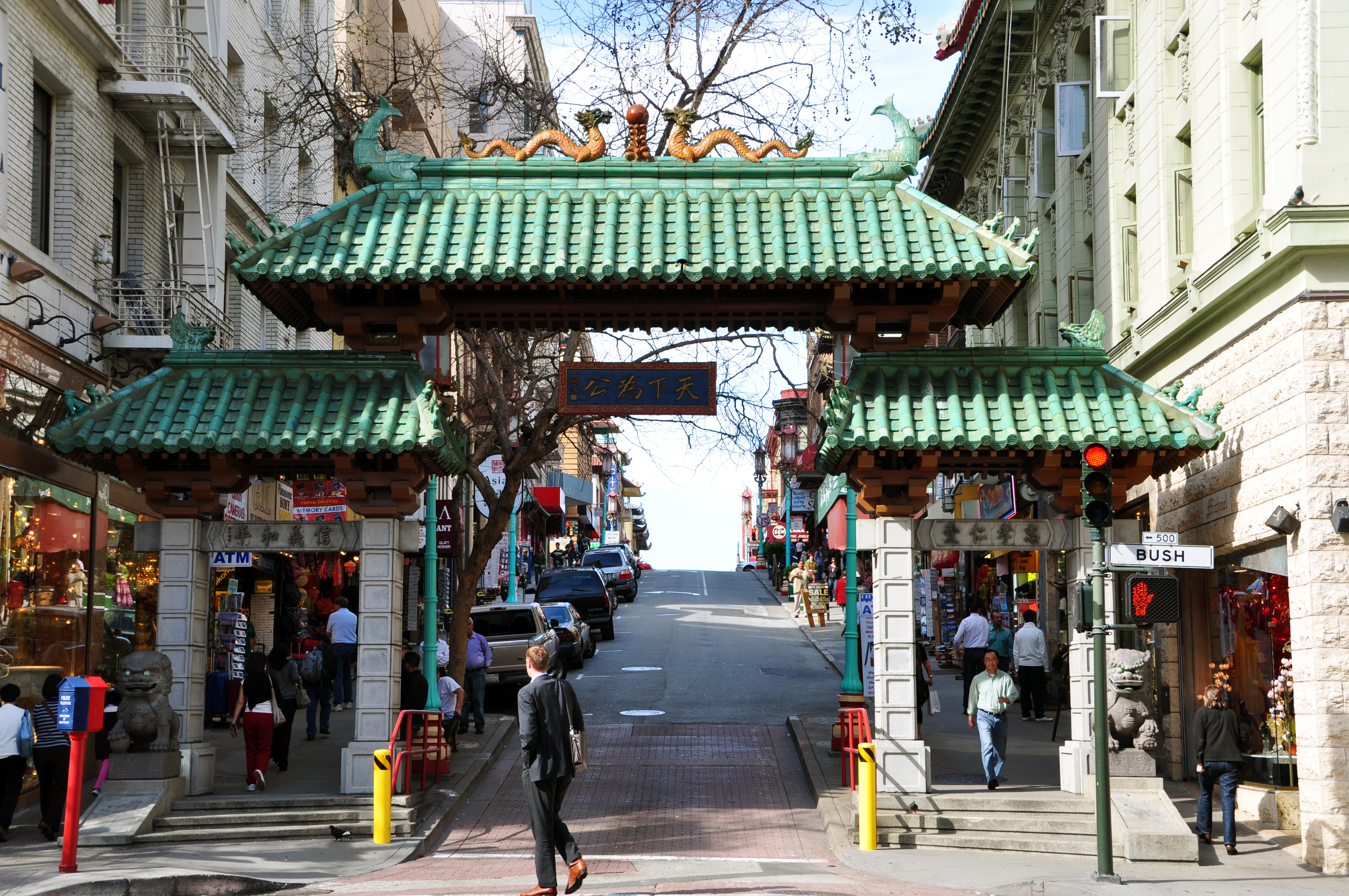
1894–1961 · Hardboiled AuthorWorking as a Pinkerton detective, Hammett walked these foggy streets gathering material for The Maltese Falcon. Sam Spade’s San Francisco feels so real because it was. Stand at the corner of Bush and Stockton at dusk and the atmosphere hasn’t changed much. The detective’s cynical eye still seems appropriate in a city that sells both dreams and disappointment.
Ansel Adams
1902–1984 · PhotographerBorn in the Western Addition, Adams first learned to love light and shadow while wandering the city’s hills. Though he became famous for Yosemite, the city’s dramatic fog and sharp light shaped his eye. The de Young Museum now holds his archives. On a clear day from Tank Hill you can see exactly the kind of luminous atmosphere that made him pick up a camera.
Plan your visit
Practical guides for San Francisco — pick the format that matches your trip.
San Francisco Money-Saving Passes & Cards
An honest guide to San Francisco passes and transit cards, with current prices, break-even math, and the cases where buying nothing is the smarter move.
San Francisco First-Timer Tips: What Locals Actually Tell Their Friends
Honest San Francisco tips from a local: Alcatraz ticket traps, Muir Woods reservation rules, cable car shortcuts, Tenderloin boundaries, and what to skip.
Photo Gallery
Explore San Francisco in Pictures
A scenic aerial perspective of the San Francisco Bay, highlighting the iconic Richmond-San Rafael Bridge stretching across the water toward distant mountains.
Griffin Wooldridge on Pexels · Pexels License
A bright, sunny day captures the iconic San Francisco skyline, featuring the prominent Coit Tower and Transamerica Pyramid rising above the waterfront.
Jeffry Surianto on Pexels · Pexels License
A classic San Francisco street scene captures the city's unique architecture leading toward the iconic Transamerica Pyramid under a bright blue sky.
Gintare K. on Pexels · Pexels License
The historic Stanford Court hotel stands prominently on a quiet, sun-drenched street in San Francisco, California.
Clément Proust on Pexels · Pexels License
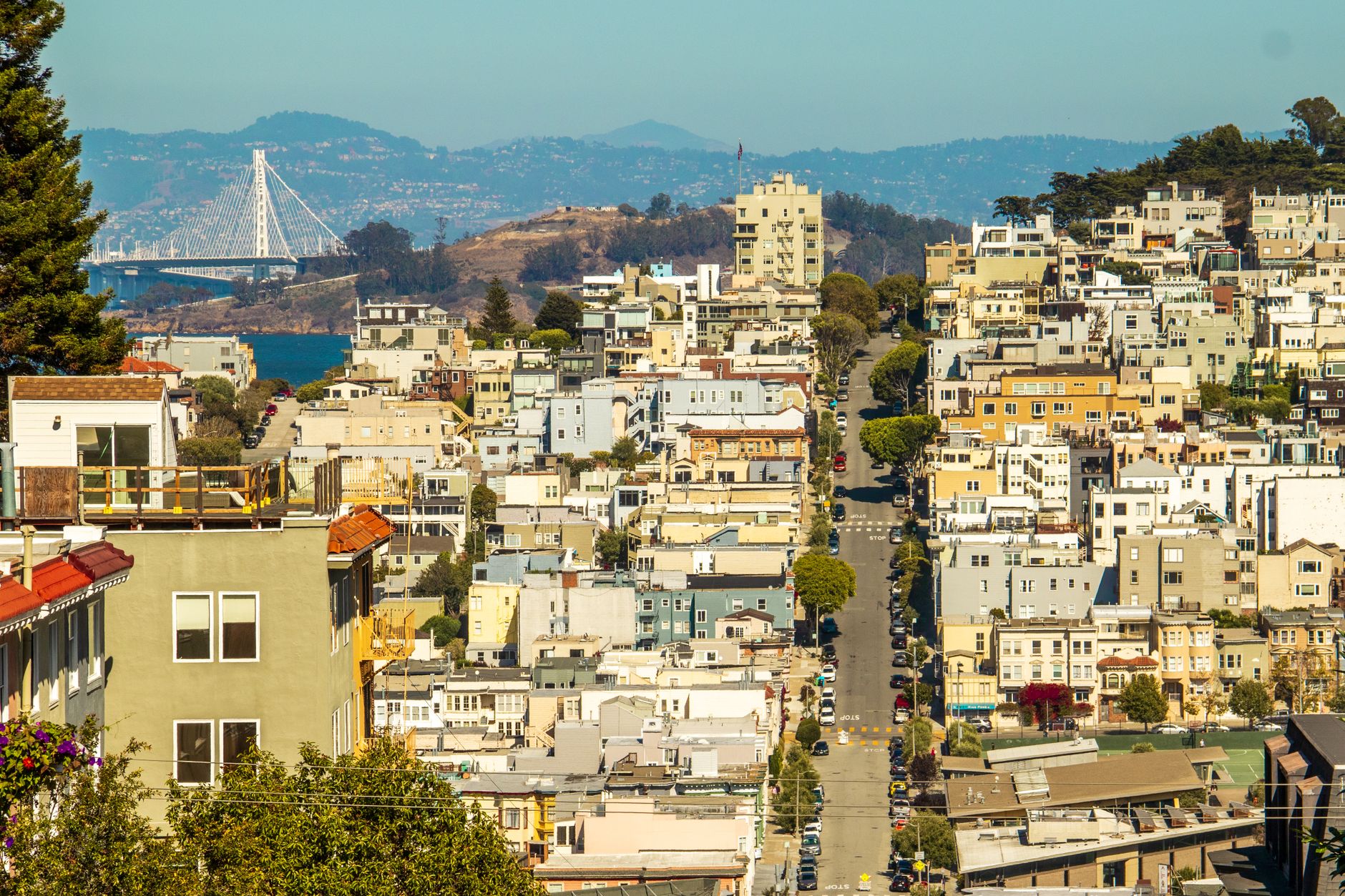
A picturesque, sunlit view of San Francisco's iconic hilly streets and dense urban architecture, with the Bay Bridge visible in the background.
Hannibal Photography on Pexels · Pexels License
A historic cable car waits at its terminal in San Francisco, surrounded by classic brick architecture and busy city life.
Larry Hyler on Pexels · Pexels License
The San Francisco skyline glows at night, highlighted by the vibrant purple illumination of the historic City Hall dome.
Stephen Leonardi on Pexels · Pexels License
The San Francisco skyline glows at twilight, highlighting the historic Ferry Building and the city's modern architectural landscape reflected in the bay.
Rev. Lisa j Winston on Pexels · Pexels License
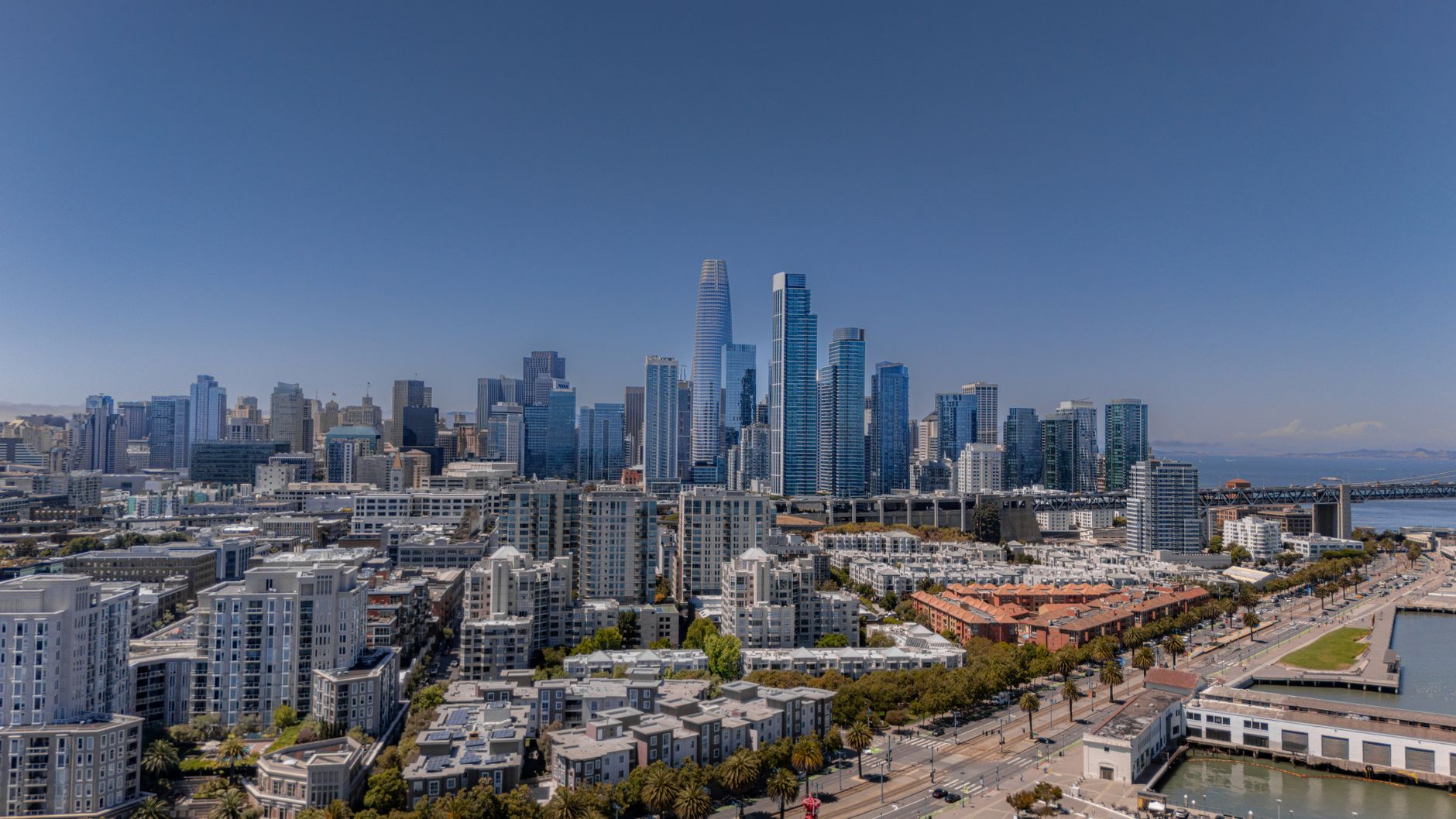
A stunning aerial perspective of the San Francisco skyline, showcasing the city's blend of modern high-rises and coastal urban landscape under bright, clear daylight.
Mazin Omron on Pexels · Pexels License
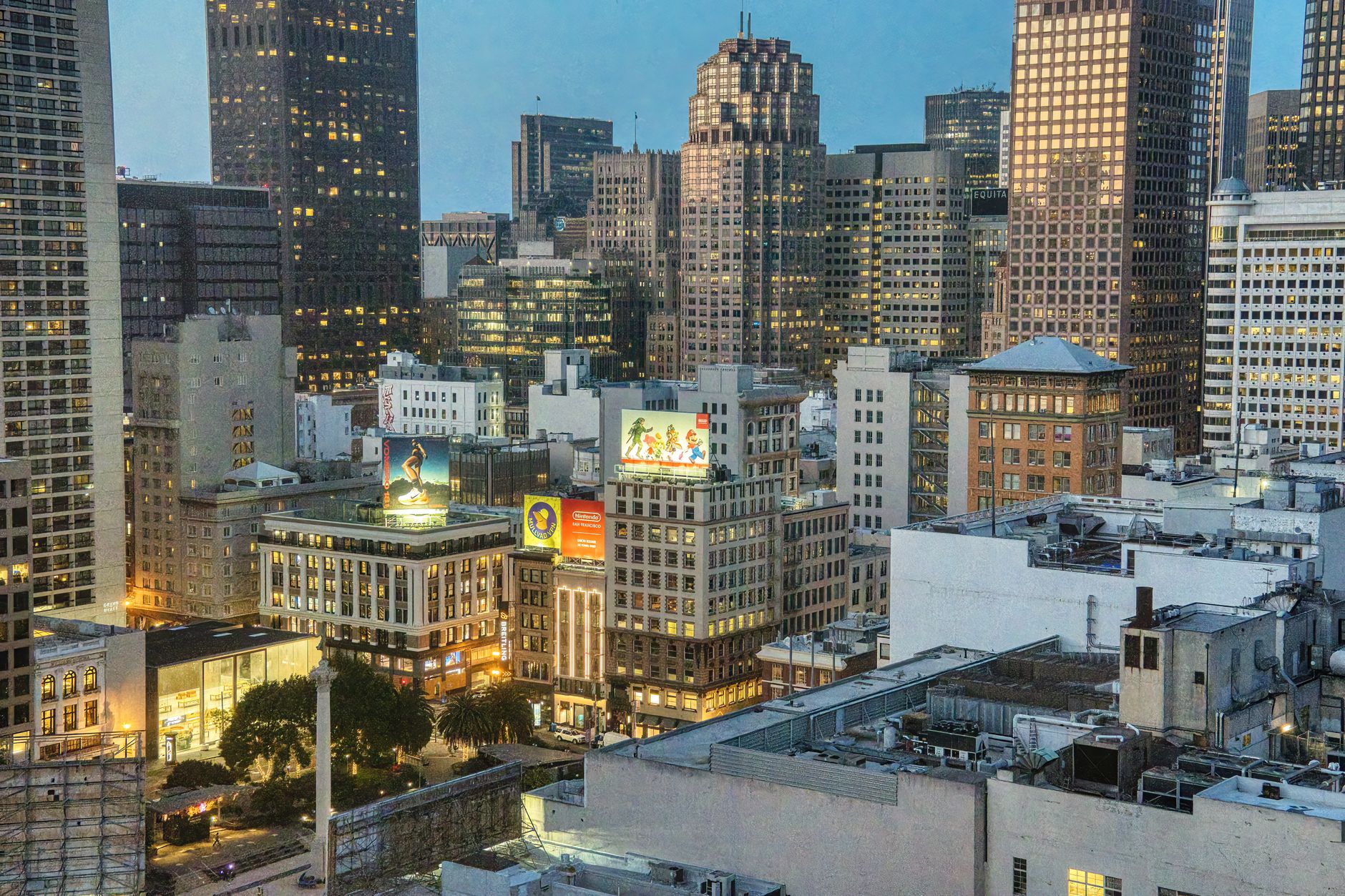
The dense urban landscape of San Francisco, United States of America, glows with city lights and vibrant billboards as dusk settles over the downtown district.
Tom Fisk on Pexels · Pexels License
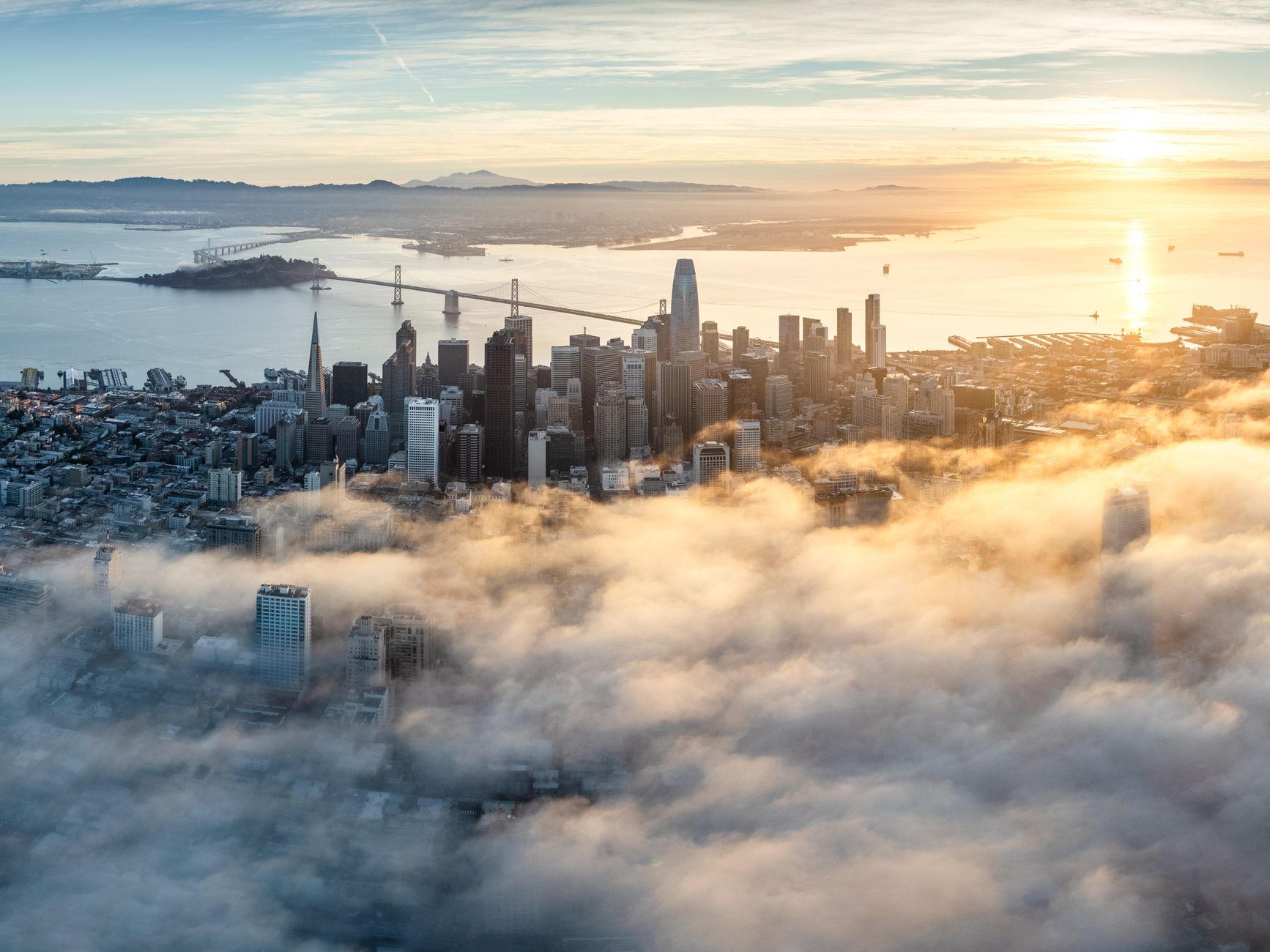
The iconic San Francisco skyline emerges from a blanket of golden morning fog as the sun rises over the Bay Area.
Zetong Li on Pexels · Pexels License
Practical Information
Getting There
San Francisco International Airport (SFO) sits 13 miles south of downtown. BART leaves directly from the International Terminal G-side and reaches Powell Street in 30 minutes for $11.15. Taxis from the center islands outside arrivals run $50–$80. If you're driving, Interstate 280 North or US-101 North drop you straight into the city.
Getting Around
Muni runs the show in 2026 with 7 light rail lines, 40 bus routes, the historic F-Line streetcars, and three cable car lines. Grab a Clipper card or load it onto your phone wallet. The California Street cable car line gives better views with half the crowds of the Powell-Hyde route. E-bikes have taken over the hills. Use them.
Climate & Best Time
September and October deliver the warmest, clearest days, often reaching 23°C with almost no fog. Summer days rarely break 20°C and nights drop to 12°C. Bring a jacket in any month. Winter brings rain but also the clearest air for bridge views. Avoid June and July unless you enjoy persistent marine layer.
Safety
Car break-ins remain the biggest headache for visitors. Never leave anything visible in a parked car, even for five minutes. The Tenderloin and certain SoMa blocks warrant extra awareness after dark. The rest of the tourist circuit from Embarcadero to Golden Gate Park stays active and generally fine.
Where to Eat
Don't Leave Without Trying
Bob's Donut & Pastry Shop
quick biteOrder: The classic glazed donuts and fresh pastries — this is where locals actually queue up at 2 AM for late-night cravings, not tourists.
Open 24 hours and a genuine SF institution, Bob's is the real deal: no frills, just perfectly executed donuts and pastries that locals have loved for decades. This is where you grab breakfast at midnight.
Sweet Maple
local favoriteOrder: The pancakes are legendary — fluffy, buttery, and worth the wait. Pair with their excellent coffee.
With nearly 4,500 reviews, Sweet Maple is where SF locals actually go for breakfast, not the tourist traps. This is the real McCoy: a neighborhood favorite that's been perfecting the morning ritual for years.
Jane The Bakery
quick biteOrder: The croissants are buttery perfection, and the seasonal pastries reflect what's fresh — this is artisanal baking at its best.
Jane brings serious European bakery chops to SF with handcrafted pastries and bread that justify the slight wait. This is where you go when you want the real thing, not mass-produced pastries.
Blue Bottle Coffee
cafeOrder: Single-origin pour-overs showcase Blue Bottle's obsessive approach to coffee sourcing and preparation — order whatever's on the seasonal menu.
Blue Bottle is SF's coffee obsession made real: a local roastery that helped define the third-wave coffee movement. This isn't just caffeine; it's craft.
Brenda's French Soul Food
local favoriteOrder: The beignets are addictive — pillowy and perfect for breakfast — and the gumbo delivers authentic New Orleans soul in a SF neighborhood spot.
Brenda's bridges French technique with Creole heart, creating a warm, unpretentious spot where 6,000+ reviewers have found genuine comfort food. This is where locals go when they want something real.
Smuggler's Cove
local favoriteOrder: The rum cocktails are meticulously crafted — order by spirit origin or ask the bartender to surprise you. This is rum done right.
Smuggler's Cove is an obsessive temple to rum culture with a carefully curated collection and bartenders who actually know their stuff. This isn't a tourist bar; it's where cocktail nerds come to learn.
The Law Café
cafeOrder: The pastries and coffee reflect careful sourcing and technique — a hidden gem where quality matters more than volume.
The Law Café is a quiet, quality-focused spot near City Hall that prioritizes craft over crowds. With a near-perfect 4.7 rating, this is where locals escape the noise and grab something genuinely good.
Happy Donuts
quick biteOrder: Fresh, affordable donuts that don't compromise on flavor — this is honest, no-nonsense baking at a price that won't break the bank.
Happy Donuts delivers exactly what it promises: quality donuts without pretension or markup. It's the kind of place where locals grab breakfast before work, not a destination, but a genuine neighborhood staple.
Dining Tips
- check Tipping: Standard in sit-down restaurants is 15–20%. For bars, $1–$2 per drink is standard. Fast food/counter service does not require a tip, though digital prompts are common.
- check Payment: Cards are widely accepted; mobile payment apps (Apple Pay) are standard. Cash is rarely required unless at small, cash-only legacy establishments.
- check Meal times: Breakfast is typically 7am–10am. Lunch is 11:30am–2pm. Dinner is 5:30pm–9pm.
- check Reservations: Essential for popular or fine-dining spots. Book via OpenTable or Resy, often 2–4 weeks in advance for high-demand venues.
- check Closures: Many restaurants close on Mondays or Tuesdays; always check websites before visiting.
- check Insider tip: Skip the tourist traps at Fisherman's Wharf. Instead, head to the Ferry Building on a Saturday morning to eat where the local chefs shop. Grab a slice at a neighborhood spot and walk to a local park.
Restaurant data powered by Google
Tips for Visitors
Layer Like a Local
San Francisco weather flips every few blocks. Pack a light jacket even in September when the rest of California swelters. The famous fog rolls in without warning.
Never Leave Valuables
Car break-ins remain the top tourist crime. Research shows even an empty bag on a seat can trigger a smash-and-grab. Take everything with you or use hotel storage.
Clipper Card First
Buy a Clipper Card at SFO or load it on your phone before leaving the airport. One card covers BART, Muni, cable cars and ferries. Individual tickets cost more and slow you down.
Skip Wharf Seafood
Tourist traps at Fisherman’s Wharf serve overpriced, average catches. Walk to the Ferry Building Marketplace instead for local Dungeness crab and oysters at fair prices.
Sunset at Tank Hill
Skip crowded Twin Peaks. Tank Hill offers the same 360-degree views with zero crowds and parking right at the trailhead. Bring a blanket and arrive 30 minutes before golden hour.
Book Alcatraz Early
Alcatraz tickets regularly sell out three weeks ahead, especially for the night tour. Reserve directly through the official Alcatraz Cruises site the moment your dates are set.
Explore the city with a personal guide in your pocket
Your Personal Curator, in Your Pocket.
Audio guides for 1,100+ cities across 96 countries. History, stories, and local insight — offline ready.
Audiala App
Available on iOS & Android
Join 50k+ Curators
Frequently Asked
Is San Francisco worth visiting? add
Yes, if you like cities that feel like multiple places at once. The fog pouring over the Marin Headlands at dusk still stops people in their tracks, even after a hundred visits. Just know the hills will destroy your calves and the tech money has changed the character of some neighborhoods.
How many days do you need in San Francisco? add
Four days lets you see the bridge, Alcatraz, Golden Gate Park and at least two neighborhoods without rushing. Five days is better if you want to linger in the Mission for murals and burritos or take a day trip to Muir Woods. Three days feels like you’re always checking your watch.
How do you get from SFO to downtown San Francisco? add
Take BART from the airport’s International Terminal for $11.15. The ride takes about 30 minutes and drops you at multiple downtown stations. A Clipper Card or phone tap works seamlessly. Skip rideshares unless you have too much luggage.
Is San Francisco safe for tourists? add
The city is safe in tourist areas during daylight. Avoid the Tenderloin and parts of SoMa at night. The biggest risk is car break-ins. Use common sense, don’t flash valuables, and you’ll be fine.
When is the best time to visit San Francisco? add
September and October bring the warmest, sunniest weather with the least fog. Summer often means cold wind and marine layer until mid-afternoon. Winter is rainy but quieter and cheaper.
Should I ride a cable car in San Francisco? add
Yes, but take the California Street line instead of the Powell line. Same iconic experience, far fewer crowds, and better views of the city as you climb Nob Hill. Buy a Clipper Card to avoid the long ticket lines.
Sources
- verified A Passion and A Passport — Provided detailed hidden viewpoints, transport tips, and local recommendations for San Francisco attractions.
- verified SF Travel & SFMTA — Official guidance on BART, Muni, Clipper Card, and airport transfers.
- verified Eater SF & Local Guides — Food recommendations, Mission burritos, Ferry Building, and neighborhood dining customs.
- verified Inside Guide to San Francisco Tourism — Safety information, best months to visit, and practical visitor advice.
Last reviewed: