
Place
United States of America Updated Apr 2026
The first thing that hits you in San Francisco is the smell of eucalyptus mixed with sea salt and hot sourdough. One minute you're shivering in fog so thick it muffles the cable car bells, the next you're squinting under a sky so blue it feels like a dare. This is the United States of America at its most contradictory: 49 square miles of Victorian gingerbread, Gold Rush ghosts, and venture capital poured into coffee that costs more than lunch.
 Photo: Max Fomin / Pexels
Built from cited sources · see the method · How we make our guides →
The city has always collected dreamers. Gold in 1848. Peace and love in 1967. Code in the 2010s. Each wave left its mark. Walk through the Mission and you'll still taste the burritos born there in the 1960s, rice and all. Stand under the Golden Gate at Fort Point and the bridge's rivets, each one 3.5 inches across, still look like they were hammered in yesterday.
Yet the place refuses to freeze. Fog rolls in like a stage curtain at 4 p.m. sharp. Locals layer jackets the way other cities layer irony. And every neighborhood argues, loudly, that it is the real San Francisco. They're all half right. The arguments themselves might be the truest part.
What changes you is how small the city feels once you learn its secrets. A crooked street no one photographs. The free observation tower at the de Young that beats every paid viewpoint. The fact that you can ferry to Sausalito for houseboats and be back before dinner. San Francisco doesn't ask you to love it. It simply rearranges what you thought a city could be.
Not every monument, just the ones we'd walk you past ourselves.
Where to wander, by quarter — each with its own rhythm.
Before you go
Curated from places in this city. Same price as official sites.


Prices shown are indicative — final pricing and availability are confirmed at checkout. Audiala may receive a commission from bookings made via these links.
From Ohlone shell mounds to Silicon Valley fog
The Ramaytush Ohlone settled the bay's edge in small villages. They harvested clams and acorns where downtown skyscrapers now stand. Their name for the place, Ahwaste, simply meant the bay. Shell mounds still surface in construction sites, reminding us the city rests on ten thousand years of someone else's home.
On November 2, Gaspar de Portolá's Spanish expedition first sighted the immense harbor. They stood on the headlands while fog peeled back like theater curtains. Within seven years soldiers and friars arrived to build both presidio and mission. The Ohlone world began its violent unraveling.
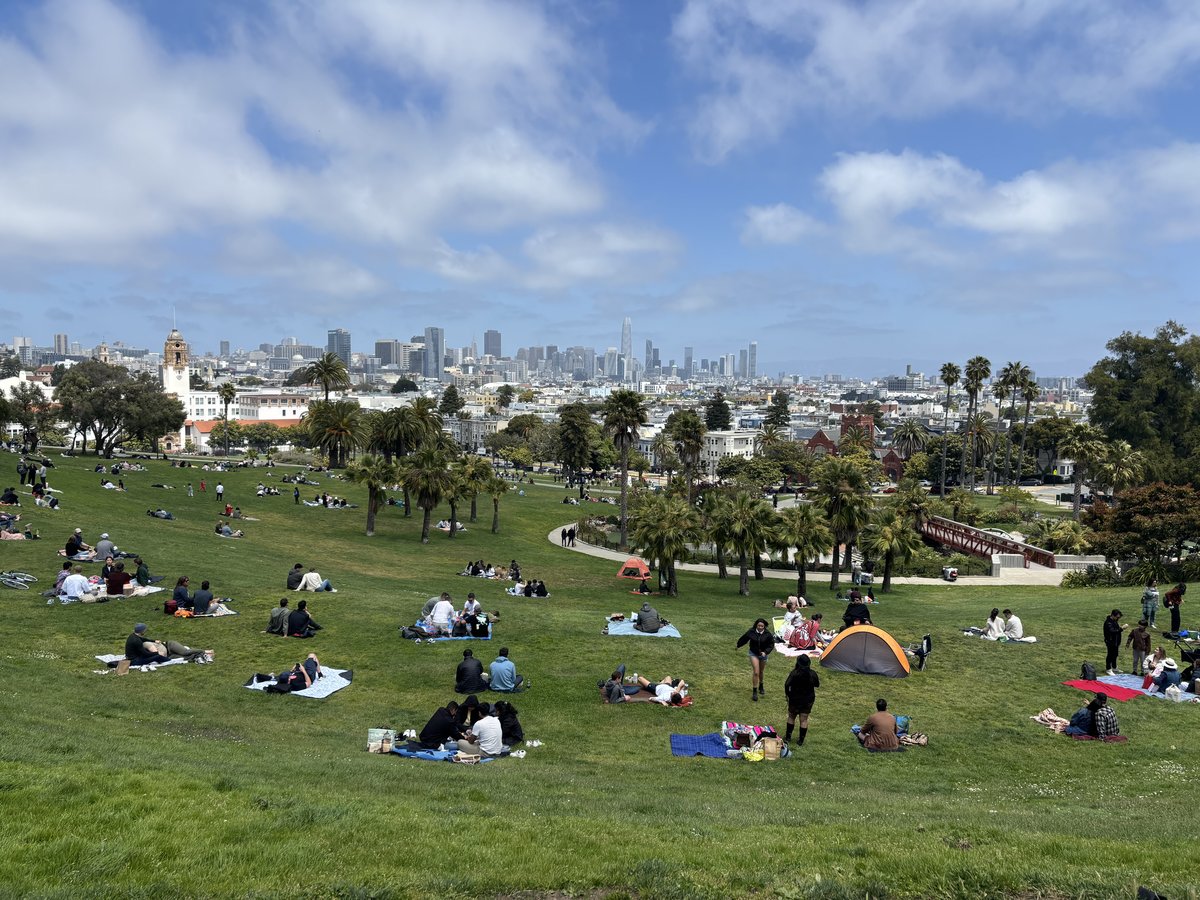
Juan Bautista de Anza planted a cross at the edge of a lagoon on June 29. The adobe Mission San Francisco de Asís still stands, the oldest building in the city. Its walls contain Ohlone labor and Spanish ambition. Sunday mornings the smell of incense still drifts across Dolores Park.
News traveled slowly to this distant outpost. When it finally reached Yerba Buena, the handful of settlers simply changed flags. The presidio crumbled while cattle wandered its parade ground. For twenty-seven years the settlement remained a sleepy trading post scented with hides and tallow.
James Marshall found glittering flakes in a Sierra stream on January 24. Within months San Francisco's population exploded from 850 to 25,000. Ships choked the bay so thickly that sailors abandoned them and walked straight to the mines. The rotting hulls became the city's first real estate.
Joshua Abraham Norton walked into a newspaper office and announced he was Emperor of the United States. Locals played along for twenty-one years. He issued his own currency, ate for free at the best restaurants, and banned the word "Frisco." When he died in 1880, 30,000 people attended his funeral. The city has never quite recovered from the joke.
The final golden spike at Promontory Summit funneled thousands of Chinese laborers through San Francisco. They built the railroads then faced exclusion laws in the city they helped create. Chinatown's narrow alleys became both refuge and pressure cooker. The incense and sound of mahjong still carry the memory.
Andrew Hallidie watched a horse slip on a wet cobblestone hill and die. Four months later his Clay Street cable car made its maiden voyage. The system still runs on the same principles, gripping a moving steel rope buried beneath the street. Listen carefully at Powell and Market. You can hear 1873 rattling underneath modern traffic.
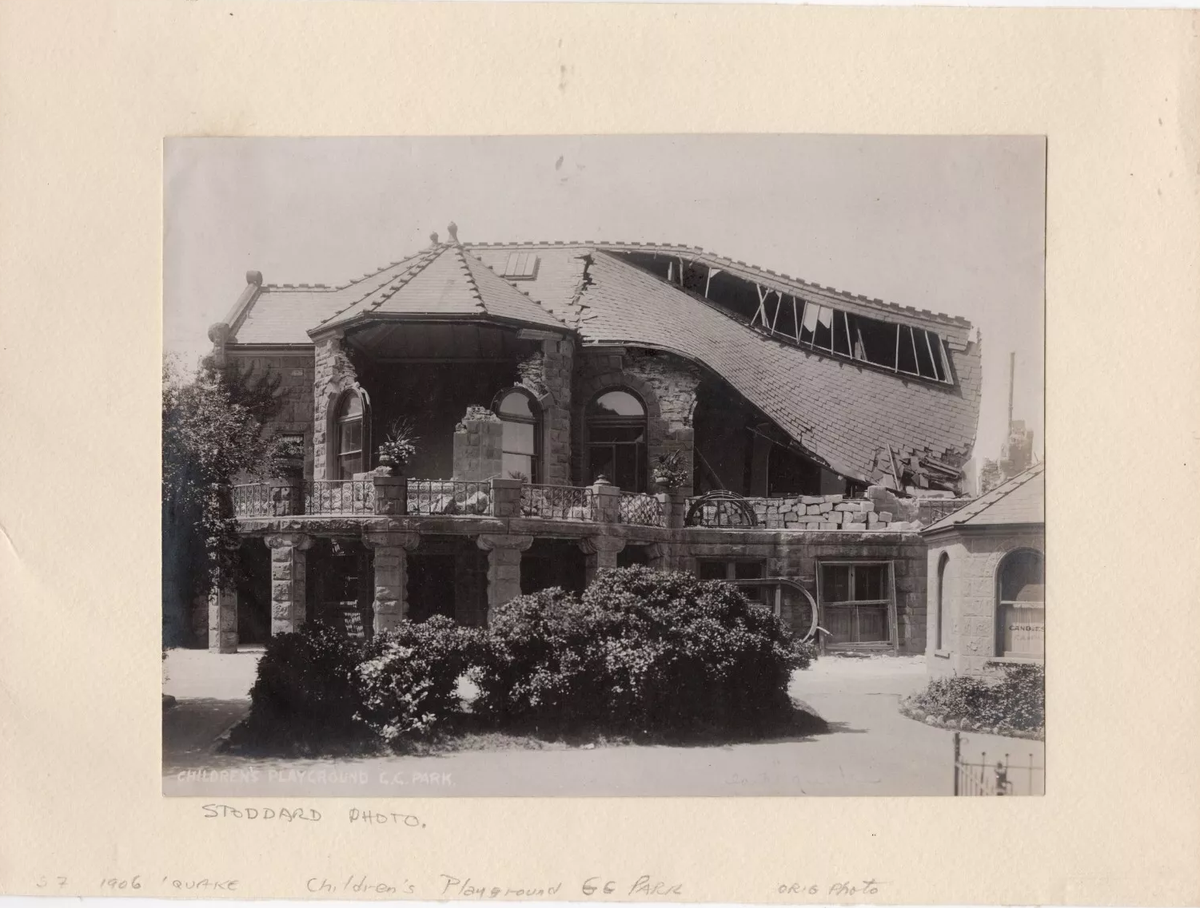
At 5:12 a.m. on April 18 the ground lurched for 47 seconds. Buildings fell. Gas mains snapped. Fires burned for four days and destroyed 80 percent of San Francisco. Army troops dynamited entire blocks trying to create firebreaks. The smell of smoke lingered for months. Yet within three years the city hosted a world's fair to prove it had survived.
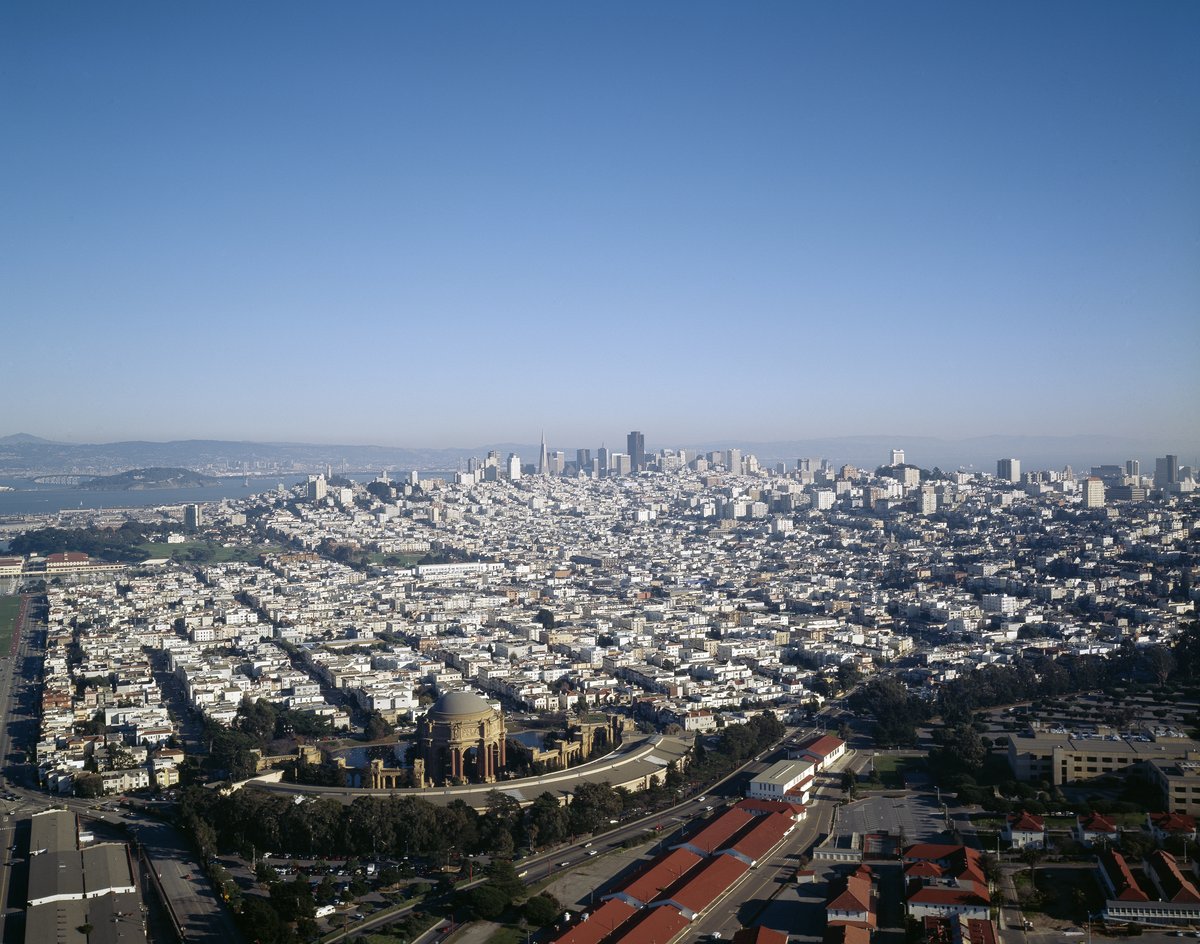
The fair celebrated both the rebuilt city and the new Panama Canal. Its Tower of Jewels glittered with 100,000 cut-glass pieces. At night searchlights played across the sky while the bay lapped at temporary palaces. Only the Palace of Fine Arts remains, its reflected columns still trembling in the lagoon like a fever dream.
Eleven men died during construction. The finished bridge swayed 27 feet in the wind on its first day. Joseph Strauss promised it would stand 1,000 years. The color, called International Orange, was chosen because it cuts through fog better than any other. Walk across at dawn. The cables sing in the wind like nothing else on earth.
Lee Jun Fan entered the world at Chinese Hospital during the Year of the Dragon. His father was performing in local opera. The city taught him both wing chun and street fighting before Hollywood ever noticed. He would later say San Francisco's fog and hills shaped his footwork. The dragon never really left.
Steven Paul Jobs arrived at San Francisco General Hospital and was immediately given up for adoption. The city that would later make him its reluctant godfather barely noticed. Twenty years later he and Wozniak started Apple in a Los Altos garage, but the attitude was pure San Francisco. Question everything. Especially authority.
Thirty thousand young people descended on Haight-Ashbury carrying flowers and LSD. The Diggers handed out free food on the Panhandle while the Grateful Dead played in the park. By October the streets reeked of patchouli, urine, and dashed expectations. The counterculture had both invented and destroyed itself in six months.
Game 3 of the World Series was about to begin when the ground rolled at 5:04 p.m. The Bay Bridge collapsed. A freeway pancake in Oakland killed 42. Baseball saved lives that day. The city, newly obsessed with seismic safety, retrofitted everything it could reach. The fault line still sleeps beneath your feet. It dreams in magnitudes.
Tents appeared in front of the Federal Reserve Building on Market Street. Bankers walked past protesters every morning carrying the same briefcases. The camp lasted 74 days before police cleared it at 2 a.m. in full riot gear. The conversation about who the city belongs to never really ended. It just moved indoors.
Office towers went dark. The Financial District echoed like a cathedral at midnight. Tech workers discovered they could live anywhere with good WiFi. When the fog rolled in during those quiet months it felt like the city was finally catching its breath after 170 years of constant shouting. Some say it hasn't stopped breathing easier since.
Self-proclaimed Emperor · 1818–1880
Lived in San Francisco 1850s–1880
After losing everything in the Gold Rush, he declared himself Emperor of the United States in 1859 and issued his own currency. San Franciscans played along, seating him in theaters and printing his decrees in newspapers. He even banned the word “Frisco.” Walk down Commercial Street today and you can almost picture him inspecting his domain in his threadbare uniform.
Baseball Legend · 1914–1999
Born and raised in San Francisco
The Yankee Clipper grew up in the North Beach neighborhood, the son of a fisherman. He’d return here after seasons, eating at the same restaurants where old-timers still told stories about his 56-game hitting streak. The city named the airport roadway after him. You can still find old-timers in North Beach who swear the fog lifted the day he hit safely in game 57.
Hardboiled Author · 1894–1961
Lived and wrote in San Francisco
Working as a Pinkerton detective, Hammett walked these foggy streets gathering material for The Maltese Falcon. Sam Spade’s San Francisco feels so real because it was. Stand at the corner of Bush and Stockton at dusk and the atmosphere hasn’t changed much. The detective’s cynical eye still seems appropriate in a city that sells both dreams and disappointment.
Photographer · 1902–1984
Born in San Francisco
Born in the Western Addition, Adams first learned to love light and shadow while wandering the city’s hills. Though he became famous for Yosemite, the city’s dramatic fog and sharp light shaped his eye. The de Young Museum now holds his archives. On a clear day from Tank Hill you can see exactly the kind of luminous atmosphere that made him pick up a camera.
Where locals actually book dinner — not the tourist menus.
Small things that change how the city treats you.
The city, as it actually looks.


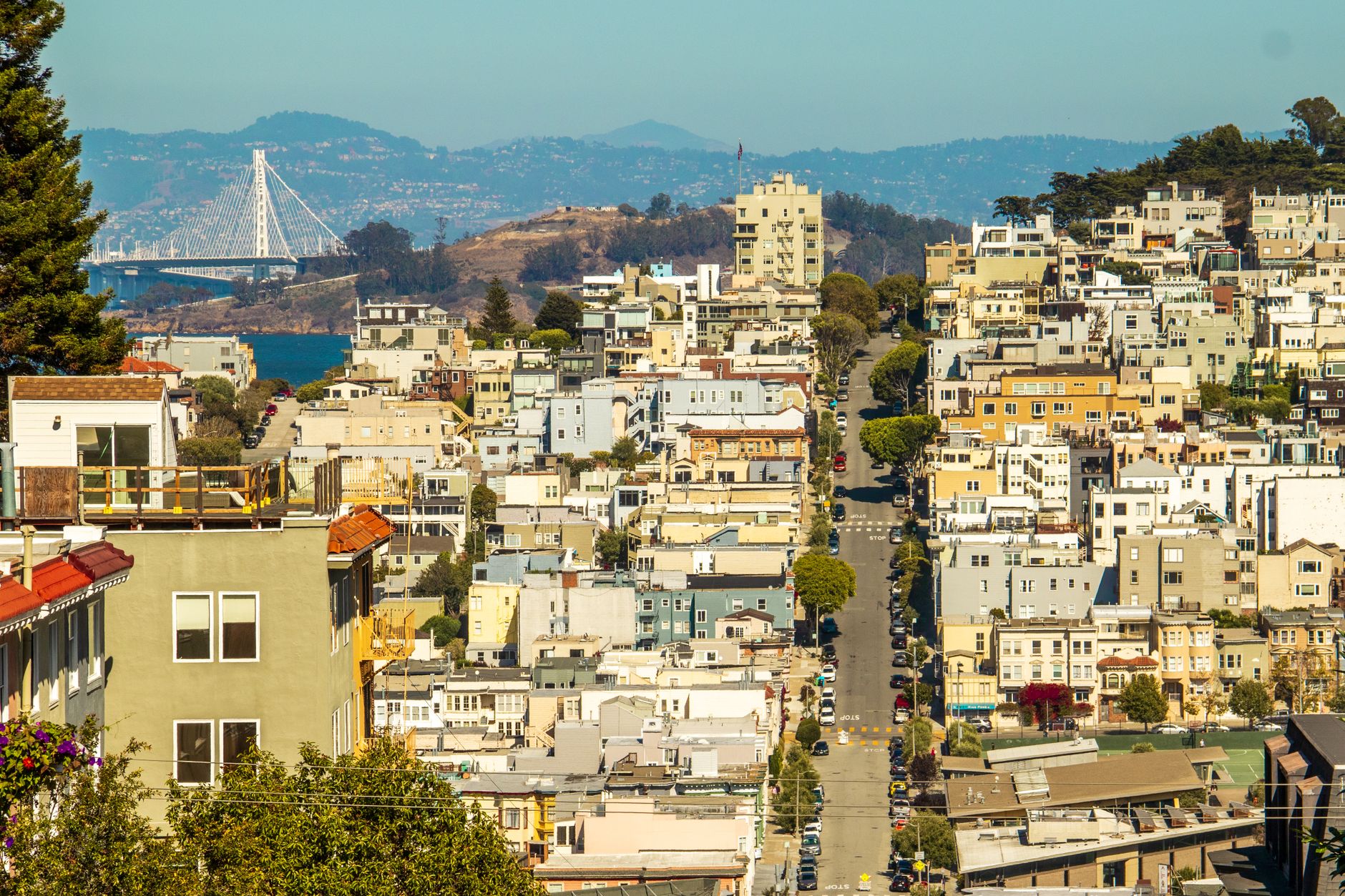


Yes, if you like cities that feel like multiple places at once. The fog pouring over the Marin Headlands at dusk still stops people in their tracks, even after a hundred visits. Just know the hills will destroy your calves and the tech money has changed the character of some neighborhoods.
Four days lets you see the bridge, Alcatraz, Golden Gate Park and at least two neighborhoods without rushing. Five days is better if you want to linger in the Mission for murals and burritos or take a day trip to Muir Woods. Three days feels like you’re always checking your watch.
Take BART from the airport’s International Terminal for $11.15. The ride takes about 30 minutes and drops you at multiple downtown stations. A Clipper Card or phone tap works seamlessly. Skip rideshares unless you have too much luggage.
The city is safe in tourist areas during daylight. Avoid the Tenderloin and parts of SoMa at night. The biggest risk is car break-ins. Use common sense, don’t flash valuables, and you’ll be fine.
September and October bring the warmest, sunniest weather with the least fog. Summer often means cold wind and marine layer until mid-afternoon. Winter is rainy but quieter and cheaper.
Yes, but take the California Street line instead of the Powell line. Same iconic experience, far fewer crowds, and better views of the city as you climb Nob Hill. Buy a Clipper Card to avoid the long ticket lines.
390 places to discover


Showing 1–48 of 390 places
Saved and recently read places — kept on this device only.
Photos may have been resized or cropped.