Plan and listen to Aztec Bowl with Audiala.
Audio guide in your pocket, itinerary in your browser. Built for the way you actually visit.
Introduction
Nestled within the San Diego State University (SDSU) campus, the Aztec Bowl and its successor, Viejas Arena, are iconic landmarks that embody the rich athletic, cultural, and architectural heritage of San Diego, California. From its origins as a 1930s Works Progress Administration (WPA) project providing vital infrastructure and employment, through decades of collegiate sports glory, to its transformation into a modern multi-use arena, this venue tells a compelling story of community resilience and evolution (Wikipedia; San Diego Union-Tribune; Kids Kiddle).
This guide presents everything you need to plan your visit, including historic highlights, practical details on visiting hours, tickets, accessibility, and insider tips—plus suggestions for nearby attractions to enrich your San Diego experience. Whether you’re a sports fan, history buff, or cultural explorer, the Aztec Bowl and Viejas Arena offer a unique window into Southern California’s past and present.

Origins and Construction of Aztec Bowl
Constructed between 1933 and 1936 as a WPA project, Aztec Bowl was envisioned as an on-campus stadium to foster school pride and community engagement (Wikipedia). Designed as a horseshoe-shaped amphitheater dug into a canyon hillside, it featured concrete bleachers and distinctive cobblestone walls, blending seamlessly with the landscape (AS SDSU). The stadium opened in October 1936 with a 10,000-seat capacity, later expanded to 12,592. Its construction not only provided jobs during the Great Depression but also created a lasting symbol of progress and unity for SDSU and San Diego.
Aztec Bowl’s Role at San Diego State University
For over thirty years, Aztec Bowl was the home field for SDSU Aztecs football, hosting games, track and field events, and major campus gatherings (Wikipedia). The move from Balboa Stadium to Aztec Bowl marked a new era for university athletics and campus tradition (San Diego Union-Tribune). The venue also welcomed visiting teams, students, alumni, and community members for concerts, commencements, and civic celebrations, becoming a central part of SDSU’s identity.
Cultural and Historical Milestones
President John F. Kennedy’s 1963 Commencement Address
One of Aztec Bowl’s most significant moments was President John F. Kennedy’s address during the 1963 commencement, where he received the first honorary doctorate from the California State University system (Kids Kiddle). A commemorative granite boulder at Viejas Arena’s north entrance honors this occasion (AS SDSU).
Entertainment and Traditions
The stadium was a hub for concerts and community events, including performances by the Grateful Dead, The Police, and Lollapalooza (Wikipedia; Concert Archives). It witnessed the birth of SDSU traditions such as the “Monty” mascot and the adoption of all-black football uniforms (College Football History). Legendary coach Don Coryell’s leadership further shaped the Aztec legacy (SDSU News).
Architectural Preservation and Transition to Viejas Arena
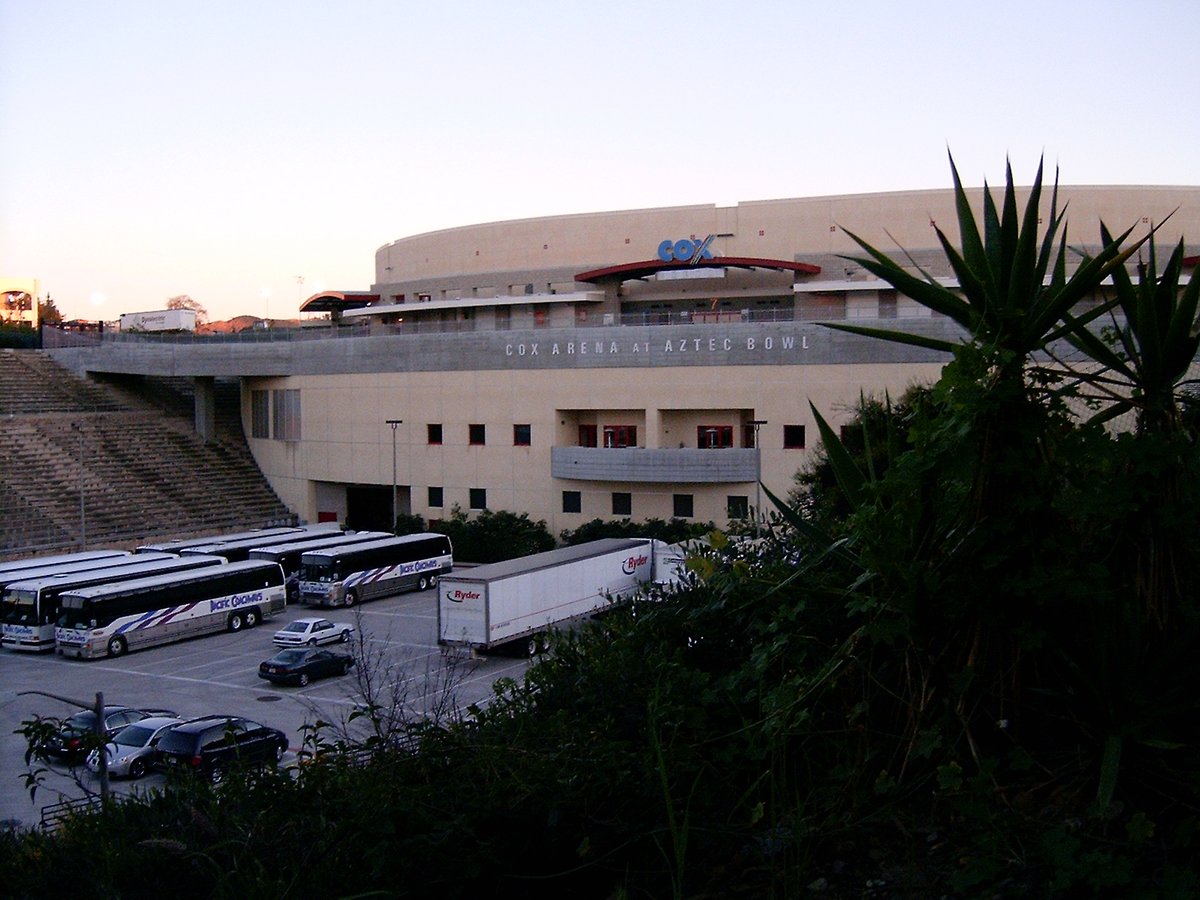
By the mid-1960s, Aztec Bowl’s capacity and amenities no longer matched SDSU’s needs. The football team moved to San Diego Stadium in 1967, and Aztec Bowl shifted focus to concerts and special events (CBS8). In 1994, it was added to the National Register of Historic Places, ensuring the preservation of its most distinctive features (San Diego Union-Tribune). Viejas Arena was constructed on the same site, with original cobblestone walls and bleachers integrated into the new design (Wikipedia). The arena opened in 1997 (as Cox Arena), with a capacity of 12,414, and was later renamed for the Viejas Band of Kumeyaay Indians.
The result is a remarkable blend of historic architecture and modern amenities, praised as an “ingenious compromise” that honors history while supporting contemporary needs (Stadium Journey).
Visiting Viejas Arena: Hours, Tickets, and Accessibility
Visiting Hours
- Open Hours: Viejas Arena’s open hours vary by event. For most events, doors open 1–2 hours prior to start time. For historical viewing and campus tours, check the Viejas Arena Official Site or SDSU Visitor Center for details.
Tickets
- Where to Buy: Tickets for games, concerts, and events can be purchased online via the GoAztecs Tickets portal, at the Viejas Arena box office, or through authorized vendors.
- Pricing: Ticket prices range widely depending on the event, from around $10 for regular-season games to over $400 for premium concerts (ScoreBig; Event Tickets Center). Advance purchase is strongly recommended for high-demand events.
Accessibility
- Physical Access: Viejas Arena offers ADA-compliant seating, accessible entrances/restrooms, elevators, and ramps (SanDiego.org).
- Parking: Accessible parking is available near the main entrance. Event parking typically costs $15; general parking is $31 per vehicle.
- Service Animals: Permitted in accordance with ADA guidelines.
- For Assistance: Contact arena services or the SDSU Visitor Center in advance for special accommodations.
Visitor Experience: Seating, Amenities, and Event Tips
Seating Options
- Floor Level: Ideal for concerts and special events.
- Lower & Upper Levels: 100-level offers proximity to the action; 200-level is more budget-friendly.
- Suites & Premium: Enhanced comfort and amenities.
- Open-Air Concourse: Enjoy San Diego’s weather while navigating the arena (The Vendry).
Amenities
- Concessions: Wide range of food and beverage options, including alcohol and specialty snacks. Most stands are cashless.
- Restrooms: Accessible stalls, family restrooms, baby-changing stations.
- Nearby Dining: The Habit Burger, Trujillo’s Taco Shop, Woodstock’s Pizza, and many more within walking distance.
Event Tips
- Arrive Early: Allow time for parking, security, and crowd navigation.
- Check Bag Policy: Restrictions are enforced; review guidelines in advance.
- Use Public Transit/Rideshare: SDSU Transit Center is close by; rideshare drop-off is at 55th Street and Remington Road.
- Dress in Layers: Indoor temperatures vary; the open-air concourse means conditions can change.
- Accessible Tourism: San Diego offers many resources for accessible travel (SanDiego.org).
Nearby Attractions and Unique Experiences
- Historical Sites: Balboa Park, San Diego Museum of Man, and the Gaslamp Quarter are all within a short drive (Le Travel Style).
- On-Campus Fun: Aztec Lanes (bowling), campus tours, and the preserved cobblestone walls and JFK commemorative boulder.
- Dining & Shopping: The College Area features a vibrant mix of restaurants, coffee shops, and boutiques.
- Lodging: Accommodations range from budget motels to upscale hotels near campus (Concert Archives).
FAQs
Q: What are Viejas Arena’s visiting hours?
A: Hours vary depending on events; doors generally open 1–2 hours before start. For campus tours or historical visits, consult the Viejas Arena website or SDSU Visitor Center.
Q: How do I buy tickets?
A: Purchase tickets through GoAztecs Tickets, the box office, or authorized vendors. Early purchase is advised.
Q: Is the arena wheelchair accessible?
A: Yes, with ADA-compliant seating, accessible entrances/restrooms, and elevators.
Q: What is the parking situation?
A: Event parking is available for $15–$31. Arrive early or use public transit to avoid delays.
Q: Are guided tours available?
A: SDSU offers campus tours that include historic sites; contact the Visitor Center for schedule and information.
Q: Are service animals allowed?
A: Yes, as per ADA guidelines.
Listen to the full story in the app
The whole Aztec Bowl,
told well.
Listen to sourced travel stories with local history and practical context — ready offline.
Verified, and shown.
Researched and written by the Audiala editorial team from historical records, architectural archives, and local expertise.
Built from cited sources · see the method · How we make our guides →