Early Origins & Construction
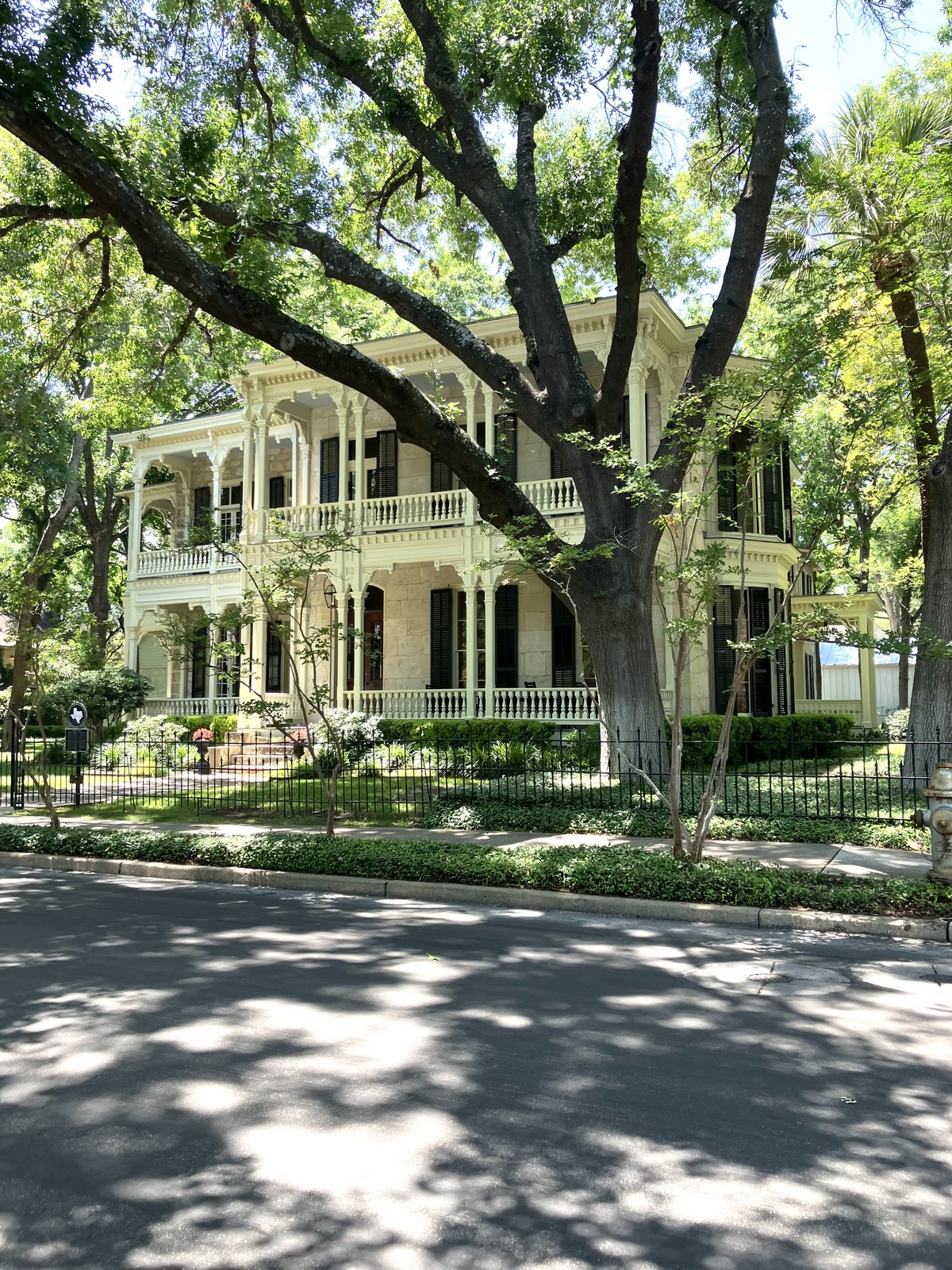
Constructed in the mid-1800s as San Antonio was transitioning into a modern city, Eagar House embodies the aspirations of early residents seeking permanence and comfort. Named after Sarah Eagar, a figure of local prominence, the home remains one of the city's oldest surviving residences (Texas Historical Commission, 1962). Its thick masonry walls, high ceilings, and deep-set windows were designed for the challenging South Texas climate.
Architectural Significance
Eagar House is a prime example of early Texas residential architecture, reflecting regional influences and practical adaptations. Its limestone construction and classical European details offer valuable insight into 19th-century design and the skilled craftsmanship of John H. Kampmann (UTSA Faculty Research Symposium Booklet). The house’s robust exterior, masonry, symmetrical windows, and decorative cornices make it a reference point for architectural studies and a highlight for visitors.
San Antonio in the 19th Century: Historical Context
During the mid-1800s, San Antonio was a meeting place of cultures, welcoming Anglo-Americans, Germans, and Mexican Americans. Eagar House, located at 434 S. Alamo Street, was near significant landmarks and played a role in the city’s social and civic life (San Antonio House Registry), bearing witness to San Antonio’s evolution.
Ownership & Notable Residents
While details regarding Sarah Eagar are scarce, her association cements the house’s significance. The property has also been known as the Vinck House and St. Joseph’s Rectory, reflecting its varied roles, from private residence to religious rectory (Texas Historical Commission, 1962).
Visiting Information: Hours, Tickets, Accessibility
- Hours Open Thursday–Sunday, 10:00 AM–4:00 PM (check for holiday or event variations).
- Tickets $10 adults, $7 seniors/students, free for children under 12. Purchase tickets [online] or at entrance.
- Guided Tours Hourly, offering in-depth stories about architecture and history.
- Accessibility Wheelchair accessible with accommodations for disabilities. Contact the visitor center for arrangements.
Nearby Attractions & Travel Tips
- The Alamo Iconic mission just a short walk away.
- King William Historic District Scenic neighborhood filled with historic homes.
- San Antonio River Walk Dining, shopping, entertainment alongside the river.
Access via public transport, ride-shares, and nearby parking makes visiting easy.
Preservation & Landmark Status
Eagar House was designated a Recorded Texas Historic Landmark in 1962 (Historic Marker Application). Preservation efforts, led by groups like the San Antonio Conservation Society, maintain its historical integrity amid ongoing development.
Educational & Cultural Programs
The Eagar House serves as a cornerstone for educational outreach, featuring in walking tours, heritage programs, and workshops. It collaborates with schools and universities, hosting workshops in preservation, oral history, and archival research, and celebrates San Antonio’s diverse heritage (Texas Historical Commission, 1962; Time Out San Antonio).
Recent Developments & Preservation Efforts
Ongoing restoration is supported by the ICAA Texas Chapter, the San Antonio Chapter of the American Institute of Architects, and community organizations, ensuring the Eagar House remains a vibrant heritage site (San Antonio House Registry).
Architectural Features: Exterior & Interior
Exterior:
The house’s limestone façade, symmetrical windows, and classical entrance reflect European influences. Masonry construction using local stone ensures durability and a distinctive appearance (UTSA Faculty Research Symposium Booklet).
Interior:
High ceilings, spacious rooms, elaborate woodwork, hardwood floors, and original fireplaces reflect both comfort and status. Decorative plasterwork and period hardware offer a window into 19th-century material culture.
Construction Techniques & Materials
Eagar House’s thick, load-bearing limestone walls provide insulation and stability. Lime-based mortar and native hardwoods were used, while ironwork details reflect the era’s technological advances (UTSA Faculty Research Symposium Booklet).
Cultural & Urban Significance
This house is a symbol of San Antonio’s transformation, shaped by European immigrants and changing building techniques. Its location and character contribute to the city’s unique identity and complement other landmarks like the Menger Hotel and St. Joseph’s Catholic Church.
Preservation & Adaptive Reuse
Preservation ensures the Eagar House continues as a living part of the city. Adaptive reuse allows it to function as an event space and educational center, balancing heritage with modern needs (San Antonio Visitor’s Guide).
Visitor Experience: Tours, Photography, Amenities
- Tours Guided and self-guided options available. Guided tours offer rich historical context.
- Photography Allowed in most areas—flash and tripods may be restricted.
- Amenities Gift shop, restrooms, water stations, and family-friendly resources.
- Accessibility Main floor wheelchair accessible; inquire for further accommodations.
- Gardens Landscaped with native plants and heritage roses, ideal for relaxation and photography.
Comparative Analysis with Other Historic Homes
Compared to other Kampmann-designed residences—Steves, Halff, and Groos Houses—Eagar House stands out for its unique character while sharing architectural lineage. This variety enriches San Antonio’s architectural heritage (UTSA Faculty Research Symposium Booklet).
FAQs
Q: What are the visiting hours?
A: Thursday–Sunday, 10:00 AM–4:00 PM (confirm before visiting).
Q: How much is admission?
A: $10 adults, $7 seniors/students, free for children under 12.
Q: Are guided tours available?
A: Yes, hourly during open hours.
Q: Is the house wheelchair accessible?
A: Main floor is accessible; contact for additional needs.
Q: Can I take photographs?
A: Most areas permit photography; ask staff about interior restrictions.
Insider Tips
- Best times Early morning or late afternoon for ideal light and fewer crowds.
- Combine visits Explore other Kampmann buildings and King William Historic District.
- Travel light Wear comfortable shoes and bring sun protection.
- Special events Check the events calendar for lectures, festivals, and workshops (Fodor’s San Antonio; AllEvents.in).
- Download resources Use the Audiala app for interactive tours and extra content.
Discover More
Plan your visit to the Eagar House and experience a cornerstone of San Antonio’s history. Purchase tickets in advance, check for special events, and explore related historic sites for a full appreciation of the city’s heritage. Stay informed via the Audiala app and our social channels.
By visiting and supporting the Eagar House, you help preserve San Antonio’s unique multicultural legacy for future generations.