Rochester
United States of America Updated May 2026
Rochester answers to two names, and the contradiction tells you everything. The flour barrels rolling out of the High Falls mills in the 1830s built one nickname; the lilacs Ellwanger and Barry planted in Highland Park rewrote it a generation later. Both stick, because this Upstate New York city on the Genesee River has always been a place that reinvents itself in public, then keeps the receipts.
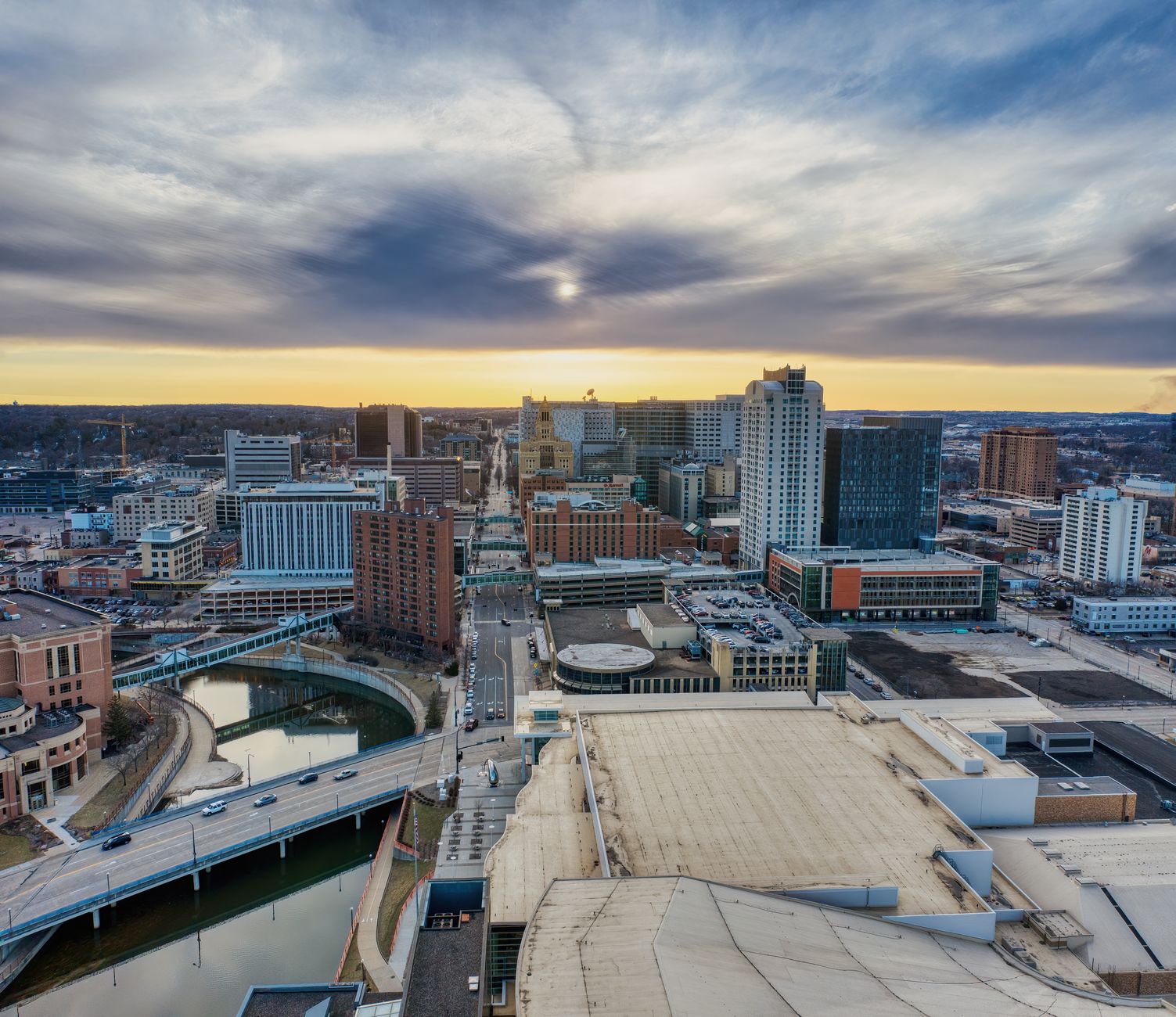 Photo: Tom Fisk / Pexels
- Attractions
- 12
- Audio
- 2 h 56 min
- Trip length
- 2-3 days
- Best season
- Late Spring (May)
Why Rochester
Built from cited sources · see the method · How we make our guides →
The river runs straight through downtown and drops 96 feet at High Falls — a working waterfall framed by old mill walls, where a daredevil named Sam Patch took his last jump on November 13, 1829. Walk a few blocks in any direction and the city's other obsessions surface. Kodak, Xerox, Bausch & Lomb, Western Union: every one of them started here. So did the first American statue honoring a Black man, standing in Highland Park, looking south.
Frederick Douglass lived in Rochester for 25 years. Susan B. Anthony was arrested at her Madison Street house in 1872 for the crime of voting, and that house is now the city's first National Historic Landmark. Civil rights and suffrage are not museum topics here — they are the addresses people give when describing their neighborhood. The two friends are buried at Mount Hope, a Victorian cemetery on a hill where visitors still leave 'I voted' stickers on Anthony's headstone every November.
What surprises most visitors is how much of the city is green. Four Olmsted parks ring the inner neighborhoods, the lilacs bloom for a festival every May, and the Genesee carries you north until it spills into Lake Ontario at Charlotte Beach. The Strong Museum of Play owns the world's deepest collection of video games and the original 1935 Monopoly set. The Eastman Museum holds the photographs. The city, somehow, holds all of it at once.
The Strong Museum of Play
One Manhattan Square holds the world's most comprehensive collection of video games, board games, and toys — including the first Monopoly set ever made. It is the only Smithsonian-affiliate museum dedicated entirely to play, and it takes that mandate seriously.A 96-Foot Waterfall Downtown
High Falls drops the Genesee River straight through the city center, the same cataract whose mills earned Rochester the nickname Flour City in the 1830s. In November 1829, daredevil Sam Patch jumped from a platform here and never resurfaced.Eastman, Anthony, Douglass
George Eastman built Kodak here and left his mansion as a photography museum. Susan B. Anthony was arrested on Madison Street in 1872 for voting; Frederick Douglass lived in Rochester for 25 years and is buried in Mount Hope Cemetery beside her.Olmsted's Flower City
Frederick Law Olmsted designed four parks for Rochester — Genesee Valley, Highland, Seneca, and Maplewood. Highland Park alone holds over 500 varieties of lilac, the reason 500,000 people show up each May for the Lilac Festival.
Neighborhoods
Where to wander, by quarter — each with its own rhythm.
East End
The cultural core, anchored by the Eastman Theatre and the Eastman School of Music. Evenings here mean Rochester Philharmonic concerts, jazz spilling out of the clubs along East Avenue during the June festival, and dinner at restaurants that stay open past 10 — which is not a given in this city. The architecture skews early-20th-century, when Kodak money was still building monuments to itself.Park Avenue
Tree-lined, walkable, and dense with independent shops and brunch spots between Alexander and Culver. The Park Ave Festival in August takes over twelve blocks. Stone houses from the 1890s sit shoulder to shoulder with bungalows, and the side streets lead quickly into Cobbs Hill Park, which has the best skyline view in the city.Corn Hill
Rochester's oldest residential neighborhood, just south of downtown across the river. The Italianate and Greek Revival houses from the 1830s and 1840s were saved from urban renewal by stubborn preservationists in the 1960s. The Corn Hill Arts Festival every July fills the brick streets with painters and musicians, and the Sam Patch packet boat still runs canal tours from the riverfront.South Wedge
A triangle pressed between the river and Mount Hope Avenue, named for its shape on the map. Once industrial, now the address for the city's best independent bookstore, a handful of breweries, and Boulder Coffee. Highland Park sits at its southern edge, which means the lilacs are a ten-minute walk from your beer.Neighborhood of the Arts (NOTA)
Centered on University Avenue, with the Memorial Art Gallery as its anchor and the Rochester Contemporary Art Center a few blocks away. The first Friday of every month, galleries stay open late and the whole stretch turns into one long opening. Studios occupy converted warehouses; the rents are still — for now — within reach of the artists who fill them.High Falls District
The industrial heart of 19th-century Rochester, perched directly above the 96-foot waterfall. Pont de Rennes pedestrian bridge gives you the full view of the gorge. Old mill buildings have been converted into apartments and offices, and the Genesee Brew House — the visitor center for the brewery — has a rooftop deck that puts you eye-level with the falls.Charlotte
Rochester's lake neighborhood, eight miles north of downtown where the Genesee meets Lake Ontario. Charlotte Beach has a long pier, a carousel from 1905, and summer crowds eating frozen custard at Abbott's. The lighthouse from 1822 still stands a few blocks inland — the lake retreated and left it landlocked, which feels like a Rochester kind of joke.Susan B. Anthony Neighborhood
The blocks around Madison Street west of downtown, named for the resident who was arrested at 17 Madison Street in 1872. The Anthony house is the obvious destination, but the surrounding Italianate row houses tell their own story about the abolitionist and suffragist circles that operated within a few minutes' walk of each other in the 1860s and 70s.
Plan your trip
Before you go
- Getting There
- Greater Rochester International Airport (ROC) sits four miles southwest of downtown with direct flights from most major U.S. hubs. Amtrak's Empire Service and Lake Shore Limited stop at Louise M. Slaughter Rochester Station on Central Avenue, connecting to NYC, Buffalo, and Chicago. Interstates 90 (the New York State Thruway), 390, and 490 converge on the city.
- Getting Around
- RTS (Regional Transit Service) runs all city buses from the Mortimer Street Transit Center; a single ride is $1 in 2026 and a 1-Day Freedom Pass is $3. Rochester has no subway or tram — the old subway tunnel under Broad Street closed in 1956 and is now a curiosity for urban explorers. The Genesee Riverway Trail gives cyclists a 24-mile route from Lake Ontario to Genesee Valley Park, and rideshare covers the rest.
- Climate & Best Time
- Lake Ontario keeps winters grey and snowy — January averages 18–32°F (-8 to 0°C) with roughly 100 inches of seasonal snow. Summers run warm and humid at 60–82°F (16–28°C), and autumn delivers reliable Finger Lakes foliage from late September into October. Aim for mid-May for the Lilac Festival or September for the best weather-to-crowd ratio.
- Language & Currency
- English, U.S. dollars. Tipping in 2026 holds at 18–20% for sit-down restaurants and $1–2 per drink at bars. Sales tax in Monroe County is 8%, added at the register rather than baked into the listed price.
Who lived here
-
Abolitionist, orator, publisher · 1818–1895
Frederick Douglass
Lived here 1847–1872
Douglass published the North Star from a Rochester office on Main Street and used the city as a final Underground Railroad stop before the Canadian border. He'd recognize Highland Park, where his 1899 monument was the first U.S. statue of an African-American man, and he'd probably have opinions about the schools that still bear his name. He's buried at Mount Hope, a short walk from Susan B. Anthony.
-
Suffragist · 1820–1906
Susan B. Anthony
Lived here 1866–1906
Anthony cast an illegal ballot at a Rochester polling place in November 1872 and was arrested two weeks later in the parlor of her Madison Street home. That parlor is now a National Historic Landmark and her grave at Mount Hope still gets covered in 'I Voted' stickers every election day. She lived to see the 19th Amendment's ratification by exactly zero years — she died fourteen years short.
-
Founder of Kodak · 1854–1932
George Eastman
Lived here from 1860s until his death
Eastman moved to Rochester as a boy and built Kodak into one of America's largest companies before democratizing photography with the slogan 'You press the button, we do the rest.' His 50-room East Avenue mansion now houses the world's oldest photography museum. He gave away the equivalent of two billion dollars in his lifetime and ended his own with a suicide note that read, 'My work is done. Why wait?'
-
Daredevil · 1799–1829
Sam Patch
Died here November 13, 1829
Patch made his name jumping off Niagara Falls and then announced a Friday the 13th leap from the 96-foot High Falls in downtown Rochester. He jumped. He did not surface. His body was found in the Genesee months later, frozen into the ice near Charlotte. The High Falls overlook still draws people who come to look down and think about him.
-
Collector, museum founder · 1897–1969
Margaret Woodbury Strong
Born and lived here
Strong inherited a buggy-whip fortune and spent decades buying 27,000 dolls along with toys, games, and ephemera that everyone else considered junk. She left the collection and the money to turn it into a museum. The Strong National Museum of Play now holds the World Video Game Hall of Fame and one of the first surviving Monopoly sets — vindication, fifty years on.
Where to Eat
Where locals actually book dinner — not the tourist menus.
Insider tips
Small things that change how the city treats you.
Time the Lilacs
Highland Park's 500+ lilac varieties peak for roughly ten days in mid-May, overlapping the Lilac Festival. Hit the arboretum at 8am to beat the crowds and catch the scent before the heat thins it.Order the Garbage Plate
Nick Tahou Hotel invented it in 1918: home fries, macaroni salad, two hots or a cheeseburger, mustard, onions, and meat hot sauce. Locals consider ordering anything else there a misstep.Skip Transit, Rent a Car
RTS buses are thin outside downtown and the Olmsted parks, Eastman Museum, and Mount Hope Cemetery are spread across the map. A car or rideshare budget will save half a day.Visit May Through October
Lake Ontario buffers Rochester into snowy, gray winters that can dump 100+ inches a season. Late spring through early fall gets you the festivals, the falls without ice, and patios on the Genesee.Free Museum Windows
The Memorial Art Gallery is free Thursdays 5–9pm. The Susan B. Anthony Museum and George Eastman gardens are cheap entries that punch well above their price.Shoot High Falls at Dusk
The Pont de Rennes pedestrian bridge gives you the 96-foot drop framed by the old Brown's Race millworks. Go an hour before sunset when the gorge walls warm up and the spray catches the light.
Gallery
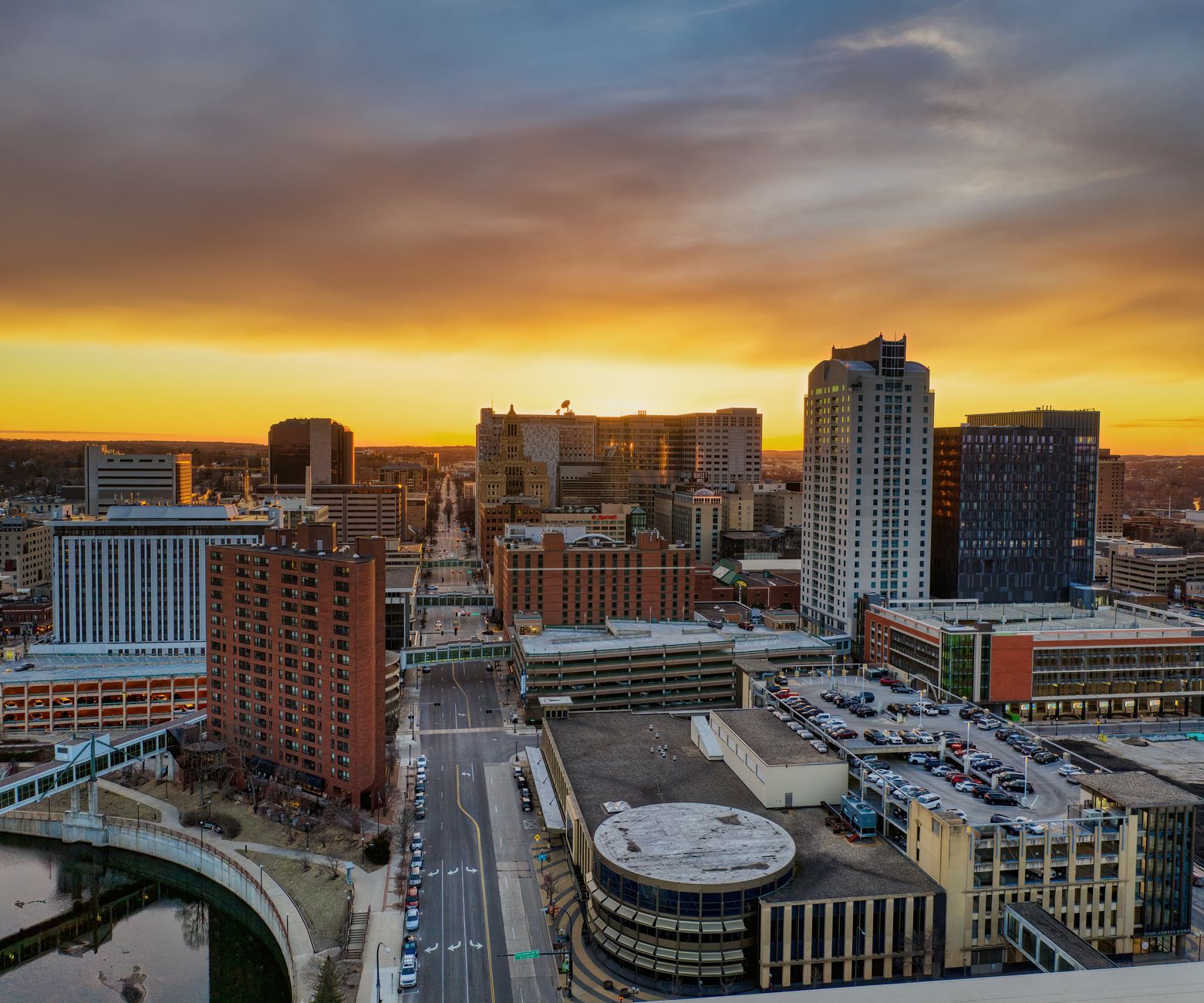
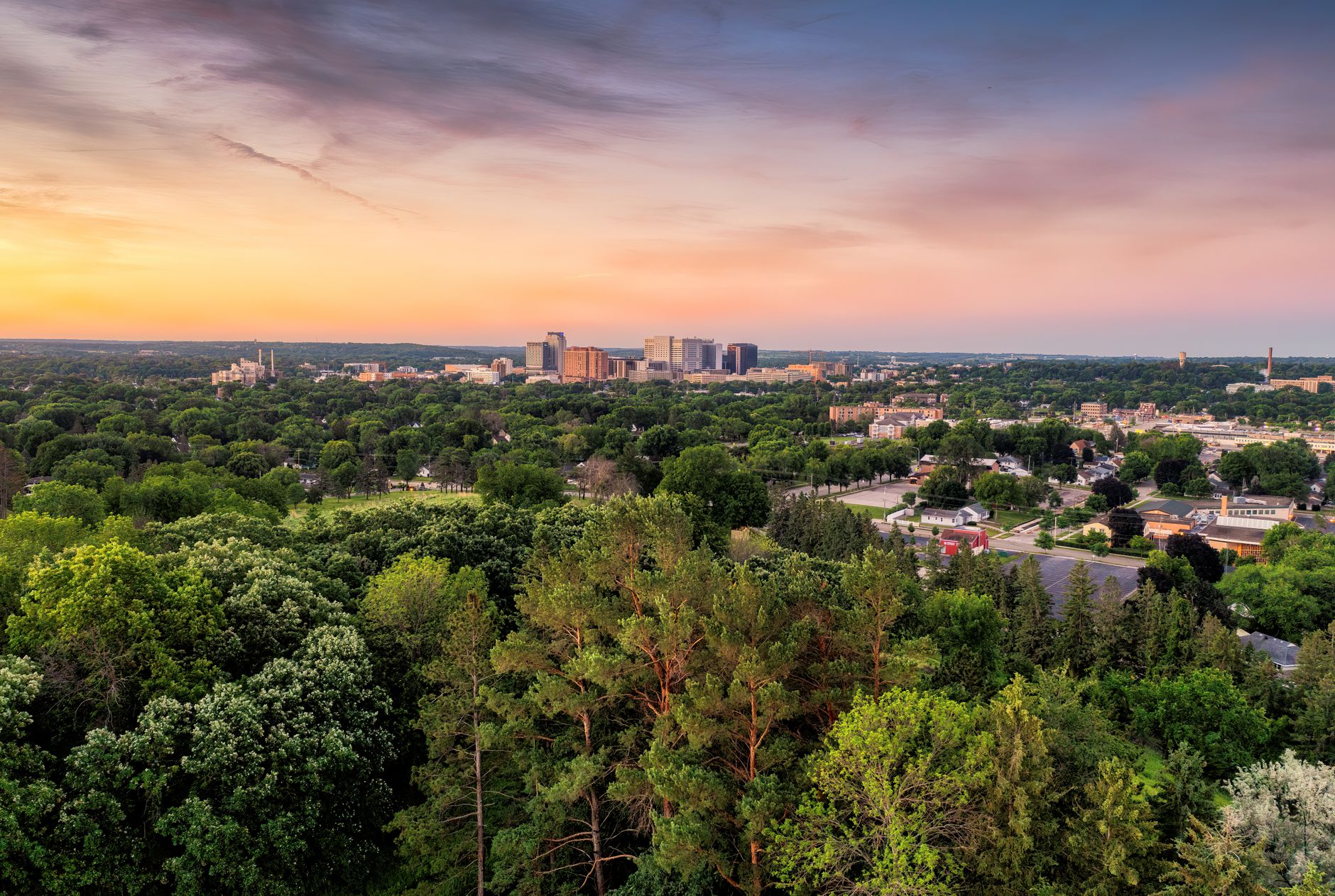
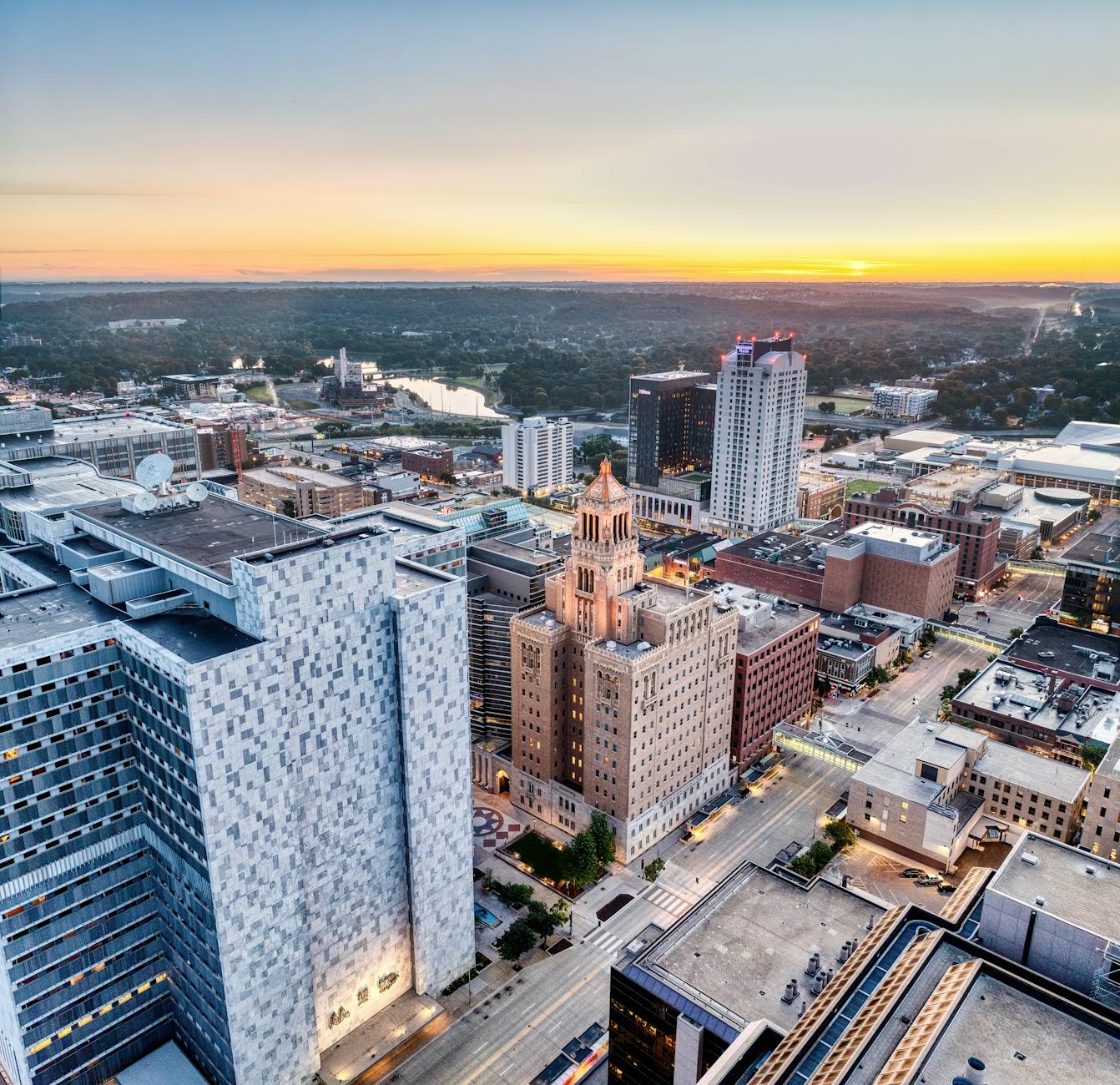
The city, as it actually looks.




Watch


Frequently asked
Is Rochester NY worth visiting?
Yes, if you care about American social history, photography, or the Olmsted parks system. Rochester is where Frederick Douglass published the North Star, where Susan B. Anthony was arrested for voting in 1872, and where George Eastman built Kodak. It's not a weekend-trip-from-anywhere city, but for a focused two or three days it delivers more than its size suggests.
How many days do you need in Rochester?
Two to three days covers the essentials. Day one for the Strong Museum of Play and downtown including High Falls. Day two for the George Eastman Museum, Susan B. Anthony House, and Mount Hope Cemetery. Add a third day if you want Highland Park, the Memorial Art Gallery, and a Finger Lakes side trip.
What is Rochester NY famous for?
Kodak, Xerox, and Bausch & Lomb were all founded here, which is why locals call it an innovation town. It's equally famous for civil rights history: Frederick Douglass lived here for 25 years and Susan B. Anthony for 40. The Strong National Museum of Play holds the world's largest collection of video games and toys.
Is Rochester NY safe for tourists?
The neighborhoods tourists actually visit — East End, Park Avenue, the South Wedge, Corn Hill, downtown by day — are fine. Like any mid-sized American city, the crescent of neighborhoods northwest and southwest of downtown has higher crime rates and little tourist reason to walk through. Stick to the main districts and you'll be no more exposed than in any comparable city.
What's the best time of year to visit Rochester?
Mid-May for the Lilac Festival, late September for the Fringe Festival and the foliage, or July for the Jazz Festival. Avoid January and February unless you specifically want lake-effect snow. October brings the apples and the Finger Lakes harvest within an hour's drive.
How far is Rochester from Niagara Falls?
About 80 miles, or roughly 90 minutes by car on I-90 west. Many visitors pair the two as a single trip, with Rochester as the cultural base and Niagara as a day excursion. The Erie Canal towns of Lockport and Medina sit roughly halfway.
What is a garbage plate?
Rochester's signature late-night meal: two starches (home fries and mac salad), two proteins (cheeseburgers, hots, eggs), onions, mustard, and a spiced meat sauce on top. Nick Tahou Hotel trademarked the name and has been serving it since 1918. Every other Rochester diner sells a variation under a different name.
Pick up where you left off
Saved and recently read places — kept on this device only.
Photo credits (9)
- Tom Fisk — Pexels License (https://www.pexels.com/license/) — Source: https://www.pexels.com/photo/12124483/
- Tom Fisk — Pexels License (https://www.pexels.com/license/) — Source: https://www.pexels.com/photo/12114690/
- Tom Fisk — Pexels License (https://www.pexels.com/license/) — Source: https://www.pexels.com/photo/12124485/
- Tom Fisk — Pexels License (https://www.pexels.com/license/) — Source: https://www.pexels.com/photo/13154542/
- Tom Fisk — Pexels License (https://www.pexels.com/license/) — Source: https://www.pexels.com/photo/11369674/
- Tom Fisk — Pexels License (https://www.pexels.com/license/) — Source: https://www.pexels.com/photo/28355409/
- Tom Fisk — Pexels License (https://www.pexels.com/license/) — Source: https://www.pexels.com/photo/12157725/
- Tom Fisk — Pexels License (https://www.pexels.com/license/) — Source: https://www.pexels.com/photo/11369661/
- Tom Fisk — Pexels License (https://www.pexels.com/license/) — Source: https://www.pexels.com/photo/11369663/
Photos may have been resized or cropped.