Richmond
United States of America Updated May 2026
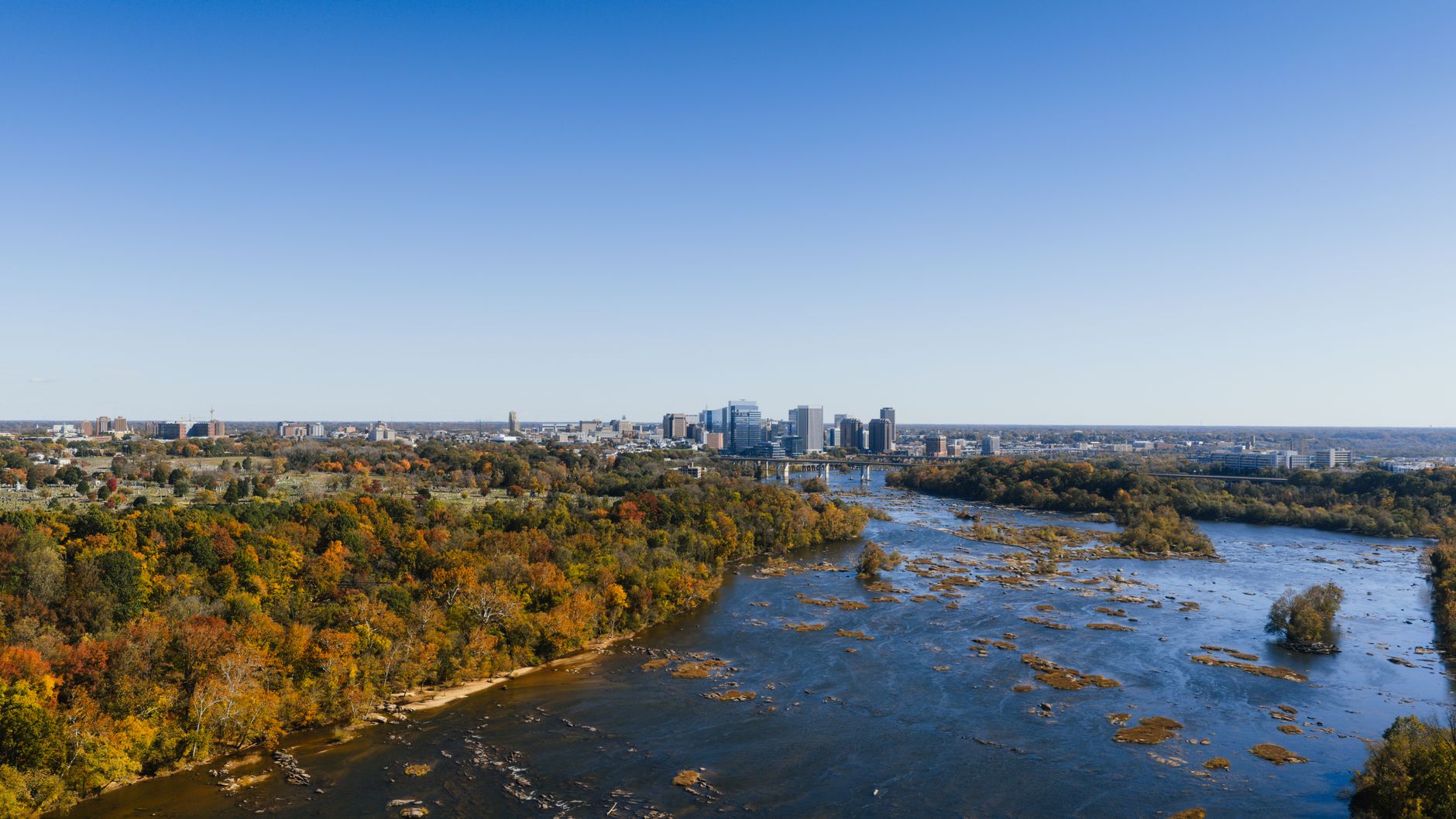
Whitewater slams through the center of Richmond, United States of America, hard enough to drown out traffic for a moment, and that tells you almost everything about the city. This is a state capital where Thomas Jefferson borrowed a Roman temple for the Capitol, where the Civil War still hangs in brick and bronze, and where people finish work by crossing a footbridge onto river rocks warm from the sun. Richmond feels older than many American cities and less polished than it likes to admit. Better that way.
 Photo: K / Pexels
- Attractions
- 15
- Trip length
- 2-3 days
- Best season
- Spring and fall (April-May and September-October)
Why Richmond
Built from cited sources · see the method · How we make our guides →
Richmond's story turns on sharp edges. Patrick Henry's 1775 speech at St. John's Church pushed Virginia toward revolution; between 1861 and 1865 the city served as the capital of the Confederacy; in Shockoe Bottom, more than 350,000 enslaved people were bought and sold in what was then the nation's second-busiest slave market. You don't visit Richmond to avoid American history's hardest chapters. You come because the city has stopped pretending they can be separated.
The James River keeps Richmond from becoming a museum piece. Belle Isle sits just below downtown, reached by a suspended pedestrian bridge under the Lee Bridge, and the air smells of wet stone, mud, and sunscreen on warm afternoons. A few blocks away, students from Virginia Commonwealth University spill through murals, coffee shops, cheap noodle spots, and bars, giving old tobacco warehouses and Victorian rowhouses a useful dose of impatience.
Richmond is good at the pleasures that matter on a trip. Free entry at the Virginia Museum of Fine Arts raises the standard for an afternoon indoors, Scott's Addition packs breweries and cideries into old industrial blocks, and Church Hill still rewards an early walk with long views over the river and the pointed white spire of Libby Hill Park. The city keeps changing shape, but it never quite smooths itself out. That's the point.
A capital built on argument
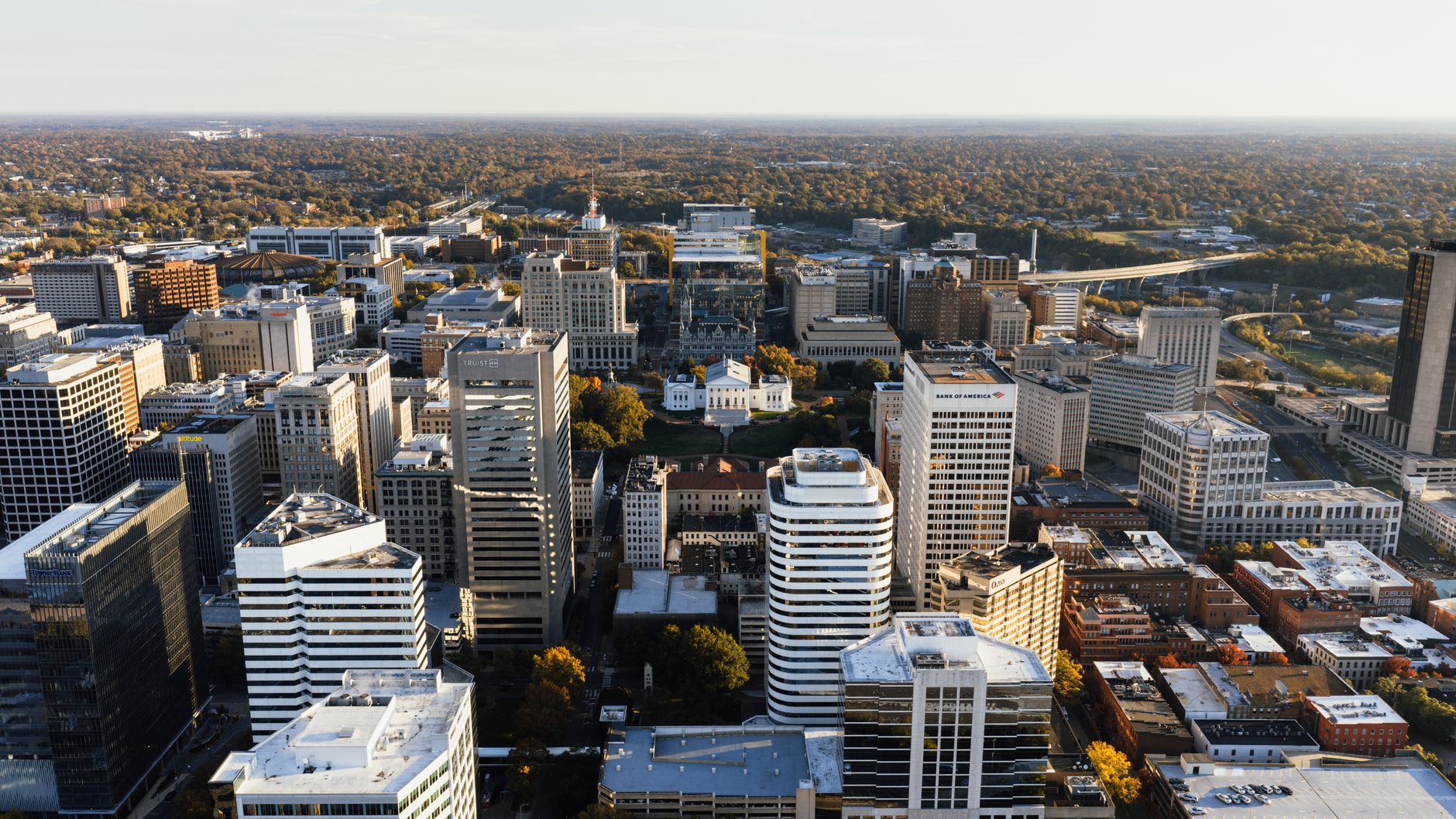
Richmond wears American history with the seams showing. Thomas Jefferson's Virginia State Capitol, built between 1785 and 1798 after the Maison Carree in Nimes, still stands over a city where Patrick Henry's 1775 speech at St. John's Church and the long afterlife of the Civil War remain part of the daily street map.Rapids through downtown
The James River doesn't skirt Richmond; it cuts straight through it. Belle Isle, the Canal Walk, and the James River Park System put Class III and IV whitewater within sight of office towers, so the city can smell like wet granite and sycamore leaves a few blocks from Broad Street.Beauty with a hard edge
Richmond's museum circuit refuses to stay polite. Free galleries at the Virginia Museum of Fine Arts sit alongside the American Civil War Museum, the Richmond Slave Trail, and Shockoe Bottom, where more than 350,000 enslaved people were bought and sold between 1830 and 1865.Breweries, murals, and long nights
Scott's Addition turned old warehouses into one of the South's liveliest drinking districts, and Jackson Ward gives the city its deeper cultural pulse. You can spend an afternoon with Maggie Walker's Richmond, then end the night with a lager, a mural tour, and music on Broad Street.
Neighborhoods
Where to wander, by quarter — each with its own rhythm.
Church Hill
Church Hill is where Richmond explains itself in one long climb. St. John's Church stands here, the site of Patrick Henry's 1775 speech, but the neighborhood is not frozen in patriot mythology; it has steep brick sidewalks, a weekend line outside Sub Rosa Bakery, and some of the best river views from Libby Hill Park and nearby overlooks. Come early, when the light catches the church steeples and the city looks almost tender.Shockoe Bottom
Shockoe Bottom carries some of Richmond's heaviest ground. Cobblestones, old warehouses, and 17th Street Market can make it look like a nightlife district with good bones, but this was also the second-busiest slave market in the United States between 1830 and 1865, with more than 350,000 people sold here according to preservation research. Walk the Richmond Slave Trail before you do anything else. The bars can wait.Jackson Ward
Jackson Ward has style, memory, and anger in the walls. By 1903, 2nd Street was being called "Black Wall Street," and the neighborhood became one of the country's great centers of Black business, music, and political life, anchored by figures such as Maggie L. Walker and John Mitchell Jr. Interstate construction tore through it in the 1950s, and that damage still matters, but so do the restored storefronts, murals, the Hippodrome, the Leigh Street Armory, and a plate of fried chicken at Mama J's.The Fan
The Fan is Richmond at its most lived-in: long rows of late-19th-century houses, shaded blocks, corner bars, and porches that look made for talking too long after dark. Main Street is the social spine, with places like Bamboo Cafe, Helen's, Sticky Rice, and Sidewalk Cafe keeping the nights loose and unpretentious. You come here to walk, not to tick sights off a list.Carytown
Carytown can feel a little pleased with itself, but that confidence has earned some ground. Nine blocks of old storefronts hold indie shops, the Byrd Theatre's 1928 movie-palace glow, New York Deli's oddball local loyalty, and enough restaurants to keep an evening moving without much planning. Go if you like neighborhoods that still believe errands should involve a cocktail or a slice of cake.Scott's Addition
Scott's Addition used to be warehouses and garages; now it is Richmond's easiest argument for day drinking before sunset. Breweries, cideries, a meadery, coffee roasters, and distilleries fill the old industrial grid, with names like The Veil, Ardent, Buskey, Black Heath, and Blanchard's doing much of the work. The area can feel a bit too self-aware on weekends. Then again, the beer is usually good enough to forgive it.Arts District
Broad Street's Arts District runs on theater marquees, gallery openings, and student energy from nearby VCU. First Fridays turns the corridor into a street party, but the district is just as useful in daylight, when you can move between Lift Coffee, small galleries, murals, and performance venues without the crowd. Richmond likes to present itself as historic. This stretch reminds you it is still making things.Manchester
Manchester sits south of the James with old factory bones and a skyline view that makes downtown look cleaner than it is. Loft conversions, newer restaurants, Brewer's Cafe, and quick river access give the area a younger, still-forming identity, and that unfinished quality is part of the appeal. Walk here near dusk. The bridges start to glow, and Richmond finally looks like a river city first and a capital second.
Plan your trip
Before you go
- Getting There
- Richmond International Airport (RIC) sits about 10 miles southeast of downtown in Sandston, with direct road access to I-64, I-295, and the Pocahontas Parkway. Amtrak serves both Main Street Station downtown and Staples Mill Road Station for trains to Washington, Philadelphia, and New York, while drivers usually arrive via I-95 north-south or I-64 east-west.
- Getting Around
- Richmond has no metro or tram in 2026, so local transport runs on the GRTC bus network and the Pulse bus rapid transit line, which links Willow Lawn, Scott's Addition, VCU, Downtown, Shockoe Bottom, and Rocketts Landing every 10 minutes. GRTC remains zero-fare in 2026, including airport routes 7A and 7B, and Capital Bikeshare plus the Canal Walk, Fan District streets, and James River trails make short hops easier than parking.
- Climate & Best Time
- Spring usually lands in the 60s to upper 70s F (16-26 C), summer climbs into the upper 80s F (around 31 C) with heavy humidity, autumn settles back into the low 60s to low 80s F (17-28 C), and winter often ranges from the low 30s to upper 40s F (0-9 C). April to June and September to October are the sweet spot in 2026 for lighter rain, easier walking weather, and fewer sweat-soaked afternoons than July and August.
- Language & Currency
- English is the working language everywhere, though you'll hear plenty of Spanish and see some bilingual service signage. Payments run on US dollars, cards are accepted almost everywhere in 2026, and American tipping customs still apply: about 18 to 22 percent in restaurants and 15 to 20 percent for taxis or rideshares.
- Safety
- The central visitor districts, especially the Fan, Carytown, Church Hill, Scott's Addition, Downtown, and Shockoe Slip, are generally easy to manage with normal city awareness. After dark, downtown can empty out fast, so rideshare often makes more sense than a long walk, and leaving bags visible in parked cars is asking for trouble.
A River City Built on Falls, Fire, and Argument
From Powhatan frontier town to a capital still wrestling with memory
- c. 1200
Village at the Falls
Most scholars date a major Indigenous settlement at the James River falls to this period, on the high ground later called Church Hill. The place mattered because the river changed character here: smooth tidewater gave way to churning rock, trade slowed, and power gathered.
- 1607
Parahunt Guards the Frontier
Parahunt, son of Chief Powhatan, ruled the village at the falls when English explorers first pushed upriver. He stood at a tense edge of Tsenacommacah, where Powhatan territory faced Monacan country upstream and every canoe route carried politics.
- 1609
Nonsuch Fails Fast
Captain John Smith's men tried to plant an English settlement at the falls and gave it the swaggering name "Nonsuch." Native resistance and bad positioning stripped the boast bare; the post did not last, which tells you how hard this ground was to hold.
- 1645
Fort Charles Rises
English authorities built Fort Charles at the falls to lock down the frontier after years of war. Timber walls and armed men changed the sound of the riverbank: less market crossing, more garrison vigilance.
- 1646
Treaty Ends Powhatan Power
The Treaty of 1646 forced Powhatan peoples to cede lands below the fall line to the English. A political world collapsed on paper, then in fields, footpaths, and river access. Richmond's later growth began with that dispossession.
- 1673
Byrd's Trading Post
William Byrd I secured land at the falls and built a fort and trading post, turning the site into a colonial hinge between tidewater wealth and the interior. Tobacco, furs, and land speculation soon did the talking.
Show the full timeline (26 moments)
- 1733
William Byrd II Names Richmond
William Byrd II laid out a town and named it Richmond after the view from Libby Hill reminded him of Richmond upon Thames. The comparison was elegant, almost vain, and pure Byrd: he saw a river bend and imagined a capital.
- 1742
Town Charter Granted
Virginia's General Assembly formally chartered Richmond as a town. Streets that had been a speculative grid became civic fact, with warehouses, taverns, and muddy commerce pressing down toward Shockoe Creek.
- 1775
Liberty in St. John's
Patrick Henry delivered his "Give me liberty, or give me death!" speech at St. John's Church on March 23, 1775. The room was small, wooden, and close with breath; the words outgrew it at once, pushing Virginia toward war.
- 1780
Capital Moves Inland
Virginia moved its capital from Williamsburg to Richmond during the Revolution, partly for safety and partly because power was shifting westward. The decision remade the town's future. Government arrived, and with it lawyers, clerks, ambition, and permanent political theater.
- 1781
Arnold Burns the Town
Benedict Arnold led about 900 British troops into Richmond in January 1781 and burned public buildings, supplies, and foundry stores. Smoke rolled over the young capital before it had even settled into the role; Richmond learned early that being important made it vulnerable.
- 1785
Jefferson Draws a Republic
Thomas Jefferson set the design for the Virginia State Capitol, modeled on the Maison Carree in Nimes, and construction began that year. He gave Richmond a Roman temple for a democratic experiment, which was either inspired or audacious. Probably both.
- 1800
Gabriel Plans Revolt
Gabriel, an enslaved blacksmith, organized a large uprising in the Richmond area, aiming to seize the city and demand freedom. Storms, betrayals, and militia patrols stopped it before the march began, but white Virginia never forgot how close fear had come to its doorstep.
- 1811
Poe Grows Up Here
Edgar Allan Poe spent much of his youth in Richmond, absorbing its brick houses, churchyards, and social coldness. The city shaped his eye for theatrical ruin long before it honored him with a museum; he knew its shadows when they were still ordinary streets.
- 1830s
Tredegar Forges an Arsenal
Tredegar Iron Works expanded in the 1830s into one of the nation's leading iron foundries. Heat, hammer blows, and the metallic stink of industry changed the riverfront, tying Richmond's prosperity ever tighter to machines, transport, and enslaved labor.
- 1848
Henry Box Brown Escapes
Henry "Box" Brown mailed himself from Richmond to Philadelphia in a wooden crate, a human parcel roughly the size of a coffin. His escape exposed the city's slave-trading world with brutal clarity: Richmond was not just a political capital in waiting, but a market in bodies.
- 1861
Confederate Capital Chosen
After Virginia seceded, the Confederacy moved its capital to Richmond, drawn by rail connections and Tredegar's industrial muscle. That choice turned the city into the South's nerve center and its target. Every road to Richmond became a road to war.
- 1863
Bread Riot Breaks Loose
On April 2, 1863, hungry women surged through downtown demanding food and then smashing shop windows when speeches failed. Hunger has its own sound. In Richmond, it was glass, shouting, and the crack in Confederate confidence becoming impossible to hide.
- 1865
Fire, Flight, and Freedom
Retreating Confederate forces evacuated Richmond on April 2, 1865, then set warehouses and bridges ablaze. Union troops entered the next day through smoke and heat, and on April 4 Abraham Lincoln walked the streets while newly freed Black Richmonders crowded around him. Few cities have watched one regime burn and another arrive in the span of forty-eight hours.
- 1871
Jackson Ward Takes Shape
Jackson Ward emerged after the war as a center of Black business, faith, and political life. Insurance offices, newspaper rooms, and storefronts filled the district until it earned the nickname "Black Wall Street" of the South, though the phrase can flatten what it really was: a neighborhood built against relentless pressure.
- 1888
Streetcars Rewrite the Map
Richmond's electric streetcar system proved that urban transit could pull a city outward with speed and regularity. Neighborhoods stretched, commuting changed, and the city's shape stopped belonging only to people who could walk or ride a horse.
- 1903
Maggie Walker Opens a Bank
Maggie L. Walker chartered St. Luke Penny Savings Bank in Jackson Ward, becoming the first African American woman in the United States to found and lead a bank. She did not traffic in symbolism alone. She built institutions on Leigh Street where Richmond's Black middle class could keep money, borrow money, and claim ground.
- 1910
Manchester Becomes Richmond
Richmond annexed the independent city of Manchester across the James River, binding both banks more tightly into one urban whole. Bridges mattered more than slogans here; the river still divided, but less absolutely than before.
- 1957
Church Hill Gets Saved
Historic Richmond Foundation launched the Pilot Block Project in Church Hill, restoring houses that many had written off as doomed. Preservation in Richmond has never been innocent, but this effort kept a remarkable streetscape from becoming another absence.
- 2007
Capitol Hill Reopened
A major renovation of the Virginia State Capitol and Capitol Square finished in the 2000s, with a visitor center tucked into the hill rather than sprawling over it. The old building kept its dignity. Richmond, for once, chose repair over grandstanding.
- 2020
Monument Avenue Turns
After nationwide protests over racial injustice, Richmond removed the Confederate statues that had long dominated Monument Avenue. Bronze certainties vanished under cranes and police lights. The city did not solve its history; it stopped pretending stone had settled the argument.
Who lived here
-
Planter and founder · 1674–1744
William Byrd II
Founded the city in 1737
William Byrd II laid out Richmond in 1737 after deciding the view from what became Libby Hill looked enough like Richmond upon Thames to borrow the name. He'd still recognize the city's habit of building ambition on a bluff above the river, though he'd probably be startled by how many of its defining stories now center the people his world tried to keep out of the record.
-
Orator and revolutionary politician · 1736–1799
Patrick Henry
Delivered his famous 1775 speech here
Patrick Henry turned St. John's Church into one of the loudest rooms in American history on March 23, 1775, when he delivered the "Give me liberty, or give me death!" speech. Walk into Church Hill now and the streets feel almost too calm for that sentence, which is part of the point: Richmond hides its detonations behind ordinary brick.
-
Statesman and architect · 1743–1826
Thomas Jefferson
Moved Virginia's capital here and designed the Virginia State Capitol
Jefferson moved Virginia's capital to Richmond in 1780, then gave the city a Capitol modeled on the Maison Carrée in Nîmes. He wanted Rome on a Virginia hill; what stands there now feels more complicated, a classical shell holding two and a half centuries of argument.
-
Writer · 1809–1849
Edgar Allan Poe
Spent much of his childhood here
Poe grew up in Richmond, and the city still suits him better than the souvenir version of his legend does. Church Hill gardens, narrow brick passages, and the damp hush near the river after dark make you understand why his imagination kept drifting toward beauty with a bruise on it.
-
Enslaved blacksmith and resistance leader · c. 1776–1800
Gabriel
Planned the 1800 Richmond slave uprising
Gabriel, an enslaved blacksmith from just outside the city, organized a large revolt aimed at Richmond in 1800 before storms and betrayal stopped it. His presence changes the city map: the Capitol is no longer just Jefferson's monument, but part of a landscape where freedom was argued from below as well as above.
-
Abolitionist and performer · 1815–1897
Henry "Box" Brown
Escaped slavery from Richmond in 1849
Henry Brown mailed himself out of Richmond in a wooden crate in 1849, turning the city's slave-trading machinery into the stage set for one of the boldest escapes in American history. Shockoe's warehouses and tracks look different once you know one man beat the system here by making himself cargo.
-
Banker and civil rights leader · 1864–1934
Maggie L. Walker
Lived and worked in Jackson Ward
Maggie L. Walker built power in Jackson Ward, chartering St. Luke Penny Savings Bank in 1903 and proving that Black wealth in Richmond was not a side note but a force. Stand near her house on East Leigh Street and the neighborhood stops reading like nostalgia; it starts sounding like strategy.
-
Tennis champion and activist · 1943–1993
Arthur Ashe
Born here
Arthur Ashe was born in Richmond under Jim Crow, learned discipline on segregated courts, and carried that composure onto the world stage. The boulevard named for him is a reminder that this city has produced grace without gentleness, which is a very Richmond combination.
Where to Eat
Where locals actually book dinner — not the tourist menus.
Insider tips
Small things that change how the city treats you.
Free Airport Ride
Take GRTC Route 7A or 7B from Richmond International Airport to the Downtown Transfer Station. Buses leave about every 15 minutes, and the whole GRTC system is still zero-fare.Stack Free Stops
VMFA has free general admission, and Maymont's 100-acre estate is free with a suggested donation. Pair them in one day and spend your money on dinner instead of tickets.Skip Car Rental
Downtown, the airport, and many central neighborhoods connect well enough by free GRTC buses that a rental car often feels like dead weight. Add rideshare only for late-night returns from Scott's Addition or farther-out gardens and battlefields.Respect The River
The James isn't decoration: Richmond is the only U.S. city with Class III and IV rapids running through downtown. If you're not going with an outfitter, stick to marked trails, bridges, and calmer access points around Belle Isle and the park system.Start In Shockoe
Begin with the Richmond Slave Trail and Shockoe Bottom before you tour Confederate sites. The city reads differently once you understand that more than 350,000 enslaved people were bought and sold here.Eat In Jackson
For a meal with real local context, head to Jackson Ward rather than defaulting to chain-heavy downtown blocks. Lillie Pearl, Southern Kitchen, and Urban Hang Suite sit inside a neighborhood that helped earn the name "Black Wall Street."
Gallery
The city, as it actually looks.



Watch

Frequently asked
Is Richmond worth visiting?
Yes, especially if you like cities with friction instead of polish. Richmond gives you Class III river rapids in the middle of downtown, a state capitol designed by Thomas Jefferson, and some of the country's hardest conversations about slavery and the Civil War in a compact area.
How many days in Richmond?
Two to three days works well for most visitors. That gives you time for the Capitol, Shockoe Bottom, Jackson Ward, one major museum, and a half-day on the James River or at Maymont without turning the trip into a checklist.
How do I get from Richmond airport to downtown?
The cheapest answer is free: GRTC Routes 7A and 7B run from Richmond International Airport to the Downtown Transfer Station about every 15 minutes. Rideshare is faster door-to-door, but the bus makes a rental car easy to skip at the start of the trip.
Do you need a car in Richmond?
No, not if you're staying near downtown, The Fan, Museum District, or Scott's Addition. Free GRTC buses cover a lot, and central neighborhoods are manageable in short hops; a car only starts paying off if you're chasing outlying battlefields, suburban breweries, or day trips.
Is Richmond safe for tourists?
Usually yes in the areas most visitors use, but common city habits still matter. Keep your wits at night, don't leave gear visible in a parked car, and treat the James River with respect because moving water is a bigger hazard here than most first-time visitors expect.
Is Richmond expensive to visit?
No, Richmond is easier on the wallet than Washington or many East Coast capitals. Free GRTC transit, free VMFA admission, and free entry to Maymont help keep daily costs down, so you can spend more on food or a guided river outing.
What area should I stay in Richmond?
The Fan and the Museum District are the easiest base for first-timers who want walkable streets, quick museum access, and solid food. Downtown works if you care most about the Capitol, Canal Walk, and Civil War sites, while Scott's Addition suits travelers who plan to spend evenings at breweries and cideries.
What is Richmond known for?
Richmond is known for being layered and a little unresolved. It's the capital of Virginia, the former capital of the Confederacy, home to major Black history sites in Shockoe Bottom and Jackson Ward, and one of the few American cities where whitewater runs past office towers.
Pick up where you left off
Saved and recently read places — kept on this device only.
Photo credits (7)
- K — Pexels License (https://www.pexels.com/license/) — Source: https://www.pexels.com/photo/34586195/
- K — Pexels License (https://www.pexels.com/license/) — Source: https://www.pexels.com/photo/34586179/
- K — Pexels License (https://www.pexels.com/license/) — Source: https://www.pexels.com/photo/34586187/
- K — Pexels License (https://www.pexels.com/license/) — Source: https://www.pexels.com/photo/34586197/
- K — Pexels License (https://www.pexels.com/license/) — Source: https://www.pexels.com/photo/34586176/
- K — Pexels License (https://www.pexels.com/license/) — Source: https://www.pexels.com/photo/34586173/
- K — Pexels License (https://www.pexels.com/license/) — Source: https://www.pexels.com/photo/34586199/
Photos may have been resized or cropped.