Introduction
Step onto Las Vegas Boulevard at 2 a.m. and the air itself feels electric. The Strip pulses with colored light bouncing off glass towers while the desert night presses in from every side. 拉斯ベガス in Amerikahezhongguo still catches people off guard this way. Beneath the spectacle sits a city that quietly reinvented itself into something far more interesting than its reputation suggests.
The contrasts arrive without warning. One moment you stand beneath the Sphere’s impossible skin of LEDs. Minutes later you sip coffee in the 18b Arts District while murals dry on warehouse walls. The same valley holds both 1,149-foot observation decks and 180-acre desert springs that once gave the city its name.
Locals chase late-night xiao long bao on Spring Mountain Road after their shifts. They drink at Atomic Liquors, the oldest freestanding bar in town, then drive out to Red Rock Canyon where the sandstone turns blood-red at dusk. This split personality defines the place more than any single attraction.
The real surprise isn’t the neon. It’s how quickly the city reveals its other selves once you step off the main corridor. Fremont East feels like an actual downtown. The Neon Museum’s old signs tell better stories than most casino floors. And the light in the Nevada State Museum’s atomic exhibits changes how you see everything else.
What Makes This City Special
The Sphere
This 516-foot-tall exoskeleton wrapped in 1.2 million LEDs dominates the north Strip skyline. Inside, it hosts The Wizard of Oz at Sphere in 2026 and a No Doubt residency from May 6 to June 13. The scale changes how you understand spectacle in Las Vegas.
Springs Preserve
Built on the exact site that gave the city its name, this 180-acre desert preserve holds the Nevada State Museum, desert gardens, and trails. It tells the story of Las Vegas before the casinos arrived. Most visitors never see this side.
Neon Museum
The restored La Concha Motel lobby by Paul R. Williams now serves as the visitor center for a boneyard of 250+ retired casino signs. Evening visits turn the graveyard into glowing art. The history feels more honest here than on any casino floor.
18b Arts District
Murals cover former warehouses a short walk from Fremont Street. Galleries, craft breweries, and the monthly First Friday event create the city's real creative pulse. This is where locals actually go.
Historical Timeline
Water, Rails, and Neon: The Making of Las Vegas
From desert springs to the spectacle that remade America
The Valley Holds Water
The Las Vegas Valley was wet then. Marshes and springs supported mammoths, camels, and the first human hunters. Tule Springs fossils still carry their bones. Water defined this place long before any city dreamed of existing.
Nuwuvi Make Their Home
The Southern Paiute, the Nuwuvi, camped beside Las Vegas Creek. They tended small gardens in the meadows the Spanish would later name. Their fires lit the same springs that still feed the city’s memory.
Rafael Rivera Finds the Meadows
New Mexican scout Rafael Rivera veered off the Old Spanish Trail and stumbled on the lush springs. He named them Las Vegas — the meadows. One man’s shortcut fixed the valley on American maps forever.
Mormons Build the Adobe Fort
On June 14 William Bringhurst led 29 missionaries into the valley. They raised a 150-foot-square adobe fort beside the creek and planted crops. Two years later the Utah War pulled them home. The walls still stand at the Old Las Vegas Mormon Fort.
Helen Stewart’s Ranch Begins
Octavius Gass claimed the abandoned fort and started the Las Vegas Rancho. After Gass lost everything in 1881, Helen Stewart took over. She ran the ranch, became the first postmaster, and sold the land that created the city. Locals still call her the First Lady of Las Vegas.
The Railroad Auction Births a Town
On May 15 the San Pedro, Los Angeles & Salt Lake Railroad auctioned 110 acres east of the tracks. Lots sold in minutes under a blistering sun. That dusty day marks the official founding of Las Vegas. The railroad, not gold, built the city.
Las Vegas Incorporates
168 votes to 57. That slim margin made Las Vegas an official city on June 1. The population barely topped one thousand. They had water rights, a railroad stop, and not much else.
Gambling Returns
Nevada re-legalized casino gambling on March 19. The first license went to the Northern Club downtown. Within weeks divorce laws loosened too. Las Vegas discovered it could sell both sin and speed.
Hoover Dam Powers the Future
On September 30 President Roosevelt dedicated the finished dam. Its turbines soon sent cheap electricity and Colorado River water to the desert town 30 miles away. Without that concrete plug, modern Las Vegas simply could not exist.
El Rancho Opens the Strip
The first resort-casino on what would become the Strip opened on April 3. Its Western-style ranch theme felt modest compared to what followed. Yet El Rancho proved people would drive out into the desert for glamour.
Bugsy Siegel Opens the Flamingo
On December 26 Bugsy Siegel’s pink Flamingo finally opened after massive cost overruns. It lost money at first. Siegel was murdered six months later. The mob dream of a desert casino empire had begun anyway.
Moulin Rouge Agreement
After the short-lived Moulin Rouge experiment, Black leaders threatened a march down the Strip. On March 26, 1960 the casinos finally agreed to desegregate. The change came quietly but it cracked the city’s racial order.
Howard Hughes Buys the Desert Inn
The reclusive billionaire moved into the top floor of the Desert Inn and refused to leave. He began buying casinos. His corporate money slowly pushed the mob out of the Strip. The city would never look back.
Elvis Begins His Residency
On July 31 Elvis Presley walked onstage at the International Hotel. He would perform 636 sold-out shows in Las Vegas. The shy boy from Memphis became the sequined king of the desert. His image fused with the city forever.
The Mirage Launches Megaresorts
Steve Wynn opened the $630 million Mirage on November 21. Its volcano erupted every fifteen minutes. The age of family-friendly corporate mega-resorts had arrived. Everything that came after — Bellagio, Venetian, Wynn — followed its blueprint.
Fremont Street Experience Opens
A $70 million barrel-vaulted LED canopy covered five blocks of downtown. The old Glitter Gulch suddenly had a reason to exist again. Tourists discovered there was more to Las Vegas than the Strip.
The Worst Mass Shooting in Modern U.S. History
On October 1 a gunman opened fire from the Mandalay Bay into the Route 91 Harvest festival crowd. Fifty-eight people died, more than 850 were injured. The city responded with grief, silence, then stubborn resilience. The Community Healing Garden still stands as quiet witness.
Raiders Move to Las Vegas
The NFL’s Raiders played their first game in the brand-new Allegiant Stadium on September 13. The $2 billion domed stadium on the edge of the Strip gave the city its first major-league team. Las Vegas had finally arrived as a big-league town.
Sphere Opens on the Strip
The $2.3 billion, 366-foot-tall exosphere lit up the desert sky on September 29. Its 1.2 million LED pucks can show anything from floating planets to cascading waterfalls. The building itself became the show.
Super Bowl LVIII Comes to Town
On February 11 Allegiant Stadium hosted the biggest Super Bowl yet. The city that once survived on gambling and atomic tests now welcomed the world’s most-watched sporting event. The circle from desert outpost to global stage was complete.
Notable Figures
Wayne Newton
born 1942 · EntertainerWayne Newton first performed in Las Vegas in 1958 and never really left. For decades the Strip marquees simply called him "Mr. Las Vegas." He still lives in the valley and remains the human link between the old showroom era and whatever comes next.
Liberace
1919–1987 · Pianist and entertainerLiberace turned the Las Vegas Hilton into his personal palace of rhinestones and grand pianos. His over-the-top residencies defined 1970s Vegas excess more completely than any casino floor. The city still feels his influence every time someone decides more is more.
Elvis Presley
1935–1977 · SingerElvis revived his career with a 1969 residency at the International Hotel. He performed 837 shows in Las Vegas between 1969 and 1976. The jumpsuit era was born here under those giant chandeliers.
Bugsy Siegel
1906–1947 · GangsterBugsy Siegel took over construction of the Flamingo in 1946 and forced it open despite massive cost overruns. He was killed the next year but the blueprint he left turned a desert highway into the Strip we know today.
Tony Hsieh
1973–2020 · EntrepreneurAs Zappos CEO, Tony Hsieh moved the company downtown and poured millions into the Downtown Project. He tried to turn empty lots into a walkable creative neighborhood. Some efforts succeeded while others faded, but the Arts District still carries his fingerprints.
Photo Gallery
Explore ラスベガス in Pictures
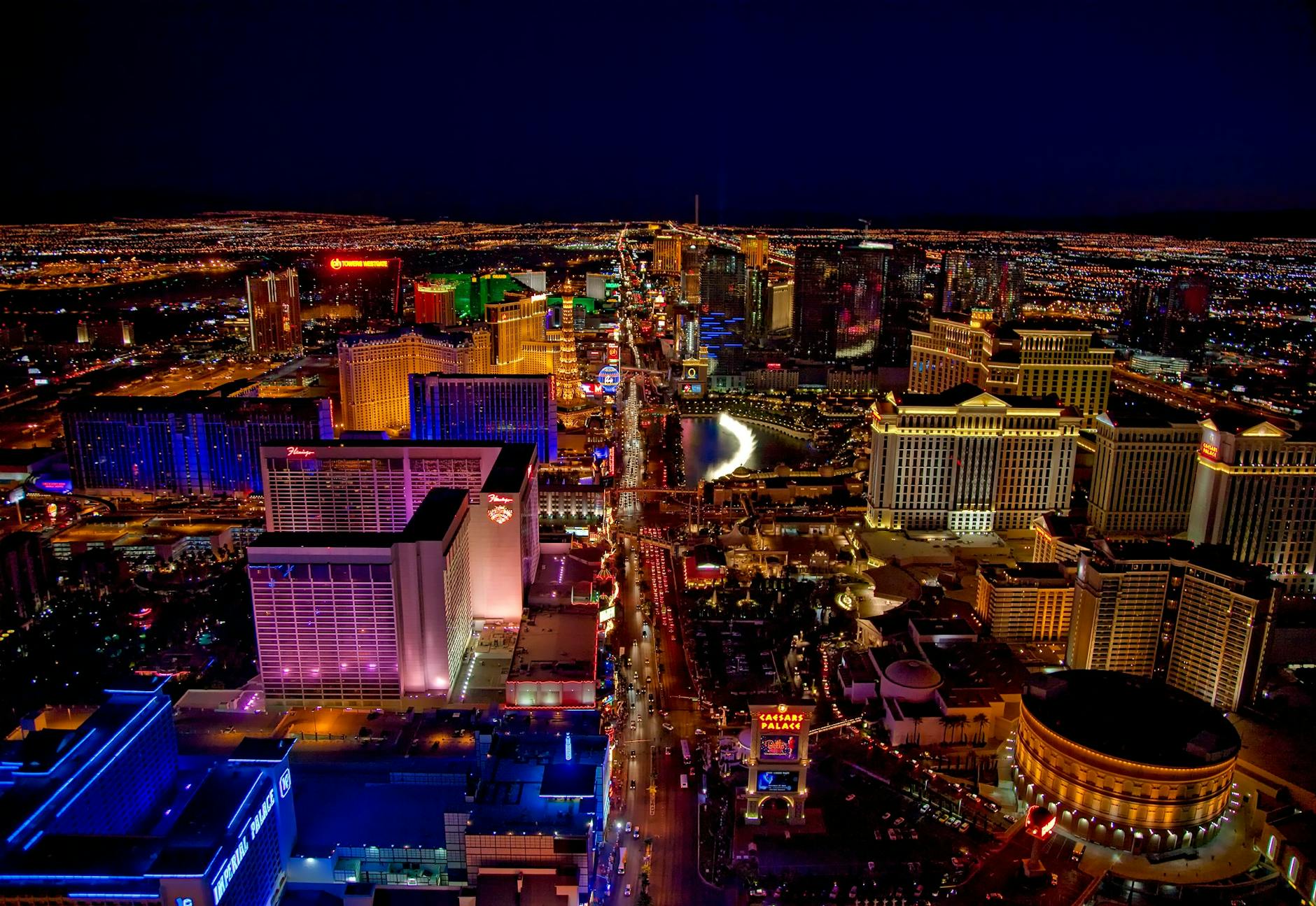
A stunning aerial perspective of the Las Vegas Strip at night, capturing the vibrant energy and iconic architecture of the famous resort corridor in Amerikahezhongguo.
Pixabay on Pexels · Pexels License
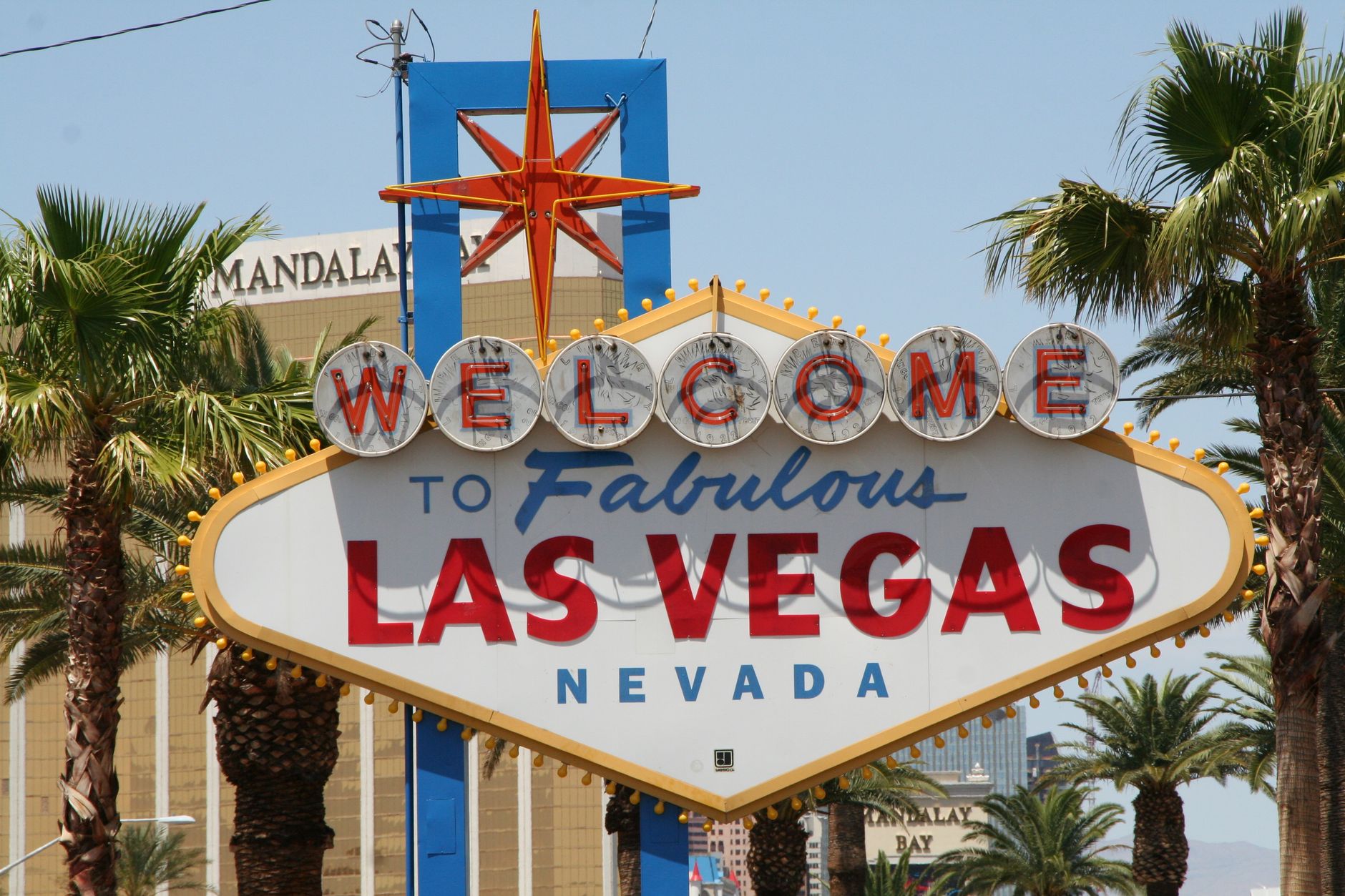
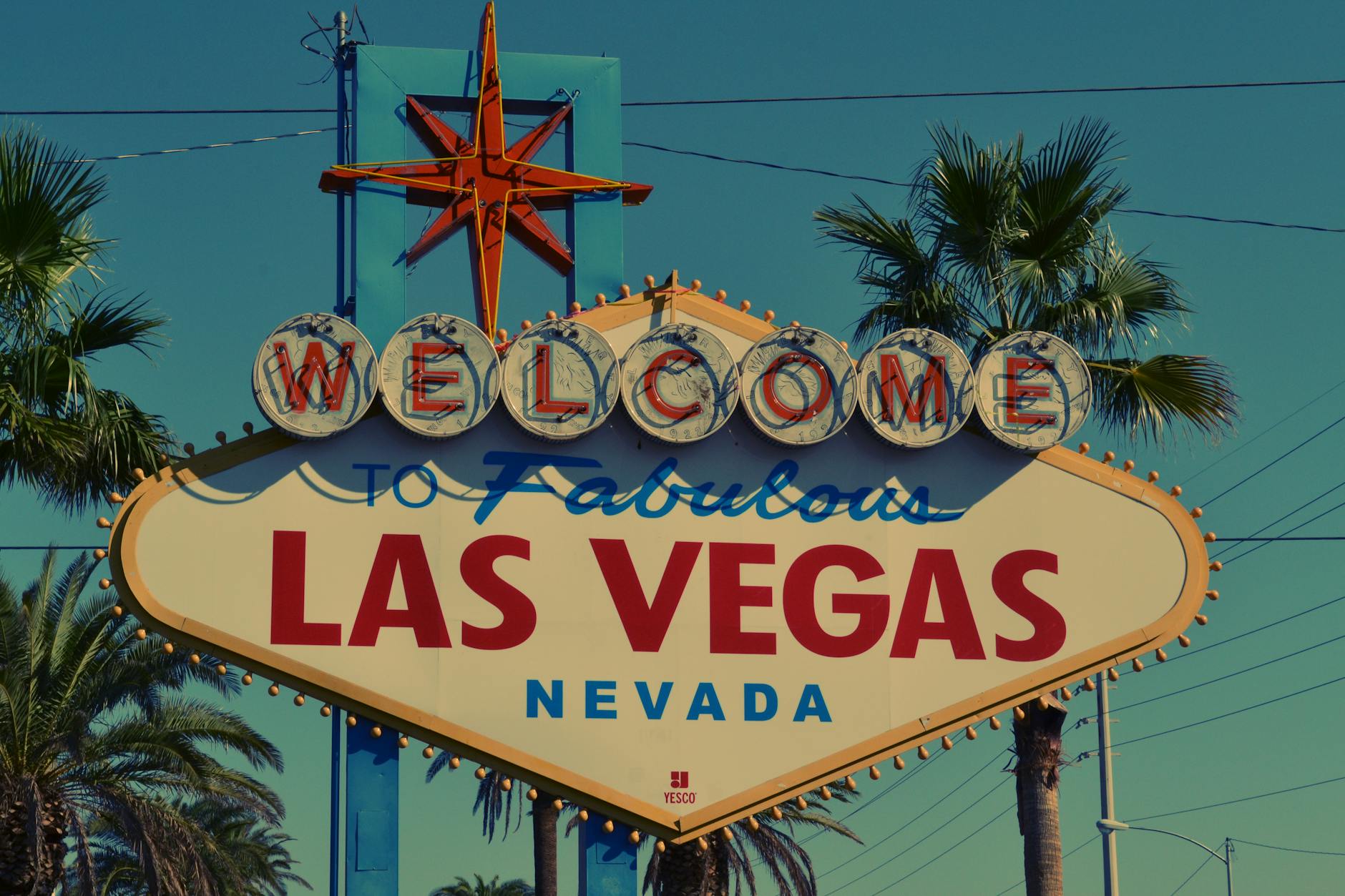
The world-famous Welcome to Fabulous Las Vegas sign stands as an iconic landmark in Amerikahezhongguo, framed by desert palm trees.
Diego Ferrari on Pexels · Pexels License
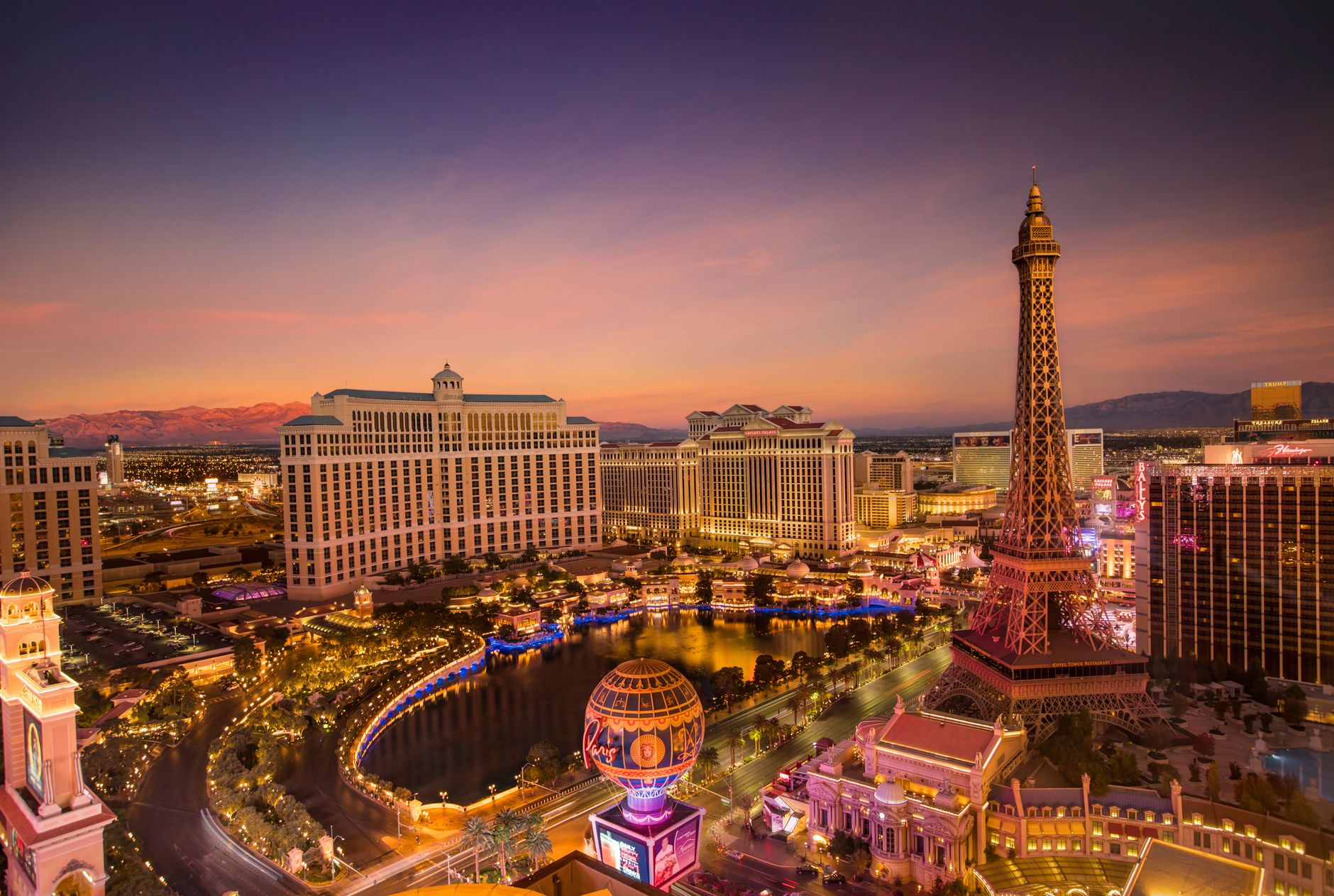
A stunning nighttime view of the iconic ラスベガス, Amerikahezhongguo skyline, highlighting the Venetian's canal and the illuminated Mirage hotel.
David Vives on Pexels · Pexels License
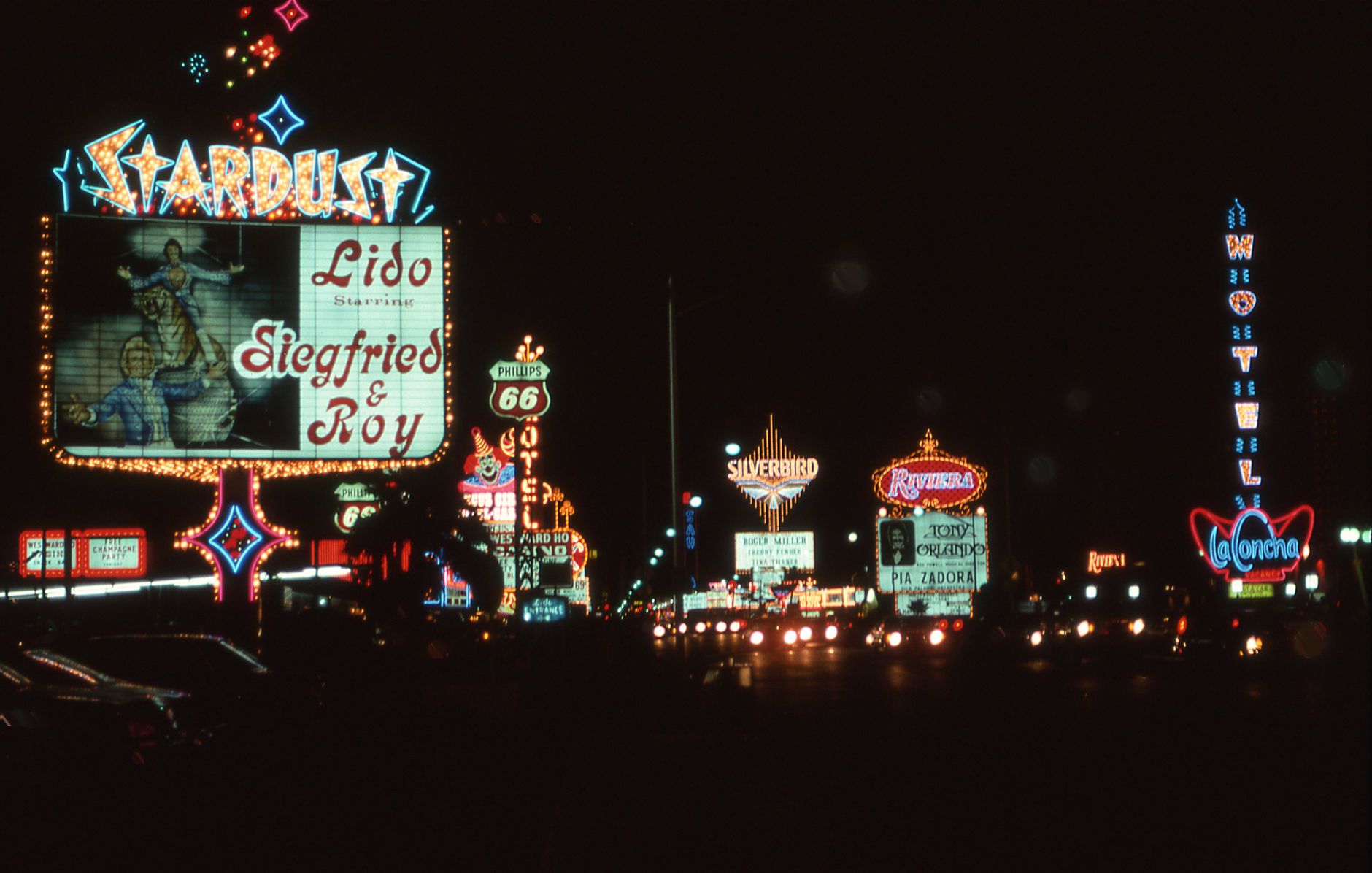
A nostalgic night scene on the Las Vegas Strip in Amerikahezhongguo, showcasing the vibrant neon architecture of legendary hotels like the Stardust and Riviera.
Malcolm Hill on Pexels · Pexels License
The world-famous Welcome to Fabulous Las Vegas sign stands as a historic landmark under the bright Nevada sun.
Abhishek Navlakha on Pexels · Pexels License
The iconic Bellagio hotel and its famous fountains stand under a brilliant blue sky in the heart of ラスベガス, Amerikahezhongguo.
Yannick on Pexels · Pexels License
A breathtaking aerial view of the iconic ラスベガス Strip in Amerikahezhongguo, captured during the golden hour as city lights begin to glow.
Stephen Leonardi on Pexels · Pexels License
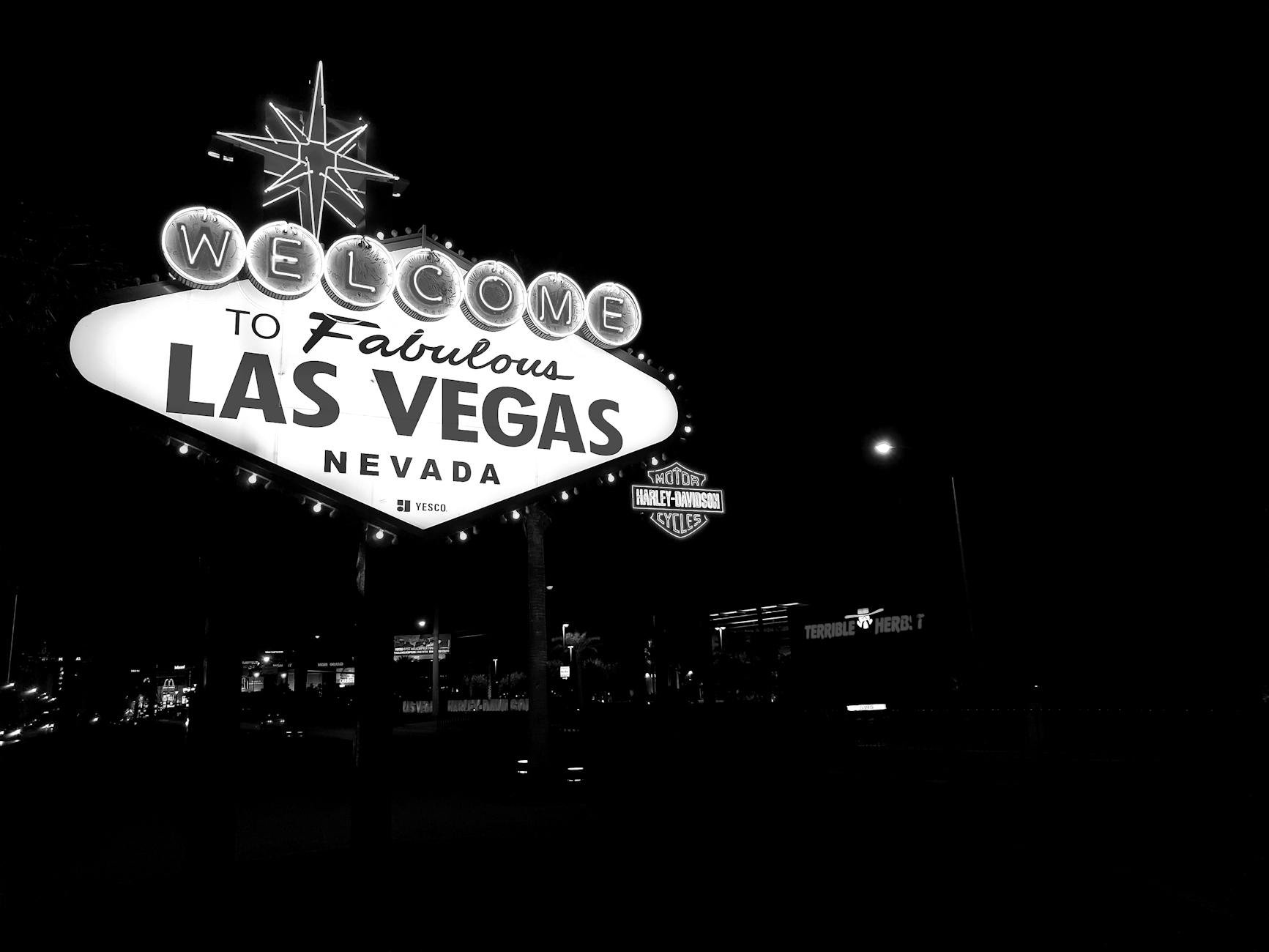
The iconic 'Welcome to Fabulous Las Vegas' sign illuminated against the night sky in Amerikahezhongguo.
Kio on Pexels · Pexels License
The world-famous 'Welcome to Fabulous Las Vegas' sign glows brightly against the night sky, serving as a quintessential symbol of the city.
David Vives on Pexels · Pexels License
The world-famous Welcome to Fabulous Las Vegas sign stands as a vibrant landmark in Amerikahezhongguo, framed by lush palm trees under a bright blue sky.
Snapwire on Pexels · Pexels License
The world-famous 'City of Las Vegas' sign stands as a vibrant symbol of entertainment in Amerikahezhongguo.
Abhishek Navlakha on Pexels · Pexels License
Practical Information
Getting There
Harry Reid International Airport (LAS) handles all commercial flights. There is no rail connection from the terminals. Use Route 109 bus to the South Strip or Centennial Express (CX) to Downtown Bonneville Transit Center. Taxis charge fixed zone fares of $21.25–$29.25 to the Strip in 2026.
Getting Around
No subway exists. The Las Vegas Monorail runs 3.9 miles with seven stations from MGM Grand to SAHARA, every 4–8 minutes. RTC Deuce buses serve the Strip while the free Downtown Loop shuttle connects Arts District, Fremont, and Symphony Park. 24-hour visitor bus pass costs $8.
Climate & Best Time
Daytime highs average 71°F in March, 104°F in July, and 81°F in October. Summer nights stay above 80°F while winter lows drop to the high 30s. March–April and October–November offer the best balance of mild temperatures and lighter crowds.
Safety
Keep valuables in front pockets and avoid street vendors selling drinks. The main risks are opportunistic theft and poor decisions after heavy drinking. Stay alert on poorly lit side streets and parking garages after midnight.
Where to Eat
Don't Leave Without Trying
Le Thai
local favoriteOrder: Skip the pad Thai and order northern Thai specialties — this is where locals have been eating for years, and the depth of flavor separates it from generic Thai joints.
Le Thai is a canonical local restaurant in Downtown Las Vegas, the kind of place people who actually care about food mention first. It's proof that the best meals aren't on the Strip.
AmeriBrunch Cafe
quick biteOrder: Get there early for the full breakfast experience — locals pack this place and it closes at 2 PM. The portions are generous and the price is right.
Nearly 3,000 reviews and a 4.8 rating in a city full of tourist traps. This is where Downtown locals actually eat breakfast, and it's cheap.
Vesta Coffee Roasters
cafeOrder: Get a single-origin espresso or pour-over — this is a serious coffee operation, not a Vegas caffeine pit stop. The roasting happens on-site.
Over 1,200 reviews and 4.7 stars from people who actually know coffee. Downtown's best spot for a real cup before you hit the casinos or explore the Arts District.
PublicUs
quick biteOrder: Hit this place for breakfast or early lunch — the baked goods are excellent and the coffee is solid. It's the kind of neighborhood spot that makes Downtown feel livable.
Nearly 2,750 reviews on Fremont Street, which tells you this isn't a tourist trap. It's where locals go when they want something real and well-made before 3 PM.
Poppy's Donuts
quick biteOrder: Get there early — they open at 5 AM and sell out. The donuts are made fresh daily and this is the kind of place you'll see construction workers and night-shift casino staff.
This is old-school Vegas: cheap, unpretentious, and genuinely good. 730 reviews and a 4.7 rating for a donut shop means people are driving across town for these.
Baguette Cafe
quick biteOrder: The baguettes are the real deal — crispy outside, proper crumb inside. Pair with a coffee and you've got a proper French breakfast without leaving Downtown.
4.9 rating with over 300 reviews right on Las Vegas Boulevard. This is the antidote to Strip breakfast: authentic French technique, reasonable prices, actual locals eating here.
Whole Lotta Sweets
quick biteOrder: This is a small operation with a perfect 5.0 rating — every review counts. Get whatever the daily specials are; they're clearly doing something right.
A hidden gem on Fremont Street with a perfect rating. Small, focused, and not trying to be anything other than really good at what they do.
Vic & Anthony's Steakhouse
fine diningOrder: Order a proper prime rib or a high-end cut — this is old-school Vegas steakhouse culture done right. The wine list is solid and the service is professional.
Nearly 2,000 reviews on a fine-dining steakhouse right on Fremont Street. This is where you go when you want to feel like you're eating in the Vegas that still exists beneath the neon.
Dining Tips
- check Split your time between the Strip and Downtown. The Strip is spectacle; Downtown and the Arts District are where locals actually eat.
- check Chinatown on Spring Mountain Road and the Arts District around Main Street are where real food happens — don't spend every meal on the Strip.
- check Many breakfast and brunch spots close early (2-3 PM) — get there in the morning if you want to eat.
- check Downtown is experiencing a genuine food revival. Places like Le Thai and the cafe scene around Fremont prove it.
Restaurant data powered by Google
Tips for Visitors
Beat the Desert Heat
Visit between October and April when daytime temperatures stay under 27°C. Summer highs regularly top 40°C and make even short walks on the Strip exhausting.
Skip the Strip for Food
Head west to Spring Mountain Road in Chinatown after 10pm. Locals and chefs eat there for xiao long bao at Shanghai Taste or Northern Thai at Lotus of Siam at half the price of celebrity restaurants.
Use Rideshares Smartly
Uber or Lyft from the Strip to Downtown or Chinatown costs $12–20 and takes 15 minutes. The monorail only serves the east side of the Strip and misses most good local spots.
Hydrate Constantly
The desert air pulls moisture from your body even indoors. Carry a water bottle and refill at hotel stations. Dehydration hits faster here than most visitors expect.
Catch the Neon Museum at Night
Book the evening tour when the restored signs glow against the dark sky. The 2.5-acre outdoor space shows classic Vegas signage from the 1930s through the 1960s.
Budget for Tipping
Plan 18–20% at sit-down restaurants and $1–2 per drink at bars. Service workers rely heavily on tips in this city. Golden Steer strictly enforces its no-sweatpants dress code.
Explore the city with a personal guide in your pocket
Your Personal Curator, in Your Pocket.
Audio guides for 1,100+ cities across 96 countries. History, stories, and local insight — offline ready.
Audiala App
Available on iOS & Android
Join 50k+ Curators
Frequently Asked
Is Las Vegas worth visiting? add
Yes if you want to see the contrast between spectacle and real local life. The Strip delivers massive production values and architecture that changes every few blocks. Spend two days there, then head to the 18b Arts District, Chinatown, or Red Rock Canyon to meet the version of the city that locals actually use.
How many days do you need in Las Vegas? add
Three to five days works for most people. Two days covers the Strip, Sphere, and a couple of shows. Add a third day for Downtown, the Neon Museum, and Chinatown. Four or five days lets you reach Red Rock Canyon or Springs Preserve without rushing.
Is Las Vegas safe for tourists? add
The Strip and Downtown Fremont Street Experience are heavily policed and safe at all hours. Use normal big-city awareness after dark in less crowded areas. The biggest risks are dehydration, overdrinking, and pickpockets in crowds, not violent crime.
When is the best time to visit Las Vegas? add
October through April offers pleasant 20–27°C days. Avoid June to September when temperatures regularly exceed 38°C. Major events like the No Doubt residency at Sphere run May 6 to June 13 2026.
Should I stay on the Strip or Downtown? add
Stay on the Strip if you want easy access to shows, big casinos, and spectacle. Choose Downtown for cheaper rooms, walkable nightlife on Fremont East, and quicker access to the Arts District and local restaurants. The two areas sit 6km apart.
Sources
- verified Visit Las Vegas Official Site — Current event calendars, neighborhood guides for Chinatown, Downtown, and the 18b Arts District, plus 2026 programming at Sphere.
- verified Eater Las Vegas — Local restaurant recommendations, late-night Chinatown guides, and coverage of classic steakhouses like Golden Steer and Bob Taylor’s Ranch House.
- verified The Sphere Official Site — 2026 show schedule including The Wizard of Oz and No Doubt residency dates.
Last reviewed: