Plan and listen to Riddick Stadium with Audiala.
Audio guide in your pocket, itinerary in your browser. Built for the way you actually visit.
Introduction
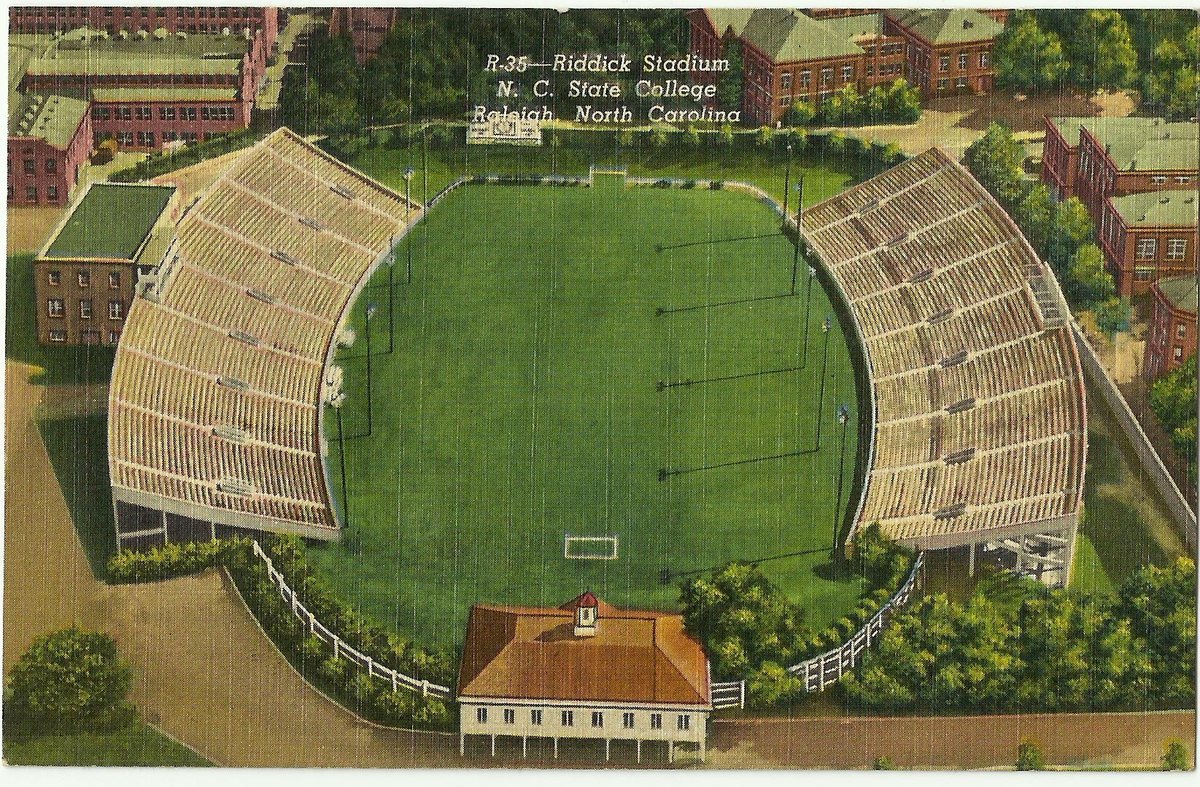
Riddick Stadium, once the energetic heart of North Carolina State University (NC State) athletics, holds a special place in Raleigh’s historical and cultural landscape. Established in 1907 and named after Dr. Wallace Carl Riddick—NC State’s first football coach, influential dean, and university president—the stadium was more than a sports venue; it was a symbol of collegiate pride and community engagement. Though the stadium was gradually dismantled by 2013, its legacy endures through commemorative markers, campus buildings like Riddick Hall and SAS Hall, and the lasting traditions of Wolfpack athletics. This guide provides a detailed look at Riddick Stadium’s history, practical visiting information, and tips for exploring nearby Raleigh landmarks and university sites. For further visuals and in-depth historical context, consult Living New Deal, Legeros Hidden Raleigh, and the NC State University website.

Early Years and Expansion (1907–1938)
Riddick Stadium was constructed in 1907, named for Dr. Wallace Carl Riddick, a foundational figure in NC State’s development. The venue started with wooden bleachers and a basic field, quickly becoming the epicenter of Wolfpack football and university events (legeros.com). During the 1930s, New Deal programs funded significant expansions that increased capacity to about 16,000, added concrete stands, and built a new field house (Living New Deal).
Stadium’s Role in Athletics and Campus Life (1930s–1965)
For decades, Riddick Stadium was a vibrant hub for NC State football, baseball, track, and campus-wide festivities. It hosted homecoming parades, pep rallies, concerts, and events like “Zoo Day,” fostering a strong sense of campus community and Wolfpack spirit.
Decline, Demolition, and Redevelopment (1960s–2013)
By the 1960s, the stadium had become outdated, prompting the construction of Carter-Finley Stadium. Wolfpack football moved there in 1966, and Riddick’s structures were gradually demolished. The final remnants, including the field house, were removed by 2013 (Goodnight Raleigh). Today, the site is home to SAS Hall and green spaces, with Riddick Hall honoring the legacy of the stadium.
Visitor Information
Visiting the Former Stadium Site
- Location: The former Riddick Stadium site sits at the intersection of Stinson Drive and Pullen Road, behind the dormitories along Pullen Road on the NC State campus (NC State Campus Map).
- Current Use: The area now hosts SAS Hall (Department of Mathematics) and Riddick Hall (an administrative building). Commemorative markers and displays highlight the site’s history (NC Architects).
- Hours: The campus is open for public exploration from dawn to dusk. SAS Hall is accessible weekdays, typically 8:00 AM–6:00 PM.
- Tickets: No tickets are needed to visit the site or surrounding landmarks.
Accessibility
The NC State campus is wheelchair-accessible, with ramps, elevators, and paved walkways. Visitor parking is available at nearby decks such as Coliseum and Dan Allen Parking Decks, with fees ranging from $2–$3 per hour (NC State Parking). Public transit via GoRaleigh buses and pedestrian-friendly routes offer easy access.
Guided Tours and Campus Exploration
Although there are no dedicated Riddick Stadium tours, NC State offers campus tours that include historical highlights. Self-guided walking tours and online brochures are available through the Visitor Center. For archival research or special exhibits, the NC State University Libraries Special Collections can be consulted.
Nearby Attractions
- Memorial Belltower: An iconic campus symbol, just a short walk from SAS Hall.
- Pullen Park: A historic city park nearby with walking trails, a carousel, and picnic areas (Pullen Park Info).
- Carter-Finley Stadium: The current home of NC State football, with tours available on game days (NC State Athletics).
- Downtown Raleigh Museums: Including the North Carolina Museum of History and the Museum of Natural Sciences (Things to Do in Raleigh).
Dining and Amenities
- On-Campus: Talley Student Union offers a variety of dining options.
- Hillsborough Street: Adjacent to campus, this area features popular cafes and restaurants like Irregardless Café and Press Coffee & Crepes (Best Raleigh Coffee Shops).
Frequently Asked Questions (FAQ)
Q: Can I visit Riddick Stadium today?
A: The stadium itself has been demolished, but the site is accessible on the NC State campus near SAS Hall.
Q: Are there any memorials or plaques at the site?
A: Yes, commemorative markers and displays provide context about the stadium’s history.
Q: What are the visiting hours?
A: The campus and outdoor areas are open from dawn to dusk. SAS Hall is open weekdays, 8:00 AM–6:00 PM.
Q: Do I need tickets to visit?
A: No tickets are required for visiting the site or nearby campus landmarks.
Q: Is the area accessible for visitors with mobility needs?
A: Yes, the site and campus are wheelchair accessible.
Q: What other attractions are nearby?
A: Memorial Belltower, Pullen Park, Carter-Finley Stadium, and downtown Raleigh museums.
Discover More
Plan your visit to NC State and Raleigh’s historic university sites today! Download the Audiala app for guided walking tours, subscribe to our newsletter for travel tips, and follow us on social media for the latest updates. For further details, visit NC State Facilities, Living New Deal, and Visit Raleigh.
Listen to the full story in the app
The whole Riddick Stadium,
told well.
Audio guides for 1,100+ cities across 96 countries. History, stories, and local insight — offline ready.
Verified, and shown.
Researched and written by the Audiala editorial team from historical records, architectural archives, and local expertise.
Researched from Wikidata, Wikipedia & official sources · fact-checked · How we make our guides →