
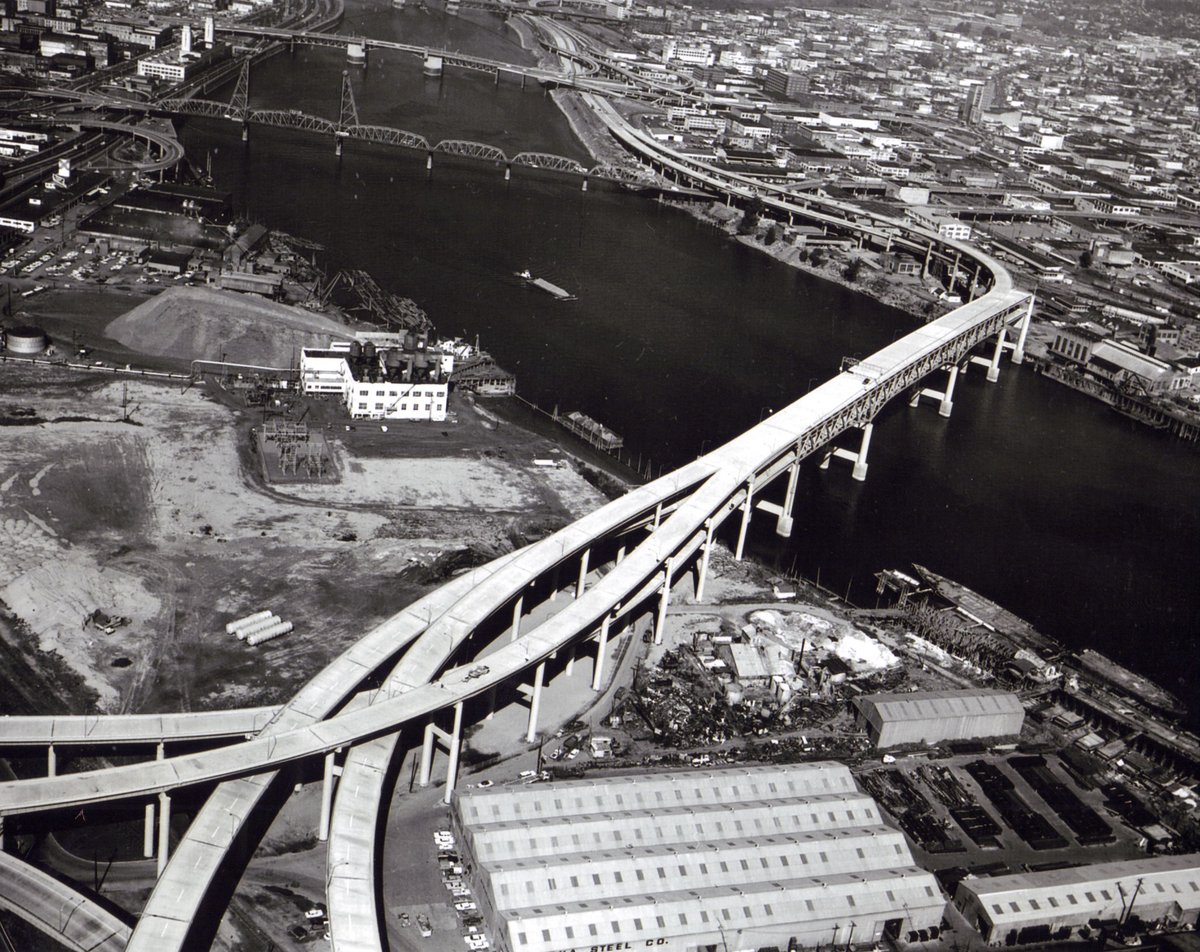
What the Morrison Bridge Is
The Morrison Bridge is a central Portland crossing of the Willamette River, connecting Morrison Street and I-5 on the east to Alder and Washington Streets on the west. It is a major link between Southeast Portland and downtown, and one of the city’s busiest bridges. The current six-lane bridge handles about 50,000 vehicles daily and provides critical access to Interstates 5 and 84. Its 90-foot-wide deck, mid-century design, and central location make it both transportation infrastructure and a civic landmark (Wikipedia; Multnomah County; Oregon Hikers Field Guide).
The bridge accommodates pedestrians, cyclists, vehicles, and river navigation. Its minimalist design, dynamic LED lighting, and role in Portland’s public art and community life contribute to its place in the city’s identity as “Bridge City” (Travel Portland).
History
Early Origins and the First Morrison Bridge (1887–1905)
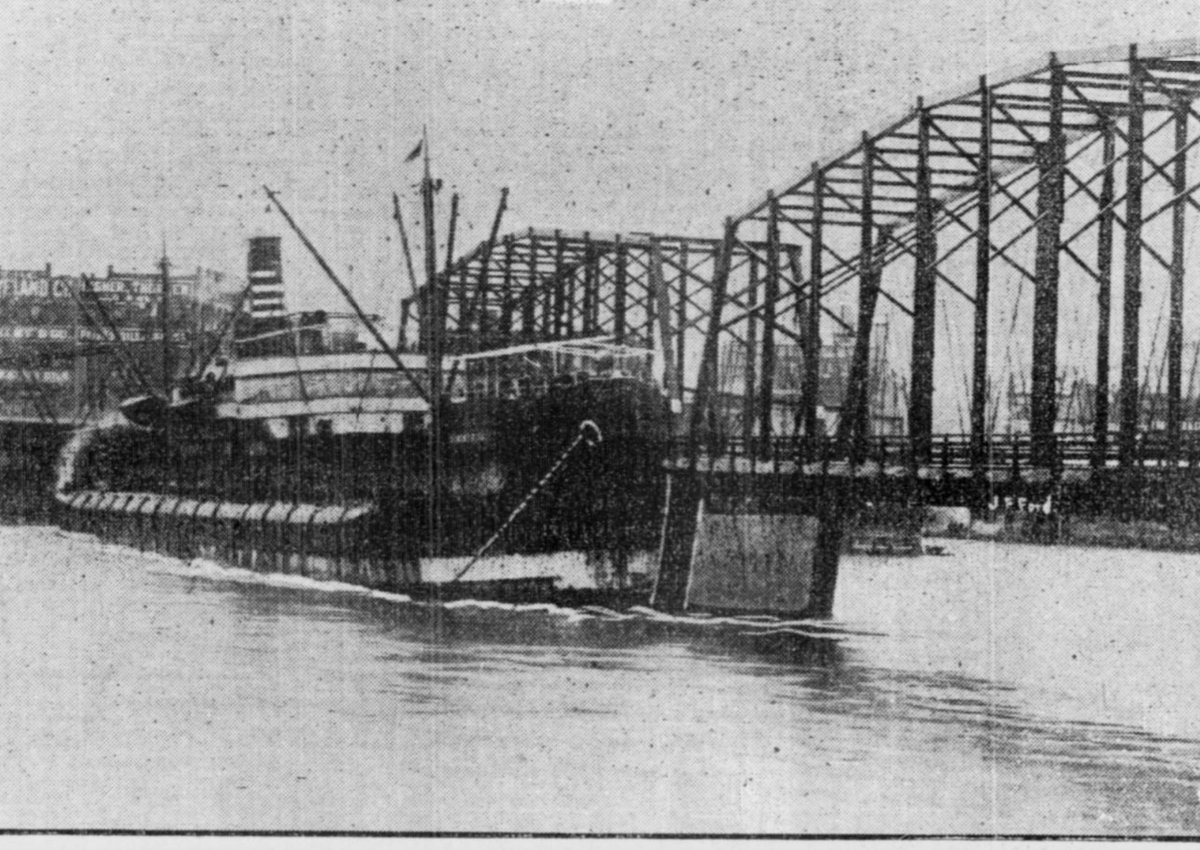
Dedicated in 1887, the original Morrison Bridge was a wooden truss swing-span and Portland’s first bridge across the Willamette River. At 1,200 feet, it was the longest bridge west of the Mississippi. It replaced ferry crossings and helped spur development on the city’s east side (Wikipedia; Oregon History Project).
The bridge was named for Morrison Street, which was named for Scottish immigrant John L. Morrison. Initially a toll bridge, it became toll-free in 1895. It soon became important to Portland’s economic and social life, supporting the shift from horse-drawn vehicles to electric streetcars and the city’s early growth (PDX Today).
The Second Morrison Bridge (1905–1958)
A sturdier crossing was needed by 1905 as traffic increased. The second Morrison Bridge was also a swing-span, built with improved materials and able to accommodate streetcars. However, it was not designed for the automobile era, which arrived in force in the 1920s and 1930s. Its limitations under growing vehicle loads led to the need for a modern replacement (PDX Today; Wikipedia).
The Present Morrison Bridge: Construction and Engineering (1958–Present)
Completed in 1958 at a cost of $12.9 million, the current bridge is a double-leaf bascule, or drawbridge, designed for six lanes of vehicle traffic and continuing river navigation. Its main span was constructed with steel and reinforced concrete piers. Engineering firms Sverdrup & Parcel and others contributed to the project, with construction led by American Bridge Division and U.S. Steel (Library of Congress; HistoricBridges.org).
The main span is 284 feet, and the bridge’s total length is approximately 760 meters. Ramps connecting it to Interstates 5 and 84 were added in 1961, strengthening its role in Portland’s transportation network.
The double-leaf bascule mechanism uses counterweights, massive gears, and electric motors to raise the central span for river traffic. It is described as Oregon’s largest mechanical device (Multnomah County Morrison Bridge; Oregon Essential).
What to See
Views, Architecture, and Engineering
Walking or cycling across the bridge offers panoramic views of the Portland skyline, the Willamette River, and neighboring bridges. The east and west riverbanks, Tom McCall Waterfront Park, and the Eastbank Esplanade are vantage points for photography; sunset and evening lighting displays are also popular photo opportunities (Busy Tourist).
The bridge’s functional, minimalist design reflects mid-20th-century modernist values. Exposed steelwork and clean lines form a distinctive silhouette, especially at night (Light the Bridges). Its steel and reinforced-concrete construction, high-strength steel, welding techniques, and superstructure anchored deep into the riverbed reflect mid-century engineering. The design balances road traffic and river navigation, while coordinated operations aim to limit disruption for both.
The bridge also has interpretive signage about its history and engineering. Routine maintenance, including inspections, lubrication, and painting, helps preserve its function and longevity (Multnomah County Bridge Maintenance).
Lighting and Civic Life
The Willamette Light Brigade’s dynamic LED system turns the bridge into a platform for public art and community expression. Custom displays celebrate local causes and events, and public participation in lighting themes reflects Portland’s diversity and values (Light the Bridges; Willamette Week).
During the annual Portland Winter Light Festival and other events, the lighting becomes a riverfront focal point. The bridge’s displays enliven the waterfront and support civic dialogue (Light the Bridges; Willamette Week).
Portland Troll Bridge and Events
Beneath the bridge, the “Portland Troll Bridge” has a rotating collection of troll dolls, an unofficial art installation. The bridge is also a highlight of the annual Providence Bridge Pedal and other citywide events (Busy Tourist; Oregon Essential).
Practical Visiting Information
Hours, Admission, and Tours
The Morrison Bridge is open 24 hours a day, seven days a week, and is free to access. No tickets are required. Pedestrians, cyclists, and vehicles can use the bridge at all times, though occasional event closures can occur, including for the Providence Bridge Pedal (Oregon Essential).
There are no regular guided tours of the bridge itself, but it is often included in city walking and cycling tours.
Accessibility and Getting There
The bridge has ADA-compliant sidewalks, ramps, and crossings. A dedicated pedestrian pathway was added in 2009, and protected bike lanes provide a route for cyclists. The bridge is wheelchair accessible and suitable for families. Nearby public transit routes, including streetcar and bus lines, serve the area (Travel Portland; Travel Portland: Getting Around).
For drivers, the bridge is one of Portland’s busiest crossings (Oregon Essential).
Upgrades and Preservation
The Morrison Bridge has been listed on the National Register of Historic Places since 2012. As Portland’s first bridge across the Willamette and a vital link throughout the city’s history, it represents the city’s development and its relationship with the river (Wikipedia; PDX Today).
Multnomah County upgrades include adding titanium rebar, removing weight restrictions, and repairing bascule-span motors. This work is scheduled through 2026. Seismic retrofitting and electrical-system modernization are also intended to improve resilience, reliability, and operational safety (Multnomah County; Bridge Projects; Multnomah County Seismic Upgrades).
Tips
- Visit during the day for city views or in the evening for LED displays; evening light displays are especially notable during lighting events.
- For photographs, try the riverbanks, Tom McCall Waterfront Park, or the Eastbank Esplanade, including after sunset.
- Use the dedicated pathways and stay alert for cyclists and traffic.
- Signage is clear, and access is convenient from both ends.
- Prepare for rain in fall and winter.
- Renting a bike is one way to explore the city’s bridges and trails; public transit also provides access (Travel Portland).
Nearby Places
- Tom McCall Waterfront Park Adjacent to the bridge on the west side, with space for walks and festivals (Busy Tourist).
- Eastbank Esplanade A scenic multi-use path on the east side (Oregon Essential).
- OMSI One of the nearby attractions.
- Downtown Portland Shopping, dining, and cultural sites, including downtown shopping and dining districts (Busy Tourist).
The bridge’s connectivity supports activity and revitalization in neighboring districts and along the waterfront. Named for John L. Morrison, it symbolizes Portland’s growth and enduring connection with the Willamette River (Multnomah County; Light the Bridges).
FAQ
Q: What are the visiting hours for Morrison Bridge?
A: It is open 24/7, with no restrictions except occasional event closures.
Q: Is there a fee to visit or cross the bridge?
A: No. Access is free.
Q: Are guided tours available?
A: There are no regular tours of the bridge itself, but local tours often feature it.
Q: Is the bridge wheelchair accessible?
A: Yes. The pedestrian path is ADA-compliant.
Q: When is the best time for photos?
A: Evenings, especially during lighting events.