
1. Historical Background and Cultural Significance
Indigenous Heritage and Early Land Use
Forest Park’s human history dates back at least 10,000 years, with Chinookan-speaking peoples and other Indigenous groups thriving in the area, relying on its resources for fishing, trade, and ceremony (Forest Park Conservancy), (Portland.com). Their stewardship practices shaped the land’s ecology long before European arrival.
European Settlement and Development
Following the Lewis & Clark expedition in 1806, the Donation Land Claim Act of 1850 led to the displacement of Native peoples and the exploitation of the hills north of Portland for logging, farming, mining, and oil drilling (Forest Park Conservancy), (Portland State University Thesis). These utilitarian uses left lasting marks on the landscape.
Olmsted Vision and the Birth of Urban Wilderness
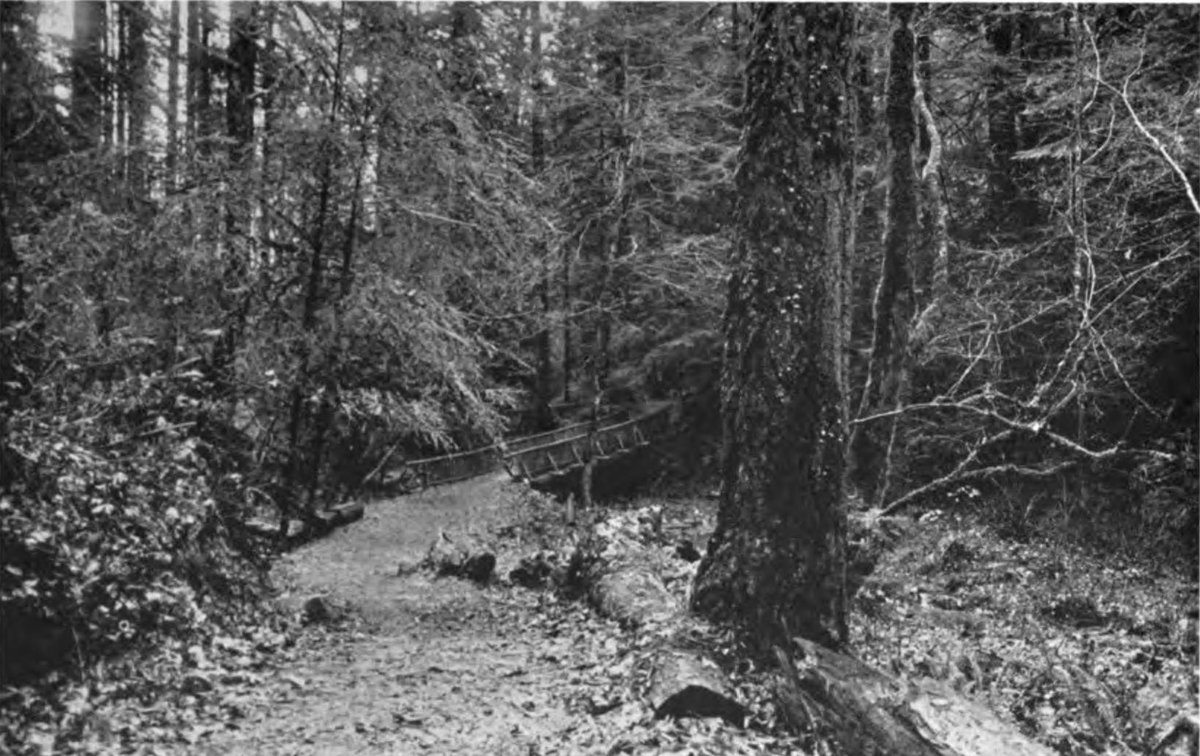
In 1903, John Charles Olmsted, a renowned landscape architect, visited Portland and recommended the creation of a “forest park,” inspired by the City Beautiful Movement’s emphasis on green spaces for public health and well-being (Olmsted Network). His vision was for a continuous tract of native forest, fostering spiritual renewal and passive enjoyment of nature—a concept unique among urban parks of the era.
Establishment and Legal Protection
It took over four decades of advocacy and shifting public values before Forest Park was officially established in 1948 (Portland State University Thesis). The park is now protected by city ordinance, prioritizing ecological health and passive recreation—an approach that continues to guide its management (Olmsted Network).
Cultural and Urban Impact
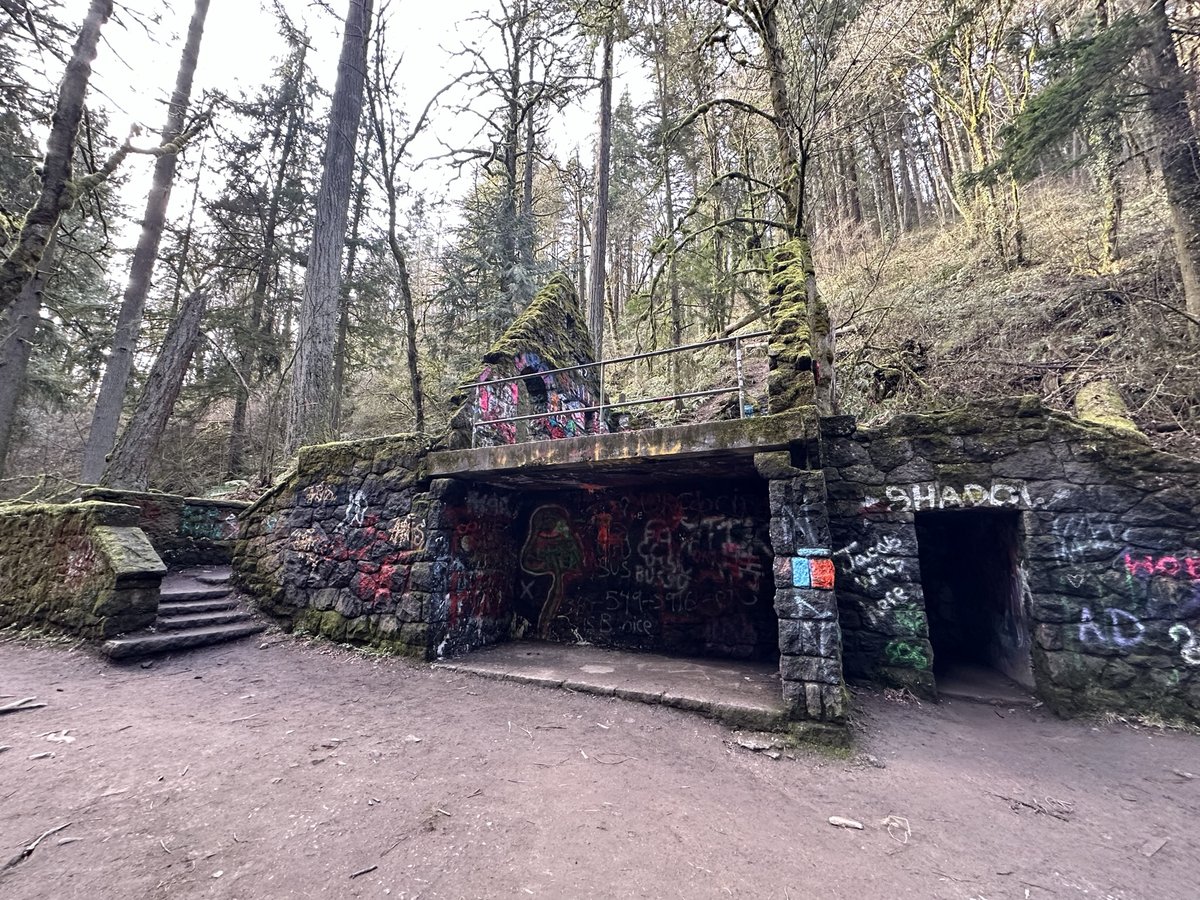
Forest Park is integral to Portland’s identity, serving as a refuge for residents, a research site for scientists, and a model for urban conservation nationwide. Its network of trails and landmarks, such as the Witch’s Castle, have become woven into the city’s cultural fabric (Oregon Essential), (Nomadasaurus). The park’s ongoing preservation reflects Portland’s commitment to sustainability and public access to nature.
2. Visiting Information: Hours, Tickets, and Access
Hours and Admission
- Open Daily from dawn to dusk
- Admission Free, with no tickets required (Portland.gov)
Getting There
- By Car Multiple trailheads with parking (e.g., Lower Macleay, Wildwood). Arrive early on weekends and holidays.
- By Public Transit Several TriMet bus routes serve areas near key trailheads.
- By Bike Accessible via city bike routes.
Accessibility
- Many trails are rugged and natural; a few near main entrances are relatively flat.
- Some trailheads offer accessible parking, but most trails are not wheelchair-friendly.
- Contact Portland Parks & Recreation for the latest accessibility updates (Portland.gov).
What to Bring
- Sturdy footwear, water, layers for changing weather, and a map (cell service is spotty).
3. Park Highlights: Trails, Attractions, and Photography
Wildwood Trail
The 30-mile Wildwood Trail is Forest Park’s signature path, offering diverse scenery and multiple entry points. It’s suitable for anything from short hikes to day-long adventures (Travel Portland).
Lower Macleay Trail & Witch’s Castle
A popular, accessible route that leads to the moss-draped Witch’s Castle—a 1930s stone structure steeped in local lore.
Pittock Mansion
A moderate 5-mile round-trip hike from Lower Macleay leads to this historic estate, with panoramic city and mountain views.
Audubon Society of Portland
Located adjacent to the park, this wildlife sanctuary provides interpretive trails and excellent birdwatching opportunities.
Photographic Spots
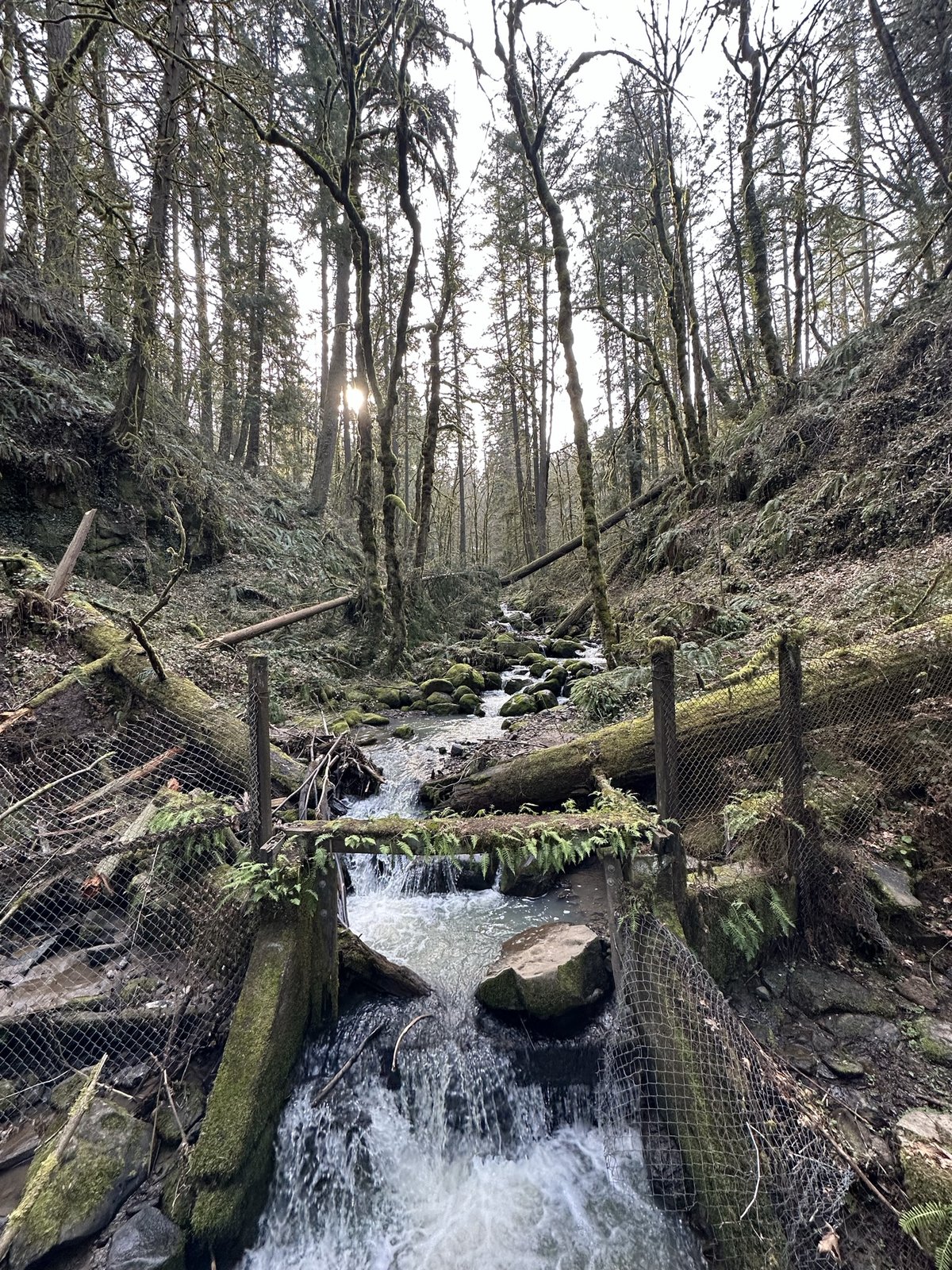
- Balch Creek and Saltzman Creek for riparian scenes
- NW Skyline Boulevard viewpoints for sweeping vistas
- Seasonal wildflowers in spring and vibrant foliage in autumn
4. Ecological Setting and Biodiversity
Landscape Features
Forest Park sits on the northeast slope of the West Hills, forming a critical wildlife corridor between the city and the Oregon Coast Range (Portland.gov), (Wikipedia). The park’s 30 miles of streams feed into the Willamette River and support diverse habitats.
Vegetation
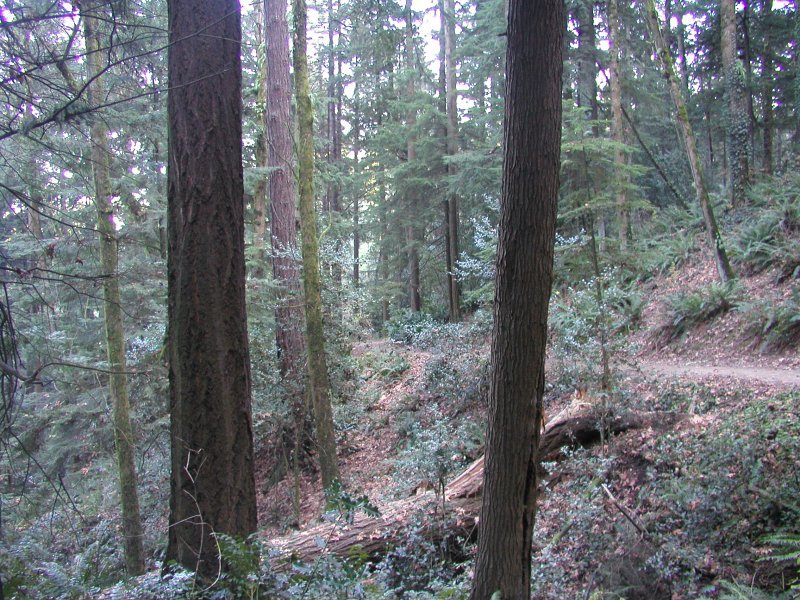
Dominated by Douglas-fir, western hemlock, grand fir, and bigleaf maple, the park’s understory includes sword fern, Oregon grape, and trillium (Wikipedia). Invasive species like English ivy and Himalayan blackberry threaten native plant communities, prompting ongoing restoration (Portland.gov).
Wildlife
- Mammals Black-tailed deer, coyotes, bobcats, Roosevelt elk, flying squirrels, and more (Wikipedia).
- Birds Over 112 species including owls, woodpeckers, warblers, and raptors (Travel Portland), (Wikipedia).
- Amphibians & Reptiles Pacific tree frogs, rough-skinned newts, northwestern salamanders.
- Invertebrates Native bees, butterflies, and aquatic macroinvertebrates.
5. Conservation Challenges and Management
Major Threats
- Habitat Fragmentation Urban development, roads, and utility corridors disrupt wildlife movement (Oregon Conservation Strategy).
- Invasive Species Ivy and blackberry reduce biodiversity; over 1,260 acres have undergone restoration (Portland.gov).
- Infrastructure Projects The PGE Harborton Reliability Project will remove wetlands and trees for power lines, drawing significant opposition due to ecological impacts (Wikipedia), (Portland Mercury).
- Climate Change Alters precipitation patterns, increases wildfire risk, and stresses native species (Portland.gov).
Management and Restoration
- Stewardship Led by Portland Parks & Recreation and Forest Park Conservancy, with community volunteers (Forest Park Conservancy).
- Urban Forest Plan Focuses on increasing canopy, equity, climate adaptation, and community engagement (Portland.gov).
- Community Programs Multilingual hikes, job training, and improved accessibility (Portland.gov).
- Monitoring Ongoing wildlife and tree surveys (Portland.gov).
6. Visitor Guidelines and Frequently Asked Questions
Guidelines
- Stay on marked trails
- Do not pick plants or disturb wildlife
- Leash and clean up after dogs
- Participate in stewardship events
- Respect seasonal closures and restoration zones
FAQs
Q: What are the park’s hours?
A: Open daily from dawn to dusk.
Q: Is there an entrance fee?
A: No, entry is free.
Q: Are dogs allowed?
A: Yes, on leash.
Q: Is the park accessible for those with disabilities?
A: Some trailheads have accessible parking; most trails are rugged.
Q: Are guided tours available?
A: Yes, through Forest Park Conservancy and Portland Parks & Recreation.
Q: Is parking available?
A: Parking is at major trailheads; it fills quickly on weekends.
7. Nearby Attractions
- Pittock Mansion Historic site and gardens with city views
- Portland Japanese Garden Renowned cultural garden in Washington Park
- Washington Park Home to the Oregon Zoo and Hoyt Arboretum
8. Future Developments and Stewardship
- Land Acquisition Ongoing efforts to acquire remaining private parcels and buffer lands (Metro).
- Restoration Focus on native plant communities and climate resilience.
- Visitor Experience Enhanced signage, trail maps, and digital navigation tools in development.
9. Summary and Visitor Recommendations
Forest Park is a living symbol of Portland’s environmental values, cultural history, and commitment to community stewardship. With extensive trails, rich biodiversity, and scenic vistas, it offers experiences for all visitors—hikers, birdwatchers, and nature lovers alike. Ongoing conservation addresses invasive species and urban pressures, while stewardship organizations ensure the park’s preservation for future generations. Plan ahead by using interactive maps, consider joining stewardship activities, and explore nearby historical sites to enrich your visit. Stay updated via the Forest Park Conservancy (forestparkconservancy.org) and Portland Parks & Recreation (portland.gov).

For more about Portland’s outdoor experiences, see our articles on Washington Park and Portland Japanese Garden.


