Introduction
The first thing that hits you in Portland, United States of America, is the smell of rain on 100-year-old roses mixed with espresso and distant fir needles. Most visitors expect a sleepy Pacific Northwest town. What they get instead is a city that quietly refuses to behave, where a 19th-century mansion perches on a hill above craft-beer loading docks and thousands of Vaux’s swifts tornado into a school chimney every September dusk.
This is not a place that sells itself with superlatives. Portland simply does what it wants. It keeps its largest urban forest inside city limits, lets independent bookstores occupy an entire city block, and turns parking lots into dinner theaters for food carts. The motto on the police cars once read "Keep Portland Weird." They eventually removed it, but only because the city had already internalized the instruction.
Walk five blocks in any direction and the personality flips. One moment you’re staring at a perfect ikebana garden floating above the city. The next you’re watching a man in a lobster costume ride a unicycle past a 1926 movie palace that still shows 35mm prints. That friction is the point. Portland doesn’t resolve its contradictions. It collects them.
And yet something shifts while you’re here. You start noticing how the light moves through the Douglas-firs at 4 p.m. in November. You begin to understand why people line up without complaint for Thai chicken and rice cooked in a 10-foot trailer. The city doesn’t change you with monuments. It changes you by lowering your tolerance for anything that feels manufactured.
Places to Visit
The Most Interesting Places in Portland
Providence Park
Providence Park is an iconic sports and cultural landmark nestled in the heart of Portland, Oregon, renowned for its rich history, architectural significance,…
Oregon Zoo
Nestled within Portland’s scenic Washington Park, the Oregon Zoo stands as a premier destination for wildlife enthusiasts, families, and visitors seeking an…
Portland Art Museum
Nestled in the vibrant heart of downtown Portland, the Portland Art Museum (PAM) stands as a testament to over a century of cultural enrichment, architectural…
International Rose Test Garden
Nestled within the verdant expanses of Washington Park in Portland, Oregon, the International Rose Test Garden stands as a living emblem of the city’s…
Veterans Memorial Coliseum
Nestled in the heart of Portland, Oregon, the Veterans Memorial Coliseum stands as a distinguished emblem of mid-century modern architecture and a profound…
Pittock Mansion
Perched majestically atop Portland’s West Hills, Pittock Mansion stands as an enduring symbol of the city’s rich history, architectural grandeur, and cultural…
Portland Japanese Garden
Nestled within the scenic Washington Park of Portland, Oregon, the Portland Japanese Garden stands as a serene sanctuary embodying authentic Japanese…
Tom Mccall Waterfront Park
Tom McCall Waterfront Park stands as one of Portland, Oregon's most iconic and cherished public spaces, weaving together the city’s rich history,…
Forest Park
Nestled just minutes from downtown Portland, Forest Park stands as one of the largest urban forest reserves in the United States, spanning over 5,200 acres…
Oaks Amusement Park
Nestled along the scenic Willamette River in Portland, Oregon, Oaks Amusement Park stands as a cherished historical landmark and one of the oldest…
Mill Ends Park
Mill Ends Park, famously recognized as the world’s smallest park, is an extraordinary Portland landmark that embodies the city’s whimsical spirit and creative…
Tryon Creek State Natural Area
Tryon Creek State Natural Area, nestled within the Portland metropolitan region, represents a unique urban forest oasis rich in ecological diversity, cultural…
What Makes This City Special
Urban Wilderness
Forest Park stretches 5,200 acres right inside city limits with over 80 miles of trails. Step off a neighborhood greenway and suddenly you're under a 100-year-old Douglas fir canopy where the only sound is your own footsteps on fern-lined paths.
Craft Beer Capital
More than 80 breweries operate inside the city. The real surprise isn't the quantity but how many occupy former warehouse loading docks where you can still smell the faint trace of hops from tanks that once held industrial chemicals.
Powell’s City of Books
This independent bookstore occupies an entire city block and contains roughly one million books. The color-coded rooms create a labyrinth where people regularly lose track of time, emerging hours later with purchases they didn't plan to make.
Keep Portland Weird
The Peculiarium displays shrunken heads and carnival oddities without a trace of irony. First Thursday in the Pearl District and Last Thursday on Alberta Street turn entire neighborhoods into living galleries where the art spills onto the sidewalks.
Historical Timeline
From Chinookan Fires to Keep Portland Weird
Eleven thousand years of rain, ambition, and stubborn independence
First People Camp by the River
The Multnomah and Kalapuya peoples began seasonal camps along the Willamette. They fished steelhead in water so clear you could count the rocks on the bottom. For eleven millennia their fires smoked under the same Douglas firs that still shade Forest Park today. The land remembers them in ways maps never will.
Portland Gets Its Name
Francis Pettygrove and Asa Lovejoy flipped a copper coin on a muddy riverbank. Portland, not Boston. The loser shrugged, the winner bought more land. Within months the first frame houses rose where downtown's glass towers now block the sky. A city was born from pure ego and a one-cent piece.
First English Settlers Arrive
Wagon after wagon rolled down the Oregon Trail and stopped at the Willamette's west bank. They smelled of oxen and wet wool. The town platted the year before suddenly had bodies to fill it. Overnight it became the supply hub for everyone heading farther south to chase California gold.
Linus Pauling Born on the Wrong Side of the Tracks
A boy arrived in a cramped Portland house who would later win two unshared Nobel Prizes. The city gave him the smell of sawdust and river fog. He never forgot either. Chemistry would be his escape, but the rain stayed in his bones.
Oregon Steam Navigation Company Forms
Riverboats began churning the Willamette and Columbia in earnest. Their paddlewheels sounded like money. Portland suddenly controlled the flow of wheat, lumber, and people between the coast and the interior. The city learned early that whoever moves the goods names the price.
Black Saturday Devours the City
Flames tore through wooden buildings on a dry August afternoon. Twenty-two blocks vanished in smoke thick enough to block the sun. The smell of charred fir lingered for weeks. Survivors rebuilt in brick and stone this time, determined not to lose the city twice.
Electricity Reaches Portland
Power lines stretched fourteen miles from Willamette Falls. Streetcars soon rattled down muddy streets lit by electric globes. People came out at night just to stand under the new glow. The future had arrived, humming and bright.
James Beard Learns to Cook
A chubby boy watched his mother run the Gladstone Hotel kitchen. He tasted everything. Portland's farmers' market and immigrant cooks taught him that food could be both honest and theatrical. The city still argues whether it produced him or he produced it.
Douglas Engelbart Born
In a Portland house not far from the river, a boy arrived who would later invent the computer mouse. He grew up watching log booms drift past on the Willamette. The connection between hands and distant machines began here in the rain.
Ursula K. Le Guin Arrives as a Child
The family moved to Portland when she was a girl. She walked the same damp streets Matt Groening would later mock. Her Earthsea and distant planets carried the smell of wet cedar and the city's particular melancholy. She never really left.
Vanport Floods and Vanishes
The Columbia River broke through railroad dikes on a Sunday afternoon. Fifteen thousand people, many Black families denied housing elsewhere, lost their homes in hours. The city watched entire streets float away. Some scars never got buildings over them.
Gus Van Sant Claims the City
He showed up young and stayed. His camera found beauty in the cracked sidewalks of Burnside and the alienated kids under bridges. Portland became both setting and character in his films. The rain on windshields was never just weather.
RFK Campaigns on the Waterfront
Robert Kennedy stood before cheering crowds at the Memorial Coliseum days before his death. The city, still raw from Vanport and urban renewal displacements, listened. His visit marked the last time national politics felt intimate here.
Mt. Hood's Shadow Falls Across New Parks
Lawrence Halprin's open space sequence transformed downtown. Concrete terraces and fountains replaced parking lots. People suddenly had places to sit outside without buying something. The city began to look like it belonged to its residents again.
Powell's Books Takes Over a Whole Block
Michael Powell expanded into a former car dealership. The store eventually held over a million books. bibliophiles still get lost on the color-coded floors. In a city that loves rain more than small talk, it became the perfect sanctuary.
Matt Groening Draws Springfield
The Simpsons creator based his dysfunctional town on Portland's quirks. The bored students at Lincoln High, the gloomy skies, even the eccentric uncles. He gave the city the ultimate backhanded compliment: eternal television immortality.
International Rose Test Garden Reaches Peak Glory
Seven thousand rose bushes covered the hillside in Washington Park. Their perfume drifted across the city on warm evenings. The oldest public rose test garden in America had become something better than pretty. It became inevitable.
Portland Aerial Tram Begins Construction
Two sleek cars were planned to glide 3,300 feet up Marquam Hill. Skeptics called it a rich person's toy. When it opened in 2006, everyone rode it anyway. The view from the top still silences first-timers.
Keep Portland Weird Becomes Official
The slogan appeared on bumper stickers and store windows. It wasn't marketing at first. It was a defensive cry against chain stores and California money. The city decided its oddness was worth protecting with the same ferocity others reserve for their children.
Occupy Portland Takes the Park Blocks
Tents filled the grassy squares downtown. The movement lasted longer here than almost anywhere else. Police finally cleared the camp after five months. The arguments about who the city belongs to never really packed up.
Notable Figures
Matt Groening
born 1954 · CartoonistGroening named half the characters in The Simpsons after the streets he biked as a kid here. He has said Springfield’s weirdness is basically Portland with the sprinklers left on. Walk past a food cart pod at dusk and you can almost hear the opening theme.
Ursula K. Le Guin
1929–2018 · AuthorLe Guin wrote her Earthsea novels and The Left Hand of Darkness from a modest house in northwest Portland. She walked the same damp streets you will. The city’s stubborn independence and love of the uncanny still feel like pages from one of her books.
James Beard
1903–1985 · Chef and food writerBefore America had a food culture it had James Beard, who learned to cook in his mother’s Portland boarding house. The annual awards that bear his name still celebrate the kind of honest, independent cooking you find at carts across town.
Chuck Palahniuk
born 1962 · AuthorPalahniuk still lives near the city that inspired Fight Club. The first rule of Portland, he might tell you, is that everyone claims they moved here before it was cool. The second rule is that the rain never stops and neither do the stories.
Photo Gallery
Explore Portland in Pictures
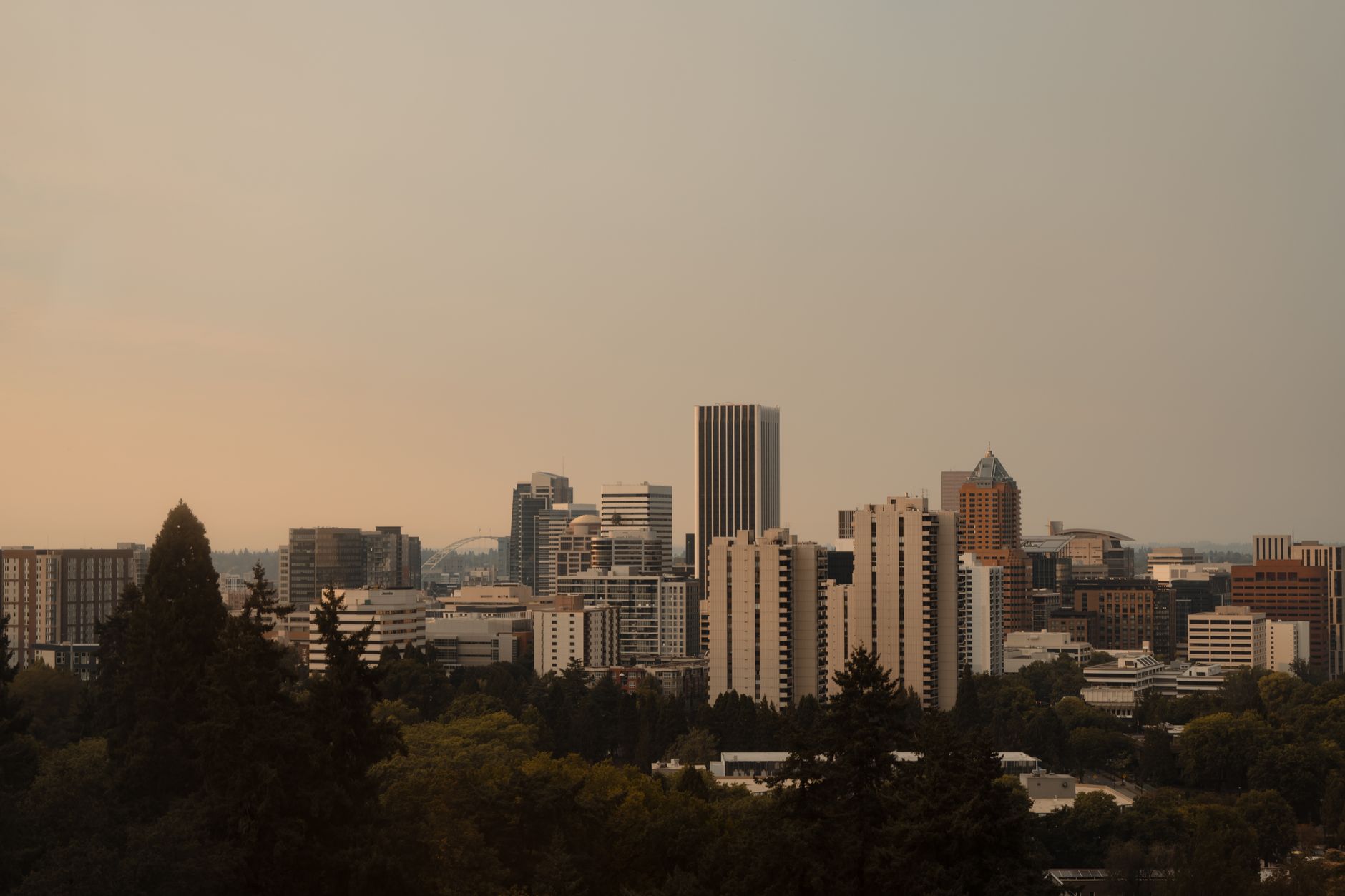
The Portland skyline glows under a soft, hazy sunset, showcasing a blend of modern architecture and surrounding greenery.
Luis Erives on Pexels · Pexels License
A historic sternwheeler riverboat docked on the Willamette River, showcasing the industrial charm of Portland, Oregon.
Sean P. Twomey on Pexels · Pexels License
A view of a tent encampment situated beneath a highway overpass in Portland, United States of America, set against a backdrop of modern urban architecture.
Brett Sayles on Pexels · Pexels License
A stunning aerial perspective of Portland, United States of America, showcasing the city's iconic bridges spanning the Willamette River amidst urban architecture.
Stephen McDaniel on Pexels · Pexels License
The historic Hawthorne Bridge glows under a dramatic sunset sky as it reflects over the calm waters of the Willamette River in Portland.
Brett Sayles on Pexels · Pexels License
A classic urban view of downtown Portland, United States of America, showcasing the historic Portland Outdoor Store neon sign and the city's unique blend of old and new architecture.
Brett Sayles on Pexels · Pexels License
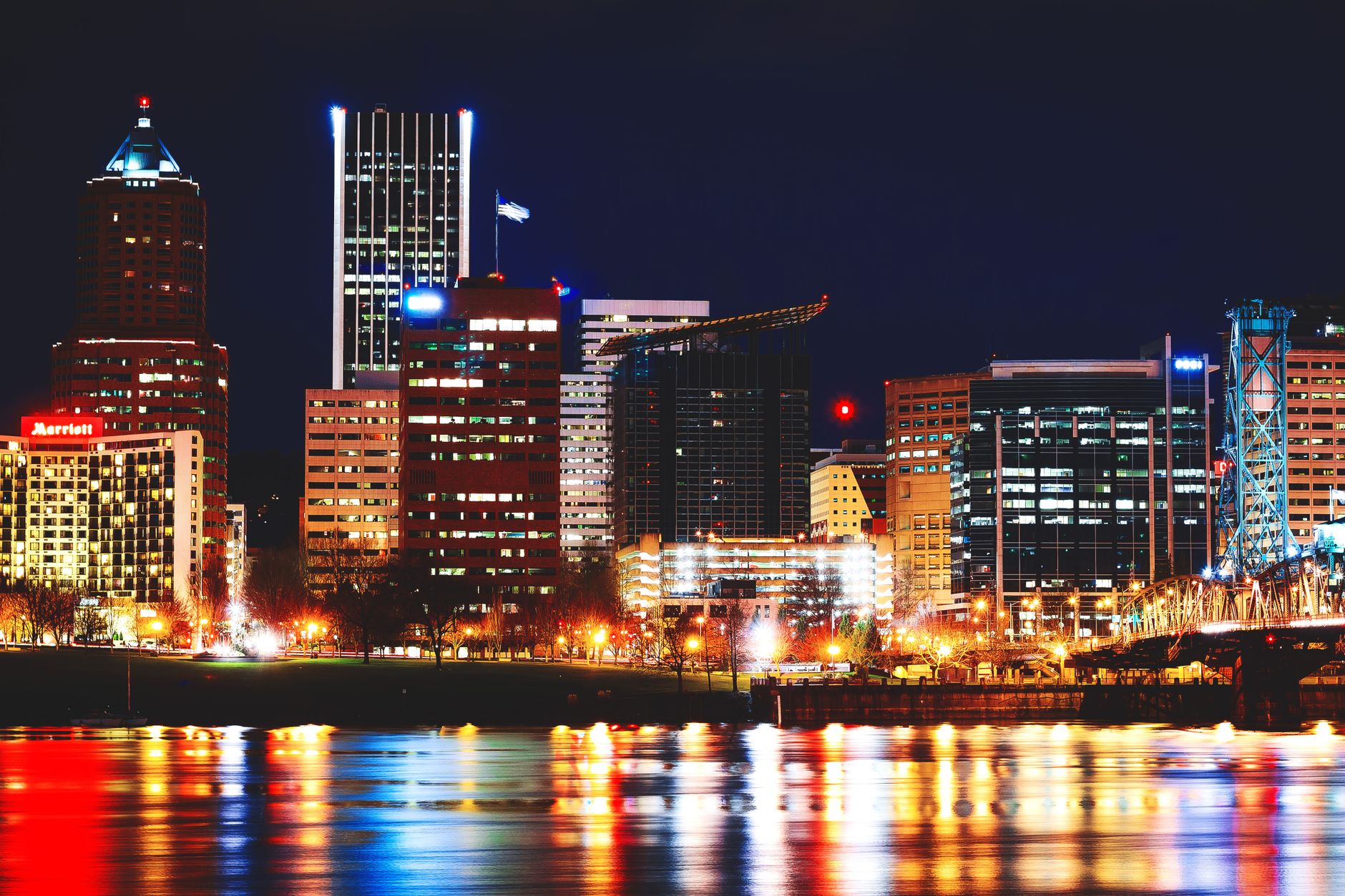
The Portland skyline glows at night, with city lights reflecting beautifully across the surface of the Willamette River.
Tabitha Mort on Pexels · Pexels License
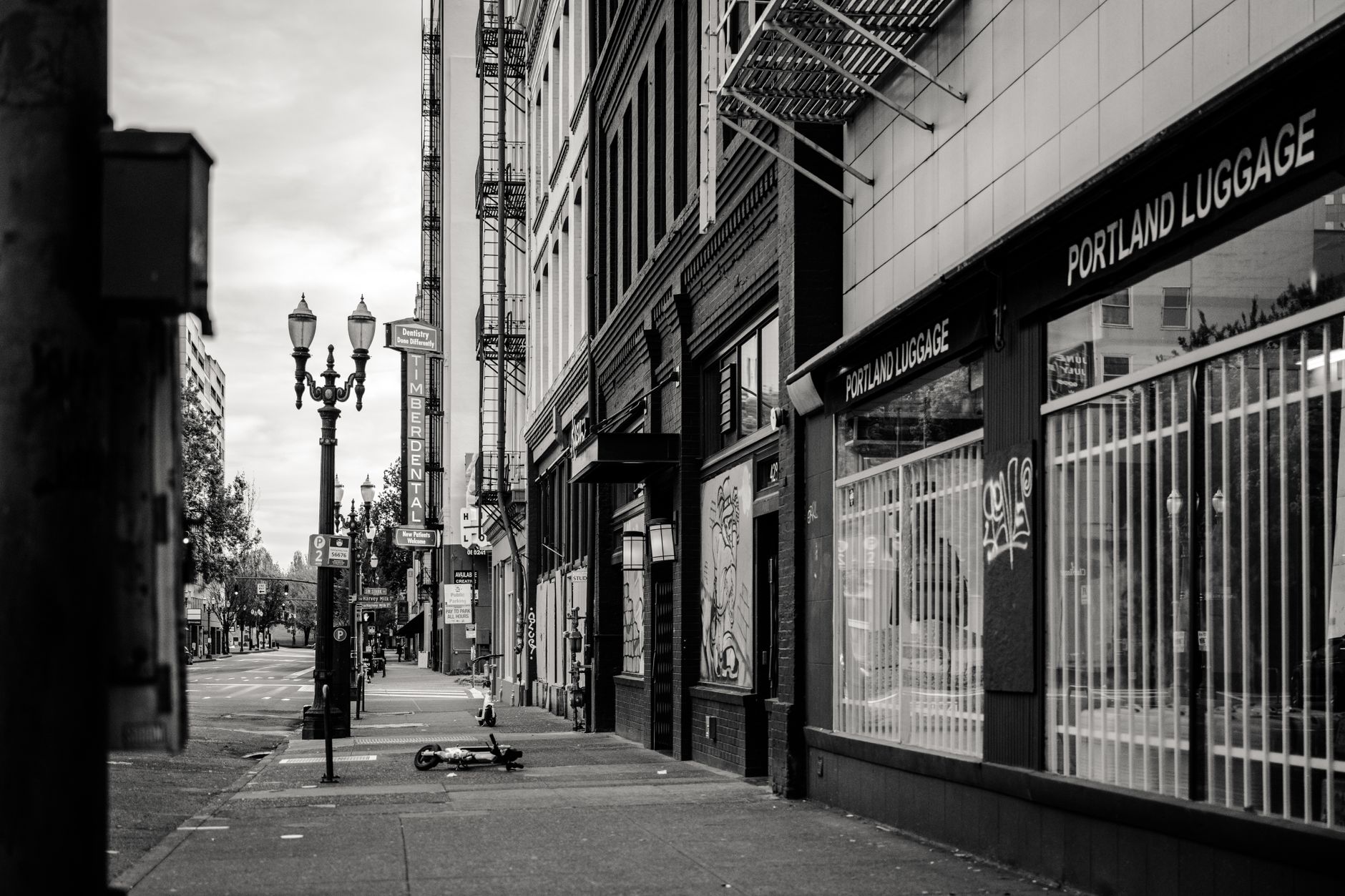
A quiet, atmospheric view of a historic street in Portland, United States of America, featuring classic architecture and urban details.
Brett Sayles on Pexels · Pexels License
A view of the iconic Portland Outdoor Store, a historic landmark in downtown Portland, Oregon, showcasing its classic stone facade and vintage neon sign.
Brett Sayles on Pexels · Pexels License
Practical Information
Getting There
Portland International Airport (PDX) sits 20 minutes from downtown. The MAX Red Line light rail departs from the lower level near baggage claim and reaches the city center in about 40 minutes for $2.80. Amtrak's Union Station serves as the main rail hub with daily Cascades and Coast Starlight routes. Interstate 5 runs north-south through the city while I-84 heads east toward the Columbia River Gorge.
Getting Around
TriMet operates the MAX light rail with five lines, extensive bus routes, and the Portland Streetcar loops. Tap a contactless card or phone on every boarding using the Hop system. The city maintains 385 miles of bikeways and the BIKETOWN e-bike share costs $1 to unlock plus $0.35 per minute in 2026. The Portland Aerial Tram rises 500 vertical feet from South Waterfront to Marquam Hill in three minutes.
Climate & Best Time
Summer highs average 27–30°C (June–August) with almost no rain. Winters hover between 2–8°C and bring most of the annual 114 cm of precipitation, mainly November through March. Spring blooms hit their peak in April and May. September offers warm days, harvest markets, and far fewer visitors than July.
Safety
Property crime remains the main concern, particularly theft from vehicles. Never leave visible luggage or bags in parked cars, even in seemingly safe neighborhoods. Downtown faces visible homelessness but standard urban awareness suffices for most visitors. The city stays generally safe for tourists who avoid leaving valuables unattended.
Where to Eat
Don't Leave Without Trying
Ken's Artisan Bakery
local favoriteOrder: The croissants and sourdough loaves are exceptional—Ken's is a Portland institution where locals queue for fresh-baked bread that rivals anything you'll find on the West Coast.
This is where serious bread lovers go. Ken's commitment to traditional French techniques and quality ingredients makes it a pilgrimage site for anyone who cares about their morning pastry.
Delicious Donuts
quick biteOrder: Get whatever's fresh—the rotating daily specials are what keep locals coming back early. The glazes are perfectly balanced, never cloying.
This isn't a chain donut shop; it's a neighborhood gem where the owners care about quality. Early morning hours mean you catch them warm, which is how they're meant to be eaten.
Coava Coffee Roasters
cafeOrder: Single-origin espresso or pour-over—Coava roasts their own beans and the quality is immediately obvious. The baristas know what they're doing.
Portland's coffee culture is serious business, and Coava represents the best of it: direct relationships with farmers, meticulous roasting, and baristas who treat coffee like craft.
Sisters Coffee Company in The Pearl District
cafeOrder: Their seasonal drinks are worth trying, but honestly, a well-made cappuccino here is all you need. The space is perfect for lingering.
Located in the artsy Pearl District, Sisters Coffee combines excellent espresso with a neighborhood vibe. It's the kind of place where you'll see locals working on laptops and artists sketching.
Huber's Cafe
local favoriteOrder: The Huber's Steak & Eggs is a Portland classic—perfectly cooked steak with runny eggs and crispy hash browns. Don't skip it.
This historic cafe has been a Portland institution since 1879. It's where locals go for reliable, honest food in a space that feels genuinely lived-in, not manufactured.
Elephants Delicatessen
quick biteOrder: The sandwiches are built with care—quality meats and fresh ingredients. Ask the staff for their recommendation; they know what's good today.
A neighborhood deli that feels like it's been there forever (it has). Elephants represents Portland's no-nonsense approach to good food: quality ingredients, reasonable prices, zero pretense.
Mother's Bistro & Bar
local favoriteOrder: The comfort food here is elevated but not fussy—think meatloaf and pot roast done right. Weekend brunch is when Mother's really shines.
Mother's has the highest review count for good reason: it's a place where Portlanders actually eat, not just visit. The food is honest and satisfying, the service is warm, and the vibe is genuinely welcoming.
Andina
fine diningOrder: The ceviche is fresh and bright, and the pisco cocktails are worth lingering over. Andina takes Peruvian cuisine seriously without being pretentious.
This is where Portland's food scene gets more adventurous. Andina brings authentic Peruvian flavors to the Pearl District with sophistication and genuine passion for the cuisine.
Dining Tips
- check Tipping is standard at 20% for full-service dining. For counter service, tipping is optional but increasingly common; $1–$2 or rounding up is typical.
- check Portland is largely cashless and card-dominant. Digital payment apps (Square, Venmo) are ubiquitous at carts and cafes.
- check Many independent restaurants close on Mondays or Tuesdays—check ahead.
- check Breakfast and brunch are weekend rituals; lunch typically runs 11:30 AM–1:30 PM, dinner 6:00 PM–9:00 PM.
- check Don't skip the food carts—some of the best chefs in Portland operate out of them. Cartopia and other pod locations are legendary.
- check For high-end or destination restaurants, make reservations 2–4 weeks in advance using Resy or OpenTable.
Restaurant data powered by Google
Tips for Visitors
Visit in Summer
Come between June and August when Portland sees consistent warm, dry days perfect for Forest Park trails and the International Rose Test Garden. Rain returns reliably after September.
Food Cart Etiquette
Never stand blocking the ordering window at a pod. Step aside after deciding, pay in cash when possible, and remember the cooks are often the owners.
Use Biketown
Unlock an e-bike for $1 then pay $0.35 per minute. Portland’s 385 miles of paths and neighborhood greenways make cycling faster than driving in the central eastside.
Hide Your Valuables
Property crime targets visible items in parked cars. Leave nothing on seats, even at trailheads in Washington Park or Forest Park.
Pair Beer with Carts
Grab poutine from Potato Champion at Cartopia then walk next door to a brewery. The Central Eastside and Division Street pods offer the densest concentration.
Buy a Hop Card
Load value onto a Hop card or tap your phone for MAX Red Line rides from PDX. Adult fare is $2.80; the system covers light rail, buses, and the Portland Streetcar.
Explore the city with a personal guide in your pocket
Your Personal Curator, in Your Pocket.
Audio guides for 1,100+ cities across 96 countries. History, stories, and local insight — offline ready.
Audiala App
Available on iOS & Android
Join 50k+ Curators
Frequently Asked
Is Portland worth visiting? add
Yes, if you like independent bookstores the size of a city block, 80 breweries, and an urban forest larger than Central Park. The combination of Powell’s City of Books, Forest Park’s 80 miles of trails, and food cart pods cannot be found anywhere else in the US.
How many days do you need in Portland? add
Three full days works for most first-timers. Spend one in Washington Park among the roses and Japanese Garden, another exploring the Central Eastside pods and breweries, and the last hiking Forest Park or riding the Aerial Tram. Four days lets you add a Columbia River Gorge waterfall hike.
How do you get from PDX airport to downtown Portland? add
Take the MAX Red Line light rail directly from the lower level of the terminal. The 40-minute ride costs $2.80 and drops you at Pioneer Courthouse Square or nearby stations. Taxis and rideshares wait on the outer roadway if you have heavy luggage.
Is Portland safe for tourists? add
The city is generally safe but property crime remains the main issue. Do not leave bags or electronics visible in rental cars. Downtown has visible homelessness; most visitors prefer staying in the Pearl District or Central Eastside instead.
When is the best time to visit Portland Oregon? add
June through August delivers the sunniest weather and longest days for hiking and rose garden visits. March to May brings rhododendron and cherry blooms while September’s swifts at Chapman Elementary create one of the strangest natural spectacles in any American city.
How expensive is Portland for visitors? add
Food carts keep lunch under $15. A day pass on TriMet costs about $5. Hotel rooms in the Pearl District run $180–$280 nightly. Craft beer pints start at $7. Overall it sits slightly below Seattle and well below San Francisco.
Sources
- verified Travel Portland — Official tourism site used for food cart pods, events, safety information, and cultural venues.
- verified Oregon Essential — Local perspective on neighborhoods, food carts, best visiting months, and practical visitor tips.
- verified Lonely Planet — Seasonal guidance, culture overview, and attraction details including Forest Park and Powell’s.
- verified TriMet — Official transport information for MAX Red Line from PDX, Hop fare system, and trip planning.
Last reviewed: