

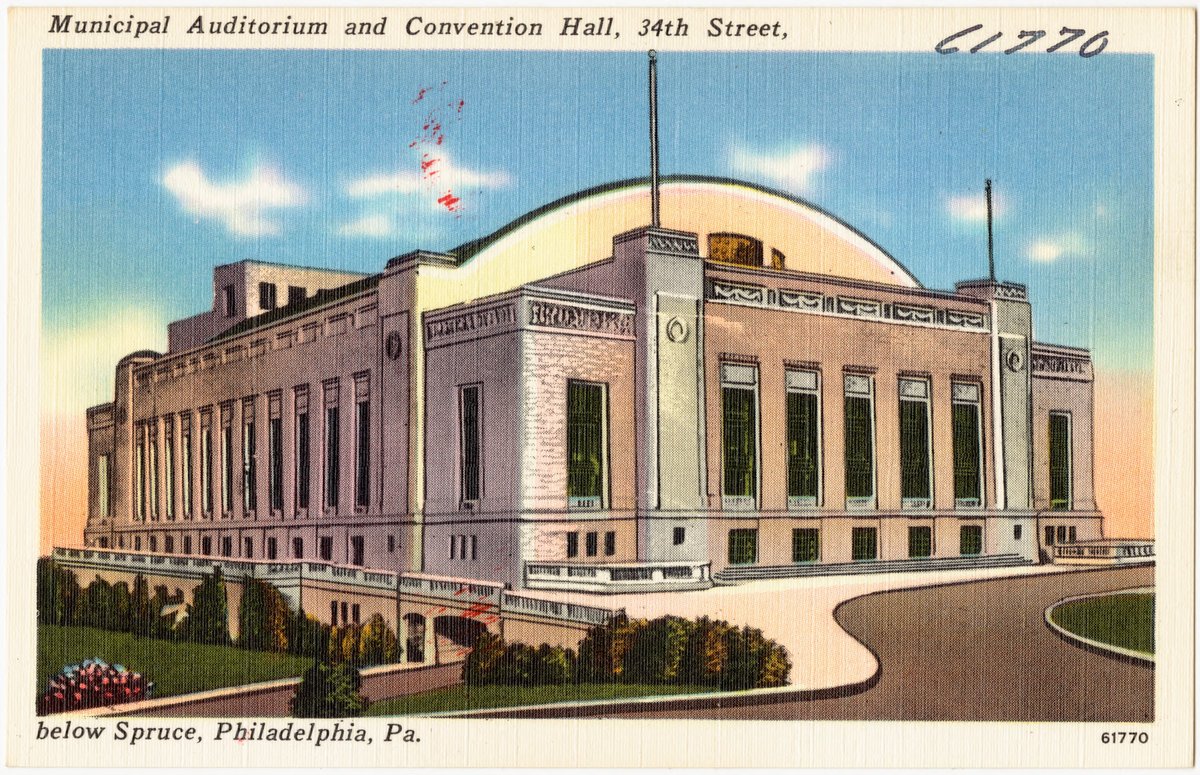
A Landmark’s Legacy: The Philadelphia Civic Center
The Philadelphia Civic Center was more than a building—it was a symbol of the city’s aspirations and achievements. From political conventions that shaped national leadership to landmark concerts and athletic showdowns, the Civic Center was Philadelphia’s grand stage. Its Art Deco architecture, cultural gravitas, and adaptability ensured it remained at the forefront of the city’s events for most of the 20th century.
Origins and Development
The Civic Center’s origins reach back to Philadelphia’s late 19th-century drive to become a commercial and cultural epicenter. The 1899 National Export Exhibition laid the groundwork, resulting in the construction of the Commercial Museum on the future site of the Civic Center. Early venues like Pennsylvania Hall and Bethel Church hosted significant events but lacked the scale and permanence of the Civic Center’s facilities.
With the completion of the Municipal Auditorium in 1931—later known as Convention Hall and then the Civic Center—the city gained a versatile space that could accommodate up to 15,000 people. Its location at 3400 Civic Center Blvd, adjacent to major universities and hospitals, made it a central gathering place for a diverse range of audiences.
Architectural Significance
Architect Philip H. Johnson’s Art Deco design set the Civic Center apart, with striking limestone friezes depicting the evolution of labor from ancient Egypt to modern America. The main auditorium could seat nearly 12,000 for sporting events and up to 15,000 for conventions. Over time, the Civic Center complex expanded, incorporating additional halls and facilities to meet the city’s growing needs.
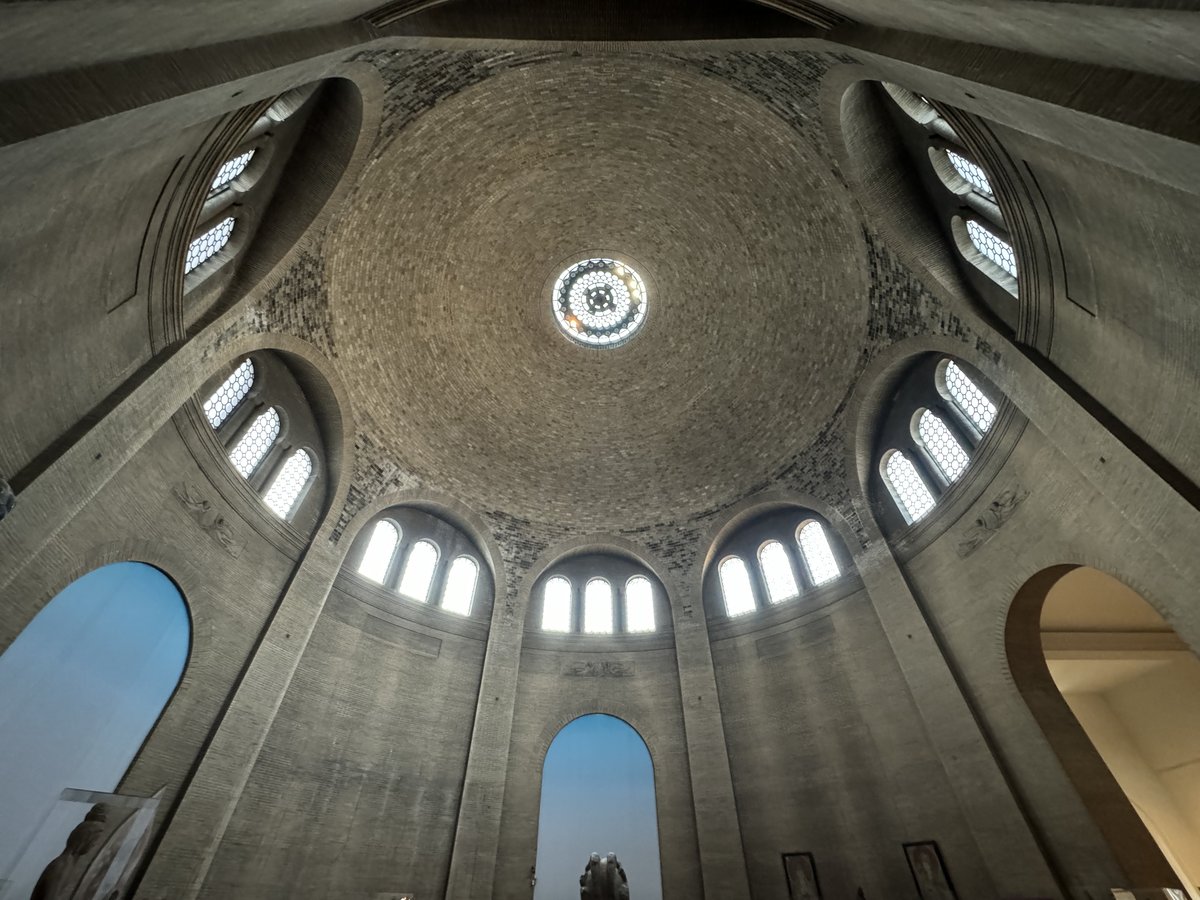
Following demolition, the Civic Center’s most significant Art Deco frieze was preserved and relocated to Bayonne, New Jersey, ensuring that a piece of its artistic heritage remains accessible (Wikiwand).
Political, Social, and Cultural Milestones
The Civic Center played a pivotal role in American politics, hosting four major national conventions: the 1900, 1936, 1940, and the historic 1948 Democratic and Republican National Conventions. Its stage welcomed global figures such as Dr. Martin Luther King Jr., Pope John Paul II, and Nelson Mandela, highlighting its status as a platform for social change and civic engagement (Liquisearch).
Culturally, the venue was home to legendary musical acts—the Beatles’ sold-out 1964 concert, the Rolling Stones, and the Grateful Dead, among others. The Civic Center also served as a film and TV soundstage, including for the iconic “Rocky V” fight scene (RetroSeasons).
Sports and Entertainment History
As a premier sports destination, the Civic Center hosted the NBA’s Philadelphia Warriors and 76ers, the 1960 NBA All-Star Game, and hockey teams such as the Philadelphia Blazers and Firebirds. It also accommodated university graduation ceremonies and college basketball tournaments, including the 1986 MEAC and the final 1996 Atlantic 10 Men’s Basketball Tournament before its closure (Wikiwand).
Decline, Demolition, and Enduring Influence
The opening of the Spectrum arena in 1967 marked the beginning of the Civic Center’s decline as major events gravitated toward more modern venues. The closure of the Commercial Museum in 1982 and the launch of the Pennsylvania Convention Center in 1993 further diminished its role. By 2005, the Civic Center had closed its doors permanently and was subsequently demolished. Salvaged elements—most notably the limestone frieze—were relocated, and the site was redeveloped into the University of Pennsylvania’s Perelman Center for Advanced Medicine (Michael Froio Photography).
Visitor Information
Is the Philadelphia Civic Center Still Open?
No, the Philadelphia Civic Center was demolished in 2005. However, its legacy continues at the Pennsylvania Convention Center, which serves as Philadelphia’s principal venue for conventions, exhibitions, and civic events.
Visiting Hours and Tickets
- Philadelphia Civic Center No longer open; no visiting hours or tickets available.
- Pennsylvania Convention Center Public access typically from 8:00 AM to 6:00 PM (Monday to Friday), with hours extended for major events. For event schedules and ticket information, consult the official events calendar.
Accessibility and Travel Tips
- Accessibility The Pennsylvania Convention Center is fully ADA-compliant, featuring accessible entrances, restrooms, and assistive listening devices.
- Transportation Located at 1101 Arch Street, Center City, the Convention Center offers direct access via SEPTA regional rail (Jefferson Station), Market–Frankford and Broad Street subway lines, and multiple bus routes. Ample parking garages are nearby.
- Travel Tips Use public transit when possible, arrive early for major events, and consult the Guide to Philly Parking for parking options.
Nearby Historic Landmarks
- Independence Hall and Liberty Bell Cornerstones of American history, within walking distance.
- Philadelphia Museum of Art Renowned for its collections and the “Rocky Steps.”
- Reading Terminal Market A historic food hall adjacent to the Convention Center.
- University of Pennsylvania and Drexel University Prominent campuses near the former Civic Center site.
Frequently Asked Questions (FAQs)
Q: Can I visit the Philadelphia Civic Center today?
A: No, it was demolished in 2005. The Pennsylvania Convention Center is the current principal venue.
Q: What happened to the Civic Center’s architectural elements?
A: The limestone frieze was preserved and relocated to Bayonne, New Jersey.
Q: Where can I learn about the Civic Center’s history?
A: Local museums and archives, as well as online resources, provide historical records and photographs.
Q: What are the Pennsylvania Convention Center’s hours?
A: Hours vary by event; general public access is 8:00 AM–6:00 PM on weekdays.
Q: Is the Convention Center accessible for disabled visitors?
A: Yes, it is fully ADA compliant.
The Pennsylvania Convention Center: Visitor Guide
Location and Accessibility
- Address 1101 Arch Street, Philadelphia, PA 19107
- Public Transit Directly above Jefferson Station (SEPTA regional rail); near Race-Vine (Broad Street Line) and 11th Street (Market-Frankford Line) subway stations
- By Car Accessible from I-95, I-76, and the Pennsylvania Turnpike
Visiting Hours and Tickets
- Hours Vary by event; generally 8:00 AM–6:00 PM, with extended hours for large conventions (PA Convention Center Visiting Hours)
- Tickets Visit the event organizer’s website or the PA Convention Center Tickets page
Parking
Numerous garages are within walking distance. For options and rates, see Guide to Philly Parking.
Amenities
- Modern restrooms, accessible facilities, free Wi-Fi, on-site dining, and proximity to Reading Terminal Market
Nearby Attractions
- Liberty Bell and Independence Hall
- Philadelphia Museum of Art
- Reading Terminal Market
- Love Park
Tips for Visitors
- Use public transportation for convenience
- Plan visits around event schedules
- Arrive early for best parking options
For more details, visit the official website or Visit Philly.
Summary and Visitor Recommendations
The Philadelphia Convention Hall and Civic Center was a pillar of the city’s civic and cultural life throughout the 20th century. Though no longer standing, its legacy survives in the Pennsylvania Convention Center and through preserved artifacts like the labor frieze. Visitors to Philadelphia can engage with the city’s rich heritage by exploring nearby historic landmarks and attending events at the Convention Center, which continues the tradition of civic engagement and cultural celebration.
For event schedules, historical insights, and travel tips, consult the Pennsylvania Convention Center website and the Philadelphia Civic Center Legacy and Visitor Information.
Stay updated and enhance your visit by downloading the Audiala app.