
Origins and Architecture
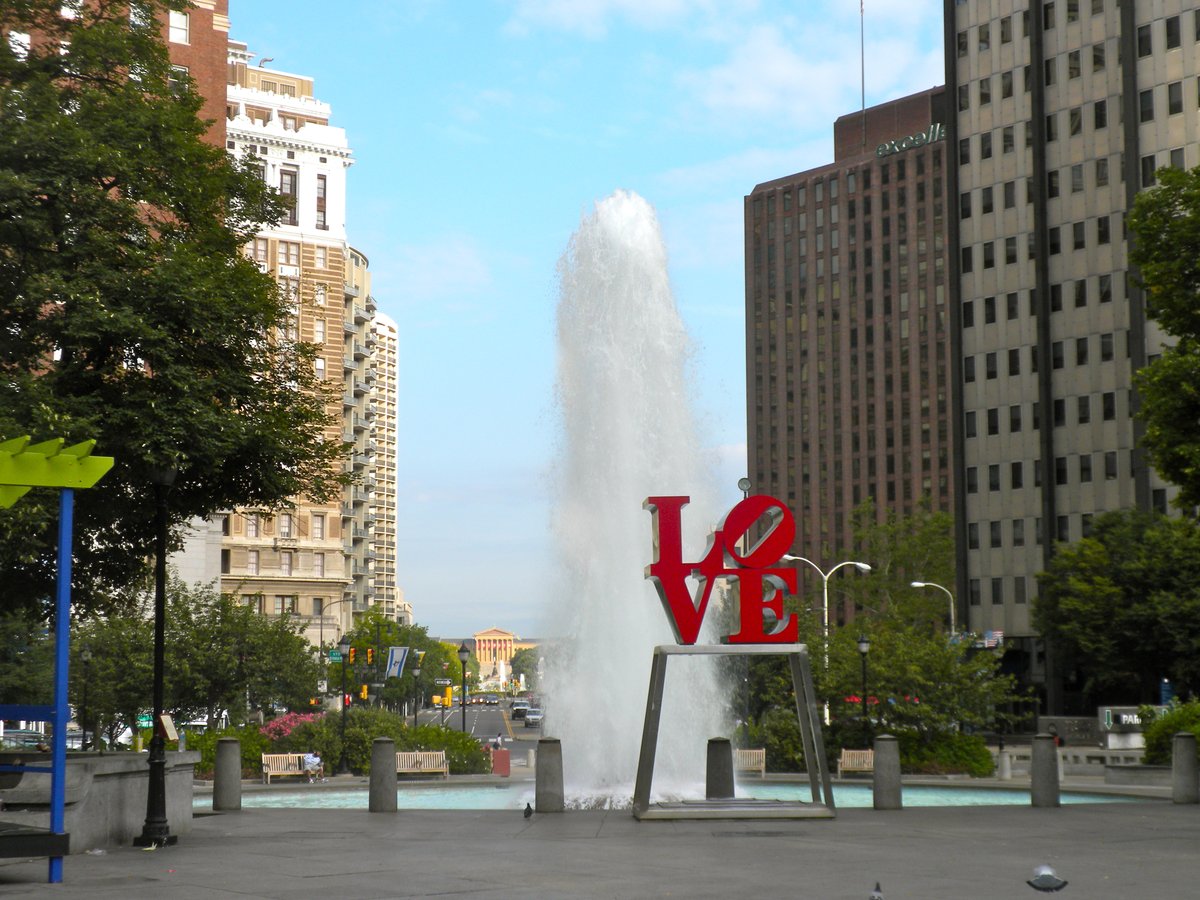
LOVE Park’s inception dates back to Edmund Bacon’s early vision for a grand civic plaza at the terminus of the Benjamin Franklin Parkway. Realized in the mid-1960s, the park was constructed atop an underground parking garage—a dual-purpose urban solution. Its design embodies mid-century modernist trends: open granite plazas, geometric planters, and a central fountain (added in 1969) define the space. Kling, also responsible for nearby Dilworth and Thomas Paine Plazas, created a civic core that fuses functionality with bold, clean aesthetics (Wikipedia; Vice; Philadelphia Beautiful; PhillyVoice).
The park’s strategic location opposite City Hall and at the start of the Parkway was a deliberate move to connect Philadelphia’s municipal and cultural arteries, reinforcing its role as a gathering place for civic and cultural events (PhillyVoice).
The LOVE Sculpture: Symbolism and Legacy
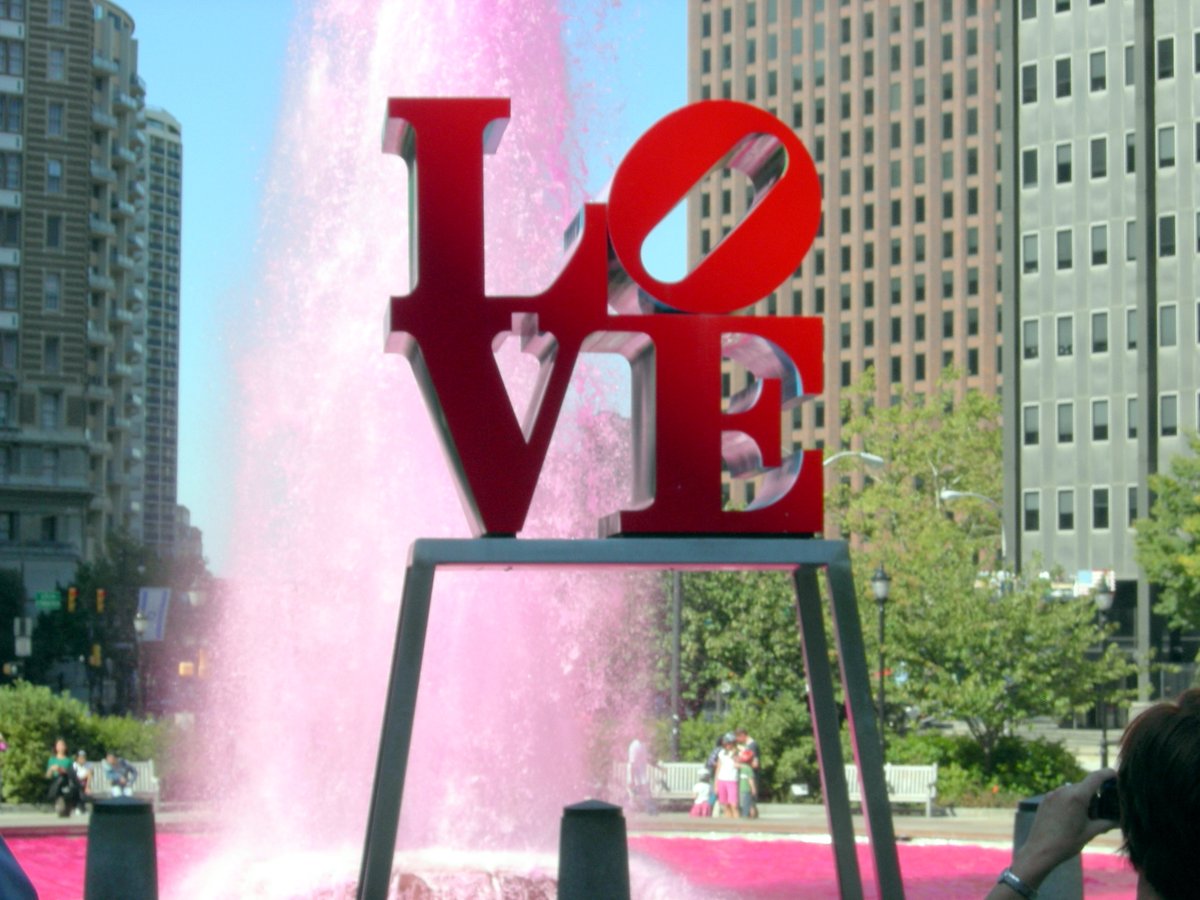
Installed in 1976 during the United States Bicentennial, Robert Indiana’s “LOVE” sculpture transformed the park’s identity. The iconic stacked red letters—with the tilted “O”—quickly became a symbol of Philadelphia’s welcoming spirit and a visual representation of unity, inclusion, and the Quaker values that underpin the city’s history (PhillyVoice; Metro Philadelphia). The sculpture’s popularity was so profound that after its brief removal in 1978, public demand ensured its permanent return, thanks to the efforts of civic leader F. Eugene Dixon, Jr. (Billy Penn).
The LOVE sculpture stands as a backdrop for countless proposals, celebrations, and photos, its image reproduced on everything from postage stamps to souvenirs (Visit Philly; Philadelphia Encyclopedia). Its message resonates globally, inspiring similar installations and reinforcing Philadelphia’s image as the “City of Brotherly Love.”
Cultural Impact and Evolution
Civic Symbolism and Gathering Place
LOVE Park’s proximity to City Hall and its open layout make it a natural stage for civic gatherings, public celebrations, protests, and festivals. The park is a democratic space, reflecting the city’s spirit of community and inclusivity (Wikipedia; PhillyVoice).
Skateboarding Mecca
From the 1980s through the early 2000s, LOVE Park was internationally renowned as a skateboarding hotspot. Its granite ledges and open design attracted skaters from around the world, featuring in legendary skate videos and competitions. Although skateboarding is now prohibited, the park’s legacy endures, with pieces of its granite repurposed in other skateparks, even as far away as Malmö, Sweden (BuzzFeed News; Jenkem Magazine; Vice; Billy Penn).
Renovations and Modernization
Between 2016 and 2018, a $20 million renovation revitalized LOVE Park, introducing green spaces, a splash fountain, improved accessibility, and updated the Fairmount Park Welcome Center. While the redesign made the park more accessible and environmentally friendly, it also altered some of the original skateboarding features, sparking debate among preservationists and the skate community (Billy Penn; BuzzFeed News).
International Influence and Public Art
LOVE Park continues to serve as a canvas for public art. Notably, “The Portal,” an interactive installation by Lithuanian artist Benediktas Gylys, connects Philadelphia with cities worldwide via real-time video links (Portals.org). Temporary art installations, performances, and multicultural events further enhance the park’s role as a global cultural hub.
Visitor Information
Visiting Hours
- Open daily from 6:00 AM to 10:00 PM (some sources state dawn to dusk; check for event-specific hours).
Admission
- Free entry for all visitors. No tickets required for general access.
Accessibility
- The park is fully wheelchair accessible, with smooth ramps, wide pathways, and accessible amenities.
- Public transportation: SEPTA’s Suburban Station and multiple bus lines serve the area.
Amenities
- Ample seating, shaded areas, and splash fountains (operational in warmer months).
- Public restrooms available onsite or at adjacent City Hall and Dilworth Park.
- Free public Wi-Fi (availability may vary).
- Regular security patrols and visible park staff.
Events and Annual Programming
LOVE Park hosts an array of events throughout the year, serving as a dynamic stage for cultural, civic, and community engagement.
Major Annual Events
- Concilio’s Hispanic Fiesta A vibrant celebration of Latino culture, featuring music, dance, and cuisine (PR Newswire).
- Wawa Welcome America Festival Philadelphia’s signature July Fourth celebration, with pop-up events, concerts, and food trucks (PR Newswire).
- Christmas Village A European-style holiday market with artisan crafts, festive lights, and seasonal treats (Destinationless Travel).
- Free Weddings The city offers free wedding ceremonies at the LOVE sculpture every Wednesday (advance registration required) (Destinationless Travel).
Recurring Attractions
- Food Trucks and Pop-Up Markets Rotating selection of local cuisine and artisan goods, especially during lunch and event hours.
- Fitness and Dance Classes Outdoor yoga, salsa and bachata dance parties, and community fitness sessions.
- Art Installations and Performances Temporary public art, live music, and surprise performances.
- Civic Gatherings Rallies, advocacy events, and public celebrations reflecting the city’s diverse communities.
Seasonal Highlights
- Summer Operational splash fountains, outdoor classes, and evening events.
- Winter Festive lights, holiday market, and seasonal installations.
For the latest schedules, consult the City of Philadelphia’s official events calendar or LOVE Park’s social media.
Nearby Attractions
LOVE Park’s central location makes it an excellent starting point for exploring Philadelphia:
- Philadelphia City Hall Directly adjacent, offering historic tours and a panoramic observation deck.
- Benjamin Franklin Parkway Leads to the Philadelphia Museum of Art, Barnes Foundation, and Rodin Museum.
- Dilworth Park Across the street, featuring fountains, skating, and seasonal programming.
- Reading Terminal Market A short walk away, home to diverse food vendors and local specialties.
- Avenue of the Arts Theaters, galleries, and cultural venues nearby.
Travel Tips
- Best Time to Visit Weekdays and early mornings offer fewer crowds and optimal lighting for photos.
- Photography Be prepared to wait for your turn at the LOVE sculpture, especially during peak hours or events.
- Pets Allowed on leash; follow posted regulations.
- Event Planning Arrive early for major events and check official sources for the latest programming and closures.
- Safety The park is well-patrolled, but standard urban precautions are recommended, especially at night.
Frequently Asked Questions (FAQ)
Q: What are LOVE Park’s visiting hours?
A: Open daily from 6:00 AM to 10:00 PM (check for special events).
Q: Is there an entrance fee?
A: No, LOVE Park is free to enter.
Q: Is the park accessible to people with disabilities?
A: Yes, LOVE Park features ramps, smooth pathways, and accessible amenities.
Q: How do I get to LOVE Park via public transit?
A: SEPTA’s Suburban Station and multiple bus lines serve the area. The park is within walking distance of major Center City hotels and attractions.
Q: Are pets allowed?
A: Yes, pets are permitted but must be leashed.
Q: Can I get married at LOVE Park?
A: Yes, the city offers free ceremonies on Wednesdays with advance registration.