The Irish Memorial
The Irish Memorial in Philadelphia commemorates the victims of the Great Hunger, also known as the Irish Famine, and the Irish immigrants who sought new lives in America. It is part of Philadelphia’s Historic District, near Independence National Historical Park and Penn’s Landing. The memorial is described as being at the southeast corner of Front and Chestnut Streets; another account refers to its new temporary location at 109 Spruce Street.
The memorial’s centerpiece is a bronze sculpture by Glenna Goodacre, known for her work on the Vietnam Women’s Memorial in Washington, D.C. The monument honors the famine victims and immigrants and contributes to the area’s cultural and historical character. It holds particular meaning for the 44 million Americans of Irish descent, while its story resonates with visitors regardless of ancestry (Irish Memorial).
History and significance
The Great Hunger, or An Gorta Mór, occurred between 1845 and 1850. More than one million Irish men, women, and children died from starvation and disease, while another million emigrated to escape the conditions. The memorial remembers those affected and their descendants who sought refuge and a new life in the United States.
The memorial was conceived to mark the sesquicentennial of the Great Hunger. Civic leaders, government officials, private foundations, and the community joined in a $3 million project to plan and build it. It officially opened on October 25, 2003 (Irish Memorial).
Irish immigrants had been part of Philadelphia’s history since the city’s early days. Before the American Revolution, Irish settlers included Protestant Scots-Irish and Irish Quakers. By the early 19th century, Philadelphia had approximately 5,000 Irish-born residents, many of them veterans of the failed Irish uprising of 1798 (Irish Memorial).
The Society of the Friendly Sons of St. Patrick, founded in 1771, supported Irish immigrants in Philadelphia. The benevolent organization included both Catholic and Protestant members and aided thousands of immigrants arriving by ship.
The memorial’s design also incorporates elements of the Irish landscape, including stone walls and a stone from Croagh Patrick (Irish Star).
What to see
The bronze sculpture has 35 life-sized figures and measures 30 feet long, 12 feet wide, and 12 feet high. It is arranged in vignettes that tell the story of the Irish immigrant experience (Atlas Obscura).
The east end represents the famine-stricken Irish landscape, with figures shown in states of despair and suffering. The sculpture rises into a ship, symbolizing the Atlantic crossing. The figures there convey anticipation, fear, hope, and determination. At the west-facing end, immigrants step onto American soil and move forward toward a future they hope will bring freedom and opportunity.
Designed as a sculpture in the round, the monument can be viewed from all angles. Its figures wear period attire and are loosely modeled in an impressionistic style. The different perspectives reveal varied details, expressions, and body language, tracing a progression from grief and despair to hope and resolve. Landscape and architectural elements help evoke both the barren Irish countryside and the ship.
Visiting information
Hours and admission
The Irish Memorial is open to the public 24/7, and there is no admission fee or ticket requirement. Visitors can explore the monument at their own pace.
Location, accessibility, and transport
The memorial is described as being at the southeast corner of Front and Chestnut Streets in Philadelphia’s Historic District. A separate account describes its new temporary location at 109 Spruce Street as a focal point for community gatherings and commemorations.
The site is wheelchair accessible. Philadelphia buses and the SEPTA subway are public transit options for reaching the area. Several parking garages are nearby, though street parking can be limited.
Tours and events
The memorial does not offer on-site guided tours. Visitors can join historical walking tours in Philadelphia, which often include nearby landmarks such as Independence Hall and the Liberty Bell. Educational programs and events are occasionally held at the memorial, particularly around significant dates such as St. Patrick’s Day (Irish Memorial).
Accounts differ on how often events are held: one says the memorial does not host regular events, though it serves as a gathering place for commemorative ceremonies, particularly around St. Patrick’s Day. Another says it hosts events throughout the year and identifies an annual St. Patrick’s Day Celebration with a ceremony and festivities.
Amenities and support
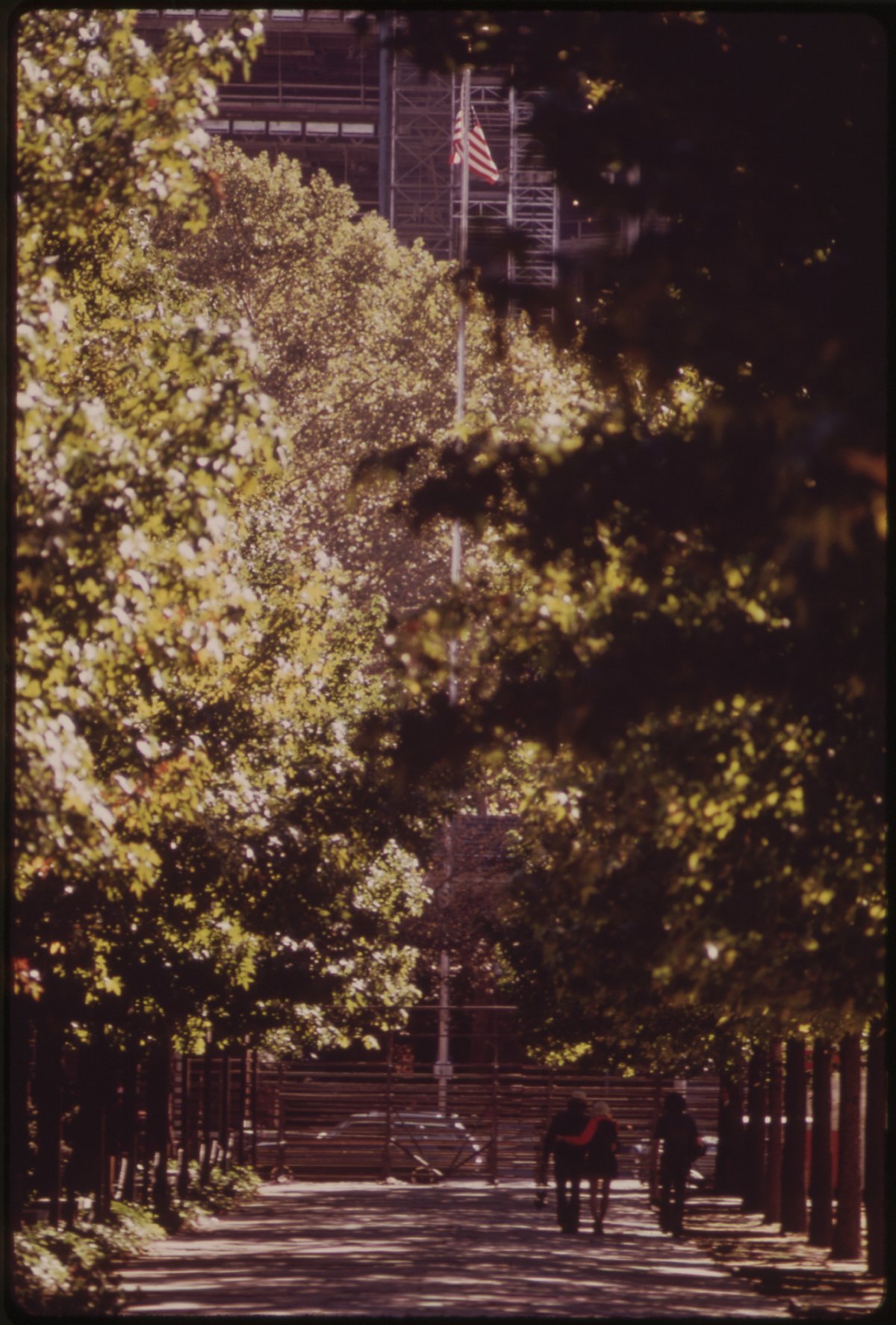
The memorial is part of a park area with walkways, benches, and green spaces. The park is dog-friendly, public restrooms are available nearby, and cafes and restaurants in the vicinity offer refreshments.
The memorial is funded by donations from individuals and organizations. Contributions can support its maintenance and preservation, and fundraising events and volunteer activities are also available through the Irish Memorial.
Tips
The suggested best times to visit Philadelphia are spring (April to June) and fall (September to November), when the weather is mild and pleasant. Summers can be hot and humid, while winters can be cold and snowy. August is also described as a lively time to visit, with numerous events and festivals (Visit Philly).
Take time to walk around the sculpture and look at it from different angles. For photography, early morning and late afternoon offer softer light; changing light throughout the day also creates varied compositions, shadows, and highlights.
The memorial is a place of reflection and remembrance, so a quiet and respectful demeanor is appreciated. Visitors are also advised in the original visitor information to be mindful of their belongings and surroundings, as the area can get busy, especially during peak tourist seasons.
Nearby places
Nearby attractions include:
- Independence Hall, where the Declaration of Independence and the Constitution were debated and adopted.
- The Liberty Bell, an iconic symbol of American independence.
- The National Constitution Center, which offers a deeper look at American history and cultural heritage.
- The Plough & The Stars and Brownie’s Irish Pub, nearby establishments offering traditional Irish fare and a place for a meal or a pint after visiting the memorial (Irish Star).
FAQ
What are the visiting hours?
The Irish Memorial is open to the public 24/7.
Is there an admission fee?
No. Admission is free, and tickets are not required.
Is the memorial wheelchair accessible?
Yes, the site is wheelchair accessible.
Are guided tours available at the memorial?
The memorial does not offer on-site guided tours. Visitors can explore it at their own pace or join a historical walking tour in Philadelphia.