
Founding and Early Development (1695–1744)
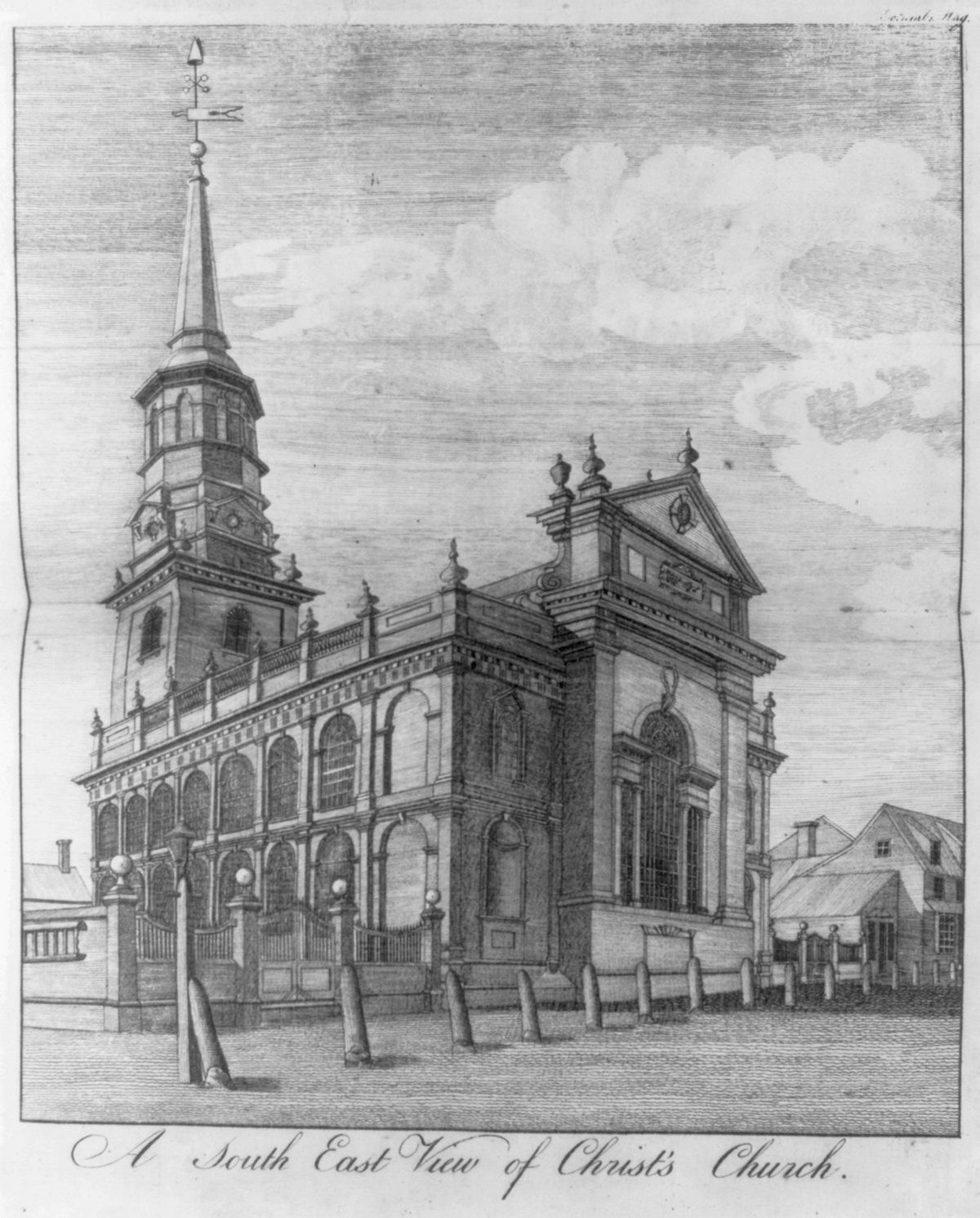
Established in 1695 as a parish of the Church of England, Christ Church was a direct outcome of William Penn’s Charter for Pennsylvania (Christ Church History). The first modest structure, built at Market and 2nd Streets, was soon outgrown by the expanding congregation (The Clio). In 1727, construction began on a new Georgian-style church, led by Dr. John Kearsley and inspired by the architecture of London’s Christopher Wren churches. Completed in 1744, the church features arched windows, fluted columns, and elegant white pews (Uncovering PA).
Architectural Significance and Features
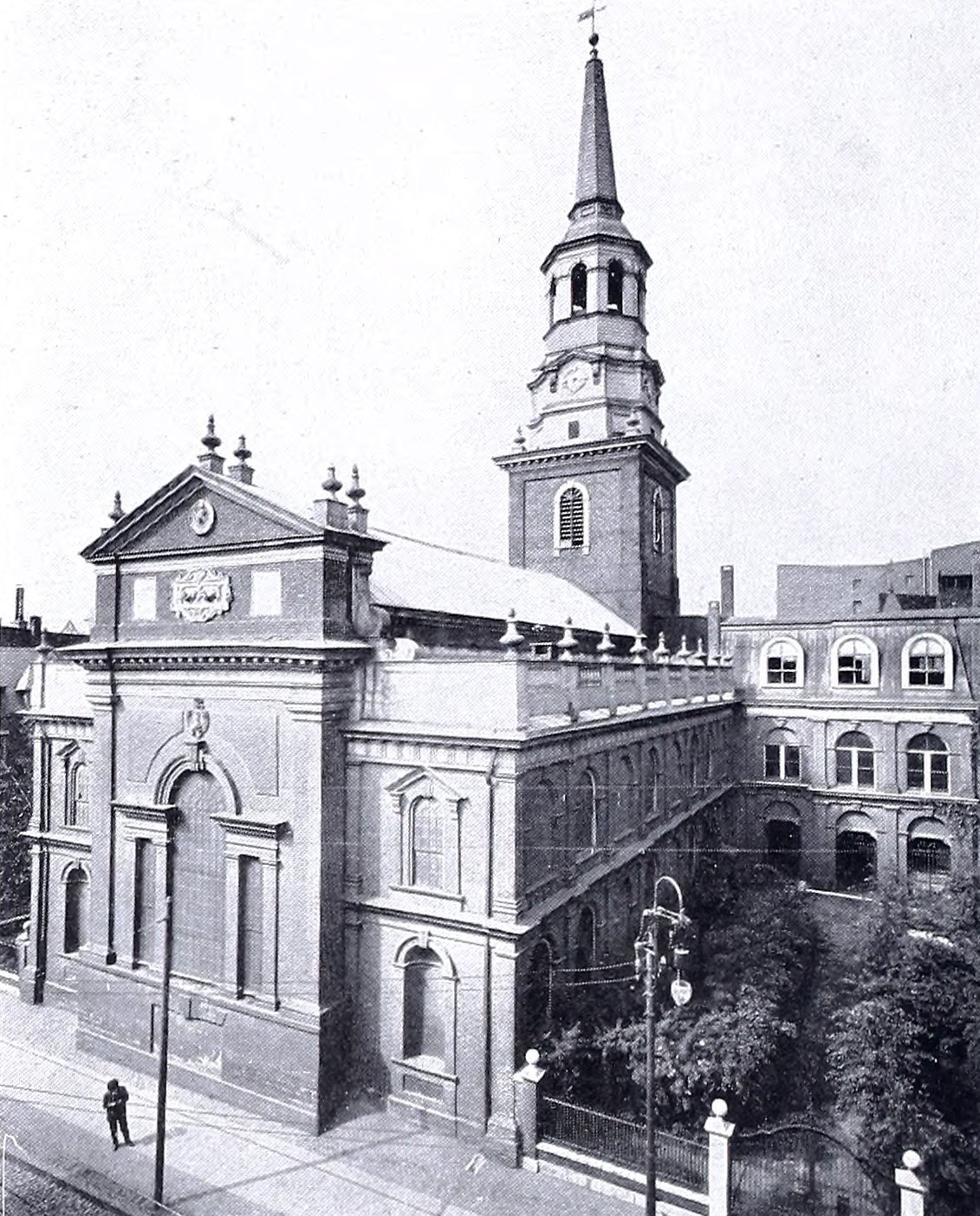
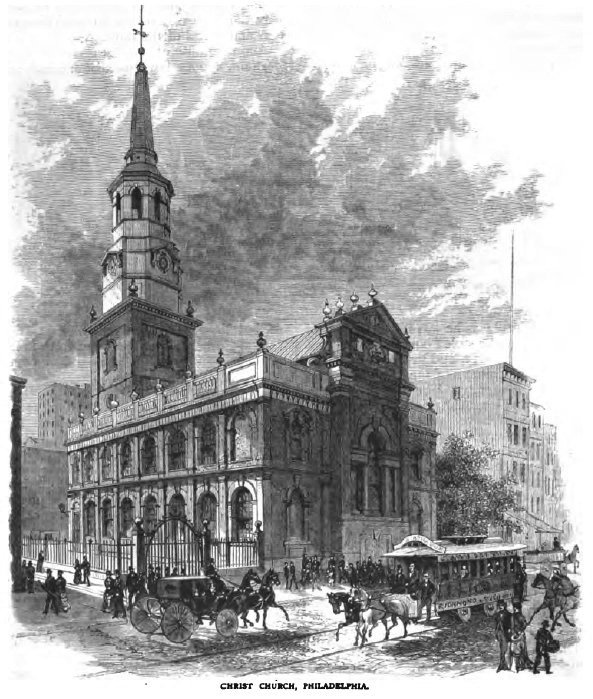
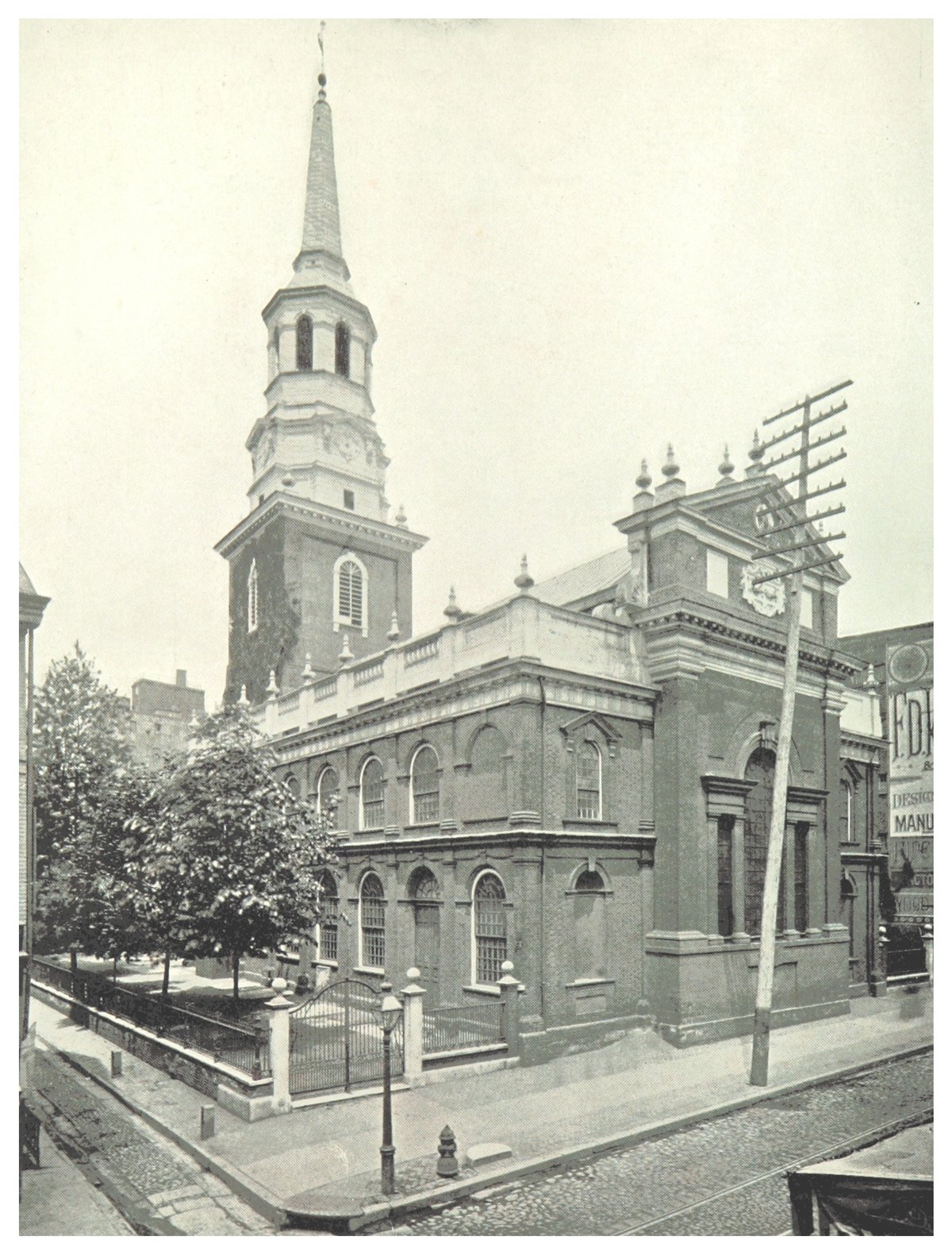
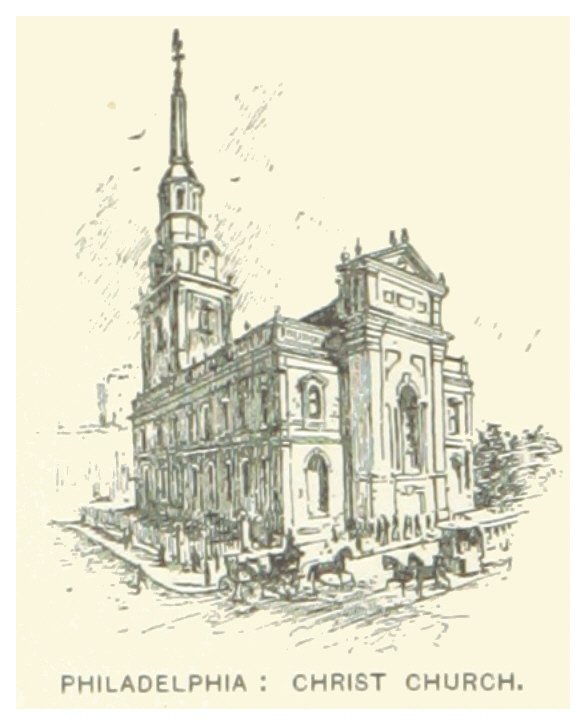
Christ Church stands among the finest examples of Georgian ecclesiastical architecture in America (Wikipedia). The symmetrical façade, understated interior, and soaring 196-foot steeple (added in 1754) define its grandeur (Lonely Planet; Uncovering PA). The steeple, designed by Robert Smith and financed with help from Benjamin Franklin’s lottery, was for decades the tallest structure in the colonies.
Inside, original 18th-century features remain, including the baptismal font from London (1697), used to baptize William Penn, and a communion table crafted by Jonathan Gostelowe (Wikipedia). The grand chandelier, installed in 1740, still illuminates the sanctuary (Visit Philly).
Role in the American Revolution
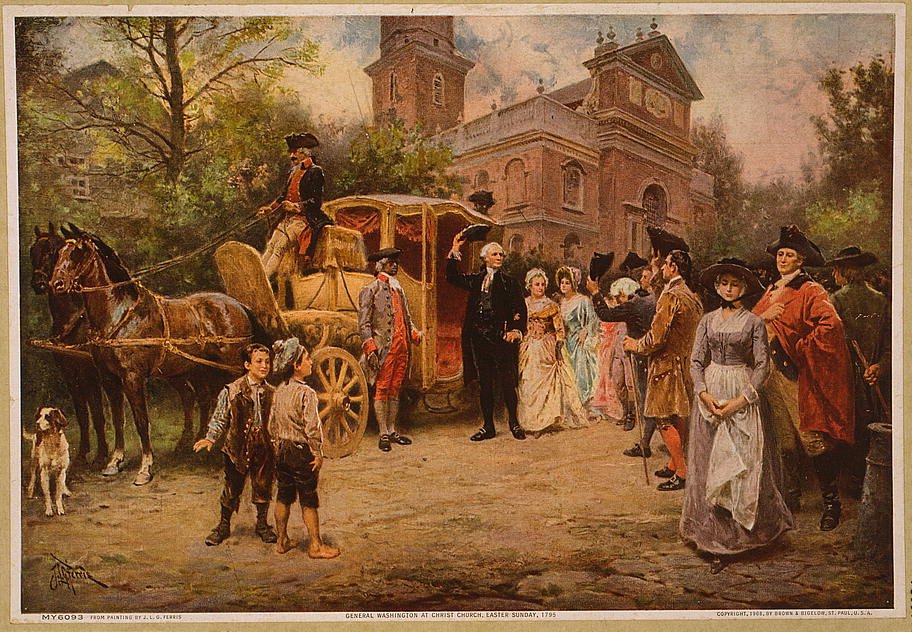
As Philadelphia’s principal Anglican church, Christ Church was a gathering place for influential figures during the American Revolution. Nearly all delegates to the First and Second Continental Congresses worshipped here (Uncovering PA). Fifteen signers of the Declaration of Independence were parishioners (Wikipedia; Christ Church History). On July 5, 1776, Declaration signers attended services, underscoring the church’s centrality in America’s founding (Lonely Planet).
After the Revolution, Christ Church became the birthplace of the American Episcopal Church, with rector William White serving as its first Presiding Bishop (Wikipedia).
Social and Cultural Impact
The congregation of Christ Church reflected the diversity of colonial Philadelphia—including free and enslaved Black individuals, artisans, merchants, and political leaders (Broadway World). Roughly a quarter of the city’s free and enslaved Black population was baptized here during its first century. Absalom Jones, born enslaved to a vestryman, was ordained as the first African American Episcopal priest in the U.S. at Christ Church (Christ Church History). The church also operated a religious school for enslaved people, reflecting its evolving role in discussions about race and freedom.
Exhibitions like “On Buried Ground” highlight the histories of free and enslaved Black individuals interred without headstones, bringing to light the church’s complex social legacy (Broadway World).
Christ Church Burial Grounds
Christ Church’s burial grounds are among the nation’s most significant colonial and revolutionary-era cemeteries. The historic churchyard contains graves of two signers of the Declaration of Independence, while the larger Christ Church Burial Ground—located at 5th and Arch Streets—houses over 4,000 graves, including Benjamin Franklin and four other signers (Uncovering PA). Maps are available for visitors to locate notable graves.
Visiting Christ Church Philadelphia: Hours, Tickets, and Tours
Location
- Address 20 N. American St. (2nd above Market), Philadelphia, PA 19106
- Burial Ground N 5th and Arch Streets
Visiting Hours
- Church Open Tuesday–Sunday, 10:00 AM–4:00 PM. Closed Mondays and major holidays.
- Burial Ground Open daily 11:00 AM–5:00 PM (December: 11:00 AM–4:00 PM, weather permitting). Closed January, February, Easter, Thanksgiving, and Christmas (Christ Church GPS Address).
Admission & Tickets
- Self-Guided Tour $5 adults, $2 youth (ages 5–12)
- Burial Ground $5 adults, $2 youth
- Combo Ticket $8 adults, $3 youth
- Guided Tours (20–30 minutes) $10 adults, $5 youth
- ACCESS Cardholders $2 per person for up to 4 family members (with valid card and ID)
Admission is free for general entry, but guided tours and combo tickets require purchase. Donations are encouraged to support preservation efforts.
Accessibility
- Christ Church is wheelchair accessible via 2nd Street; accessible restrooms are available.
- For additional accommodations, contact 215-922-1695.
Tours & Group Visits
- Guided tours are offered daily and provide in-depth historical context.
- Groups of 10+ should reserve in advance (contact info), though walk-ins are welcome.
Special Events
Christ Church hosts annual events such as historical reenactments and the Red, White, and Blue Block Party in July, with extended hours and special programming.
Architectural Legacy and Preservation
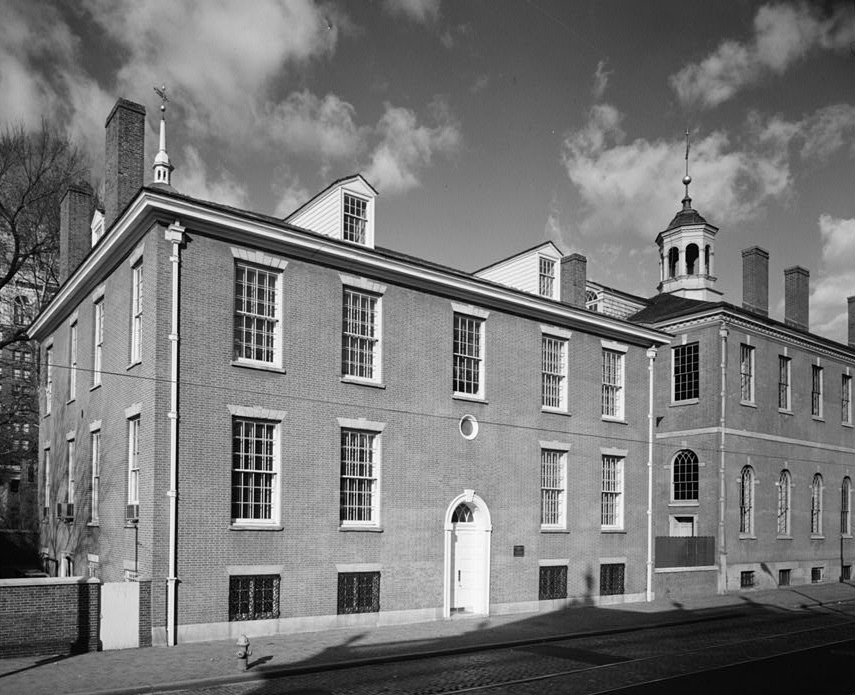
Christ Church’s Georgian colonial design—red brick façade, white trim, and iconic steeple—remains largely unchanged since the 18th century (Lost New England). Its grand scale and ornate detailing set it apart from early Philadelphia’s Quaker meeting houses, reflecting the city’s growing wealth and civic aspirations.
The church’s interior features high, arched ceilings, clear glass windows, original pews, a grand chandelier, and a medieval baptismal font from London (Visit Philly). Renovations by Thomas U. Walter in the 1830s modernized the sanctuary while preserving its colonial character (American Heritage).
Christ Church is a designated National Historic Landmark, with ongoing restoration efforts focused on maintaining both the exterior and interior fabric, including repairs after a 1908 fire and continual conservation of historic woodwork (Lost New England).
Visitor Experience and Media
- Virtual Tours Available on the official website, offering high-quality images of the architecture and burial grounds.
- Photography Permitted inside and outside; please respect the space during services or private events.
- Acoustics The sanctuary’s superb acoustics make it a venue for concerts and community events (TripJive).
- Maps and Brochures Available for $1 to enhance self-guided tours; virtual resources and lesson plans are also online.
Practical Tips for Your Visit
- Arrive early on weekends or holidays to avoid crowds.
- Check weather for outdoor burial ground visits, especially in winter.
- Wear modest attire out of respect for the congregation.
- Restrooms and accessibility features are on-site.
- Combine your visit with nearby sites like Independence Hall, the Liberty Bell, and Betsy Ross House (PHL Visitor Center).
Frequently Asked Questions (FAQ)
Q: What are the visiting hours for Christ Church Philadelphia?
A: Tuesday–Sunday, 10:00 AM–4:00 PM; burial ground typically 11:00 AM–5:00 PM (seasonal variations apply).
Q: How much do tickets cost?
A: Self-guided tours: $5 adults / $2 youth; combo tickets: $8 adults / $3 youth; guided tours: $10 adults / $5 youth.
Q: Is Christ Church wheelchair accessible?
A: Yes, via 2nd Street, with accessible restrooms.
Q: Can I take photos?
A: Yes, but please be respectful.
Q: Are guided tours available?
A: Yes, daily tours provide detailed historical insight; advance booking recommended for groups.
Q: How do I reserve group tours?
A: Call 215-922-1695 ext. 32 or email the Director of Education & Preservation (see Contact Information).
Contact Information
- Phone 215-922-1695
- Email Matthew Havens, Director of Education and Preservation: [email protected]
- Official Website Christ Church Philadelphia Hours & Admission