Plan and listen to Baker Bowl with Audiala.
Audio guide in your pocket, itinerary in your browser. Built for the way you actually visit.
Introduction: Baker Bowl’s Historical Significance and Visitor Information
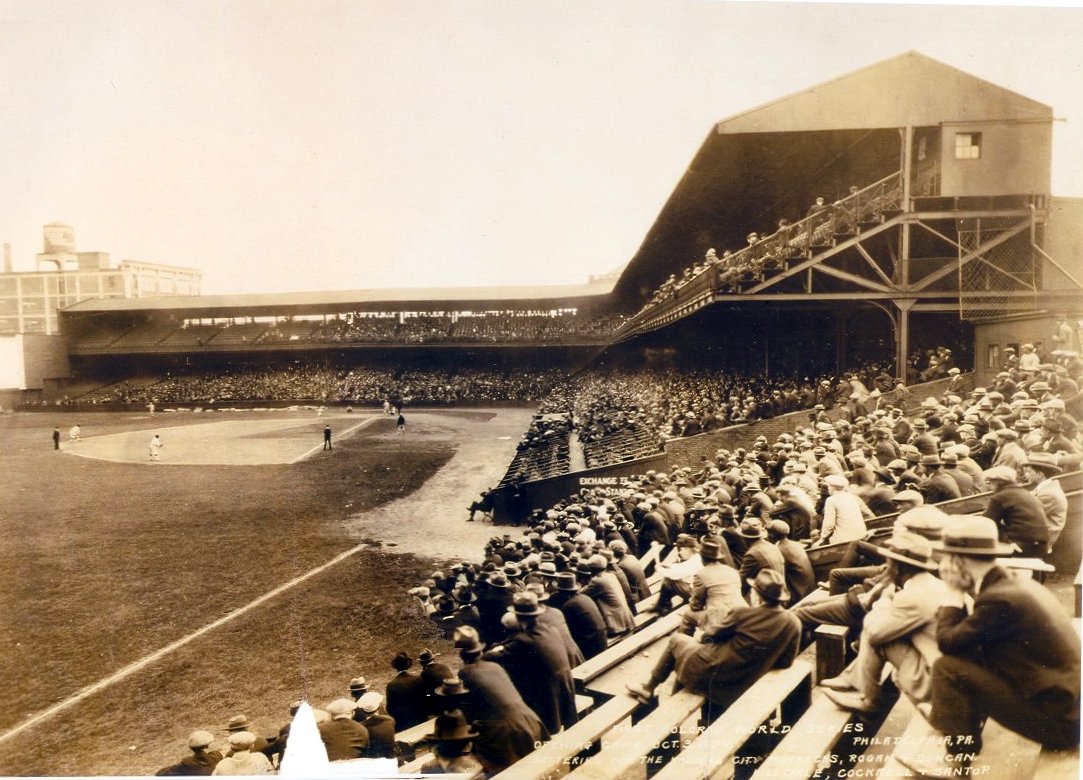
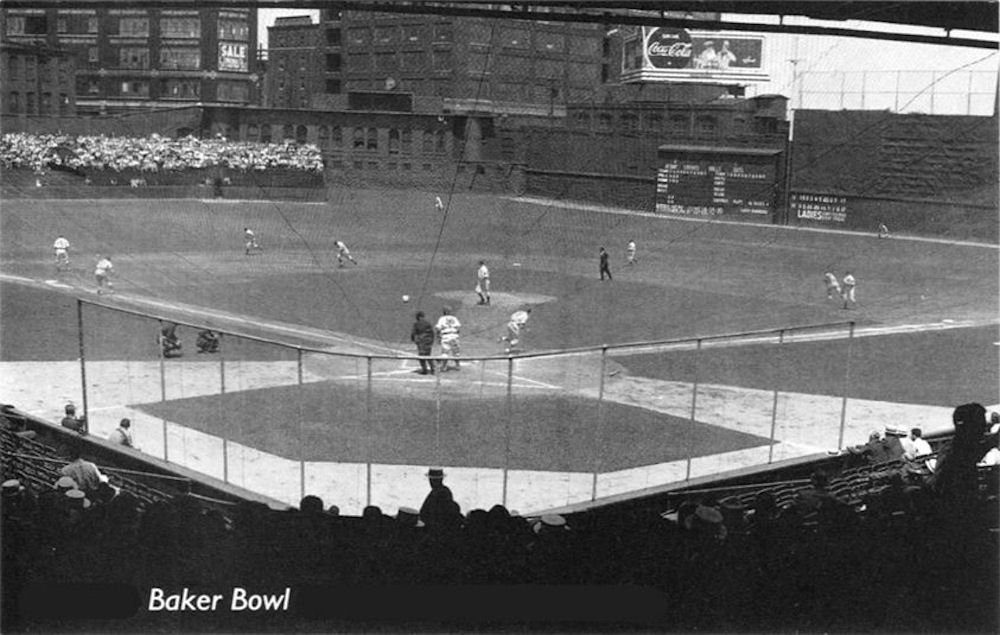
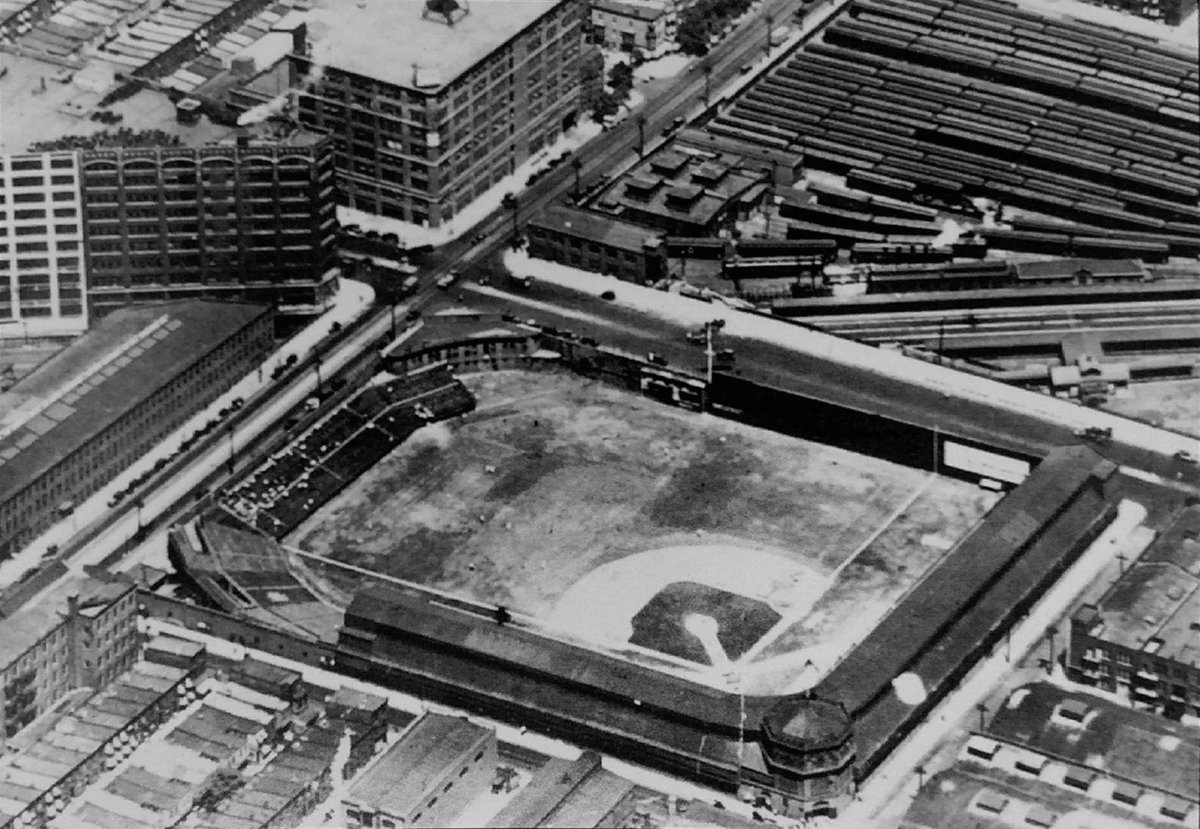
Nestled in North Philadelphia, the historic Baker Bowl site serves as a testament to the city’s rich baseball and cultural heritage. Constructed in 1887 as National League Park, the Baker Bowl was home to the Philadelphia Phillies until 1938 and played a pioneering role in the development of baseball architecture. Known for its innovative construction—including the first use of brick outer walls and cantilevered concrete supports—the Baker Bowl set industry standards and influenced stadium design nationwide. Its distinctive features, such as the iconic 60-foot right-field wall only 280 feet from home plate, earned it nicknames like “The Band Box.”
Beyond baseball, the Baker Bowl hosted Negro League World Series games, Philadelphia Eagles NFL matches, and diverse community events, cementing its role in the city’s social fabric. Although the original ballpark was demolished in 1950, the site remains accessible as a historical landmark, marked by a Pennsylvania state historical marker. Visitors can freely explore the area during daylight hours, with nearby attractions including Temple University, Franklin Square, and the Philadelphia Museum of Art. This guide provides a detailed look at the Baker Bowl’s storied past, visitor logistics, travel tips, and connections to Philadelphia’s broader sporting heritage, making it an essential resource for baseball enthusiasts and history lovers alike. (Baseball Almanac, SABR, Philadelphia Encyclopedia, Deadball Baseball)

Origins and Construction
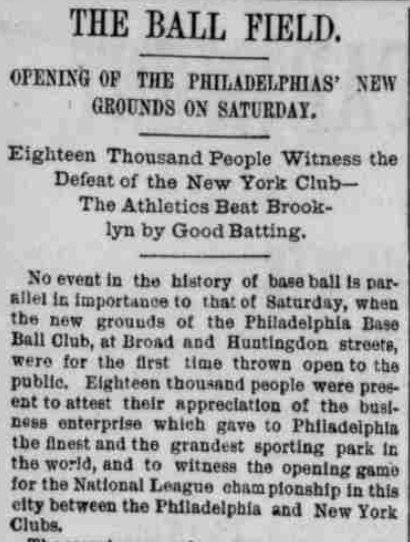
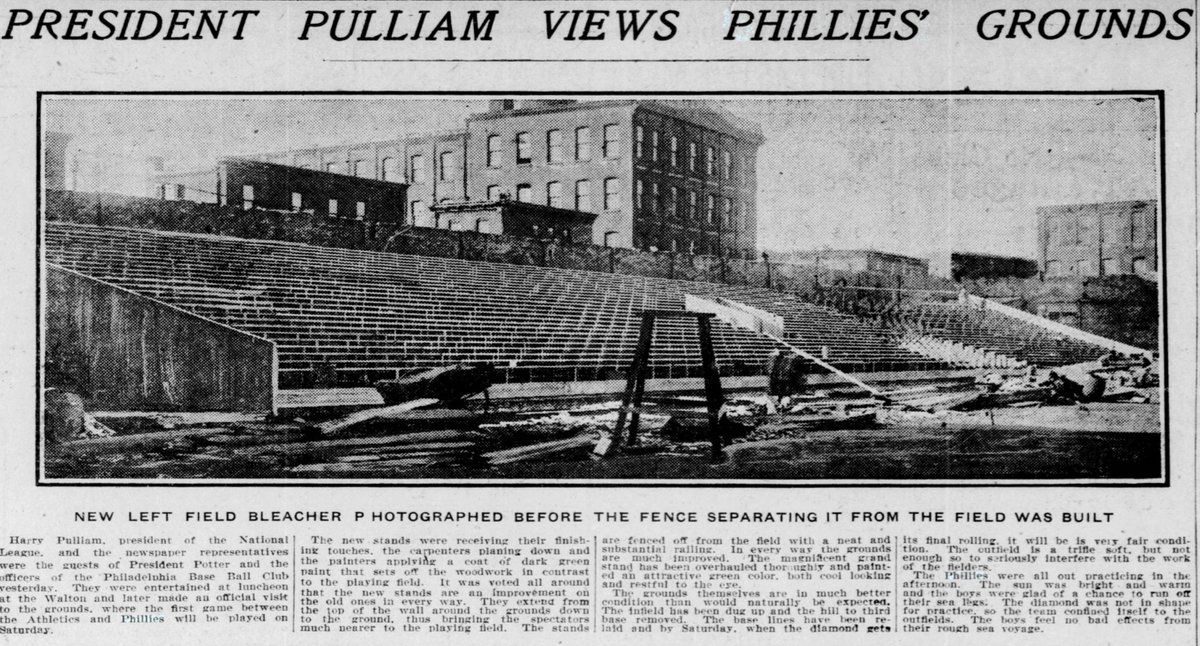
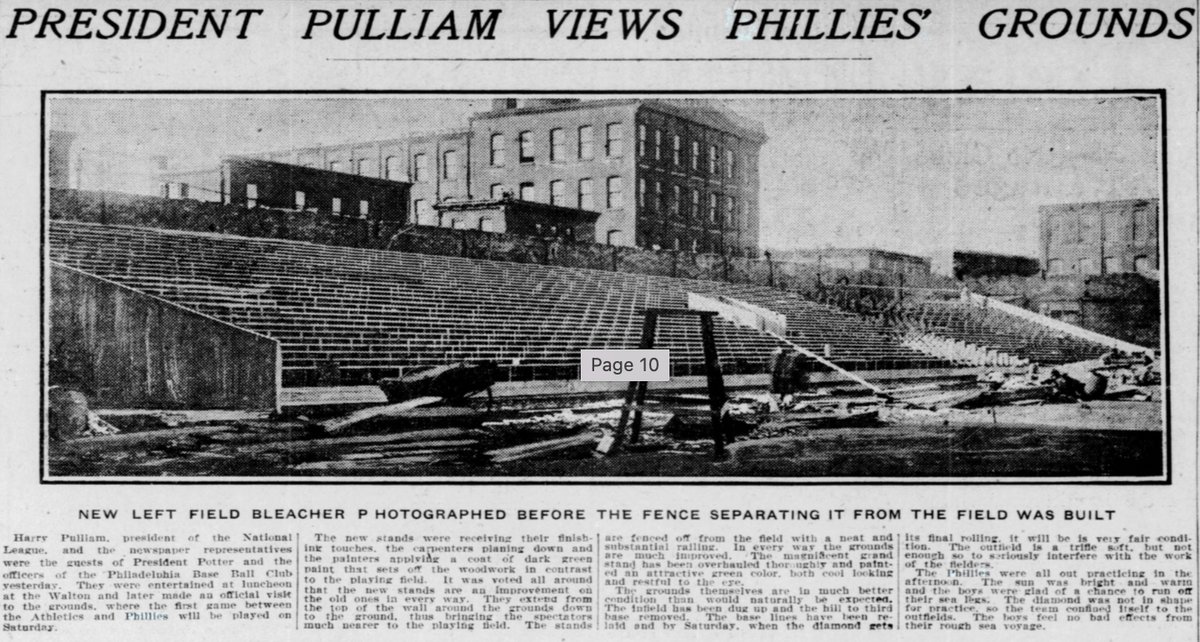
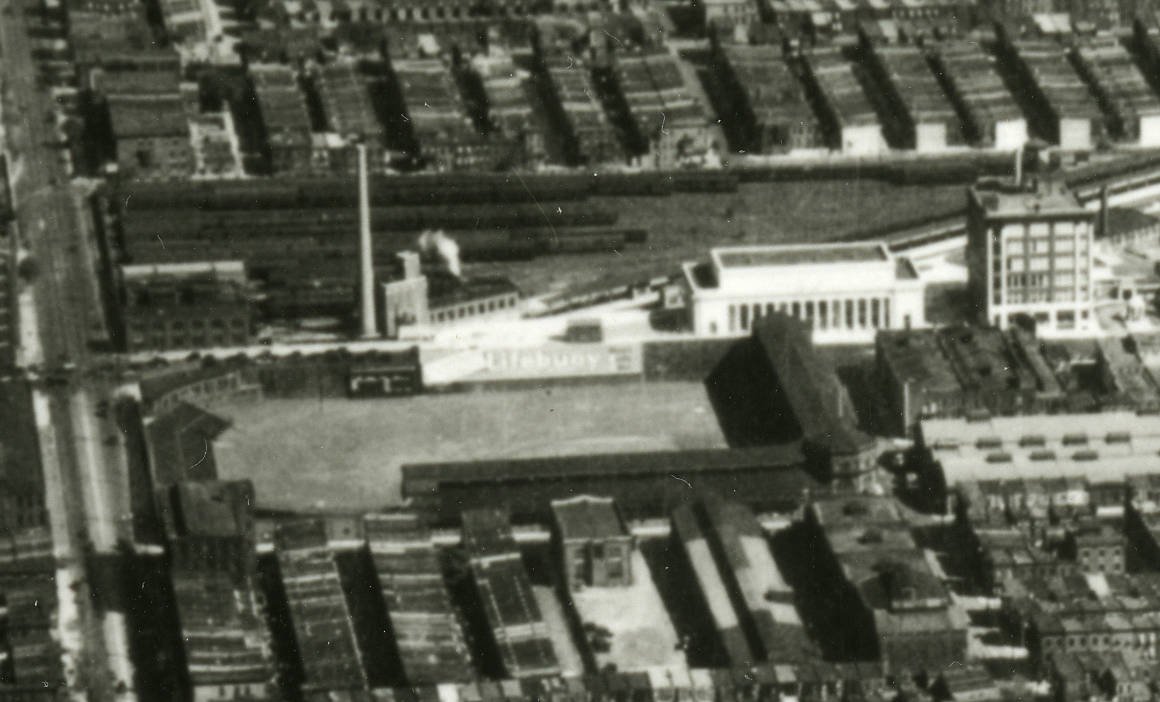
Baker Bowl, originally National League Park, was built in 1887 by Phillies owners Al J. Reach and John Rogers to position Philadelphia as a premier baseball city (A Plus Sports and More). The wooden structure cost $101,000 and seated 12,500. Its location, bounded by N. Broad Street, W. Huntingdon Street, N. 15th Street, and W. Lehigh Avenue, made it highly accessible and central to community life (Hagley Library, Philadelphia Encyclopedia).
A catastrophic fire in 1894 destroyed most of the park, but the brick outer walls survived. In 1895, the Baker Bowl was rebuilt with seating for 18,800, a double-decked grandstand, and cantilevered concrete supports—pioneering features that eliminated obstructed views and set new standards for stadium safety and design (Baseball Almanac, SABR).
Architectural Innovations and Notable Features
The Baker Bowl’s most famous feature was its right-field wall: just 280 feet from home plate and rising 60 feet high, it was even taller than Fenway Park’s Green Monster. This unique design created a haven for left-handed power hitters and influenced stadium architecture nationwide (Baseball Almanac). Other quirks included a left-field “terrace” present in the early years and a variety of nicknames—“The Cigar Box,” “The Band Box,” “Huntingdon Field Grounds”—reflecting its compact, distinctive layout (A Plus Sports and More).
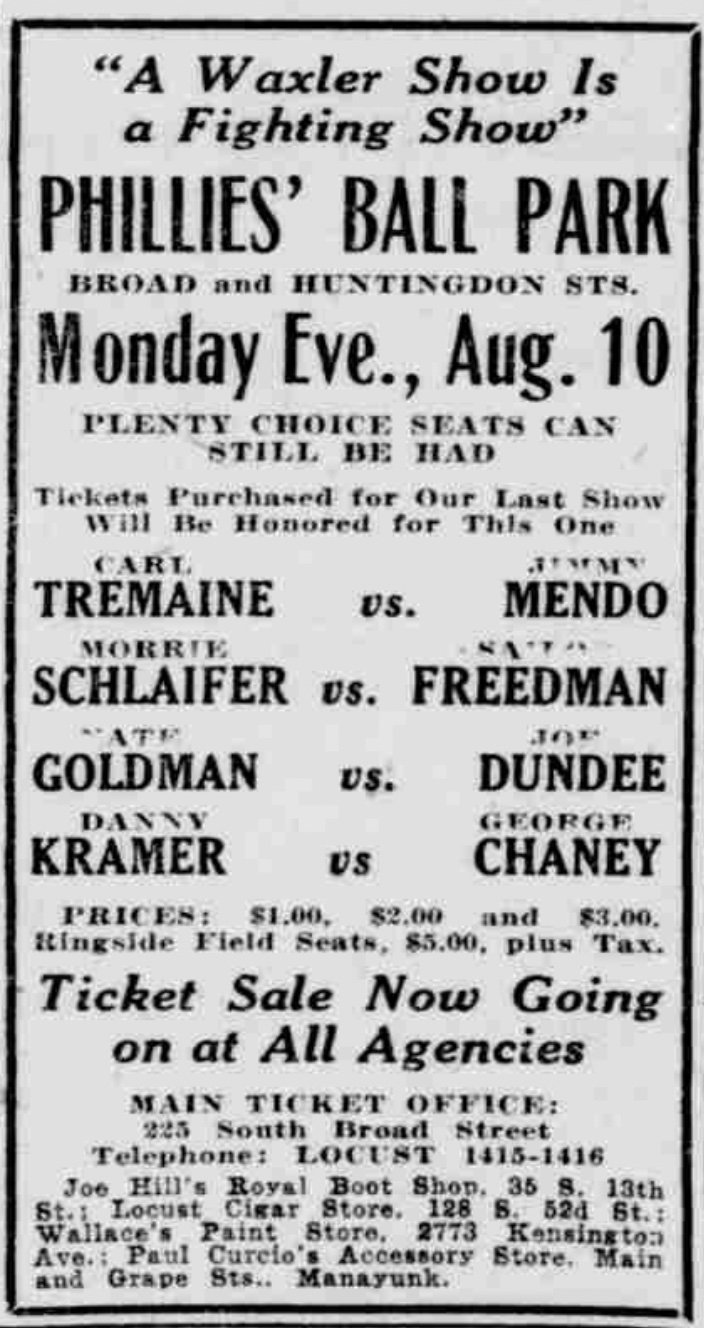
Beyond baseball, the Baker Bowl hosted non-sporting events such as circuses, midget car racing, and community gatherings, illustrating its role as a multifunctional urban venue (Deadball Baseball).
Historical Events and Milestones
Baseball and Beyond
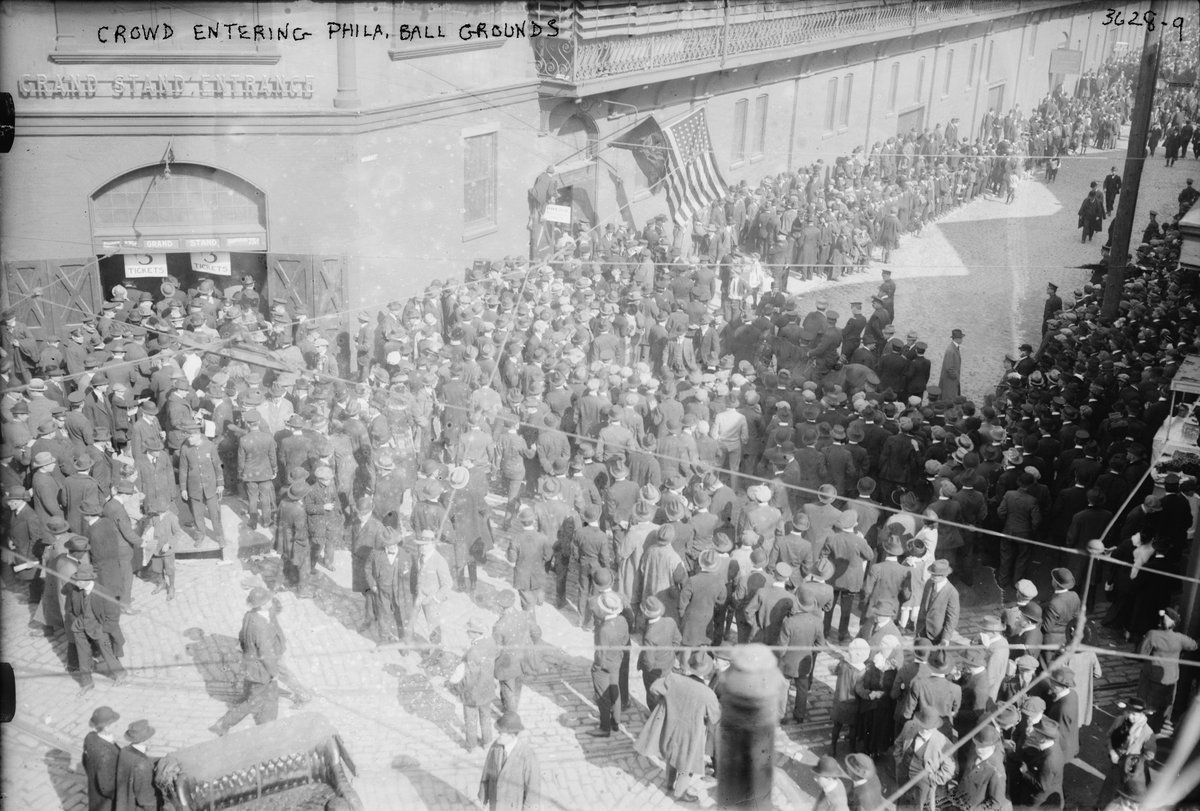
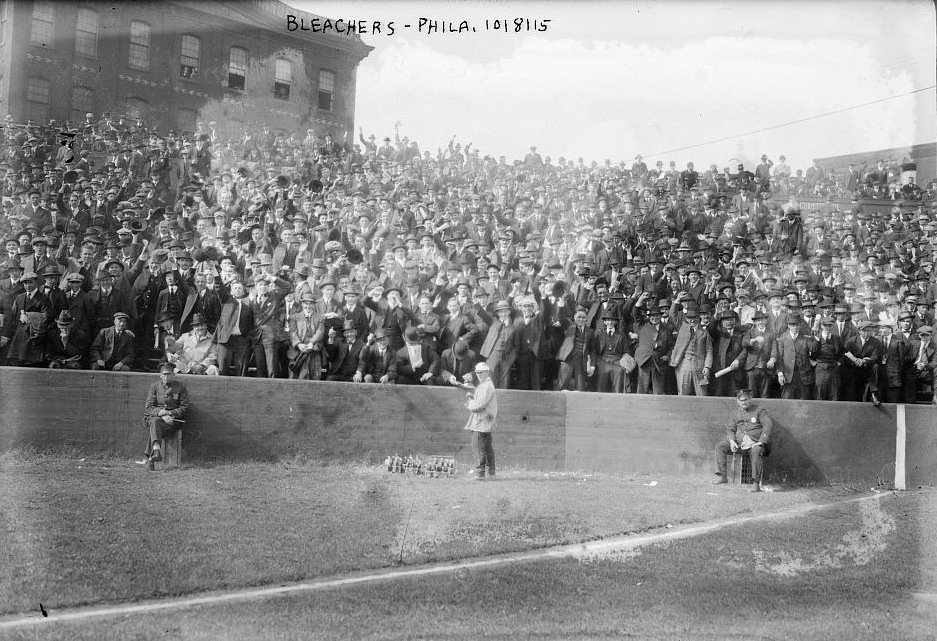
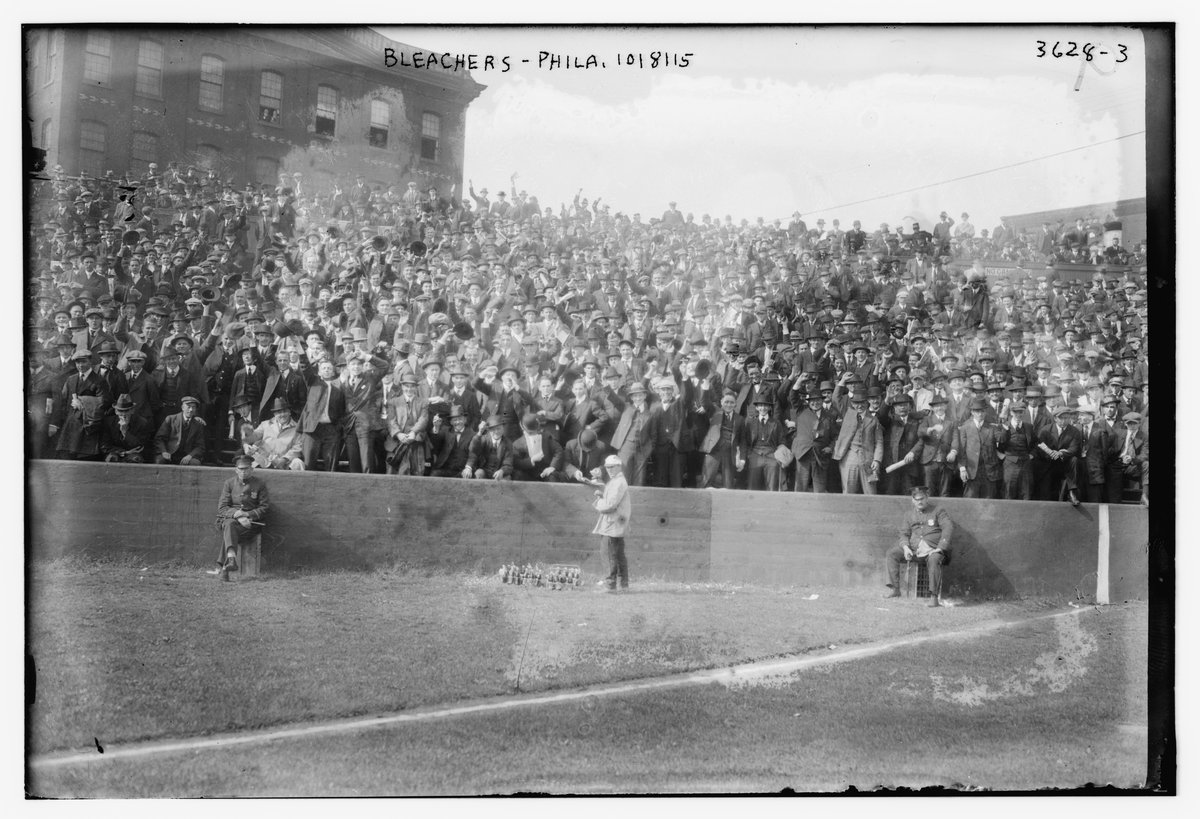
- 1915 World Series: The Phillies’ first World Series appearance took place here, attended by President Woodrow Wilson—the first sitting president at a Series game (A Plus Sports and More).
- Negro League World Series: Hosted from 1924 to 1926, including the inaugural series between the Hilldale Daisies and Kansas City Monarchs (SABR).
- Babe Ruth’s Final Game: The legendary slugger played his last major league game at the Baker Bowl in 1935 (Baseball Almanac).
- Philadelphia Eagles: The park was briefly home to the NFL’s Eagles from 1933–1935 (SABR).
Tragedy and Impact
- 1903 Upper Deck Collapse: A structural failure led to dozens of injuries and fatalities, prompting nationwide reforms in stadium safety (Baseball Almanac).
- 1927 Disaster: Another stand collapse added to the park’s troubled safety record.
- 1923 Court Ruling: Solidified the tradition of fans keeping balls caught in the stands, a beloved baseball custom (Project Ballpark).
Decline, Demolition, and Enduring Legacy
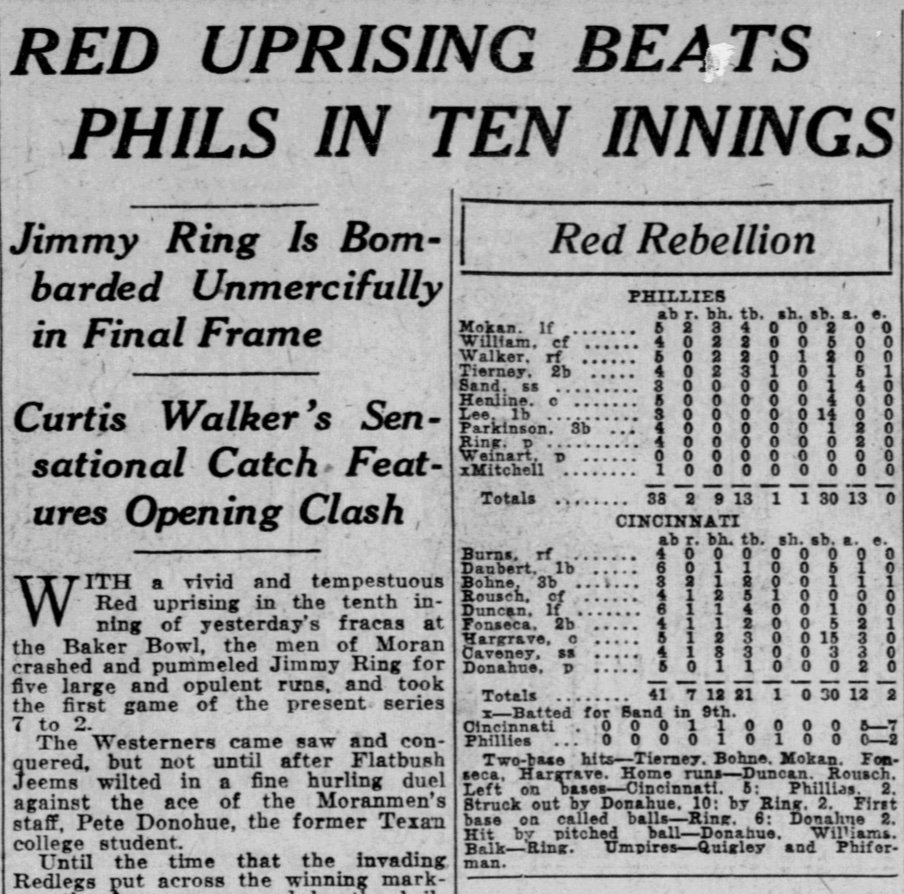
After World War I, the Phillies’ poor performance and financial challenges led to neglect and decline. The park became increasingly dilapidated, with maintenance and improvements ceasing (SABR, Philadelphia Encyclopedia). In 1938, the team moved to the more modern Shibe Park. The Baker Bowl was gradually dismantled, suffering from fires, vandalism, and storm damage until its demolition in 1950 (SABR).
Despite this, the Baker Bowl’s influence persists. Its architectural innovations—especially cantilevered supports—shaped the design of modern ballparks. The site is commemorated by a Pennsylvania state historical marker, preserving its memory for future generations (PHMC Marker).
Visiting the Baker Bowl Site
While the ballpark is gone, its location remains a significant historical site in Philadelphia.
Hours and Admission
- Visiting Hours: Open public space, accessible year-round during daylight hours.
- Tickets: No tickets or fees required.
Accessibility
- Wheelchair accessible with paved sidewalks and ramps.
- Urban environment; visitors should use typical city safety precautions.
Tours and Travel Tips
- Guided Tours: No official tours, but local historical walking tours occasionally include the Baker Bowl site. Check with local providers or Philadelphia tourism for current offerings.
- Getting There: Located at N. Broad St. and W. Huntingdon St., North Philadelphia. Accessible by SEPTA buses and regional rail (Temple University station nearby). Limited street parking—public transit or rideshare recommended.
Nearby Attractions
- Temple University: Museums and galleries nearby.
- Franklin Square: Historic park with family activities.
- Philadelphia Museum of Art: Renowned cultural institution.
Exploring the Site
- Historical Marker: Find and read the Pennsylvania state marker for concise history.
- Surviving Structures: Look for the V-shaped warehouse and two-story brick building, remnants from the ballpark era.
- Walking Tour: Pair with a visit to the former Shibe Park site for a full historical experience.
- Use Historical Maps: Overlay vintage photos/maps on your device for a richer self-guided walk (Virtual Globetrotting).
Frequently Asked Questions (FAQ)
Is the Baker Bowl site open to the public?
Yes, the site is accessible year-round during daylight hours.
Are tickets required to visit?
No, the site is an open public space with no admission fee.
Is the site wheelchair accessible?
Yes, paved sidewalks and ramps provide accessibility.
Are guided tours available?
No official tours, though some local walking tours include the site.
Are any original structures still standing?
The stadium itself is gone, but some adjacent historic buildings and the state marker remain.
Where can I learn more about its history?
See the reference section below for detailed online resources and organizations dedicated to Philadelphia baseball history.
Discover More
Plan your visit to the Baker Bowl site and immerse yourself in Philadelphia’s rich sports history. For more guides and heritage updates, follow us on social media and download the Audiala app for curated audio tours and interactive experiences.
Listen to the full story in the app
The whole Baker Bowl,
told well.
Audio guides for 1,100+ cities across 96 countries. History, stories, and local insight — offline ready.
Verified, and shown.
Researched and written by the Audiala editorial team from historical records, architectural archives, and local expertise.
Researched from Wikidata, Wikipedia & official sources · fact-checked · How we make our guides →