Magic Kingdom
OrlandoUnited States 28° N · 81° W Updated Apr 2026
Built in Bay Lake rather than Orlando proper, Magic Kingdom is a carefully staged kingdom of ferries, fireworks, and crowds that locals still call MK today.
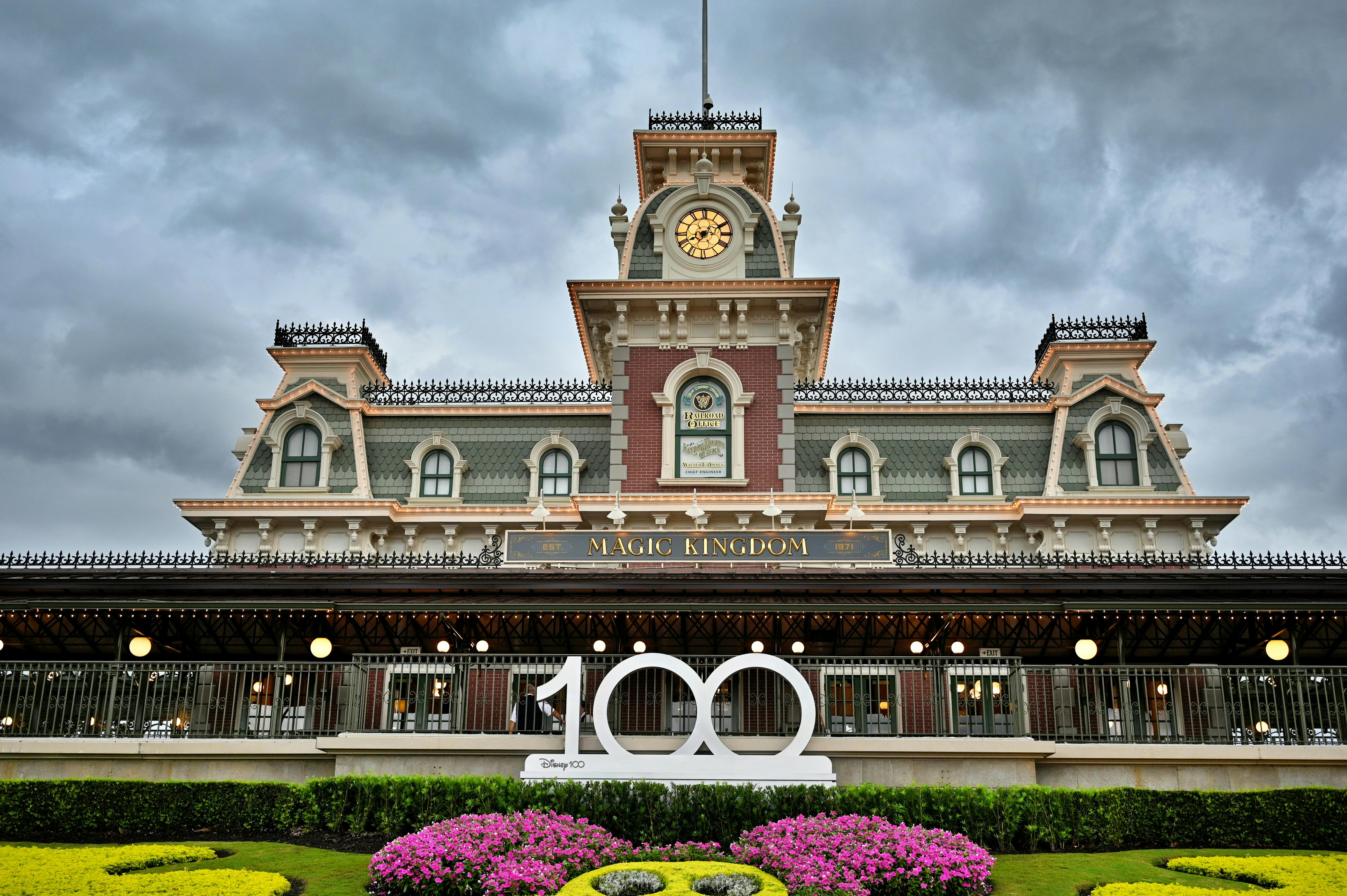 Photo: Thomas Dudek / Pexels
- Time needed
- Full day
Why does Magic Kingdom in Orlando, United States, feel older than the country it imitates, even though nearly every brick was placed within living memory? That tension is the reason to come: not just for rides or fireworks, but to watch America turned into theater with such confidence that the illusion starts arguing with reality. Today you step under the railroad station, catch the smell of popcorn and sunscreen, hear brass music bouncing off Main Street facades, and see Cinderella Castle rise at the end of the avenue like a promise made in pale blue stone.
Most first-time visitors see a perfected fantasy. The place wants that. Horse-drawn streetcars rattle past gingerbread trim, the sidewalks gleam, and every sightline pulls your eye toward the castle, which stands 189 feet tall, roughly the height of a 17-story office block, yet looks taller because the upper turrets shrink in scale as they rise.
But Magic Kingdom is more interesting once you stop treating it as innocent make-believe. Records show the park opened on 1 October 1971 as the public face of Walt Disney World, a project built from more than 27,000 acres of Central Florida wetlands, cattle land, and engineering nerve. You visit for the spectacle, yes. You stay alert for the machinery under the spectacle.
That machinery is part of the thrill. A day here moves between sincere wonder and highly controlled deception, and few places in American culture reveal so much about what the country wants to remember, polish, and sell back to itself.
What to see
-
Cinderella Castle and the Central Hub
Cinderella Castle works because it cheats, and beautifully so: the upper towers shrink as they rise, which makes 189 feet feel taller than a 19-story office block while the pale walls and slate-blue spires keep pulling your eye upward. Come at it from the side paths rather than the dead-center march up Main Street, and the trick becomes more interesting: morning light catches the textured stone, the moat throws glare back like a mirror, and the whole building stops reading as a logo and starts reading as an exquisitely engineered piece of theater. -
Haunted Mansion in Liberty Square
Haunted Mansion is where Magic Kingdom drops its cheerful mask and gets sly. The white-columned manor sits at the edge of Liberty Square like a polite threat, and the best part starts before you board anything: damp air around the crypt, a low musical thrum from the queue, epitaphs guests rush past, and a facade whose 18th-century manners feel one candle away from collapse. -
A Late-Afternoon Route from Main Street to Adventureland
Start on Main Street around 5:00 PM for Flag Retreat in Town Square, when the brass notes bounce off the shopfronts and the whole street briefly stops selling nostalgia and earns it. Then slip toward the side streets, look up at the tribute windows most people never read, cut past the hub into Adventureland, and climb the Swiss Family Treehouse as the heat softens; from up there, with rope bridges creaking and jungle sounds drifting over the water, Magic Kingdom suddenly makes sense as a sequence of carefully staged worlds rather than one giant crowd.
Plan your visit
- Getting There
- Magic Kingdom hides one extra step: drivers park at the Transportation and Ticket Center, then cross Seven Seas Lagoon by Express Monorail or ferry before they see the tapstiles. As of 2026, plan 30 to 45 minutes from parking to entry; LYNX Route 300 also reaches the TTC from LYNX Central Station via Disney Springs Transfer Center for $2 one way or $4.50 all day, and the walk from Disney's Contemporary Resort usually takes about 10 minutes on a paved path.
- Opening Hours
- As of 2026, Magic Kingdom runs on a date-based calendar, not a fixed weekly schedule, and Disney changes it often. Official spring 2026 examples range from 9:00 AM to 10:00 PM on some days, 9:00 AM to 11:00 PM on busier dates, and even 8:00 AM openings on select peak days; Early Entry starts 30 minutes earlier for eligible resort guests, Disney After Hours runs on select nights from January 12 to July 27, 2026 from 10:00 PM to 1:00 AM, and Big Thunder Mountain Railroad is scheduled to reopen on May 3, 2026.
- Time Needed
- A skimmed visit takes 4 to 6 hours if you want the castle, a handful of classic rides, one meal, and nighttime fireworks. A first visit usually needs 10 to 13 hours, and families with small children do better with a split day because this park can easily stretch longer than a Broadway double bill with 25-plus major attractions competing for your feet.
- Accessibility
- As of 2026, Disney provides accessible parking, wheelchair and ECV rentals, companion restrooms, first aid, and queue tools such as DAS, Rider Switch, and Attraction Queue Re-Entry. The park's broad paved paths are generally mobility-friendly, and monorail stations at the TTC and Magic Kingdom use elevators or ramps, but DAS registration must be done by live video chat rather than in person.
- Cost & Tickets
- As of 2026, Magic Kingdom uses date-based pricing, and public 2026 tracking puts one-day tickets roughly in the $139 to $199 range, with some holiday dates reported higher; children under 3 enter free. Lockers cost $10, $12, or $15 per day depending on size, and Disney After Hours tickets run $175 to $199 plus tax on select nights, which can be a better value if you care more about short queues than full-day park time.
History
The Kingdom Walt Never Saw
Magic Kingdom looks timeless on purpose. Records show it was the product of a very modern problem: Walt Disney wanted a new park without the motels, billboards, and roadside clutter that had crowded Disneyland in California, so his company spent 18 months quietly buying more than 27,000 acres in Central Florida before the public announcement on 15 November 1965.
Then the story swerved. Walt Disney died on 15 December 1966, years before guests ever walked up Main Street, and the place that now feels inevitable had to survive grief, debt, swamp engineering, and the possibility that the whole Florida project might stall before the castle ever left the drawing board.
The turning point
Roy Disney's Last Promise
At first glance, Magic Kingdom seems like Walt Disney's finished dream, delivered exactly as he imagined it. That is the version most visitors accept when they stand in front of Cinderella Castle, hear the parade music, and assume the founder personally carried the place from sketch to opening day.
But the dates refuse to behave. Walt died in December 1966, almost five years before Magic Kingdom opened on 1 October 1971, and records show the man who had the most to lose after that was his older brother, Roy O. Disney, then in his seventies and supposed to be retiring, not gambling his final years on a billion-dollar resort in a Florida swamp.
The turning point came when Roy chose not to close the file on the Florida Project after Walt's death. He secured financing, pushed construction forward, and insisted the resort be named Walt Disney World so the credit would stay with his brother; then, on 25 October 1971, he stood in Town Square and read the dedication aloud, a public act that doubled as a private vow kept. Look at the park after knowing that, and the place changes: the castle stops being a fairy-tale centerpiece and starts looking like a memorial built at full scale, bright enough to hide the strain that brought it into being.
The Swamp Beneath the Script
A Park That Edited Itself
Tips for visitors
Camera Rules
Leave the selfie stick, drone, and giant tripod at home. Disney bans drones and extension poles, and tripods or monopods only work if they fit inside a standard backpack and stay under 6 feet, so the clean move is a small camera or just your phone.Bag Strategy
Magic Kingdom is not a luggage-storage stop in disguise. Bags larger than 24 x 15 x 18 inches are not allowed, while lockers top out at a jumbo 17 x 22 x 26 inches, which is about the size of a compact dorm fridge turned sideways.Eat Outside
Magic Kingdom's food is serviceable, not inspiring; the better move is slipping out to the monorail resorts when the park feels loud and fried. Steakhouse 71 at the Contemporary is a solid mid-range break, Capt. Cook's at the Polynesian is the budget fallback, and California Grill is the splurge if you want fireworks with dinner instead of elbows with fries.Best Arrival
Morning wins here because the light on Cinderella Castle is softer and the crowds haven't yet turned Main Street into a moving carpet. If you drive, aim to reach the TTC 45 to 60 minutes before official opening; the ferry horn and monorail glide feel romantic, but they still eat time.Skip Fake Deals
Buy tickets from Disney or an authorized seller only. The common Orlando-area scam is the too-good-to-be-true discount ticket, and saving a few dollars is a poor trade if you end up stranded outside the gate with a useless barcode.Pair Smartly
Frequently asked
Is Magic Kingdom worth visiting?
Yes, if you want the park that still feels like Disney's thesis statement in bricks, brass, and fireworks. Magic Kingdom opened on October 1, 1971, and its best trick still works: Main Street squeezes your view, then Cinderella Castle rises 189 feet, about as tall as an 18-story building, in a piece of forced perspective so sly most people never notice. Go for the atmosphere as much as the rides.
How long do you need at Magic Kingdom?
A full day is the honest answer, and many first-timers need 10 to 13 hours to do the place without sprinting. A shorter 4 to 6 hour visit can cover castle views, a few classics, and nighttime fireworks, but this is Disney's largest gate with 25-plus major attractions, so a half day feels like reading only the first chapters.
How do I get to Magic Kingdom from Orlando?
From Orlando, the simplest plan is driving or rideshare to Disney's Transportation and Ticket Center, then taking the ferry or monorail to the gate. If you want public transit, LYNX Route 300 connects LYNX Central Station to the Transportation and Ticket Center for a $2 one-way fare, though the trip works better if you treat it as a slow approach rather than a quick hop.
What is the best time to visit Magic Kingdom?
The best time is a weekday with an early start and a late finish, because Magic Kingdom changes character after dark. Official 2026 calendar snapshots show many regular days running from 9:00 AM to 10:00 or 11:00 PM, and the park feels sharper at night when the Florida glare drops, the castle starts glowing, and the hub turns from garden into theater.
Can you visit Magic Kingdom for free?
No, Magic Kingdom is not free, though children under 3 do not need a park pass. Even arriving by ferry just gets you the view across Seven Seas Lagoon; to step through the tapstiles you need a dated ticket, and special events like After Hours are separately ticketed.
What should I not miss at Magic Kingdom?
Don't miss the side-angle walk around Cinderella Castle, the 5:00 PM Flag Retreat on Main Street, and at least one slow stretch where you stop chasing rides and listen. The best small secrets live above eye level in the Main Street windows, in the haunted hush of the Haunted Mansion queue, and at Cinderella's Wishing Well, where the castle finally stops looking like a backdrop and starts looking built.
Sources & attribution 18
- Walt Disney World Ticket & Visit Guide — Confirmed the October 1, 1971 opening date and supported current ticketed entry guidance.
- Walt Disney World Resort Opens — Provided opening-date history and the broader opening context for Magic Kingdom.
- The Architectural Design of Cinderella Castle at Magic Kingdom — Supplied Cinderella Castle height, forced-perspective design, and physical construction details.
- TouringPlans Magic Kingdom — Supported realistic time estimates for a full-day visit and the scale of the park.
- One Day Park Touring Plans — Supported the estimate that one day involves tradeoffs and that short visits cover only highlights.
- How Much Time Do You Need at Magic Kingdom? — Supported half-day versus full-day timing expectations for visitors.
- Walt Disney World Resort Transportation — Provided official transportation details, including transfer logistics to Magic Kingdom.
- Monorail Transportation — Confirmed monorail access and the Transportation and Ticket Center connection.
- LYNX Disney Area Brochure January 2026 — Confirmed Route 300 service to the Transportation and Ticket Center and public transit fares.
- Disney World Calendar — Provided current 2026 operating-hour patterns used to answer best-time-to-visit questions.
- Magic Kingdom After Hours — Confirmed that After Hours is a separately ticketed event and gave its 2026 date range.
- Disney After Hours Purchase Page — Corroborated After Hours ticketing and date details.
- Admission Tickets — Supported the point that park entry requires a purchased ticket.
- Main Street Philharmonic — Supported the sensory description of Main Street's live-music atmosphere.
- Flag Retreat — Provided the daily 5:00 PM Flag Retreat ceremony details.
- Cinderella Castle — Supported castle-focused visitor advice, including side approaches and the Wishing Well area.
- Haunted Mansion — Supported the recommendation to linger in the Haunted Mansion queue for atmosphere and detail.
- Tony Baxter Honored with Window on Main Street, U.S.A. — Confirmed that Main Street windows function as tribute plaques to Disney contributors.
Built from cited sources · see the method · How we make our guides →
More in Orlando.
4 places to discover — a few worth pairing.


Pick up where you left off
Saved and recently read places — kept on this device only.
Photo credits (3)
- Thomas Dudek — Pexels License (https://www.pexels.com/license/) — Source: https://www.pexels.com/photo/17391162/
- Steve DiMatteo — Pexels License (https://www.pexels.com/license/) — Source: https://www.pexels.com/photo/34804566/
- Amanda Brady — Pexels License (https://www.pexels.com/license/) — Source: https://www.pexels.com/photo/29157074/
Photos may have been resized or cropped.