Place
United States Updated Apr 2026
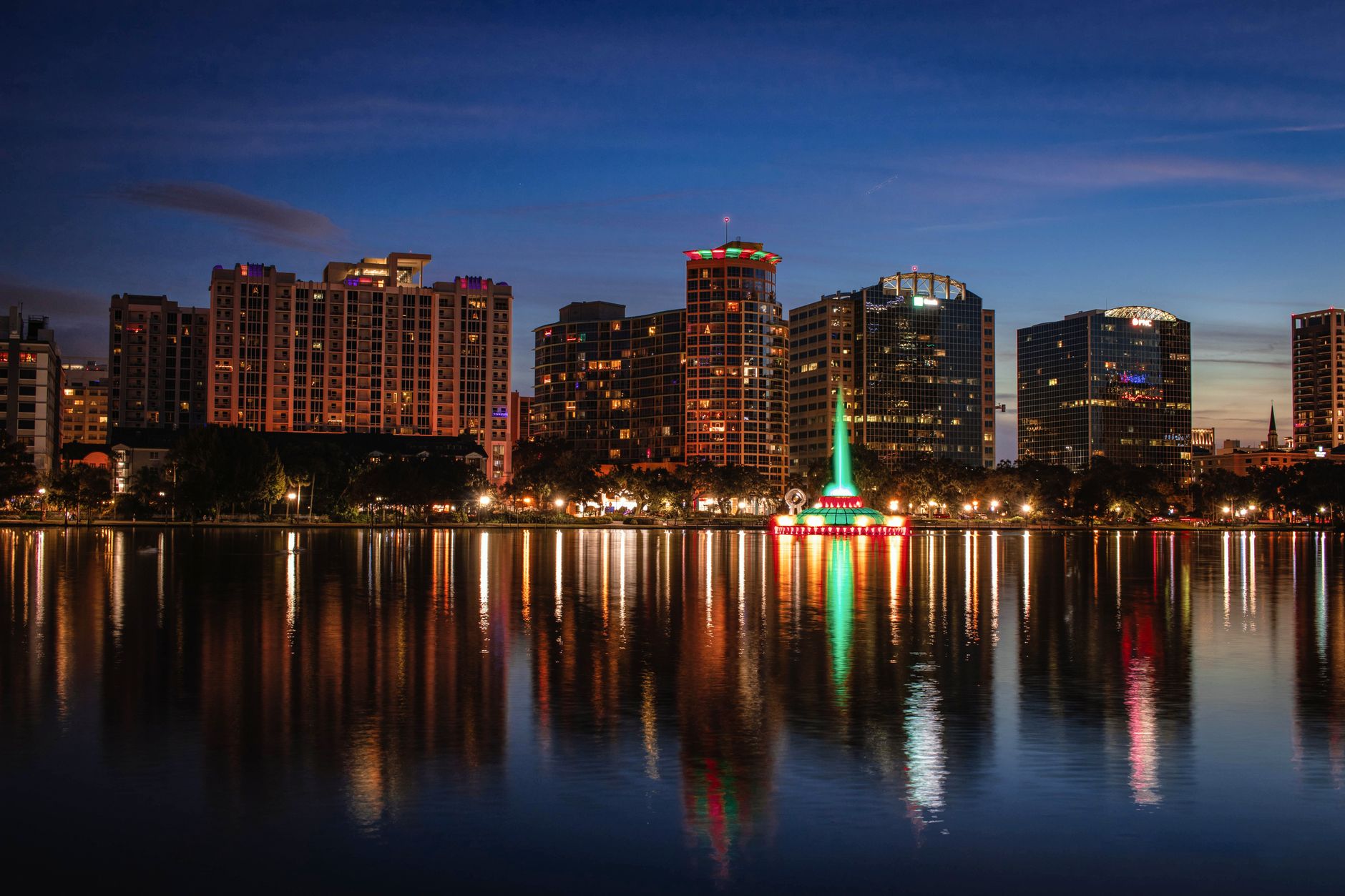
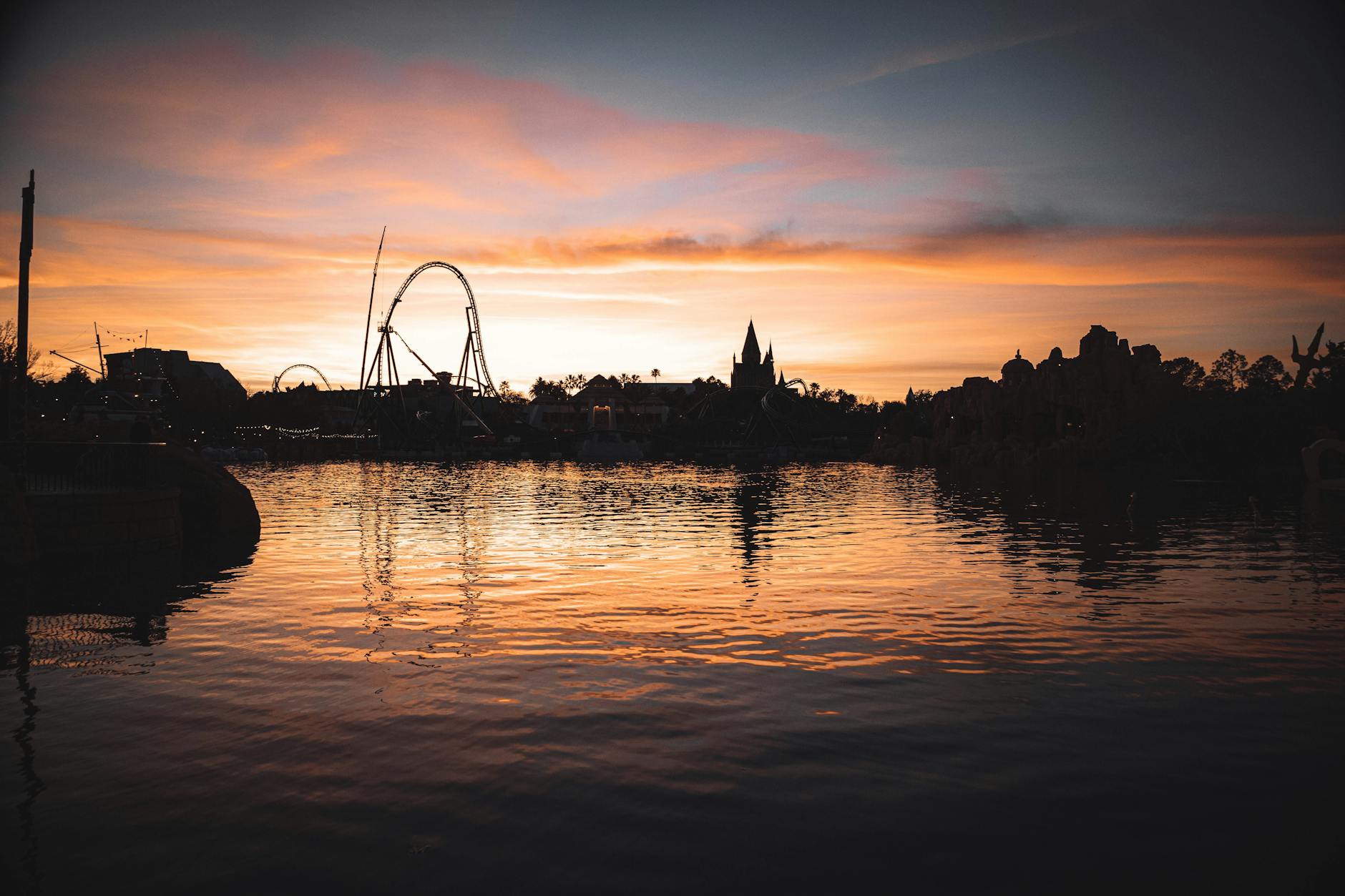
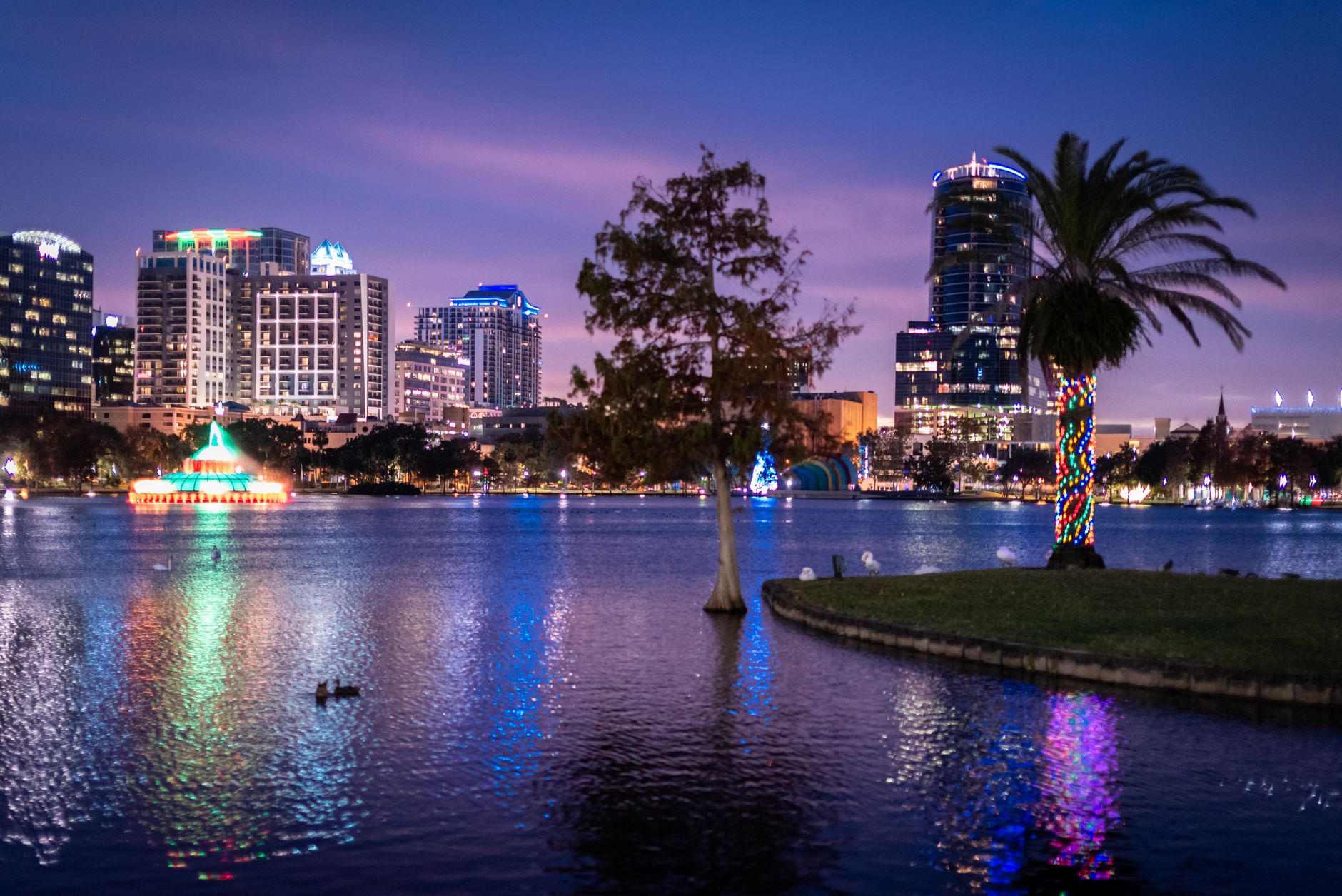
At sunset, the fountain at Lake Eola throws light across the water while a swan boat drifts past downtown towers and a roller coaster screams somewhere far off in the dark. That contrast is Orlando in the United States: engineered spectacle on one side, live oaks, wetlands, and old brick streets on the other. People come expecting queues and fireworks. They rarely expect a city with bungalow districts, Black history museums, Vietnamese bakeries, and one of the country's strangest little arts scenes.
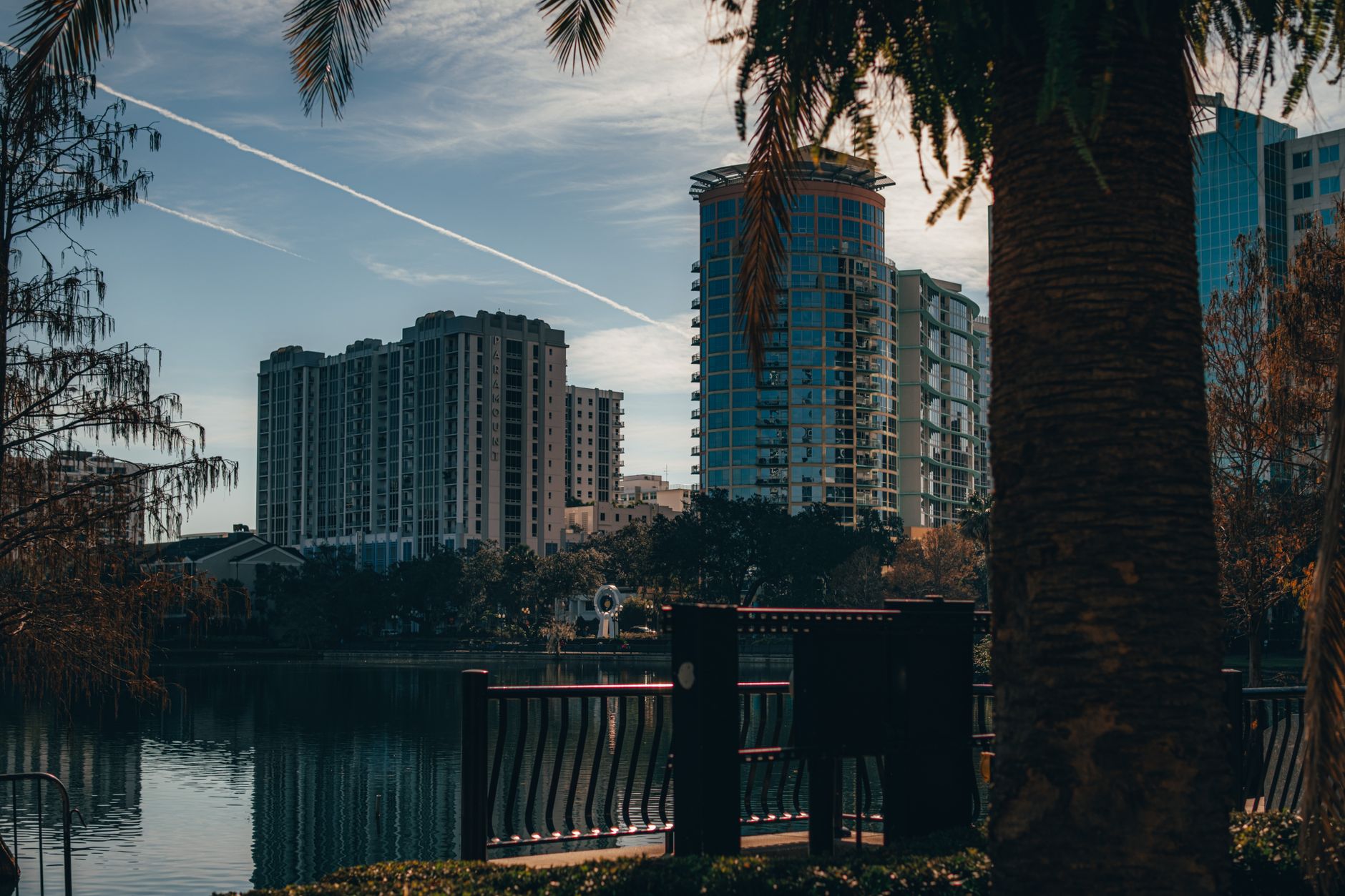 Photo: Connor Scott McManus / Pexels
Built from cited sources · see the method · How we make our guides →
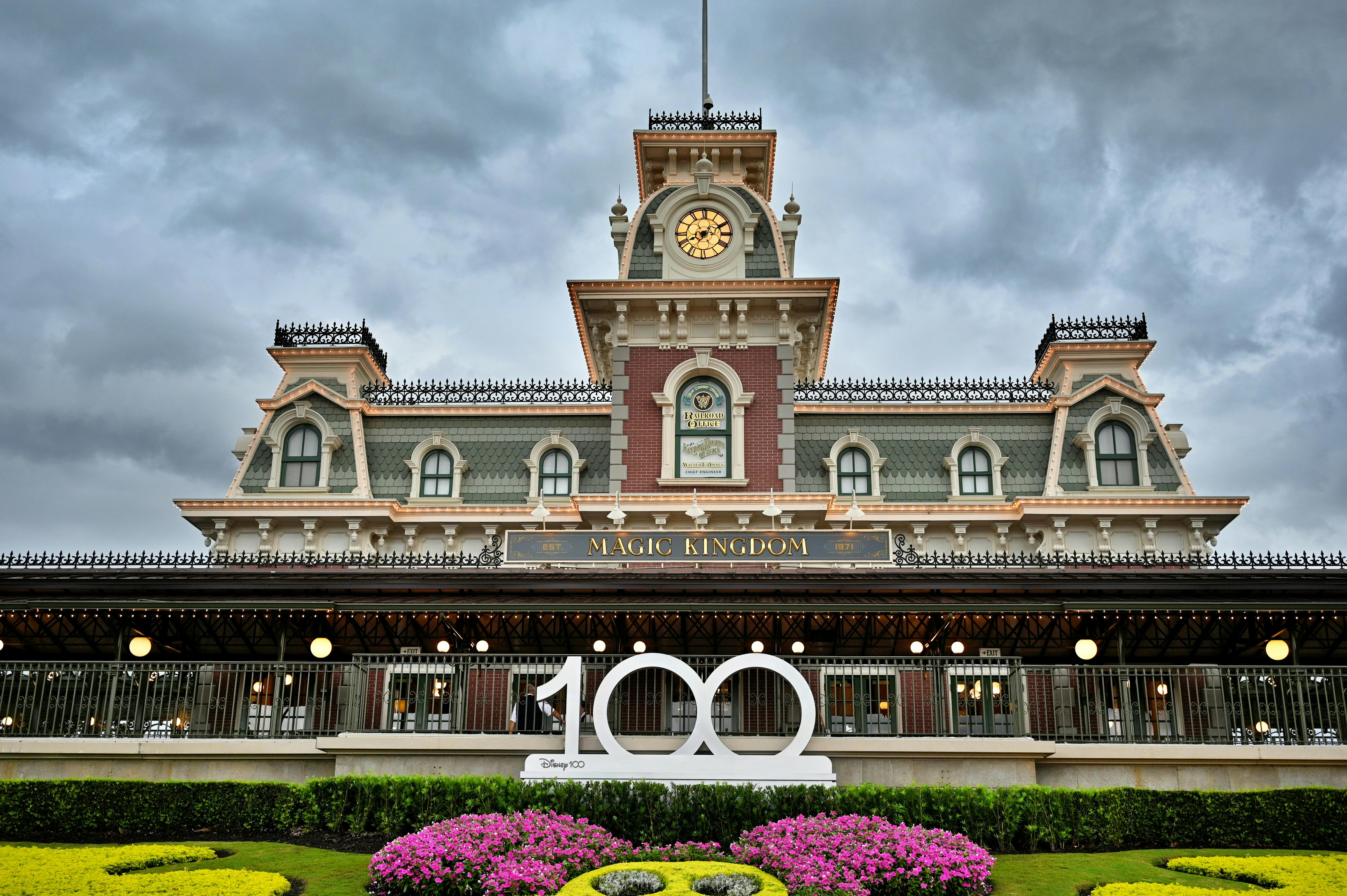
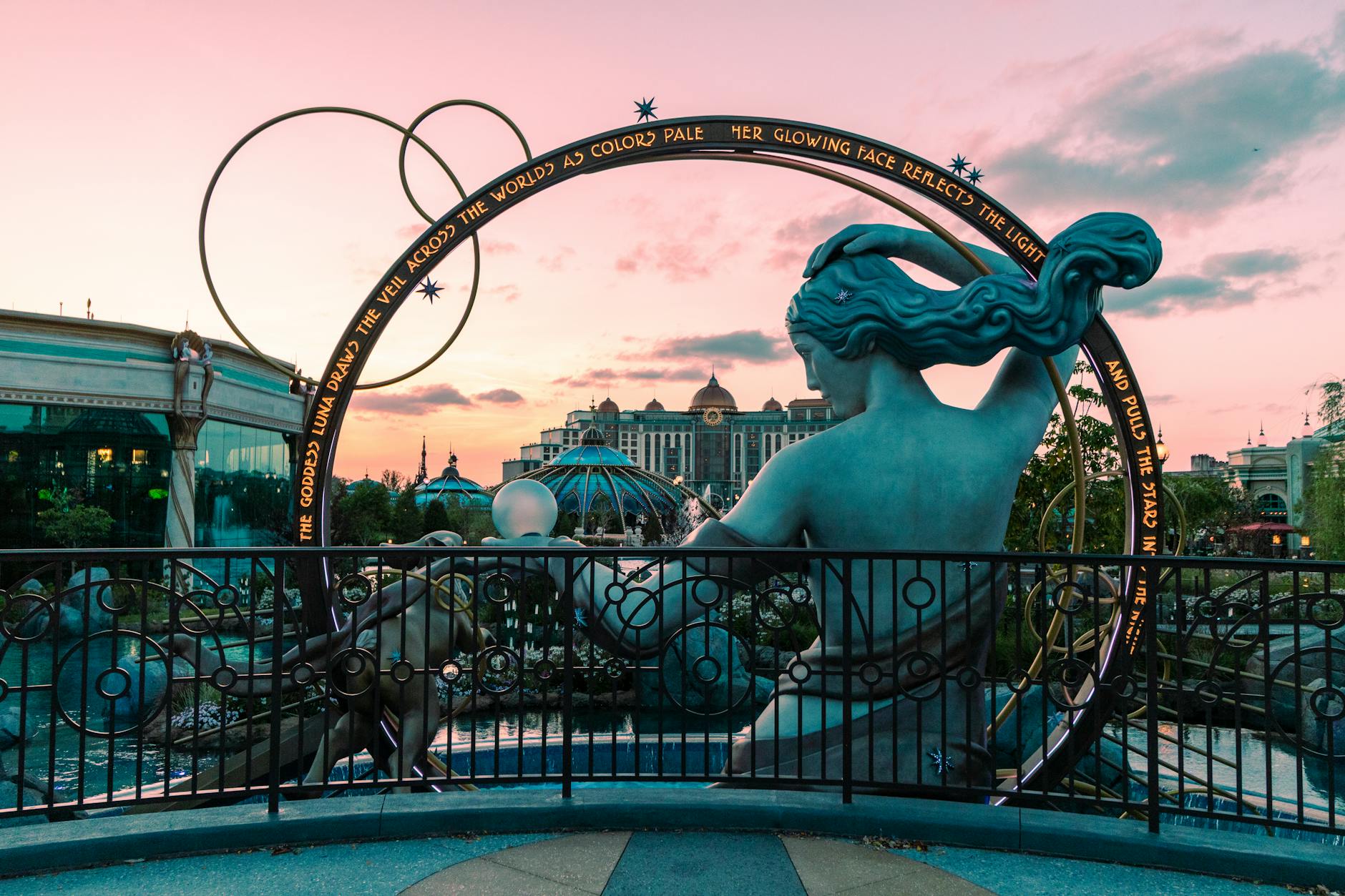
The parks still matter, obviously. Universal Epic Universe, which opened on May 22, 2025, changed the balance again, turning Orlando into a place with several competing worlds of fantasy spread across the southern fringe of the metro. But the city makes more sense when you leave the resort corridors and notice what holds daily life together: coffee at East End Market, Sunday loops around Lake Eola, late-night skewers in Mills 50, a jazz set in a house venue called Timucua.
Downtown Orlando is less polished than visitors imagine, and that's part of its appeal. The 1927 Orange County courthouse now houses the History Center, the Beacham and Kress buildings still carry their old commercial swagger, and the neighborhoods just east of the core soften into brick streets and early-20th-century houses under heavy oak shade. Ten minutes later, you can be in Loch Haven, where museums, theaters, and rehearsal rooms sit between three lakes like a small cultural republic that somehow escaped the theme-park script.
The deeper surprise is ecological. Orlando sells fantasy, yet some of its sharpest memories come from real Florida: cypress knees in still water, the mineral chill of a spring, an egret standing in a drainage wetland with the patience of a saint. That uneasy closeness between spectacle and swamp is the city's real subject, and once you see it, Orlando stops looking like an artificial place and starts looking like a very American one.
Not every monument, just the ones we'd walk you past ourselves.

Where to wander, by quarter — each with its own rhythm.
Before you go
Orlando grew out of war posts, orange groves, airfields, and a reinvention so complete it can make a young city feel older than it is.
Human presence in the Orlando region reaches back to the late Paleoindian era, long before any city had a name here. What mattered then was water, game, and high ground around lakes and wetlands, not a downtown grid. The secret under modern Orlando is this: the ground had already held memory for roughly 14,000 years before the first surveyor drew a street.
By the 18th century, Seminole communities had emerged in Florida from Creek and related peoples moving south into a changing borderland. Spanish claims still covered the map, but power on the ground often belonged to the people who knew the hammocks, rivers, and pine flatwoods. Orlando's earliest political story is really a story about who could move through this country and survive it.
Spain ceded Florida to the United States under the Adams-Onis Treaty, ending three centuries of shifting imperial control between Spain and Britain. On paper, the flag changed cleanly. On the ground, it opened a far harsher phase of pressure on Seminole communities and pushed this part of Central Florida toward military occupation.
On November 9, 1838, U.S. troops established Fort Gatlin south of present-day downtown during the Second Seminole War. That date matters more than any romantic founding tale. Orlando began in the shadow of removal policy, patrol routes, and anxious nights on the frontier.
The Jernigan family created the first permanent settler nucleus near Fort Gatlin, turning a military edge zone into a place where people tried to stay put. Cabins, fields, and a rough local network followed. You can almost smell the pine smoke and damp soil of a settlement that still had one eye on the tree line.
Orlando became the seat of Orange County in 1856, which gave the young settlement more than prestige. Courts, records, lawyers, and routine arguments over land all began to gather here. Civic power often arrives with paperwork before it arrives with beauty.
In 1857 the U.S. Post Office adopted the name Orlando, and the first city limits were platted from what is now Heritage Square. The old frontier settlement now had a civic identity that could be written on envelopes, deeds, and court notices. Names make places feel inevitable. They rarely are.
On July 31, 1875, Orlando incorporated as a town with 85 inhabitants and 22 qualified voters. Those numbers are almost comically small when you stand in present-day traffic on I-4. But incorporation fixed Orlando in law and gave it the authority to tax, govern, and imagine itself as more than a clearing between lakes.
The South Florida Railroad reached Orlando in 1880, tying the town to wider markets and a much faster future. Freight, visitors, and citrus could now move on steel rather than mud-churned roads. Church Street would soon smell of timber, coal smoke, and oranges packed for places far colder than this one.
A major fire on January 12, 1884 destroyed much of Orlando's business district. Flames taught the town a hard architectural lesson, pushing builders away from flimsy frame construction toward brick, stone, and metal. Disasters leave design notes behind.
Florida law incorporated Orlando as a city on February 4, 1885. By then the place had moved beyond courthouse village status into something more ambitious, fed by citrus money and rail access. The city still felt young, but it had started to act older.
Nearby Eatonville incorporated on August 15, 1887, becoming one of the first self-governing Black municipalities in the United States. Orlando's story makes less sense if you leave Eatonville out. Just north of town, Black political self-rule took shape with a force and clarity that still echoes through Central Florida's cultural life.
Zora Neale Hurston spent her formative years in Eatonville, the self-governing Black town whose streets and voices later fed her fiction and folklore work. Orlando was not her city in the narrow municipal sense. But greater Orlando shaped the ear that made her one of the sharpest American writers of the 20th century.
Two freezes, on December 29, 1894 and February 7, 1895, wrecked Orlando's citrus economy. Growers reported 21,737 acres planted and not one box produced after the double hit; temperatures fell to at least 18 degrees Fahrenheit. One cold snap can ruin a harvest. Two can rearrange a city.
Philip Phillips moved to Orlando in 1905 and went on to turn citrus into wealth on a scale that still marks the map, from Dr. Phillips Center to roads and schools bearing his name. He was a businessman first, philanthropist second, and the order matters. Orlando's built memory often carries the names of people who made their fortunes from fruit.
Mayor E. Frank Sperry donated the fountain and surrounding land that helped define Lake Eola Park. The lake had always been there, dark and reflective in the middle of town. The gift gave Orlando a public stage, a place where civic life could gather around water instead of merely passing by it.
Dr. William Monroe Wells came to Orlando in 1917 and became one of the central figures in Black Orlando. In a segregated city, he built medical practice, business influence, and later a hotel that offered dignity where white institutions offered exclusion. The story is harsh. The achievement is harder still.
The Wells'Built Hotel opened in 1926 and became a cultural anchor for African American performers and travelers shut out of white hotels. Musicians, athletes, and touring celebrities slept here because they had to. The building still carries that double truth: glamour in the rooms, segregation at the door.
Orange County opened its new courthouse in 1927, the building that now houses the Orange County Regional History Center. Courthouses are civic theater as much as utility, and this one announced a city that wanted to look durable in limestone and symmetry. Nearly a century later, it still tells that story from the same block.
In 1940 the Army took over Orlando Municipal Airport and turned it into Orlando Army Air Base. Barracks, training, and wartime industry revived the local economy with the smell of fuel and hot metal in the air. Orlando began to trade some of its orange-grove identity for runway concrete.
Jack Kerouac lived on Clouser Avenue in College Park from 1957 into 1958, where he wrote much of The Dharma Bums and watched On the Road reach the world. The house was small, the neighborhood ordinary, the literary aftershock anything but. Orlando keeps this secret well: one of American literature's restless books was drafted under its humid skies.
Florida founded what is now the University of Central Florida on June 10, 1963 as Florida Technological University, meant to support the nearby space program. This linked Orlando more tightly to engineers, defense work, and scientific training rather than tourism alone. The city was learning to live a double life.
Walt Disney World opened on October 1, 1971 and changed Orlando more completely than any other single event in its history. A military-citrus-service city became a global tourism capital, with hotel towers, rental cars, convention business, and service work spreading across Central Florida. Orlando before Disney feels local. Orlando after Disney belongs to the planet.
SeaWorld Orlando opened on December 15, 1973, proving Disney would not stand alone for long. Central Florida was becoming a multi-park destination rather than a one-brand pilgrimage. Competition built the city almost as fast as imagination did.
The Orange County Convention Center opened on February 26, 1983 and gave Orlando another economic engine, this one powered by badge lanyards and carpeted exhibition halls. Theme parks drew families; conventions filled hotel rooms midweek and in shoulder seasons. The city had learned how to monetize square footage on a vast scale.
Universal Studios Florida opened on June 7, 1990 and turned Orlando's tourism economy into a genuine rivalry. Visitors now compared parks, prices, and fantasies. Competition sharpened the whole city, for better and sometimes for uglier traffic.
Shaquille O'Neal arrived in 1992 as the Orlando Magic's top draft pick and gave the young franchise swagger, noise, and national attention. The city had a giant in pinstripes before it had much basketball history. For a few years, Orlando felt less like a resort town pretending to be major league and more like the real thing.
SunRail began service in May 2014, and the Dr. Phillips Center opened on November 6 that same year. One project addressed movement, the other culture, and together they argued that Orlando was more than exit ramps and park queues. Downtown started sounding different after dark: train brakes, theater crowds, live music spilling into the warm air.
At 2:02 a.m. on June 12, 2016, the Pulse nightclub shooting killed 49 people and wounded dozens more. Orlando's civic memory divides before and after that night. Grief entered the city's public language, and so did a different kind of solidarity, visible in memorials, rainbow seats at the soccer stadium, and the way residents speak about belonging.
Brightline began passenger rail service between Orlando and South Florida on September 22, 2023, giving the city a faster rail link to Miami and beyond. The station sits inside the airport, which is a very Orlando solution: mobility wrapped inside infrastructure built for arrivals. For once, the city felt a little less car-bound.
Universal Epic Universe opened on May 22, 2025, the biggest tourism expansion here since Disney's early decades of buildout. Orlando did not become something new overnight. It became more fully what it already was: a city capable of building entire worlds at metropolitan scale while real neighborhoods, histories, and losses continue just beyond the turnstiles.
Novelist · 1922–1969
Lived here in 1957
Kerouac spent 1957 in College Park on Clouser Avenue, where he wrote "The Dharma Bums" while "On the Road" entered the world. He knew an Orlando before the castles and coaster steel; today's city, with its strange mix of lakeside calm and engineered fantasy, would probably have amused him.
Astronaut · 1930–2018
Grew up here
John Young moved to Orlando as a child and carried the city with him all the way to the Moon and the first Space Shuttle mission. His name on John Young Parkway feels fitting in a place where rockets and theme parks both taught Central Florida how to think big.
Golfer · 1929–2016
Lived in the Orlando area; owned Bay Hill
Palmer turned Bay Hill into one of Orlando's defining sports addresses, giving the city a golf identity that runs deeper than souvenir polos. He would still recognize the local ritual: palms moving in the heat, polished fairways, and people treating a March tournament like civic liturgy.
Singer · born 1973
Born here
Howie Dorough was born in Orlando, and the Backstreet Boys were formed here in 1993, back when the city was becoming a strange engine for teen pop. That history still hangs around Orlando like glossy late-90s humidity: sincere, manufactured, and impossible to separate from the place.
Singer and television host · born 1977
Career launched here with *NSYNC
Fatone's Orlando link is not birth but origin story: *NSYNC came together here in 1995, when the city was quietly producing boy bands as efficiently as it produced fireworks. Orlando taught a whole generation that performance could be both local labor and global export.
Actor · born 1962
Born here
Wesley Snipes was born in Orlando before his life and career moved elsewhere, which gives the city a clean factual claim on one of its cooler sons. He belongs to an Orlando that existed before the international image hardened, when the place was still writing its own script.
Actress · born 1956
Born and raised here
Delta Burke grew up in Orlando and attended Colonial High School, back when the city was far less famous and far less polished. Her connection matters because it points to the older Orlando underneath the visitor economy: suburban, Southern, and changing fast.
Entrepreneur and film producer · 1901–1966
Selected the Central Florida site for Walt Disney World
Disney never lived in Orlando, but he chose the Central Florida site for the Florida Project, and that decision rewired the city's fate more than any residency ever could. He would find today's Orlando both familiar and unruly: part master plan, part immigrant food city, part machine that grew larger than its inventor.
Where locals actually book dinner — not the tourist menus.
Mills 50 is the cleanest answer to the question Orlando keeps asking outsiders: yes, the city can cook. This district folds Vietnamese, Japanese, Filipino, Chinese, and pan-Asian kitchens into a mural-lined strip, and Visit Orlando now points out that more Michelin-recognized restaurants sit here than anywhere else in the city.
Central Florida heat makes a bowl of pho feel oddly right, especially when the broth arrives fragrant with star anise and herbs while rain drums outside. Mills 50 is the district to start in; skip the generic resort menus and eat where the room is full of regulars.
East End Market in Audubon Park works well when you want Orlando in miniature rather than another giant dining complex. It functions as a local food hall and neighborhood anchor, the kind of place where coffee, pastry, lunch, and a good bottle of something can happen under one roof without feeling programmed.
Audubon Park leans toward careful coffee, small-batch sweets, and independent kitchens with opinions. Pair it with Leu Gardens and you get one of Orlando's better half-days: humid air, camellias, then something cold or flaky within a short walk.
Winter Garden's Plant Street Market gives you a different Central Florida mood from the resort corridor. The setting is historic downtown rather than hotel frontage, and the food feels better for it: casual, sociable, and close to the West Orange Trail if you want to earn dessert.
Orlando's food reputation now rests less on celebrity tie-ins and more on neighborhoods that can actually feed you well. If meals matter, build a night around Mills 50, then use Winter Park or Audubon Park for slower lunches and coffee breaks.
Small things that change how the city treats you.
The city, as it actually looks.


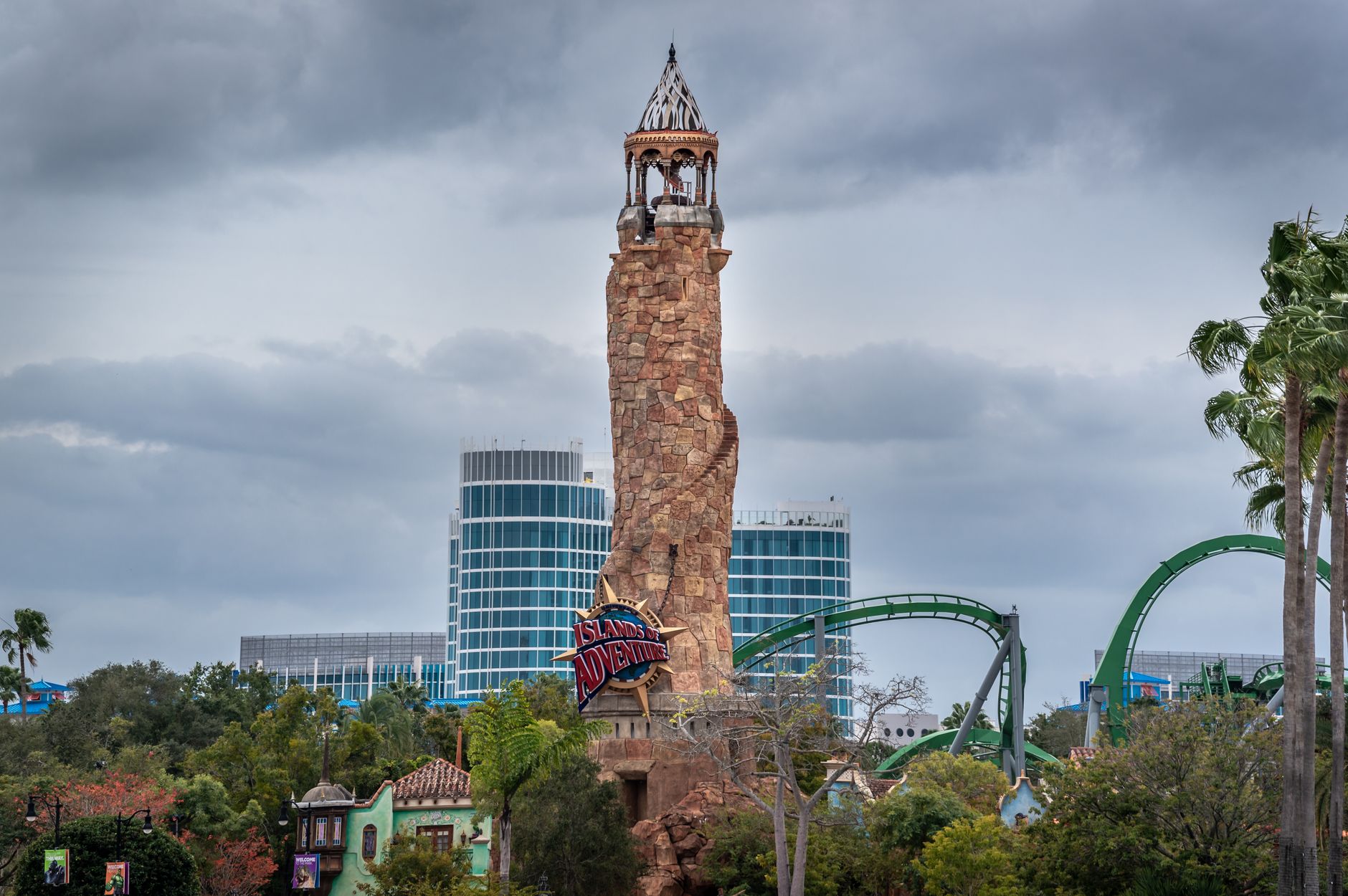
Yes, if you treat it as more than a theme-park stop. The surprise is how much real city sits beside the rides: Lake Eola, Loch Haven, Winter Park, Eatonville, and food neighborhoods like Mills 50 and Audubon Park give Orlando shape after the fireworks fade.
Five to seven days works well for a first trip. That gives you time for two or three major parks, one slower day around Lake Eola or Winter Park, and at least one night spent eating your way through Mills 50 or Audubon Park.
Usually, yes. Orlando is a spread-out metro where the resort corridors, downtown neighborhoods, and side trips sit far apart, so a car or rideshares save time unless you are staying inside one resort zone and doing almost everything there.
Absolutely. A strong non-park version of the city looks like Lake Eola, the Orange County Regional History Center, Loch Haven Cultural Park, Leu Gardens, Winter Park, Eatonville, and a long evening in Mills 50.
Yes, in the way most large American tourist cities are: busy areas are generally manageable, but common-sense habits matter. Stay aware late at night, keep valuables out of sight in parked cars, and use rideshares if you are bar-hopping between neighborhoods.
It can be, especially if you stack big-ticket parks, on-site hotels, and last-minute dining. Costs drop fast when you mix park days with free or low-cost stops like Lake Eola, Kraft Azalea Garden, Mead Botanical Garden, East End Market, and neighborhood food crawls.
The answer depends on your trip. Stay near Disney or Universal for park-heavy plans; choose downtown, Thornton Park, Winter Park, or Audubon Park if you want walkable meals, bars, museums, and a version of Orlando that feels less like a controlled simulation.
For most visitors, rideshare or a rental car is the easiest move from Orlando International Airport. Public transport exists, but it rarely matches the way travelers actually move between resort districts, downtown, and neighborhood dining zones.
4 places to discover
Saved and recently read places — kept on this device only.
Photos may have been resized or cropped.