Introduction
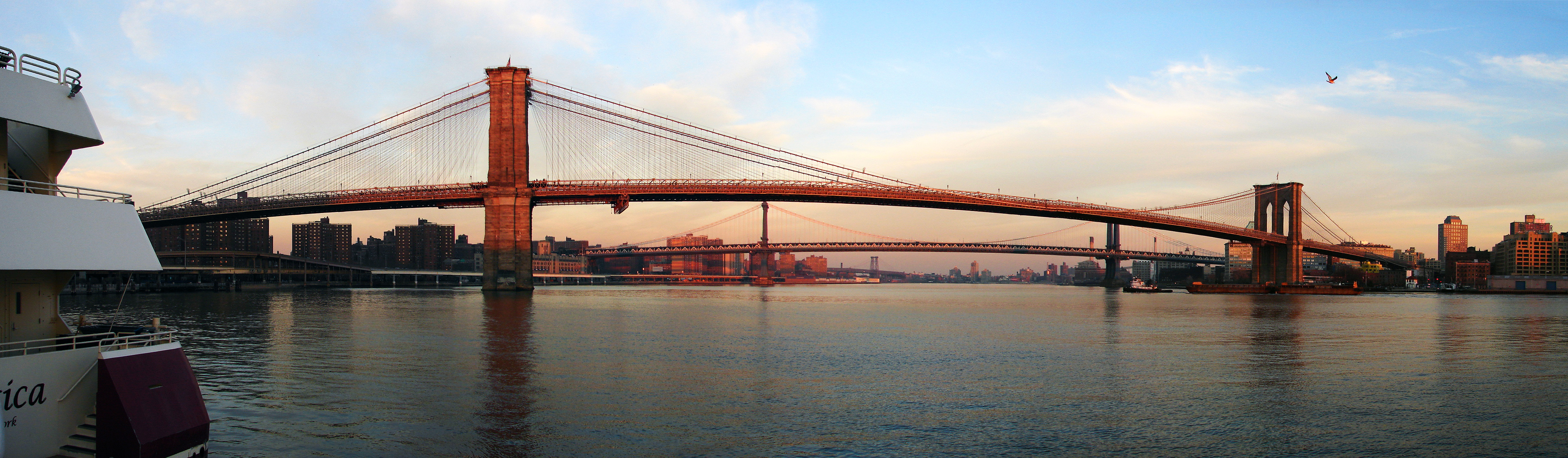
The Williamsburg Bridge is not just a vital transportation link; it is a historical icon connecting Manhattan's Lower East Side with Brooklyn's Williamsburg neighborhood. Whether you're a history buff, a local commuter, or a tourist, this guide covers everything you need to know about the Williamsburg Bridge, from its rich history to practical visitor information.
Spanning 1,600 feet across the East River, the Williamsburg Bridge was a monumental achievement when it was completed in 1903. Designed by engineer Leffert L. Buck, it was the longest suspension bridge in the world at the time and played a crucial role in the urban development of both Manhattan and Brooklyn. The bridge's construction marked a significant shift in urban planning, promoting the growth of Williamsburg and surrounding neighborhoods (NYC Department of Transportation).
The bridge also holds cultural significance, featuring in numerous films, TV shows, and works of literature. It has been a focal point for labor strikes and protests, reflecting the social and economic changes in New York City. Beyond its architectural marvel, the Williamsburg Bridge continues to be a vital transportation link, accommodating thousands of vehicles, pedestrians, and cyclists daily (American Society of Civil Engineers).
History of the Williamsburg Bridge
Early Conception and Planning
The Williamsburg Bridge was conceived in the late 19th century due to the escalating population and increased demand for transportation between Manhattan and Brooklyn. The Brooklyn Bridge, completed in 1883, was already experiencing congestion, prompting the need for another crossing over the East River.
Design and Construction
Designed by engineer Leffert L. Buck, the construction of the Williamsburg Bridge began in 1896 and was completed in 1903. At its completion, it was the longest suspension bridge in the world, boasting a main span of 1,600 feet (488 meters) and a total length of 7,308 feet (2,227 meters). The bridge was among the first to use steel towers, enhancing its strength and reducing its weight.
Opening and Early Years
The bridge opened to the public on December 19, 1903, a grand event attended by thousands. Initially accommodating pedestrians, horse-drawn carriages, and streetcars, it also featured two elevated railway tracks later converted to subway tracks.
Impact on Urban Development
The bridge significantly influenced urban development in both Manhattan and Brooklyn. It facilitated the expansion of the Lower East Side and spurred the growth of Williamsburg, transforming it from an industrial area into a thriving residential community.
Renovations and Modernization
The bridge has seen several renovations, most notably in the 1990s, to ensure its structural integrity. This comprehensive project, completed in 2002, included cable replacements, steel tower reinforcement, and new roadways and pedestrian walkways.
Cultural Significance
Beyond its architectural marvel, the Williamsburg Bridge holds cultural importance, featuring in films, TV shows, and literature. It has also been a focal point for labor strikes and protests, reflecting the social and economic changes in New York City (NYC Arts).
Preservation and Future Prospects
Preservation efforts are ongoing to maintain the bridge's functionality and historical integrity. Regular inspections and repairs ensure it remains a critical link between Manhattan and Brooklyn, supporting the city's growth.
Visitor Information
Visiting Hours and Tickets
The Williamsburg Bridge is open 24/7 and free to the public. There are no tickets required to walk or cycle across the bridge.
Accessibility
The bridge is accessible to pedestrians and cyclists. While there are no specific facilities for visitors with disabilities, the pedestrian and bike paths are generally smooth and navigable.
Travel Tips
- Best Time to Visit: Early mornings or late afternoons for fewer crowds and beautiful lighting for photography.
- Safety: Be mindful of cyclists and follow pedestrian pathways. Use crosswalks and obey traffic signals.
- What to Bring: Comfortable walking shoes, a camera, and water.
Nearby Attractions
- Domino Park: A waterfront park in Williamsburg with stunning views of the bridge.
- East River State Park: Offers green spaces and beautiful river views.
- Lower East Side Tenement Museum: Learn about the history of immigrants in New York City (Tenement Museum).
Special Events and Guided Tours
While the bridge itself does not host regular events, nearby parks and neighborhoods often have events that provide excellent views of the bridge. Guided walking tours of Williamsburg and the Lower East Side frequently include the bridge in their itineraries.
Photographic Spots
- Mid-span of the Bridge: Offers panoramic views of Manhattan and Brooklyn.
- East River Parks: Capture the bridge against the backdrop of the river and skyline.
FAQ
Q: What are the visiting hours of the Williamsburg Bridge?
- A: The bridge is open 24/7.
Q: Is there a fee to walk across the Williamsburg Bridge?
- A: No, it is free to walk or cycle across the bridge.
Q: Are there guided tours available?
- A: Yes, guided walking tours of nearby neighborhoods often include the bridge.
Listen to the full story in the app
Your Personal Curator, in Your Pocket.
Audio guides for 1,100+ cities across 96 countries. History, stories, and local insight — offline ready.
Audiala App
Available on iOS & Android
Join 50k+ Curators
Sources
- verified
- verified
- verified
- verified
- verified
- verified
Last reviewed: