Type 2+ letters to search all countries, cities, and places
/Ctrl KEsc
travel_explore
Type 2+ letters to search all countries, cities, and places
Press Enter to open the top result
Wall Street / NYSE
New York City·United States·40° N · 74° W·
Verified Apr 2026
The street that began as a Dutch wall now frames a closed stock exchange, heavy security, and the most theatrical few blocks in American finance today.
Free (exterior only; NYSE is not open to the public)
Why does the most famous street in capitalism feel, at first glance, almost too small for the myths piled onto it? Wall Street and the New York Stock Exchange in New York City, United States, reward a visit because they let you watch power pretending to be stone: bronze barriers, flag-draped columns, the clang of bells somewhere behind locked doors, and a narrow canyon of light between Broad Street and Wall. Stand here a minute and the place stops being an idea and becomes physical again.
The surprise is scale. The NYSE facade at 18 Broad Street looks ceremonial rather than gigantic, and Wall Street itself is shorter than many first-time visitors expect, a quick walk in Lower Manhattan rather than some endless financial avenue swallowing New York City.
Records show the exchange is still active, but the building that symbolizes it is not generally open to the public. That sounds disappointing until you realize the real experience happens outside: traders and tourists funnel past each other, Trinity's bells carry over the traffic, and the air holds equal parts cold stone, diesel, and expensive coffee.
Come for the mythology if you want. Stay for the contradictions: a street named for a vanished Dutch wall, a market born under a tree that no longer exists, and a district where bomb scars, slave-trade memory, protest chants, and opening-bell ceremony all share the same few blocks.
Researched by the Audiala editorial team from historical records, architectural archives, and local expertise.
What to see
New York Stock Exchange Facade
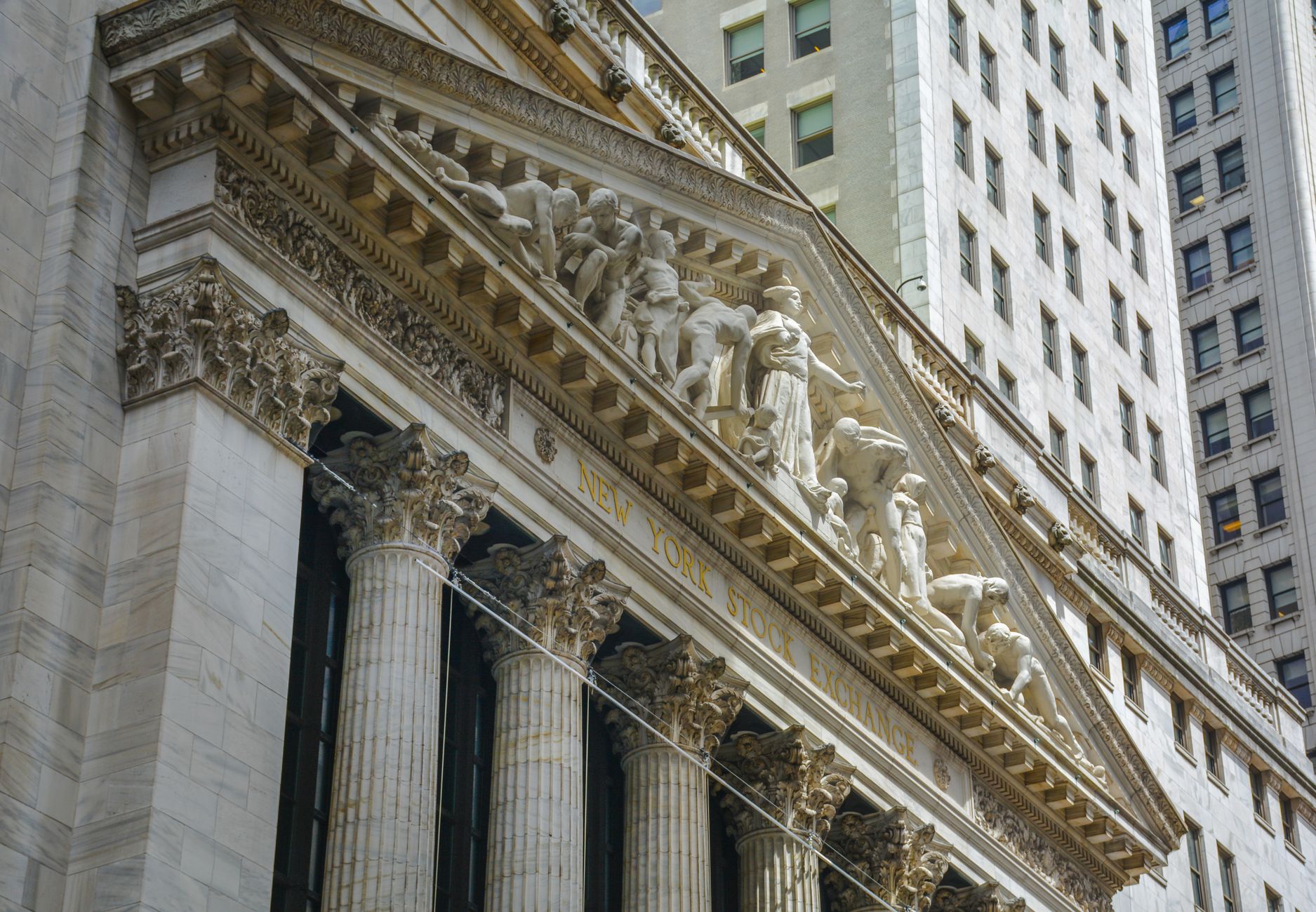
The surprise is how theatrical the New York Stock Exchange feels once you stand on Broad Street and let the whole front resolve: six Corinthian columns in white Georgia marble, a pediment crowded with allegorical figures, and behind that stone bravado a vast bronze-framed glass wall built to feed daylight into the trading floor. George B. Post designed this facade in 1901-1903 as a machine disguised as a temple, and that tension is the real thrill here; look for the lion heads, the fruit swags, and the Roman numeral cornerstone MCMI, then notice how the street suddenly seems less like a movie set about money and more like a carefully staged argument about power.
Federal Hall
Federal Hall, across at 26 Wall Street, fixes a mistake many visitors make: they come hunting finance and miss the civic drama under their feet. Step inside and the noise drops to a museum hush, the rotunda gathers every footstep into a soft echo, and the place starts to smell faintly of cold stone and old varnish; George Washington took the oath here in 1789, and the inaugural balcony stone still survives inside, a small slab carrying more voltage than half the monuments in Midtown.
Wall, Broad, and the Scars in the Stone
Walk this district slowly, not like a checklist, because the best part is the collision packed into three short blocks: Federal Hall’s republican grandeur, the Exchange’s marble certainty, and at 23 Wall Street the pockmarks left by the bombing of September 16, 1920, still rough in the stone a century later. Start on the Federal Hall steps, cross toward Broad Street for the full frontal view of the NYSE, then circle to New Street where the building turns plainer and smarter, and finish by reading those scars; after that, lower Manhattan stops feeling like an abstract symbol and starts looking like a place where ambition always came with a body count.
Plan your visit
Getting There
The cleanest subway approach is J or Z to Broad Street, or 2, 3, 4, 5 to Wall Street; if you need elevators, use Fulton Street and walk south about 10 to 12 minutes down Broadway. Coming from Battery Park or the Staten Island Ferry, walk north on Broadway for 10 to 15 minutes; coming from the Brooklyn Bridge, expect 15 to 20 minutes on foot. Driving works badly here unless you enjoy crawling through FiDi, though reservable garages at 45 Wall Street, 9 Cedar Street, and 10 Liberty Street usually save the circling.
Opening Hours
As of 2026, Wall Street and the NYSE exterior are viewable any time because you are visiting a public street, not a museum. The building itself stays closed to ordinary visitors, while NYSE market hours run Monday to Friday, 9:30 a.m. to 4:00 p.m. ET, so the block feels sharpest at the opening bell rush and just before the 4:00 p.m. close. Holiday closures in 2026 change the trading energy, not your access to the outside.
Time Needed
Give it 15 to 20 minutes if you only want the NYSE facade, Fearless Girl, and the broad-stone canyon of Broad Street. A better visit takes 75 to 90 minutes, which gives the place time to shift from postcard to power theater. Set aside 1.5 to 2.5 hours if you add Federal Hall, Trinity Church, Stone Street, and a pause long enough to look up.
Accessibility
For step-free access, arrive via Fulton Street, Bowling Green, South Ferry, WTC Cortlandt, or Brooklyn Bridge-City Hall; Wall Street and Broad Street stations are convenient but do not appear on the MTA's accessible-stations list. Most surrounding sidewalks are level, but Broad Street in front of the exchange is cobbled, which can jolt wheels, canes, and strollers like a badly tuned washing machine. Federal Hall nearby is handicapped-accessible, which helps if you want an indoor stop beside the outdoor visit.
Cost & Tickets
As of 2026, the Wall Street streetscape and the NYSE exterior cost nothing, and no reservation is needed. The catch is the famous one: you cannot buy a normal tourist ticket for the NYSE interior because it is not open to the public. If you want context without paying, pair the stop with free Federal Hall; if you want a guided version, current walking tours in the area run about $29 to $59.
Photo Gallery
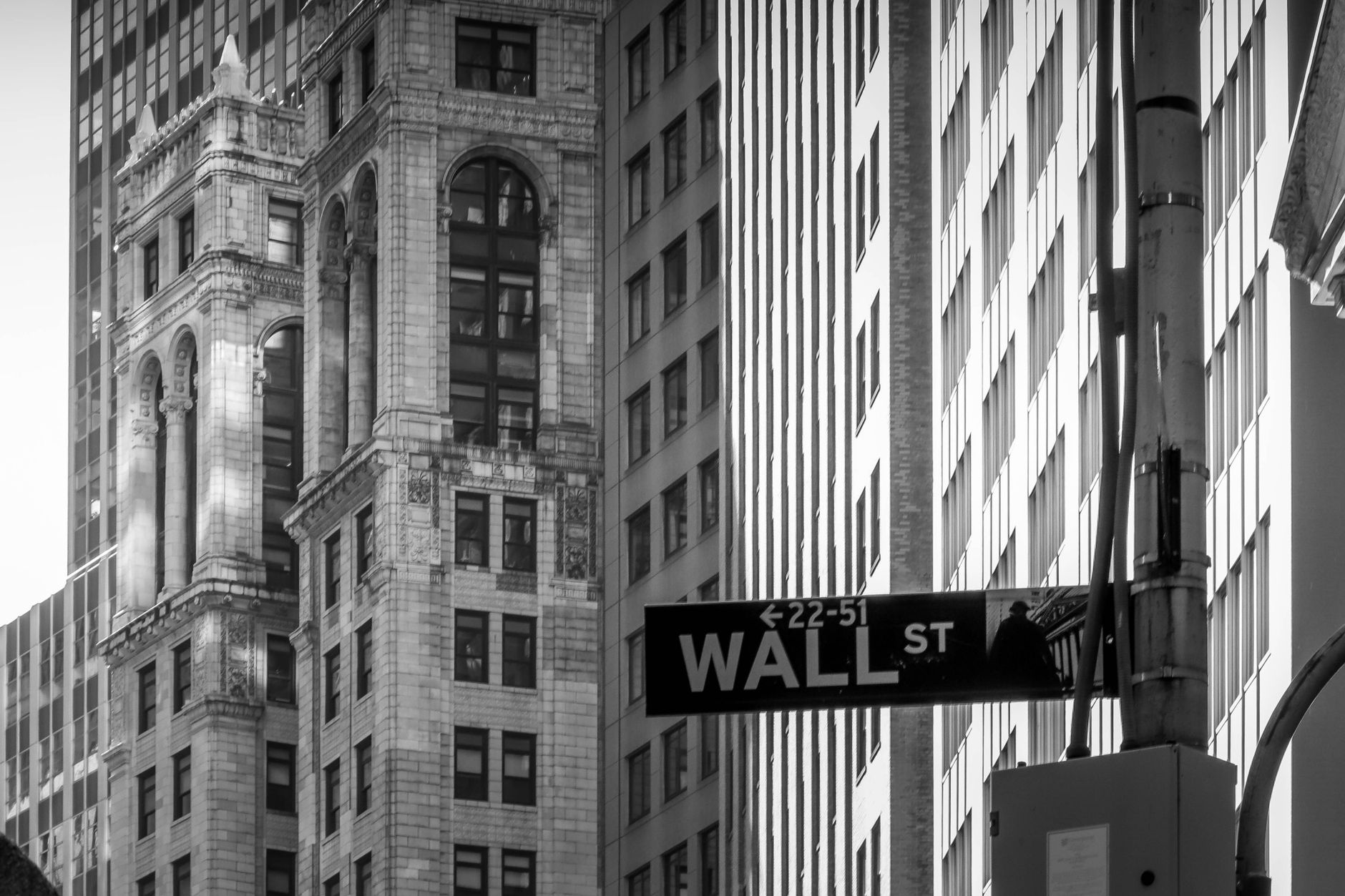
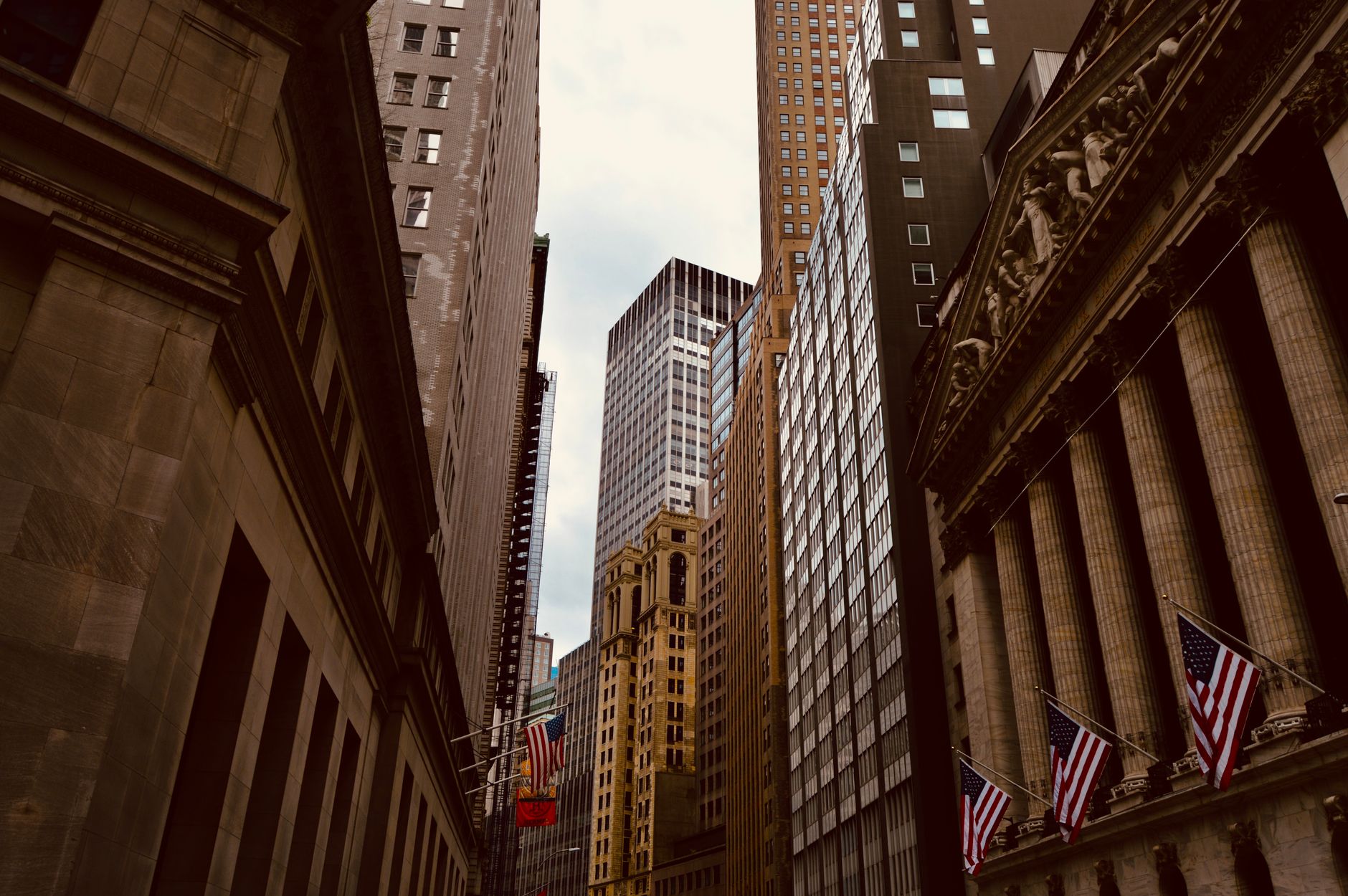
The New York Stock Exchange facade rises above Wall Street with carved figures, Corinthian columns, and surrounding towers in soft daylight. · Vlada Karpovich on PexelsHistoric stone towers and modern office facades crowd the frame around the Wall Street sign. The black-and-white light gives New York's financial district a hard, vertical rhythm. · William Doll II on PexelsThe New York Stock Exchange rises between Lower Manhattan towers, its carved pediment and tall columns framed by American flags. Soft daylight gives the stone facade a muted, historic weight. · Louis on PexelsTall financial district buildings frame Wall Street near the NYSE, with American flags hanging from the stone facade. The overcast light gives the canyon of towers a sober, cinematic mood. · Colwyn Davis on PexelsThe New York Stock Exchange facade rises in black and white, its stone columns and American flag giving Wall Street its familiar institutional weight. · david hou on PexelsThe New York Stock Exchange facade rises above Wall Street with Corinthian columns, carved figures, and gold lettering catching the daytime light. Tall Financial District buildings press close around the landmark. · Arpan Parikh on PexelsThe New York Stock Exchange glows after dark on Wall Street, its neoclassical facade covered by a massive American flag. The empty street and warm lights make the financial landmark feel almost theatrical. · Following NYC on Pexels
History
Bells Against the Noise
Wall Street changes its machinery every generation, yet its basic ritual has held. Records show brokers met here in 1792 to trade at agreed commissions, the exchange formalized rules in 1817, and the market still gathers by the clock today, opening and closing with a bell because this street has always depended on making trust visible and public.
That continuity matters more than the marble. The tools moved from shouted orders to ticker tape in 1867, then to telephones in 1878, then to screens, but the district still runs on repeated acts: the bell, the floor, the timed session, the gathered crowd, the sense that prices must be witnessed as well as calculated.
The turning point
The Tree Vanished. The Ritual Stayed.
At first glance, the story seems tidy: Wall Street began under a buttonwood tree on 17 May 1792, grew up into the grand temple on Broad Street, and never looked back. Tourists accept that version because the NYSE facade feels built to confirm it, all columns and patriotic confidence.
But the details don't sit still. The tree is gone, its exact spot near 68 Wall Street is uncertain, and the building people photograph today dates from 1903, when architect George B. Post faced a personal and professional test: give a chaotic, overheated market a form that looked orderly enough for the nation to trust. When the current exchange opened, that was the turning point. Post did not preserve a tree. He turned a custom of face-to-face trading into architecture.
Records show the custom outlived every object attached to it. The exchange moved from curbside deals to the Tontine Coffee House in 1793, adopted formal rules in 1817, changed its name in 1863, and absorbed each new technology without giving up the ceremony of gathering and marking time together. Once you know that, the place reads differently: the columns matter less than the repetition behind them, and Wall Street starts to look like a stage where continuity itself is the performance.
What Changed
Almost everything material changed. The Dutch wall that gave the street its name was built in 1653 on Peter Stuyvesant's orders, roughly 2,340 feet long, about the length of seven city blocks, and 9 feet high, about as tall as a basketball hoop; it was gone by 1699. Records also show the exchange migrated from an outdoor agreement to a coffee house, then to headquarters on Broad Street, then to George B. Post's 1901-1903 building, while ticker tape, telephones, and electronic systems remade the speed of trading.
What Endured
The enduring thing is ritualized exchange at a fixed place and hour. Records show the market still opens and closes on a daily timetable, the floor still preserves roles descended from older trading customs, and the bell still acts as more than theater: it marks the public beginning and end of the session. Also enduring is Wall Street's other habit, less flattering and just as old, of turning into a civic stage whenever Americans want to argue about power, from Washington's inauguration across the street to Occupy protests and 9/11 remembrance nearby.
Tips for visitors
Weekday Pulse
Come on a weekday morning or around 3:30 p.m. if you want the block at full voltage, with screens glowing and suited people moving fast between barricades and marble. Weekends are quieter, which is better for photos but worse for understanding why this short street became a national metaphor.
Photo Rules
Street photography is fine here, and you do not need a city film permit for a handheld camera or simple tripod as long as you are not taking over public space. Drones are the line you should not cross: in New York City, takeoff and landing require a permit, and this is a poor place to test police patience.
Ignore the Hustle
The main nuisance is not danger so much as friction: souvenir sellers, ticket hawkers, and photo bottlenecks around the Broad Street and Bowling Green corridor. Keep walking if someone tries to sell urgency, and do not mistake a crowd for a queue you need to join.
Eat Two Blocks Away
Skip the overpriced snack reflex near the photo choke points and walk a little. Leo’s Bagels at 3 Hanover Square is a good budget stop at about $10 to $15, Pisillo at 97 Nassau Street does giant panini in the budget-to-mid-range bracket, and Delmonico’s at 2 South William Street is the splurge if you want old-money theater with your steak.
Pair It Properly
Wall Street works best as an anchor, not a whole afternoon. Federal Hall sits right beside the exchange, Trinity Church is a short walk west, and the 9/11 Memorial and Oculus are about 10 to 12 minutes away on foot, which turns the visit from finance cliché into a much stranger New York story.
Travel Light
Do not arrive expecting a cloakroom at the NYSE. As of 2026, no official luggage storage is attached to the site, so book nearby storage in advance if you have bags; current third-party options in FiDi start around $5.50 to $5.90 a day.
Where to Eat
local_dining
Don't Leave Without Trying
New York pizza slicesBagels with lox and cream cheesePastrami on ryeEgg creamSoup dumplingsCannoli
Harry's
fine dining
American Steakhouse€€€star4.5(1792)
Order: The Beef Wellington is the standout dish here, paired with a side of truffle mac and cheese.
A true Financial District institution housed in the historic India House, offering an old-school, sophisticated atmosphere that feels miles away from the modern office grind.
Order: The French toast topped with banana, blueberries, and almond flakes is a perfect, not-too-sweet morning treat.
A charming, cozy escape that feels like a quick trip to a Parisian corner, offering an intimate atmosphere amidst the high-rise intensity of Lower Manhattan.
Order: The eggs Benedict with salmon is exceptional, but arrive early to grab a seat during the busy brunch rush.
This contemporary diner manages to combine massive, satisfying portions with a warm, energetic staff that makes it a go-to for refueling after a long day of sightseeing.
checkStandard tipping is 18% to 20%; always check your bill for automatic gratuity before adding extra.
checkMany NYC restaurants are closed on Mondays; always verify if a venue is open if you're planning a Monday meal.
checkNew York has no rigid meal hours, but dinner is typically busiest from 7 p.m. onwards.
checkBy law, all NYC establishments must accept cash as a payment method.
checkLunch service in the Financial District typically runs from 12 p.m. to 3 p.m.
Restaurant data powered by Google
Frequently asked
Is Wall Street worth visiting?
Yes, if you treat it as a compact walk through American myth rather than a theme-park attraction. In a few blocks you get the NYSE’s 1901-1903 marble facade by George B. Post, Federal Hall where Washington took the oath, and the bomb-scarred stone of 23 Wall Street that most people miss. The street is short. The history is not.
How long do you need at Wall Street and the NYSE?
Give it 30 minutes for a quick look, or 75 to 90 minutes if you want the place to make sense. The fast version is the NYSE facade, Fearless Girl, and Federal Hall steps; the better version adds the quieter New Street side, the 1920 bombing scars across the way, and time to stand still long enough to notice how the canyon of stone cuts the light.
How do I get to Wall Street from Times Square?
The easiest route is the subway: take the 2 or 3 downtown to Wall Street, or the N, R, or W and change as needed for Lower Manhattan. If you need step-free access, skip Wall Street station and use Fulton Street instead, then walk about 10 to 12 minutes south through the Financial District.
What is the best time to visit Wall Street and the NYSE?
Weekday mornings, or the hour before the 4:00 p.m. market close, give you the strongest sense of the place. That is when Broad Street feels most charged, with security radios crackling, tour groups clustering, and the facade reading less like a postcard and more like a working stage set. Weekends are calmer but flatter.
Can you visit the NYSE for free?
You can see the NYSE exterior for free, but you cannot tour the interior as a normal visitor. The building at 18 Broad Street is closed to the public, so your visit is really an outdoor one: columns, pediment, flags, barricades, and the long look across to Federal Hall.
What should I not miss at Wall Street and the NYSE?
Do not stop at the obvious Broad Street photo and leave. Walk around to the New Street side for the building’s working face, look up at the pediment called "Integrity Protecting the Works of Man," then cross to 23 Wall Street and find the pockmarks left by the September 16, 1920 bombing. One more block east, the slave-market history at Pearl and Wall changes the whole district.
Sources & attribution9
Researched and written by the Audiala editorial team from historical records, architectural archives, and local expertise. Last reviewed April 2026.
NYSE — Market Hours & Holidays — Confirmed regular market hours of 9:30 a.m. to 4:00 p.m. ET, which helps identify the liveliest times to visit the area.
Strictly necessary cookies keep navigation working. Analytics cookies (PostHog, Google Analytics) help us learn which pages work — aggregate only, no ads, no selling. You can change this any time from the footer.
Privacy
Cookie preferences
Pick what you're okay with. You can change this any time from the footer.
Strictly necessary
Always on
Sign-in, language, navigation. Always on.
Product analytics
PostHog and Google Analytics, aggregate usage only. Helps us see which pages work and which need fixing. No selling, no ads.
Marketing
Off today. Reserved if we ever run paid acquisition. We will ask again before turning it on.