An introduction.
Researched by the Audiala editorial team from historical records, architectural archives, and local expertise.
TThe most valuable building in Times Square is almost completely empty inside — and that's exactly the point. Times Square, the bowtie-shaped intersection at the heart of New York City in the United States, is a place where the surface is literally worth more than the substance, where zoning laws force private buildings to glow, and where a million people gather each New Year's Eve to watch a crystal ball descend a hollow tower. You should come here not for what it pretends to be, but for what it accidentally reveals about spectacle, commerce, and the strange American instinct to turn everything into a stage.
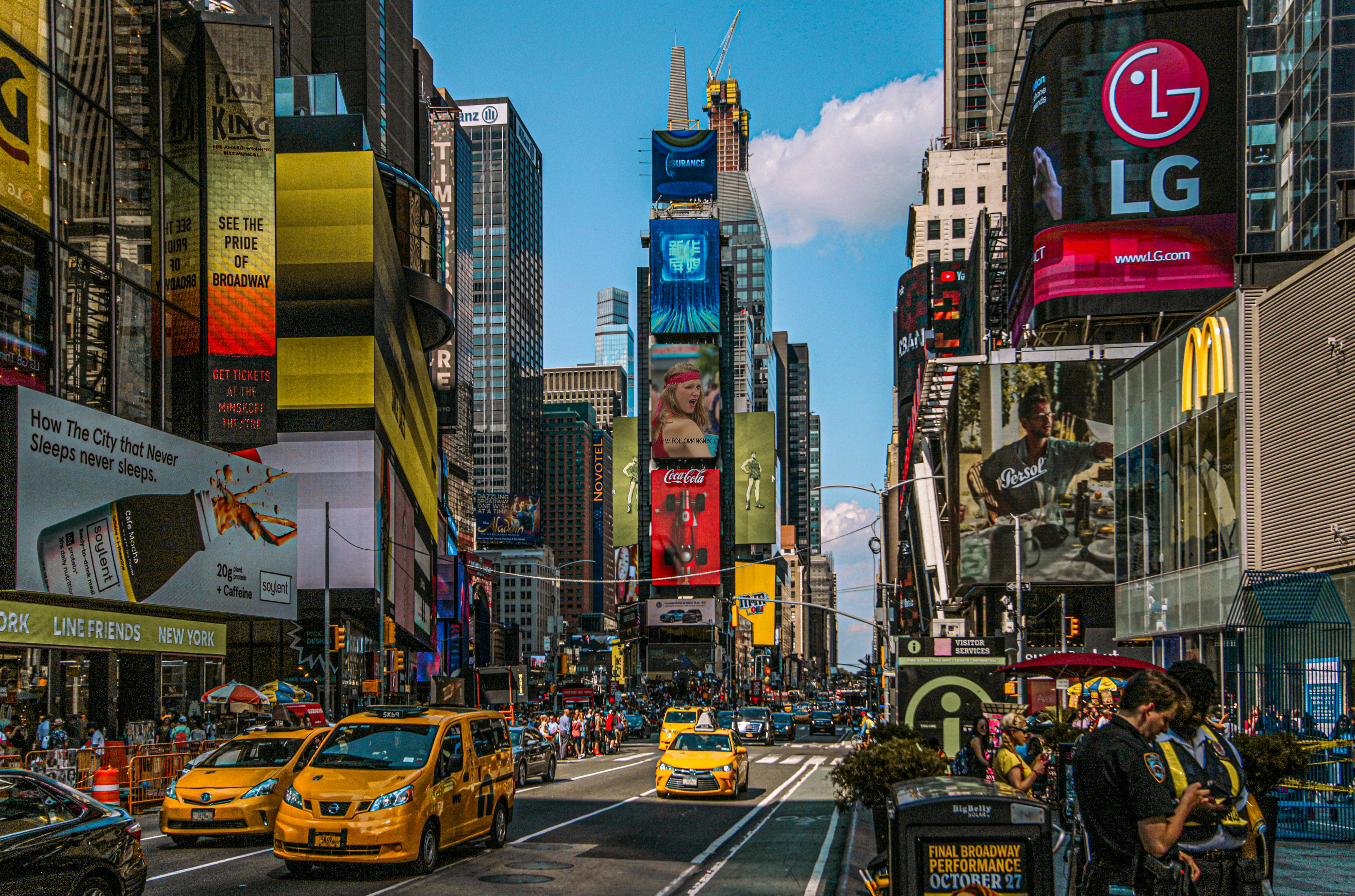
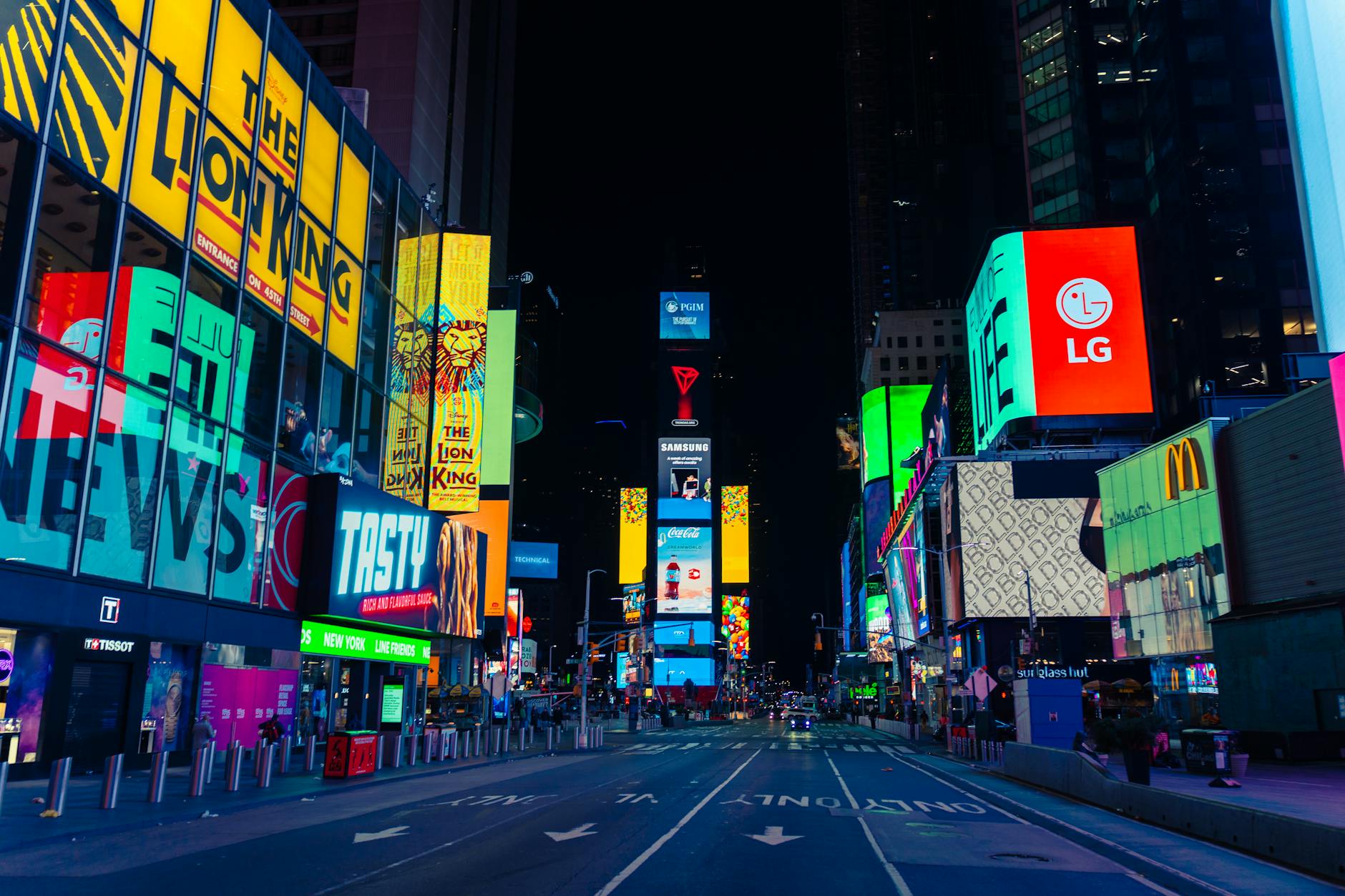
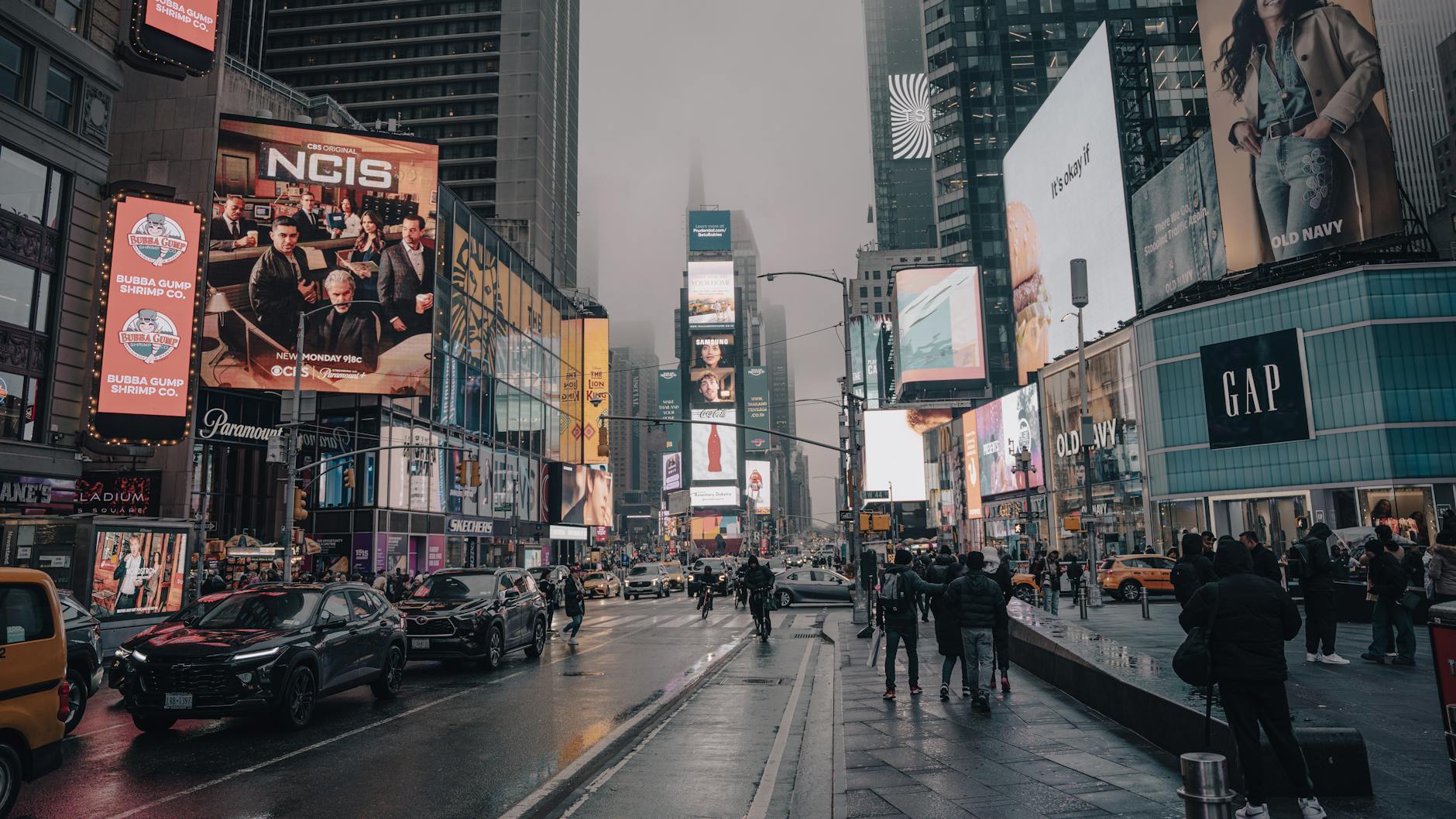
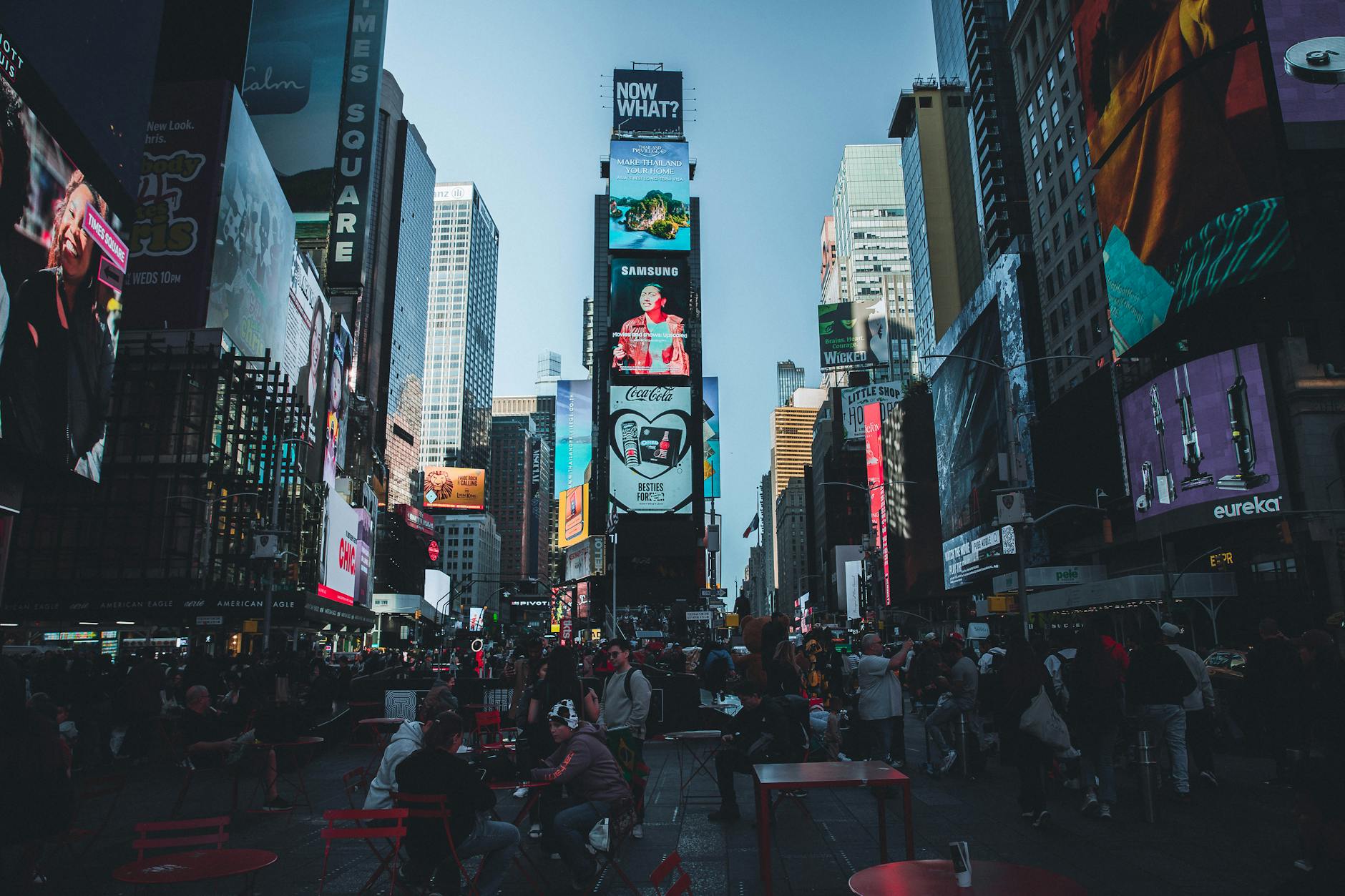
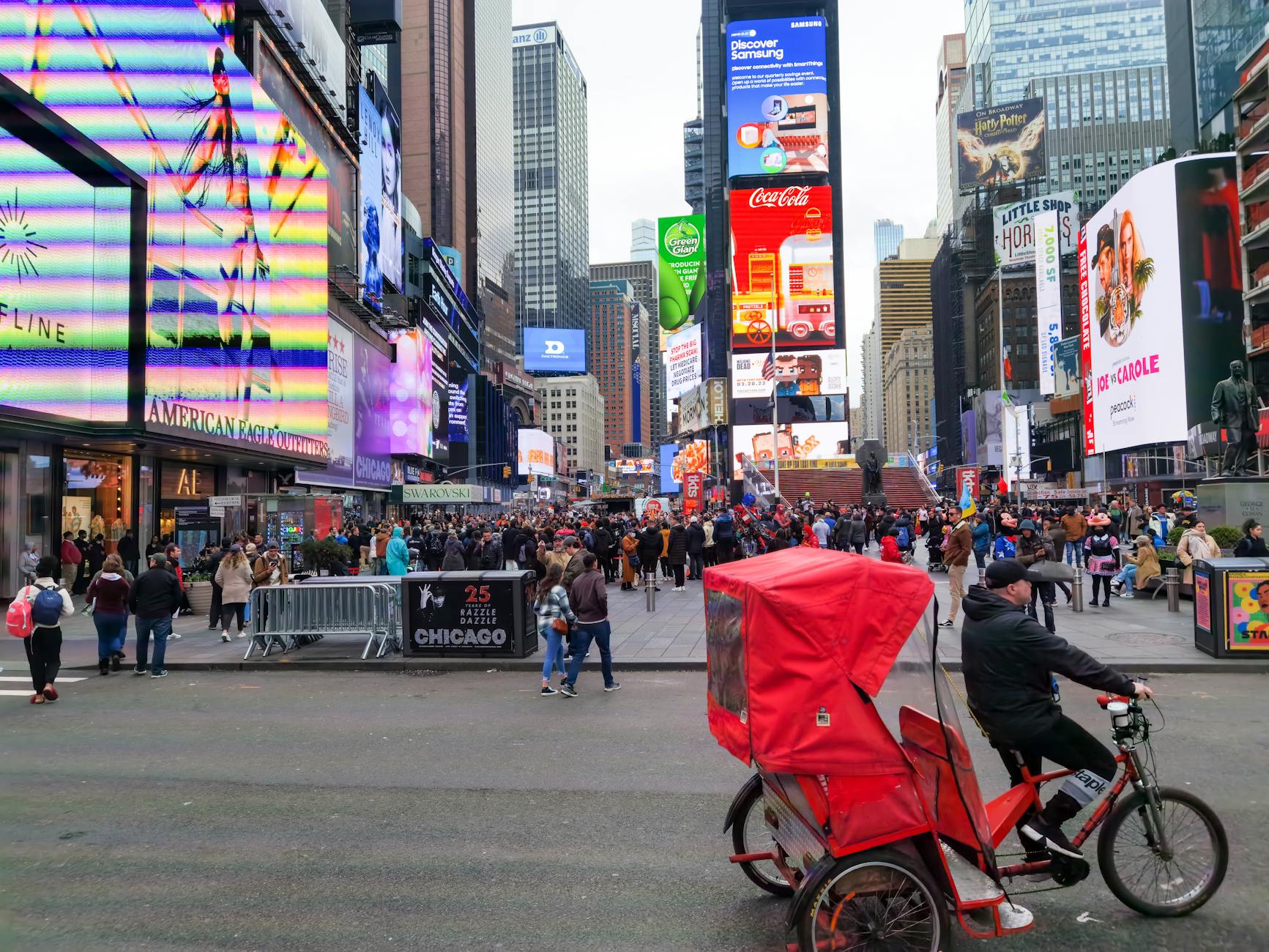
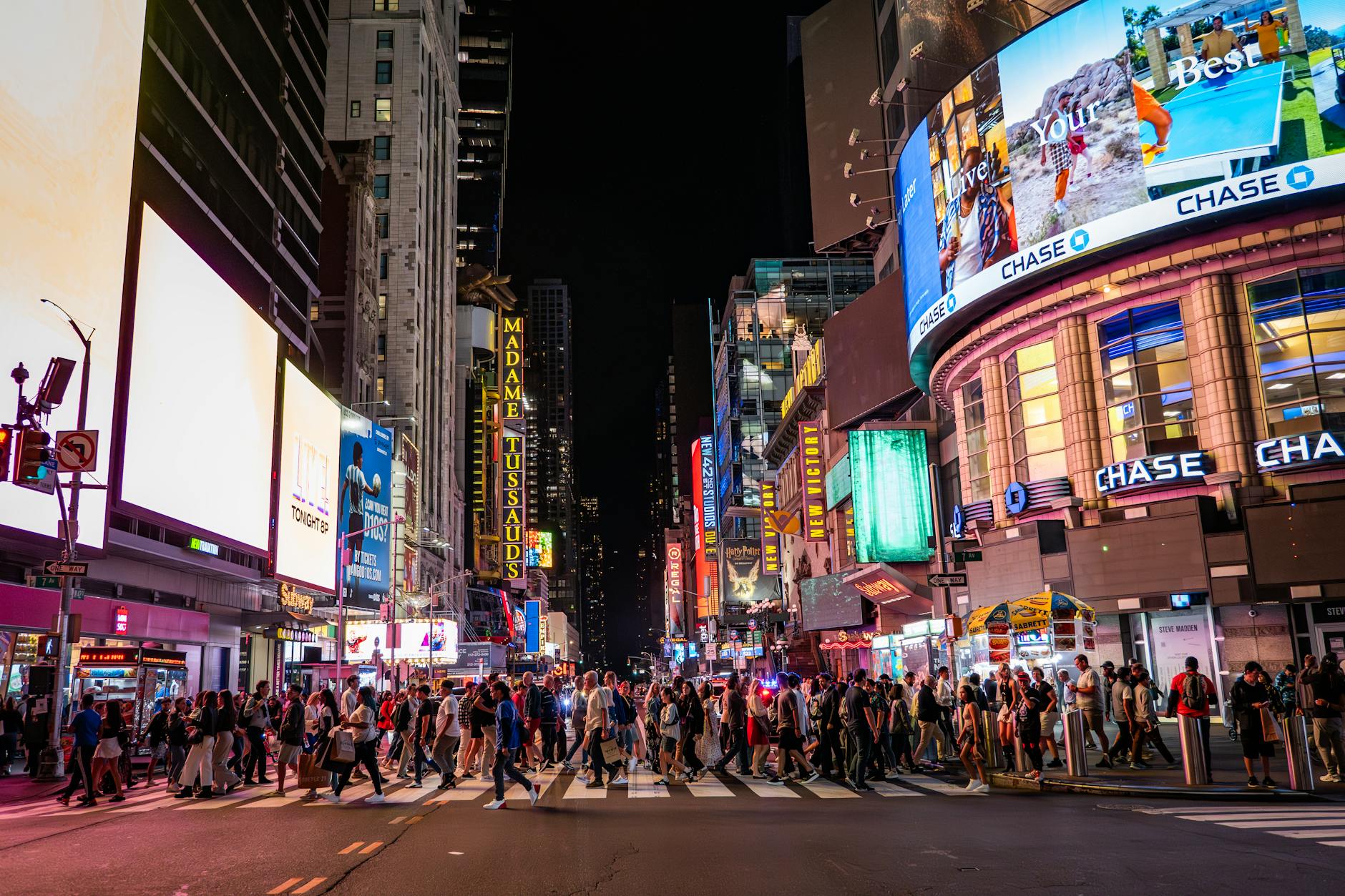
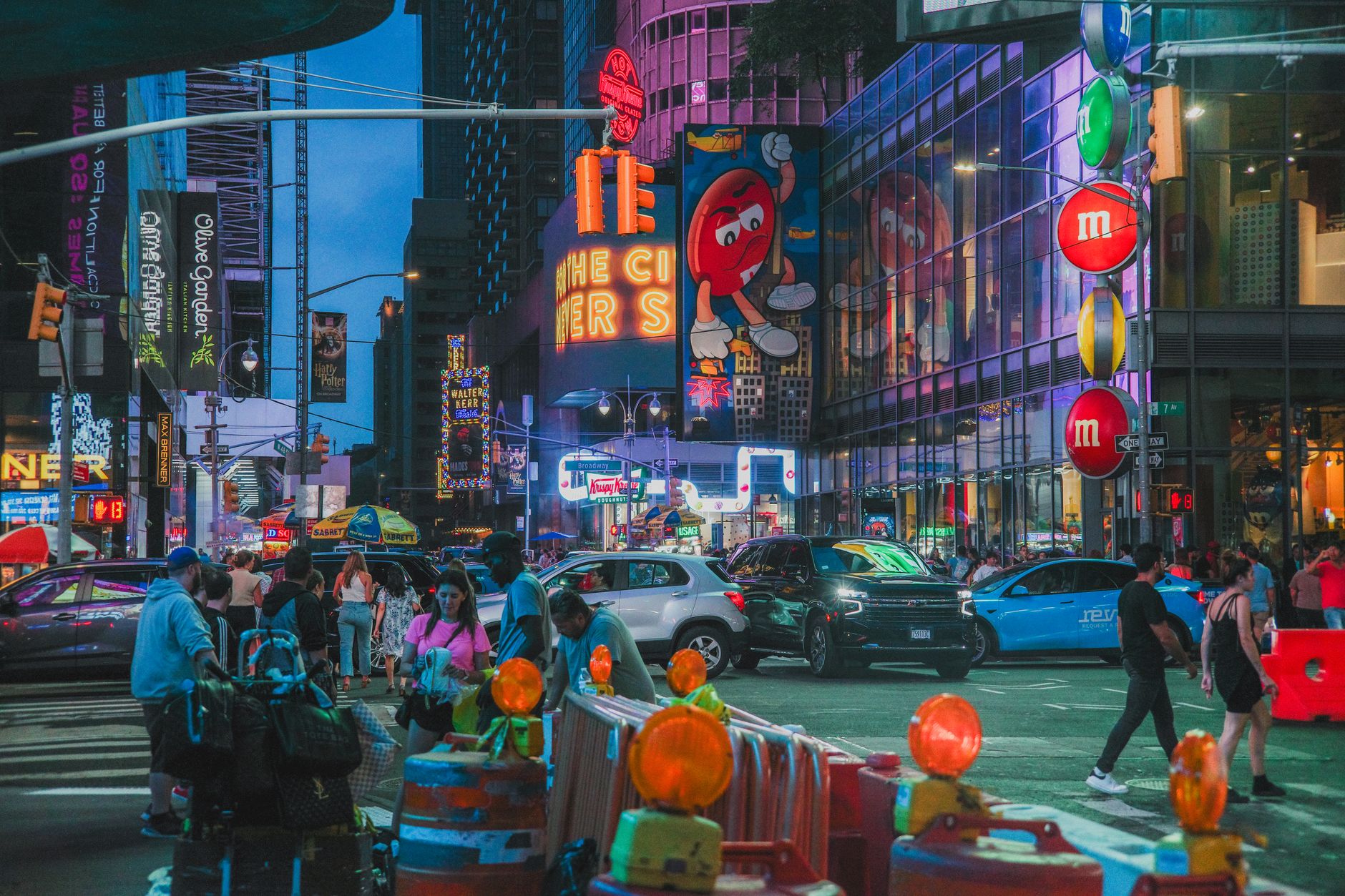
Stand at the corner of 42nd Street and Seventh Avenue on any given Tuesday at 11 PM and you're bathed in more artificial light than some small cities produce. The billboards — some four stories tall, all of them mandatory by law — cycle through advertisements at a pace that makes your peripheral vision twitch. The air smells of roasted peanuts from a cart, diesel from an idling bus, and something sweet and unidentifiable drifting from a candy shop. Underfoot, the hum of seven subway lines vibrates through the pavement.
This is not a square. It's a collision — Broadway slicing diagonally across the orderly Manhattan grid, creating two triangles of public space that the city eventually stopped filling with cars and handed back to pedestrians in 2009. The result is an outdoor room roughly five blocks long, walled not by stone but by light. Every night at 11:57 PM, those walls become a synchronized art gallery for exactly three minutes, when the billboards hand themselves over to a public art installation called Midnight Moment. Almost nobody knows this happens.
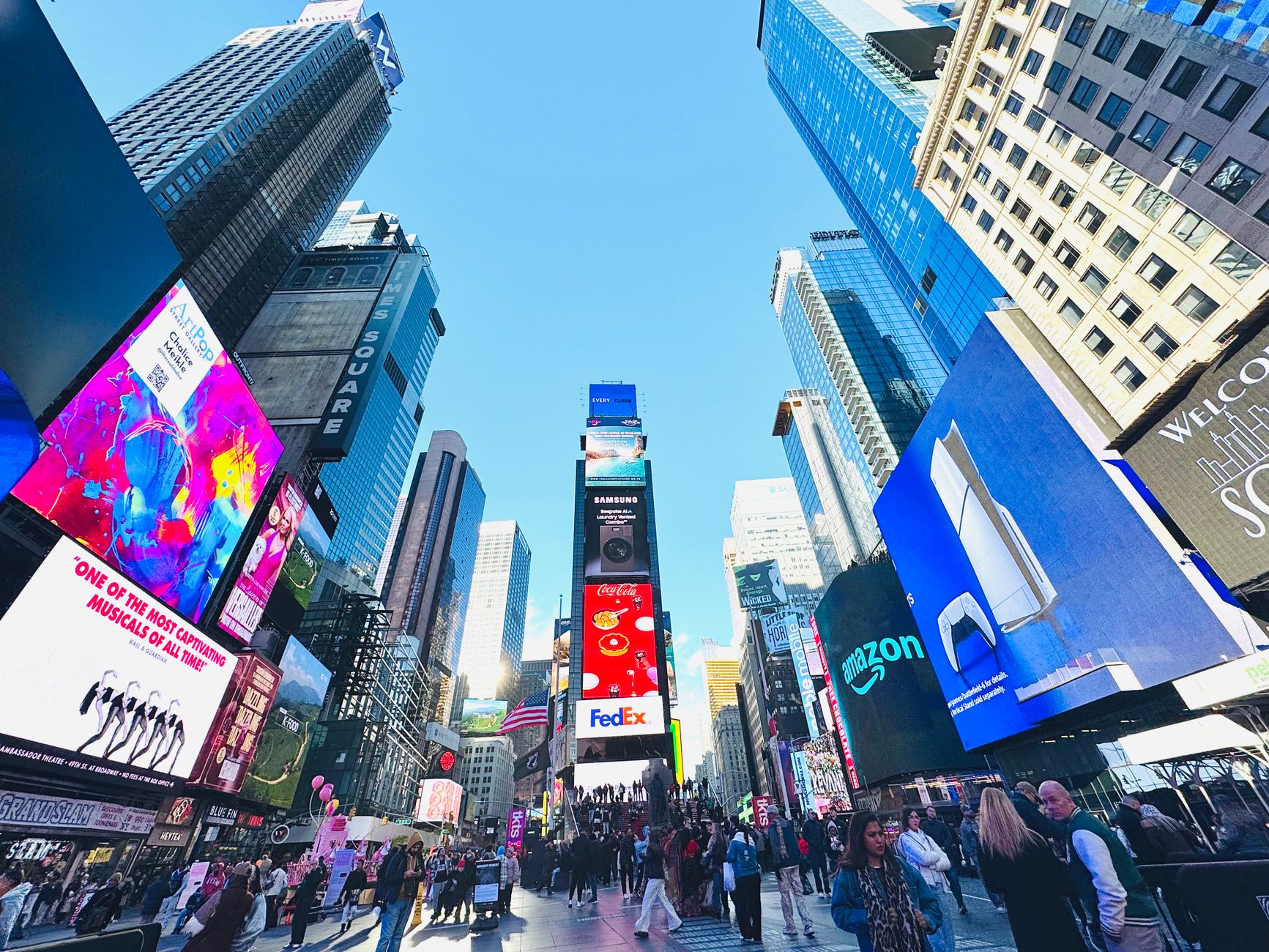
Times Square asks you to look up. But the real stories are in the gaps — the statue most people walk past, the building that makes more money as a billboard than it ever could as an office, the memory of a night in the 1940s when all the lights went dark at once.
Dua Lipa - Live In Times Square
Dua Lipa01 What to see.
One Times Square
The Red Steps at the TKTS Booth
A Sensory Walk: From the Invisible Sound Art to the News Zipper
02 In pictures.


Watch & Explore Times Square.
Plan and listen to Times Square with Audiala.
Audio guide in your pocket, itinerary in your browser. Built for the way you actually visit.
Tickets & tours.
These are guided options from our partners — same price as booking direct.
Prices are indicative — final pricing and availability are confirmed at checkout. Audiala may earn a commission from bookings made through these links.
Also on GetYourGuide
More tours for Times Square
Curated from GetYourGuide. Same price as official, free cancellation on most.
 GetYourGuide
NYC: SUMMIT One Vanderbilt Tickets
from
€41
 GetYourGuide
NYC: Madame Tussauds Entry Tickets
from
€27
 GetYourGuide
NYC: See Yourself on a Times Square Billboard for 24 Hours
from
€129
 GetYourGuide
NYC: One Times Square Skywalk Ticket
from
€28
Prices shown are indicative — final pricing and availability are confirmed at checkout. Audiala may receive a commission from bookings made via these links.
03 Visitor logistics.
The practical scaffolding for a good visit — kept short.
Getting There
The Times Square–42nd Street subway station sits directly underneath the action, served by the 1, 2, 3, 7, N, Q, R, W, and S lines — roughly half of all NYC subway routes pass through here. From Penn Station, it's a 7-minute walk north on Seventh Avenue. Driving is genuinely inadvisable; street parking is nonexistent and garage rates rank among the city's steepest, often $40–60 for two hours.
Opening Hours
As of 2026, Times Square is a public intersection open 24 hours a day, 365 days a year — no gates, no tickets, no closing time. The digital billboards blaze around the clock, though the famous 'Midnight Moment' digital art display runs nightly at exactly 11:57 PM across every screen simultaneously. On New Year's Eve, heavy security lockdowns restrict access from the early afternoon onward, so plan accordingly if you're visiting late December.
Time Needed
A focused walk through the main pedestrian plazas — photos, gawking at the 50-foot-tall billboards, absorbing the noise — takes 30 to 60 minutes. If you're catching a Broadway show, browsing the Museum of Broadway, or eating nearby, budget 3 to 4 hours. After dark is when the neon truly earns its reputation, so consider timing your visit for dusk.
Accessibility
The pedestrian plazas are wide, flat, and fitted with curb cuts — wheelchair and stroller access is straightforward on the ground level. Elevator access to most subway lines exists at the Times Square–42nd Street complex, though the underground passageways connecting platforms can be long and disorienting. Peak hours (evenings and weekends) pack the plazas so densely that maneuvering any mobility device becomes a real challenge; visit before noon on a weekday for breathing room.
Cost
Walking through Times Square costs nothing. Zero. The spectacle of light pouring off a billion dollars' worth of advertising is entirely free to witness. Nearby ticketed attractions like Madame Tussauds or the Museum of Broadway run $30–45 per person — always book online in advance to skip the sidewalk queues.
04 Tips for visitors.
Small things that change the day.
Dodge the Scams
Three cons run constantly here: someone pressing a 'free' CD into your hand then demanding $20, costumed characters blocking your path for aggressive tip demands, and unauthorized ticket sellers hawking fake discount passes. Keep your hands in your pockets, decline firmly, and only buy tickets from official box offices or verified websites.
Photography Rules
Personal photos and video are completely unrestricted — shoot away. Professional or commercial shoots require a permit from the NYC Mayor's Office (CECM), and drones are strictly illegal without both FAA and NYPD authorization.
Eat Off the Bowtie
The chain restaurants clustered at the intersection are overpriced and underwhelming — walk 5 minutes west into Hell's Kitchen instead. Joe's Pizza on Broadway near 40th is a $4 slice institution, Los Tacos No. 1 on 43rd serves what many consider the city's best tacos for under $15, and Joe Allen on 46th is the classic Broadway hangout where the walls display posters of famously flopped shows.
Best Time to Visit
Come at dusk — the screens overpower daylight anyway, but the transition from sunset to full neon around 7–8 PM is when the place genuinely feels electric. Weekday mornings before 10 AM are eerily quiet by Times Square standards, perfect if you want photos without 300,000 other people in them.
One Times Square Secret
That iconic building where the ball drops on New Year's Eve is almost entirely hollow inside — its exterior advertising space generates far more revenue than any tenant ever could. A $500 million renovation underway since 2022 is adding a new observation deck, so check for opening updates.
Find a Restroom
Public toilets in Times Square are essentially nonexistent. Duck into the large retail stores — the M&M's World or Disney Store both have accessible restrooms — or buy a coffee at any chain café to use theirs without guilt.
Where to Eat
Don't Leave Without Trying
Le Parisien Bakery
cafeOrder: The croissants and fresh-baked pastries—this is where locals grab their morning coffee and a buttery, flaky croissant before heading to the theater district.
With nearly 7,600 reviews and a stellar 4.8 rating, Le Parisien is the real deal: authentic French pastries made fresh daily, not a tourist trap. It's the closest you'll get to a Parisian boulangerie in Times Square.
Margon
local favoriteOrder: The ropa vieja and Cuban sandwich—this is fast, affordable, authentic Cuban street food that locals have loved for decades.
Margon is a true neighborhood institution: cheap eats, massive flavor, and zero pretense. This is where you experience real New York, not the Times Square tourist version.
NY Bakery and Desserts Times Square
quick biteOrder: The banana pudding and fresh-baked cookies—a nod to NYC's iconic dessert traditions, available around the clock for midnight cravings.
Open 24 hours with solid reviews, this is your lifeline for late-night sweets or an early-morning pastry when nothing else is open. Reliable and unpretentious.
Waffle & Crepe house
quick biteOrder: The waffles and crepes—a perfect light breakfast or snack that's quick and satisfying before catching a show.
Perfect 5.0 rating from early reviews. A hidden gem for a quick, quality waffle or crepe in the heart of the Theater District.
Dining Tips
- check Avoid chain restaurants in Times Square; seek out authentic local spots like Margon for real New York flavor.
- check Chelsea Market, a short trip away, features diverse food vendors including Los Tacos No.1 for authentic quick bites.
- check Time Out Market New York offers a curated collection of the city's top chefs in one convenient space.
- check For iconic NYC experiences, head to nearby neighborhoods: Katz's Delicatessen for pastrami, Joe's Pizza for classic slices, or Magnolia Bakery for banana pudding.
Restaurant data powered by Google
05 From Horse Manure to Holy Light
Before it was the crossroads of the world, this intersection smelled like horses. In the 1890s, Longacre Square — named after London's carriage-making district — was a tangle of harness shops, stables, and the kind of establishments that served the men who worked in them. The transformation began underground: in 1904, the Interborough Rapid Transit Company opened a subway station at 42nd Street, and a newspaper publisher saw an opportunity that would reshape the identity of an entire neighborhood.
What followed was a century of reinvention so extreme it reads like fiction. A theater district bloomed in the 1910s. A wartime blackout silenced the signs in the 1940s. Peep shows colonized the storefronts in the 1960s. Crack dealers worked the corners in the 1980s. And then, in the span of roughly a decade, corporate America scrubbed it all clean and rebuilt it as a theme park of itself. The history of Times Square is the history of New York's relationship with its own image.
The Publisher, the Tower, and the Most Profitable Empty Building on Earth
Most visitors assume Times Square was always a center of bright lights and Broadway glamour — that the name itself suggests some grand civic plaza. The surface story is seductive: a famous newspaper lent its name to a famous place, and the rest is neon history. But look closer at One Times Square, the slender tower at the intersection's southern triangle, and things stop adding up. The building has been largely vacant for decades. No major tenant. No functioning offices on most floors. Yet its exterior generates tens of millions of dollars a year in advertising revenue, making it arguably the most profitable "useless" building in the world.
The man who started all this was Adolph S. Ochs, publisher of The New York Times. In 1903, Ochs was not yet the titan of journalism he'd become — he was a Chattanooga newspaper owner who had purchased the struggling Times for $75,000 just seven years earlier. What was at stake for Ochs was credibility. He needed a headquarters that would announce his paper's arrival as a serious New York institution. When he learned the IRT subway would open a station at 42nd Street, he made his move: he built a 25-story tower directly above the new station, then lobbied Mayor George B. McClellan to rename Longacre Square in honor of his paper. In April 1904, the mayor signed the resolution. The square got a new name. Ochs got an address that was also an advertisement.
Here's what changed everything: Ochs didn't stay. The New York Times moved its offices to 43rd Street just a few years later, leaving the tower behind. But the name stuck, and the building's true purpose revealed itself — not as a workplace, but as a surface. By 1928, the first electric "news zipper" wrapped the building's facade, turning it into a real-time information screen decades before the internet. The tower became a frame for messages, not a container for people. A $500 million renovation begun in 2022 will modernize the facade while the interior remains, by design, largely empty.
Knowing this changes what you see when you look at One Times Square during the ball drop. You're not watching a celebration atop a great building. You're watching a million people count down while staring at a hollow shell whose only purpose is to be looked at — a building that became more valuable the moment it stopped being used as a building. It's the most honest monument to spectacle ever built.
The Dimout and the Electrician's Promise
The Twenty-Year Gutter and the Corporate Resurrection
Listen to the full story in the app
The whole Times Square,
told well.
Audio guides for 1,100+ cities across 96 countries. History, stories, and local insight — offline ready.
06 Frequently asked.
The questions travellers send us most about Times Square.
Is Times Square worth visiting?
Yes, but calibrate your expectations — it's less a place and more a phenomenon, a canyon of light where 238,000 square feet of LED screens cook the air and the ground vibrates from subway trains rolling beneath your feet. Most New Yorkers actively avoid it, which tells you something: it's a spectacle built for outsiders, and if you treat it that way — a 45-minute sensory experiment rather than a cultural destination — you'll get exactly what it offers. Walk a few blocks west into Hell's Kitchen afterward for food that doesn't cost $28 for a mediocre burger.
How long do you need at Times Square?
Thirty to sixty minutes is enough to walk the pedestrian plazas, climb the red TKTS steps for the iconic overhead view, and absorb the full assault of light and noise. If you're catching a Broadway show or visiting a nearby attraction like the Museum of Broadway, budget three to four hours. After dark is when the screens hit hardest — and if you linger until 11:57 PM, every billboard synchronizes for the nightly Midnight Moment art display, which is genuinely worth seeing.
Can you visit Times Square for free?
Completely free — it's a public intersection, open 24 hours a day, 365 days a year, with no tickets or reservations required. The pedestrian plazas between 42nd and 47th Streets have moveable chairs and tables you can sit in at no cost. Just be aware that costumed characters (Elmo, Spider-Man, the Statue of Liberty) will pose for photos and then demand tips, sometimes aggressively — decline firmly or have a dollar ready.
How do I get to Times Square from New York City?
The Times Square–42nd Street subway station is one of the city's largest hubs, served by the 1, 2, 3, 7, N, Q, R, W, and S lines — meaning you can reach it from almost anywhere in Manhattan, Brooklyn, or Queens without a transfer. From Penn Station it's a five-minute walk east; from Grand Central, take the S shuttle one stop. The station complex has elevator access for wheelchair users, though the sheer density of pedestrians during peak hours makes maneuvering difficult.
What is the best time to visit Times Square?
Go after dark on a weekday evening — the screens are at full intensity, and the crowds thin out compared to weekend afternoons. Summer weekends and the weeks around Christmas are the most packed, with foot traffic sometimes slowing to a standstill. Avoid New Year's Eve unless you genuinely want the experience: access is locked down by early afternoon, there are no bathrooms in the viewing pens, and you'll stand in the cold for up to ten hours.
What should I not miss at Times Square?
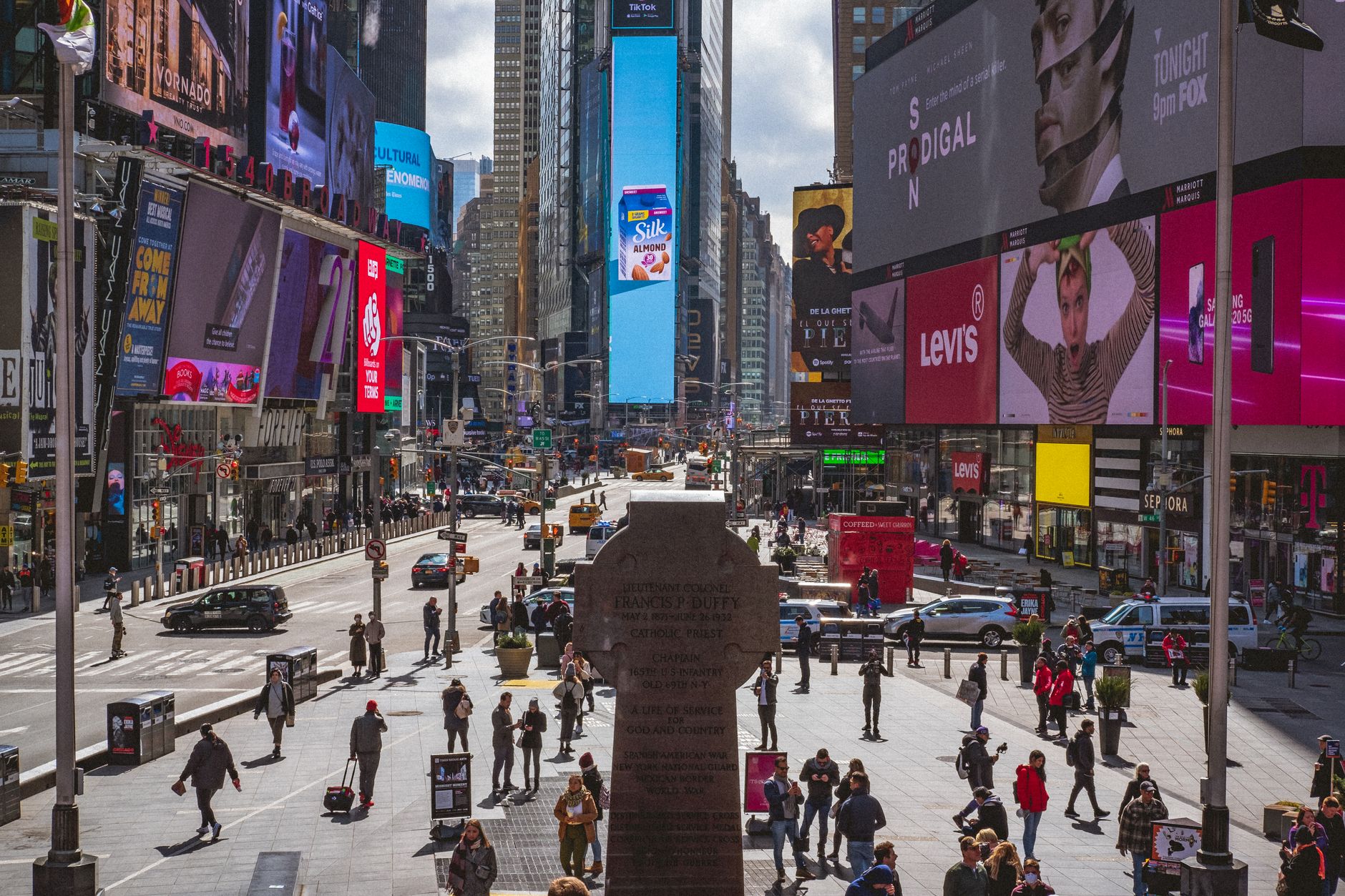
Most people miss the best thing there entirely: Max Neuhaus's permanent sound installation, a low-frequency ambient hum rising from a subway grate on the traffic island between Broadway and 7th Avenue at 46th Street — you'll walk right over it unless you stop and listen. Climb the red TKTS steps above the discount ticket booth for the best photo angle of the full bowtie intersection. And look at One Times Square, the ball-drop building: it's essentially a hollow steel frame, one of the most profitable "empty" buildings on earth, where a single billboard can cost $4 million a year while the interior sits largely vacant.
What scams should I avoid at Times Square?
The three biggest: costumed characters who demand $10–20 for an unsolicited photo, street performers who press "free" CDs into your hand then insist on payment, and unofficial ticket sellers hawking overpriced bus tours or attraction passes. Keep your hands in your pockets — literally — and buy show tickets only from the official TKTS booth or directly from theater box offices. Pickpocketing also spikes in the densest crowd areas, particularly around the pedestrian plazas on weekend evenings.
Why is Times Square called Times Square?
It was renamed in April 1904 after publisher Adolph S. Ochs moved The New York Times headquarters to the newly built Times Tower at the intersection of Broadway and 42nd Street. Before that, it was called Longacre Square, named after London's carriage-making district — fitting, since the area was then a hub for horse stables and harness shops. Mayor George B. McClellan signed the renaming resolution, and the Times celebrated by launching the first New Year's Eve fireworks display in 1904, replaced by the now-famous ball drop on December 31, 1907.
Verified, and shown.
Researched and written by the Audiala editorial team from historical records, architectural archives, and local expertise.
Primary source for the chronological history of Times Square, including the 1904 renaming, 1905 Times Tower opening, 1928 news zipper, WWII dimout, and the 1986–1989 decline period.
Confirmed the original name 'Longacre Square' and provided historical context for the area's transformation.
Corroborated the 1904 renaming, the 1907 first ball drop, the bowtie geometry of the intersection, and subway line information.
Historical context on the pre-1904 identity of Longacre Square and the carriage district era.
Source for the Max Neuhaus sound installation detail and the area's gritty mid-century history.
Background on the multi-decade revitalization effort that transformed Times Square from the 1980s onward.
Local perspective on the love-hate relationship New Yorkers have with Times Square.
Community discussion reflecting local sentiment about the area.
Detailed descriptions of common Times Square scams including the CD hustle and costumed character tips.
Additional safety and scam-avoidance guidance for Times Square visitors.
Official city source for photography permits, professional filming rules, and event regulations in Times Square.
Regulations for organized public gatherings and amplified sound in the Times Square area.
Coverage of the $500 million One Times Square renovation project begun in 2022.
Source for mandatory advertising zoning laws, notable buildings (Paramount, Knickerbocker, Palace Theatre), and One Times Square's hollow interior and renovation details.
Researched from Wikidata, Wikipedia & official sources · fact-checked · How we make our guides →