

Young Israel Beth El of Borough Park: Hours, History & Tips
A Historic Synagogue in Borough Park
Young Israel Beth El of Borough Park stands as one of Brooklyn’s most significant Orthodox synagogues. Founded in 1902, the original Temple Beth-El quickly became a spiritual and cultural hub for Borough Park’s Jewish community. The first brick synagogue was built in 1906 at 12th Avenue and 41st Street, now the neighborhood's oldest surviving synagogue structure, serving today as Chevra Anshei Lubawitz.
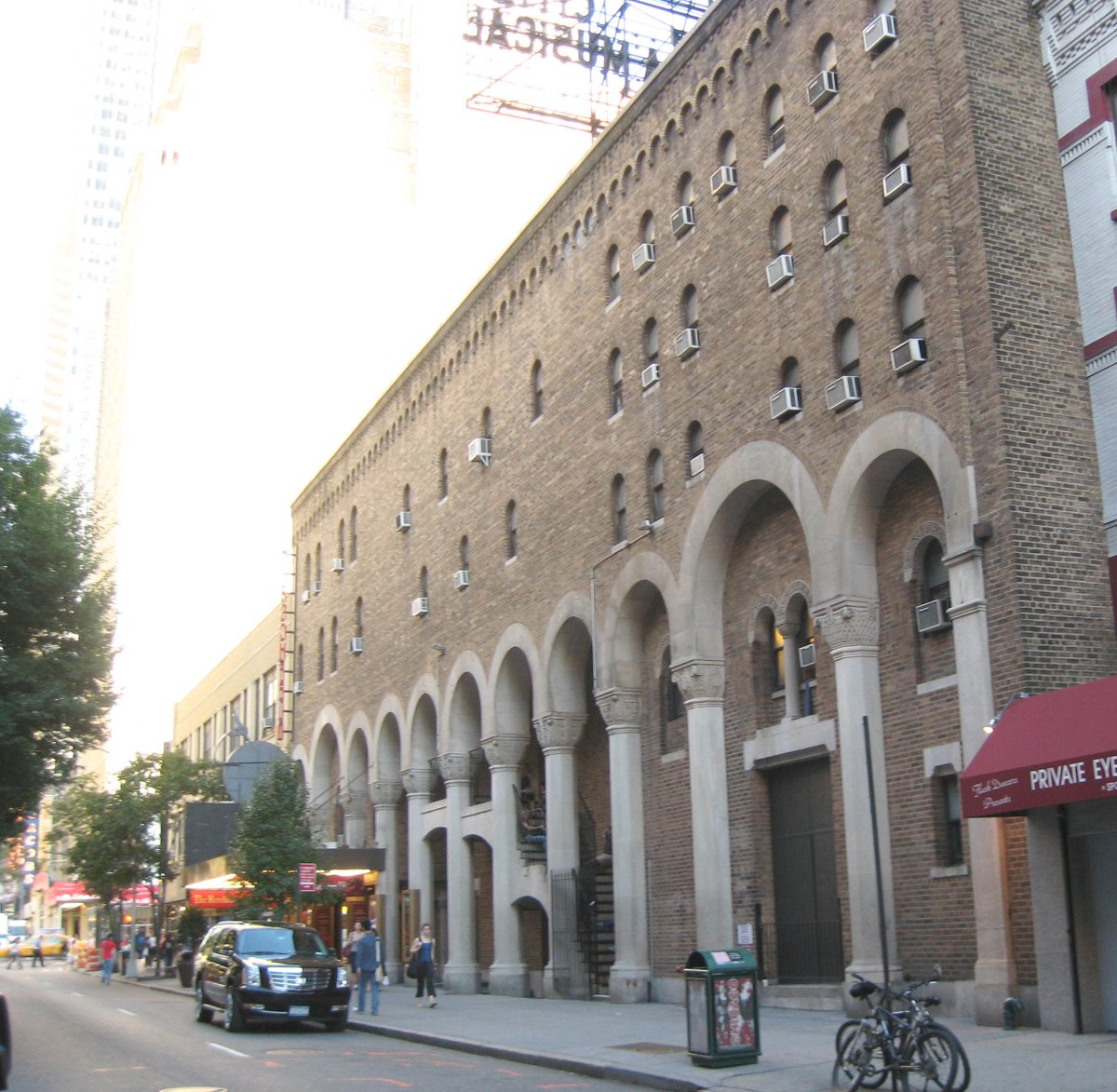
The current three-story synagogue on 15th Avenue, constructed between 1920–1923 and designed by Shampan & Shampan, is celebrated for its Moorish and Egyptian Revival elements—ornate arches, decorative motifs, and a distinctive historic presence. In 2010, it was listed on the National Register of Historic Places.
Facing demographic changes in the 1980s, Temple Beth-El merged with the Young Israel of Boro Park (established in the 1930s), forming today's Young Israel Beth El of Borough Park (YIBE). This congregation has nurtured a rich musical tradition, with renowned cantors like Mordechai Hershman, Moshe Koussevitzky, and Benzion Miller.
Visitor Information
- Visiting Hours Primarily open during religious services (weekdays, Shabbat, Jewish holidays) and special events. Always check the YIBE website or contact the synagogue for up-to-date hours.
- Admission Free for services and visits. Group tours should be arranged in advance.
- Accessibility The building accommodates visitors with mobility needs; please confirm specifics in advance.
- Photography Restricted, especially during services. Ask permission before taking photos.
- Guided Tours & Events Offered occasionally—check online calendar or social media for updates.
- Nearby Attractions Explore Borough Park’s kosher restaurants, Jewish bookstores, and other synagogues for a fuller cultural experience.
FAQ
- Best times to visit? Shabbat and holidays are vibrant, but verify hours first.
- Admission fee? None; donations appreciated.
- Wheelchair accessible? Yes, but confirm ahead.
- Guided tours available? Occasionally, with prior arrangement.
- Photography policy? Ask for permission; limited during services.
Discover Temple Beth-El: A Historic and Cultural Gem
Temple Beth-El congregations across New York—spanning Manhattan, Buffalo, Ithaca, Jersey City, Great Neck, and Hornell—offer a rich blend of history, architecture, and communal life. This section explores their roots, architectural highlights, and visitor information.
Historical Roots
These congregations were established by Jewish immigrants seeking inclusive spaces for worship and education. Noteworthy examples:
- Ithaca Founded 1925, notable for its twelve-sided clerestory and symbolic architecture (PocketSights).
- Buffalo Established 1847, evolving through multiple buildings to meet community needs (Jewish Buffalo History).
Architectural Marvels
- Ithaca 1929 design features a red clay-tiled dome and rich symbolic motifs (PocketSights).
- Buffalo Evolved architecturally to accommodate a growing congregation (Jewish Buffalo History).
- Jersey City & Great Neck Known for inclusive, progressive environments (Temple Beth-El Jersey City; Temple Beth-El Great Neck).
Visiting Information
- Ithaca Tours by appointment, Mon–Fri 9 AM–5 PM; donations welcome.
- Buffalo Events/services open to visitors; tours by request.
- Jersey City & Great Neck Visiting hours align with services/events; check online for schedules.
Public transit and parking are available at most locations. Explore nearby parks, historic districts, and cultural centers.
Social, Cultural, and Educational Impact
Temple Beth-El congregations foster community through social clubs, choirs, and service initiatives. Education is a central mission, with programs for all ages (Temple Beth-El Jersey City; Temple Beth-El Great Neck). Many sites are recognized on historic registers (PocketSights; Wikipedia: Hornell).
Ritual Artifacts and Artistic Heritage
Admire stained glass, Torah scrolls, and symbolic art—such as Buffalo’s preserved stained glass, now at Temple Beth Tzedek (Jewish Buffalo History).
Leadership and Legacy
Dedicated leaders—rabbis, cantors, and laypeople—are the lifeblood of these congregations, fostering dynamic community environments (Jewish Buffalo History).
FAQ
- Visiting hours? Vary by site; check each website.
- Admission fee/ticket? Usually free; donations welcome; ticketing for special events.
- Wheelchair accessible? Varies, but most offer accommodations.
- Guided tours? Available in many locations by appointment.
Temple Beth-El New York City: Architectural Highlights & Visitor Guide
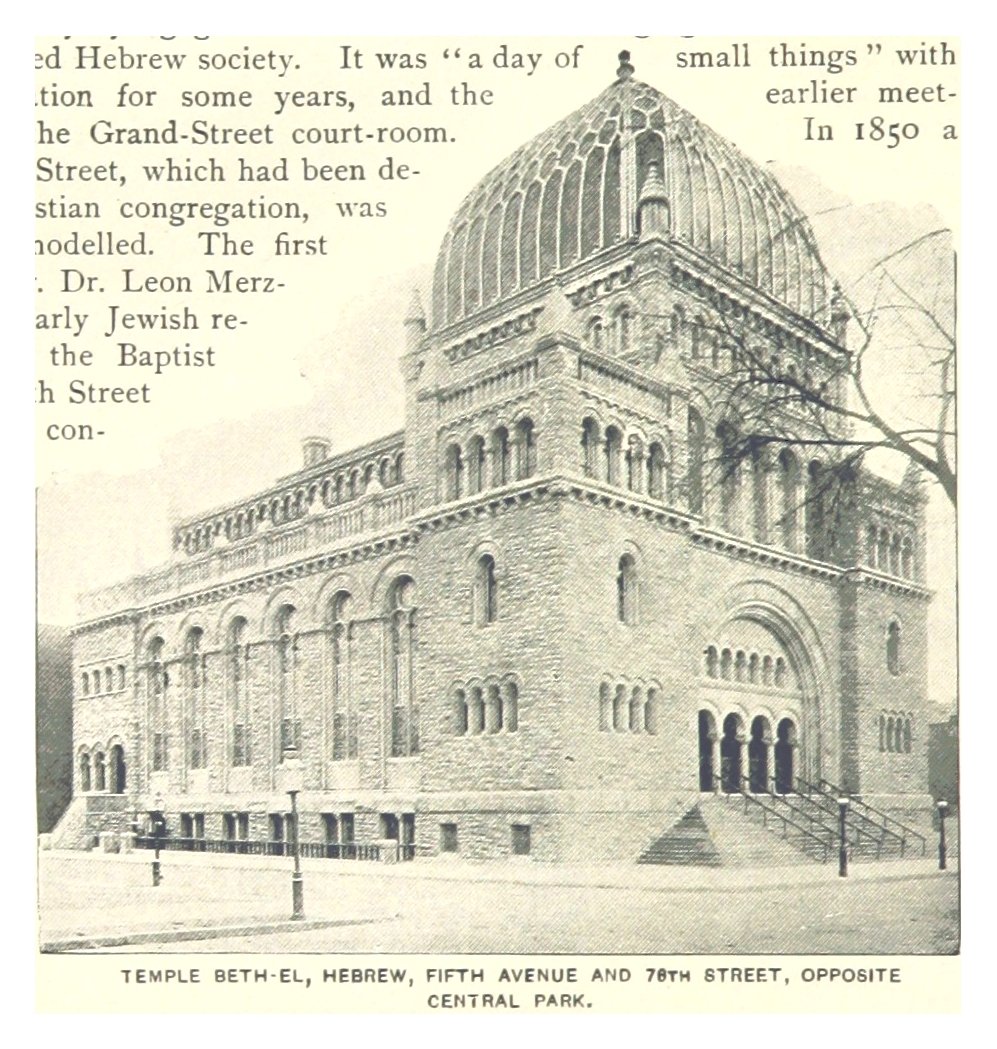
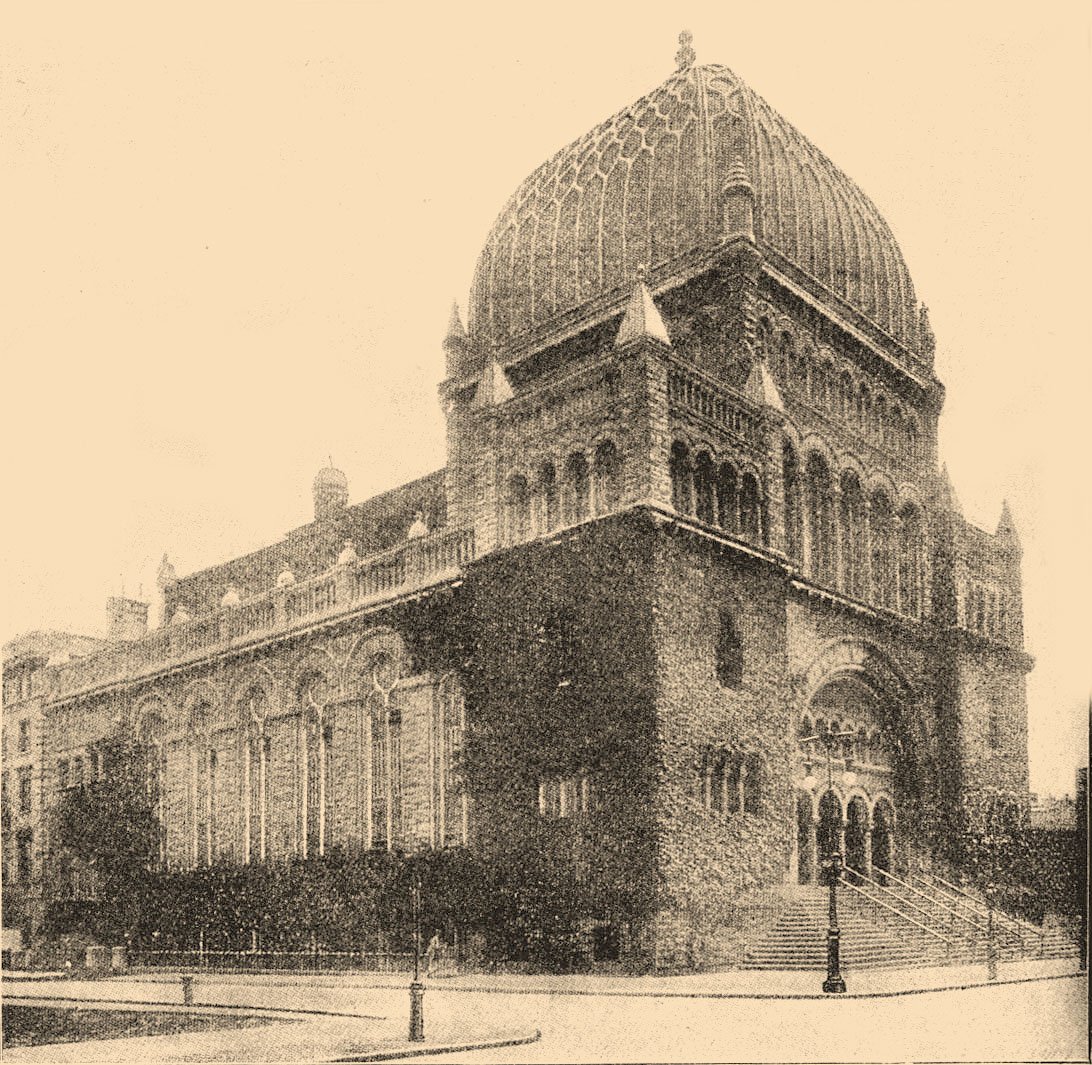
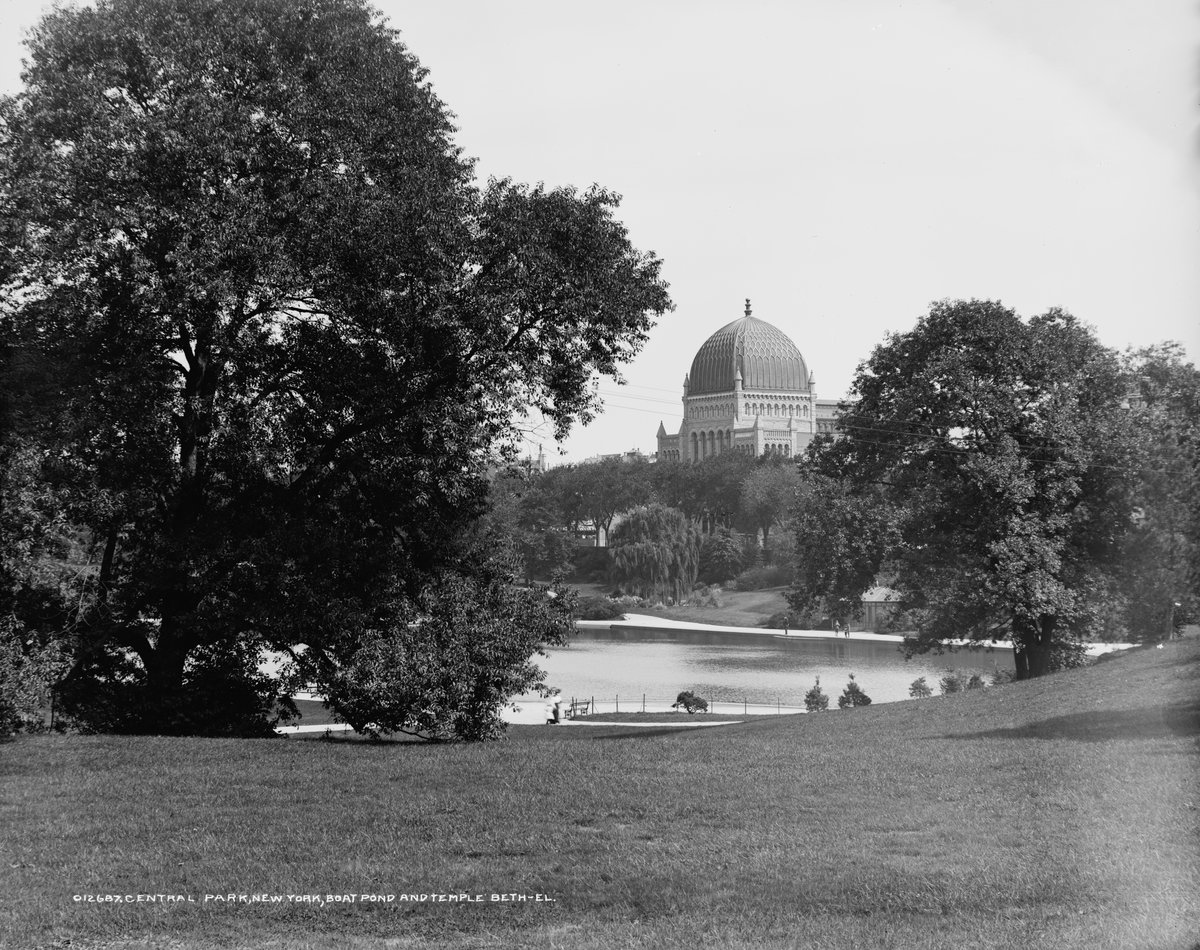
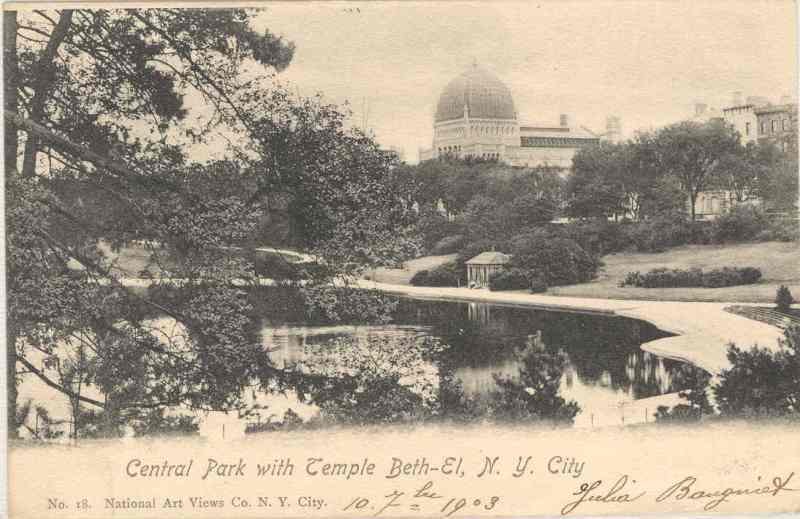
The original Temple Beth-El at 945 Fifth Avenue was a beacon of Romanesque Revival, Byzantine, and Moorish architecture. Designed by Brunner & Tryon, it was dedicated in 1891 and became a symbol of Jewish identity in New York (Wikipedia).
Design Features
- Exterior Indiana limestone façade, 51-foot copper dome inspired by Berlin’s New Synagogue.
- Interior Mexican onyx, Numidian marble, gold leaf, and a custom Odell organ (later replaced by a M. P. Möller organ above the bimah).
Transformation
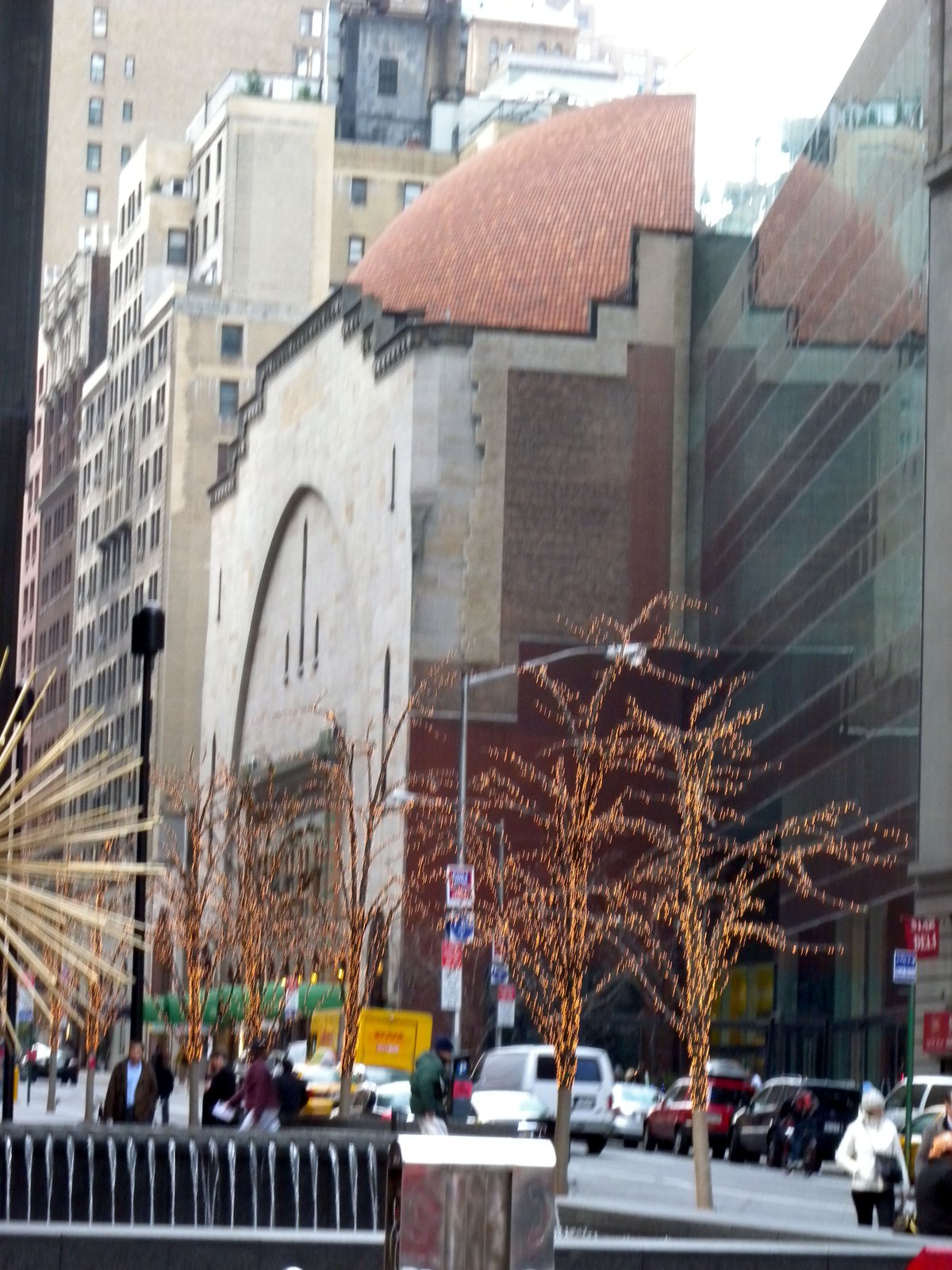
After merging with Temple Emanu-El in 1927, the original building was used sporadically and demolished in 1947 (Sideways NYC). The new Emanu-El complex at 1 East 65th St. preserves echoes of the Beth-El legacy, including the Beth-El Chapel with a double-dome roof.
Visiting Temple Emanu-El
- Hours Mon–Fri 10 AM–4 PM; Sun 12–4 PM; closed Saturdays/major holidays.
- Tickets Guided tours available via Temple Emanu-El’s website; suggested donations support preservation.
- Accessibility Fully accessible, with ramps/elevators.
- Nearby Attractions Metropolitan Museum of Art, Central Park.
Special Features
- The Dome Inspired successor structures.
- Materials Set standards for synagogue interiors.
- Organ Placement Enhanced both acoustics and visual focus (Wikipedia).
Visuals
Archival and current photos, plus virtual tours, are available on the official website and in historical archives.
FAQ
- Is the original building open to visitors? No; visit Temple Emanu-El for the legacy experience.
- Guided tours or special events? Yes, at Temple Emanu-El.
Temple Beth-El in Manhattan Beach and Chappaqua: Visiting Information
Locations
- Manhattan Beach 111 West End Ave, Brooklyn, NY 11235
- Chappaqua Renowned for its Louis Kahn–designed sanctuary (ArchDaily)
Getting There
- Manhattan Beach Subway (B/Q to Brighton Beach), then walk or bus.
- Chappaqua Metro-North Harlem Line to Chappaqua, then short taxi/rideshare.
Visiting Hours & Tickets
- Manhattan Beach Shabbat services Fridays 7 PM, Saturdays 9:30 AM. Adult classes Wednesdays via Zoom.
- Chappaqua Schedules vary; check the website or call ahead.
- Admission Free for regular services; some events/tours may require registration or fee.
Special Events & Tours
Both locations occasionally offer guided tours focusing on architecture and history. Events are listed on their respective websites.
Architectural Highlights
- Chappaqua Kahn’s octagonal sanctuary, cubic cupola with 24 windows, four concrete columns, natural wood. Expansion by Alexander Gorlin Architects added glass lobby, classrooms, and more (ArchDaily).
Accessibility
Both locations offer accessible entrances and facilities. For city-wide accessible travel, see Wheel the World: Accessible NYC Guide.
Visitor Etiquette & Tips
- Dress modestly; men may be offered a kippah.
- Ask before taking photos.
- Silence phones; arrive early.
- Non-Jewish visitors are welcome to observe respectfully.
Practical Tips
- Register ahead for classes/tours (Temple Beth-El Manhattan Beach).
- Public transport or rideshare is recommended.
- Expect security checks.
- No on-site dining, but many nearby options.
Nearby Attractions
- Manhattan Beach Brighton Beach, Coney Island.
- Chappaqua Village shops, Rockefeller State Park Preserve.
FAQ
- Hours? Manhattan Beach: Fri 7 PM, Sat 9:30 AM. Chappaqua: varies.
- Admission? Free for services; some events may require registration.
- Guided tours? Yes, by appointment.
- Accessibility? Yes, at both sites.
Contact Information
- Temple Beth-El of Manhattan Beach
111 West End Avenue, Brooklyn, NY 11235
Tel: 718.891.3500
templebethelmb.org - Chappaqua See ArchDaily for details.
Summary
Temple Beth-El’s enduring legacy is a testament to the resilience and cultural richness of New York’s Jewish community. From the grandeur of old Manhattan and the innovation of Chappaqua to the vibrancy of Borough Park, each site offers unique insight into Jewish life and heritage. For the most rewarding visit, consult official websites for up-to-date information, and consider engaging in special events or educational programs. Enhance your exploration by downloading the Audiala app for exclusive tours and content (Temple Beth-El NYC Wikipedia; Young Israel Beth El; ArchDaily; Sideways NYC).