What the Place Is
New York City’s public art includes several sculptures known as “Reclining Figure.” The most celebrated is Henry Moore’s monumental bronze at Lincoln Center, where it has stood since 1965. Set in the Paul Milstein Pool and Terrace, it combines with the water and urban architecture to create shifting reflections and light across its textured surfaces (Henry Moore Foundation; Curbed NY; Wikipedia.
A smaller, more intimate Moore “Reclining Figure” is in Bryant Park. Another work, Zaq Landsberg’s “Reclining Liberty,” reimagines the Statue of Liberty in a relaxed pose and invites visitors to engage with public art (Bryant Park Official Website; Henry Moore Foundation; Andrew Logan Projects; Secret NYC).
History
Henry Moore was born in 1898 in Castleford, Yorkshire, England. After serving in World War I, he studied at Leeds School of Art and the Royal College of Art in London, supported by an ex-serviceman’s grant. Classical antiquity and non-Western art—including pre-Columbian, African, and Oceanic forms—influenced his work. His early sculptures established recurring themes of reclining figures and mothers and children, expressed through organic abstraction and an interest in the interplay of internal and external forms (Henry Moore Foundation).
During World War II, scarcity of materials and limited commissions led Moore to focus on drawing. His “Shelter Drawings,” depicting Londoners taking refuge during the Blitz, helped establish his reputation and led to his appointment as an official war artist. After his Hampstead home was destroyed, he relocated to Perry Green and returned to sculpture, focusing on public commissions and humanistic subjects. These included the 1943 “Madonna and Child” for St. Matthew’s Church in Northampton.
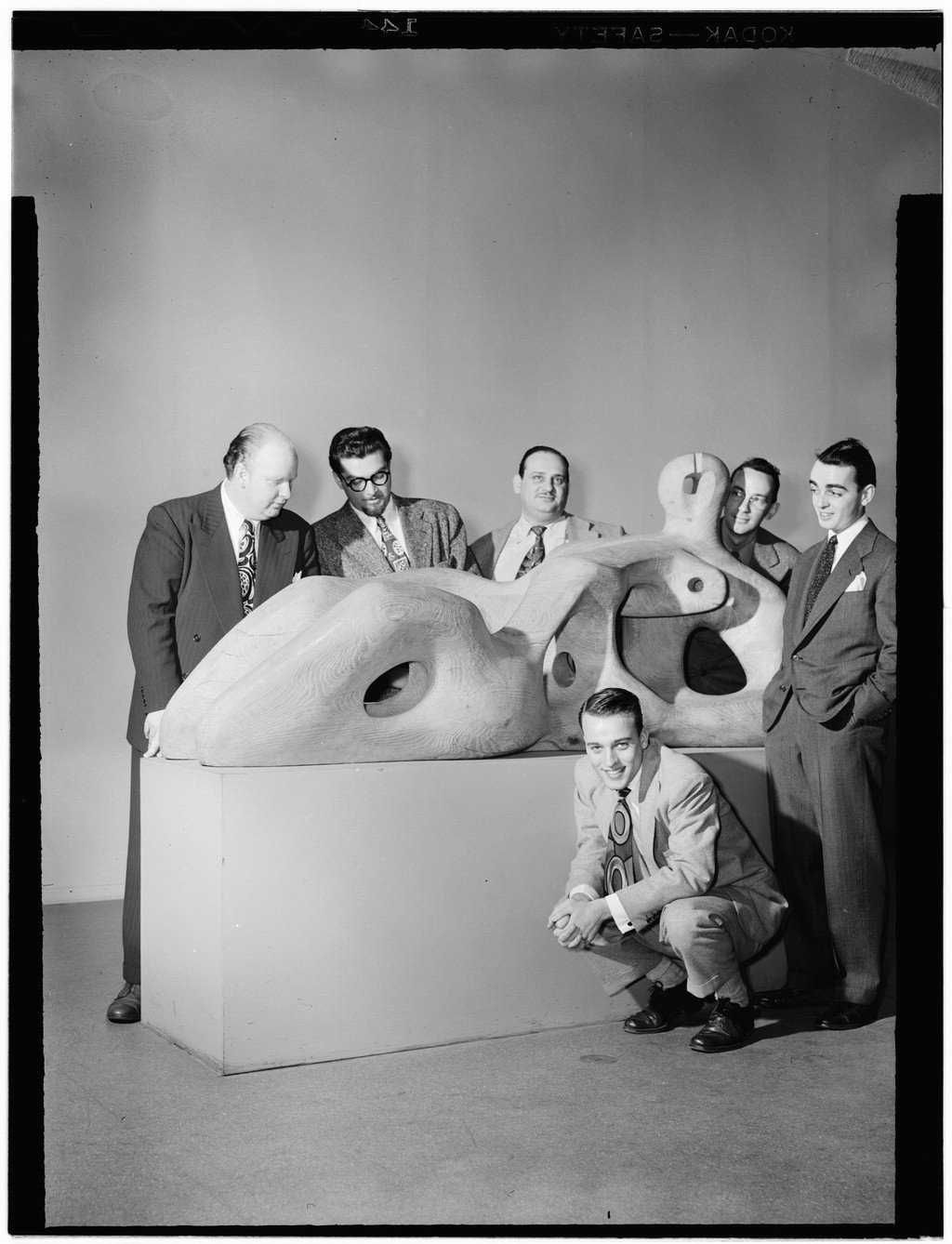
By the late 1940s and 1950s, Moore had achieved international recognition. His milestones included a 1946 Museum of Modern Art exhibition in New York and the International Prize for Sculpture at the 1948 Venice Biennale. His sculptures grew in scale and abstraction, exploring connections between the human figure and landscape. The reclining figure became central to this exploration and to his large-scale bronzes for public settings.
Moore’s Lincoln Center sculpture was commissioned in the early 1960s as part of the center’s effort to include significant modern artworks in its new performing arts complex. He was asked to create a site-specific piece for the reflecting pool, now the Paul Milstein Pool and Terrace, beside David Geffen Hall. It was his only sculpture designed specifically for installation in water (Curbed NY; Flickr). Completed between 1961 and 1965, it has been a defining feature of Lincoln Center since its unveiling in 1965 (Curbed NY).
Zaq Landsberg’s “Reclining Liberty” was initially displayed in Morningside Park. It is described as now present in Red Hook, Brooklyn, and as currently exhibited at Andrew Logan Projects there, with a permanent site in Staten Island.
What to See
Lincoln Center’s Reclining Figure
About 16 feet long, Moore’s bronze has dynamic, organic forms that contrast with Lincoln Center’s geometric architecture. Its placement in the pool evokes natural landforms and invites contemplation of humanity’s relationship with the natural world.
The sculpture exemplifies Moore’s mature style: abstract but rooted in recognizable human forms, monumental yet inviting close inspection. Its rough-textured surface and interplay of solid forms and voids change with sunlight and reflections. The reclining pose, a recurring motif in Moore’s work, suggests repose and contemplation, as well as continuity between humanity and nature (Flickr).
Bryant Park’s Reclining Figure
The Bryant Park sculpture explores the reclining human form through abstraction. Its gentle curves and negative spaces invite reflection on the connection between body and landscape, and symbolize rest, fertility, and timelessness. Its smaller scale lets visitors engage closely with its flowing forms amid the park’s greenery.
Reclining Liberty
Landsberg’s “Reclining Liberty” gives New York’s best-known symbol a contemporary, playful interpretation. Its interactive approach invites visitors to touch, lounge on, and photograph the sculpture.
Practical Visiting Information
Lincoln Center
- Hours The Paul Milstein Pool and Terrace is open daily from dawn until dusk.
- Admission Free; no ticket is required.
- Accessibility Wheelchair accessible, with smooth walkways and nearby benches.
- Subway Take the 1, A, B, C, or D train to 66th Street–Lincoln Center or 59th Street–Columbus Circle.
- Bus Multiple MTA bus routes stop nearby.
- Parking Several parking garages are in the area; spaces may be limited during peak times.
- Photography Permitted and encouraged.
- Tours Lincoln Center occasionally offers guided art tours that include the sculpture; check the official website for details.
Bryant Park
- Location Bryant Park, Manhattan.
- Hours Daily, 7:00 AM to 11:00 PM.
- Admission Free.
- Accessibility Paved pathways and ramps provide wheelchair access.
- Subway Take the B, D, F, M, 7, or S train to 42nd Street–Bryant Park.
- Photography The sculpture’s form and the park’s greenery provide photography opportunities.
Reclining Liberty: Red Hook
- Address 384 Van Brunt Street.
- Hours Wednesday–Friday, 2:00–8:00 pm; Saturday–Sunday, 12:00–8:00 pm; additional hours by appointment.
- Admission Free (Andrew Logan Projects Official Website).
- Accessibility Wheelchair accessible, with step-free, street-level access.
- Public transit The area is served by the F/G subways, about a 20–25-minute walk away, the B61 bus, and the NYC Ferry’s South Brooklyn route.
- Facilities Restrooms are available. Seating is minimal; a blanket or portable chair can be brought.
- Pets and children Leashed pets are generally allowed at outdoor sites. Children should be supervised while interacting with the artwork.
Reclining Liberty: Staten Island
- Address 1441 South Avenue.
- Hours Accessible during daylight.
- Admission Free.
- Public transit Accessible via the Staten Island Railway and local buses.
- Facilities Restrooms are limited, and seating is minimal.
Tips
Early morning or late afternoon offers favorable light for visiting Lincoln Center’s sculpture. At Bryant Park, those times also offer optimal light and fewer crowds. Visitors are encouraged to touch, lounge on, and photograph “Reclining Liberty,” making it suitable for families.
Most COVID-19 restrictions have lifted, but check official websites for current guidelines. Share photos and impressions using #RecliningFigureNYC, and stay updated by downloading the Audiala app.
Nearby Places
At Lincoln Center, nearby cultural landmarks include the Metropolitan Opera House, New York Philharmonic, and New York Public Library for the Performing Arts. Central Park is a short walk away.
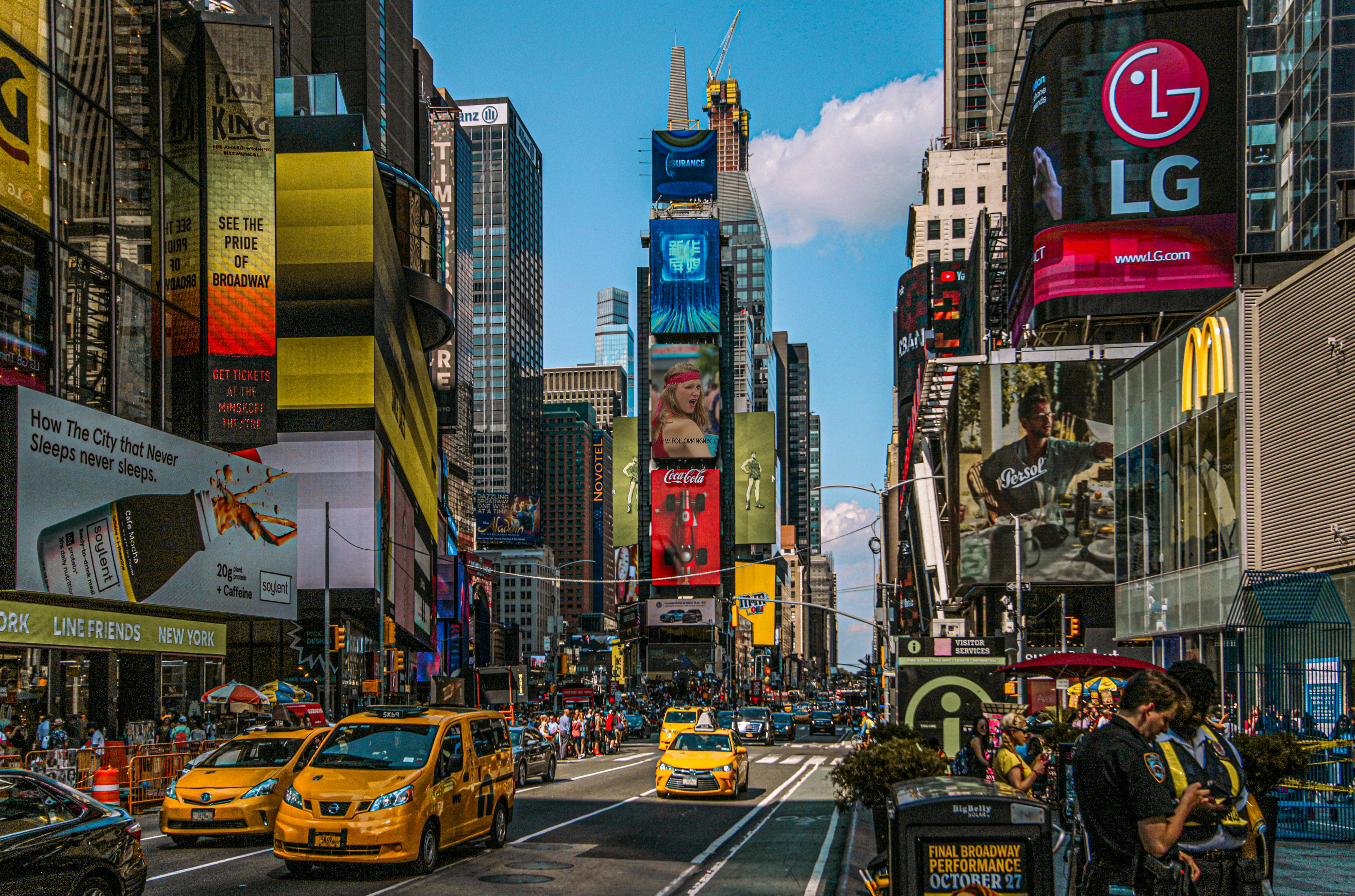
Bryant Park is near the New York Public Library, Times Square, and the Museum of Modern Art.