
Commissioning, Installation, and Artistic Elements
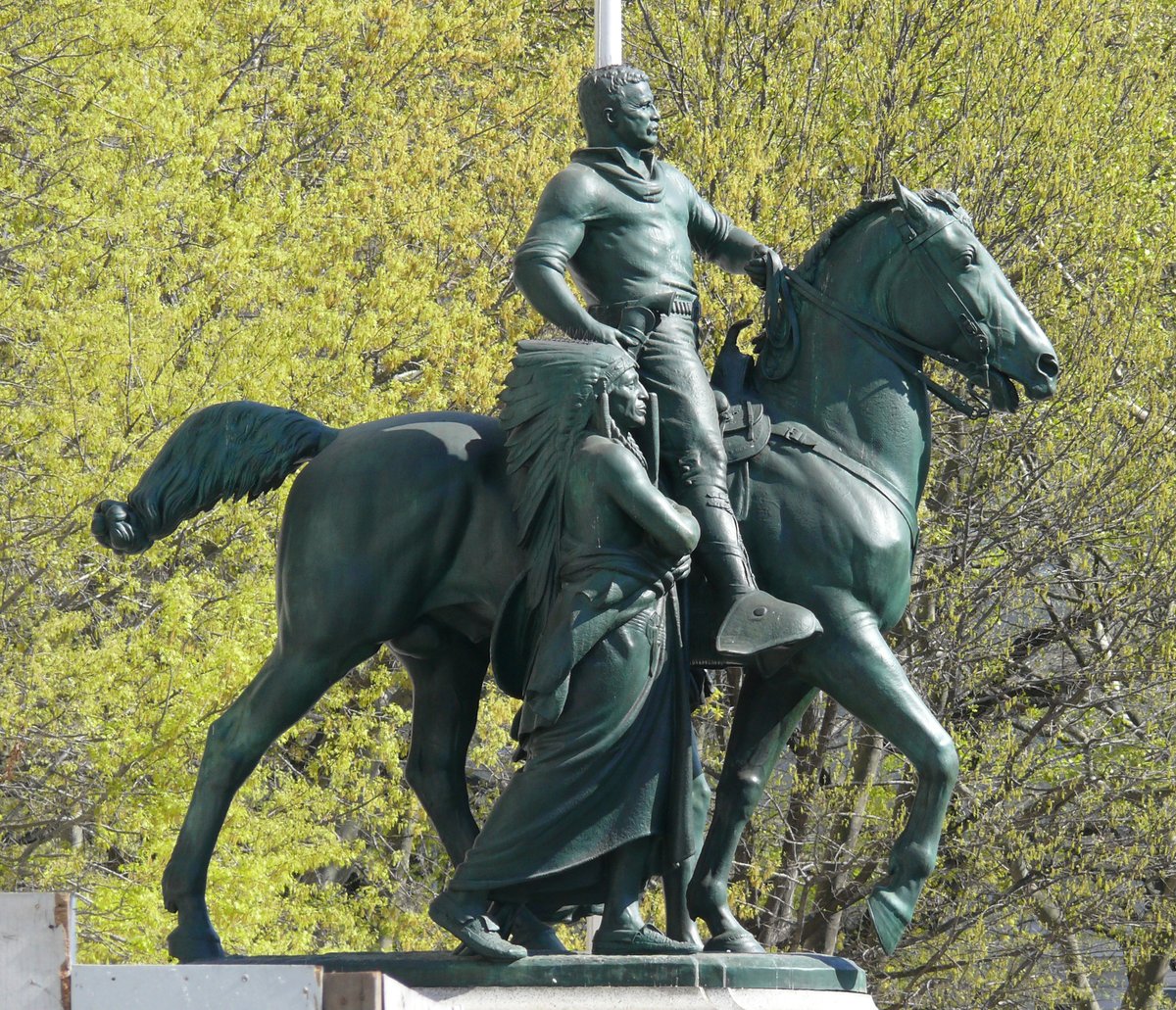
Commissioned as part of a movement to honor Roosevelt’s legacy, the statue was funded by the New York State Roosevelt Memorial and designed by James Earle Fraser, a sculptor famed for “End of the Trail.” Installed at the prominent Central Park West entrance of the AMNH in 1940, the statue quickly became a notable fixture in New York City’s landscape (The Art Newspaper).
The artistic composition featured Roosevelt mounted on horseback, with a Native American and an African man on either side, walking slightly behind him. Fraser’s stated intention was to convey Roosevelt’s “friendliness to all races,” but the statue’s visual hierarchy—Roosevelt elevated above the other two—was widely interpreted as emblematic of racial and colonial dominance (Smithsonian Magazine; Daily Mail).
Public Debate, Controversy, and Removal
Upon its unveiling, the statue was largely accepted by the public. However, as societal values evolved, criticism mounted regarding its implicit endorsement of racial hierarchy. The 2017 events in Charlottesville and the subsequent national reckoning with monuments of controversial legacy brought renewed attention to the statue. Activist groups, including Decolonize This Place and the Monument Removal Brigade, organized protests and demonstrations, arguing that the statue perpetuated harmful stereotypes and colonial violence (Hyperallergic; The New Yorker).
In 2020, the AMNH requested the statue’s removal, with support from city officials and the Roosevelt family. The New York City Public Design Commission unanimously approved its removal in June 2021. The statue was dismantled in January 2022 and is now in storage, with plans to move it to the Theodore Roosevelt Presidential Library in North Dakota (NBC News).
Current Status and Visiting Information
Where Is the Statue Now?
As of June 2025, the statue is not on public display. It is in storage, awaiting installation at the Theodore Roosevelt Presidential Library in Medora, North Dakota, planned for 2026. The library intends to present the statue within a broader educational and historical context, consulting with diverse community groups to ensure sensitive and inclusive interpretation (The Dickinson Press; Native News Online).
Visiting the American Museum of Natural History (AMNH)
Although the statue has been removed, the AMNH remains one of New York City’s most prominent cultural destinations.
- Address Central Park West at 79th Street, Manhattan, NY
- Hours Typically open daily from 10:00 a.m. to 5:30 p.m. (confirm current hours on the AMNH website)
- Tickets Required for museum entry. Discounts available for children, students, and seniors. Purchase online or at the museum.
- Accessibility The museum and plaza are wheelchair accessible.
- Exhibitions The “Addressing the Statue” exhibit inside the museum explores the statue’s history, controversy, and broader debates on monuments and memory (AMNH).
The Former Statue Site
- Open Plaza The area where the statue stood now serves as a public plaza and main entrance to the museum.
- Interpretive Signage Visitors will find signage explaining the statue’s history, removal, and ongoing discussions about public art (Hyperallergic).
- Outdoor Accessibility The plaza is accessible without a museum ticket and is open year-round.
Nearby Attractions
- Central Park Directly adjacent to the museum, ideal for walking and sightseeing.
- New-York Historical Society Located a short walk south on Central Park West.
- The Metropolitan Museum of Art On the east side of Central Park.
- Theodore Roosevelt Birthplace National Historic Site Learn more.
- Sagamore Hill National Historic Site NPS information.
Frequently Asked Questions (FAQ)
Q: Is the Equestrian Statue of Theodore Roosevelt still on display in New York City?
A: No. The statue was removed from the AMNH entrance in 2022 and is now in storage, pending relocation to North Dakota.
Q: What are the visiting hours for the American Museum of Natural History?
A: Typically, 10:00 a.m. to 5:30 p.m. daily. Check the AMNH website for current hours and updates.
Q: Can I visit the former statue site?
A: Yes, the plaza where the statue once stood is open to the public without a museum ticket.
Q: Are there exhibitions about the statue at the museum?
A: Yes. The “Addressing the Statue” exhibit inside the AMNH explores its history and context.
Q: Is the plaza and museum accessible to visitors with disabilities?
A: Yes, both are fully wheelchair accessible.
Q: When will the statue be displayed again?
A: The statue is scheduled for installation at the Theodore Roosevelt Presidential Library in Medora, North Dakota, when the library opens in 2026.
Visuals and Media
- Historical and contemporary images of the statue and its former site are available through the AMNH and public archives.
- The AMNH website offers virtual tours and resources for remote visitors.
- Maps and interactive media outline the statue’s original and future locations.
Timeline of Key Events
- 1929 Statue commissioned.
- 1940 Statue installed at AMNH.
- 2017–2019 Heightened protests and debate; “Addressing the Statue” exhibition opens.
- 2020 AMNH requests removal; city agrees.
- 2021 NYC Public Design Commission approves removal.
- 2022 Statue removed and placed in storage.
- 2026 Planned reinstallation at Theodore Roosevelt Presidential Library, North Dakota.
Visitor Tips and Practical Advice
- Best Times to Visit Weekdays and early mornings tend to be less crowded.
- Weather Considerations The plaza is outdoors—dress accordingly for New York’s seasons.
- Photography The museum’s façade and the open plaza provide excellent opportunities for photos.
- Engagement Take time to read interpretive signage and visit the “Addressing the Statue” exhibition for a deeper understanding of the site’s history.
Continuing Conversations and Community Engagement
The story of the Equestrian Statue of Theodore Roosevelt continues to spark important discussions about race, representation, and public monuments. The American Museum of Natural History and the forthcoming Theodore Roosevelt Presidential Library are committed to fostering ongoing dialogue and educational programming that addresses the complexities of Roosevelt’s legacy and the broader context of public art (Native News Online; Hyperallergic).
Summary and Final Travel Advice
The Equestrian Statue of Theodore Roosevelt’s journey from celebrated monument to subject of removal and recontextualization mirrors broader cultural shifts in how societies confront their histories. While the statue is no longer on public display in New York City, the AMNH remains a vital center for learning about Roosevelt’s impact and the evolving dialogue around monuments and memory. Looking ahead, the planned display at the Theodore Roosevelt Presidential Library promises a more nuanced and inclusive approach, shaped by engagement with Indigenous, African American, and other community voices (The Art Newspaper; ABC News).
For up-to-date visiting hours, ticket information, and travel resources, consult the AMNH website and the Audiala mobile app. Engaging with these sites not only enriches your understanding of Roosevelt and American history but also supports thoughtful public dialogue about art and memory in the 21st century.