Type 2+ letters to search all countries, cities, and places
/Ctrl KEsc
travel_explore
Type 2+ letters to search all countries, cities, and places
Press Enter to open the top result
Coney Island
New York City·United States·40° N · 74° W·
Verified Apr 2026
New York's gloriously tacky summer playground folds beach, boardwalk, roller coasters, sideshows, and classic hot dogs into one salt-air Brooklyn afternoon.
Beach and boardwalk free; rides and attractions extra
Best season
Late spring to early fall
Why does Coney Island, in New York City, United States, still feel slightly lawless when so much of New York has been priced, polished, and explained to death? That question is the reason to come: Coney Island lets you see the city with its tie loosened, where the Atlantic hits the boardwalk, the Cyclone rattles the air, and the old promise of cheap spectacle still survives in salt, grease, and neon.
Most people arrive expecting nostalgia. They get something stranger. Coney Island is still doing the job it taught America to love more than a century ago: gathering crowds by the water and giving them permission to behave a little differently than they would in Midtown or Times Square.
Walk along Surf Avenue and the Riegelmann Boardwalk and the place keeps changing register. One minute you smell sunscreen, fryer oil, and the mineral tang of the ocean; the next you hear a barker, a baseball crowd at Maimonides Park, or the hard clack of feet on sun-bleached planks.
That mix is the point. Visit for the beach, the rides, the sideshow, the Wonder Wheel, the hot dog with more mythology than good taste, and the rare New York mood that still belongs to the crowd rather than the skyline.
Researched by the Audiala editorial team from historical records, architectural archives, and local expertise.
What to see
Deno's Wonder Wheel
The ride that best explains Coney Island is not the loudest one but the 1920 Wonder Wheel, rising 150 feet above West 12th Street like a steel compass needle pointed at the Atlantic. Choose a swinging red or blue car if you want the full old-Coney nerves, because the cabin slides on its inner track while the boardwalk shrinks below you; choose a white car if you'd rather study the geometry of beach, rides, and distant towers, with Manhattan faint on the horizon like a row of filed teeth. From up there, the whole district stops looking kitsch and starts reading as what it always was: New York's escape hatch, built where salt air and spectacle could share the same block.
The Cyclone and Steeplechase Plaza
The Cyclone still feels faintly unreasonable, which is exactly why you should ride it. Opened on June 26, 1927, its 85-foot drop is about the height of an eight-story brownstone tipped toward the sea, and the train does not glide so much as rattle, snap, and argue its way through that exposed timber lattice while the smell of hot brakes, sunscreen, and frying dough drifts in from Surf Avenue. Stay in Steeplechase Plaza after the ride, when your pulse is still catching up, and look at the B&B Carousell nearby: 50 hand-carved wooden horses circling with improbable dignity, a reminder that Coney has always understood the difference between speed and style.
Boardwalk to Sharks, Then West to the Quiet Edge
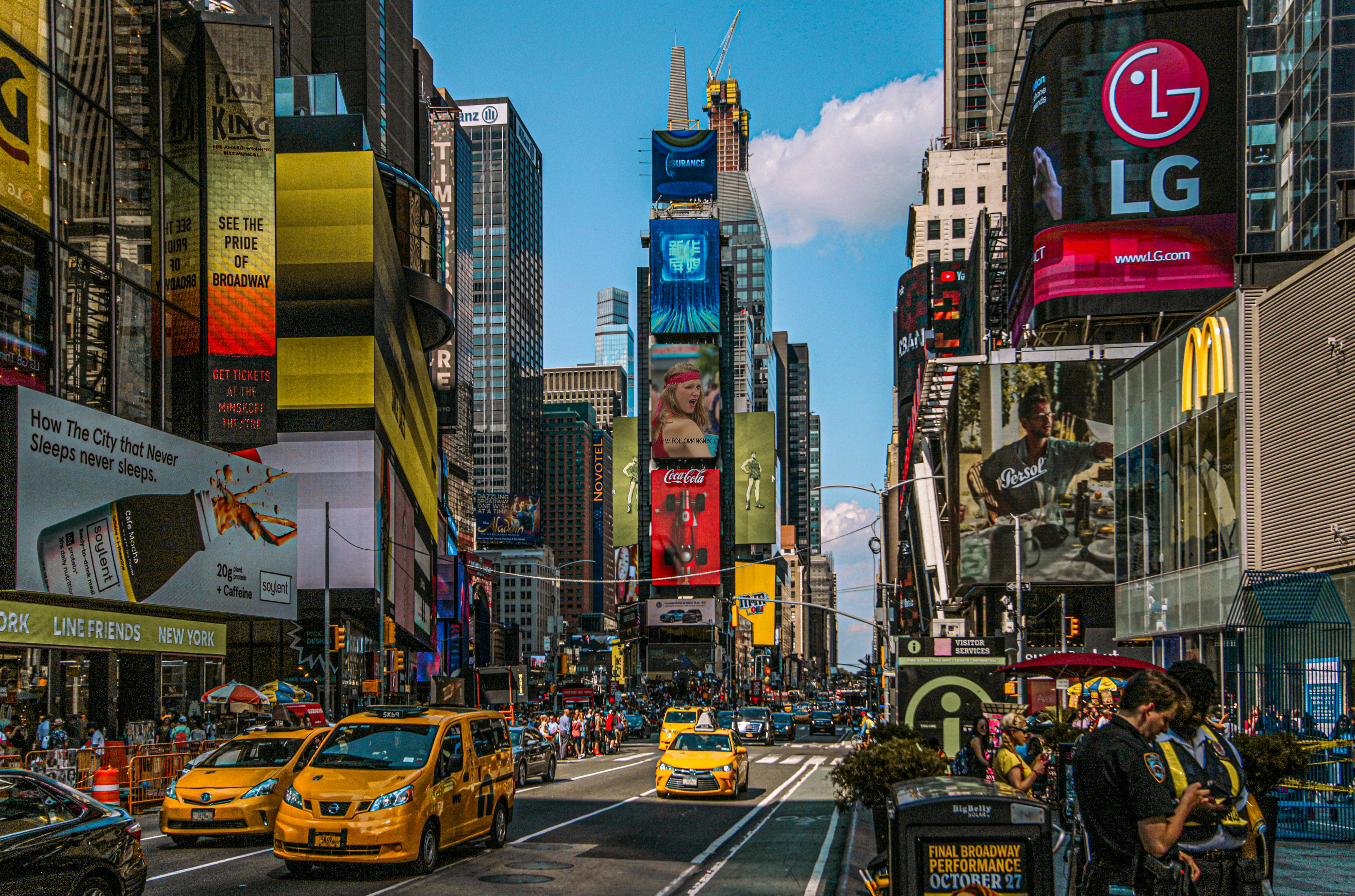
Start at the Riegelmann Boardwalk near West 8th Street in the late afternoon, when the light turns the beach pale gold, then walk east to the New York Aquarium's Ocean Wonders: Sharks!, a 57,500-square-foot building whose aluminum skin flickers in the wind like fish scales. The shift inside is the whole point: gulls and ride shrieks give way to cool dark galleries, rays passing overhead like torn silk, and then, if you've had enough performance, walk back west past the rides toward the shaded benches at West 25th Street or even Kaiser Park, where Coney drops the mask and the creek air smells more marsh than popcorn. Best paired with a morning in Times Square if you want to understand how New York does spectacle twice, once in neon and once in salt.
Plan your visit
Getting There
Most people should take the D, F, N, or Q train to Coney Island-Stillwell Av, then walk 5-7 minutes south on Stillwell Avenue toward Surf Avenue and the ocean; Luna Park, Nathan's, and the boardwalk sit close together, packed into a few blocks like a carnival poured onto the edge of Brooklyn. The F or Q to West 8 St-NY Aquarium works best for the aquarium and the east end, with a 2-5 minute walk, while drivers usually come via Belt Parkway Exit 6 or 7S and then hunt for paid lots around West 17th Street, West 12th Street, or Neptune Avenue.
Opening Hours
As of 2026, Coney Island does not keep one set of hours because the beach, boardwalk, aquarium, and amusement parks all answer to different clocks. The boardwalk is open year-round but closes 1:00 a.m.-5:00 a.m.; beach access is free, with swimming only during lifeguard hours, usually 10:00 a.m.-6:00 p.m. in beach season, while the New York Aquarium runs daily year-round and Luna Park and Deno's operate on seasonal calendars that stretch wide in summer and shrink sharply on spring and fall weekdays.
Time Needed
Give Coney Island 1.5-2.5 hours if you only want the boardwalk, beach, Nathan's, and a look at the old rides creaking above Surf Avenue. A half day, 4-6 hours, suits the classic version with some rides, a meal, and time to watch the light turn the Atlantic flat and metallic; a full day, 6-9 hours, makes sense if you add both amusement parks, the aquarium, and a sideshow or Cyclones game.
Accessibility
Coney Island-Stillwell Av is the better subway stop for wheelchair users because it is ADA-accessible; West 8 St-NY Aquarium is not. NYC Parks lists Coney Island as an accessible beach with beach mats at points including Stillwell Avenue, West 8th Street, and Ocean Parkway, plus reservable beach wheelchairs, and the aquarium's buildings are wheelchair-accessible with sensory bags and limited free wheelchairs, while Coney Island USA's museum remains upstairs and not wheelchair-accessible.
Cost & Tickets
As of 2026, the cheapest version of Coney Island is still the best bargain in New York: the beach and boardwalk are free, and both Luna Park and Deno's let you enter without a gate fee and pay only for rides. Expect New York Aquarium tickets from $29.95 off-peak for adults, free Wednesday admission after 3:00 p.m. with a timed ticket, Luna Park wristbands from $49.99-$89.99 depending on height and zone, Deno's single rides from $5-$10, and Coney Island USA museum admission at $5 or a $18 museum-plus-sideshow combo.
History
The City Keeps Coming Here to Misbehave
Records and photographs show Coney Island changing shape again and again, from Lenape fishing ground to elite resort, from electric fantasy to scarred redevelopment zone. One function held. New Yorkers kept coming here to test what freedom felt like when sand replaced pavement and the rules softened at the water's edge.
That continuity matters more than any single facade. Fires erased parks, fill turned an island into a peninsula, and developers kept trying to civilize the place, yet the old rhythm survived: spring opening, summer parade, sideshow stunt, beach plunge, boardwalk wandering, one more turn on a ride because the lights are on and the night is still warm.
The turning point
The "fireproof" park that proved what really lasts
At first glance, Coney Island's history looks like a graveyard of lost wonders. Dreamland, Luna Park, Steeplechase: tourists learn the names, look at the postcards, and assume the real story is disappearance.
Then one fact starts to itch. Dreamland, opened in 1904 by developer William H. Reynolds, sold itself as a clean, modern white city, and later accounts describe it as fireproof; yet records show the park burned in 1911 so completely that Reynolds lost the fortune and prestige he had tied to it. That contradiction is the hinge.
The revelation is less sentimental than the souvenir version. Coney Island was never saved by buildings alone; it was saved by repetition. George C. Tilyou understood that earlier at Steeplechase, where what mattered was not architectural purity but the chance for ordinary people to laugh, flirt, scream, eat badly, and stay out late by the sea. After Dreamland fell, the crowd still came. Look around now and the changed gaze is this: the real monument is not a vanished tower but the public ritual itself, repeated season after season with different rides, different music, and the same appetite for release.
What Changed
Documented change at Coney Island is brutal and visible. The Switchback Railway opened in 1884 and helped invent the American roller coaster; Luna Park opened in 1903 under Frederic Thompson and Elmer Dundy; Dreamland opened in 1904 and was gone by 1911; the Riegelmann Boardwalk arrived in 1922-1923; landfilling then tied the former island more firmly to Brooklyn; Steeplechase was demolished in 1966 after Fred Trump bought the site. Even the ground shifted underfoot. Recent research cited in 2023 found subsidence of about 2.6 millimeters a year, slow as a fingernail grows and far more worrying when you stand beside the Atlantic.
What Endured
The old purpose kept going. Documented annual traditions still frame the year through bodily ritual and public spectacle: the Polar Bear Club's New Year's Day plunge, the Blessing of the Rides at Deno's, the Mermaid Parade founded in 1983, the beach-opening ceremony, the Nathan's contest at Surf and Stillwell, and the last permanently housed traditional circus sideshow in the United States, according to Coney Island USA. Different century, same instinct. People still come here to gather in public, show off a little, and let the ocean make the whole performance feel larger than life.
Tips for visitors
Best Timing
Summer weekends feel like the whole city had the same idea at once, so go on a weekday morning or late afternoon if you want room to breathe and shorter ride lines. Friday evenings earn their crowd with fireworks, but spring weekdays can feel half-asleep, with shutters down and the wind doing most of the talking.
Camera Rules
Personal photos are fine on the boardwalk, and the place rewards them: rusted ride steel, gull noise, salt haze, all of it. Luna Park bans tripods, lights, and reflectors without written consent, and the aquarium allows personal photography but restricts tripods in some exhibits; drones in New York City need a permit, so don't assume the beach is a free launch pad.
After Dark
Daytime feels lively and manageable with normal city awareness, but locals are right about the mood shift after dark, especially once the family crowd drains away. Watch for illegal scooters and uneven boardwalk sections, keep your route simple, and use the subway rather than gambling on parking-lot exits after a big event.
Eat Selectively
Nathan's Famous at 1310 Surf Avenue is the ritual order: hot dog, fries, maybe nothing else. For better food, Paul’s Daughter and Ruby’s Bar & Grill handle the boardwalk version well at budget to mid-range prices, while Liman is the nearby sit-down seafood play if you want an actual dinner instead of fried nostalgia in a paper tray.
Save Money
Skip the all-day splurge unless you know you'll ride hard; Coney rewards pick-and-choose planning better than blind wristband buying. The strongest thrift move in 2026 is pairing the free boardwalk and beach with New York Aquarium's free Wednesday entry after 3:00 p.m., though you still need to reserve a timed ticket in advance.
Combine Eastward
Coney works best when you don't treat it like a sealed amusement compound. Walk east along the boardwalk into Brighton Beach after your rides or aquarium visit; the shift from screaming roller coasters to neighborhood food and quieter benches happens in under 20 minutes, which is about the length of a decent New York mood swing.
Where to Eat
local_dining
Don't Leave Without Trying
New York-style pizzaBagels with lox and cream cheeseConey Island hot dogsPastrami on ryeBacon, egg, and cheese sandwichChopped cheeseKnishesCheesecakeBlack-and-white cookiesEgg creams
Teura Italian Restaurant
local favorite
Authentic Italian€€star4.8(510)
Order: The handmade lobster ravioli and wood-fired pizza are standout choices, followed by their creamy homemade cheesecake.
This is a rare gem in Coney Island serving high-quality, handmade pasta that feels like a true family recipe. It’s the perfect spot for a sit-down meal that feels authentic and deeply comforting.
Order: The Turkish breakfast for two is exceptional, featuring fresh bread, honeycomb, labne, and a full pot of authentic Turkish tea.
It’s a warm, professional spot where the food tastes like a home-cooked meal prepared with genuine care. The quality of ingredients shines through in every dish, making it a must-visit for breakfast lovers.
Order: Go for the seafood boil classics like crab legs, and don't miss out on the lobster mac & cheese.
If you are looking to feast, the all-you-can-eat options here are legendary for the area. The staff is incredibly hospitable, and the sheer variety of fresh, perfectly seasoned seafood makes it a memorable experience.
Order: Try their traditional Georgian bread and sweets; the food quality is consistently praised as excellent.
This modern, clean, and spacious spot is a fantastic place to explore Georgian flavors. It offers a very welcoming atmosphere that locals appreciate for its quality and friendly service.
checkTipping is standard practice; aim for 18-20% for good service.
checkDinner crowds peak early now, typically between 6:00 PM and 7:30 PM.
checkWeekend brunch is a local ritual; expect the busiest times to be between 12:30 PM and 2:00 PM.
checkDon't assume restaurants are closed on specific days; hours vary wildly across the city, so always check ahead.
checkBreakfast in NYC is often a quick, portable affair from a deli or bodega.
checkSome restaurants automatically add gratuity for groups of 4 or more.
Restaurant data powered by Google
Frequently asked
Is Coney Island worth visiting?
Yes, if you want New York at its most windblown and least polished. Coney Island works best as a mash-up of free beach, old rides, boardwalk food, and odd little survivals like the Cyclone and the Wonder Wheel, not as one neat attraction. Come for salt air, gull noise, and that exposed Atlantic horizon you don't get in Midtown.
How long do you need at Coney Island?
Plan 4 to 6 hours for a satisfying first visit. That gives you enough time for the boardwalk, a ride or two, Nathan's on Surf Avenue, and either the aquarium or a sideshow without rushing. If you want both amusement parks plus the aquarium, give it a full day of 6 to 9 hours.
How do I get to Coney Island from New York City?
The easiest route is the subway: take the D, F, N, or Q to Coney Island-Stillwell Av. From that station, the boardwalk, Luna Park, and Nathan's are about a 5 to 7 minute walk south toward the ocean, while the F or Q to West 8 St-NY Aquarium puts you closest to the aquarium. Stillwell is the better choice if you need an ADA-accessible station.
What is the best time to visit Coney Island?
Late spring and early fall are the sweet spot for most people. You get milder light, fewer shoulder-to-shoulder crowds, and enough of the district open to feel the old carnival rhythm without the full summer crush. Summer brings the loudest version of Coney, with daily ride operations, beach season, and Friday fireworks, but also more lines, more heat, and less room to breathe.
Can you visit Coney Island for free?
Yes, the beach and boardwalk are free, and that already gives you a real Coney Island day. You only pay if you add rides, the New York Aquarium, or Coney Island USA's museum and sideshow. Even the amusement parks themselves have no gate fee, which means you can wander under the ride skeletons and decide later what deserves your money.
What should I not miss at Coney Island?
Don't miss the boardwalk, the Cyclone, and a ride on the Wonder Wheel. The Cyclone's timber frame still rattles like a wooden ship in rough water, and the Wonder Wheel lifts you 150 feet above the beach, about the height of a 15-story building, with the Atlantic spread out beside Brooklyn. If you have another hour, add the History Project under the Wheel or the aquarium's Ocean Wonders building, where the light drops and the whole district suddenly goes quiet.
Sources & attribution14
Researched and written by the Audiala editorial team from historical records, architectural archives, and local expertise. Last reviewed April 2026.
New York Aquarium FAQs — Used for average visit length at the aquarium, which helps estimate total time needed at Coney Island.
Coney Island USA Visitor Information — Used for museum and sideshow pricing and for framing Coney Island as a cluster of separate attractions rather than one ticketed site.
Strictly necessary cookies keep navigation working. Analytics cookies (PostHog, Google Analytics) help us learn which pages work — aggregate only, no ads, no selling. You can change this any time from the footer.
Privacy
Cookie preferences
Pick what you're okay with. You can change this any time from the footer.
Strictly necessary
Always on
Sign-in, language, navigation. Always on.
Product analytics
PostHog and Google Analytics, aggregate usage only. Helps us see which pages work and which need fixing. No selling, no ads.
Marketing
Off today. Reserved if we ever run paid acquisition. We will ask again before turning it on.