
History and Origins
Commissioned as part of the Rockefeller Center Art Deco program, the Atlas statue was installed in 1937 during a period of significant economic hardship. The Rockefeller family envisioned the Center as a symbol of hope and modernity, blending commerce, culture, and art. The statue quickly became the centerpiece of the complex’s public art, embodying the era’s collective strength and ambition.
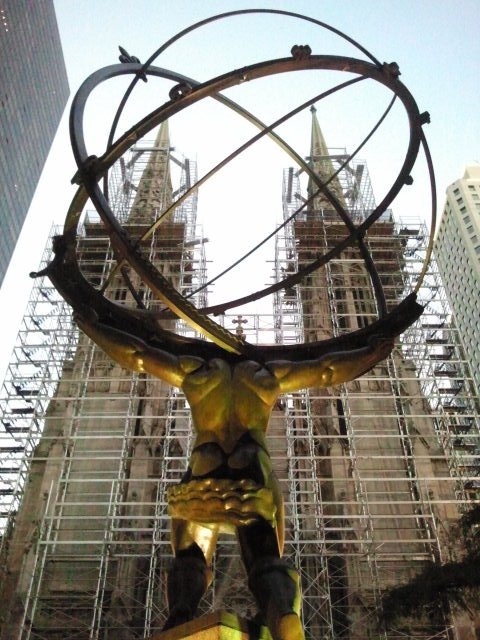
Atlas, the mythological Greek Titan, is depicted bearing the heavens as punishment from Zeus for leading a rebellion against the Olympian gods—a powerful metaphor for human endurance and the weight of responsibility. The statue’s orientation facing Fifth Avenue, with its gaze toward St. Patrick’s Cathedral, sets up a dramatic visual and philosophical dialogue between secular ambition and spiritual aspiration.
Artistic Vision and Design
Sculptors and Creation
- Artist Lee Lawrie, a major figure in American architectural sculpture, conceived the statue’s powerful form.
- Collaborator Rene Paul Chambellan contributed detailed modeling and ornamentation, with expertise in Art Deco and architectural sculpture.
- Foundry The casting was completed by Roman Bronze Works in Queens, ensuring both durability and intricate detailing.
Physical Description
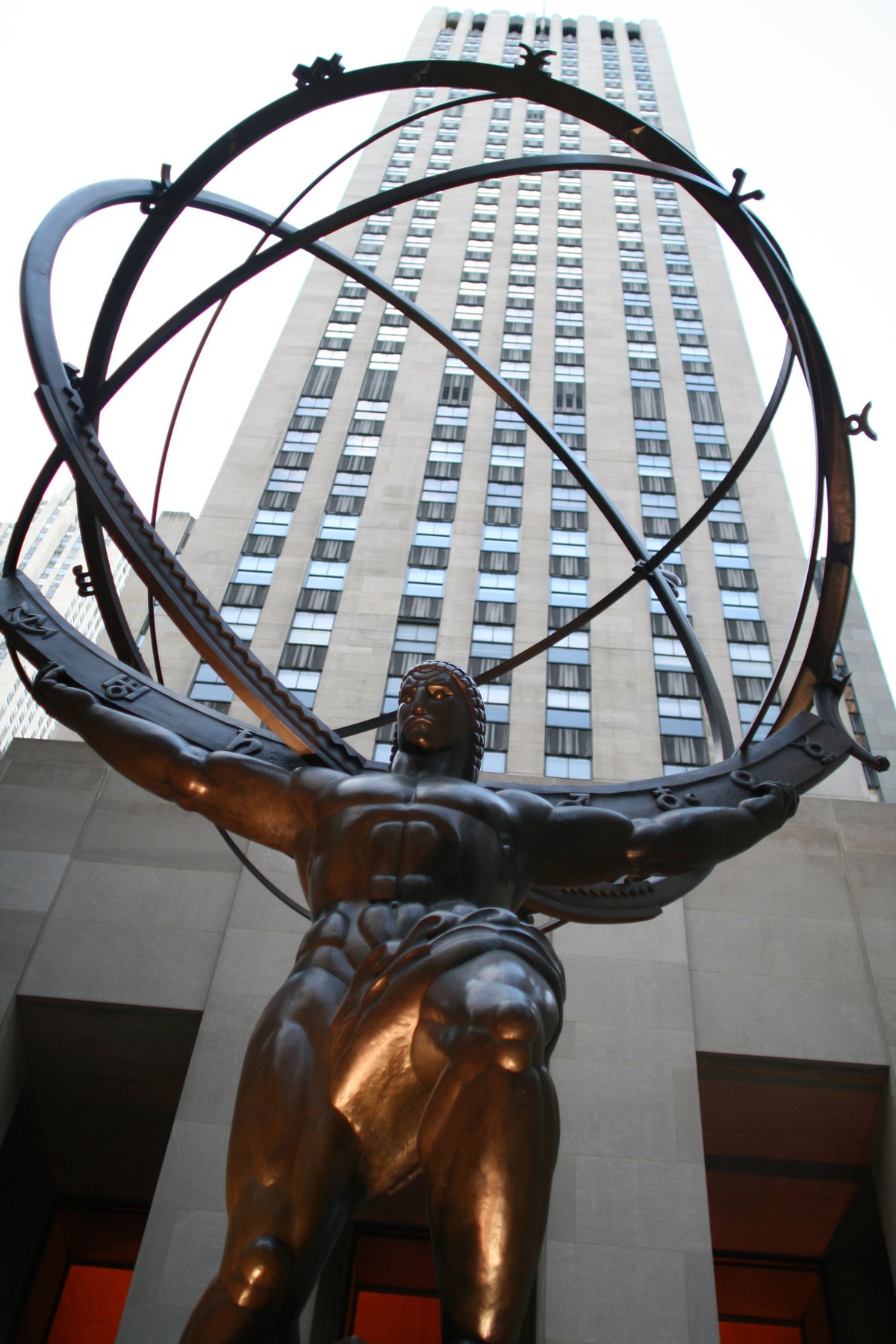
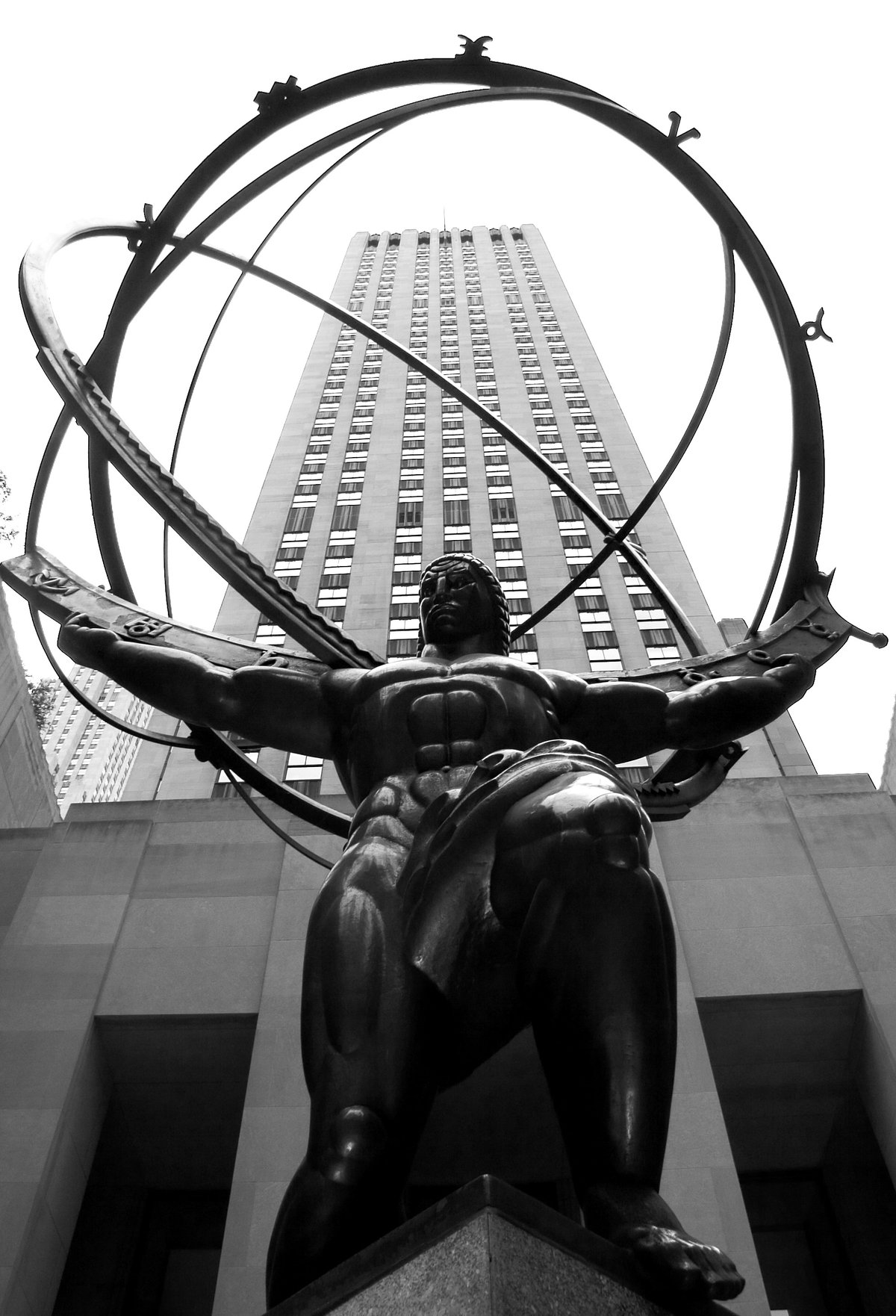
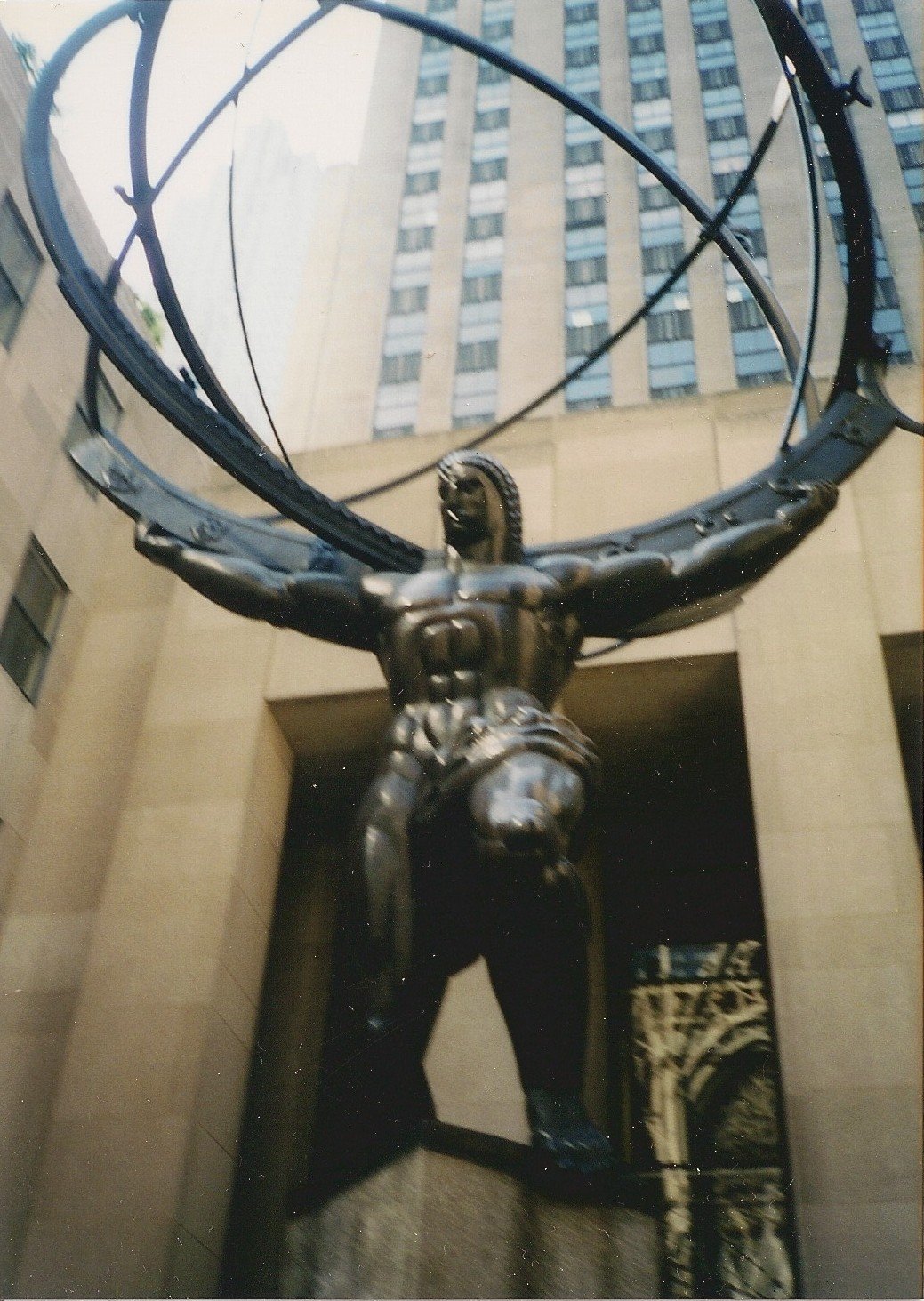
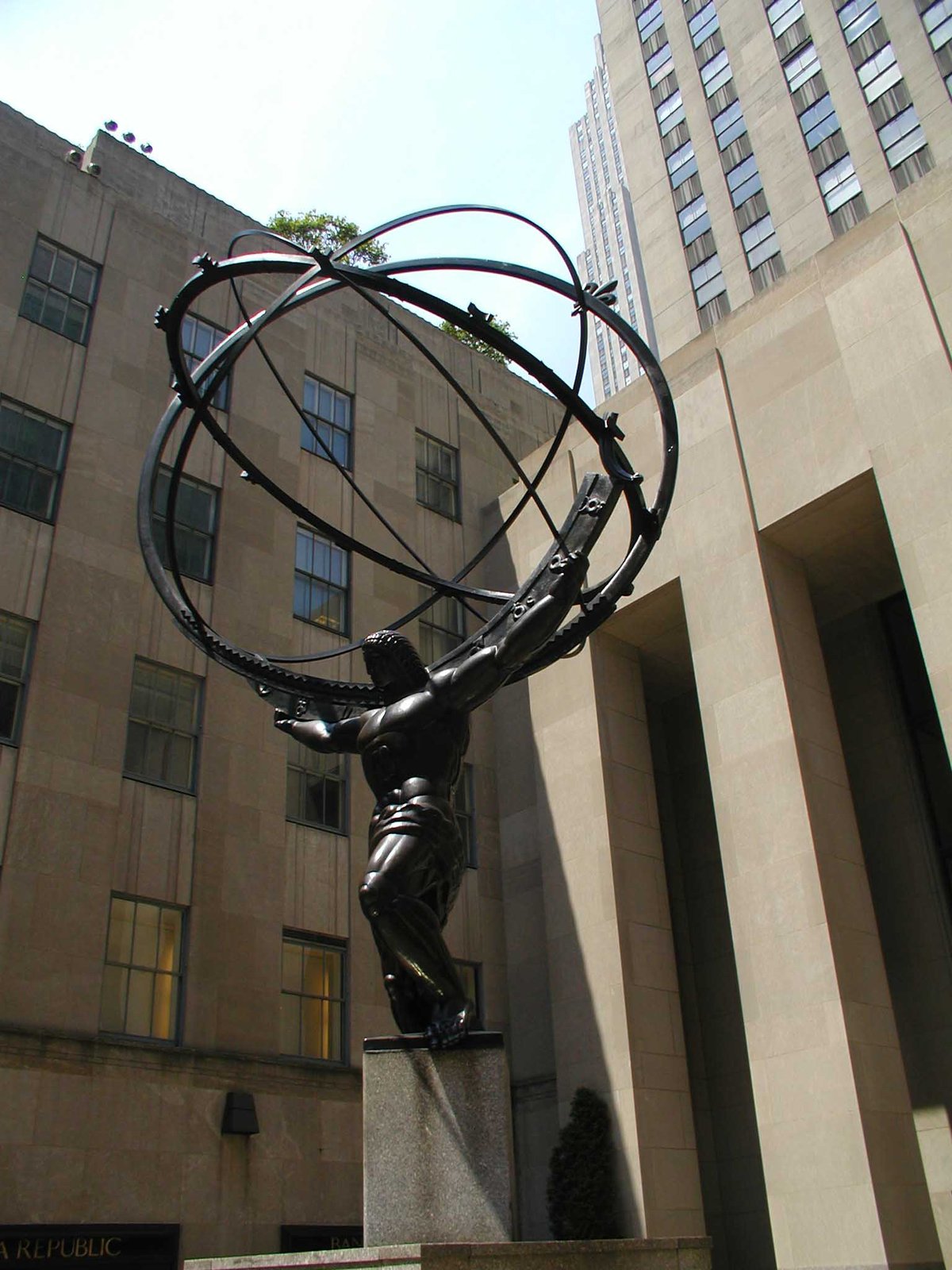
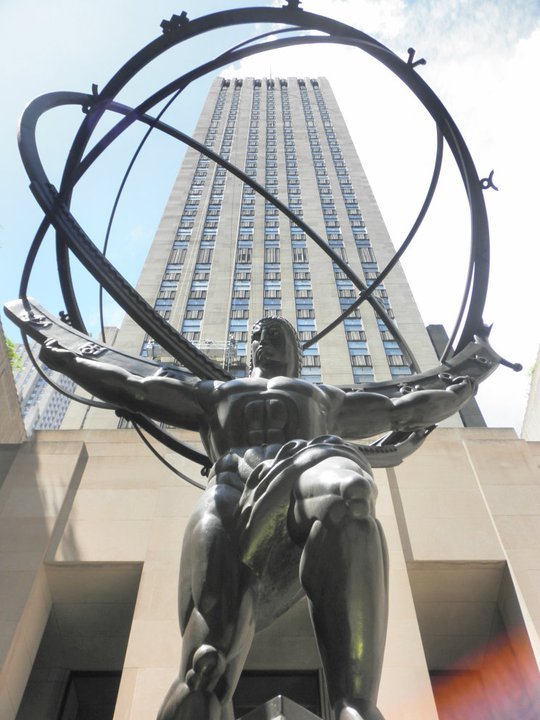
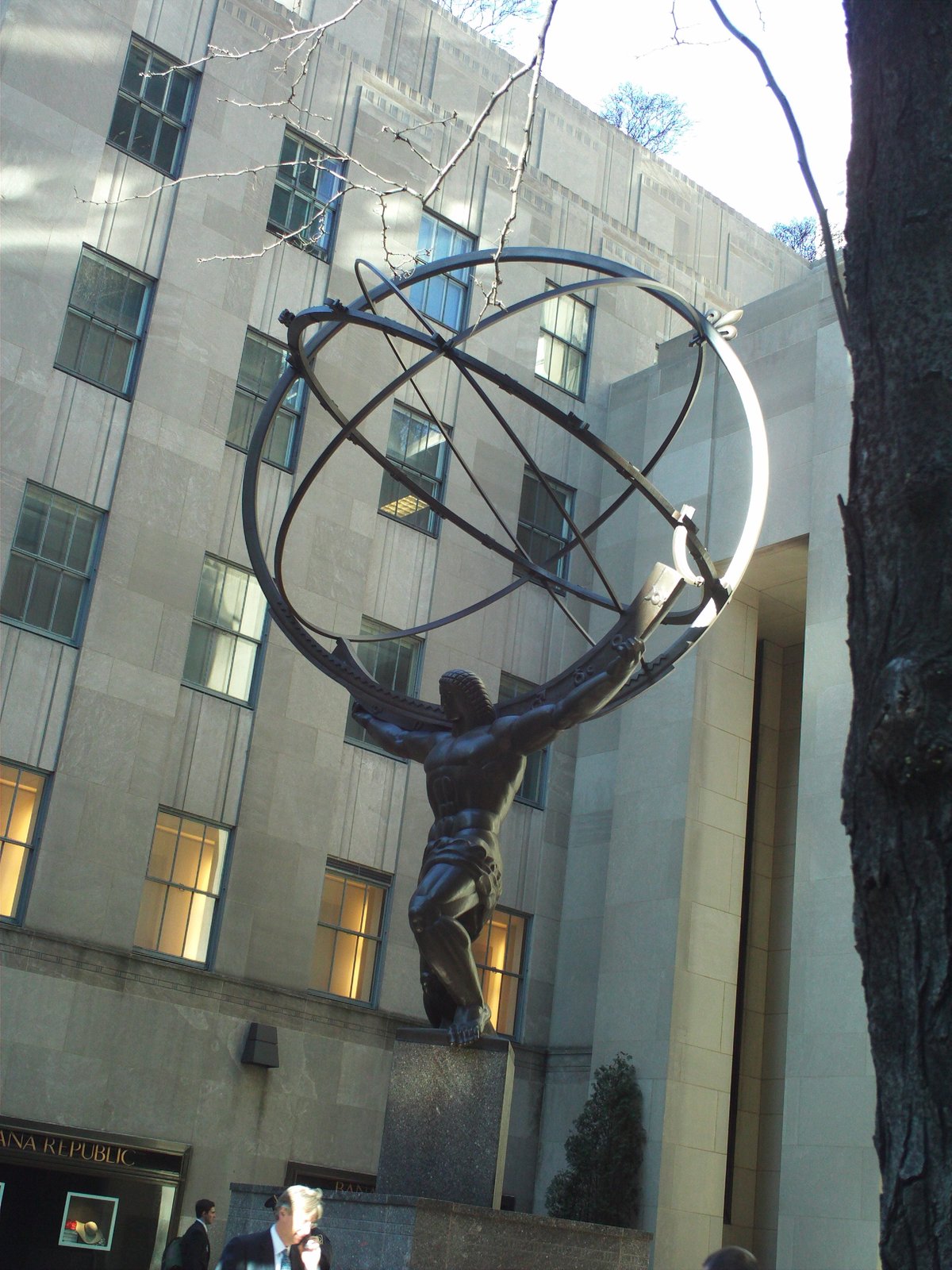
- Height Atlas himself stands 15 feet (4.6 meters); the entire installation, including pedestal and sphere, reaches about 45 feet (14 meters).
- Weight Approximately 14,000 pounds (6,350 kg).
- Sphere The armillary sphere measures 21 feet (6.4 meters) in diameter and is adorned with zodiac symbols.
- Pose Atlas is depicted in a powerful kneeling stance, supporting the celestial sphere above his shoulders, his muscles rendered in stylized Art Deco fashion.
- Materials Crafted from bronze with a granite pedestal, the statue’s patina has deepened over decades.
Symbolism
The choice of Atlas and the depiction of an armillary sphere—an ancient astronomical instrument—reflect humanity’s quest for knowledge and the inescapable weight of duty. The sphere’s rings, inscribed with zodiac signs, connect the sculpture to ancient cosmology and the passage of time. The statue’s placement and orientation create a visual contrast with the neighboring St. Patrick’s Cathedral, highlighting the interplay between myth and faith in the urban landscape.
Visiting Hours, Tickets, and Accessibility
Visiting Hours
- Open 24/7 The Atlas statue is located in a public outdoor plaza, accessible every day of the year, at any hour.
Tickets and Admission
- Free Entry There is no admission fee or ticket required to visit the statue.
Accessibility
- Wheelchair Accessible The surrounding plaza features smooth pavements and ramps.
- Nearby Facilities Rockefeller Center offers public restrooms, seating areas, and accessible entrances.
Guided Tours
- Several guided tours of Rockefeller Center and Midtown Manhattan include the Atlas statue as a highlight. Official Rockefeller Center tours offer detailed historical and artistic commentary (Rockefeller Center Official Site).
Nearby Attractions and Travel Tips
Key Nearby Attractions
- St. Patrick’s Cathedral Directly across Fifth Avenue.
- Top of the Rock Observation Deck Panoramic city views.
- Radio City Music Hall Historic entertainment venue.
- Channel Gardens Landscaped promenade with seasonal art installations.
- Prometheus Statue Another renowned sculpture within Rockefeller Center.
- Museum of Modern Art (MoMA) A short walk away.
Travel and Transportation
- Subway
- 47–50 Sts–Rockefeller Center (B, D, F, M trains)
- 5th Ave/53rd St (E, M trains)
- Bus Multiple city buses serve Fifth Avenue and Midtown.
- Taxis/Ride-shares Widely available throughout Manhattan.
Visitor Tips
- Best Time to Visit Early morning or late evening for fewer crowds and optimal photography.
- Photography No restrictions; consider wide-angle lenses to capture the statue with the backdrop of Rockefeller Center or St. Patrick’s Cathedral.
- Seasonal Events The holiday season features the Rockefeller Center Christmas Tree, ice skating rink, and festive decorations—expect larger crowds.
Cultural Impact and Legacy
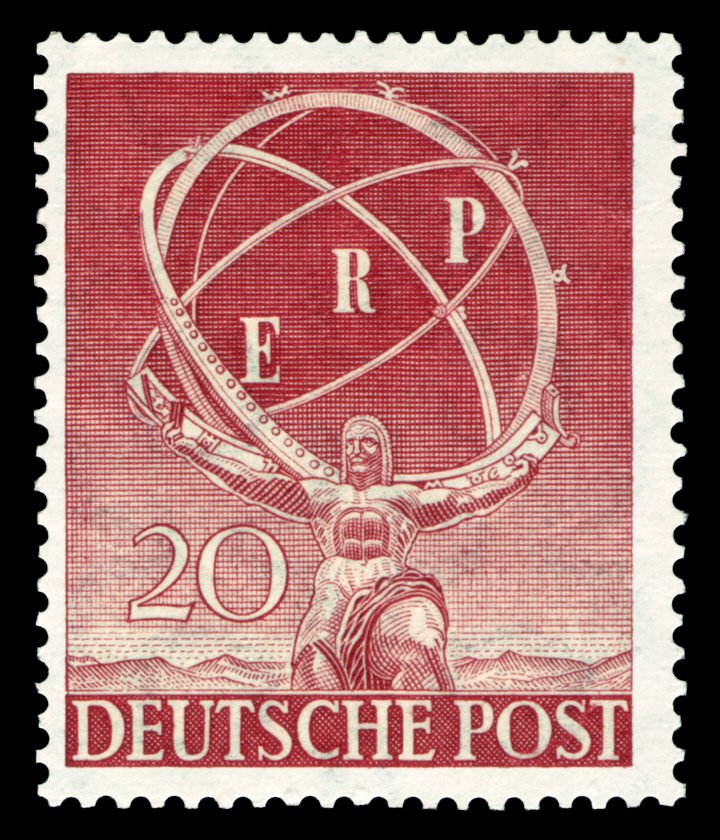
Since its unveiling, the Atlas statue has become an enduring symbol of New York City, representing strength, perseverance, and the weight of responsibility. Its image appears frequently in films, television, and literature—most notably in Ayn Rand’s "Atlas Shrugged," where the figure becomes a metaphor for individualism and self-reliance.
The statue's face was once controversially thought to resemble Benito Mussolini, sparking public debate in the 1930s, though the artists denied any intentional likeness (Big Apple Secrets). Over time, the Atlas statue’s meaning has transcended political associations, cementing its place in the cultural and artistic fabric of the city.
Today, Atlas continues to inspire millions, serving as the backdrop for seasonal celebrations, public gatherings, and guided tours. Its presence reinforces Rockefeller Center’s identity as a hub for art, culture, and architectural innovation (The Tourist Checklist).
Technical and Artistic Details
- Materials Bronze (statue and sphere), granite (pedestal).
- Casting By Roman Bronze Works, renowned for large-scale public art.
- Engineering Internal supports and a precisely balanced pedestal allow the statue to maintain its dynamic, straining pose.
- Art Deco Influence Evident in the stylized musculature, geometric lines, and streamlined forms.
Frequently Asked Questions (FAQ)
Q: What are the Atlas statue visiting hours?
A: The statue is accessible 24/7, year-round.
Q: Is there an admission fee or ticket required?
A: No, the statue is free to visit.
Q: Is the statue wheelchair accessible?
A: Yes, the plaza is fully wheelchair accessible.
Q: Are guided tours available?
A: Yes, both official and private guided tours include the Atlas statue.
Q: Can I take photos?
A: Absolutely. Early mornings and evenings offer the best lighting and fewer crowds.
Q: What subway lines serve Rockefeller Center?
A: B, D, F, M, E, and M lines.