An introduction.
Researched by the Audiala editorial team from historical records, architectural archives, and local expertise.
HHow did a thoroughfare named for a French royal dynasty become globally synonymous with a Kentucky whiskey? Bourbon Street in New Orleans, United States, carries a title that outlived the monarchy that coined it, trading regal lineage for brass bands and balcony revelry. Walk its thirteen blocks, each roughly the length of two city buses parked end to end, to see how colonial planning, survival architecture, and sanctioned street theater fused into one of the most theatrical urban corridors in the Americas.
The noise hits you first. A brass quartet cuts through humid air, competing with clinking glasses and the rhythmic slap of footsteps on worn brick. Above the neon signs, wrought-iron balconies cantilever over the sidewalk. You can buy a drink in a plastic cup and carry it past three centuries of rebuilt masonry.
The street feels invented for spectacle. Municipal archives show it was actually engineered for survival. Every balcony, courtyard, and brick seam answers an older mandate to keep the city from burning itself down.
01 What to see.
The Spanish Colonial Iron Galleries
The Cypress Floorboards & Acoustic Canyon
The Dawn Walk: Canal to Esplanade
02 In pictures.


Plan and listen to Bourbon Street with Audiala.
Audio guide in your pocket, itinerary in your browser. Built for the way you actually visit.
03 Visitor logistics.
The practical scaffolding for a good visit — kept short.
Reaching the Strip
The Red Canal Streetcar Line drops you one block south at Canal Street, with modern low-floor cars and wheelchair ramps. Skip the rental car; metered spots vanish after dark, and rideshare drop-offs at Royal Street save you the parking hunt.
Street & Venue Hours
As of 2026, the public right-of-way stays open twenty-four hours a day while individual clubs unlock around late afternoon and close by the state’s 4:00 AM curfew. Festival weekends trigger rolling pedestrian zones that keep the corridor active until sunrise.
How Long to Stay
A brisk twenty-minute walk covers the full thirteen-block stretch from Canal to Esplanade, enough to absorb the neon glow and iron silhouettes. Plan three to four hours if you intend to linger at Fritzel’s jazz stage, trace the 1794 Spanish-era brickwork, and actually listen to the room.
Entry & Venue Pricing
As of 2026, walking the pavement costs absolutely nothing, and legendary venues like Fritzel’s frequently keep the cover charge at zero. Historic dining rooms like Galatoire’s require advance reservations and can push a Friday lunch into serious splurge territory.
Navigating the Terrain
The grade stays flat, but centuries of foot traffic have warped the historic brick into an uneven, ankle-testing surface. Modern RTA transit runs ADA-compliant lifts, yet the original eighteenth-century buildings rarely offer elevators or wide entryways.
04 Tips for visitors.
Small things that change the day.
Sidestep Street Bets
Ignore the “I know where you bought those shoes” pitch and the three-card monte tables; both rely on manufactured obligation and rigged boxes. Keep cash deep in a front pocket, offer a flat “no thanks,” and maintain your walking pace.
Master the Go-Cup
State law lets you carry open alcohol, but only in plastic or disposable containers and strictly within the French Quarter boundaries. Step across Canal or Esplanade with that cup and a police officer will confiscate it before you hear the streetcars.
Pack a Sport Coat
Daytime tourists wear shorts, but historic dining rooms still enforce jacket requirements for men, especially for Galatoire’s famous Friday lunch. Bars also mandate closed-toe shoes and shirts under health codes, so leave the beach sandals at your hotel.
Ask Before You Shoot
Public street photography faces zero restrictions, but live music venues routinely ban flash and professional tripods during performances. Always seek explicit permission before photographing street performers or balcony crowds; the Quarter runs on mutual respect.
Chase Late Light
Arrive between four and six o’clock to catch the low-angle sun hitting the wrought-iron balconies before the humidity spikes into evening thunderstorms. Summer downpours hit fast, so pack a compact umbrella and wear quick-drying fabrics.
Where to Eat
Don't Leave Without Trying
Fives
local favoriteOrder: The hot lobster roll and the tuna crudo are absolute standouts.
This is a rare gem in the French Quarter that locals actually frequent; it’s perfect for a chill, high-quality seafood meal right in the middle of the action.
Napoleon House
local favoriteOrder: You have to get the muffuletta (a quarter portion is perfect) and a signature Pimm’s Cup.
Steeped in history and housed in a 1914 building, this spot offers a quintessential New Orleans atmosphere that feels worlds away from the Bourbon Street noise.
Ruby Slipper
local favoriteOrder: Their signature omelets and Southern-style brunch plates are crowd-pleasers.
It’s a lively, high-energy spot that captures the city's obsession with brunch; just be sure to reserve ahead as it stays packed.
Cafe Du Monde
cafeOrder: Fresh beignets covered in powdered sugar and a classic café au lait.
It is the ultimate New Orleans landmark; yes, it’s touristy and messy, but sitting at an open-air table with a hot beignet is a rite of passage.
Dining Tips
- check Many restaurants close on Mondays or Tuesdays; always check individual hours before heading out.
- check Dinner in New Orleans skews late; 8 p.m. is a standard reservation time.
- check 18% to 20% is the standard tip for sit-down service.
- check For bar drinks, tip $1–$2 per drink or 20% on a running tab.
- check The French Market in the Quarter is your best bet for daily, walk-in market access.
Restaurant data powered by Google
05 The Stage That Refused to Quiet
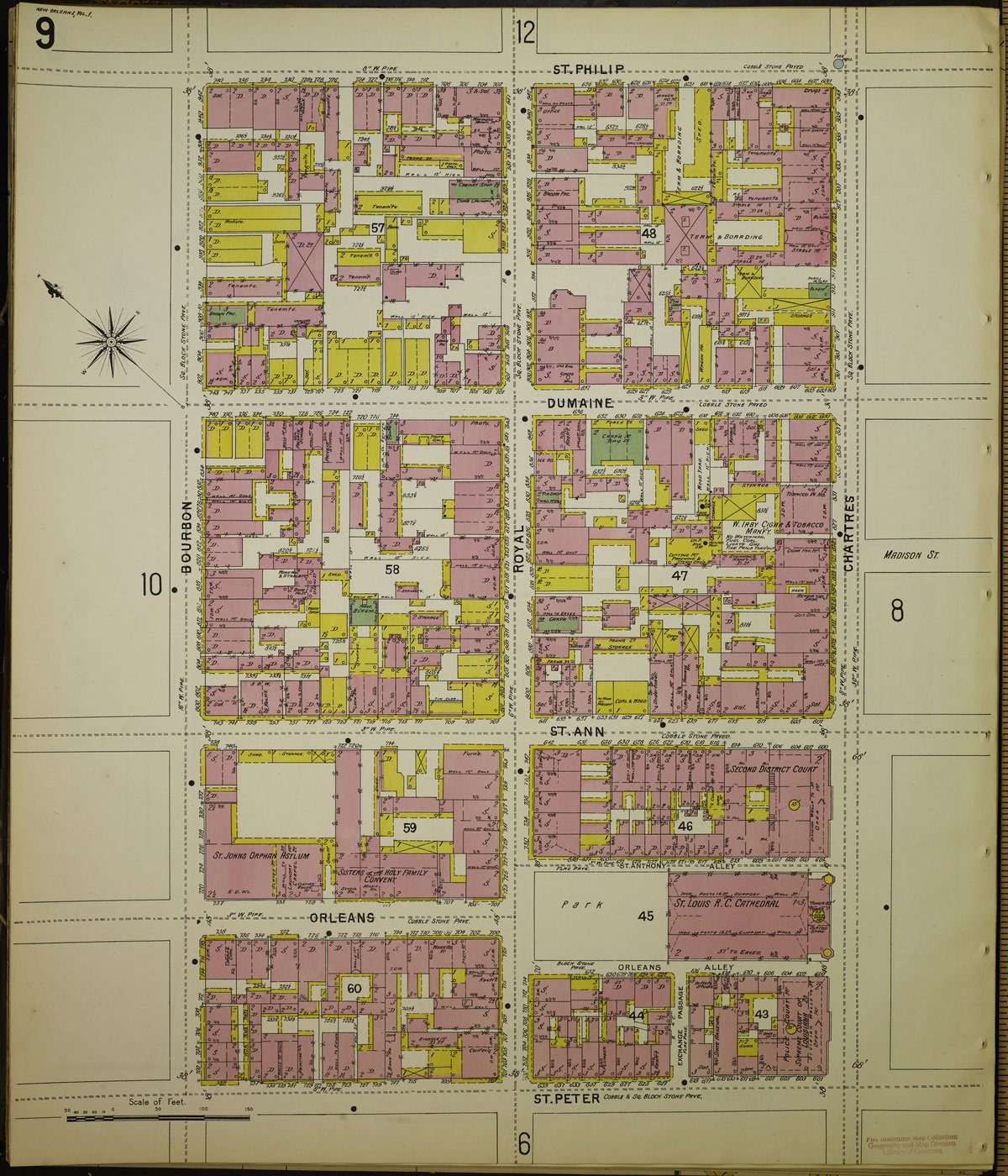
Cities usually bury their original purposes under layers of commerce and zoning codes. Bourbon Street keeps performing its founding function. Surveyor Adrien de Pauger’s grid drew a straight line through the swamp, but colonial correspondence suggests the corridor quickly learned its true job. Residents gathered here to trade, mourn, and celebrate. Today, the same geometry channels parade floats, balcony performers, and open-container walkers. The architecture changed. The ritual did not.
The Fire That Forged the Facade
Most visitors assume Bourbon Street’s architecture matches its party reputation: a hastily assembled playground of twentieth-century bars. The neon signs and plastic beads suggest a place designed for temporary thrills, not permanent memory.
But the brick party walls tell a different timeline. They predate jazz, Prohibition, and the whiskey industry’s naming conventions. Municipal archives confirm the heavy masonry arrived a full century before steam power reached Louisiana. Why would a colonial commercial corridor demand such thick, fire-resistant walls?
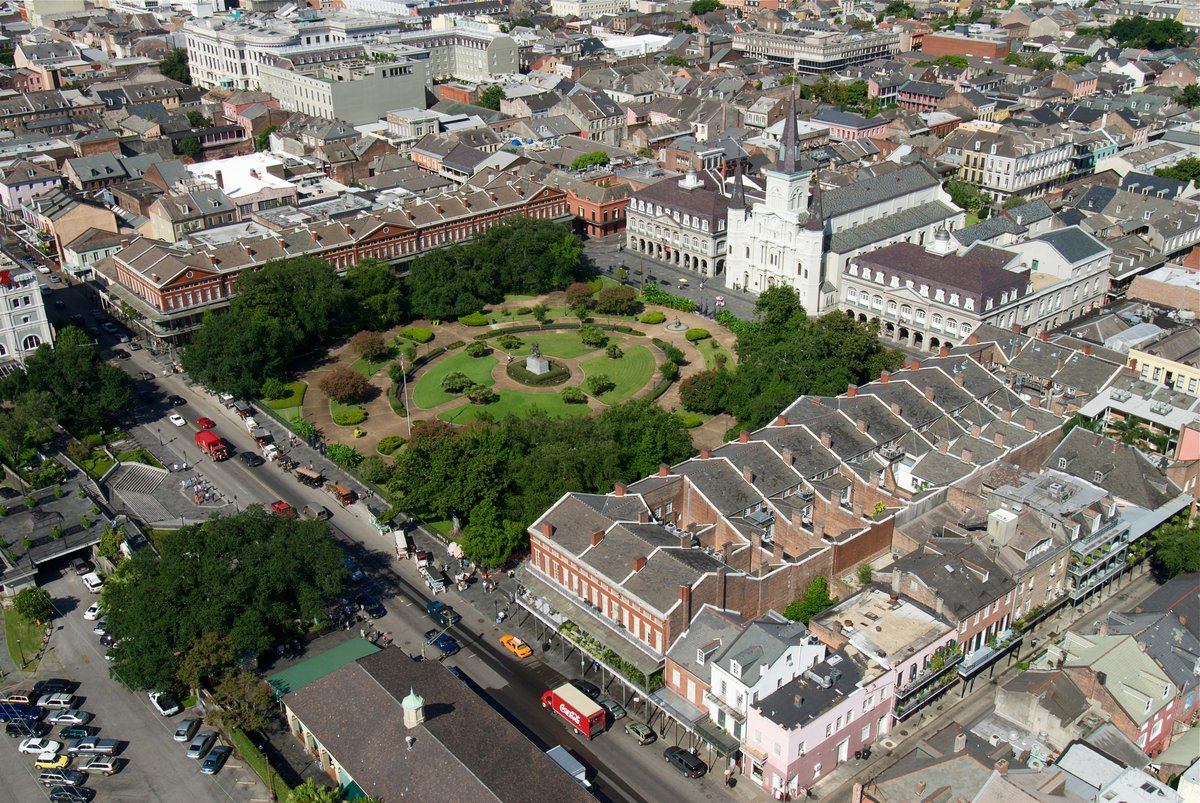
The answer begins on March 21, 1788, when dry Gulf winds turned wooden colonial roofs into a single running fuse. Governor Esteban Rodríguez Miró faced immediate ruin; without a defensible capital, colonial authority would dissolve into chaos. He issued strict rebuilding mandates that forced owners to replace timber with brick, stucco, thick party walls, and enclosed interior courtyards. The decree erased the French wooden city overnight and erected the Spanish Creole shell that still holds the street upright.
Knowing this shifts your gaze. Those wrought-iron balconies are not decorative afterthoughts. They sit on brick pilasters designed to stop spreading flames. The heavy doors lead to climate-controlled courtyards that once served as mandatory firebreaks. The street’s theatricality works because the architecture was built to survive its own stage.
What Changed: The Soundtrack
What Endured: The Open Container
Listen to the full story in the app
The whole Bourbon Street,
told well.
Audio guides for 1,100+ cities across 96 countries. History, stories, and local insight — offline ready.
06 Frequently asked.
The questions travellers send us most about Bourbon Street.
Is Bourbon Street worth visiting?
The 13-block corridor absolutely warrants a quick walk-through, but you will want to leave before the neon takes over your evening. Listen closely. Bourbon functions as a theatrical stage rather than a living neighborhood, so spend thirty minutes absorbing the acoustic canyon of overlapping brass and footsteps before stepping onto Royal Street for quiet courtyards.
How long do you need at Bourbon Street?
A brisk twenty-minute stroll covers the full stretch from Canal Street to Esplanade Avenue. Take your time. If you plan to duck into historic jazz clubs, order go-cups, and explore hidden courtyard gardens, block out two to four hours to let the humid air and worn brick pace your evening.
How do I get to Bourbon Street from downtown New Orleans?
The RTA Red Canal Streetcar provides the smoothest route into the Quarter, dropping you exactly one block south of the main strip at Canal and Bourbon. Walk north. Driving into the French Quarter after 5 PM means fighting metered spots and pedestrian barricades, so stick to the streetcar or a rideshare drop-off near the Convention Center.
What is the best time to visit Bourbon Street?
Dawn between 6 and 9 AM offers the only real chance to read the Spanish Creole brickwork and iron galleries without a wall of tourists. Breathe deeply. Spring and fall bring tolerable Gulf humidity and the soft light that makes pastel stucco glow, while summer afternoons turn the pavement into a steam vent and winter nights strip the acoustic clutter down to bare brass.
Can you visit Bourbon Street for free?
Walking the public right-of-way costs exactly zero dollars and stays open 24 hours a day. Step right in. Individual bars and music rooms set their own cover charges, usually ranging from nothing at all to twenty-five dollars, though places like Fritzel’s European Jazz Club regularly let you hear live traditional jazz without paying a dime at the door.
What should I not miss at Bourbon Street?
Look down at the concave wear grooves in the cypress floorboards of century-old venues, where generations of dancers literally carved shallow troughs into the wood. Watch the grain. Step through heavy wooden courtyard gates to escape the street’s acoustic canyon, and keep an eye out for the original marble absinthe drip fountains tucked behind bar counters, untouched by modern renovations.
Verified, and shown.
Researched and written by the Audiala editorial team from historical records, architectural archives, and local expertise.
Provides street layout dimensions, venue operating hours, cover charge ranges, and historical naming origins.
Documents the 1788 and 1794 fires, Spanish rebuilding mandates, and colonial grid layout history.
Traces the cultural diffusion of second line traditions and live music lineage into modern Quarter tourism.
Details ongoing Vieux Carré Commission preservation debates, civic memory, and architectural authenticity.
Researched from Wikidata, Wikipedia & official sources · fact-checked · How we make our guides →